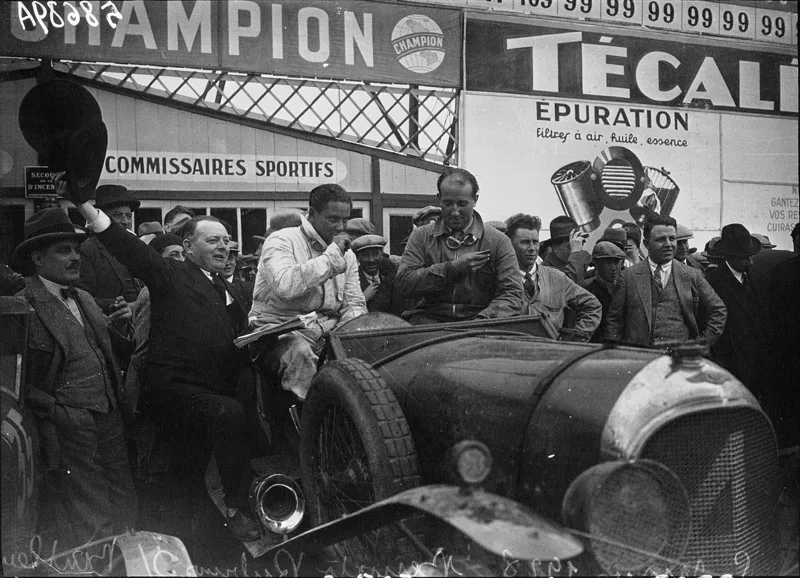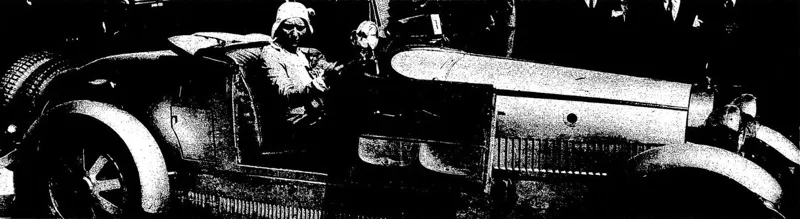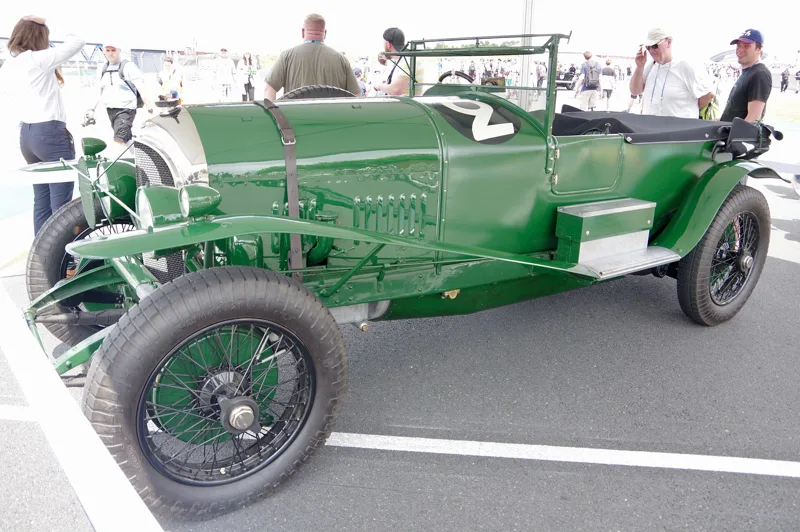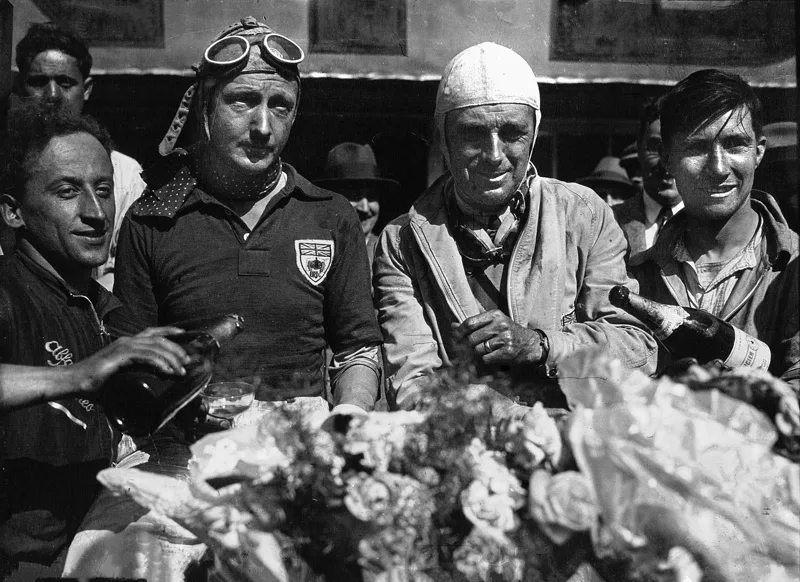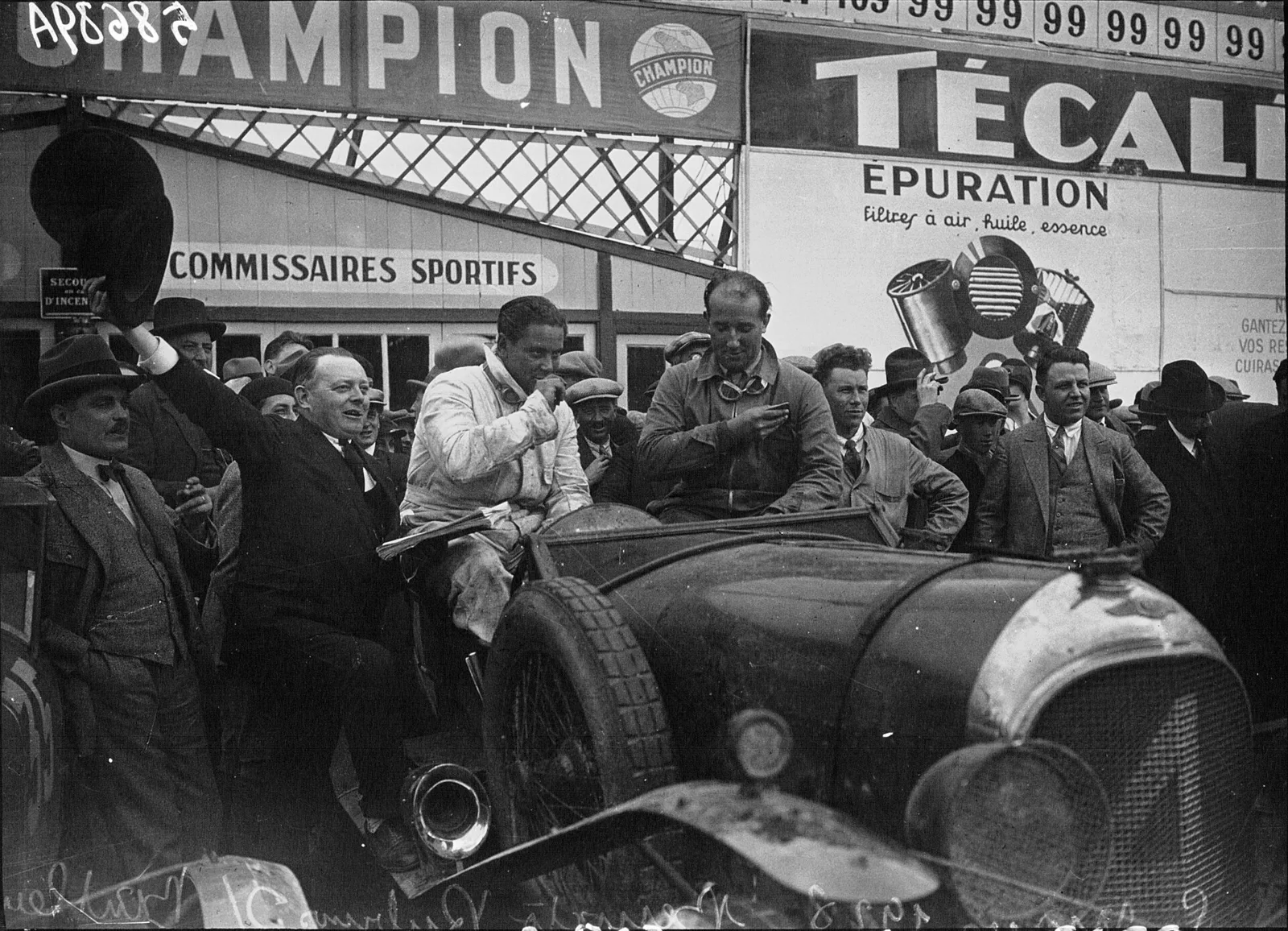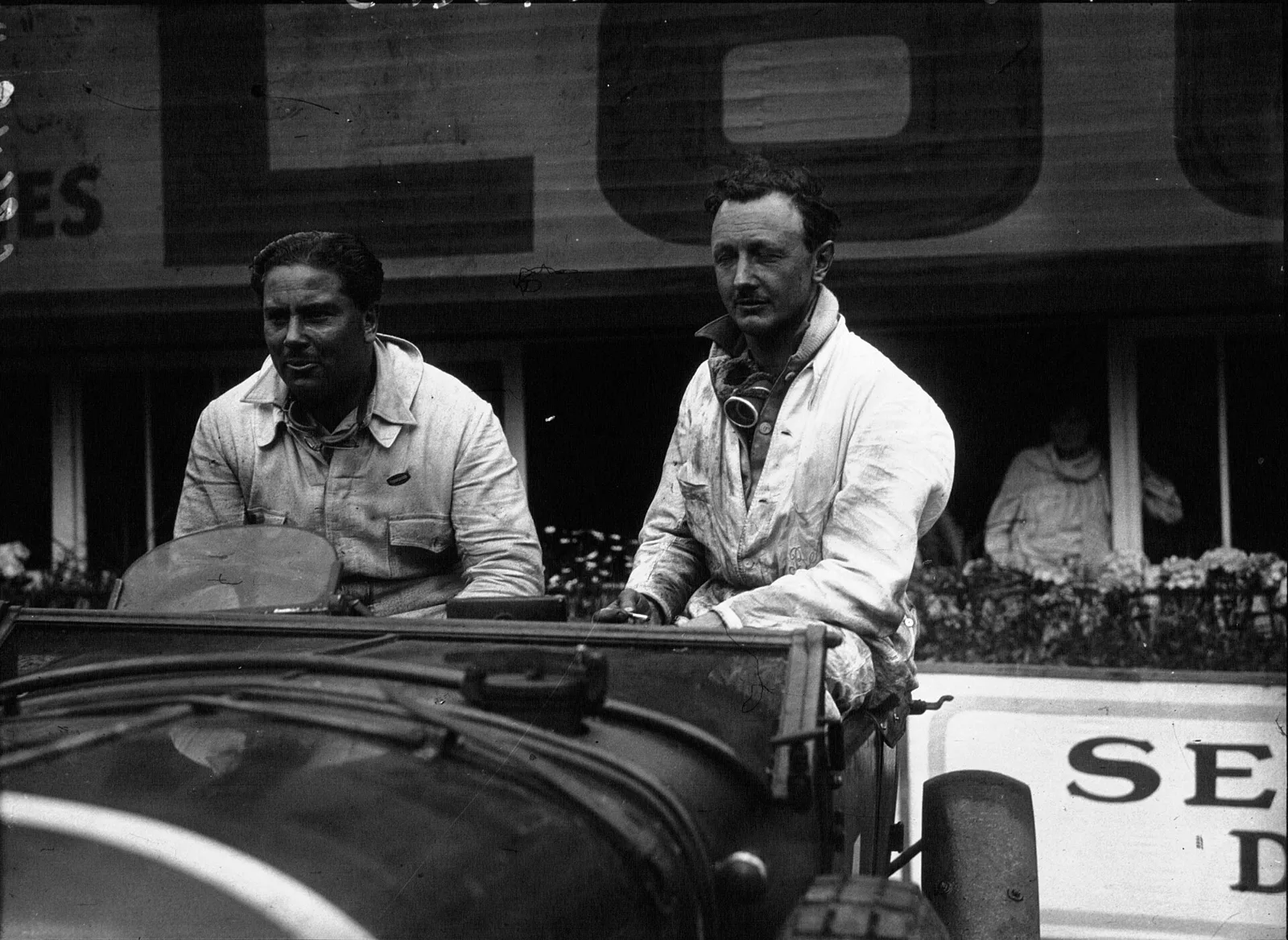
Four Bentleys crossed the line together, a result that set a new distance record and ended in a formation finish.
The 1929 race was a Bentley benefit: its drivers took the first four places, led by Barnato and Birkin. Their distance of 2,843.83 km (1,767.07 mi) set a record, and only 26 cars started the race. The race ended in a formation finish for the surviving cars.
The 1929 24 Hours of Le Mans was the most dominant display the race had yet seen. Woolf Barnato and Tim Birkin won in a Bentley Speed Six, and Bentley took the first four places on distance. The pair led from start to finish, set a new distance record and a new lap record, and the surviving Bentleys finished in a formation that the press described as a squadron of warships.
How did the rules change for 1929?
Two-seater cars were now capped at 1000cc, and the three-seat concession for 1500cc cars was dropped after two years. Shell was the official fuel for every car. Residents of southern Le Mans petitioned the council successfully, and the track was changed as a result.
A new by-pass road, the Rue de Circuit, opened 600 metres ahead of the Pontlieue hairpin at the edge of the city. The lap fell from 17.362 km (10.788 mi) to 16.340 km (10.153 mi), so the circuit was 922 metres shorter than the one the 1928 crews had driven.
The surface experiments continued. The left-hand turn approaching Arnage was partly resurfaced with bricks and dubbed Indianapolis, after the American Brickyard. A new spectator area opened between the two corners, roadside trees had their trunks painted white for visibility, and every corner was signposted.
The media centre also grew, with six phone booths and a telegraph table added to the facilities.
Four Bentleys crossed the line together, and the 1929 race ended as a demonstration of one team's strength.
Why was the 1929 field so small?
The world recession was hitting carmakers hard, so only 26 cars reached the start line. For the first time French cars were in the minority, and no French car was in line for outright distance honours. The entry list drew from only three nations: France, Britain and the United States.
Privateers filled much of the grid because manufacturers gave little direct support. Ten cars ran supercharged engines, and Dunlop tyres were fitted to every car in the field. Thirteen of the sixteen Biennial Cup places were taken.
What did Bentley bring to the race?
Bentley arrived with five cars, led by the new Speed Six sports model. Its engine was developed by Harry Weslake and used an elektron magnesium-alloy crankcase to save weight. It put out over 190 bhp and reached 185 km/h (115 mph).
Barnato, the 1928 winner, would drive the lead Speed Six with Birkin. Dudley Benjafield, another Le Mans winner, had been slated to drive it, but he gave his place to Birkin because he believed Birkin had the better chance of winning. The remaining older tourers were strengthened after earlier problems and went to Frank Clement with Jean Chassagne, Benjafield with Baron Andre d'Erlanger, Glen Kidston with Jack Dunfee, and Earl Howe with Bernard Rubin.
The Howe car had been used only a week earlier by Mary Petre and her husband Victor Bruce in a 24-hour record attempt at Montlhery. Bertie Kensington-Moir, back from Lagonda, ran the team as manager, and Walter Hassan was lead mechanic.
Who else lined up against Bentley?
Stutz came back with three cars, each entered through a European dealership. Du Pont brought an American two-seater that the ACO refused, so the team built four-seat speedsters, though only one was ready. Chrysler entered two cars, and Lagonda, Invicta, Lea-Francis, Alvis, SARA and Tracta fielded smaller challengers.
The Stutz Model M Blackhawk had a 5.3-litre engine producing 155 bhp through a four-speed gearbox. Warwick Wright ran George Eyston with Dick Watney, Automobiles Elite hired Guy Bouriat and Philippe de Rothschild, and Charles Terres Weymann entered Louis Chiron with Edouard Brisson. Their car carried an optional Roots supercharger.
Du Pont's Model G had a 5.3-litre Continental sidevalve engine, but the ACO refused it under the new engine-size rule. The company hurried four four-seater speedsters into existence, though only one was ready in time. Charles Moran Jr and Alfredo Luis Miranda, the first Americans at Le Mans, drove it. Moran was a friend of E. Paul du Pont, who had raced in Europe the year before, and Miranda was a Mexican-born New York dealer for the company. After a shakedown run at Montlhery, Moran grew concerned about Miranda's pace and decided to drive the whole event himself.
Grand Garage St Didier entered two Chrysler Sixes. The '75' was the 1929 model, driven by Henri Stoffel and Robert Benoist, and the '77' previewed the 1930 car, manned by Cyril de Vere and Marcel Mongin.
Invicta, founded in 1919, entered its 1928 large-chassis model with a 100 bhp Meadows engine. Cecil Twisleton-Wykeham-Fiennes, a major in the Royal Marines, entered it as a privateer. Lea-Francis brought a supercharged 1.5-litre S-Type that could reach 145 km/h (90 mph), and Lagonda's 2-Litre Speed Model, driven by Tim Rose-Richards and Brian Lewis, could reach 160 km/h (100 mph). The Lagonda entry was the product of a group of Lagonda owners and the company's agents, Fox and Nichol, who asked for cars to be prepared for racing. The 2-Litre Speed was lowered, given more power and fitted with a tougher gearbox and suspension. Ken Peacock entered a Lea-Francis with Sammy Newsome, a Lea-Francis distributor, as his co-driver. Alvis brought two front-wheel drive FA8/15 cars, with Sammy Davis and Leon Cushman in one and Cyril Paul and Bill Urquhart-Dykes in the other. SARA's air-cooled pushrod engine, licensed to Scotsman Motors, returned with three British drivers.
Charles de Ricou, who had bought the collapsed BNC company, also brought two new BNC models: the four-seat Acacias with a supercharged 1.5-litre Meadows engine, and a pair of BNC 527s with 1-litre Ruby engines. The smallest car in the field was the D'Yrsan Grand Sport, a low-slung machine with independent front suspension and a supercharged 749cc Ruby engine.
Tracta entered four cars with money from Charles Terres Weymann. One streamliner used a unique engine with opposed pistons powered by a Cozette supercharger, and it was the loudest and smokiest car in the race.
How did the race start?
The race began under grey cloud and drizzle. The Du Pont and the Lagonda led away first, but Birkin's Speed Six soon took the lead under the Dunlop bridge. By the end of the first lap he had set a new lap record, and the other Bentleys followed in formation behind him.
Practice had given the British teams their first look at the new layout, in unofficial sessions held while the public roads were still open to traffic.
D'Yrsan's start was a shambles, and its driver lost seven minutes pushing the car up the road to fire the engine, an offence in itself. After three-quarters of an hour Howe's Bentley was in the pits with electrical failure, and replacing the sparkplugs and the magneto took an hour without fixing the problem.
The Du Pont retired with a bent propshaft, after its sandbag ballast had broken through the floor. Once the twenty-lap minimum was done, the well-drilled Bentley crews were in and out in three minutes. At the first stops fuel spilled onto the hot exhaust of Brisson's Stutz, and it burst into flames. Brisson was burned and taken to hospital, and Louis Chiron continued the race in the car alone.
The Lagonda's floorboards caught fire, and a head gasket leak ended its race. An Alvis also went out with a cracked cylinder head.
What happened through the night?
Through the night the Bentley team kept building its lead. By 10pm Barnato and Dunfee had completed 44 laps and held a lap's advantage over the rest of the field, with the remaining Bentleys close behind them. The Stutzes and Chryslers filled the places behind them.
Dunfee lost second place when he had to stop to replace headlamp bulbs. The bulbs had burnt out the wiring while he was doing 100mph down the Mulsanne Straight, and he was livid to find the mechanics had fitted bigger replacements for the event.
At 2am Stoffel took over the Chrysler and drove hard, using his track experience to claw back ground. Around 3am the Benjafield and d'Erlanger car suffered a water leak and an electrical fault, and it was closely pursued by Bouriat and Benoist. Benoist used his Grand Prix skill in the darkness to pass the Stutz and the Bentley, reaching fourth by 6am.
Just before halftime the Tracta special broke a fuel line and retired. The Invicta had been running as high as ninth at nightfall, but a loss of engine oil broke a big-end bearing and ended its race. Around dawn Clement's Bentley stopped when the rear ballast worked loose and went through the floorboards, and it lost an hour in repairs.
How did the morning and the finish unfold?
As the spectators woke for breakfast, only about a dozen cars were still running. Chiron's solo drive ended just after dawn when his clutch gave out. At 7am Eyston's Stutz ran out of fuel with a split tank, leaving only one Stutz in the running. It had just one lap to run before its next stop.
A similar fault forced Stoffel's Chrysler into the pits for nearly two hours, with Stoffel under the car for much of the time, and that restored the Bentleys to the top four positions. Kidston and Dunfee, a lap ahead of the Benoist and Stoffel Chrysler, held their places as the race ran toward the flag.
In the last hour W.O. Bentley told his team to line up for a formation finish. It was a novelty at the time, and the Motor magazine compared the cars to a squadron of warships in line ahead.
Bouriat and Rothschild brought the Stutz home fifth, barely a lap ahead of Benoist in his Chrysler. Peacock's privateer Lea-Francis was the first smaller-engined car home in eighth, and two Tracta cars completed the ten finishers. Its shock-absorber had broken during the closing hours, but the car rode out a rough finish.
Official figures from the 1929 race
| Item | Detail |
|---|---|
| Dates | 15 and 16 June 1929 |
| Winners | Woolf Barnato and Tim Birkin, Bentley Speed Six |
| Bentley result | First four places on distance |
| Distance covered | 2,843.83 km (1,767.07 mi) |
| Average speed | 118.49 km/h (73.63 mph) |
| Fastest lap | H. Birkin, 133.55 km/h (82.98 mph) |
| Field | 26 cars started |
Why was the 1929 result so dominant?
Bentley's four finishers took the first four places, the most dominant performance by one maker in the race's short history to date. Birkin set a new lap record, 46 seconds faster than the previous year, and the distance record fell as well, with the Speed Six covering over 2,800 km (1,700 mi).
The result was not matched until 1957, when Jaguar managed a similar display. The Speed Six took all three major awards, and it was the biggest car yet to win the Index of Performance.
Frank Clement finished fourth, and he is the only driver to have taken part in all seven Le Mans races of the 1920s, all of them for Bentley. Barnato loaned the company another 25000 pounds sterling.
Not all the news was good. Rene Cozette, the supercharging pioneer, was killed in August while making a speed record attempt at Montlhery. In November Glen Kidston was the sole survivor of a Luft Hansa passenger flight crash in England, and he was badly burned.