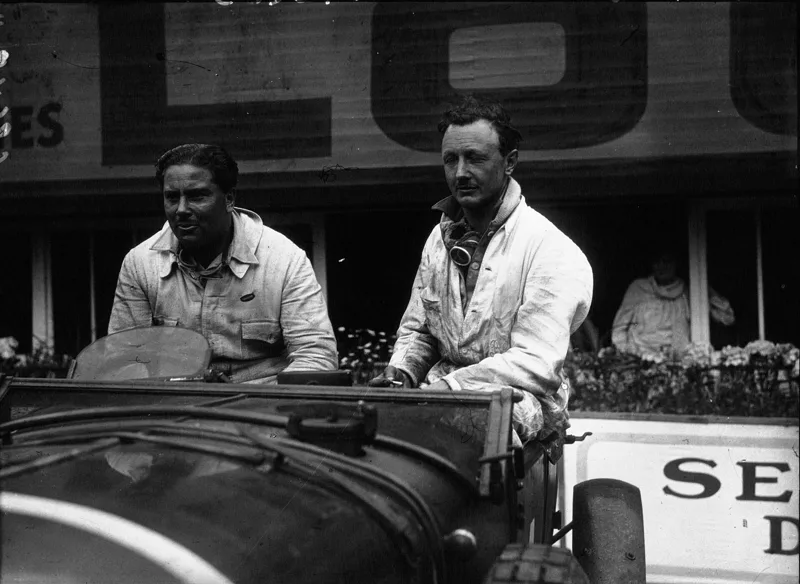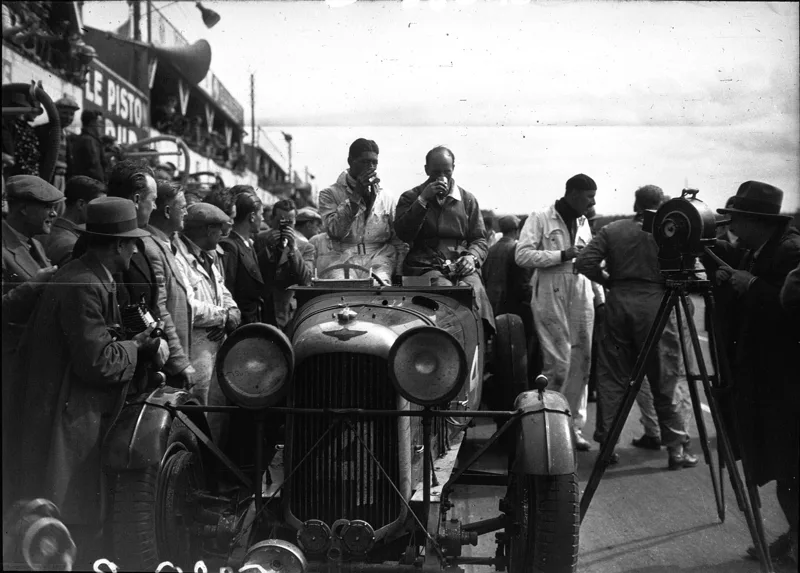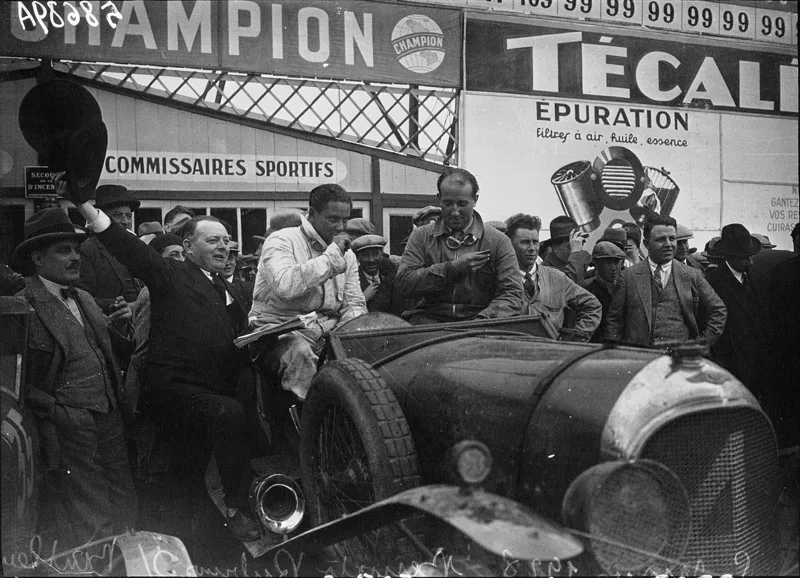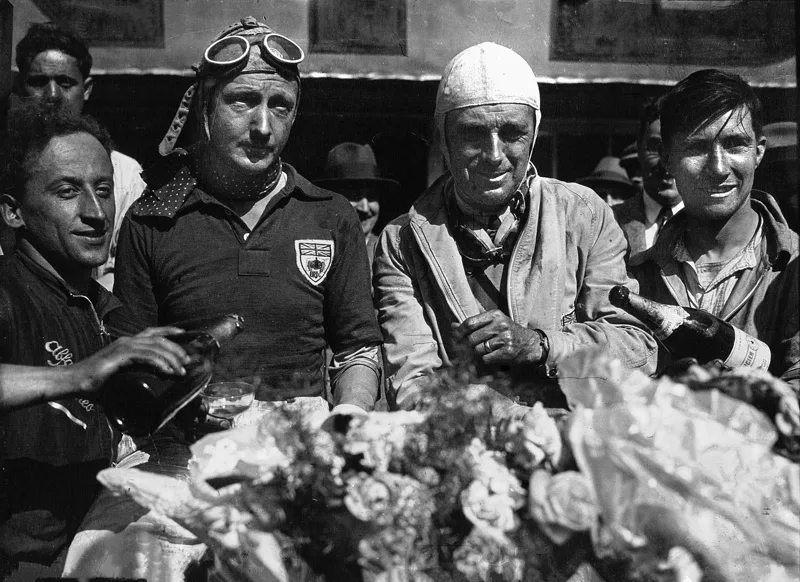
17 cars started, a privateer Mercedes led for hours, and Woolf Barnato won the race he had already won twice, with a Blower Bentley chasing him.
The race had 17 starters, the fewest in the history of the event. Barnato and Kidston shared the winning Bentley Speed Six, and the Index prize went to a Talbot by 0.004. Mercedes-Benz brought the first German car, and Marguerite Mareuse and Odette Siko became the first women to enter.
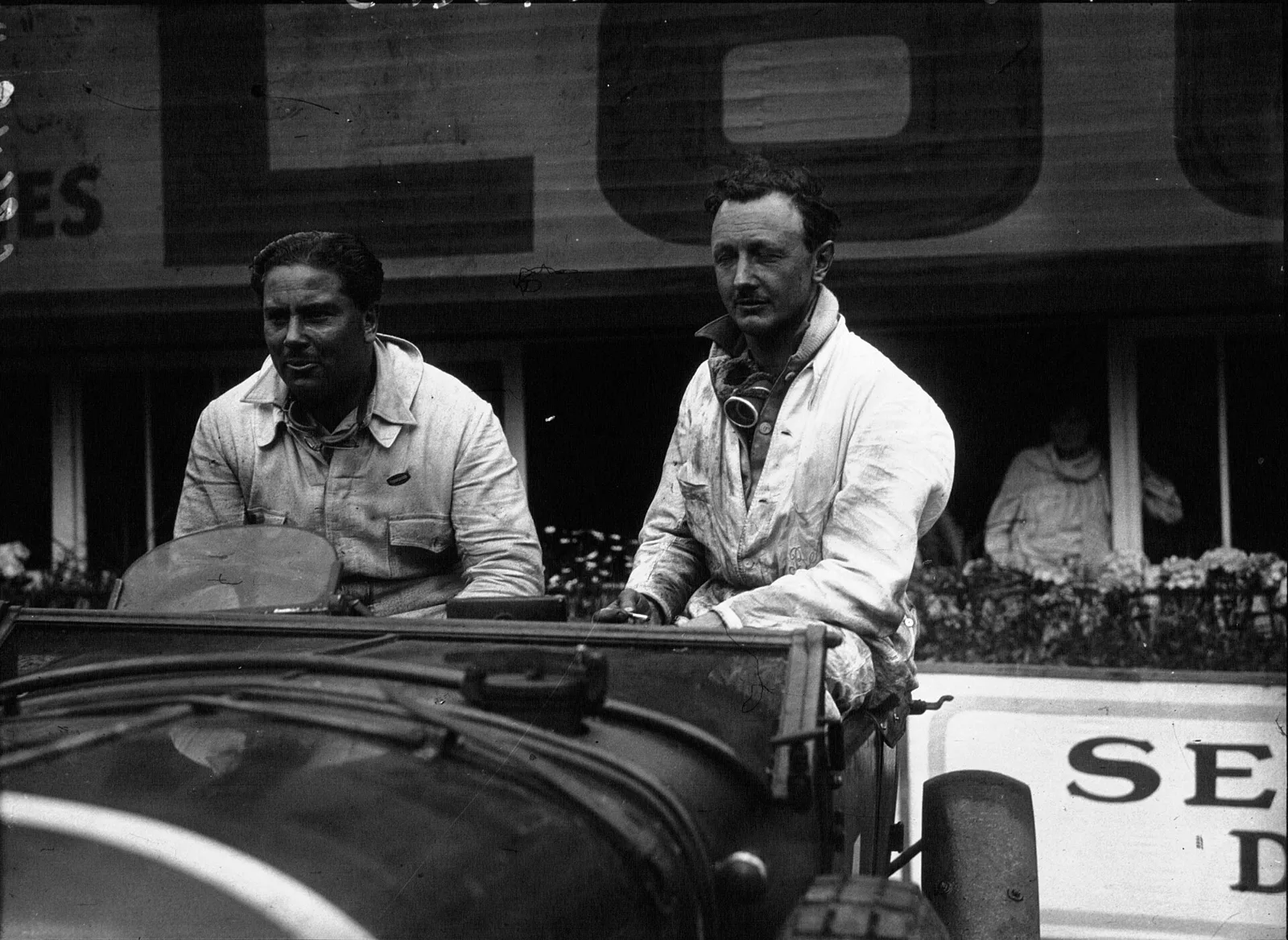
The 1930 24 Hours of Le Mans was the eighth Grand Prix of Endurance, and it had the smallest field in the race's history, with just 17 starters. Woolf Barnato and Glen Kidston won in a Bentley Speed Six, while a German Mercedes-Benz led for hours and two women entered the race for the first time. The Talbots took the Index of Performance by a margin so small it was measured in thousandths.
Why was the 1930 field so small?
The Great Depression had hit the car industry very hard. Only 33 cars entered the race, and only 19 arrived for scrutineering. The ACO nonetheless opened the event to private owners as well as works teams, which recognised a practice that had long existed. The Appendix C rules of the AIACR stayed in effect.
The ACO set five engine classes, with the brackets at 3.0, 2.0, 1.5 and 1-litres. Eligibility needed at least thirty vehicles built, and each car had to match its sales catalogue specification. Many small firms sold bare chassis that owners fitted with bodies, so the rules allowed a fairly broad interpretation.
Fuel was tightly specified. The Societe des Petroles Jupiter, Shell's French agents, offered three standard options, and teams could add up to 2% of their own additives. Liquids could be replenished only after every 20 laps, a distance of 326.8 km (203.1 mi), and the headlight period at night ran from 9.30pm to 4am.
As engine power had grown, the ACO adjusted the Index target distances again.
A German car led for hours, but the 1930 race was settled by a Talbot's margin of 0.004 over a Bentley.
How did the Blower Bentleys come to race?
Birkin had watched supercharged Mercedes and Alfa Romeos threaten Bentley's touring-car dominance, and he asked the company to supercharge its cars. Barnato was not convinced and W.O. Bentley disliked the idea, so the project was backed by Dorothy Paget, a young heiress and keen motorist. Three Blower Bentleys were ready to race, although their fuel use and understeer were a known problem.
The Roots supercharger was fitted in front of the radiator, and it lifted the engine output from 130 to 240 bhp. The extra power also meant heavier fuel use and a front end that pushed wide in corners. Bertie Kensington-Moir, formerly Lagonda's team manager, ran the team.
Birkin renewed his 1928 partnership with Jean Chassagne, while Dudley Benjafield drove with Giulio Ramponi. The third car went to Boris Harcourt-Wood and Jack Dunfee, but that car was withdrawn in practice after a big-end failure.
Which new makes made their debut?
The first German car at Le Mans was a Mercedes-Benz SSK, entered as a privateer by Rudolf Caracciola and Christian Werner. Mercedes had closed its works racing team in the depression, but team manager Alfred Neubauer persuaded the board to bankroll a privateer team led by its top works driver.
The SSK had a 7.1-litre engine producing 170 bhp, and a Roots supercharger could lift that to 300 bhp. The supercharger was not meant to run all the time, and the ACO agreed to discount its 1.3 modifier when setting the car's target distance.
Stutz returned with two black private entries. Edouard Brisson, recovering from a fuel fire that had burned his face and hands in 1929, shared one car with Louis Rigal. The other was entered by Philippe de Rothschild, who raced under the name Georges Philippe to keep his identity private.
Talbot came back with the AO90, a racing version of its 18/70 model with a 2.3L engine producing 95 bhp. Fox and Nicholl bought three Talbots after Lagonda closed its racing programme, but a fatal accident at Brooklands wrecked them, and two were repaired in less than five weeks.
Earl Howe entered a privately owned Alfa Romeo 1750 SS, which carried the same Index target as the Talbots. MG made its Le Mans debut with two Midgets, built on the Minor chassis with a plywood and fabric body, and Bugatti sent a Type 40 tourer driven by Marguerite Mareuse and Odette Siko, the first women to enter the race.
Peacock returned with a supercharged Lea-Francis S-Type and Sammy Newsome as co-driver. BNC had not survived the economic downturn, and it was bought by Charles de Ricou, who also picked up the Lombard and Rolland-Pilain companies. Bugatti had not competed in the endurance race since the inaugural 1923 event.
Practice problems and the hybrid fuel
The Blower Bentleys had overheating problems in practice, which were traced to the high combustion temperatures of the hybrid fuel. The team switched to pure benzole, which meant changing compression ratios and fitting new pistons. There was time to change only two cars, and the third was withdrawn.
The Talbot engineers asked whether their cars could run on ethyl fuel, but the ACO refused. Callingham, head of Shell's technical department in London, said the hybrid fuel was suitable, although the output would drop to about 70 bhp. The Talbots had also been modified in May to deal with the problem.
The race-week practice sessions ran on the Wednesday, Thursday and Friday nights from 10pm to 6am. The public roads were not closed, and the ACO warned drivers that they used them at their own risk. The big Mercedes showed its class, reaching 195 km/h (120 mph) on the Mulsanne Straight.
A last-minute emergency struck the BNC team, which had to empty and repair a split fuel tank just before the start. The race started while the car was still being refuelled, and then it refused to start, which left 17 cars in the field, the smallest in the race's history.
How did the race start?
Race day was sunny and hot, a welcome change from recent years. Caracciola led away, and on lap two he set the lap record before turning his supercharger off. Birkin, in the Blower Bentley, closed on him, and Bentley told his drivers to look after their cars and let the German go.
Birkin passed Caracciola as the cars braked for Mulsanne, but on the next lap a rear tread came off and he had to pit for a wheel change. Within five laps he was right behind the Mercedes again. He overtook it again on the Mulsanne Straight, and then the tread on the other tyre let go, forcing another stop at Arnage.
Further back, de Rothschild's Stutz went into Arnage too fast and ran into the bank, but he reversed out and reached the pits. Brisson's Stutz had a misfiring engine at the start, and the Lea-Francis lost time when Peacock stopped about a kilometre from the pits.
Sammy Davis, in his works Bentley, stayed on the Mercedes's tail, despite a stone that smashed his goggles. Clive Dunfee then buried the Bentley in a sandbank at Pontlieue, and it took him and Davis over two hours to dig it out and find the front axle wrecked.
Further down the field the MGs ran into trouble. Samuelson's car lost a big-end bearing, while Murton-Neale's skated off the road at the Pontlieue corners, where sand had been spread on the melting tar. The MG was retired at half-time with a broken con-rod.
Kidston's Bentley lost a tread on a pit stop. Barnato took over the car and set about closing the gap, overtaking Werner in the Mercedes around 8.30pm.
The Stutz of Brisson and Rigal caught fire at 9pm on the Mulsanne Straight when the improvised exhaust repair came loose. Rigal stopped the car and got out, narrowly missed by Barnato's Bentley. Hindmarsh stopped his Talbot to help with an extinguisher, and it took an hour to put the fire out.
What happened during the night?
By nightfall Birkin and Chassagne were seventh after five tyre failures. Ramponi had pitted with a high fever, so Benjafield faced the rest of the race alone. Neubauer allowed his Mercedes driver to use the supercharger again, and the two leaders swapped places through the night.
Just before midnight the two cars pitted together, and the Bentley got out first. At 1.30am the Mercedes slowed with its headlights flickering. A dynamo wire had worked loose and the battery was flat, so Werner could not restart after his pit stop. The Bentleys were then running 1-2-3-5, with Barnato and Kidston holding a six-lap lead over Clement and Watney.
The Talbots ran fourth and sixth for much of the night. Shortly before 3am Rose-Richards brought his Talbot into the pits when its front-wing fittings began to fail, and the team fixed it with wire and cords. That let Howe's Alfa, running better in the cool night, move back into sixth.
How did the race finish?
Barnato and Kidston took the chequered flag in a formation finish, and the Talbots won the Index of Performance by a margin of 0.004 over the winning Bentley. Barnato then announced his retirement from racing with three wins from three starts.
Birkin and Chassagne retired before midday when their Blower broke a conrod, and Benjafield's Blower lost its engine after he had driven for fourteen hours without relief. The Talbots briefly moved into third and fourth when the Bentleys dropped out, until Hindmarsh's car ran into more repair problems.
The second half of the race became a routine procession. Early mist and a heavy rain shower made for a dour afternoon, while the Talbots and the Alfa were still fighting for the Index.
British drivers filled the first six places. Howe's Alfa finished only eighteen kilometres (1 lap) behind the Talbots, and Peacock and Newsome in the Lea-Francis took sixth. The Bugatti of Mareuse and Siko finished seventh after a trouble-free run.
The Bentleys had suffered a number of tyre delaminations on their Dunlops, while the Talbots and the Mercedes had run their whole race on the starting set.
Bentley had now won five of the first eight Le Mans races. Like many manufacturers, though, the company was hit hard by falling demand, and the works team was disbanded soon after the race.
Official figures from the 1930 race
| Item | Detail |
|---|---|
| Dates | 21 and 22 June 1930 |
| Winners | Woolf Barnato and Glen Kidston, Bentley Speed Six |
| Starters | 17 |
| Distance covered | 2,930.66 km (1,821.03 mi) |
| Average speed | 122.11 km/h (75.88 mph) |
| Fastest lap | H. Birkin, 144.36 km/h (89.70 mph) |
| Index of Performance | Talbot, by 0.004 |
What did the 1930 race mean for Bentley?
It was Bentley's last Le Mans win during the 1930s. The company was struggling financially. Barnato stopped two loan repayments in 1931, and the receivers moved in. By November Rolls-Royce had taken control of the company.
Glen Kidston did not return to Le Mans. He was killed when his aircraft broke up in stormy weather on the return leg of an endurance record attempt from England to Cape Town. Dorothy Paget withdrew her backing for the Blower project in October, after continuing unreliability and only limited success.
Philippe de Rothschild retired from racing once his identity was known. He went on to build his family's wine company into one of the great French labels.