A new hood-test start, a fatal crash at dusk and a Lorraine-Dietrich win that settled both Rudge-Whitworth trophies.
The 1925 24 Hours of Le Mans, held on 20 and 21 June, was the third race of the Rudge-Whitworth Triennial Cup series and the second of the Biennial Cup. Rossignol and de Courcelles won it for Lorraine-Dietrich, and that single result decided both trophies at once.
One race settled two trophies in June 1925. The 1925 24 Hours of Le Mans, run on 20 and 21 June, was the last of three races for the Rudge-Whitworth Triennial Cup and the second for the new Biennial Cup. Rossignol and de Courcelles took the overall win in a La Lorraine-Dietrich.
How did the start and hood rules change in 1925?
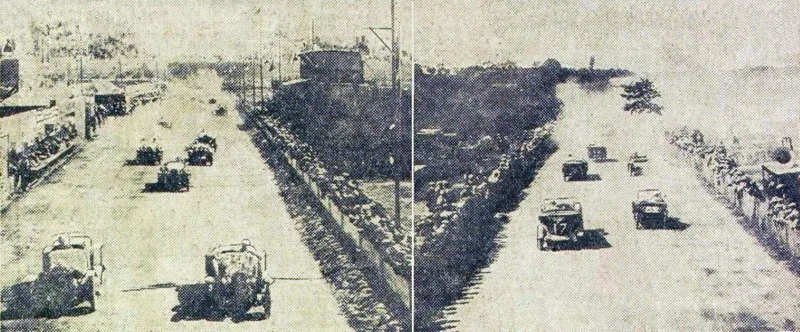
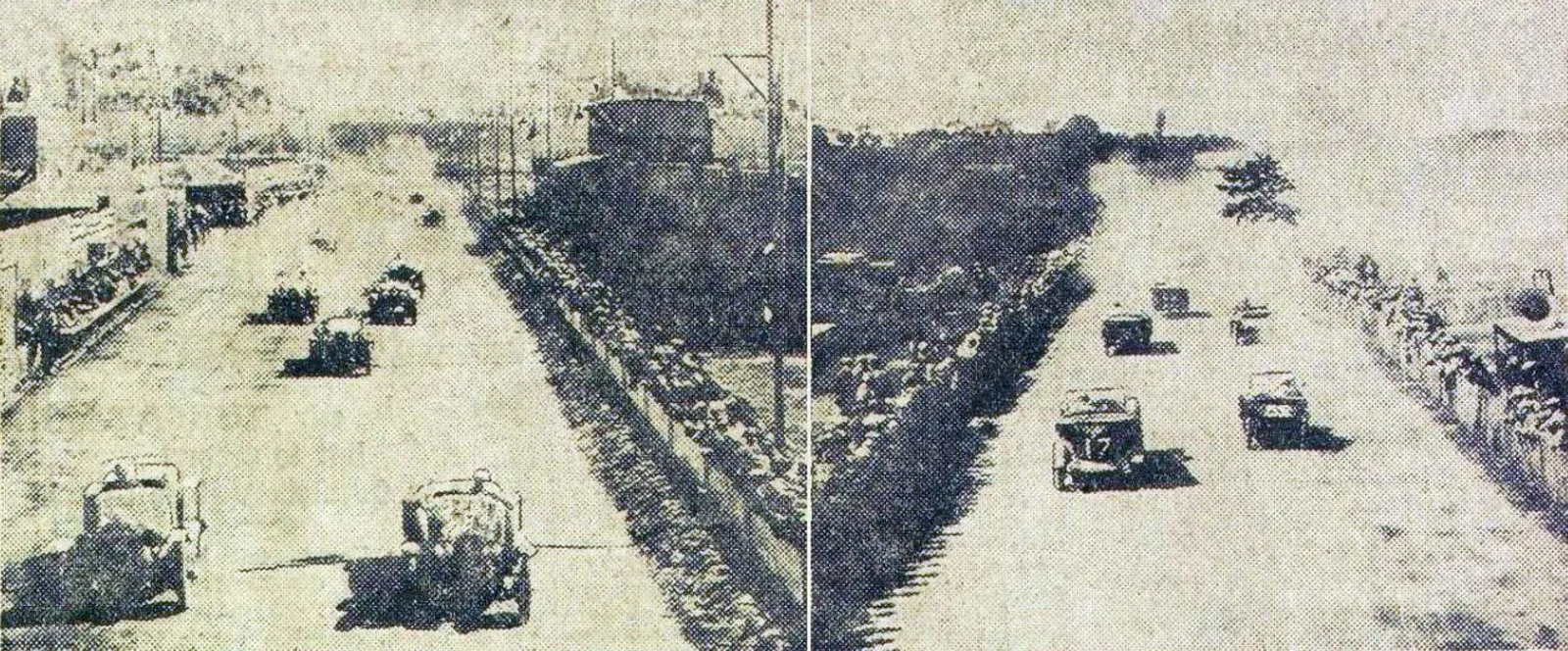
The Automobile Club de l'Ouest kept the hood test but arranged it so every car ran it at the same moment. Drivers lined up on the far side of the track, ran across when the flag fell, raised the hood and only then started the engine. That routine became the Le Mans start, which the race used until 1969.
Prizes gave the teams a reason to get the routine right. The ACO offered FF500 to the quickest car to raise its hood, while a representative of the Truffault-Hartford suspension firm in France offered FF1000 to whichever car led after the first lap. Each hood now had to remain raised for a minimum of twenty laps, roughly two hours, before it could come down.
The fluid rules tightened as well. No liquids could be added after 3pm, which fell in the final hour of the race. Every car also had to take the chequered flag to be classified.
Only seven manufacturers were still in contention for the Triennial Cup, and eight entrants lined up for the Biennial Cup. Target distances stayed on a sliding scale, though the ACO eased them less than it had the year before. Cash prizes went to leading cars at set points and to the quietest and most comfortable entries.
One race, one weekend and two Rudge-Whitworth cups decided by the same set of results.
How did the track change for the 1925 race?
The ACO wanted permanent facilities, but the land around the Les Raineries pit area was too expensive. The organisers moved to ground by the hippodrome on Les Hunaudieres, on the main road from Le Mans to Tours. Temporary pits, lighting and grandstands were erected on the Mulsanne Straight.
The national roads authority widened and sealed the surface around the new pits, which suited the new start.
Who entered the 1925 race?
68 entries were submitted and 55 arrived for scrutineering. Fifteen of those cars came from outside France, from Britain, Italy and the United States, and six tyre companies were represented across the field. Bentley, Sunbeam, AC and Austin came from Britain, while Chrysler made its first appearance for an American team.
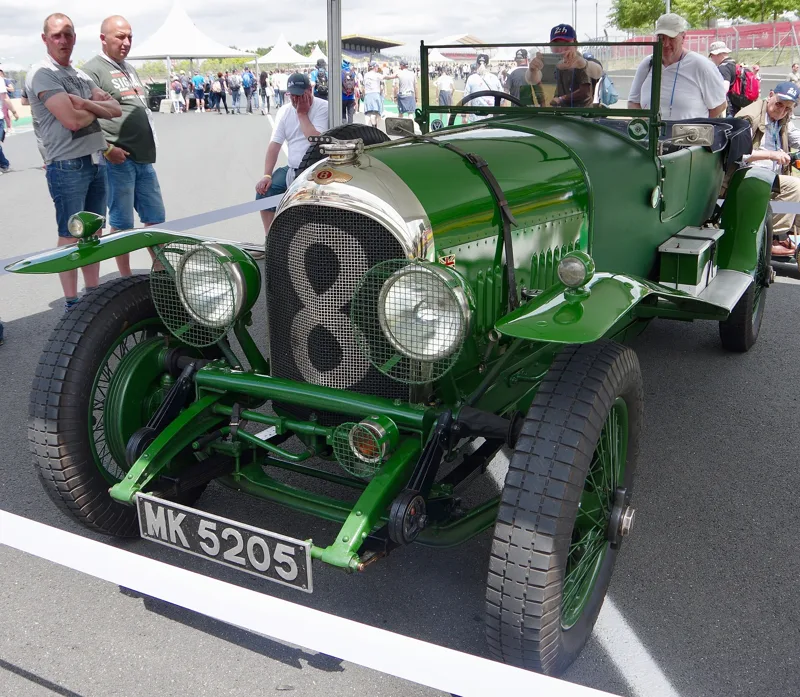
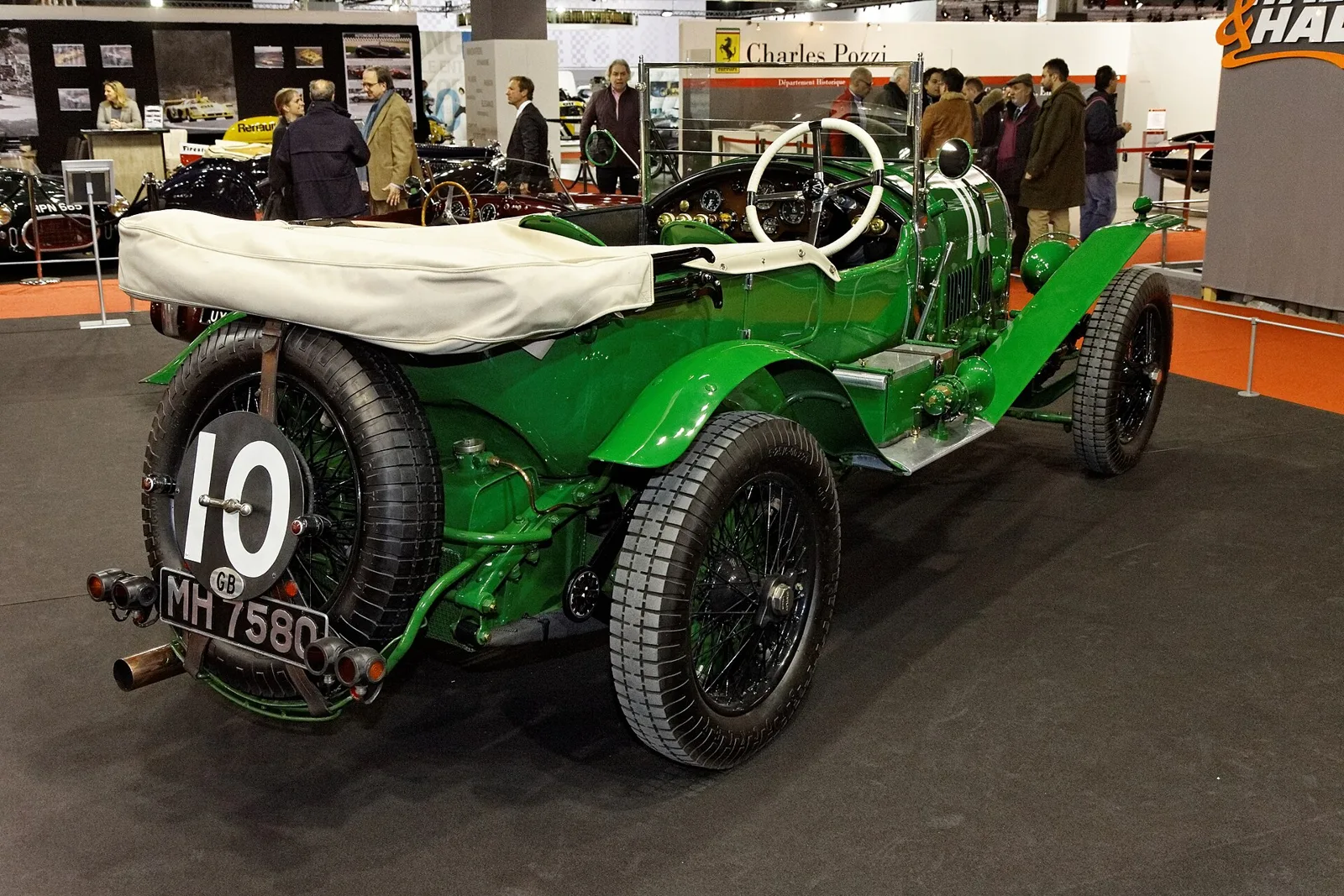
Bentley returned with a works car in support of John Duff's privateer entry, and Duff had the same car he used the year before. The works car ran an uprated 3.3-litre engine, and its drivers were Bertie Kensington-Moir, a Bentley salesman, and Dudley Benjafield, a Harley Street doctor who raced at Brooklands.
Chenard-Walcker had four cars split over two engine sizes, so it could chase the Cups with the small machines and the distance win with the large ones. Leonard and Lagache drove the latest 22CV, which sat lower and now carried a straight-eight of 3.95 litres. The smaller cars took their inspiration from the streamlined Bugatti tank of the period. Henri Toutee's Z1, a racing version of an upcoming tourer, had a 1.1-litre engine producing 50 bhp and four-wheel braking.
La Lorraine-Dietrich came back with three lightened B3-6 cars on Englebert tyres, and the driver line-ups were shuffled from the year before. Sunbeam arrived with two cars built from the production 24/60, using a 2.9-litre engine rated at 90 bhp. Segrave had given the firm a 1923 French Grand Prix victory, a notable result for a British car of its era.
The company had a long history behind it. Sunbeam was founded in 1899, merged with Talbot-Darracq after the war, and built its reputation partly on land speed records. Its two Le Mans cars carried Segrave with George Duller, and Jean Chassagne with the Autocar journalist Sammy Davis.
The biggest car in the field was the Sizaire-Berwick, a 4.5-litre machine rated at 65 bhp. Herbert Austin had bought the firm after its money troubles and fitted his own engines to the cars. The Le Mans example had been built in France, and despite its size it could not match the newer racing tourers.
Italy sent cars for the first time. Diatto ran a Tipo 35 with a 3-litre engine and 75 bhp, together with two smaller cars, and it was run by Alfieri and Ernesto Maserati. OM brought its Superba and a short-wheelbase racing model. Italian drivers included the Grand Prix racers Nando Minoia and Giulio Foresti.
Chrysler made its first Le Mans appearance with a B-70 whose 3.3-litre straight-six produced 70 bhp. Only one of the two planned cars was ready in time, and Henri Stoffel and Lucien Desvaux shared it. The AC Six came from a British firm that had once made a small delivery vehicle called the Auto Carrier, and it was driven by John Joyce and Victor Bruce.
What went wrong in practice?
Practice cost some teams their cars' running time. Leonard's Chenard-Walcker hit a lorry in private practice, and the Sunbeams were sent to a Talbot works in Paris for repairs. On Friday evening Andre Guilbert, a Reval mechanic, was testing a car when he crashed into a delivery van in a head-on collision. He suffered critical leg injuries.
Public roads were closed for practice on the Friday, from 5am to 8am and again from 9pm to midnight. Guilbert died in hospital the following Tuesday. On Saturday morning Omega-Six's owner, Gabriel Daubech, withdrew his three cars after team driver Jacques Margueritte found serious engine problems in trials.
Race figures at a glance
| Item | Detail |
|---|---|
| Dates | 20 and 21 June 1925 |
| Race | 3rd Grand Prix of Endurance |
| Entries | 68 submitted, 55 arrived for scrutineering |
| Cars from outside France | 15 |
| Winner | Rossignol and de Courcelles, La Lorraine-Dietrich |
| Second | Chassagne and Davis, Sunbeam |
| Third | Brisson and Stalter, La Lorraine-Dietrich |
| Triennial Cup | Senechal and Loqueheux, Chenard-Walcker, 13th overall |
| Biennial Cup | Glaszmann and de Zuniga, Chenard-Walcker, 10th overall |
| Fastest lap | A. Lagache, Chenard-Walcker 22CV, 9:10, 112.99 km/h (70.21 mph) |
| Average speed on longest distance | 93.08 km/h (57.84 mph) |
| Longest distance | 2,233.98 km (1,388.13 mi) |
How did the first laps unfold?
Segrave's Sunbeam led after the first lap, chased by the Bentleys, a Lorraine and the two large Chenard-Walckers. The new track surface, the drag of raised hoods and fast race pace caught several teams out on fuel. A stone went through the little Austin Seven's radiator after nine laps.
Fuel trouble hit the Bentleys first. Kensington-Moir had only just taken the lead from Segrave when his car ran dry on the 20th lap near Pontlieue. Duff ran out soon after, and he got back to the pits by illegally carrying a bottle of petrol back to his car. The detour cost him seven laps.
Leonard made the first stop on the 20th lap, and Lagache went out to the cheers of the French crowd. Lagache then lowered his own lap record by 9 seconds.
What caused the fatal crash at dusk?
Marius Mestivier's Amilcar was about to be passed by Andre Pisart's Chenard-Walcker near the Mulsanne corner when it slid off the track and overturned. Mestivier was crushed and killed instantly. It was the first fatality in the history of the endurance race.
Pisart had already lost time on the fourth lap, when a leaking water hose forced 40 minutes of repairs. He reached the pits after the crash but retired the following lap after a burst water hose caused overheating. Segrave's Sunbeam had gone earlier, at 9pm, with a broken clutch, while its sister car had been held up by a sticking throttle.
What happened through the night?
Night brought the worst of the race's accidents. Davis put the second Sunbeam into a ditch and carried on with a bent rear axle. Saint-Paul's Lorraine broke its suspension after midnight and rolled, while Senechal went off in fog near Arnage at 2am.
Davis had been avoiding a backmarker when the car left the road. The team inspected the damage in the pits and decided to carry on despite the axle. Just after midnight, Leon Saint-Paul's Lorraine lost its suspension at speed, spun several times and rolled. Tulio Vesprini, running fifth in a Diatto, stopped to help and remained with the injured driver until medical help came.
Senechal had driven solidly for eight hours before he handed over to Loqueheux at midnight. He was back in the car at 2am when the fog took it off the road at Arnage. Lit by spectators nearby, he built a bridge from fencing, got the car back onto the road and was away again in less than an hour.
The two Bignans ran third and fourth at 10pm, and the Springuel and Clause car was in line for second overall going into Sunday. Both were then delayed and lost time. At 4am, at the halfway mark, Rossignol and de Courcelles had covered 65 laps in their Lorraine and held a two-lap lead over teammates Brisson and Stalter.
A Bentley engine caught fire at a fuel stop and was too badly damaged to carry on.
The morning and the finish
The morning belonged to the Sunbeam. It passed Brisson for second place around 6am, and by breakfast the Lorraines were split by it. Two OMs were running very well in fourth and fifth, and the Rolland-Pilain cars were already held back by their poor fuel economy.
Chrysler had been running steadily before Stoffel went into a ditch with less than two hours to go, trying to avoid a slower car. The crew pushed hard to make up the lost time but finished two laps short of its qualifying distance. The team also took a prize for the quietest car.
Rossignol and de Courcelles crossed the line several laps in front, and ten laps beyond their target distance. Chassagne and Davis held on to second in their Sunbeam, just ahead of Brisson and Stalter in the other Lorraine. The two OMs came home fourth and fifth in a formation finish, and the Danieli brothers finished ahead of their Foresti and Vassaux teammates.
Who won the Triennial and Biennial Cups?
Senechal and Loqueheux won the Triennial Cup in a streamlined Chenard-Walcker 1100, finishing 13th overall after driving for over 20 hours. Glaszmann and de Zuniga finished 10th and took the inaugural Biennial Cup. It was the only Triennial Cup ever handed out.
The two streamlined Chenard-Walcker 1100s ran like clockwork all race. They were also first and second at the midway stage of the next Biennial Cup.
Only one Rolland-Pilain reached the finish, and it took second place in the Triennial standings. The team also received a special cash prize for comfort.
Diatto had a hard race too. Lecot and Renaud retired, while Rubbietti and Vesprini fell two laps short of their target after pushing to make up time lost while Vesprini was helping Saint-Paul. The Lorraine-Dietrich team donated FF1000 to them, and Hartford and Brisson added more.
Why did the 1925 race matter?
The 1925 race marked the peak of Chenard-Walcker's Le Mans story. The company was then France's third-biggest car maker, helped by its endurance successes, and its two streamlined 1100s carried off both cups. It was the company's finest hour at the track.
Lagache and Leonard took the second Spa 24-hours three weeks afterwards. Chenard-Walcker never came back to Le Mans, and its factory team was wound up at the close of 1926, after which the company faded into obscurity.
The wider market was the bigger problem. Lucien Rolland and Emile Pilain had to sell their shares under pressure from the board, and production left Tours for Paris. Diatto suffered when the Italian state fell behind on payments for vehicles it had bought, and the racing side was closed at year's end.