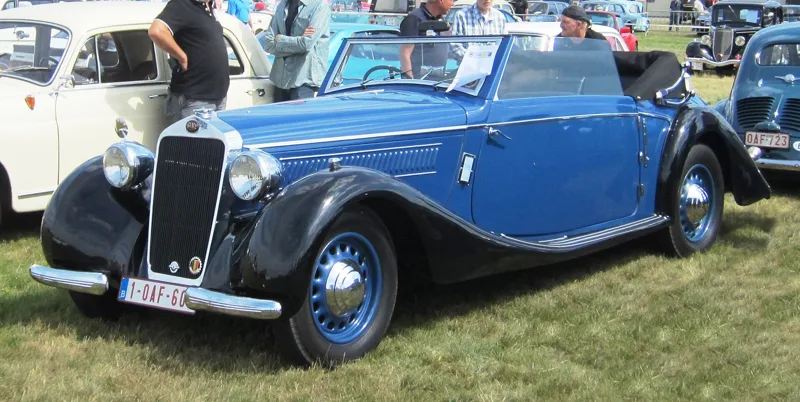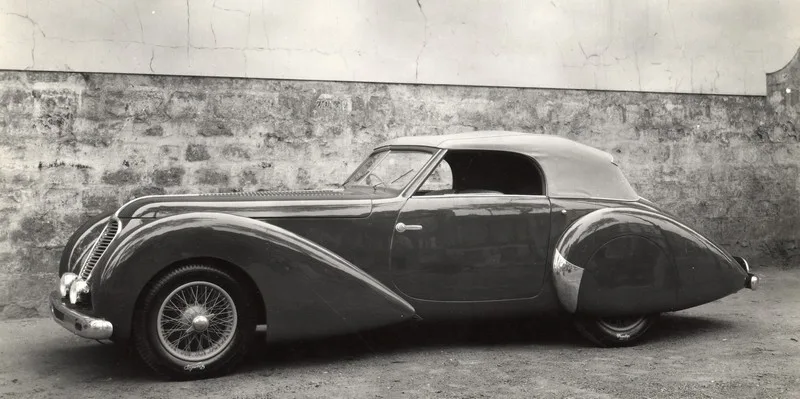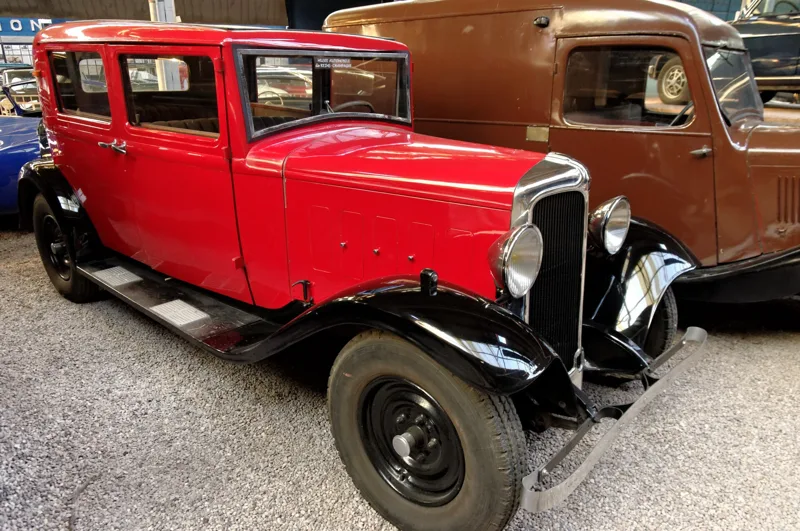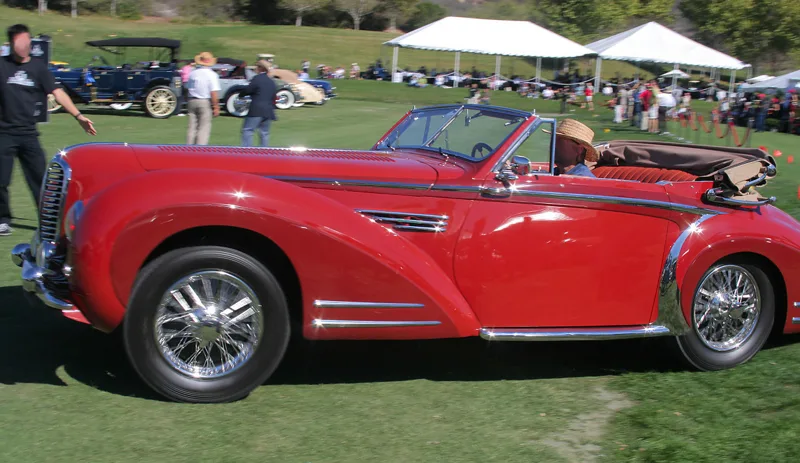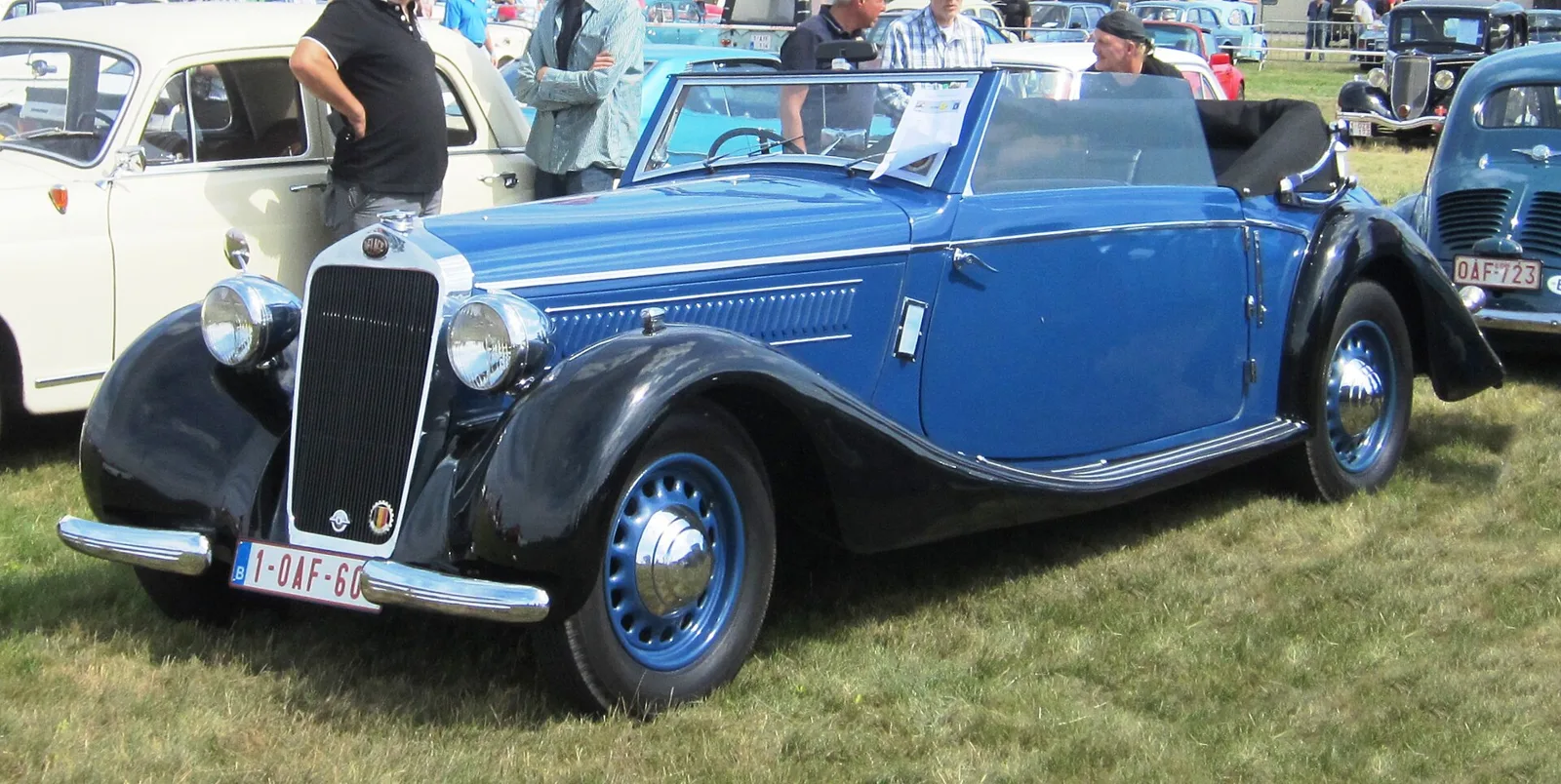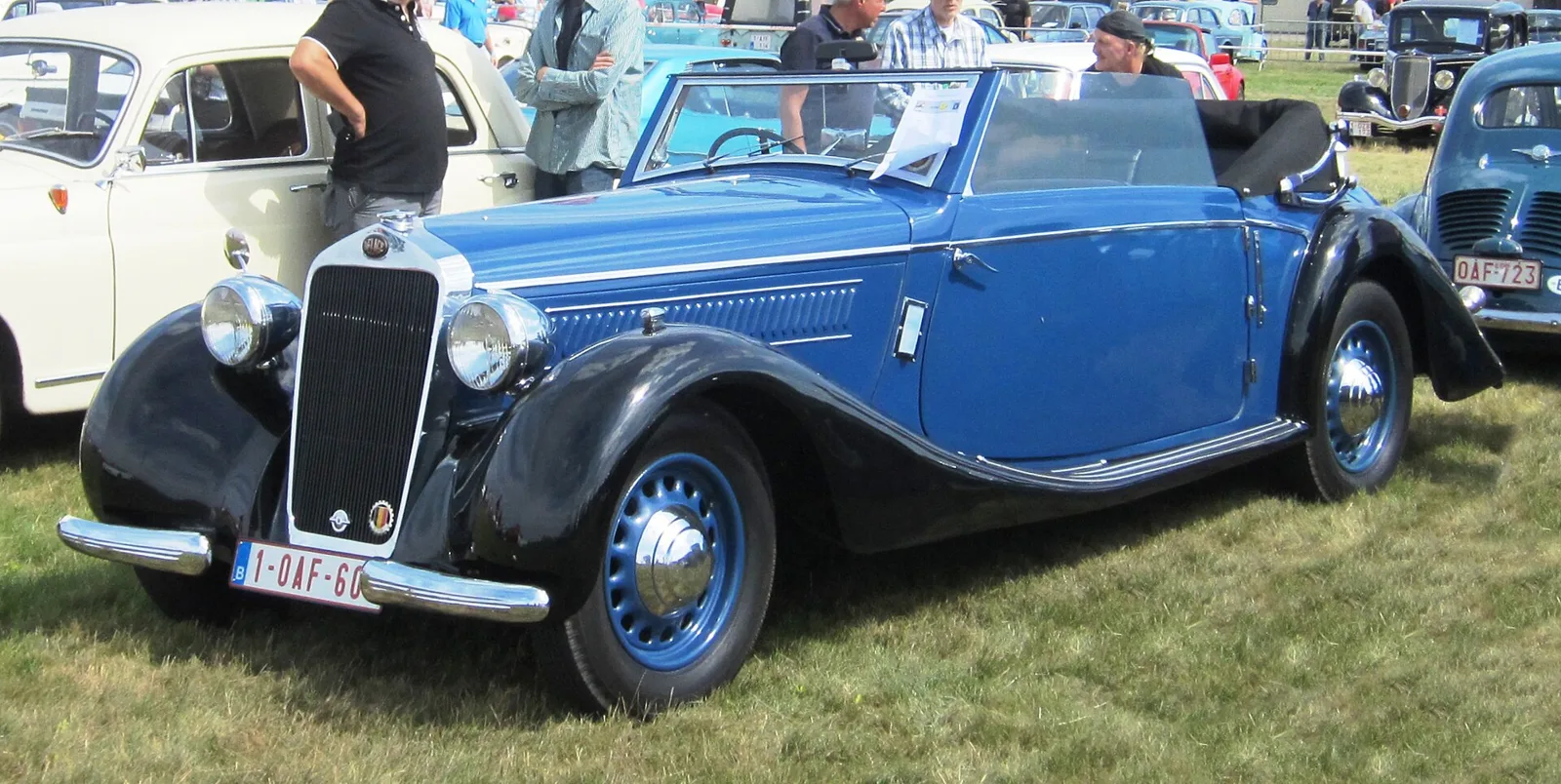
A six-cylinder French luxury car bodied by Paris coachbuilders, built alongside Delahaye models from 1935, with the last cars sold in 1954.
The D6 was a six-cylinder luxury car from the French maker that produced it in two spells, before and after the Second World War. Delahaye took over production in 1935, and the final cars were still being sold in 1954.
The Delage D6 was a six-cylinder French luxury car, built from 1930 to 1940 and again from 1946 to 1953. From 1935 onward, Delahaye built D6 cars alongside its own models, and the final examples were still being sold in 1954.
Why did Delage hand production to Delahaye?
Both the D6 and its larger eight-cylinder sister, the D8, were expensive, and demand was too low to sustain the company. Louis Delage chose voluntary receivership instead of declaring bankruptcy, and the receivership was run by Walter Watney, a prominent Delage distributor.
Delahaye's managing director, Charles Weiffenbach, arranged to acquire the assets of the Delage company. The D8-120 engine derived from Delahaye's Type 135 and gained two cylinders to become an eight.
Production of the D6-70 went on in small numbers until Delahaye stopped at the end of 1954. Walter Watney left France in 1942, and Louis Delage died at the end of 1947.
A six-cylinder French luxury car that Delahaye built alongside its own models from 1935 onward.
How did the D6 engine change over time?
The first D6 had a 3045 cc six-cylinder unit that placed the car in the 17CV tax band. Many later changes enlarged or modified that six-cylinder engine, and the 1930s range sometimes offered two or three engine sizes at once.
The suffix at the end of each model name reflected either fiscal or actual horsepower, so it is the key to telling the versions apart. Although the D6 can be seen as a run of closely related models, the chassis and engine architecture did not differ radically between them.
Engine sizes shifted steadily across the decade. The D6-11 moved to 2001 cc, the D6-65 to 2678 cc, and the D6-60 to 2335 cc.
What set the original Delage D6 apart?
Buyers could pick between two chassis lengths, 3,149 mm (124.0 in) and 3,289 mm (129.5 in). Its 3045 cc engine developed 75 hp, equal to 56 kW, at 3,600 rpm, and production ended in 1933 after 1160 cars had been built.
In 1930 the D6 was one of three Delage models. The others were the slightly lighter DS, which still had six cylinders, and the very large D8. All three faced economic headwinds after the 1929 stock market crashes.
The D6 replaced the Delage DM in 1930.
What was the D6-11 and how was it priced?
The D6-11 was a more economical version of the original car, shown at the 26th Paris Motor Show in October 1932. Its 2001 cc six made 55 hp (41 kW) at 4,000 rpm, and the bare chassis was priced at 31,600 francs in the 1933 price list.
The October 1933 price list offered ten standard body types, all priced high for a car in the 11CV tax band. A long chassis cost 32,600 francs, and a normal-length sports chassis cost 33,600 francs.
Wheelbases were 3,060 mm (120 in) for the normal chassis and 3,260 mm (128 in) for the long one. A lowered version, the D6-11S, was built on a shorter wheelbase and claimed 60 hp (45 kW) at 4,500 rpm. The last D6-11 was built in 1934, and its replacement did not enter production until 1936.
How did production move to Delahaye?
In April 1935 the Courbevoie plant produced the last Delage car built there. Production then moved to the Delahaye factory in the 13th arrondissement of Paris, and Delage kept its own management for a time.
By 1938 Delage had become an affiliate of Delahaye. The D6-65, introduced in 1934 with a 3,378 mm (133.0 in) chassis and a 2678 cc six making 65 hp (48 kW), was replaced in the same period by the D6-60.
What did the D6-60 and D6-80 offer?
The D6-60 had a 2335 cc straight six, which grew to 2528 cc for the 1937 model year. Output climbed from 56 hp (42 kW) to 67 hp (50 kW), reached at 3,500 rpm, and it used a 3,150 mm (124 in) wheelbase shared with Delahaye four-cylinder models.
The D6-80 had a 3,350 mm (132 in) wheelbase. Its first engine was a 3227 cc six making 72 hp (54 kW), and later cars used a 3557 cc six with 90 hp (67 kW) borrowed from Delahaye.
The D6-60 was taken out of production at the end of 1937, and the D6-80 had disappeared from the Delage range by 1938.
What was the D6-70?
The D6-70, introduced for 1937, was effectively a rebadged D6-60S with a 2729 cc straight six listed at 78 hp (58 kW). It shared the D6-60's 3,150 mm (124 in) wheelbase.
How did coachbuilders shape the D6?
Delage supplied the D6 as a bare chassis, and Paris-area bespoke coachbuilders fitted the bodies. The 1933 price list alone offered ten standard body types, so customers had a real choice of style.
Other coachbuilders linked with the car included Henri Labourdette and Marius Franay. After the Delahaye link,
Coachbuilders responded faster to styling trends than the volume makers. Post-war cars also kept their steering wheels on the right, which set the luxury Delages apart from Peugeot, Renault and Citroen models on the road.
What was the post-war D6 3-litre?
Production resumed in 1946 with a single model, the D6 3-litre, which was the only model the company offered after the war. Its 2984 cc six was rated at 90 hp (67 kW), reached at 3,800 rpm, and the manufacturer quoted a top speed of approximately 135 km/h (84 mph).
The post-war car kept the 3,150 mm (124 in) wheelbase that had been standard on the D6 since 1935. A longer 3,330 mm (131 in) option was available for limousine style bodies.
The last D6 3-litre cars were built during the closing months of 1953. The final batch was still for sale in 1954, most of them bodied by Chapron.
What was the D6 Olympic?
The D6 Olympic was a performance version presented in 1946. It added a triple carburettor setup, which lifted output to 100 hp (74 kW) at 4,500 rpm and reached roughly 140 km/h (87 mph).
Three-litre Delage racing cars were much in evidence during the 1948 racing season, and the Olympic version was withdrawn in 1949.
How did the Delage D6 come to an end?
The D6-75 appeared for 1939 and replaced the D6-70. Its production ended in 1940 after the invasion of northern France.
After the war the D6 3-litre continued until 1954, when auto production ended for both Delage and Delahaye. The post-war French economy was hostile to large cars, and in 1954 Henry Ford also left French car making, handing his business to Simca.
Hotchkiss had acquired Delahaye by 1955.
What were the main Delage D6 variants?
The main variants were the original D6, the economical D6-11 with its lowered D6-11S sports version, the D6-65, the D6-60, the D6-80, the D6-70, the D6-75 and the post-war D6 3-litre. The performance Olympic version sat alongside them from 1946 to 1949.
Each variant had its own engine and chassis figures, and the suffix in its name reflected the horsepower class. The D6-65 offered 65 hp (48 kW), the D6-70 78 hp (58 kW) and the D6-75 a quoted 95 hp (71 kW) from its 2798 cc six.
The D6-75 was the last pre-war variant, and its production stopped in 1940.