An America's Cup winner in 1958, a Le Mans team owner and the builder of the B.S. Cunningham Company cars.
Briggs Cunningham was an American sportsman born in Cincinnati in 1907. He is known for helming Columbia to the 1958 America's Cup win and for building and running a sports car team that competed at Le Mans until 1963.
Briggs Cunningham was an American sportsman who built and raced boats and cars from 1930 onwards. He is remembered for taking the helm of the yacht Columbia in its 1958 America's Cup triumph, and for running a team of his own cars at the 24 Hours of Le Mans.
Who was Briggs Cunningham?
Briggs Swift Cunningham II was born on January 19, 1907, in Cincinnati, Ohio, and died in Las Vegas in July 2003. He was an American entrepreneur and sportsman whose best-known achievements came in sailing and in sports car racing, where he worked as a driver, team owner and constructor.
The family fortune came from Cincinnati business. His grandfather worked on river boats and in shipping before moving into meat packing, and his father later founded and led the Citizens National Bank. William Cooper Procter became the boy's godfather.
A sailor and racer who won the America's Cup in 1958 and then built his own cars to race at Le Mans.
What shaped his early years?
His father died when Briggs was five years old, and the estate was arranged so that the heirs did not gain full control until age forty. His maternal uncle, Dr. Ashton Heyl, was a former Rough Rider who had fitted a Hispano-Suiza aircraft engine to a Dodge touring car.
He was schooled at Groton and at the Hill School in Pottstown, Pennsylvania, and then went to Yale. He also served as a brakeman on the Olympic bobsled team.
On October 2, 1929, he married Lucie Bedford. The honeymoon in Europe brought him a concours win in a Mercedes Benz SS and his first major race, the 1930 Monaco Grand Prix.
How did he serve during the Second World War?
He tried to join the US Navy but was ruled ineligible because of his age and a pre-existing condition. He joined the Civil Air Patrol instead, and his patrols over the east coast began in a Fairchild before he moved to a Sikorsky S39B amphibian that he had paid for himself.
How did he become a sailor?
Cunningham joined the Pequot Yacht Club at seventeen and raced Star Class boats there. He said that his wife taught him to sail, and in 1928 he and his father-in-law, Frederick T. Bedford, bought the eight meter Loke together.
In 1929 he acquired the six meter Akaba and gave her the name Lucie, the first of two boats he would name that way. He then commissioned Clinton H. Crane to design a second six meter, also named Lucie, which the Nevins Boatyard in New York built in 1931.
He won six world titles in six meter yachts. The same year that the new Lucie was built, he sailed as crew on Dorade, which took the Fastnet race. In 1937 he crewed for Harold Stirling Vanderbilt on the yacht Vim.
After the war he acquired the schooner Brilliant, which had belonged to the Coast Guard, and modified it to increase its speed. In 1953 he gave the Brilliant to Mystic Seaport, where it served as an offshore classroom. The Brilliant was also the first vessel fitted with the improved downhaul he had invented, which now bears his name.
What was the 1958 America's Cup win?
He was a member of the group that commissioned the 12 meter sloop Columbia for the 1958 race. The original skipper, Cornelius Corny Shields, was sidelined by heart trouble, and Cunningham took over and led the crew to victory.
It was the first post-war America's Cup race, and the boat he had backed took the trophy.
Why did he start racing cars late?
Out of concern for his mother, who feared the dangers of automobile racing, he held off on driving until she had died. In the meantime he raced sailboats competitively and was among the early members of the Road Racing Drivers Club.
He began racing internationally in 1930 with the Collier brothers, Cowles Miles Collier and Sam Collier, who were college friends. Together they helped establish the Automobile Racing Club of America in 1933, and that body later became the Sports Car Club of America in 1944.
He competed in the first ever SCCA race, and he was later described as one of the most successful SCCA sports car drivers of his time.
What was his racing team like?
His team turned up with a big transporter, fitted out in great detail, along with drivers, professionals, mechanics and cars. Its chief mechanic was Alfredo Momo, who went on to prepare several of the team's later cars.
Which early cars did he build or race?
The Number 5 Special, the only sprint car he owned, used a Ford Model T inline four-cylinder engine. Its chassis, drivetrain and running gear came from a 1939 Buick Century, while the body and radiator were taken from a wrecked Mercedes Benz SSK.
The Bu-Merc did not finish at the 1940 Worlds Fair Grand Prix after an accident. At the first Watkins Glen Grand Prix in 1948 it finished second, and in 1950 Cunningham took third there after a 1949 Straight-8 upgrade.
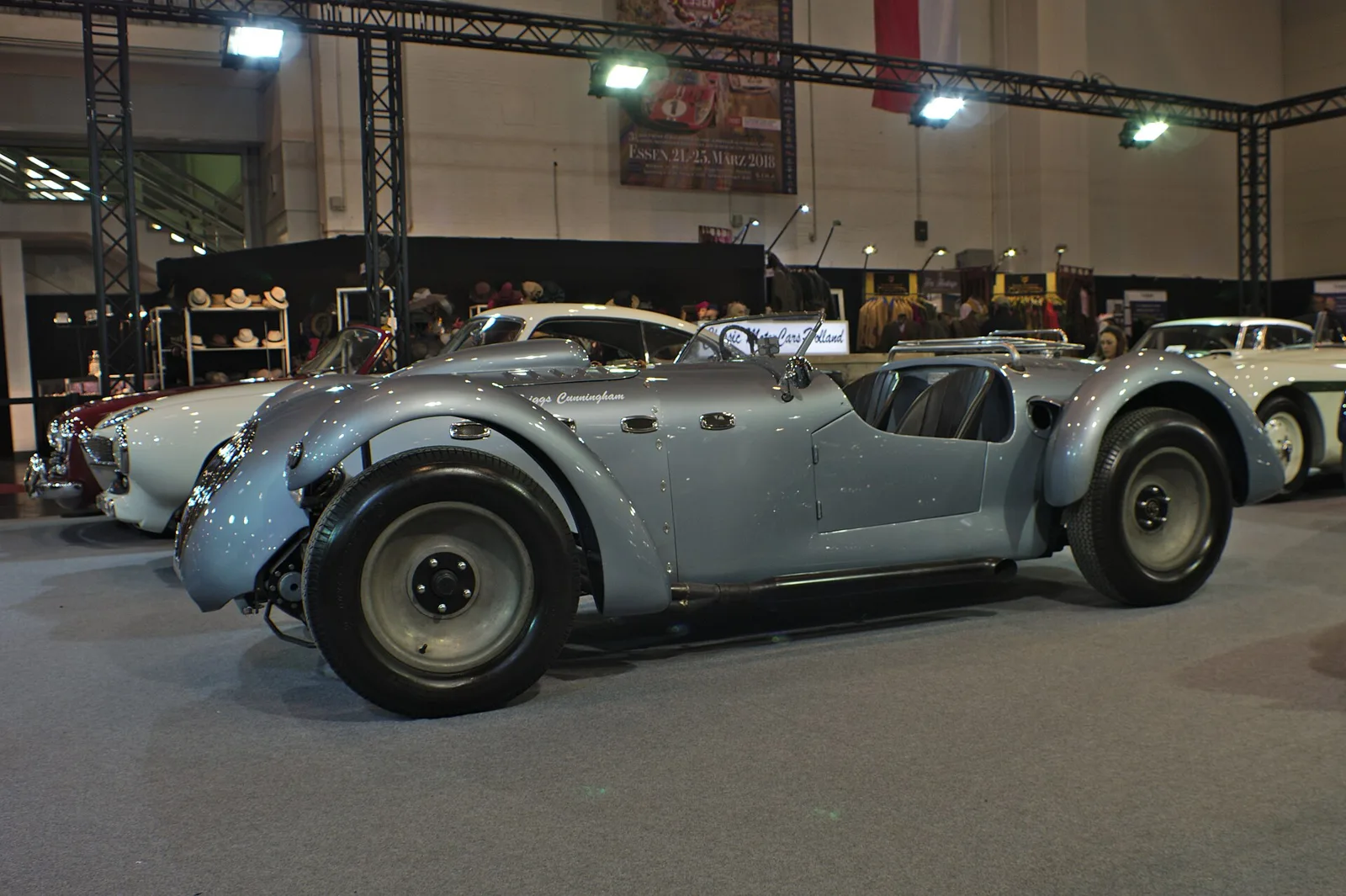
In 1950 the Cadillac-Healey Silverstone finished second at Palm Beach, and later that year Cunningham was at the wheel again at Watkins Glen. Sam Carnes Collier was killed in that race while driving Cunningham's Ferrari.
The Cadillac-Healey also appeared at Sebring on December 31, 1950, finishing twelfth overall and third in class with Phil Walters and Bill Frick.
What happened at Le Mans in 1950?
Cunningham's plan to enter a Fordillac hybrid was rejected by the organisers, so he entered two Cadillacs instead. The stock-appearing Series 61 was dubbed Petit Pataud by the French, while the second car, with a new aluminium body, became Le Monstre.
Petit Pataud finished tenth, driven by the Collier brothers. Le Monstre, shared by Cunningham and Phil Walters, finished eleventh. The body of Le Monstre was designed with engineer Howard Weinmann, and the car used five carburetors.
How did the B.S. Cunningham Company cars develop?
After buying Frick-Tappet Motors and moving the operation to West Palm Beach, Florida, Cunningham created the B.S. Cunningham Company. Its first product, the C-1, used a 331 cu in Cadillac V8 engine, and only one was built.
Later cars followed a clear line of development. The table below sets out the main models from the C-1 to the C-6R, with the engine or key feature of each and what it achieved.
| Model | Engine or key feature | What it did |
|---|---|---|
| C-1 | Cadillac V8 of 331 cu in, later a Chrysler FirePower V8 of the same size | One built |
| C-2R | Three racing cars similar to the C-1 | First appeared at Le Mans in 1951 |
| C-3 | Upgraded Chrysler FirePower V8 in a road car | Built to homologate for Le Mans, with 25 examples |
| C-4R | Two roadsters and a single C-4RK coupe | Raced first at Le Mans in 1952 |
| C-5R | Chrysler V8 with extra power | Named Le Requin Souriant, the smiling shark |
| C-6R | Four-cylinder Offenhauser from Meyer and Drake | Retired on lap 202 at Le Mans in 1955 |
The C-4R roadsters were designed by G. Briggs Weaver, and the C-5R was prepared for Le Mans in 1953. The final company car model moved away from the Chrysler V8 to an Offenhauser four-cylinder.
Which other cars did his team run?
In 1949 Cunningham bought a Ferrari 166 Spider Corsa, numbered 016-I, from Luigi Chinetti, and he did so in partnership with Alfredo Momo. That car was the first Ferrari raced in the United States, and it came before the Lister and Maserati cars that followed in later seasons.
In 1958 two Lister-Jaguar Knobblies won the SCCA C Modified championship for the team, prepared by Alfredo Momo. In 1959 the Lister-Costin took another title in the same class, with revised bodywork by Frank Costin.
What happened at Le Mans in 1960?
In 1960 the displacement rules changed to allow larger engines. With General Motors' tacit support and help from Zora Arkus-Duntov, Cunningham prepared three Corvettes for the race, and he also entered a Jaguar E-Type.
Drivers included Cunningham with Bill Kimberley, Dick Thompson with Fred Windridge, and John Fitch with Bob Grossman, while Dan Gurney and Walt Hansgen shared the Jaguar. The first Corvette went off and burst into flames, and the second retired with a mechanical problem, as did the Jaguar.
The third Corvette began to overheat, and crew members packed the engine in ice to cool it. It finished eighth overall, and it also took fifth in the GT category and a class win in its GT division.
How did his later racing go?
In August 1960 he bought a Maserati Tipo 60 Birdcage and shared it at Le Mans in 1961 with Jim Kimberly, and the duo took eighth overall and third in class.
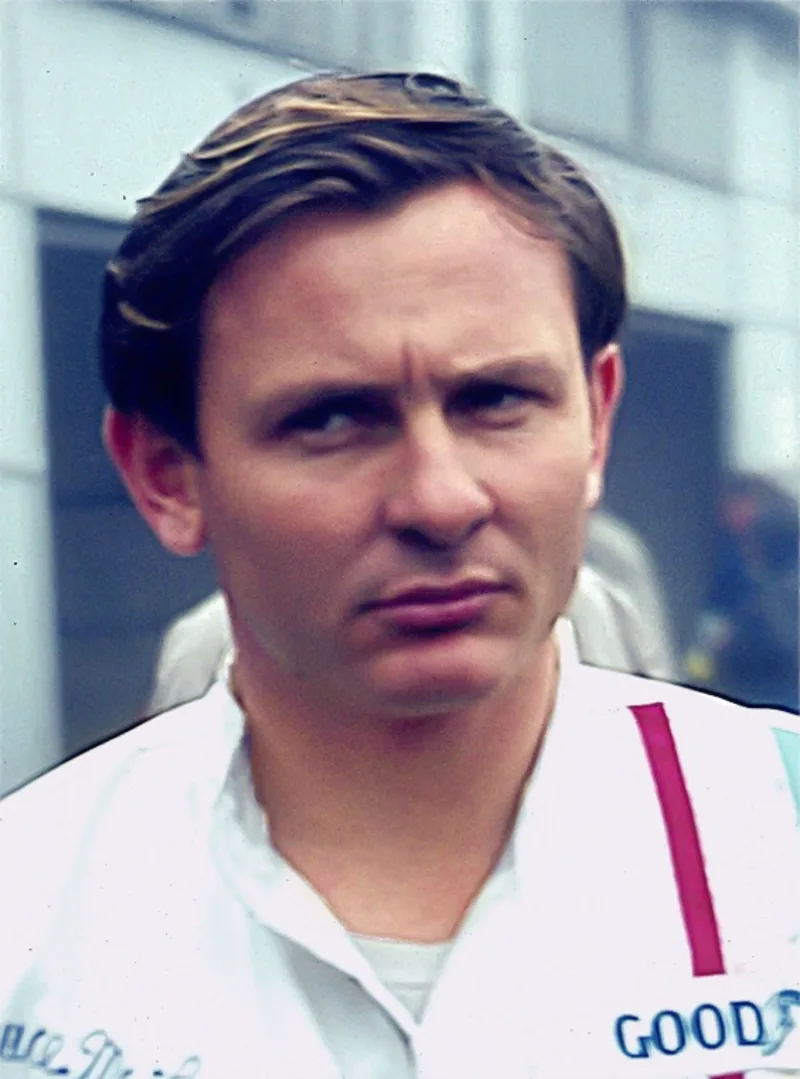
In October 1961 a Cooper T53 that Cunningham owned appeared at the US Grand Prix, Walt Hansgen drove it, and he crashed on lap 14 during his F1 debut. The chassis passed to Roger Penske and later to Bruce McLaren, who raced it as the first McLaren team car.
Cunningham also backed a Fiat-Abarth coupe, prepared by the Momo Corporation, which Bruce McLaren drove to win the 1961 3 Hours of Sebring in the Grand Touring class up to 1 L.
In 1962 two Maserati Tipo 151 coupes failed to finish at Le Mans. In 1963 he entered a Jaguar E-Type Lightweight that finished ninth, and the Le Mans operation was wound up that year. He ended his professional racing in a Porsche 904 at Sebring in 1966, sharing it with John Fitch and Davey Jordan.
What became of the museum?
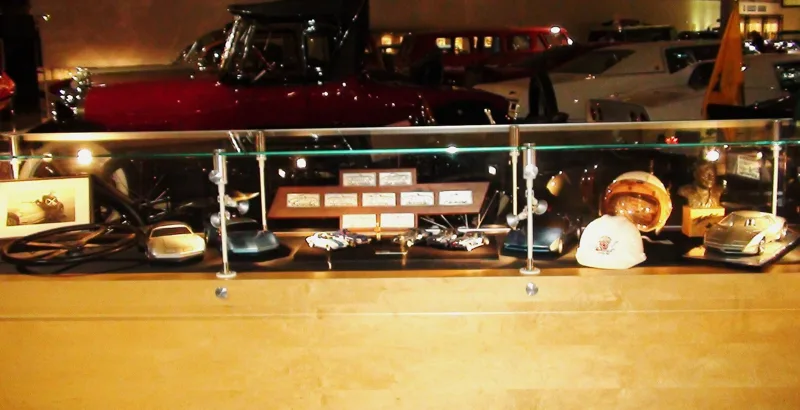
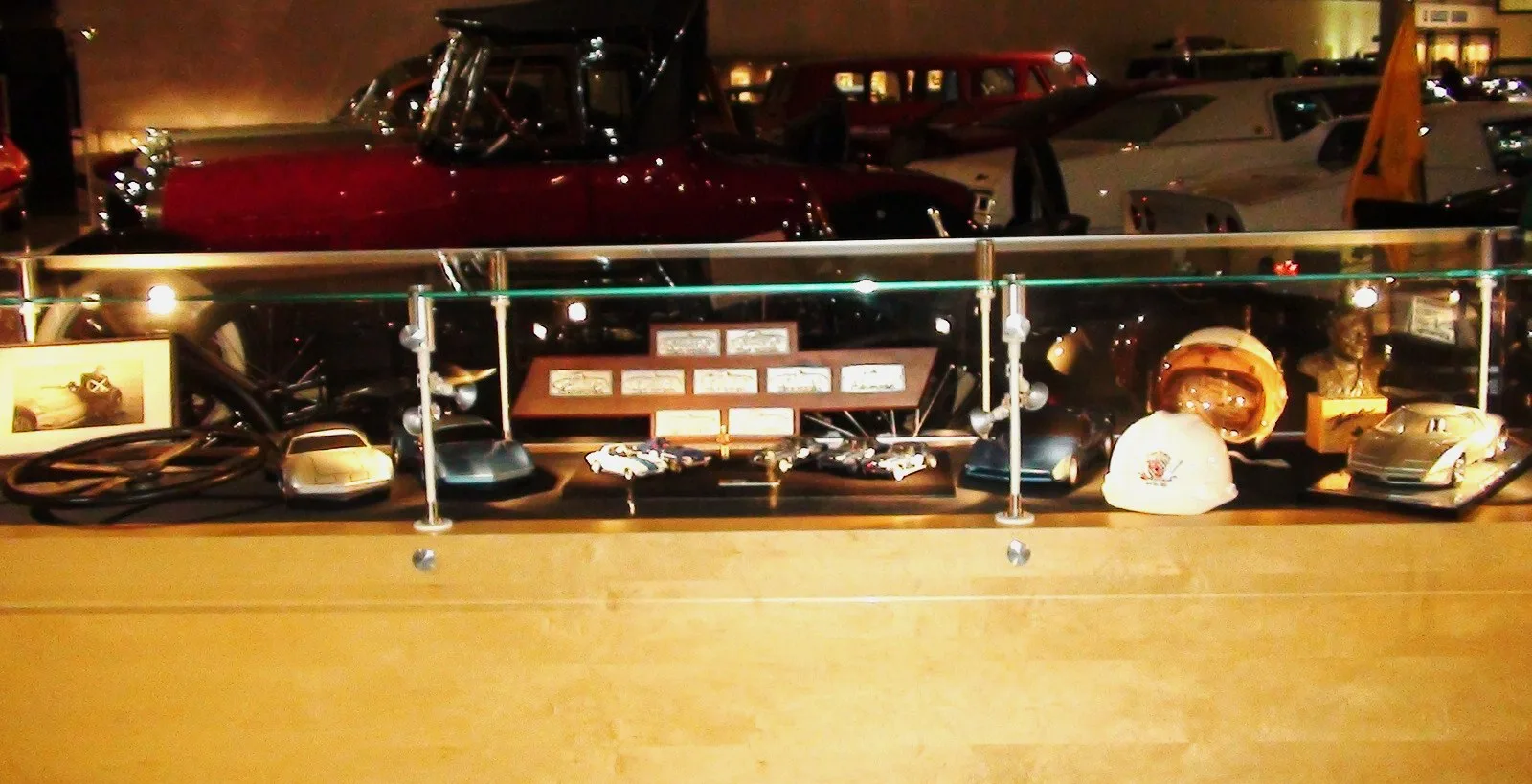
After relocating to the West Coast, Cunningham acquired a property in Costa Mesa and set up the Briggs Cunningham Museum to house his cars. The gallery building measured 40,000 sq ft, and the museum officially opened on February 5, 1966.
The museum ran for twenty-one years. In late 1986 Cunningham considered closing it because of expected changes to capital gains tax, but instead the 71 cars in the collection were sold to Miles Collier and moved to Naples, Florida, where they became the Collier Automotive Museum Collection.
What recognition did he receive?
He appeared on the cover of Time magazine on April 26, 1954, along with three of his racing cars. In 1981 his cars were the first American make shown at the Monterey Historic Automobile Races, and his cars were honoured at the Pebble Beach Concours d'Elegance that same year.
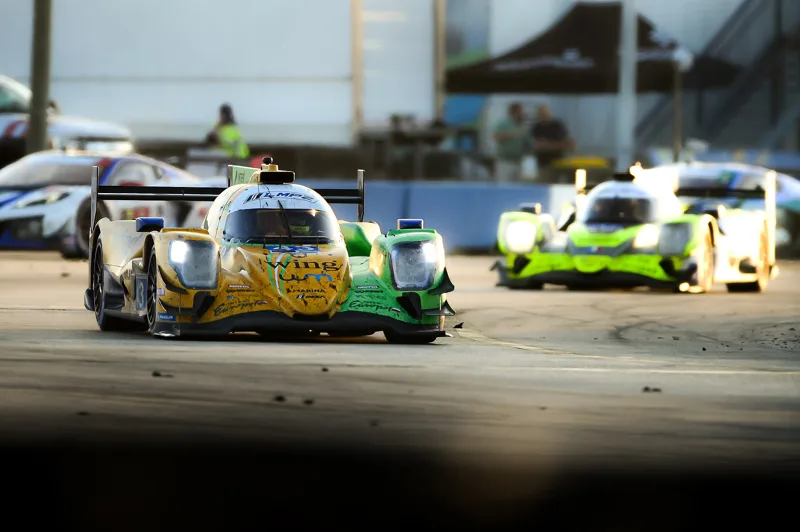
He joined the America's Cup Hall of Fame in 1993, and in 2003 the International Motorsports Hall of Fame also recognised him. Sebring International Raceway has a turn called Cunningham Corner, which honours him and his team.