From Berlin engineering school and Ardun cylinder heads to Porsche class wins at Le Mans and a Corvette Grand Sport that General Motors ordered destroyed.
Born Zachar Arkus on 25 December 1909, Zora Arkus-Duntov became a key engineer behind the Chevrolet Corvette. He made four Le Mans starts, won his class there in 1954 and 1955, and died in Detroit on 21 April 1996.
Zora Arkus-Duntov was a Russian-born American engineer and racing driver who helped shape the Chevrolet Corvette and earned the nickname Father of the Corvette. Before that work he had built a name with engine development in New York, and his racing took him to Le Mans from 1952.
Who was Zora Arkus-Duntov and where did his early life take him?
Zachar Arkus was born in Brussels, Belgium, on 25 December 1909, into a Jewish Russian family. His parents later divorced, and his mother's new partner, the electrical engineer Josef Duntov, joined the household, so Zora and his younger brother Yura took the hyphenated name Arkus-Duntov.
The family moved to Berlin in 1927. His early ambition to drive a streetcar gave way to motorcycles, and his first motorised vehicle was a 350 cc machine that he rode at nearby tracks and on the city streets.
He graduated from the Technische Hochschule Charlottenburg in 1934 and began writing engineering papers for German motor publications. In Berlin he met the young dancer Elfriede Wolff, and the couple married in February 1939, shortly before the Second World War began.
After the war began he joined the French Air Force. When France capitulated he secured papers from the Spanish consulate in Marseilles, which covered his own household as well as his brother and parents. The party then reached New York by ship from Portugal.
Father of the Corvette, a Le Mans class winner twice, and an engineer whose Grand Sport was ordered destroyed before it could race.
How did Arkus-Duntov's Ardun company begin?
In 1942 the brothers founded the Ardun Mechanical Corporation in Manhattan, a name that blended Arkus and Duntov. The name reflected the partnership at the heart of the venture. Ardun initially made dies and punches for ammunition, then parts for aircraft.
In 1947 Ardun introduced its own aluminium, overhead-valve cylinder heads for the flathead Ford V8. The overhead design was meant to fix the chronic heat problem of the valve-in-block flathead, and the heads raised power output noticeably.
Ardun grew to around 300 staff before a partner's questionable financial decisions brought the company down. Earlier, he had made two attempts with a Talbot-Lago at the Indianapolis 500, in 1946 and 1947, and missed the field each time.
Around that time a British company invited him to England, and he left the United States to take up the offer.
How did Arkus-Duntov's Allard and Porsche racing come about?
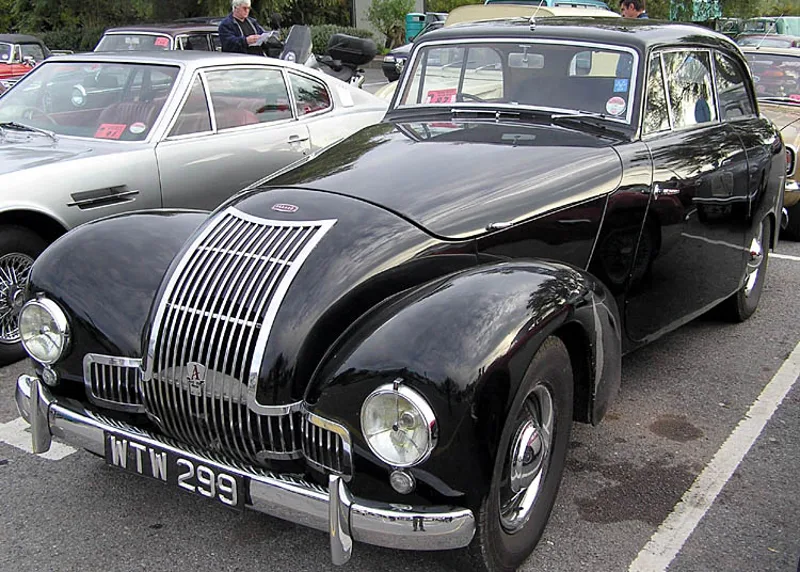
Arkus-Duntov moved to England to develop the Allard sports car and co-drove it at the 1952 and 1953 Le Mans races. Those results led to an invitation to join the Porsche team, where he went on to win his class at Le Mans in 1954 and 1955.
His goal at Allard was to prepare the company's cars for Le Mans. The owners, Sydney Allard and his wife Eleanor, noticed his work, and Carroll Shelby was also racing Allard machines in those years.
With Porsche he raced a 1100 cc 550 RS Spyder at Le Mans in those two years, winning his class each time.
How did Arkus-Duntov join General Motors and Chevrolet?
In 1953 Arkus-Duntov joined General Motors, having first seen the Motorama Corvette in New York City. The car looked striking to him, but its underpinnings disappointed him. That single encounter shaped the rest of his career, and it led straight to the Chevrolet job he took that spring.
He wrote to Chevrolet chief engineer Ed Cole, saying he would be glad to work on such a handsome car, and he enclosed a paper on a method of calculating a car's top speed. Maurice Olley then invited him to Detroit, and on 1 May 1953 he took up a post as assistant staff engineer at Chevrolet.
Soon after starting he set out his thinking in a memo on hot rodders and Chevrolet's image. It laid out how Chevrolet could challenge Ford's hold on customisers and racers, and how to make the Chevrolet V8 more attractive to them.
By 1957 he led high-performance vehicle work at Chevrolet as its Director. Earlier, in 1955, he had helped introduce the small-block V8 to the Corvette, which gave the car much-needed power.
He showed what the engine could do by climbing Pikes Peak in 1956 in a pre-production 1956 Bel Air, setting a stock car record. That year in Daytona Beach he took a Corvette to a record of 150 mph (240 km/h) across the flying mile.
He also developed the Duntov high-lift camshaft and pushed fuel injection onto the Corvette in 1957. He is also linked to four-wheel disc brakes on a mass-produced American car.
Why did Arkus-Duntov clash with Bill Mitchell over the C2 Corvette?
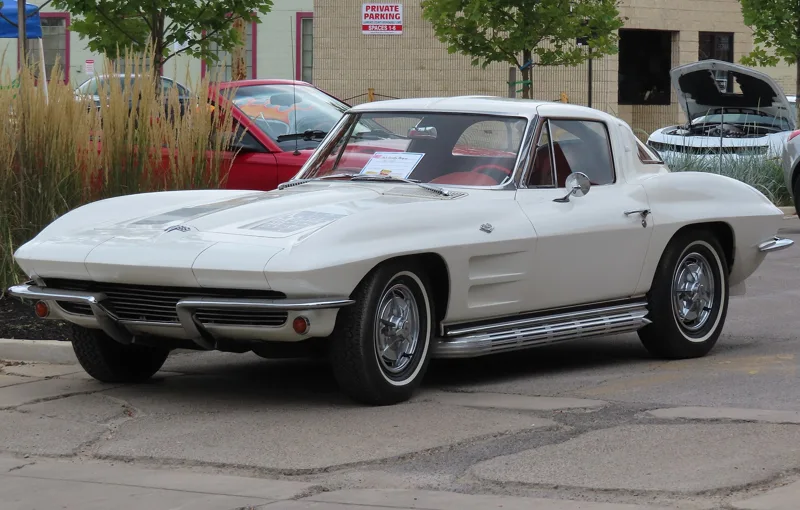
Arkus-Duntov clashed with Chevrolet chief designer Bill Mitchell over the C2 Corvette Sting Ray. Mitchell's design had a long hood and a split rear window, which Arkus-Duntov believed obstructed the driver's view, and the split window was replaced by a one-piece backlite the next year.
Mitchell's version had an extended hood, a raised windsplit running across the roof and a rear pillar that cut the back window in two. Arkus-Duntov argued that the hood hurt forward visibility and the pillar blocked the view behind the car.
The split rear window was widely criticised, and the change to a one-piece backlite followed the next year.
What went wrong for the Corvette SS at Sebring?
The Corvette SS was designed for Le Mans, and its test race was the 12 Hours of Sebring. Brake lock trouble that John Fitch could not solve sent the car out on the 23rd lap after a quick tyre change had allowed him to keep going.
Arkus-Duntov designed and built the first sports Corvette in 1956, making three copies. His proposal for a Corvette racing team led to his promotion to head the high-performance car unit in 1957.
The SS was given a magnesium body with Le Mans in mind, while a fibreglass test mule helped the engineers feel confident about their work. Time was short, and the racing car had not been fully tested before Sebring.
Despite the setbacks, the new Corvette drew public attention and set a new lap record. For Chevrolet it became clear that Le Mans would have to wait, and the situation for Arkus-Duntov's unit grew more complicated soon after.
How did the Gentleman's Agreement affect racing in America?
The 1955 Le Mans accident, which claimed 83 lives, changed attitudes to motor racing. Protests led many manufacturers to pull out, and the American Automobile Manufacturers Association recommended that members refuse to race. Those events were the background to the American position on racing.
Several further accidents, and reports of government involvement, led to the Gentleman's Agreement of 1957. GM, Ford and Chrysler, as AMA members, stopped taking part in organised racing, and Chevrolet's explicit racing support ended.
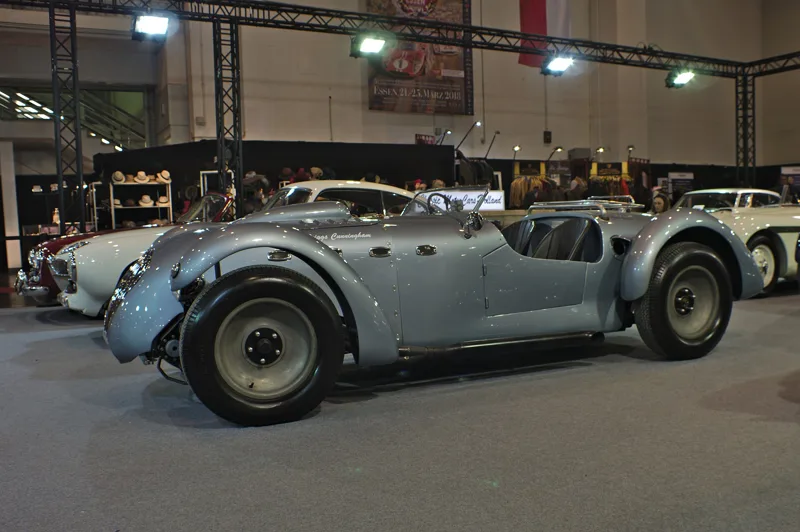
Arkus-Duntov could not halt the agreement. At his insistence, Briggs Cunningham's team reworked three Corvettes in the 24 hours before Le Mans, each with a 283-horsepower fuel-injected V8. They finished 10th, while the winners were the Ferrari, Aston Martin and Porsche cars that had no official development limits.
In 1962 GM, under heavy pressure from the US government, stopped supporting motorsport. By 1961 General Motors held about 53% of American car sales, drawing the attention of the Justice Department.
What was the Corvette Grand Sport project?
The Grand Sport was a lightweight racing Corvette that Arkus-Duntov developed in 1962 to race internationally against the Shelby Cobra and against prototypes from Ferrari, Ford and Porsche. Its weight was cut from the standard car's 3,199 lb (1,451 kg) to 1,900 lb (862 kg).
The Grand Sport's engine was an aluminium small-block V8 that produced 550 hp at 6,400 rpm. Its body panels were thin fibreglass, and the car used a ladder chassis built around tubular main rails of 4.5 in (114 mm) diameter.
Aerodynamics also mattered. Recessed door handles, hidden headlights, gills on the hood and openings behind the wheels were added to manage the lift and the airflow.
GM's board learned of the project and ordered the cars to be closed and destroyed. Arkus-Duntov stopped work but gave three cars to the Texas tycoon John Mecom and hid the other two in a Chevrolet research garage.
Private racers, including Dick Doane and Grady Davis, tested cars before the programme was stopped. Officials refused to approve the car for racing, since only five of the required 100 examples had been built.
Even so, the car took the ACC title in 1963, and Dick Thompson, known as the Flying Dentist, drove chassis #004 to that success.
GM then asked for the cars back and told him to stop racing. Arkus-Duntov upgraded chassis #003, #004 and #005 with air vents and wider 9.5 inch wheels, and lateral acceleration fell from 1.9G to 1.1G.
The upgraded cars went to the Nassau Trophy race in the Bahamas, where they beat their rivals by 10 seconds and left the Shelby Cobra and the Ferrari GTO behind. The programme still ended, and the last surviving #002 chassis was auctioned for $4.9M in 2009.
What did Arkus-Duntov do after the Grand Sport?
After the Grand Sport, Arkus-Duntov started the CERV II project in 1964. By 1967 he had risen to Chief Engineer for the Corvette. His later work culminated in the Corvette's engineering leadership. His engineering career kept moving through the decade.
He stepped back in 1975, handing the Corvette chief engineer's post to Dave McLellan. Afterwards he remained active in the Corvette community and joined several halls of fame, including the Automotive Hall of Fame.
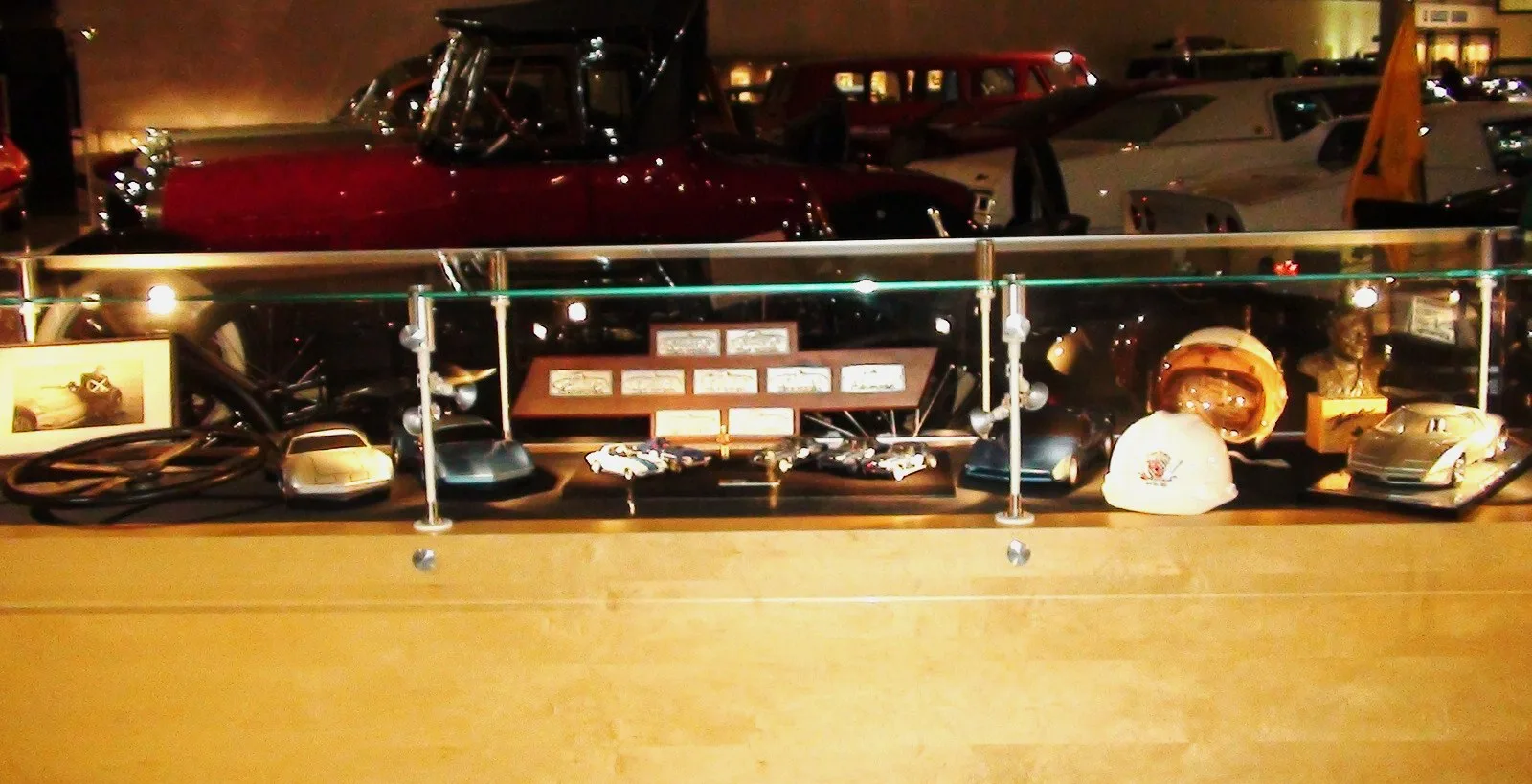
In 1992 he helped unveil the one-millionth car at Bowling Green. In 1994 he drove a bulldozer at the groundbreaking for the National Corvette Museum.
A 2024 conversation with Tadge Juechter recalled a mid-1990s design review of the upcoming fifth-generation Corvette, where the retired engineer had been a guest. After seeing the changes, Arkus-Duntov remarked that the engine was still at the front.
How was Arkus-Duntov remembered at his death?
Arkus-Duntov died in Detroit on 21 April 1996. His ashes rest in Bowling Green, Kentucky, at the museum dedicated to the car, and George Will wrote in his obituary that anyone who did not mourn him was not a good American.
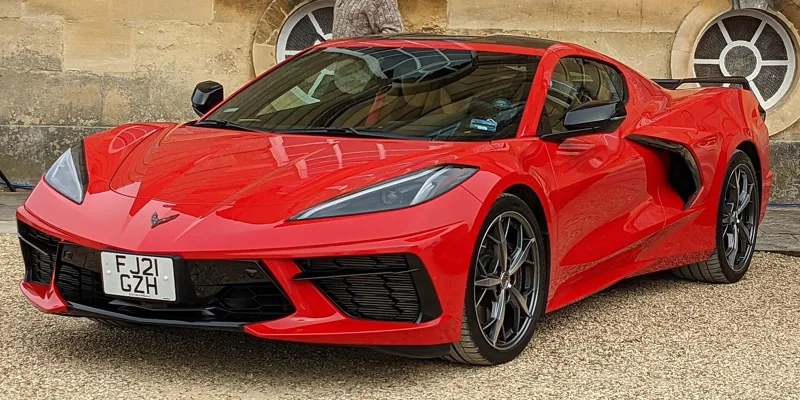
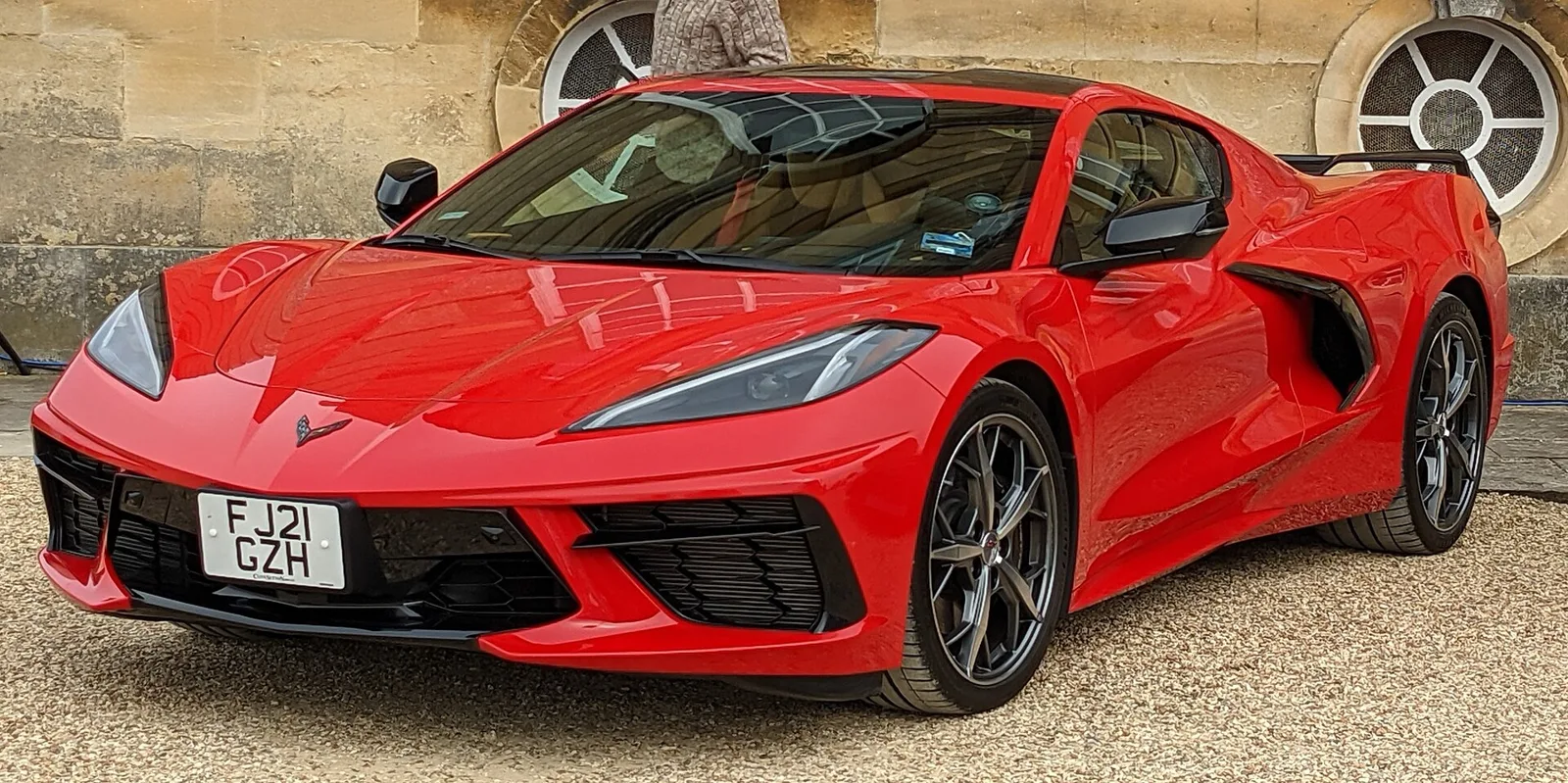
Despite his CERV I and CERV II projects and many mid-engine studies, GM did not approve a mid-engine Corvette until 2019, with the eighth-generation C8. Observers later noted stickers on a camouflaged pre-production car that resembled his profile.
Career highlights at a glance
| Year | Role | Result | Highlight |
|---|---|---|---|
| 1909 | Birth | Born Zachar Arkus | Brussels, Belgium |
| 1952 | Le Mans | Co-driver for Allard | 24 Hours of Le Mans |
| 1954 | Le Mans | Class winner | Porsche 550 RS Spyder |
| 1955 | Le Mans | Class winner | Porsche 550 RS Spyder |
| 1956 | Pikes Peak | Stock car record | Pre-production 1956 Bel Air |
| 1956 | Daytona Beach | Record | 150 mph (240 km/h) over the flying mile |
| 1957 | Chevrolet | Promotion | Director of High Performance Vehicles |
| 1963 | ACC championship | Winner | Corvette Grand Sport, chassis #004 |
| 1967 | Corvette | Chief engineer | Led the Corvette engineering team |
| 1996 | Death | Detroit | Ashes placed at the National Corvette Museum |