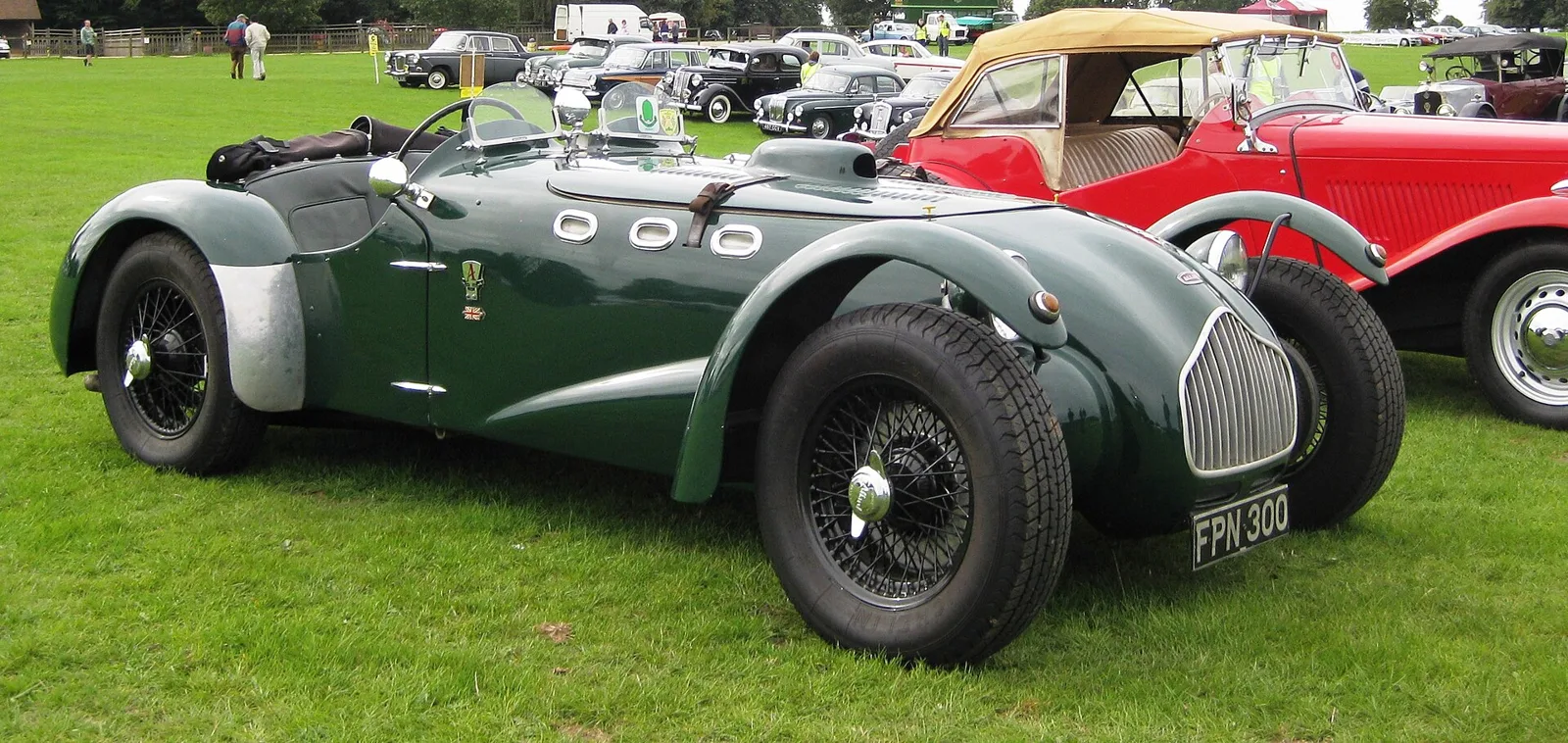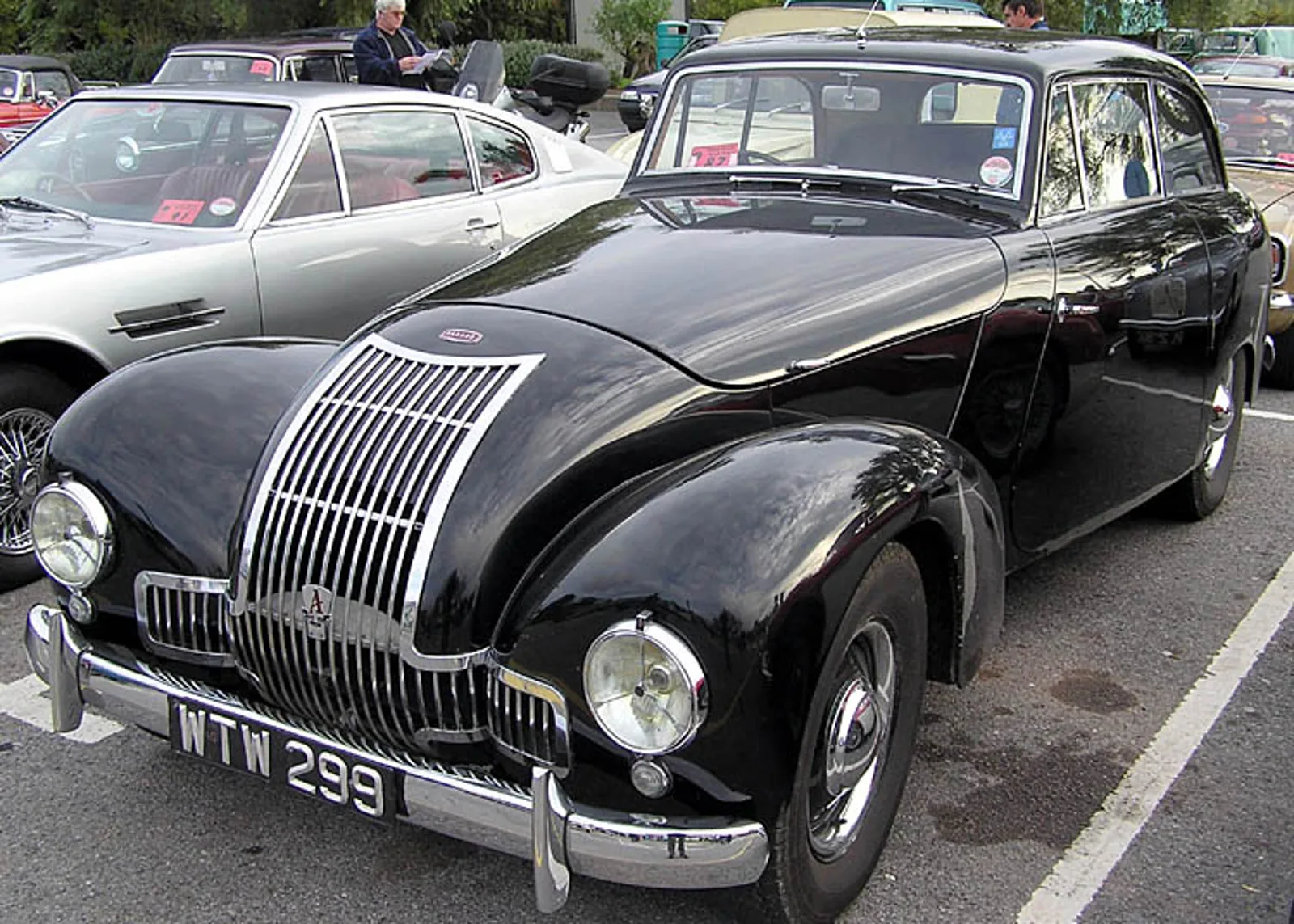
The Allard founder won the 1952 Monte Carlo Rally, finished third at Le Mans in 1950 and pushed drag racing into Britain in the early sixties.
Sydney Allard founded the Allard car company and was also a successful rally and hill-climb driver. He won the 1952 Monte Carlo Rally, finished third at the 1950 24 Hours of Le Mans and pioneered British drag racing with the Allard dragster. He died in 1966.
Sydney Allard was a British businessman and driver who founded the Allard car company. He won the 1952 Monte Carlo Rally, came third at Le Mans in 1950 and built the Allard dragster that helped launch British drag racing. He died at his home in Surrey in 1966.
Where did Allard's motorsport career begin?
Allard was born in London on 19 June 1910 to a family that ran Adlard Motor, a Ford dealership in Clapham. In 1929 he started racing a Morgan three-wheeler at Brooklands, and at the Cyclecar Club's meeting that August his machine took the first race.
He attended Ardingly College in Sussex and then became a director of the family business. Marriage to Eleanor May came in 1936, and their son Alan later raced a dragster to real success.
By 1933 he was taking part in trials, and that year he withdrew from the London-Exeter Trial in an Allard special built from his converted Morgan. In 1935 he won his class at the Brighton Speed Trials with a Ford V-8. The following April he took a 50-mile handicap race on the sands at Southport.
A British driver and businessman who won Monte Carlo, raced Le Mans and then took drag racing to Britain.
How did he fare in hill climbs and speed trials before the war?
His best prewar result came at the first Prescott Hill Climb in May 1938, where he set a sports car record of 54.35 seconds in a Lincoln V12-engined Allard Special belonging to Ken Hutchison. That season he also raced as one of the Tailwaggers, alongside Hutchison and Guy Warburton.
In July 1939 he won his class at the Lewes Speed Trials in 22.12 seconds, and that event proved to be the final speed contest in England before the Second World War. At Horndean he had also recorded the fastest time, only for the car to turn over past the finish line. His passenger, Bill Boddy, walked away unhurt.
In 1937 he had attempted to climb Ben Nevis. The car crashed and rolled, but he escaped with nothing worse than bruising.
What did Allard do during and after the war?
During the war the Adlards Motors repair works in Fulham, which Allard ran for the Army, fixed Ford trucks and Jeeps under Ministry of Supply contracts. By 1943 the firm had 225 workers and was overhauling more than 30 vehicles each week.
His first meeting after the war was the Filton event on 28 October 1945, and he set about rebuilding the car business. Production was hampered by rationing of petrol, shortages of materials and export quotas. A 1947 dealer advertisement offered places on the quota list for early delivery.
What were his hill climb and rally results after the war?
The 1949 British Hill Climb Championship went to Allard, who drove the Steyr-Allard he had built himself around a war surplus air-cooled V8. He placed third in 1947 and again in 1948, finished second in 1950, and took third in 1951 after the car was switched to four-wheel drive.
His rallying ran alongside the climbs. In 1949 Allard cars took the team prize at the Monte Carlo Rally, and Sydney finished 24th himself. A year later he was eighth in the same event, but at the Targa Florio in Sicily his Allard crashed and caught fire.
What were his later Monte Carlo appearances like?
Allard's Monte Carlo appearances did not end with his 1952 win. In 1963 he took a class victory in a Ford Allardette, navigated by the Australian Tom Fisk, and the pair reached Monte Carlo unpenalised after starting from Glasgow. It was a strong finish to a rally career that had begun almost thirty years earlier.
The following year brought a setback. In 1964 he hit a level crossing in Czechoslovakia in a Ford Cortina and retired, and 1965 was his final Monte Carlo outing.
What did he build in the late 1950s?
In 1958 he put together a sprint and hill climb machine with a Steyr engine bought from Dennis Poore. It took class honours at the Shelsley Walsh and Prescott events. At Brighton that year he placed third among unlimited sports cars, covering the standing kilometre in 25.99 seconds.
He then turned to a twin-engined four-wheel-drive Steyr prototype, a complicated machine that was never successfully run. It was soon abandoned, and the early signs of his interest in American drag racing began to show.
How did Allard's Le Mans races go?
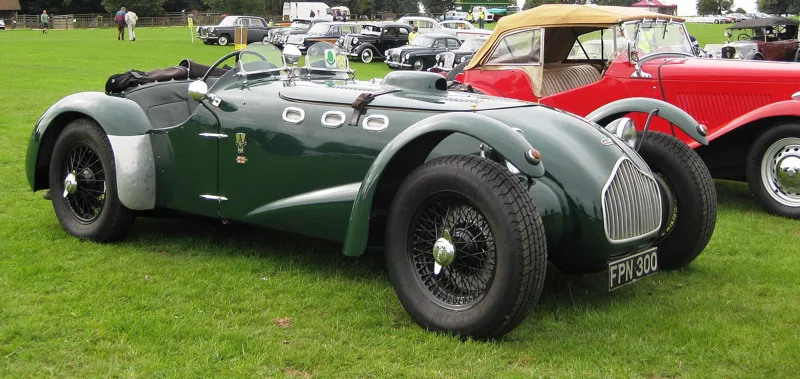
Allard came third at the 1950 Le Mans 24 Hours with Tom Cole Jr., even though a gearbox fault left them running in top gear for hours. The crowd gave him the nickname The hissing madman, a reference to the whine of his engine.
Every one of his Le Mans starts in 1951, 1952 and 1953 ended without a finish. The 1951 race saw him paired with the American Tom Cole in a works J2, and a gearbox problem brought that run to an end. In 1952 he partnered Jack Fairman in the J2X, a Chrysler hemi car, which retired at 6.30 a.m. after its engine failed.
In 1953 he drove a Cadillac-engined J2R with Philip Fotheringham-Parker. The pair were ahead at the close of the opening lap, but Allard was out on lap four with a broken rear suspension and a damaged brake line.
Other figures tied to the Allard story include Zora Arkus-Duntov, who drove a sister car at Le Mans in 1952 and 1953, and Carroll Shelby, who raced an Allard-Cadillac J2 early in his career. The formula is credited with inspiring the Corvette and the Shelby Cobra.
How did the 1952 Monte Carlo win come about?
Allard won the 1952 Monte Carlo Rally driving an Allard P1, with Guy Warburton as co-driver and Tom Lush as navigator. The event started in Glasgow, and his winning margin over Stirling Moss, who was in a Sunbeam-Talbot 90, was very narrow.
Moss was competing in his first rally and came second. The P1 used a 4,375 cc Ford V8 with side valves, and Eleanor Allard entered the event with her sisters, though she retired. The win was Allard's first major international recognition, and it gave his cars a reputation abroad.
How was the Allard dragster built?
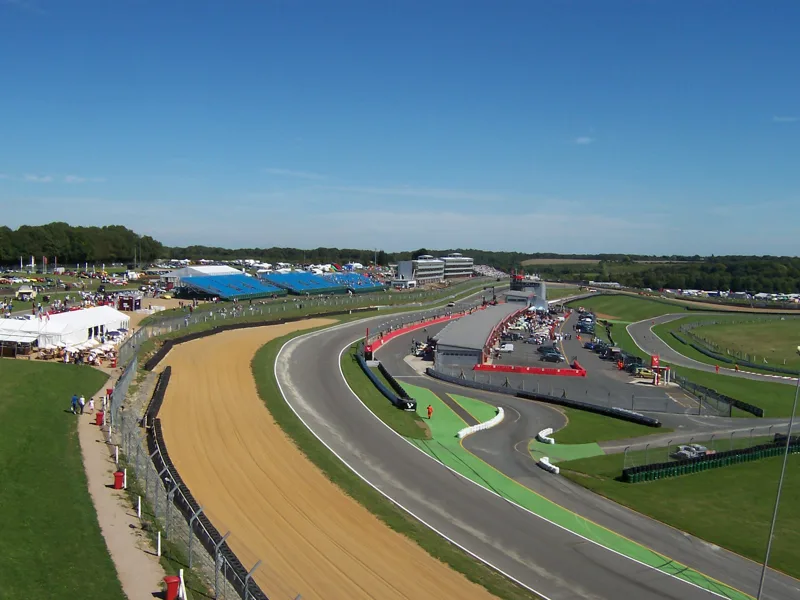
Work on the dragster took 23 weeks, running from January to June 1961, at Adlards Garage in Clapham. The car used a supercharged 354 cubic inch Chrysler engine with a 6-71 GMC blower, and it made its first public appearance at Brands Hatch in July 1961.
Some of its speed equipment came from Dean Moon in California. The car was demonstrated at Silverstone on 24 July, running without bodywork, and the gearbox failed on that occasion.
The debut went badly. On 2 September 1961 at Brighton a fuel line ruptured, and the car covered the kilometre on four cylinders in 37.91 seconds. Bill Boddy of Motor Sport labelled the outing a fiasco, and The Autocar called the dragster a gallant failure.
Later outings were more encouraging. At Wellesbourne Aerodrome in October 1961, the dragster ran the standing quarter mile in 10.841 seconds. At Debden in April 1962 it reached 10.48 seconds, which was the fastest quarter-mile figure recorded in Britain at the time.
What happened on the dragster's later runs?
At Church Fenton the car managed a standing kilometre in 20.86 seconds and a standing quarter mile in 11.54 seconds. Engine trouble returned in 1963, when two rods broke through the block at Madeira Drive, Brighton. It was a familiar problem for a car whose reputation had never fully recovered from its early failures.
By then the dragster looked old-fashioned next to American machinery. Mickey Thompson's Ford-powered car came to Brighton that year, and Allard had earlier brought Dante Duce and Thompson to England. He later received the SEMA trophy in recognition of his performances at the races.
What did Allard do to promote drag racing in Britain?
In January 1964 he unveiled the Dragstar Dragon, a cheap dragster sketched by John Hume that could be bought as a kit for under 500 pounds sterling. He founded the British Drag Racing Association in June 1964 and became its first president. Its early drivers included his son Alan, Gerry Belton and the journalist Denis Jenkinson.
The International Drag Festivals of 1964 and 1965 brought American cars and drivers to Britain. The 1964 series ran six events at airfields and RAF stations. Visiting drivers included Tommy Ivo, Tony Nancy, Don Garlits and Dante Duce.
Alan and Gerry Belton showed their dragsters at Monza during the 1964 Italian Grand Prix weekend. The 1965 Blackbushe weekend was ruined by torrential rain and was a financial disaster. Drag Festivals Ltd was forced into liquidation, although the Woodvale event limited the losses, and there Alan Allard covered the standing quarter mile in 9.30 seconds.
What were the main milestones in his career?
| Year | Event | Result |
|---|---|---|
| 1929 | Cyclecar Club meeting, Brooklands | Morgan wins the first race |
| 1938 | Inaugural Prescott Hill Climb | Sports car record, 54.35 seconds |
| 1949 | British Hill Climb Championship | Champion in the Steyr-Allard |
| 1950 | 24 Hours of Le Mans | Third with Tom Cole Jr. |
| 1952 | Monte Carlo Rally | Overall win in the Allard P1 |
| 1961 | Brighton Speed Trials | Fuel line fails, 37.91 seconds |
| 1962 | Debden standing quarter mile | 10.48 seconds |
Seen together, the entries show a driver who moved from trials to rallies and then to the drag strip.
How is Allard remembered?
The International Drag Racing Hall of Fame honoured him in 1991, and the British Drag Racing Hall of Fame followed in 2007. Both inductions came after his death in 1966, and he is often called the father of British drag racing. As founder of the Allard car company, his name stayed with the marque after he stopped driving.
Place names also keep his memory alive. Allard's Gap at the Prescott Hill Climb recalls a 1947 accident at a Bugatti Owners' Club meeting, when he went through a hedge. There is also an Allard bend at Craigantlet near Belfast and an Allard corner just after the start at Thruxton.