A bomber training base, a handicap-race winner driven to the start, and concrete seams that throw sparks. How the 12 Hours of Sebring became a fixture of the endurance calendar.
The 12 Hours of Sebring is a sports car endurance race held on the site of a wartime airfield in Florida. The circuit opened in 1950, the first 12 Hours ran on 15 March 1952, and its rough concrete surface makes it a severe test of reliability, often used to prepare for Le Mans.
Sebring's first race, on New Year's Eve 1950, went to a tiny Crosley Hot Shot that its entrant had simply driven to the circuit. A Cadillac-powered Allard covered more ground, yet the result stood, because the race was run under a handicap rule, the Index of Performance.
Seventy-odd years on, the 12 Hours of Sebring is a pillar of American endurance racing.
How did a wartime airfield become a racetrack?
The circuit occupies part of the old Hendricks Army Airfield, where B-17 pilots trained between 1941 and 1946. It lies deep in Florida, roughly 70 mi (110 km) from Orlando and 140 mi (230 km) from Miami.
Alec Ulmann, an aeronautical engineer of Russian-American background, came to Hendricks after the war while scouting places to hand military aircraft over to civilian use. He spotted the runways and service roads as a ready-made course for a sports car endurance race along the lines of the 24 Hours of Le Mans, an event he hoped to echo in America. The track opened in 1950 as a road course styled after the circuits of European Grand Prix racing.
That first event, the Sam Collier 6 Hour Memorial, drew thirty cars from across North America. Frits Koster and Ralph Deshon won in the Crosley, which Victor Sharpe had driven there. The Cadillac-engined Allard went farther, but the Official Sebring Record Book lists the Crosley, with its far smaller engine, as the winner. The winning car now sits in a Tennessee museum, the Edge Motor Museum in Memphis.
The first 12 Hours of Sebring followed 14 months later, on 15 March 1952. It is famous for racing once around the clock, starting in daylight and finishing at night.
The bumpy concrete seams that throw sparks from the undercarriages are the point: Sebring is seen as harder on cars and drivers than Le Mans.
Why did Sebring matter so much in the 1950s?
For two decades from 1953 the 12 Hours was a round of the FIA's top sports car series, known at different times as the International Championship for Makes and as the World Sportscar Championship. In the 1950s it sat on the same calendar as Le Mans, the Mille Miglia, the Targa Florio, the Carrera Panamericana and the RAC Tourist Trophy, a sign of its standing.
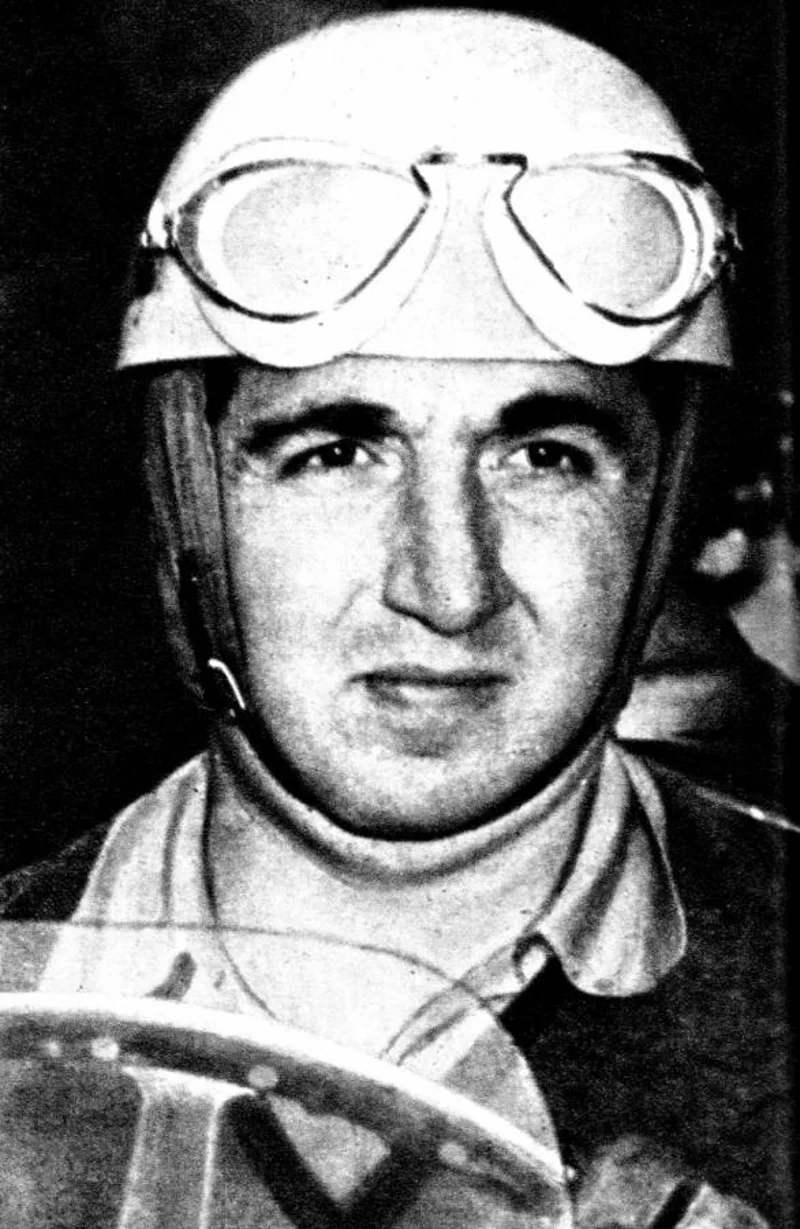
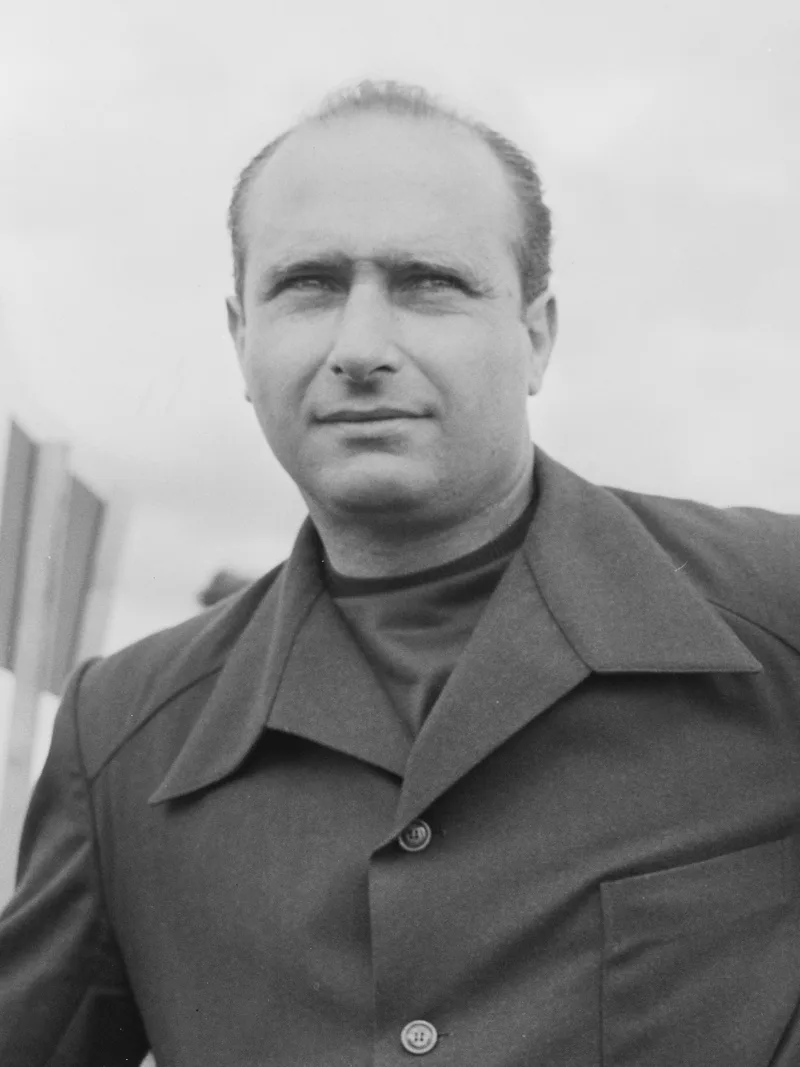
For European teams and drivers it was the biggest race in America. In the 1950s it was the one event that drew the major European factories across the Atlantic in numbers, and with them a good deal of international press. America had no Formula One Grand Prix until 1959. The stars of the era came: Mike Hawthorn, Stirling Moss, Nino Farina, Alberto Ascari and Juan Manuel Fangio, whose win in the 1957 12 Hours was the only American race the five-time world champion ever took.
In 1959 Sebring hosted the first American Formula One race, as that year's United States Grand Prix. Poor attendance and high costs sent the next one to Riverside International Raceway in southern California. The Indianapolis 500 had counted for the Formula One world championship from 1950 to 1960, but European and British teams largely ignored it and never treated it as a true Grand Prix.
What is the Sebring track like?
There are three layouts: the Club Circuit, the Short Circuit and the Full Circuit. The full course is 3.741 mi (6.021 km) long, with seventeen turns, long straights, several fast corners and some slow, technical ones. Many of the corners are named for early teams and drivers. Because Florida is so flat there is very little elevation change and little camber, which makes the circuit especially challenging in the rain.
The surface is the star. Parts of the course still run on old World War II landing field sections laid as concrete slabs with large seams, and the joins are rough enough that sparks fly from the undercarriages. Much of the track has deliberately been left as the original runway concrete. Of the full lap, 3.04 mi (4.89 km) is asphalt and 0.7 mi (1.1 km) is concrete.
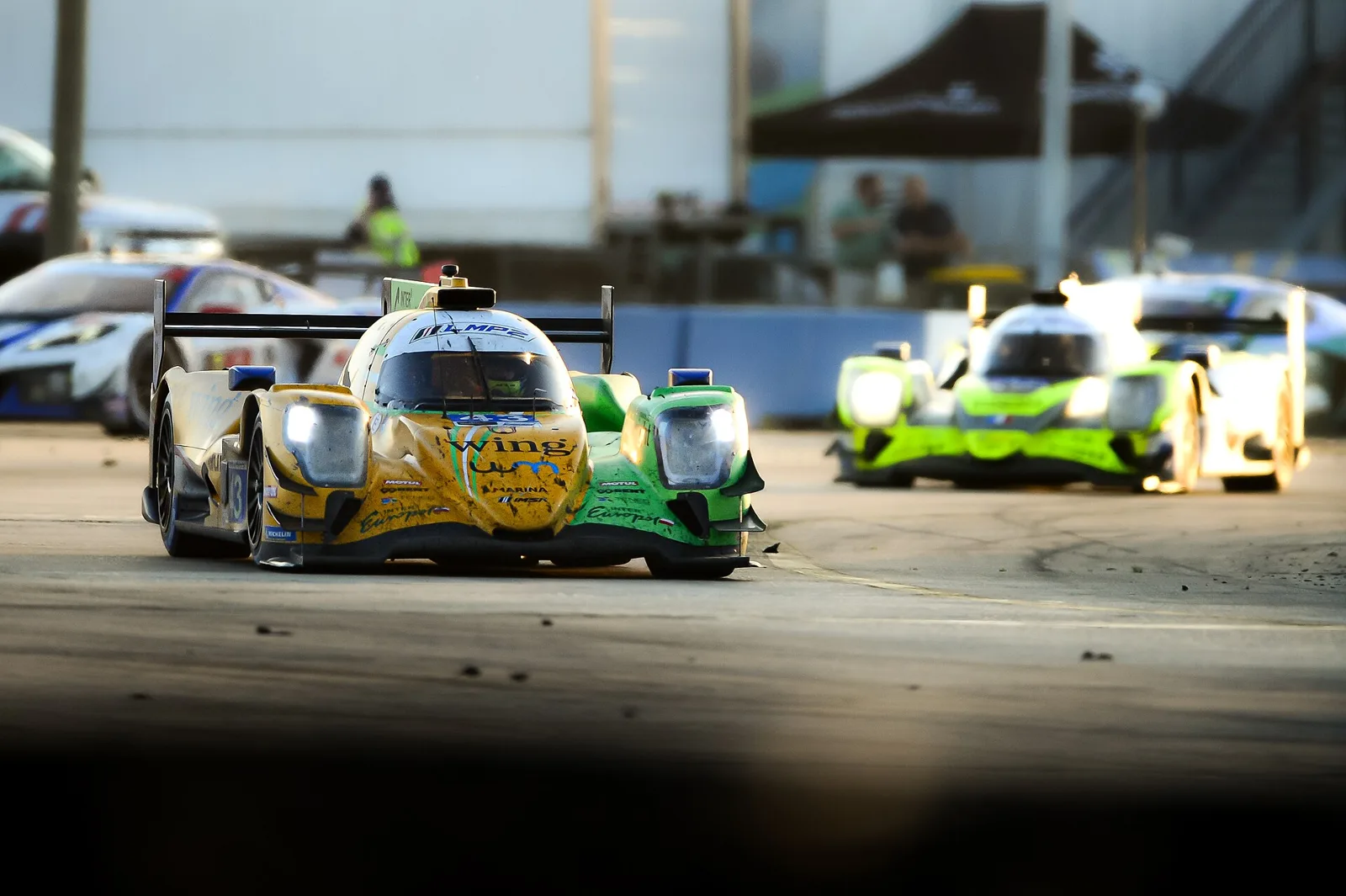
The result is a race rated as a tougher test of cars and drivers than Le Mans, and many teams use it to prepare for the French event. Hot weather in south-central Florida adds to the test of reliability. Turn 17, a long, quick right-hander, is the best-known corner: the surface there can change how fast a car leaves it onto the front straight, and the corner is wide enough for three abreast.
The original track was famously hard to follow. Mario Andretti, a three-time winner, said finding the track at all was one of the hardest parts. Drivers retired at night after getting lost on the runway sections, and some strayed even in daylight because the white lines and cones marked the way so poorly.
What happened at Sebring in 1966?
In the early years the lap strung together old airport runways and narrow two-lane service roads. The 1966 race marked a turning point, because the facilities and the safety of the track drew heavy criticism. Five people died in the race, more than in the previous fifteen years combined. Bob McLean crashed on the approach to the hairpin, his car rolling several times before hitting a utility pole. In a second accident Mario Andretti's Ferrari 365 P2 and Don Wester's Porsche 906 collided on the Warehouse Straight, close to the Webster Turns, and four spectators lost their lives.
The aftermath brought better facilities and a new layout. The Webster Turns went, and the Green Park Chicane was created further along, which moved the straight away from the warehouses, hangars and aircraft beside it. Four people have died at the track since then.
| Year | Change at the circuit |
|---|---|
| 1950 | Track opens on the airfield |
| 1967 | Webster Turns removed, Green Park Chicane added; track lengthened by 50 yd (46 m) from the 5.200 mi (8.369 km) layout |
| 1983 | Circuit shortened so track and one runway can be used at the same time |
| 1987 | Major changes allow use of another runway |
| 1991 | Changes for airport expansion bring the layout close to today's |
| 1997 | Hairpin removed for lack of run-off and replaced by the "safety pin"; Gendebien Bend re-profiled |
Who has won the 12 Hours of Sebring?
Records tell part of the story. The Porsche 935 holds the record for most wins by a car with seven, and the Audi R8 is one behind with six overall victories. Tom Kristensen is the most successful driver, with six wins, in 1999 and 2000, 2005 and 2006, 2009 and 2012. Andretti won three times. One car listed as a Porsche 935 K3 was reworked with a single-plug head and a new nose so that it looked like a 934, to meet IMSA GTO rules.
Some results stand out:
- 1966: Dan Gurney led on the last lap until his Shelby American Ford GT40 Mk II failed close to the finish. He pushed the car across the line with only Ken Miles and Lloyd Ruby ahead of him, but officials ruled the push against the rules and gave him no credit.
- 2005: the Corvette C6.R and Aston Martin's DBR9 debuted in a hard-fought GT1 class. Aston Martin won the GT1 class ahead of both Corvettes, its first class win at Sebring in 49 years, while the Corvette's earlier C5R had ruled the class for the previous three years.
- 2006: the all-new Audi R10 TDI won on its competition debut. Penske's Porsche RS Spyder finished second in LMP2, behind the Intersport Lola.
- 2007: Audi won again with the R10 TDI, even though changes to American Le Mans series rules, meant to even out the field between petrol and diesel engines, forced more frequent refuelling.
Some races were halted for a time because of heavy rain or accidents, but the clock kept running and the stoppages counted towards the twelve hours.
How has the race changed over time?
The Le Mans start, used until 1969, was dropped after that season, following Jacky Ickx's protest at Le Mans that year, and the 1970 race was the first to use a rolling start.
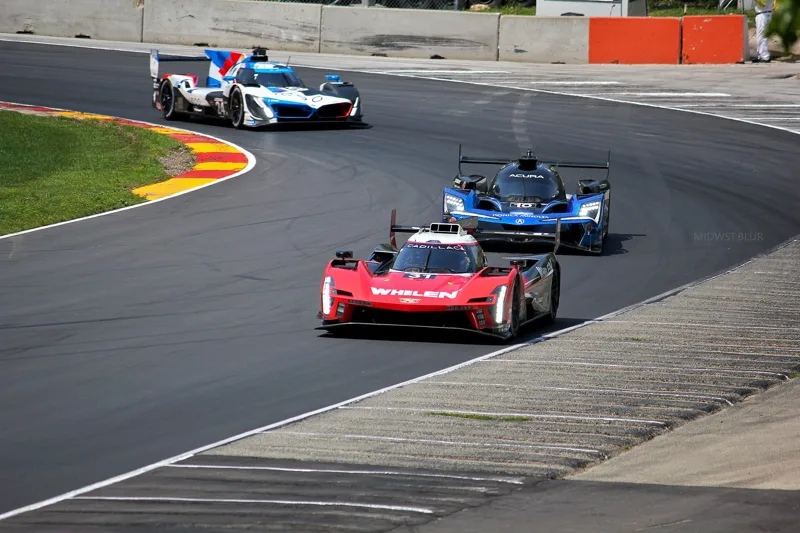
The series home has moved around. The race counted for the World Sportscar Championship, the IMSA GT Championship and the American Le Mans Series. In 2012 it briefly opened the FIA World Endurance Championship season, a single-year arrangement, before returning to the American Le Mans Series in 2013. From 2014 it has been round two of the WeatherTech SportsCar Championship. Within the Michelin Endurance Cup it is race two of four, and together with the 24 Hours of Le Mans and the 24 Hours of Daytona it makes up the informal Triple Crown of endurance racing.
In 2020 the pandemic pushed the race to mid-November, and Sebring was run twice in that one season, with a three-hour race in July in front of spectators.
The World Endurance Championship also staged the 1000 Miles of Sebring from 2019 to 2023 alongside the 12 Hours, with no races in 2020 or 2021. Toyota Gazoo Racing won in 2019, the French Alpine Elf Team won in 2022 and Toyota won again in 2023. The FIA dropped it from the WEC calendar in 2024 and 2025, when the Lone Star Le Mans, at the Circuit of the Americas near Austin, took its place. In 2021 the World Racing League, an amateur endurance series, ran the first 24-hour race at Sebring, with W2W Racing winning overall.
Who owns Sebring now, and what else happens there?
IMSA Holdings owns the track through Sebring International Raceway, LLC, which acquired the Panoz Motor Sports Group in September 2012. Sebring International Raceway, LLC had acquired the facility from Andy Evans in 1997.
Besides the 12 Hours in March, the calendar includes the Ferrari Challenge North America in April and the Historic Sportscar Racing Classic 12 Hours of Sebring in December. The track hosts Legends of Motorsport and Historic Sportscar Racing events, SCCA and NASA amateur weekends and is where the Skip Barber Racing School bases itself in winter. IndyCar, sports prototype and GT teams come for cold-season testing because of the warm climate, and IndyCar regularly tests on the upper part of the site, which mimics the street circuits it visits.
What does this mean for fans and drivers?
For a spectator, Sebring offers one of the few chances to see sports cars race from afternoon into night on a surface that has barely changed in character since the airfield days. For a team, the lesson is the one the record keeps repeating: the circuit rewards reliability. That is why so many crews use it to prepare for Le Mans, and why changes that sound minor, such as a different refuelling rule in 2007, can decide who wins.