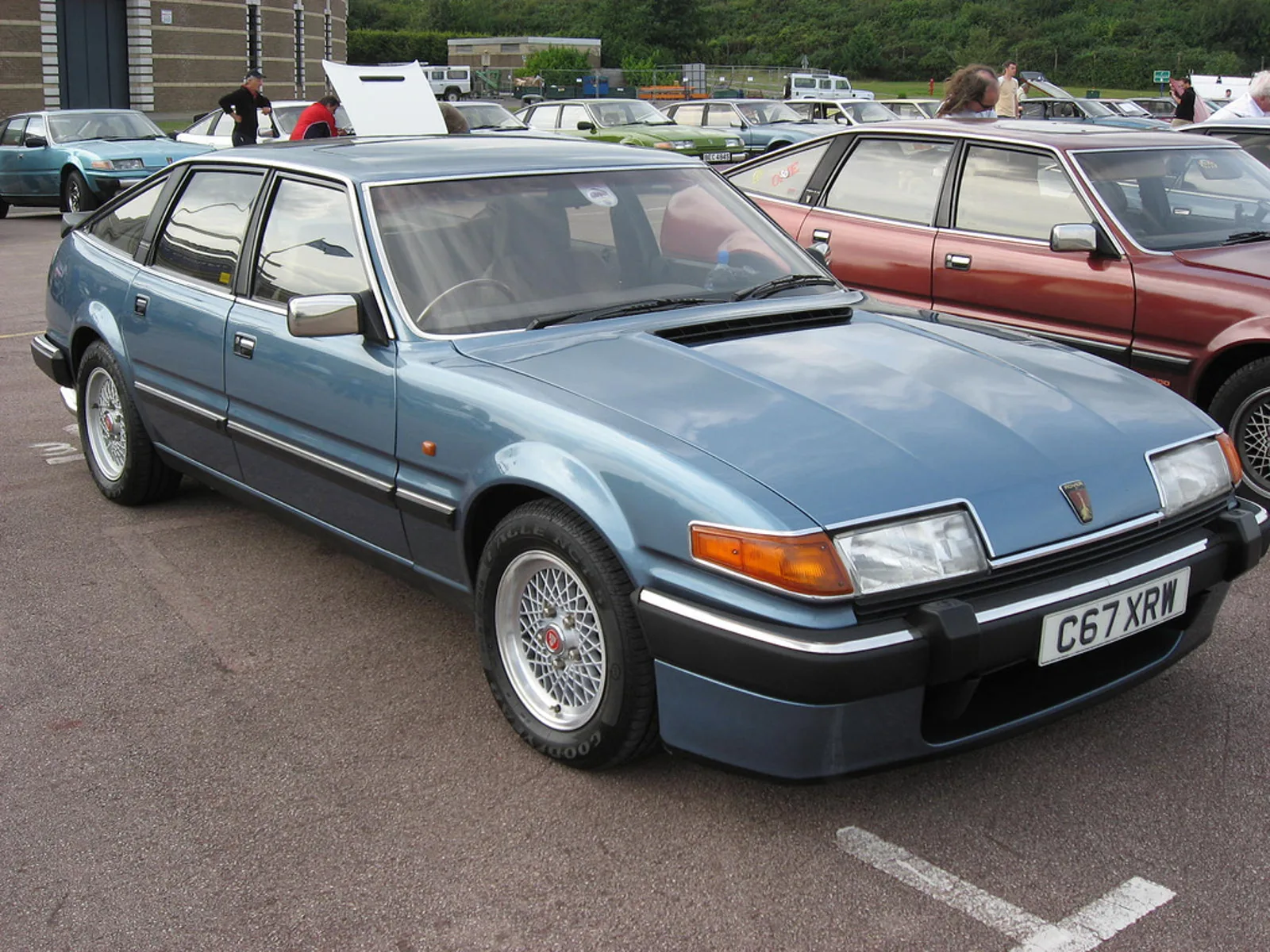
From a bicycle maker in 1878 to the Range Rover, the Honda-era 200 and the MG Rover collapse, the Rover name spanned more than a century.
Rover was a British car marque used from 1904 to 2005, after the Rover Company began as a bicycle maker in 1878. It was absorbed by Leyland in 1966, revived with Honda technology in the 1980s and 1990s, and sold to BMW before MG Rover collapsed in 2005.
Rover spanned more than a century, from its start as a bicycle maker to the end of Rover-badged car production in 2005. Its Viking longship badge outlived several owners, and the brand passed through Leyland, British Aerospace, BMW and the Phoenix Consortium along the way. The name is now held by Jaguar Land Rover, but no Rover automobiles are in production.
Where did Rover start?
Rover started as the Rover Company, a bicycle maker founded in 1878, and it began building autocars in 1904. The Viking longship became its logo. Its first cars were the Rover 8 and Rover 6, built from 1904 and 1906, and the line-up widened quickly from there.
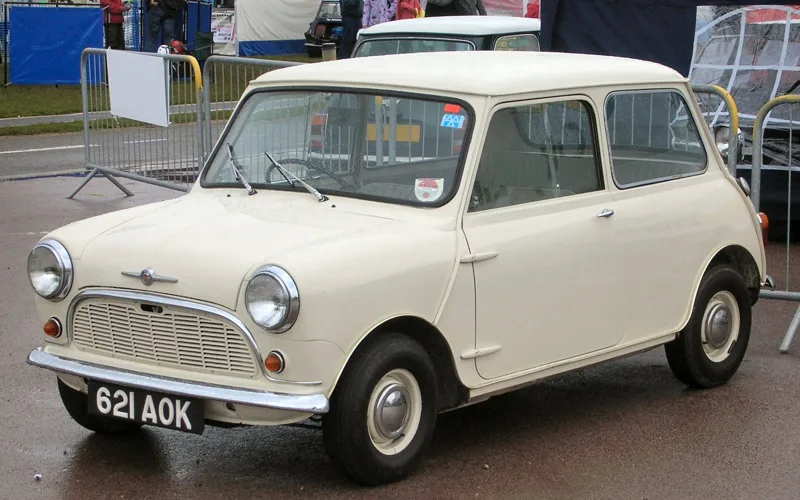
The Rover 8 ran from 1904 to 1912, while the Rover 6 and the Rover 16/20 were built from 1906 to 1910. The Rover 12 followed from 1912 to 1923. Later came the Light Six from 1927 to 1932, the Speed 20 from 1931 to 1940, and the Rover 10, which was built from 1927 to 1947.
After the Second World War the company turned to larger saloons. The P3 of 1948 gave way to the P4 family, which was built from 1949 to 1964 in many variants. The P5 followed from 1958 to 1973 in 3-Litre and 3.5-Litre form, and the P6 arrived in 1963 as a 2000, 2200 and 3500 range that ran until 1977.
A bicycle maker's badge that became a Range Rover, a Honda partnership and a long, bruising path to a dormant name.
How did Rover fare under British Leyland?
Rover was absorbed by the Leyland Motor Corporation in 1966, and it then moved through several groupings within British Leyland (BL) during the 1970s and 1980s. The brand kept its own identity, first as a subsidiary division and later through the wider group. The group was effectively nationalised in 1975, after a multibillion-pound cash injection, and Michael Edwardes was brought in to head it.
The SD1 of 1976 arrived with serious build quality and reliability problems. The TR7 and TR8 had moved to Solihull after the Triumph factory at Canley closed, but they were discontinued when cutbacks ended car production there in the late 1970s. The SD1 moved to Cowley, and future Rover cars were made at the former Austin and Morris plants at Longbridge and Cowley.
In 1979 British Leyland, by then officially BL Ltd, began a long relationship with the Honda Motor Company of Japan. Honda took a 20% stake in the company, and the company took a 20% stake in Honda's UK subsidiary. Honda used its British operations as a route into Europe, and the two companies could pool resources when developing new cars.
Why was the Range Rover important?
The Range Rover, launched in 1970, combined the comfort of a Rover saloon with the rugged ability of the Land Rover 4x4. It was one of the first vehicles to join off-road ability to everyday versatility, following the Jeep Wagoneer and International Scout. It used a licence-built ex-Buick V8 engine and was capable of up to 100 mph (160 km/h).
Engineers gave it permanent four-wheel drive, coil springs at every corner and disc brakes all round. The original design remained in production for 26 years, which is a long run for a model that outlived several corporate owners. The model passed to Land Rover in 1978, when BL set up Land Rover Limited as a separate subsidiary to take over Range Rover production.
The P8 that never reached production
The P8 was Rover's planned successor for the 3-litre, styled by David Bache. The original brief called for a car no longer than the Rover 2000, but the project was redefined as it progressed. The car scheduled for the 1971 London Motor Show was substantially larger than any Rover sedan, and its Rover V8 was expanded to 4.4 litres for the application.
Pre-production prototypes had been tested in Finland, and capacity at the Solihull plant had been set aside for the car. An expenditure review in 1970 drew criticism from Sir William Lyons, by then an influential member of the British Leyland board. Speculation linked that criticism to worries about the Jaguar XJ6, and the project was abandoned in 1972.
The decision may have suited British Leyland, given that the European market for sedans of this size shrank after the 1973 oil price shock. Some of the P8's styling cues turned up on the Leyland P76 two years later, which shows how much of the project survived in other forms.
How did Rover become a one-marque brand?
By 1988 Austin Rover had moved to a single brand, using only the Rover name, and the parent BL was renamed the Rover Group. The Rover 800 replaced the SD1 in 1986 and was developed with the Honda Legend. Models such as the Metro, the 200 and the 400 were rebadged or replaced over the following years.
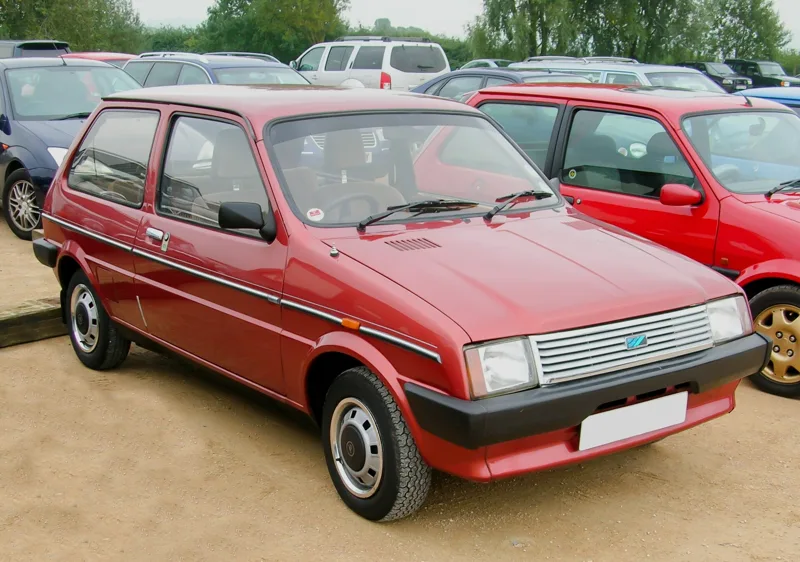
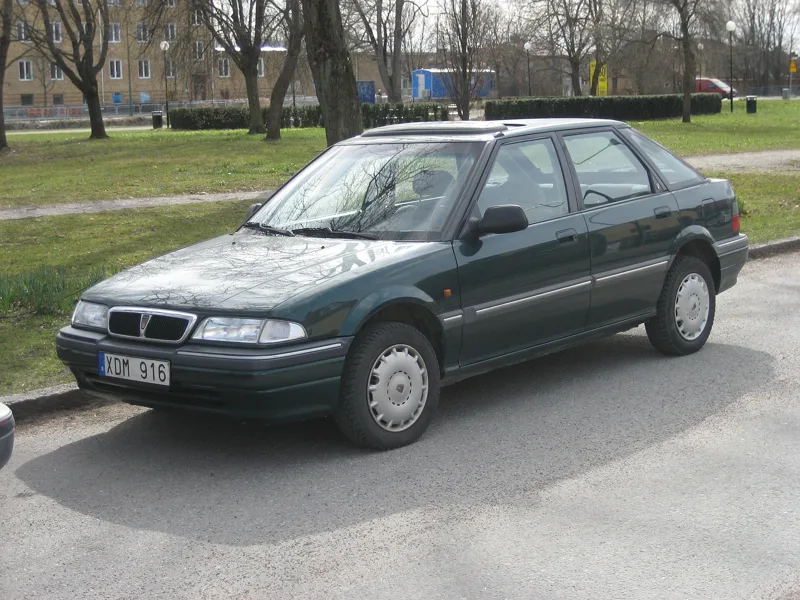
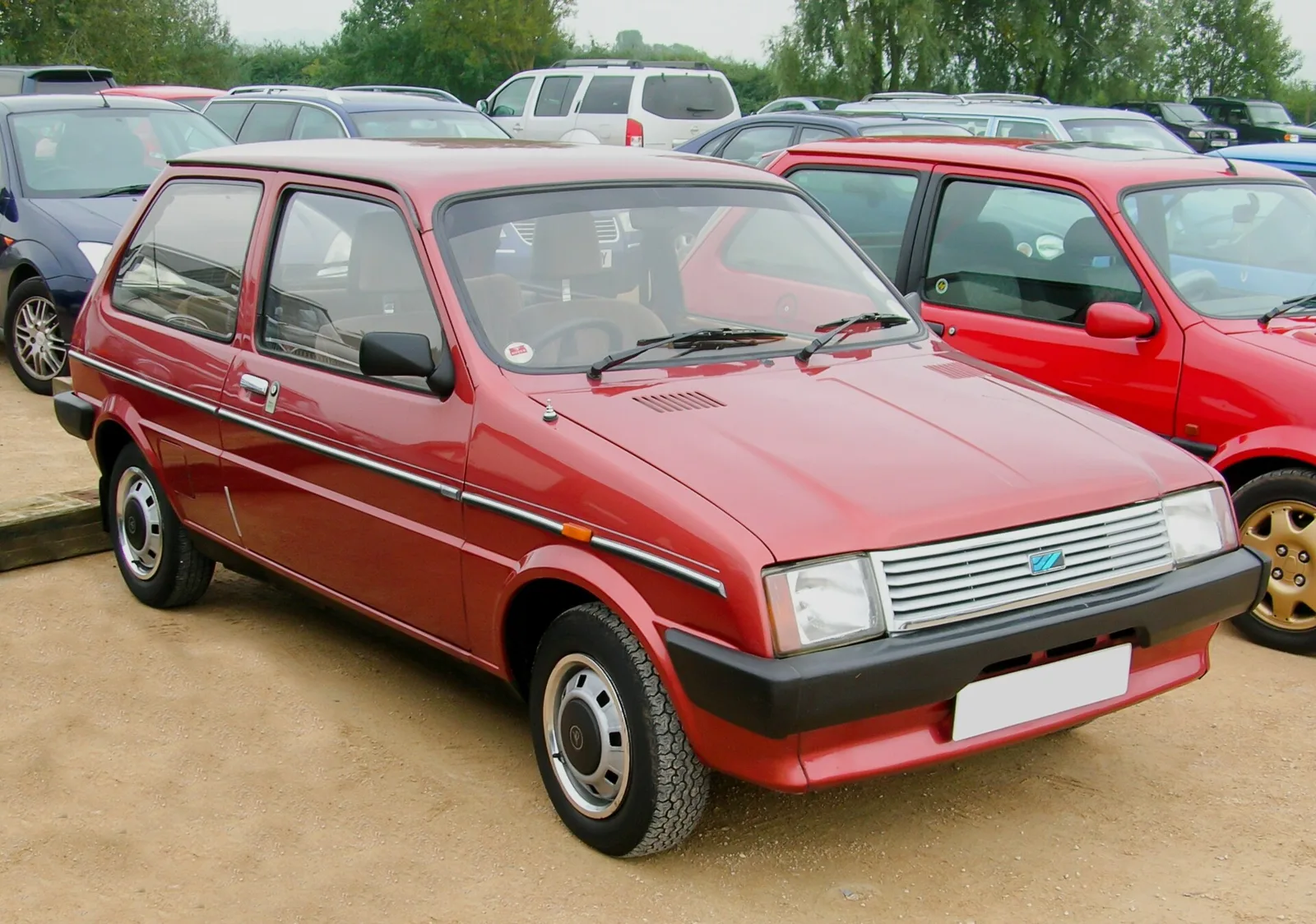
The first Honda-sourced Rover model, the Rover 200, arrived in 1984 and was based on the Honda Ballade. The second generation followed in October 1989 with a hatchback, while the Rover 400 launched in April 1990 with the four-door saloon body. The Metro was officially badged as a Rover in May 1990, although the Austin range had never shown the word on its badges.
The larger Rover 600 launched in April 1993, based on the Accord and using a mix of Honda and Rover engines. It was aimed further upmarket at the BMW 3 Series, rather than at the Ford Mondeo that the Honda Accord was marketed against. Rover also exported the Rover 800 to the United States as the Sterling from 1987 to 1991. The Maestro and Montego were never branded as Rovers, but they were sold through Rover dealerships with a badge the same shape as the Rover badge.
Who owned Rover under British Aerospace and BMW?
British Aerospace acquired the Rover Group in 1988, and BMW bought it in 1994 along with Land Rover, Riley, Mini, Triumph and Austin-Healey. The Honda partnership had turned the brand around, and Rover cars were once again seen as upmarket alternatives to Fords and Vauxhalls. BMW had come to see the brand as a potential major competitor.
Under BMW the Rover 75 launched in June 1999, a retro-designed saloon inspired by the earlier P4 and P5. It won positive reviews, although it did not outsell the BMW 3 Series. In May 2000 BMW split the group, selling Land Rover to Ford for an estimated GBP 1.8-billion and retaining the Mini brand. Land Rover and Mini had been the stronger and more valuable trademarks inside the group, even though Rover was its flagship marque.
How did MG Rover collapse in 2005?
The Phoenix Consortium, headed by former Rover chief executive John Towers, formed the MG Rover Group in May 2000 and continued to use the Rover name under licence from BMW. The new group was based at Longbridge, one of the former Austin and Morris plants. The Rover Group had lost an estimated GBP 800 million in 1999, largely because sales of the 200 and 400 family cars had fallen, and the new owners were reported to have received around GBP 430-million from BMW.
The first Rover-branded newcomer under the new owners was an estate version of the Rover 75, on sale from July 2001. A cheap entry model, the CityRover, followed in October 2003. It was a Tata Indica with a new badge, and sales were poor and reviews were mostly negative. Concept cars intended to replace the Rover 25 and 45 were shown in the early 2000s, yet no production model followed.
MG Rover production ceased on 15 April 2005, when the company was declared insolvent, and more than 6,000 jobs were lost immediately. The physical assets were sold to Nanjing Automobile Group on 22 July 2005 for GBP 53m. The buyer's preliminary plans included moving the engine plant to China and restarting MG lines at a West Midlands site. In May 2007 Nanjing said it had restarted MG TF production at Longbridge, with sales expected that autumn.
Who owns the Rover name today?
The Rover trademark is held by Jaguar Land Rover. BMW kept the rights through the MG Rover years, while SAIC wanted the name in 2006 for its own vehicles. BMW refused, because Ford held an option on the brand that dated back to its purchase of Land Rover in 2000. Ford exercised that option on 18 September 2006.
BMW had already sold the trademark to Ford in 2006 for approximately GBP 6 million. Ford sold Jaguar and Land Rover to Tata Motors in 2008 along with the Rover rights, and in 2013 the two car operations were merged into Jaguar Land Rover. Roewe, the brand SAIC created in place of Rover, was launched in early 2007 and carried the technology SAIC had obtained from the MG Rover assets. Legally the brand now belongs to Land Rover, and it is considered dormant.
Rover models at a glance
| Model | Years built | Detail |
|---|---|---|
| Rover 8 | 1904-1912 | Among the first Rover autocars |
| P4 | 1949-1964 | Family saloon in many variants |
| P5 | 1958-1973 | 3-Litre and 3.5-Litre |
| P6 | 1963-1977 | 2000, 2200 and 3500 |
| Range Rover | 1970 onward | Original design in production for 26 years |
| SD1 | 1976-1986 | 2000 to 3500 and Vitesse |
| Rover 200 | 1984-1999 | First Honda-sourced Rover |
| Rover 800 | 1986-1999 | Developed with the Honda Legend, sold as Sterling in the US |
| Rover 400 | 1990-1999 | Four-door saloon on Honda-based underpinnings |
| Rover 600 | 1993-1999 | Based on the Accord |
| Rover 75 | 1999-2005 | Retro design, positive reviews |
| CityRover | 2003-2005 | Badge-engineered Tata Indica |