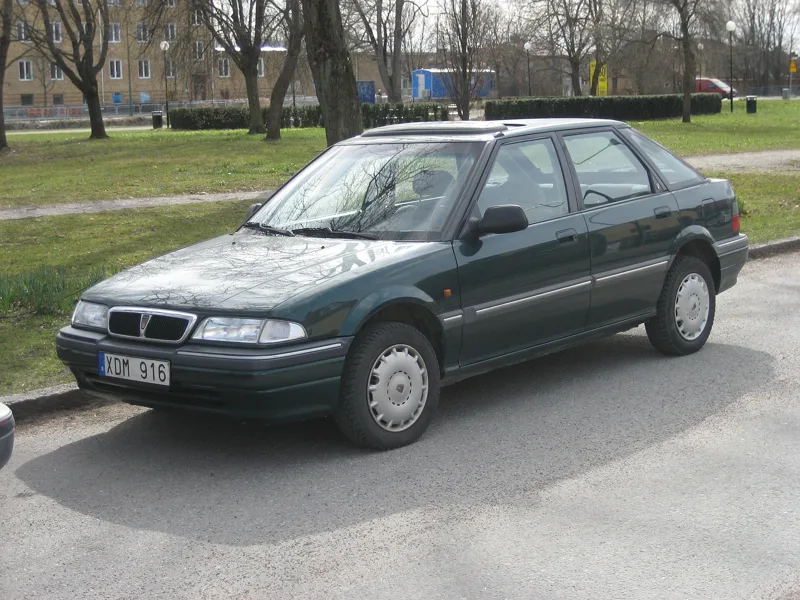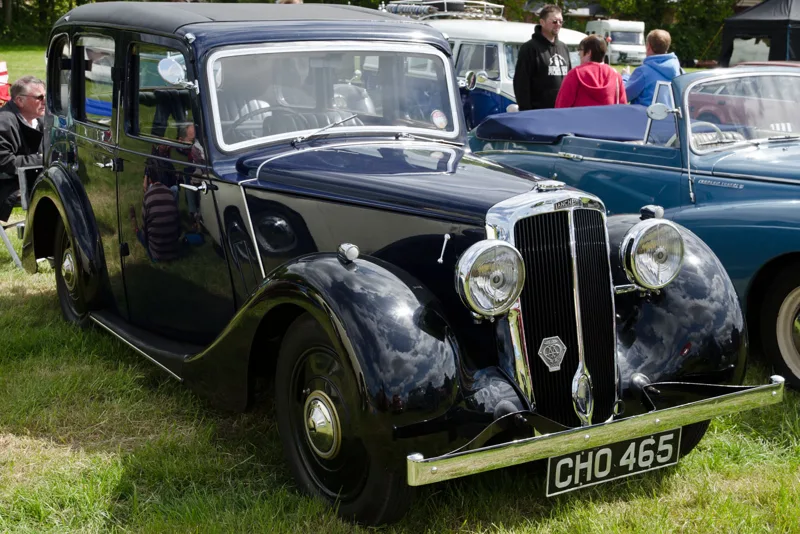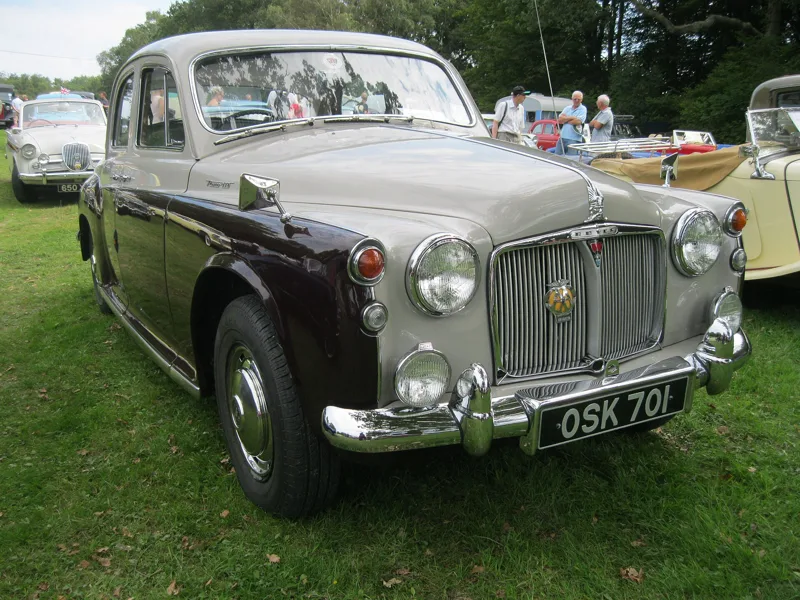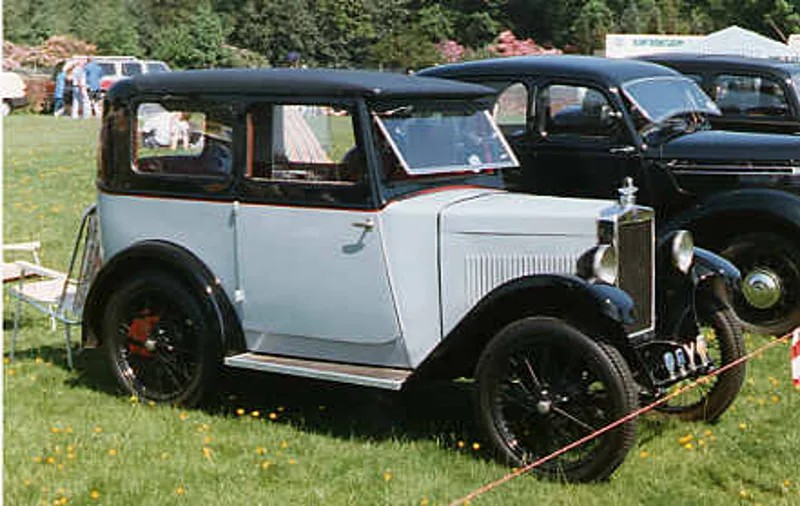
A name that Rover reused across four decades, from a 1905 touring car and a sleeve-valve twin to the Pilot six and the 1933 P1 and 1937 P2 family saloons.
The Rover 12 was a name Rover used for several medium-sized family cars from 1905 to 1948. Its engines ranged from a 1767 cc four-cylinder touring car to a 1496 cc P1 of 1933, and the P2 of 1937 was the last model before the name ended in 1948.
The Rover 12 was the name Rover attached to several medium-sized family cars between 1905 and 1948. Across that span it covered a four-cylinder touring car, a two-cylinder sleeve-valve twin, a 2297 cc four designed by Owen Clegg, a six-cylinder Pilot and two P-series family cars from the 1930s.
Where did the Rover 12 name begin?
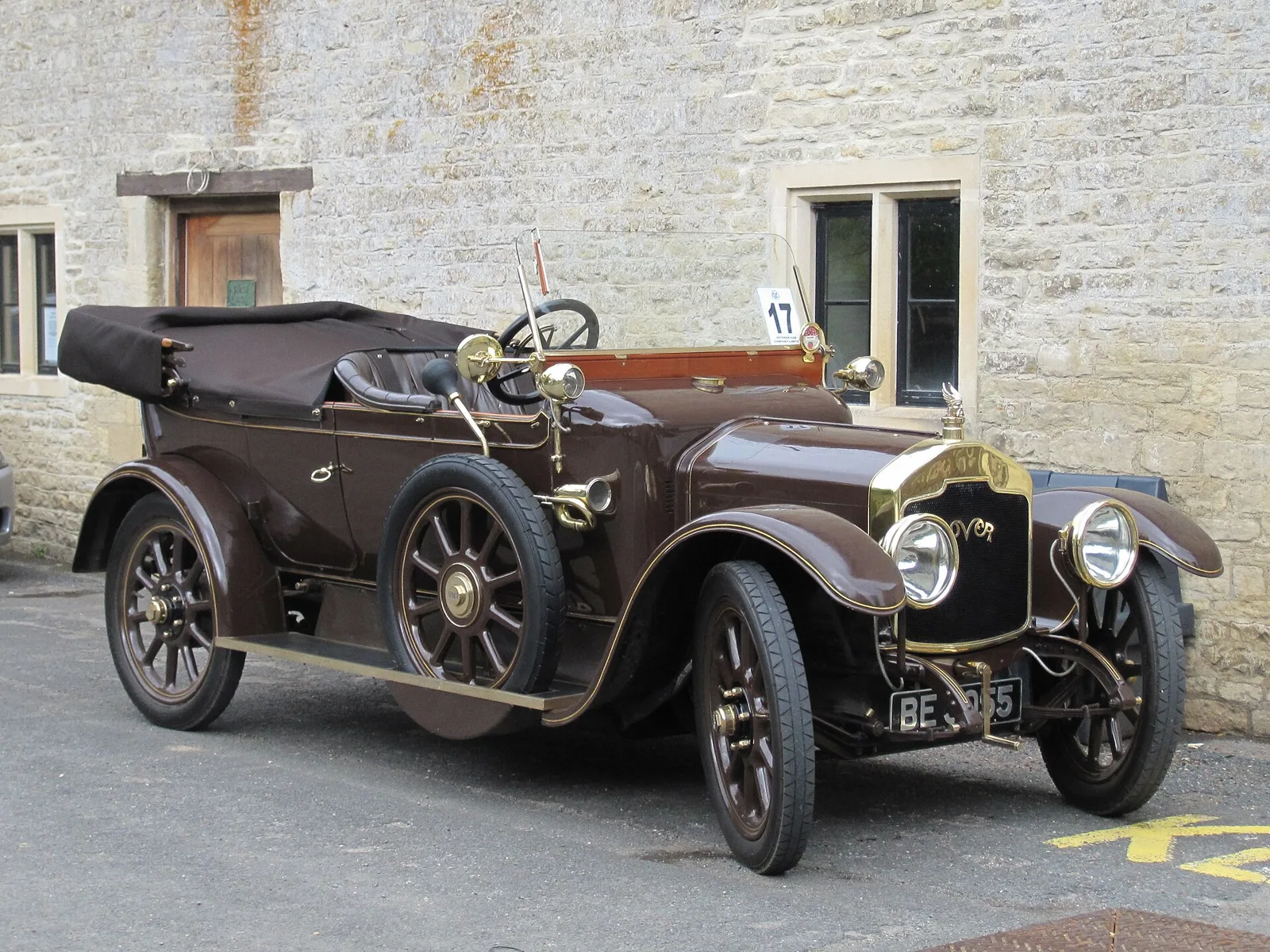
The name started with the Rover 10-12, the fourth model Rover made after its 8 hp, 6 hp and 16 hp cars. It was launched in November 1905 and shown at that year's Olympia Motor Show. Its four-cylinder, water-cooled side-valve monobloc engine displaced 1767 cc.
A name that ran from a 1905 touring car to a 1948 family saloon, carried by engines from two cylinders to six.
What was the two-cylinder Rover 12 of 1909?
The 1909 to 1910 car ran a two-cylinder side-valve engine, water-cooled, of 1624 cc. Its chassis and rear axle went on to appear in modified form under the 1912 cars, so the design carried forward into later production.
Many of the 1909 to 1910 cars found work as taxis.
How did the sleeve-valve Rover 12 work?
A supplementary sleeve-valve 12 was announced in October 1910 for the Olympia Motor Show, although Rover had signalled its plans in mid-1910. The Knight-Rover unit had two cylinders, water cooling and sleeve valves, displacing 1882 cc, and it went into a two-seater body.
The engine was built as half of a four-cylinder 1909 22 hp Daimler, because Daimler engines of that era were cast in pairs of cylinders. Its two connecting rods sat side by side on the same crank pin, which gave evenly spaced firing points.
The engine was bolted directly to the chassis frame. Its rear mounting bracket rolled over the flywheel, which put the rear mountings well apart from the front set. Magneto, distributor and water pump were all driven from the front of the crankshaft.
Lubrication was handled by a three-plunger pump, driven from the valve shaft, that forced oil from the sump into troughs under the big ends. A dashboard telltale warned the driver if the pump was not working. A foot-operated supplementary air supply drew an oil mist from the crankcase to lubricate the tops of the sleeves.
What did road testers say about the sleeve-valve car?
The Motor tested the car over ten days with a four-seat torpedo body. Its 106-inch wheelbase gave the front and rear passengers plenty of legroom, and the team reported that no water was needed in the radiator during the test.
The engine was so quiet that drivers were often asked whether it was running. The Motor's testers also found the rear wheels could step out slightly on very slippery surfaces.
The Automotor Journal was more critical. It noted a low periodic noise on acceleration and the need for very precise ignition and throttle settings. It also complained that Rover still disliked foot-operated accelerators, and that a missed gear change on the powerful clutch stop would force the driver to stop the car before any gear could be engaged.
Who designed the Clegg 12?
The new Rover 12 that appeared at the November 1911 Olympia Motor Show came from the pen of Owen Clegg, who had moved over from Wolseley. It complemented the twin-cylinder sleeve-valve models with a four-cylinder car, and its 2297 cc side-valve engine used an SU carburettor built by Rover under licence.
Roughly 5000 cars left the works before the First World War. The three-speed transmission sat apart from the engine and fed a worm-driven rear axle. Both ends used semi-elliptic springs, the hand lever worked the rear wheel brakes, and the foot pedal worked a transmission brake.
How did the Clegg 12 change after the war?
After the war, in 1919, the engine gained a detachable cylinder head and an electric starter. A chassis with a wheelbase 6 in (152 mm) longer became an option in 1921.
Advertisements in 1922 offered open two- and four-seat, saloon, limousine coupe and drophead coupe bodies at prices from 625 pounds to 800 pounds.
In 1924 the model was renamed the Rover 14 and given a four-speed gearbox, although the three-speed stayed available on the open models. The engine did not change, but the new name matched the treasury rating of 13.9 hp. A Weymann fabric-bodied saloon joined the range, and the last cars were built in 1924 after roughly 13,000 had been made.
What was the Wilks Pilot?
Spencer Wilks was given almost a free hand to improve Rover once he joined the company. He had the engine designer B H Thomas, who had come from Hillman, develop a new small six-cylinder engine to sit between Rover's 10/25 four and the larger six-cylinder cars.
Thomas's design was in effect a 10/25 engine with two extra cylinders, with dimensions changed to keep it inside the desired tax rating. It later became the basis for Rover's engines throughout the 1930s. In its first form it was described as nice but quite gutless, and it was first squeezed into the old Rover 8, 9/20 and 10/25 chassis.
The new car was announced on 21 August 1931 as a 12 hp six-cylinder with a four-speed gearbox and a silent third gear. Its advertised performance was 65 to 70 mph with 28 to 30 miles per gallon, and a de luxe model added safety glass in all windows.
How was the Pilot road tested?
Autocar's report, timed to match the Pilot's release, praised the engine for exerting its power in a very modest way that was deceptive. It said gear changing was easy and that the intermediate gears were unexpectedly quiet.
In February 1932 Rover announced a stronger chassis for the Pilot and the Family Ten, using heavier gauge material and redesigned cross members. The company said the changes came from long testing on the roughest roads of New Zealand and Australia, where the cars were sold.
Other February 1932 changes included a wider scuttle for more foot room, an enlarged crankcase, a higher compression ratio and a rear fuel tank supplying the engine by Autovac. Every Pilot received a vacuum servo for its brakes, and safety glass became standard across the range.
What were the Pilot 14 and Speed Pilot?
July 1932 brought a larger engine, 1577 cc and rated at 14 fiscal horsepower. Three carburettors were fitted and output was put at 35 horsepower, and the car sold as the Pilot 14, with a long-wheelbase tuned version named the Speed Pilot.
Rover sprayed the inside of all body panels with asbestos to deaden noise and to provide fire-proofing and insulation against heat and cold. The Speed Pilot's special engine had a high-efficiency head, a higher compression ratio and a special camshaft, and its wheelbase was 8 inches longer than the standard car's.
In July 1932 the Pilot also received the new chassis of the Ten Special, with flexible engine mountings, Startix and a new gearbox and freewheel. The brakes were Lockheed hydraulic units with large diameter drums that were self-compensating and self-lubricating.
What was the underslung frame?
The chassis frame that had previously risen over the back axle was straightened so that it ran beneath it. That limited suspension movement, but it allowed lower bodywork with a more sporting look.
Viking head mascots fitted to the Pilot and Speed Pilot had their helmet wings swept back almost to the horizontal.
How did The Times judge the Pilot 14?
The Times tested the 1577 cc car and said its main appeal was quietness at all times. The engine ran smoothly, the middle ratios were free of drone, and acceleration was respectable for the engine size and the car's weight.
The suspension allowed wheel bounce, and the clutch pedal sat too close to the steering column. A road test a year later reported that fresh modifications gave the engine a more spontaneous response, although wheel bounce remained a problem.
How successful was the Pilot?
Spencer Wilks' Pilot established the look Rover cars kept until 1949. The Wilks brothers followed it with the New Deal range, which appeared in late summer 1933.
What was the Rover 12 P1?
The P1 launched at the end of August 1933 with a new 1496 cc four-cylinder engine producing 53 bhp. Its chassis was new but based on the 1933 Speed Pilot, with an underslung layout that ran beneath the rear axle, and the four-speed transmission had a freewheel.
The suspension was conventional, with rigid axles and half-elliptic leaf springs all round. Early cars had a 112 in (2,845 mm) wheelbase, which was stretched by 3 in (76 mm) for 1935 to give rear passengers more legroom. Contemporary advertisements claimed a top speed of 70 mph and economy of 24 mpg.
The bodies were traditionally built, with steel panels on a wooden frame. The choice ran from a six-light saloon at 278 pounds to a four-light sports saloon with a small external boot at 298 pounds, plus a four-seat tourer at 288 pounds. Enthusiasts later called this version the P1, and 5775 were made.
What was the Rover 12 P2?
An updated P2 appeared in 1937 with mostly styling changes, but its chassis was stiffened and Girling rod brakes replaced the hydraulic brakes of the earlier cars. The bodies were a six-light saloon and a four-light sports saloon, and there were no tourers before the war.
Bonnet sides were fixed on the 1938 cars. Synchromesh reached the top two ratios in 1939, the same year disc wheels became an option in place of wire wheels, and they became standard after the war.
Post-war production was small. Post-war output was small: about 200 cars in 1947 and 1948, four bodies from Rover's own shop and 196 from AP Coachbuilders in Coventry. The P2 was part of a wider Rover P2 range that also included the Rover 10, 14, 16 and 20.
How many Rover 12s were built?
Some 11,786 P2s were made before the war and 4840 after. The final cars came off the line in 1948, and no direct replacement followed because later Rover models had larger engines.
What are the Rover 12 specifications?
| Model and years | Engine and key detail |
|---|---|
| Rover 10-12 (1905-1907) | Four-cylinder water-cooled side-valve monobloc, 1767 cc |
| Rover 2-cylinder 12 (1909-1910) | Two-cylinder water-cooled side-valve, 1624 cc |
| Sleeve-valve 12 (1910-1912) | Knight-Rover two-cylinder sleeve-valve, 1882 cc |
| Clegg 12 (1912-1923) | Four-cylinder side-valve, 2297 cc, SU carburettor |
| Clegg 14 (1924) | Same engine, four-speed gearbox, 13.9 hp rating |
| Pilot (1931) | Six-cylinder, 12 hp, four-speed gearbox |
| Pilot 14 (1932) | 1577 cc, 14 fiscal hp, three carburettors |
| Rover 12 P1 (1934-1936) | Four-cylinder, 1496 cc, 53 bhp, 70 mph claimed |
| Rover 12 P2 (1937-1948) | Stiffened chassis, Girling rod brakes, 1939 synchromesh |