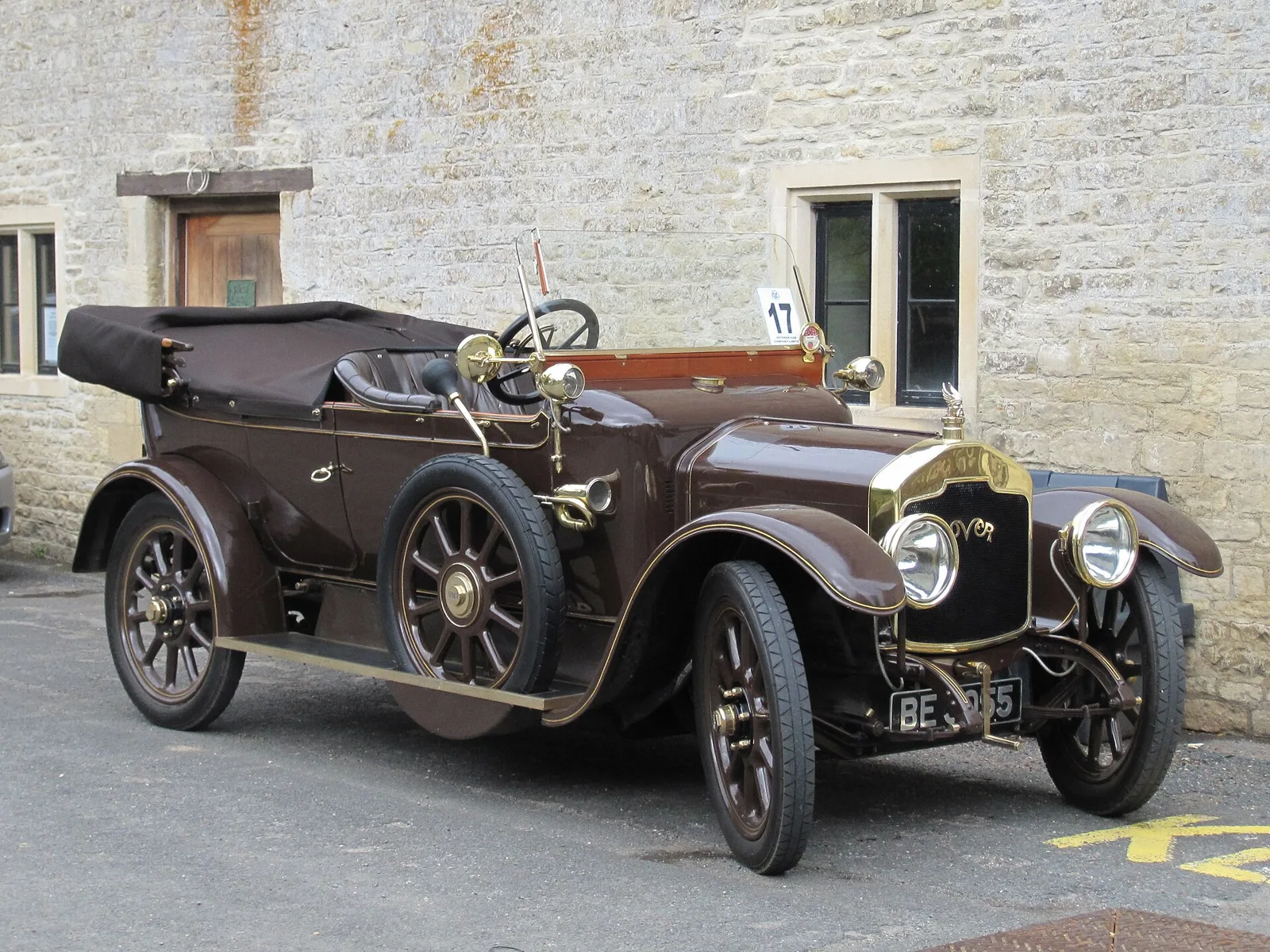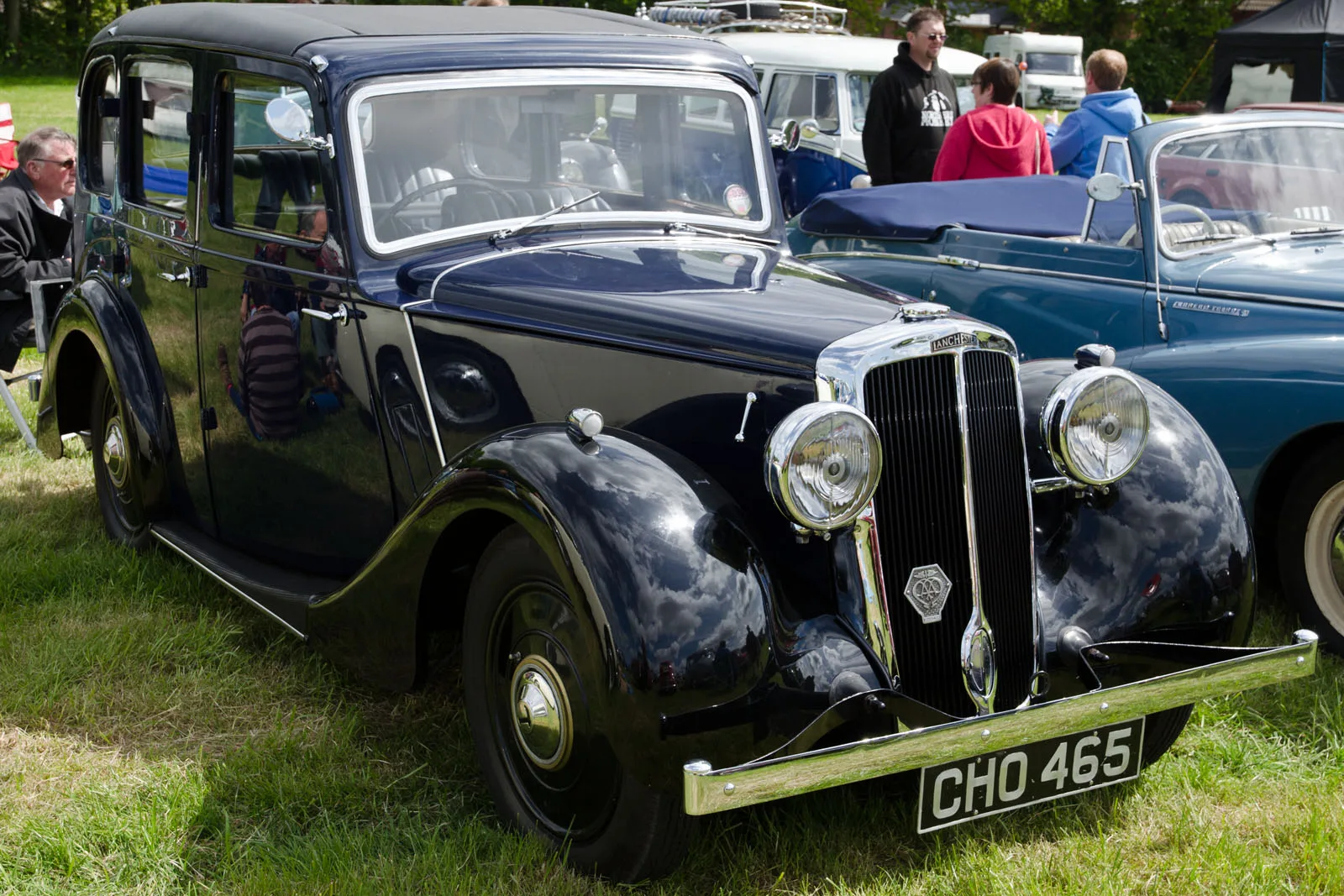
An American-engined Bullnose, a tax-friendly Humber with no driver's door, and a Lanchester that kept the fluid flywheel through war and Coventry's rebuilding.
The Morris Cowley was a series of Morris cars from 1915 into the 1950s, starting with an American-engined Bullnose. The Humber 15 was a tax-friendly medium car built from 1919 to 1927. The Lanchester Fourteen was a six-cylinder car from 1936 that returned after the war as a four with a pre-selective gearbox.
The first Morris Cowley of 1915 was assembled around American parts, and many of those parts never arrived. Three thousand engines were despatched to Morris, and by one version of events more than half were lost to enemy action crossing the Atlantic, leaving around 1,500 sets of chassis components unsold. More recent research suggests there may have been a single lost shipment of about 150, with orders for more cancelled. The Cowley name lasted from that wartime start into the late 1950s. Beside it here are two other British medium cars with very different outlooks: the tax-friendly Humber 15 of the 1920s and the Lanchester Fourteen, a six-cylinder car of 1936 that came back after the war as a four.
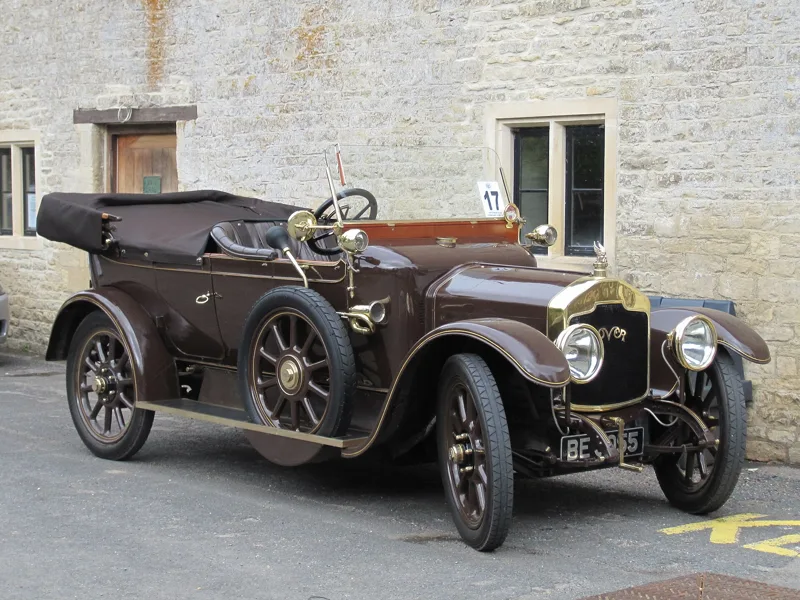
The first Morris Cowley of 1915
Shown to the press in April 1915, the Continental Cowley was a bigger, longer, wider and better-equipped cousin of the first Morris Oxford. It kept the "Bullnose" radiator and could take a four-passenger body. Its 1495 cc engine compared with the Oxford's 1018 cc. To keep the price down, Morris bought many components in the United States. The four-cylinder side-valve engine came from the Continental Motor Manufacturing Company of Detroit, the clutch and three-speed gearbox from Detroit Gear & Machine Co., and the axles and steering gear were American as well. The First World War badly disrupted supply.
The centrally placed handbrake and ball-change gear lever gave the gearbox's American origin away. They also made it easy to get in through the driver's door, with no cold steel against the leg. The petrol tank sat in the scuttle, with its filler in the middle of the dashboard above the gear lever. The imported back axle brought a first: helical gears, in a British car built in numbers.
Electric lighting was standard, a first for a Morris. Five six-volt Lucas lamps ran from a dynamo driven by a belt and mounted on the cylinder head studs. These few electrical parts cost the equivalent of 59% of the price of the imported engine. The delivery van had none.
It was no austerity special. At first it was slightly cheaper than the Oxford, but the Cowley had buttoned leather upholstery in a diamond pattern, mahogany cappings and a proper door for the driver. Mudguards were black and the usual body colour was chocolate brown. Only in 1919 did it become a stripped-down Oxford.
General sales began in late summer 1915, just as the government introduced the McKenna duties, a 33% tax on imported luxury goods. Buyers seemed unbothered by the price rises. The last Continental Cowley was put together in 1920, when the original engines ran out. The design already reflected American engineering and production methods, and Morris used them before its own mass production boomed in the 1920s. The cars earned a reputation for reliability and durability.
Of 3,000 engines shipped to Morris, by one version of events more than half were lost to enemy action.
Bullnose Morris Cowley, then the Flatnose
For 1919 the Cowley took an engine from the British arm of the French firm Hotchkiss, effectively a copy of the Continental unit that was no longer made. It was the basic car in Morris's two-model line-up, with the Oxford sharing the same 1.5-litre, 26 bhp engine until 1923 as the better-trimmed de-luxe version. Morris bought out Hotchkiss's British interests in 1923 and renamed them the Morris engines branch.
On 11 September 1926 a flat radiator replaced the Bullnose. New cars had doors on both sides and more standard accessories, while all-steel bodies were becoming available. The engines were unchanged. Unlike the Oxford, the Cowley still came with rear brakes only, with front brakes an extra. The new chassis had semi-elliptic leaf springs at all four corners and Smiths friction shock absorbers of the scissor type. Rods and springs operated the brakes, with cams inside the drums to push the shoes out, and the rear drums held two sets of shoes, one linked directly to the handbrake. The chassis was changed again in 1931 to match the Morris Major, and wire wheels became an option in place of solid artillery wheels.
The Morris Cowley of 1931 to 1935 and the Cowley Six
Announced on 29 August 1931, a much altered Cowley came in six body styles. Like the rest of the Morris range it was restyled, with an "eddy-free" leading edge on closed-car roofs, rear-mounted petrol tanks, chrome on all bright parts and Magna-type wire wheels as standard. A new frame lowered the body, springs were longer and more resilient, and bigger drums were operated hydraulically by Lockheed brakes. Connecting rods were Duralumin. A sports coupe joined the range, the 11.9 or 14/32 engine could be chosen at the same price, and four-seater tourers were dropped.
On 28 August 1933 a lower-bodied car followed, billed in advertising as "transformed". It had a new 11.9 hp engine, still of 1548 cc, behind a sloping radiator, plus a four-speed Twin-Top synchromesh gearbox and a shorter, stronger cruciform chassis. Leather upholstery, draught excluders and a battery master switch for fire safety completed the changes. From late 1934 it was badged the Morris Twelve Four.
The same day brought the Cowley Six for 1934, taking over from the Morris Major with the same 1938 cc six-cylinder side-valve engine in a lower chassis. Equipment included a synchromesh four-speed gearbox, dipping headlights, hydraulic brakes and dampers, direction indicators, safety glass and automatic ignition. A smaller, 12 hp, 1378 cc sister car was the Morris Ten Six. The Cowley Six saloon cost 215 pounds, or 220 with a fixed or sliding head, and the special coupe 265. In 1935 it became the Fifteen-Six.
The 1950s Morris Cowley
The Cowley MCV of 1950 was a commercial range built on the Morris Oxford MO, sold as a van, a pick-up and a chassis-cab. Its 10cwt van replaced the Y-series and held 120 cu ft (3,400 L), or 138 cu ft (3,900 L) without the passenger seat. The half-ton Series III replaced it in 1956, and in 1962 gave way to a Morris version of the Austin A55 van. The Cowley name never appeared on those later vans, and it is very likely that none left the factory after 1960.
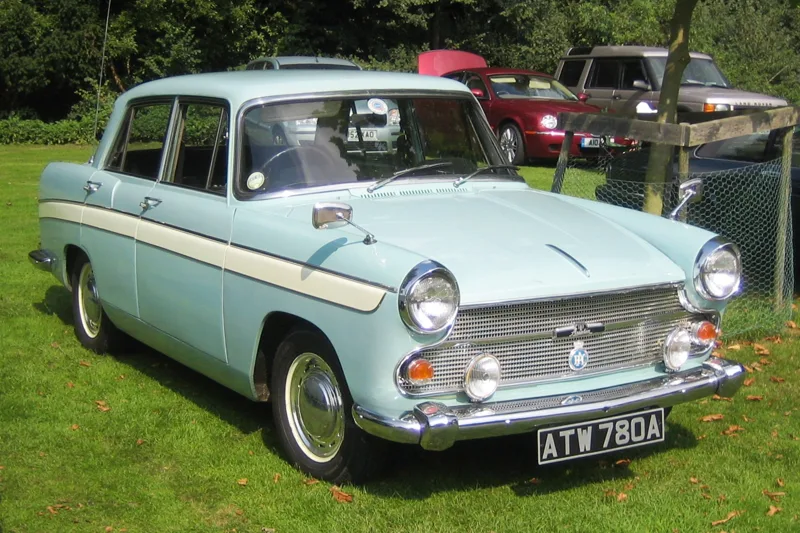
The 1954 Morris Cowley was a four-cylinder midsize car sold until 1959. It was basically a budget Oxford, with less chrome, no heater, fixed front quarter lights and a simpler dash. Launched on 14 July 1954, it sat below the Oxford Series II that had appeared two months earlier, with a smaller engine and simpler fittings.
That engine was the new 1.2-litre (1200 cc) B-Series, which also powered the Austin A40 and the Nash Metropolitan, with 42 bhp at 4,500 rpm. The Oxford's monocoque shell, torsion bar front suspension and live rear axle were shared, though early Cowleys had smaller 8 in (203 mm) brake drums. Some chrome gave way to stainless steel, plastic-covered felt replaced carpet, and the quarter lights were fixed while the main windows wound down. Steering was by rack and pinion, and the top speed was just over 110 km/h (70 mph).
A test of a saloon in 1955 by Motor magazine recorded 115.7 km/h (71.9 mph), 0 to 97 km/h (0 to 60 mph) in 31.5 seconds and 10.1 L/100 km (28.0 mpg imp). The test car cost 702 pounds including taxes. On 12 October 1956 the Oxford's larger 1.5-litre (1489 cc) engine took over, and the styling was amended to follow the Oxford Series III. That car is the Cowley 1500.
Morris Cowley engines and models through the years
| Period | Model | Engine | Notable feature |
|---|---|---|---|
| 1915 to 1920 | Continental Cowley | 1495 cc side-valve four by Continental | Imported engine, gearbox and axles; electric lighting |
| 1919 to 1926 | Bullnose | 1.5 L, 26 bhp, Hotchkiss copy of the Continental | Basic model beside the Oxford |
| 1926 to 1931 | Flatnose | Same as Bullnose | Flat radiator, semi-elliptic springs all round |
| 1931 to 1935 | Cowley (Twelve Four from late 1934) | 11.9 hp, 1548 cc (14/32 optional in 1931) | Lockheed hydraulic brakes, Magna wire wheels |
| 1934 to 1935 | Cowley Six | 1938 cc side-valve six | Replaced the Morris Major; became the Fifteen-Six |
| 1954 to 1956 | Cowley 1200 | 1200 cc B-Series, 42 bhp at 4,500 rpm | Monocoque body shared with the Oxford |
| From October 1956 | Cowley 1500 | 1489 cc | Oxford engine and Series III styling |
The Humber 15 of 1919 to 1927
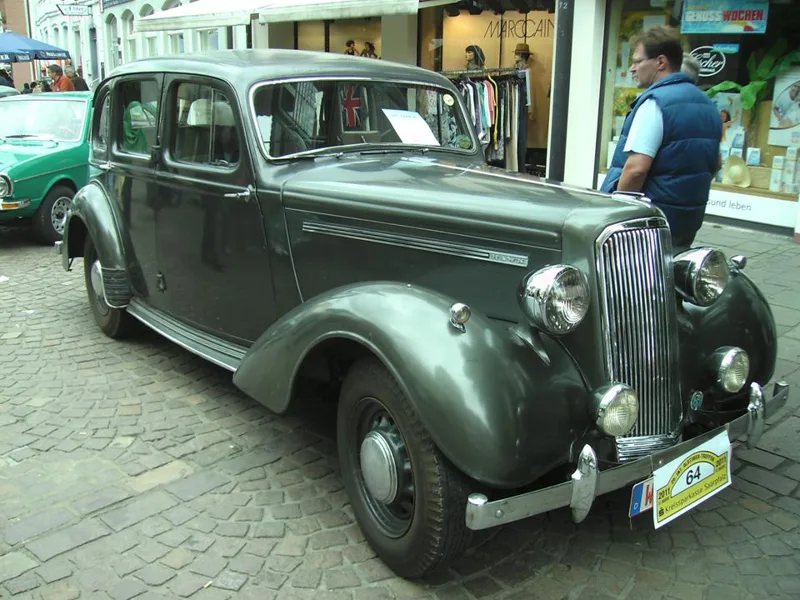
The Humber Fifteen was a medium-to-large car sold as a medium-weight model. Its engine was less powerful than usual, which meant lower annual tax and a more stately pace. Finish was superb, particularly on the tourers, and the professional classes liked these cars. Humber built them from 1919 to 1924 and from 1924 to 1927. In 1927 and 1928 the range was bracketed by a much smaller-engined 14/40 and, late that year, by a six-cylinder 20/55 of 20 hp whose capacity was ten per cent greater.
The Fifteen was on show at Olympia's first post-war Motor Show in November 1919. Commentators called the design common-sense rather than sensational, with careful attention to detail, and a blue saloon with a gleaming black roof and mouldings caught the eye.
The 15.9 had a 2.8-litre in-line four, cast in a single piece with a removable head. Its overhead inlet valves and side-by-side exhaust valves were new for Humber, and the equivalent pre-war 3.3-litre car had twin overhead camshafts. Buyers chose a saloon or a five-seat tourer, and a saloon landaulette joined the range. The driver had no door of his own: the brake and gear levers were on his right, and the spare wheel and tyre were mounted outside the body at the same spot. The landaulette had a glass partition with sliding panels behind the front seats and a fold-away extra seat in the rear that could face either side.
A hand lever by the gear lever worked internal expanding brakes on the back wheels, while the foot pedal tightened a band round a drum just behind the gearbox. The Times found a little fore-and-aft movement in the suspension but called it comfortable on rough roads. The half-elliptic springs sat above the axles, and Hartford shock absorbers were added at the rear from 1923.
The Times road-tested a five-seat open tourer and called it an expensive car, since an owner driving it himself had to attend to it daily. The owner-driver's needs had been thought through. The magneto, dynamo, starter and carburettor were easy to reach, the clutch release lubricated itself, and spring-loaded ball-valve greasers replaced grease-cups, with a special gun supplied. The fuel gauge stayed readable under a full luggage grid, and the hood had an opening for a signalling arm. Faults were small: draining the engine oil meant removing an undershield, and the carburettor control springs made the rear tappet plate awkward to remove.
The best run was 80 km/h (50 mph), where the reviewer felt 89 km/h (55 mph) was within reach. Knee room in front was unusually generous, and he judged it the best five-seat owner-driver car the paper had tried, even if a little narrow for five. The engine was lively, quiet and flexible, silky at the top end and quick to respond. The clutch could grab, but the gears were easy and quiet and the steering was delightful. Brakes and suspension rated only satisfactory.
Humber 15/40, the revised car of 1924
The 15/40, a lightly revised car, appeared at the Olympia Motor Show in October 1924. Humber worked to damp vibration: engine and gearbox rode on a subframe, with the engine hung on enclosed springs at the front and steel trunnion blocks at the rear, so that it stayed firm fore and aft but could swing a little.
Bodies now had four doors rather than three, rear seats were wider, and mudguards hugged the wheels to limit mud.
The big change was braking. Humber-Perrott semi-servo brakes went on the front wheels, worked by the same foot pedal that already drove the transmission brake. A floating shoe gave the semi-servo effect, which relied to some extent on forward motion, so backing up delivered only half the force. To handle the extra load, the front and stub axles were strengthened, the springs widened, and a new cross tube tied the dumb irons together. Adjusting the front brakes meant jacking up that end and turning hand nuts until both wheels had equal pressure, and the next year a compensating device linked the two sets of brakes. Testing it in August 1924, The Times ended its report with "travelling was a pleasure".
Lanchester Fourteen Roadrider, introduced in 1936
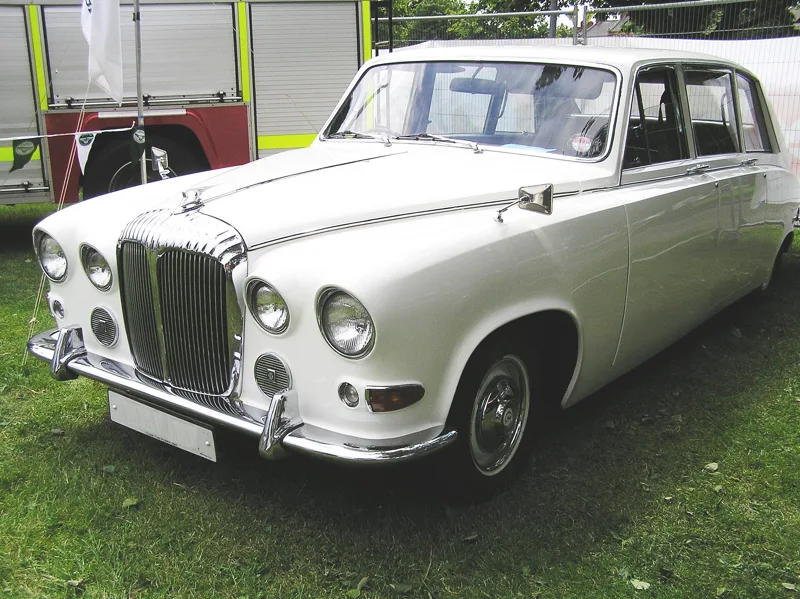
The Lanchester Fourteen Roadrider was a six-cylinder car that the Lanchester Motor Company introduced at the beginning of September 1936. The name came from its special suspension features, and it was billed as the cheapest six-cylinder Lanchester ever. It took over from the 12 hp Light Six, fitting a bigger 14 hp engine into the Eleven's chassis and body. The four-light, four-door sports saloon had a new razor-edge body, and a wholly new Roadrider shape of similar look followed within twelve months.
Chassis, engine and gearbox followed usual Lanchester habits. That meant the Daimler fluid flywheel and a self-changing, pre-selective four-speed gearbox, with final drive through an underslung worm. Picture the fluid flywheel as two fans facing each other, one spinning and pushing the other through moving oil. Magna-type wire wheels and chrome-plated bumpers were standard, coachwork was new, upholstery was all leather or leather with cloth, and the screen had twin wipers driven by a remote motor from the bottom.
The bare chassis cost 250 pounds. A fabric-topped saloon was 325, a panelled saloon 330, the sports saloon 340 and the coupe 330.
The new Lanchester Roadrider of 1937
In early October 1937 Lanchester announced a new Roadrider said to be "breaking fresh and important ground". Engine, chassis and body all changed and grew, and the front suspension was independent. A manual synchromesh gearbox with a normal clutch was available at a lower price. The car was a plainer, less luxurious cousin of the Daimler New Fifteen, with the same two standard bodies and a smaller engine.
The crankshaft ran in four bearings and the engine sat on rubber mounts. Power still passed through the Daimler fluid flywheel and self-changing gearbox, but the final drive was now spiral bevel. Up front, coil springs on parallel links gave independent suspension, and the rear half-elliptics gained a torsion bar stabiliser. The wheelbase grew by 191 mm (7.5 in) and the track by 102 mm (4 in), giving more room for seats between the axles. Bendix mechanical brakes acted on all four wheels.
With the radiator well ahead of the front axle, the bonnet looked long and the car looked big. Owners got adjustable front seats, a telescopic steering column and a new boot with its own lockable space for the spare wheel. Lanchester estimated consumption at 22 mpg and top speed at 70 mph. The saloon and sports saloon each cost 375 pounds, and a version with a four-speed synchromesh gearbox and friction clutch cost 350.
The post-war Lanchester Fourteen and the Leda
Journalists saw the new Fourteen on 9 October 1950, a day before the public announcement. Only the fluid flywheel and pre-selective gearbox looked familiar. The plan was to swap the coachbuilt body for an all-steel one when the factory space destroyed in the Coventry raids had been rebuilt, which would cut weight, allow a lower price and permit shipment for assembly overseas. The Times found only two points of technical interest: the laminated leaves, normally bars, of the front springing, and lubrication that happened automatically each time the car was started and warmed up. The chassis otherwise differed little from the pre-war one. The engine, though, was new: a 1968 cc four in place of the 1809 cc six.
The new engine was flexibly mounted to isolate torque reactions and had a balanced three-bearing crankshaft. The usual Daimler fluid flywheel and pre-selective gearbox carried the power back through a Hardy Spicer open propeller shaft to a hypoid bevel axle. The frame was box section, independent front suspension used laminated torsion bars, and Girling hydro-mechanical brakes were fitted.
The body was entirely new and coachbuilt, a four-door six-light saloon at 895 pounds. Exported with the lighter all-steel body, the car was named the Lanchester Leda.