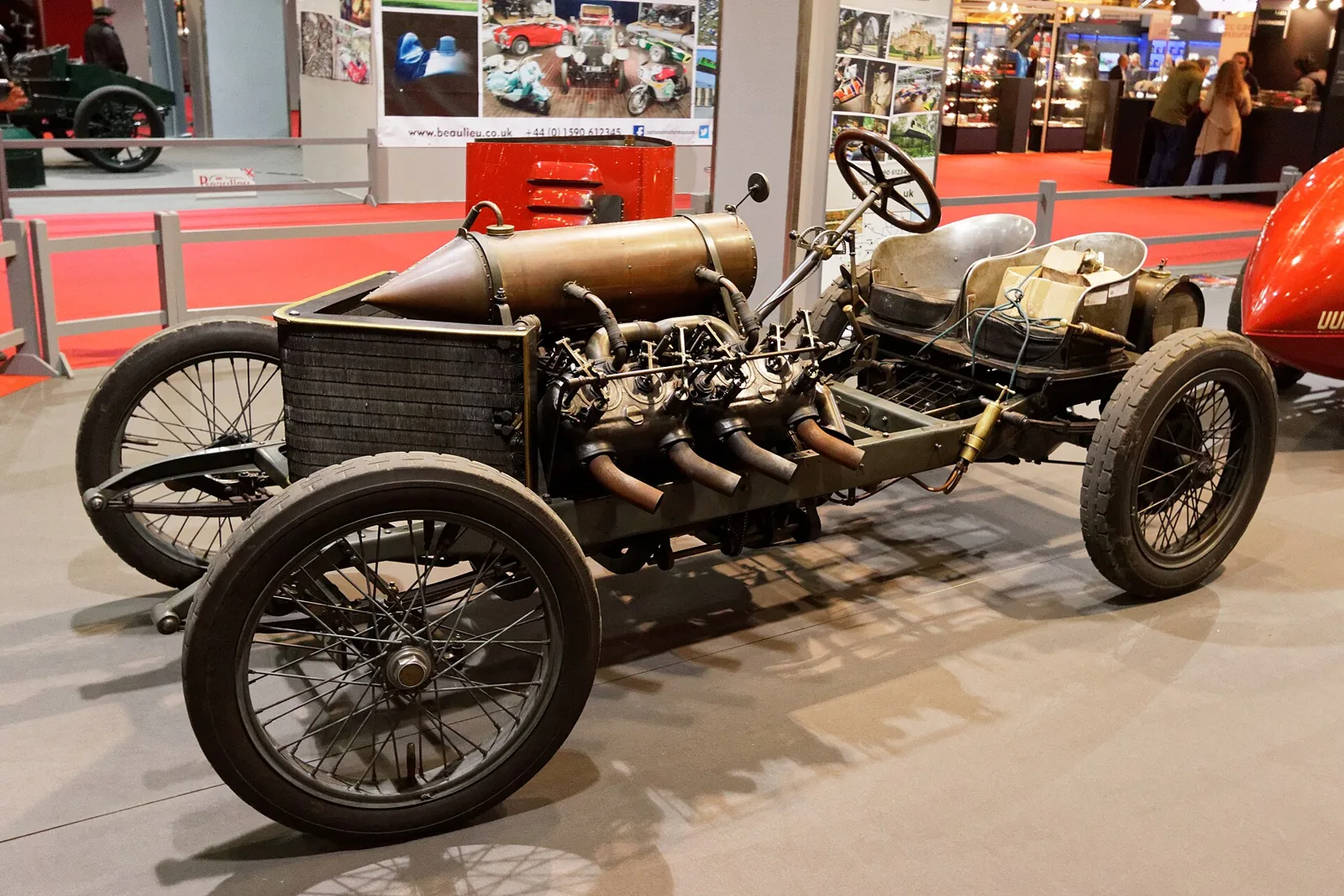
British investors, a 1904 masterpiece, a failed steam bus venture and the S.T.D. Motors group that broke apart in 1934.
English backers held Alexandre Darracq's Suresnes car maker from 1902, then regrouped it as S.T.D. Motors in 1920 alongside Sunbeam and Talbot. The group collapsed in 1934, and its French Talbot business was sold to Antonio Lago in 1935, who renamed it Talbot-Lago.
A Darracq and Company Limited was the English firm that owned Alexandre Darracq's French car maker from 1902 and was renamed S.T.D. Motors in 1920. The business ran as a British-French marque with cars built at Suresnes near Paris and a London board controlling the money, until its groups fell apart in 1934.
How did the English company come to own Darracq?
English investors led by William Beilby Avery bought A. Darracq et Cie on 30 September 1902 and formed A Darracq and Company Limited. They paid Alexandre Darracq's firm and resold it to other backers for five times what they had paid, while Darracq kept just under half the shares.
The attraction for the British backers was French automotive know-how, which was then highly regarded. The company was incorporated in England because French flotation procedures were harder to complete, and across the Atlantic the deal was read as French industry passing its risk to British investors.
The English group was headed by Avery of W and T Avery, a Birmingham scales maker, together with J S Smith-Winby, a London lawyer who had retired from the army, and Colonel A Rawlinson. Eight other investors took up the remaining shares, and there was no public offering.
A French car maker run from London that became a group of Sunbeam, Talbot and Darracq businesses before its collapse.
How quickly did the Darracq cars sell?
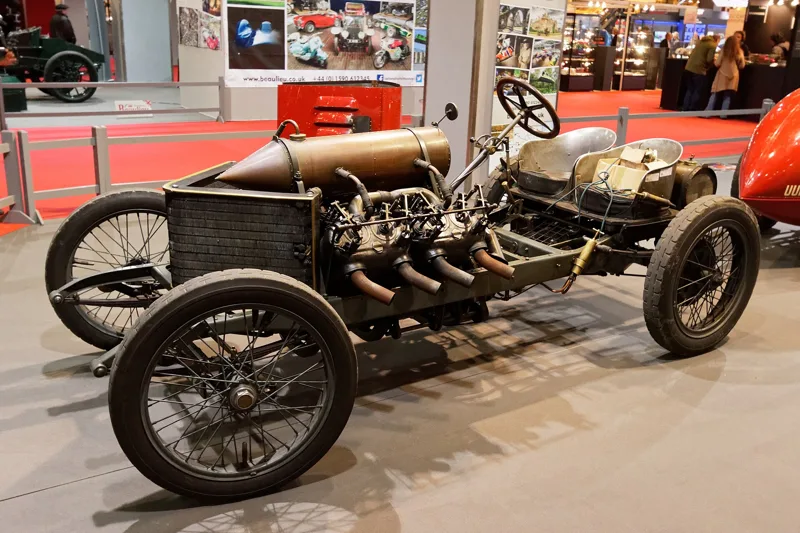
The company expanded fast on the back of its 1904 models. By 1903 four models were on offer, and the Flying Fifteen, a 3-litre four launched in 1904, helped the marque win a ten percent share of the French market. Almost 75 per cent of 1904 output went abroad, and demand outran factory capacity.
The chairman reported in late 1904 that sales were up 20 per cent, although rising costs meant profit grew more slowly. Orders ran well ahead of supply, so the factory at Suresnes had to be enlarged by as much as 50 per cent, and the 1904 models abandoned flitch-plated wooden chassis for pressed steel.
The Flying Fifteen became Alexandre Darracq's best-known design. Nothing about its layout was outstanding, but every part was in such balance that the car earned a reputation for quality. Its frame was formed from one steel sheet, a sign of how far the company had moved from its earlier construction.
Why did the company reconstitute itself in 1905?
The directors reorganised the business in 1905 to raise more capital and to deal with shareholders who had blocked new share issues. The company was technically sold and then reissued, creating A Darracq and Company (1905) Limited, and after the restructure more than 80 per cent of the shares sat in English hands.
Alexandre Darracq stayed as managing director in Paris, and Rawlinson became managing director of the London branch. J S Smith-Winby remained chairman. In 1905 the company also bought a large property in Lambeth, where new cars could be examined, adjusted and stocked before the peak sales period.
Speed was part of the marketing. The chairman told shareholders that Darracq cars held all six of the automobile world's speed records, which had been held for more than twelve months, and that K Lee Guinness had added another.
What went wrong with the steam bus venture?
The company formed a partnership with Leon Serpollet in 1905 to make steam-powered buses, and a Suresnes factory was built to make 100 chassis a month. The buses did not succeed, and by 1910 the directors had written off 156,000 pounds of investment in heavy steam vehicles.
The venture rested on Alexandre Darracq's advice, and it was one of several strains on the business in the years that followed.
Who ran the company after Alexandre Darracq?
Alexandre Darracq was replaced in late 1911 by Paul Ribeyrolles, a former head of the Gladiator Cycle Company and a motor racing enthusiast. Darracq left in June 1912, after he had already sold his shares, and a shareholder inquiry in 1913 found poor co-operation between London and Suresnes.
The cheap car that Darracq had wanted was launched at the end of 1911. Priced at 260 pounds, the 14-16 hp model used the Henriod rotary valve unit, which was too weak and tended to seize. The company blamed the failure on the difficulty of quantity production, and the damage to the marque was severe.
Owen Clegg, who had come from Rover in Coventry, took over as works manager. He had designed the Rover Twelve, and he adapted it for Darracq's new model, a 16hp car that became known as the Clegg-Darracq. The Suresnes factory was retooled for mass production, which was unusual for the period.
The reforms paid off in output. The factory was turning out sixty cars a week, and by 1914, 1,200 men were building fourteen cars a day. Norman Craig, who had led the inquiry, became chairman of the company.
How did the First World War change the business?
The Suresnes factory switched to war materials during the First World War. In 1916 the French assets moved into a new company, Societe Anonyme Automobiles Darracq, while the British assets went to the British Darracq Motor Engineering Company, and the Suresnes land was leased back.
After the Armistice of 11 November 1918, the group went on a buying spree of motor-related businesses. It bought Heenan and Froude, the Worcester engineers, and then Clement-Talbot at the end of 1919.
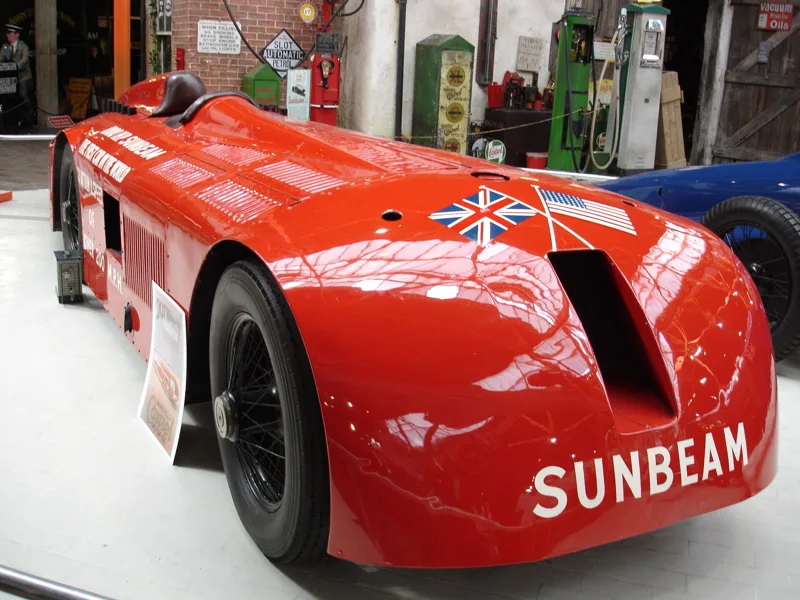
Early in 1920 the group acquired Jonas Woodhead and Sons, a Leeds spring supplier. In June 1920 it bought control of the Sunbeam Motor Car Company, and in August it added W and G Du Cros of Acton, which ran taxi operations and built bus and van bodies.
What was S.T.D. Motors?
In August 1920 the holding company was renamed S.T.D. Motors Limited, a name taken from Sunbeam, Talbot and Darracq under one owner. Each business kept its own identity, with Sunbeam cars at Wolverhampton, Talbot cars at North Kensington and Darracq cars at Suresnes, while selling and advertising were centralised in Britain.
The Darracq name did not last long inside the group. After Clement-Talbot joined, the Suresnes products were branded Talbot-Darracq for a time, and the name was dropped from all products in 1922. Cars made at Suresnes and imported into England were sold as Darracqs, and for their first two years they carried Talbot Darracq badges to avoid confusion with the English Talbots.
A 1924 breakdown of the group listed its British and French businesses. The English side included Clement-Talbot in North Kensington, the Darracq Motor Engineering Company in Fulham for bodies, Sunbeam at Moorfield, and Jonas Woodhead at Osset, while the French side was led by Automobiles Talbot at Suresnes, alongside the holding interests in Du Cros and Heenan and Froude.
Why did S.T.D. Motors collapse in the 1930s?
S.T.D. borrowed about 15 per cent of its paid-up capital in 1924, probably to fund racing ambitions, but higher profits did not follow. By 1930 a court-sanctioned reconstruction had recognised heavy losses, and the 1924 loans could not be repaid when they fell due in early 1934.
Price Waterhouse was asked to report on the finances, and its main criticism was that the board had failed to coordinate the group. In 1931 the whole board resigned after shareholders called for new blood, and a new board under General Sir Travers Clarke set about implementing the call for centralisation and standardisation.
The end came in October 1934. Just before the Olympia motor show opened, the lenders' trustees applied for receivers for Sunbeam and Clement-Talbot. Clement-Talbot was saved from receivership and could be sold when its directors chose, but Sunbeam went through a receivership that stretched into 1935.
What happened to the Talbot business and its owners?
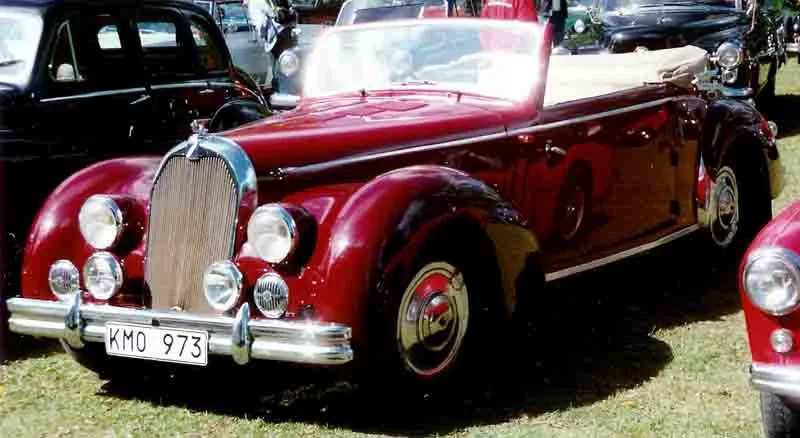
Rootes Securities took control of Clement-Talbot and the Darracq Motor Engineering Company after a provisional agreement in January 1935, and the Rootes Group bought Sunbeam from the receiver in the summer of 1935. The French Talbot business went to Antonio Lago, the manager of the Suresnes plant, who created Talbot-Lago.
Lago's purchase came once the group's commitments had been clarified and the sale of Sunbeam was complete, and once the French Talbot company had settled its commitments to its bankers. The Suresnes works, which had built Darracqs for so long, became the home of Talbot-Lago.
Where do Darracq cars appear today?
Darracq is remembered for early Japanese motoring, a British film and a television restoration. Prince Arisugawa Takehito brought a Darracq 20 CV home from a European tour in 1905, and a 1904 Darracq starred in the 1953 film Genevieve.
Prince Arisugawa was the first royal to drive a car personally. He also persuaded Uchiyama Komanosuke to build Japan's first home-made car, copying the Darracq's layout, and the Darracq was the first vehicle the future Emperor Taisho rode in.
On the 100th episode of Wheeler Dealers, Mike Brewer and Edd China brought a 1903 Darracq back into running order, with the car on loan from the Haynes museum. They drove it in the London to Brighton veteran car run, a project inspired by the Genevieve film.
Key milestones at a glance
| Year | Milestone | Detail |
|---|---|---|
| 1896 | French firm founded | Alexandre Darracq founds A. Darracq et Cie at Suresnes |
| 1902 | English buyout | A Darracq and Company Limited buys the French firm on 30 September |
| 1905 | Reconstitution | A Darracq and Company (1905) Limited, with over 80 per cent of shares in England |
| 1911 | Henriod engine model | 14-16 hp model at 260 pounds, with an underpowered rotary valve engine |
| 1920 | S.T.D. Motors | Sunbeam, Talbot and Darracq under one owner from August |
| 1922 | Darracq name dropped | The name is removed from all products |
| 1934 | Receivership | Receivers sought for Sunbeam and Clement-Talbot in mid-October |
| 1935 | Talbot-Lago | Antonio Lago creates Talbot-Lago from the French business |
What is the Darracq legacy?
The lasting pieces in this record are the early Darracq cars, the Flying Fifteen and the Suresnes works, which carried on under Antonio Lago after the English owners had gone.