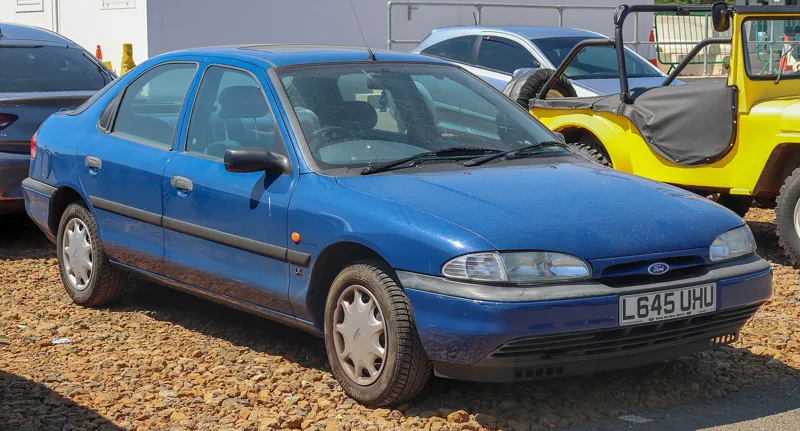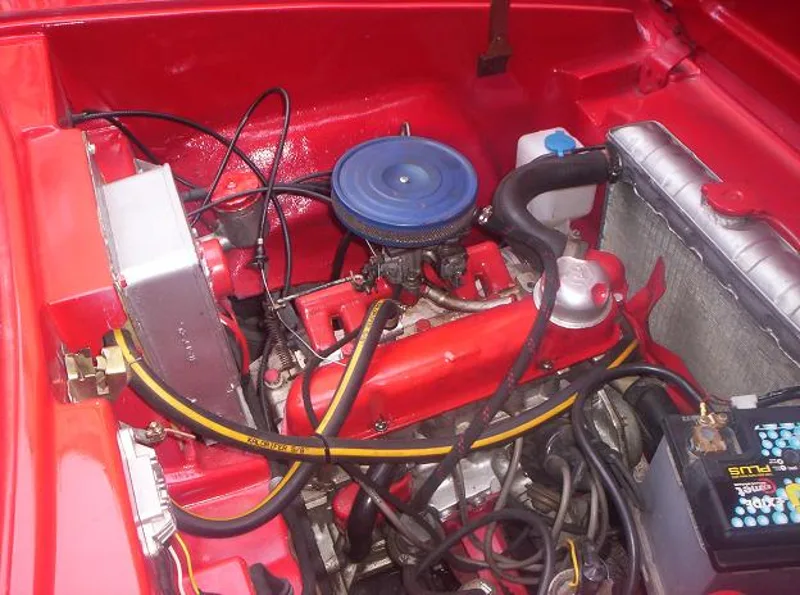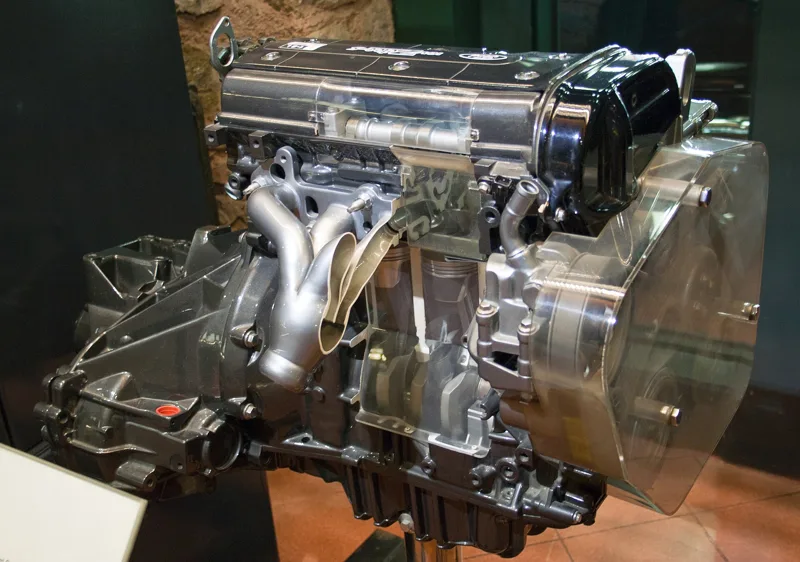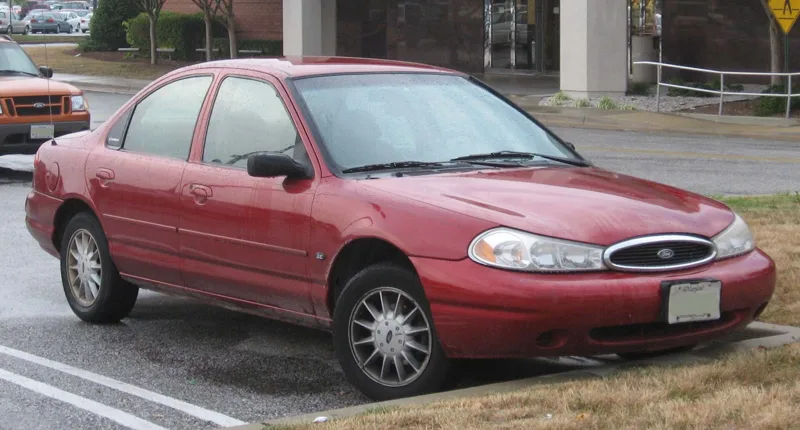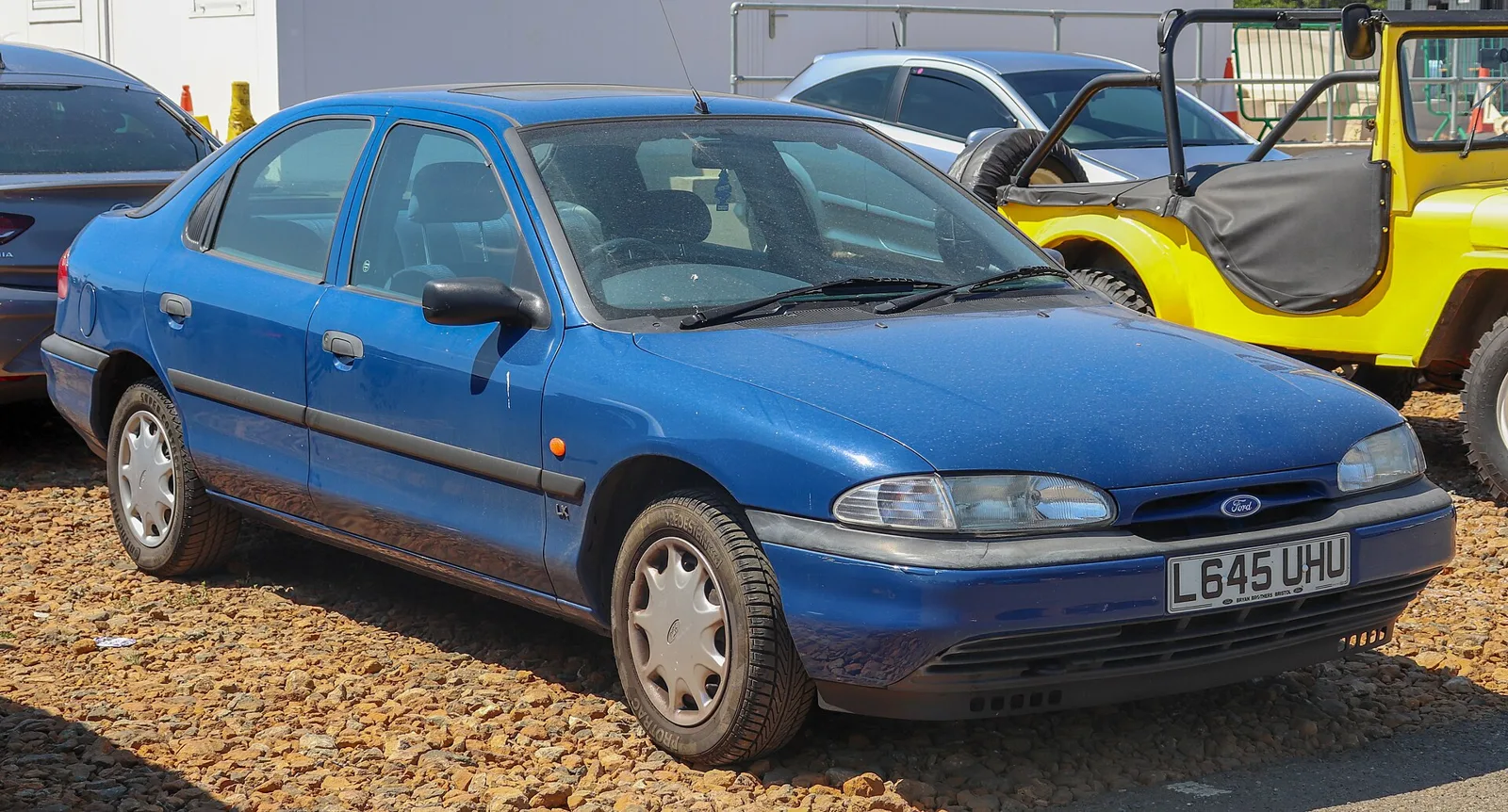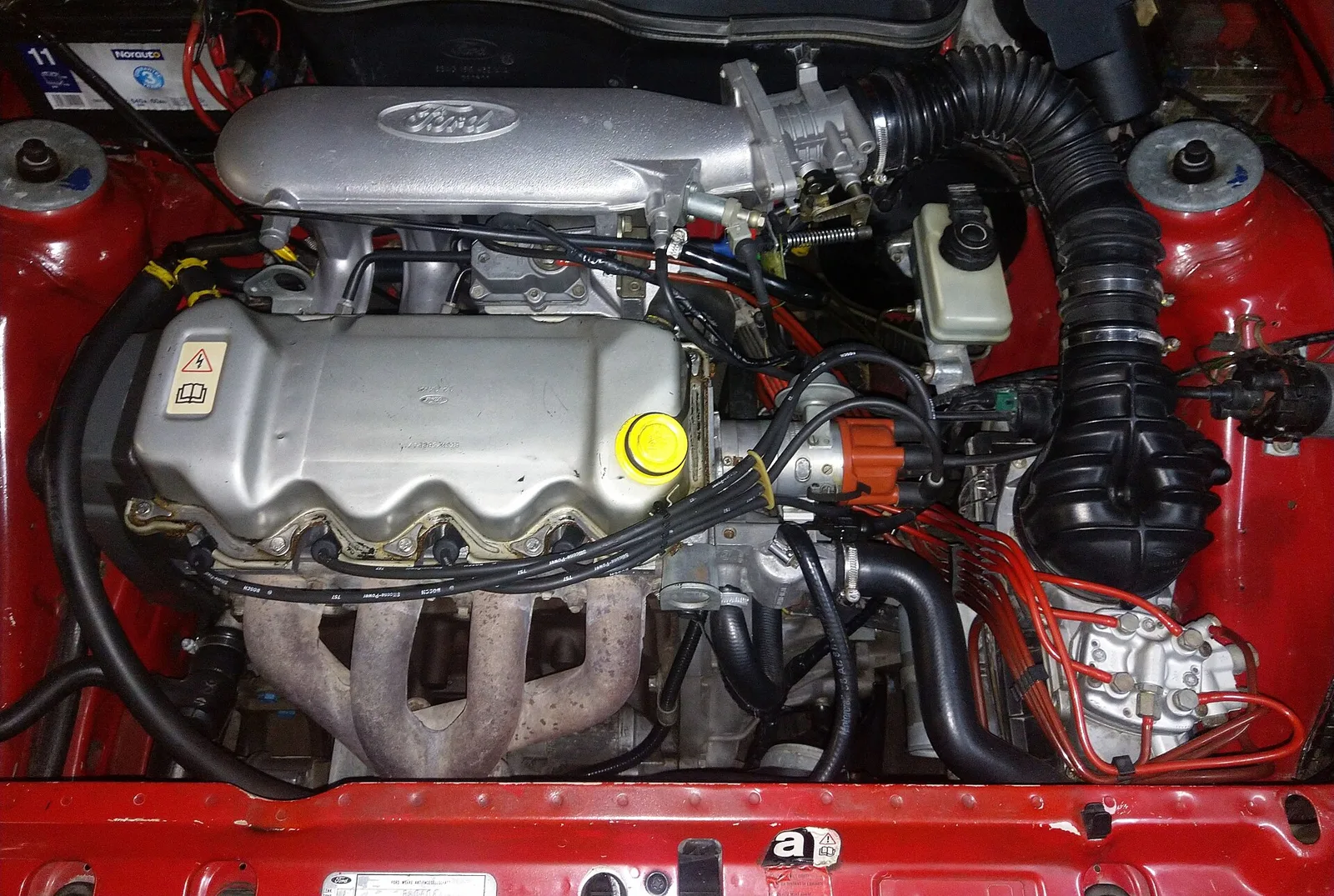
A cam-in-head four from 1980 that shared the European and North American Escort, carried a reputation for harshness and ran in production until 2004.
The Ford CVH was a straight-four petrol engine built from 1980 to 2004 with a cam-in-head layout, two valves per cylinder and a hemispherical combustion chamber. It powered the Escort, Fiesta, Orion and Sierra in Europe and was known for noise and sludge problems.
Ford's CVH was a four-cylinder petrol unit that the company built from 1980 until 2004. Its name refers to a hemispherical combustion chamber, and it was the one major part that the European and North American Escort had in common. Capacities ran from 1.1 to 2.0 litres, covering economy cars through to rally-bred hot hatchbacks.
What was the Ford CVH engine?
The CVH was a straight-four petrol engine from Ford with one camshaft mounted low in the head and two valves per cylinder. Its hemispherical combustion chamber came from valves set at an angle, and Ford fitted it to Escorts, Fiestas, Orions and Sierras in Europe, plus Escorts and Focus models in North America.
The engine name stood for Compound Valve-angle Hemispherical or Canted Valve Hemispherical, depending on which reference is consulted. Either way, the word hemispherical described the shape of the combustion chamber rather than the whole engine.
A hemispherical head without twin camshafts, carried across two decades of Escorts, Fiestas and Focus models.
Where did the CVH come from?
Engineers began work on the design in 1974 as part of Ford's Erika world car programme. That programme produced the third-generation European Escort and the 1981 North American Escort, which shared the CVH but were otherwise quite different cars.
The CVH largely replaced the overhead-valve Kent, sometimes called the Crossflow, across Ford of Europe's range. A short-block version of the Kent, the Valencia, stayed in production for many years and outlived the CVH by two years, sitting below it as the entry-level unit in the smallest Fiesta and Escort.
Engines for North America were built at Ford's Dearborn Engine plant. Engines for Europe and the UK came from the new Bridgend Engine plant in Wales.
How was the CVH designed?
The CVH used a cam-in-head layout with a single low-mounted camshaft that worked two valves per cylinder through rocker arms. The valves sat at a compound angle, which allowed a hemispherical chamber without the twin camshafts or elaborate rocker gear that a conventional hemi head needs.
It was also the first European Ford engine to use hydraulic valve lifters. The valve springs were very stiff, at 220 lb (100 kg) at full lift, because the rocker arms and tappets were heavy. Those springs kept the valves from floating up to about 6,700 rpm but added friction to an already high-friction flat-tappet design.
From 1986 the lean burn versions used reshaped combustion chambers to improve swirl. Those heads were no longer strictly hemispherical, although the name stayed the same.
Which CVH versions were built?
The CVH came in many sizes, and the 1.1 litre was the shortest-lived. It debuted in the 1980 Escort Mk3 for Continental Europe only, offered as an alternative to the 1.1 litre Valencia, and it offered almost no advantage over that simpler engine. It was dropped in 1982.
The 1.3 litre appeared in the 1980 Escort and was used in the Orion and Fiesta from 1983 to 1986. A North American 1.3 was planned, but testing found it too weak and unable to meet emissions rules, so those plans were scrapped just months before production. The 1.4 litre Lean Burn replaced it in the Escort, Orion and Fiesta from early 1986, using a Weber 28/30 TLDM carburettor.
| Variant | Displacement | Bore and stroke or bore | Output | Era |
|---|---|---|---|---|
| 1.4 L Lean Burn | 1,392 cc | 77.2 mm x 74.3 mm | 75 hp (55 kW), European trim | 1986 onward |
| 1.6 European EFI | 1,597 cc | 80 mm x 79.5 mm | 108 hp (79 kW) | XR3i and Orion GLSI |
| 1.6 European turbo | 1,597 cc | 80 mm x 79.5 mm | 132 hp (97 kW) at 6,000 rpm | RS Turbo Escort |
| 1.6 North American HO | 1,597 cc | 80 mm x 79.5 mm | 80 hp (59.7 kW), 1983-1985 | Higher output version |
| 1.6 North American turbo | 1,597 cc | 80 mm x 79.5 mm | 120 hp (89 kW) | 1984-1985 |
| 2.0 L SPI2000 | 2.0 L | 84.8 mm bore | 110 hp (82 kW) | 1997-2004 |
Did the CVH compete in motorsport?
The European turbo 1.6 was developed by Ford Europe for the RS Turbo Escort and later the Fiesta RS Turbo. It made 132 hp (97 kW) at 6,000 rpm and 133 lb ft (180 N m) at 3,000 rpm, using Mahle pistons that were stronger than the standard cast units.
The compression ratio was lowered to 8.3:1 so that higher boost pressure could be used, and the engine needed only 7 psi (0.48 bar) to reach its quoted output.
A more serious competition car was the Escort RS1600i, which carried a 115 hp (85 kW) version of the 1.6. Ford Motorsport Germany developed it for FIA Group A homologation, with a reworked cylinder head, solid cam followers and bronze bearings.
In North America, Ford's Special Vehicle Operations developed a turbocharged 1.6 with help from Jack Roush. It produced 120 hp (89 kW), which was 50 per cent more than the carburettor HO, and appeared in the 1984 and 1985 Escort GT Turbo and EXP Turbo. Roughly 10,000 cars were built, and those models came with the TRX package of upgraded suspension and Michelin tyres.
Why was the CVH criticised?
Through its twenty-year production life, the CVH had a reputation for excessive noise, vibration and harshness. The motoring presenter Jeremy Clarkson mocked the engines of CVH-powered Escorts as too rough for even a kitchen appliance maker to use.
Most of that harshness came from the cylinder head and valvetrain. The flat-tappet design and the stiff springs added friction to the valvetrain.
Sludge was a more serious problem. The camshaft was oiled through small holes in the head next to the lifter bores, and those holes could block with sludge when service intervals were missed or poor oil was used. Ford revised the crankcase ventilation circuit several times, but the problem was never completely cured. A worn camshaft then caused heavy clattering from the top end, especially at high speed.
A later problem was valve seats dropping out of the head, which happened most often in VIN P engines and sometimes with no warning. Most seats fell from cylinder 4, then cylinder 2. A typical 2.0 litre SPI in a Focus lasted about 100,000 to 120,000 mi (160,000 to 190,000 km), but a failure could come as early as 70,000 mi (110,000 km). A dropped seat damaged the cylinder wall, piston and head.
What were the CVH hybrids?
In 1982 the German firm Dr. Schrick GmbH, later AVL Schrick, developed a double overhead camshaft head for the 1.6 litre block. Its prototypes made 99 kW (133 hp), but the head never reached series production and development stopped when the multi-valve Zetec arrived.
A more practical hybrid was the ZVH or ZE-VH, which put a CVH eight-valve head on a Zeta or Zetec block. The two engines share cylinder bore spacing, water and oil passage locations and head bolt positions, so owners could keep the original head and fuel system while adopting a stronger, larger block.
What replaced the CVH?
The Zeta and Zetec engines took over from the CVH. The Zeta reused the 88 mm stroke that first appeared in the 1.9 litre CVH and was kept for the 2.0, and the Zetec introduced multi-valve heads to the Escort and Fiesta range.
Production of the CVH ended in 2004 with the Focus LX and SE sedans and wagons, which carried the last examples of the 2.0 litre SPI. That 2.0 litre engine had an 84.8 mm bore and produced 110 hp (82 kW) with 125 lb ft (169 N m) of torque.
What were the North American CVH names?
North American buyers knew the CVH under several names as the engine changed. The 1.9 litre sold as the 1.9L SEFI from 1991 to 1996 in the Escort, then as the Split Port Induction 2000, or SPI2000, from 1997 to 2002. From 2000 to 2004 it was simply called the Split Port when it appeared in the Ford Focus.
The 2.0 litre used Ford's Split Port Induction, a form of variable-length intake manifold. Each intake path divided into a primary passage, which held the injector and fed air tangentially for swirl, and a secondary passage with a runner control valve. That valve opened at high speed and wide-open throttle to add airflow and raise volumetric efficiency.
The 2.0 was made by boring the 1.9 out to 84.8 mm (3.34 in). Like the 1.9, it was a non-interference design with its water pump driven by the timing belt. Output was 110 hp (82 kW) and 125 lb ft (169 N m), and Ford cast the words "2.0L Split Port" into the top of the valve cover so owners could identify it.
How did the CVH reach China?
Chery built a 1.6 litre CVH for its SEAT Toledo based vehicles. The company bought the production line for the engine in England and had it moved to Anhui, and the first engines left that line in May 1999.
The Chinese-built engine carried the codename SQR480 and powered the Chery Fulwin from 1999 to 2006. Chery later replaced the CVH with its own ACTECO engines, which ended the CVH's life in China.
Which small makers and kit cars used the CVH?
Because Ford sold the CVH on to other manufacturers, it appeared in small-volume sports cars and in owner-built kits. The Morgan 4/4 used the 1.6 litre from 1982 to 1993, and the Caterham CVH used it from 1986 to 1991.
Other users included the Panther Kallista, with a 1.6 litre from 1983 to 1989, and the Ginetta G32, which used a 1.6 litre from 1989 to 1992. The Reliant Scimitar SS1 took 1.3, 1.4 and 1.6 litre versions from 1984 to 1990, and the Scimitar SST and Sabre followed with smaller units in the early 1990s.
Kit cars also used the engine, including the Westfield SE with a 1.6 litre, the Sylva Mojo and Mojo 2, and the Stuart Taylor Mark 1. A handful of tuners, among them Burton Power, Specialised Engines, Ferriday Engineering and Norris Motorsport, sold performance parts and complete engines to CVH owners who wanted more power.