A trademark threat created the Zetec name, a Yamaha and Mazda collaboration produced the Sigma, and a reworked Renault design kept Brazil moving.
Sigma was a 1995 small four-cylinder from Ford, Mazda and Yamaha, Zetec started as a 1991 4-valve family renamed after a Lancia trademark threat, and CHT was a Brazilian-built, Renault-derived engine from 1983. Three separate designs, linked mostly by Ford's small cars.
Ford's best-known engine badge exists because a rival carmaker owned the name it first wanted. The Zeta engine of 1991 had to be renamed Zetec after Lancia, which held the Zeta trademark, threatened to sue. The replacement word then became so familiar that it outlived the engine: today it survives only on trim levels.
Ford's Zetec, Sigma and CHT engines never formed a single family, though all three spent their careers in small, cheap cars. One was built to replace the old CVH in Europe and America, one came from a Ford, Mazda and Yamaha collaboration, and one was a Brazilian rework of a Renault design. Sorting out which is which explains a good deal of confusion on the used-car market.
Why is it called Zetec?
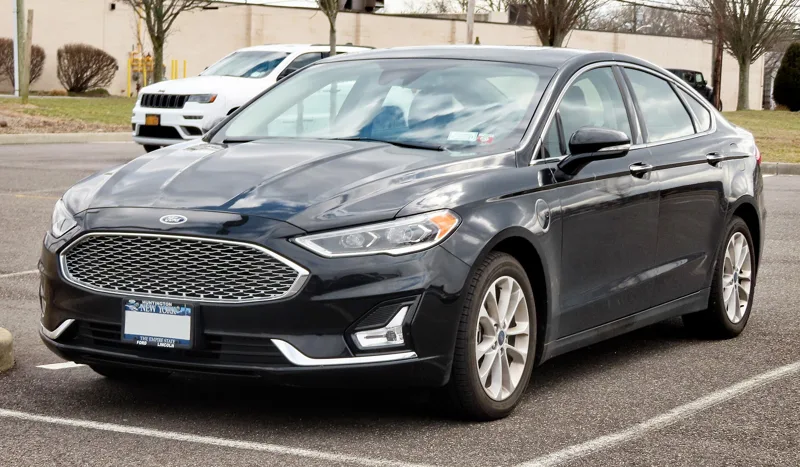
Zeta began as a codename for a cylinder head design. Ford evaluated several systems, each given a name from the Greek alphabet, and Zeta won: a four-valve-per-cylinder, double overhead camshaft layout intended to replace the CVH in both Europe and the United States. Then came Lancia's threat. Ford coined Zetec for the range of 1.6 L to 2.0 L multi-valve engines introduced in 1991, used it heavily in European advertising, and later took it to North America with the Contour.
The word proved stickier than the hardware. Ford applied it to other high-tech fours long after the original design ended production in 2004. The company even used it for a Formula One engine: Cosworth built the 3.5-litre Zetec R V8 for Ford in 1993, and Benetton used it in 1994, the season Michael Schumacher won his first World Championship.
Ford's best-known engine badge exists because a rival carmaker owned the name Zeta and threatened to go to court.
How the Zeta and Zetec engines evolved
The first Zetec-branded engine arrived for the 1992 model year in the fifth-generation European Escort, the third-generation Orion and the Mk3 Fiesta. It began as a 1.6 and 1.8 L, and a 2.0 L appeared in 1993 in the all-new Mondeo. Production ran from September 1991 to December 2004.
The original plan called for the Zeta to replace the Dearborn-built CVH, which meant keeping much of the CVH's block architecture for the US. Midway through development the plan shifted, and the Chihuahua plant in Mexico was rebuilt to make the American engines. For Europe, Ford chose to build Zetas at Bridgend, replacing the CVH, and in Cologne.
The US and European engines were nearly identical, but with one crucial exception. American management insisted on a non-interference design, so that a snapped timing belt would not send valves into the pistons. That required different pistons and sinter forged connecting rods, where Europe used conventional cast ones. The price was around 1-2% in fuel economy, which was judged too great a penalty for the European market.
Sticking valves, then Zetec-E and Zetec-R
Early cars suffered from sticking valves, a problem that showed up most in the UK and in cold climates, where drivers change gear earlier, unless a special Ford oil formulation was used. Small changes in 1995 cured it, and the engine became the Zetec-E, with a plastic inlet manifold and EGR derived from the Mondeo.
A further redesign in 1998 produced the Zetec-R. It had a two-piece crankcase to damp noise and vibration, conventional tappets with shims instead of hydraulic ones, and longer connecting rods that lowered the piston compression height. In turbocharged form it powered the Focus RS with 212 bhp (158 kW; 215 PS), dubbed Duratec RS. The Focus ST170 used a Cosworth-modified head with variable valve timing on the inlet cam and 170 bhp (127 kW; 172 PS). Both are Zetec-R engines despite their Duratec badges.
What is the Ford Sigma engine?
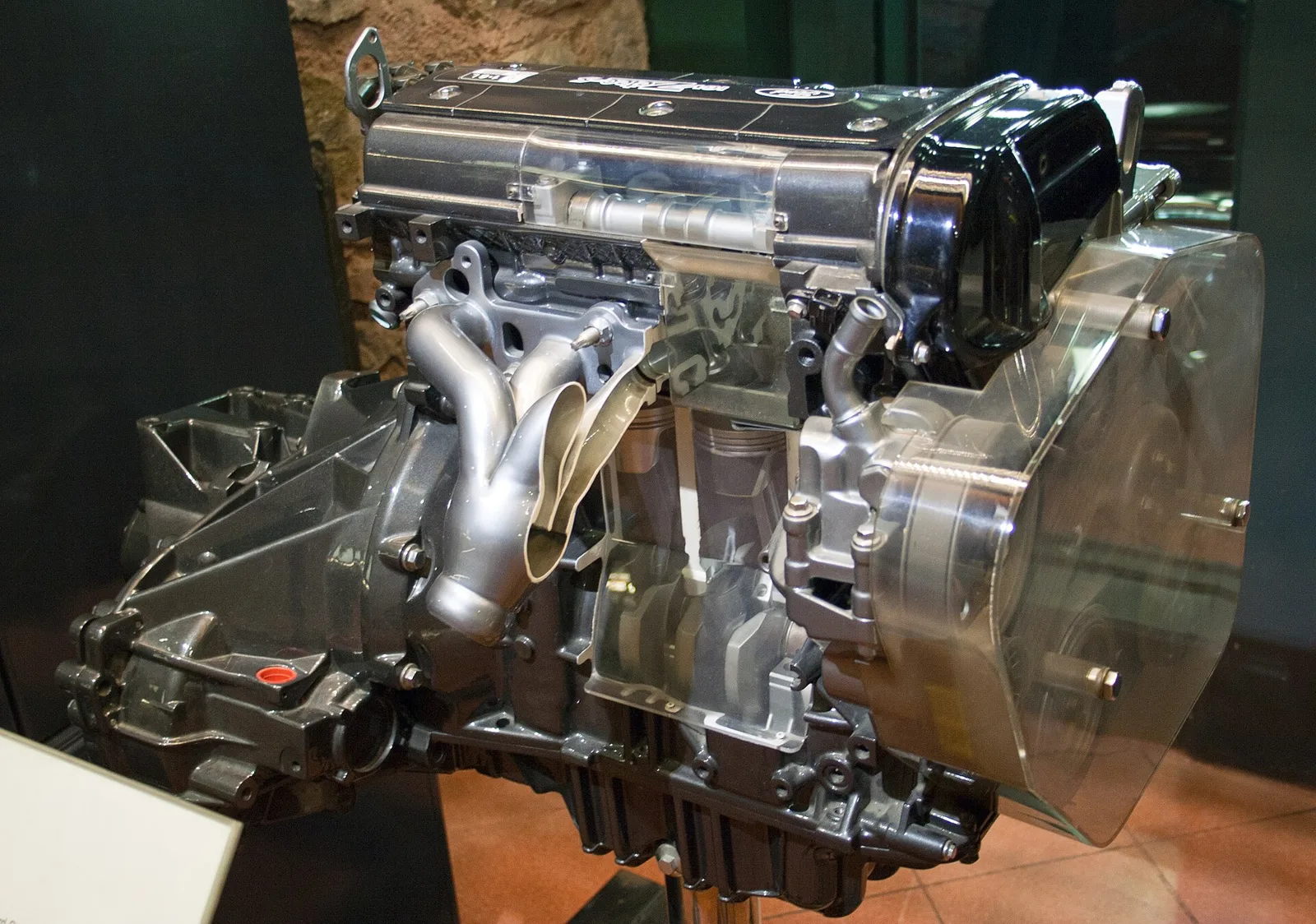
The Sigma is a very different animal. The small straight four was introduced in 1995 to replace the older HCS, a Kent derivative, and the smaller CVH units. It debuted as the Zetec-S, became the Zetec-SE, and was later renamed Duratec, with Ti-VCT as the final upgrade. Development was a joint effort between Ford, Mazda and Yamaha, as with the SHO V6. Ford's acoustics centre in Cologne-Merkenich refined the sound, the Valencia Engine Plant built the Zetec-SE, and Yamaha made the 1.7 L blocks in Japan. Mazda sells it as the MZI.
The Sigma arrived with an unusual list of firsts for Ford: a plastic inlet manifold, a "ladder" main bearing and crankcase assembly, big-end caps forged in one piece and then split, and connecting rods made of powder metal, still an exotic choice then. The trade-off shows up at the end of the engine's life. The bearing ladder cannot be re-machined like a conventional block, so the whole assembly has to be renewed. Tuners have still found ways to extract power, with different valves and skimmed cylinder heads to raise compression.
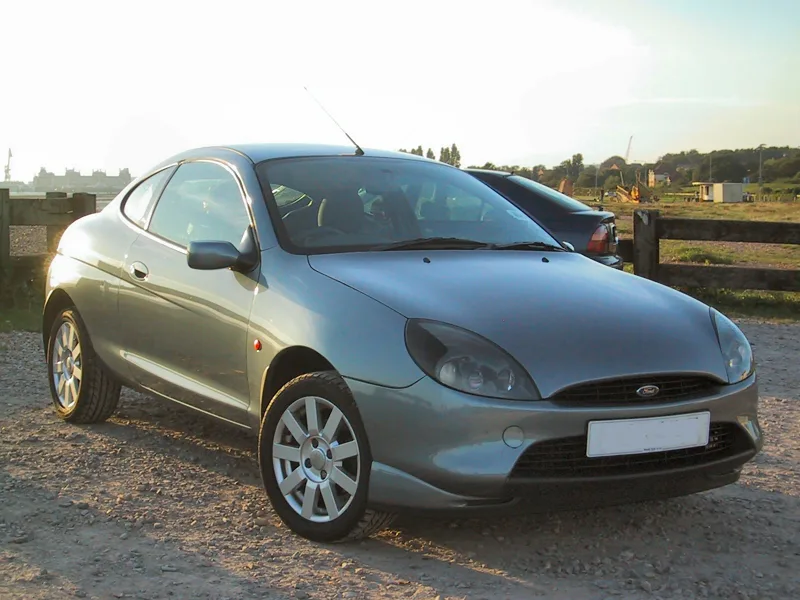
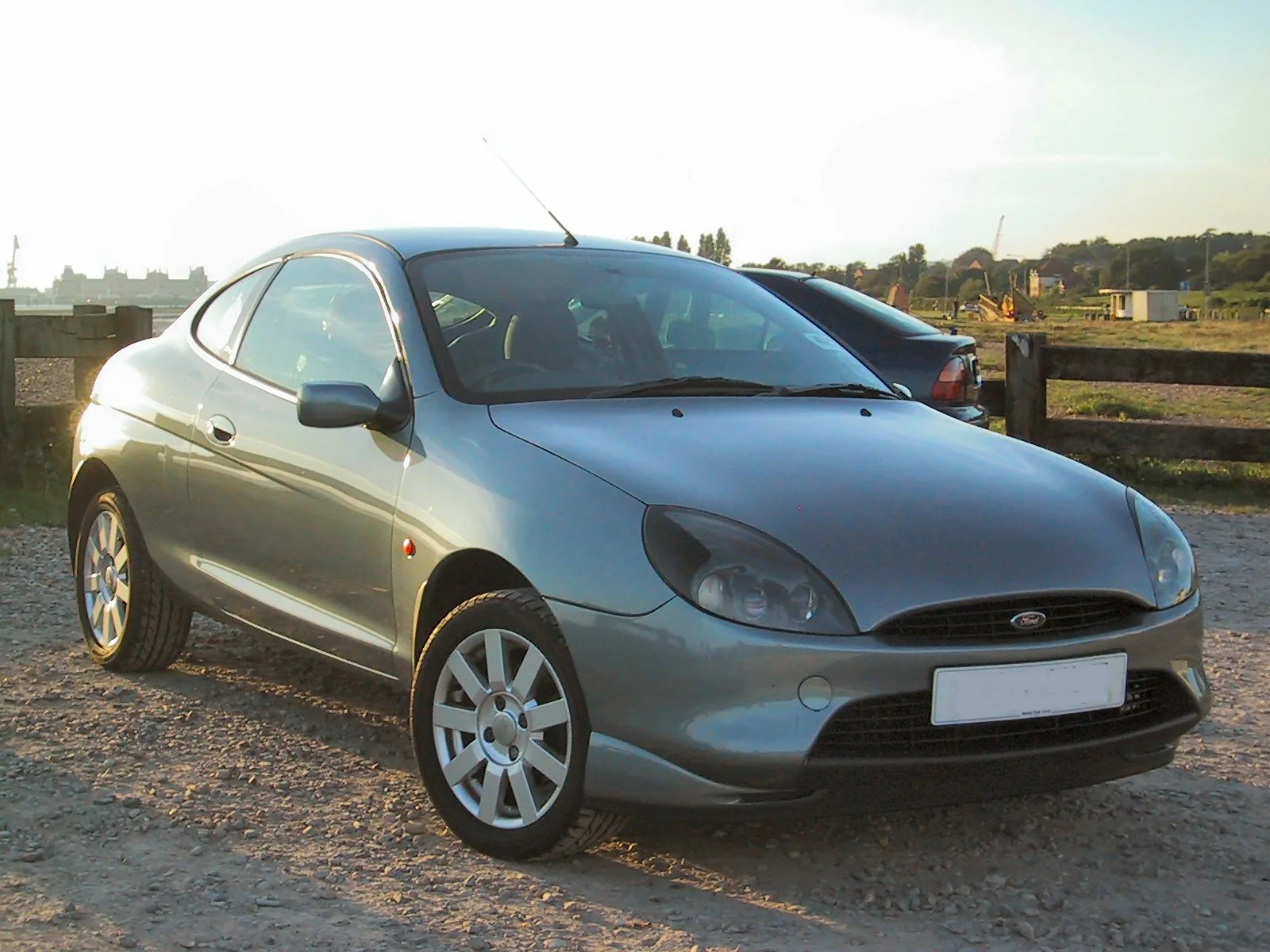
It first appeared in the Mk4 Fiesta and the near-identical Mazda 121 as a 1.2 L (1,242 cc). A 1.4 L (1,388 cc), a 1.6 L (1,596 cc) and a 1.7 L (1,679 cc) followed. The 1.7, built on a heavily modified 1.4 block with variable cam timing on the inlet camshaft, was used only in the Ford Puma. A 155 PS (114 kW; 153 hp) version powered the Ford Racing Puma, with just 500 built.
Zetec-SE versus Zetec-E
The two names suggest siblings, and they are not. The Zetec-SE shares no common parts or design with the larger Zetec-E besides the name. Their layouts differ as well: the Zetec-E sits transversely with its inlet manifold at the rear, while the Zetec-SE carries its inlet manifold at the front, with intake and exhaust on opposite sides to the Zeta.
Where the Sigma ended up
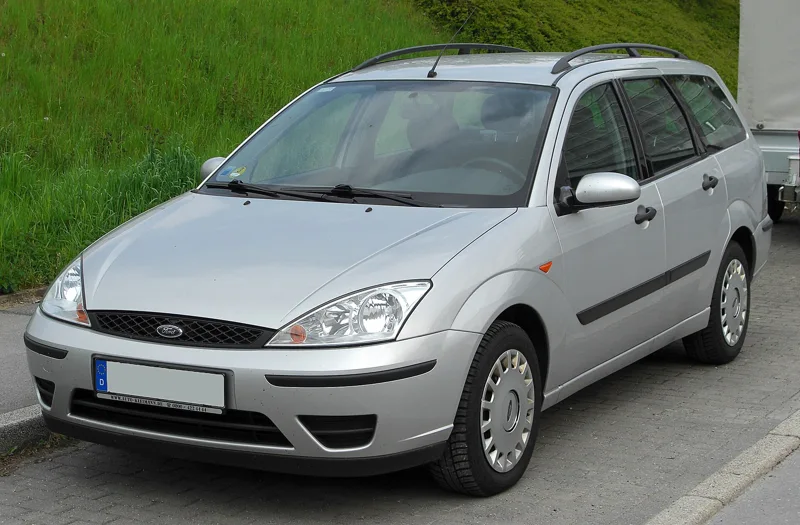
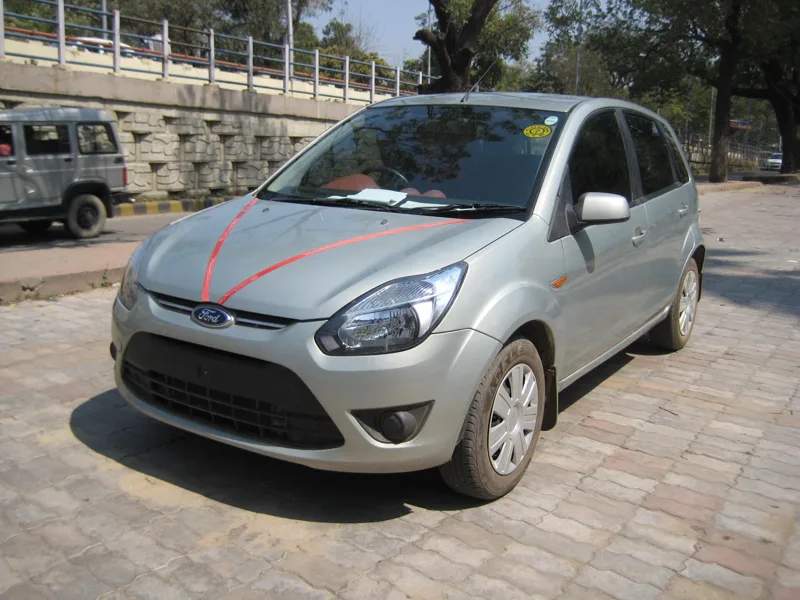
From 2002 Ford badged its engines Duratec, and the 1.7 L was dropped when Puma production stopped. The 1.6 Ti-VCT, with Twin independent Variable Camshaft Timing, arrived in 2004 with 115 bhp (86 kW; 117 PS) in the Mk2 Focus. Later cars used 105 bhp or 125 bhp versions meeting the EU5 level in the Mk3 Focus, while the Fiesta Zetec-S had a 1.6 L of 120 horsepower (89 kW; 122 PS). In the first Focus the smaller versions produced 75 and 100 brake horsepower, and these engines weigh 90 kilograms (198 lb) with belt-driven camshafts and electronic fuel injection. The usual partner is the Ford IB5 five-speed manual.
The specialists took it up too. The Caterham Seven 270 uses a tuned Sigma making 135 horsepower (101 kW; 137 PS) at 6,800 rpm, positioned as the modern equivalent of the Kent Crossflow in the Lotus 7 from 1957 to 1972. Morgan fitted a 110 bhp (82 kW; 112 PS) version in the 4/4 Roadster, with a Mazda gearbox, from 2009 until the model was discontinued in 2018. The third-generation SCCA Spec Racer, introduced in 2015, runs a 1.6 L Sigma sold as a sealed unit.
Three engine families side by side
| Family | Debut | Layout and origin | Cars named |
|---|---|---|---|
| Zeta / Zetec | 1992 model year | 1.6 to 2.0 L, 4 valves per cylinder, DOHC; built to replace the CVH | Escort, Orion, Mk3 Fiesta, Mondeo, Focus RS, Focus ST170, Contour |
| Sigma / Zetec-SE | 1995 | 1.2 to 1.7 L; Ford, Mazda and Yamaha collaboration | Mk4 Fiesta, Mazda 121, Puma, Focus, Caterham Seven 270, Morgan 4/4 |
| CHT | 1983 | 1,341 cc to 1,555 cc; pushrod OHV derived from Renault Cleon-Fonte | Brazilian Escort, Corcel II, Del Rey, Verona, Pampa |
The RoCam, a cheaper Zetec-SE for Brazil
In 2000 Ford of Brazil built a cheaper version of the Zetec-SE to rival the Volkswagen AP engine. It used a single overhead camshaft driving eight valves, not sixteen, with a cast iron block in place of aluminium and a chain in place of a belt. The result ran rougher, with more vibration and noise, but the roller finger camshaft that gives it the RoCam name delivered strong torque. Smaller than the full Sigma, it fitted the Ford Ka, replacing the Endura-E, which by then looked underpowered. Ford also patented a new aluminium head process that gave a better alloy at lower cost.
A supercharged 1.0 L of 95 PS (70 kW; 94 hp) followed in 2002 for the Fiesta, aimed at the 112 PS (82 kW; 110 hp) Volkswagen Gol 1.0 Turbo 16v. In October 2004 a 1.6 L Flex arrived that could run on petrol, ethanol or any mixture, with a compression ratio of 12.3:1 and combustion chambers borrowed from the CHT design. The 1.0 L Flex runs 12.8:1.
The engine reached Europe labelled Duratec 8v, as a 1.3 L for the Ka and Fiesta and a 1.6 L for the SportKa and StreetKa, and the European versions were built in South Africa. The 1.6 L produced 95 PS (70 kW; 94 hp) and 100 lb ft (136 N m) in the SportKa from 2003 to 2008 and the StreetKa from 2003 to 2006. The engine also found its way into the Ikon in Mexico and India, the Bantam in South Africa, and the original Focus in Russia.
What was the Ford CHT engine?
Back in Brazil, an older story had already played out. The CHT is an inline four built by Ford in Brazil through the 1980s and 1990s, derived from the Renault Cleon-Fonte and unrelated to the CVH. Ford do Brasil acquired the Cleon-Fonte manufacturing rights when it took over the Brazilian operation of Willys in the late 1960s, as part of the Renault-based Projeto M. The engine reached the market in the Ford Corcel in 1968 at 1.3 L, grew to 1.4 L with a wider bore, and was enlarged again in 1979 to 1.6 L.
The redesign began in mid-1981 as Projeto Zeta, an effort to adapt the MkIII front-wheel-drive Escort to Brazil. When the car debuted in August 1983 its engine was a Brazilian development, not the CVH sold elsewhere. Ford do Brasil had argued that a revised Cleon-Fonte would be more economical and easier to convert to ethanol. Luc de Ferran led the design, with some input from Ford of Europe and consultation with Renault.
Engineers started with the largest block, whose 77 mm by 83.5 mm bore and stroke gave 1,555 cc, and made a 1,341 cc version with a 71.5 mm bore. The target was better combustion through swirl. A new cylinder head, along with changes to manifolds, valve timing and compression ratio, produced the CHT, short for Compound High Turbulence.
Tough, simple and thrifty
The CHT earned a name for smooth running and good performance at low revs, and for simplicity and toughness. As a pushrod OHV design it trailed the contemporary SOHC Volkswagen EA827 for power. The 1983 Escort range offered five versions, the strongest an ethanol 1555 cc engine making 61.0 kW (82.9 hp) at 5600 rpm. The E-MAX variant, short for "Economia Maximizada", was tuned for fuel efficiency, and one won an award in Brazil for the most economical engine of its day, returning 17.1 km/L (48 mpg-imp; 40 mpg-US) on gasoline.
The highest-output ethanol engines went to the Escort XR3, and the CHT also went into the Corcel II, Belina II, Del Rey, Verona and Pampa. A 997 cc version with a 70.3 mm by 64.2 mm bore and stroke came in March 1992, prompted by changes to vehicle taxation, and was used in the Escort Hobby at 37 kW (50.3 hp) at 5800 rpm.
From 1987 to 1996, Ford and Volkswagen operated in Brazil as AutoLatina, and the engine was renamed AE for Alta Economia. It went into Volkswagen's first-generation Gol hatchbacks, the Voyage, Parati and Saveiro, and a 1.0 L AE-1000 followed once the law favoured cars under 1 L. Single-point fuel injection arrived on the second-generation Gol, the final car to carry the engine. After 1996, the Kent Endura-E took over at Ford, then the Zetec RoCam from 2000.
When Zetec stopped being an engine
In 1998 Ford of Britain applied Zetec to a Fiesta trim level, replacing the Si, and the Focus took the name that October. The Mondeo and Galaxy followed before the decade ended. Eventually the word was used exclusively as a trim level, with no engines carrying it. So a Zetec Fiesta of that period may not have a Zetec engine at all.
What this means for someone buying a used Ford
Identification matters. A silver cam cover marked "DOHC 16v" is a Zetec, "ZETEC 16v" means a Zetec-E, and a black plastic cover signals a Zetec-R. A Sigma engine is a different design altogether, and a worn one is costly to restore because the bearing ladder must be renewed as a whole.
The 2.0 L Zetec in the 2000-2004 US Focus and 2001-2004 Escape has a known weakness in its ABS plastic coolant outlet housing, held by three bolts. The lip that locates the O-ring cracks and sheds fragments, the seal ruptures, and coolant can be lost severely. A Focus SVT owner in Minnesota identified a fix in 2010 using a more durable housing from an earlier Zetec. As of September 2013 Ford sold both versions, with the better one listed at $20 more.
Where the engines went next
The Sigma outlived the Zeta by a long way. Ford replaced it in 2012 with a brand-new 3-cylinder 1.0-litre EcoBoost in some markets and models, with more power and torque and lower fuel consumption and CO2. In 2018 it gave way in Brazil to the 3-cylinder 1.5 L "Dragon" at 136HP. The Sigma still lives on as the basis for the four-cylinder EcoBoost 1.5 and 1.6 L engines, and it was produced at Bridgend in Wales until September 2020, as well as at Taubate in Brazil. Ford Power Products continues to sell Zetec-SE crate engines under the ZSG name, and the Zeta as the MVH in 1.8 and 2.0 L forms.