A sedan reportedly designed for the Indian market in 1999, a hatchback launched in the year Ford India's sales rose 172 percent, and the plants that outlived both.
The Ford Ikon was a sedan Ford launched in India in November 1999, and the Figo was a hatchback launched in March 2010, the year Ford India's sales rose 172 percent. Ford India had re-entered the country in 1995, and it announced the end of its Indian manufacturing in September 2021.
Ford India's sales jumped 172 percent in 2010, from 29,488 vehicles to 83,887, in the year the Figo went on sale. Eleven years later, in September 2021, the company announced it would end manufacturing in India. In between came a sedan reportedly designed for the Indian market and a hatchback with 25,000 bookings by July of its launch year.
How did Ford build its business in India?
Ford's Indian arm started building cars in 1926 as a subsidiary of Ford of Canada, and was liquidated in May 1953 after severe import restrictions. Ford came back in October 1995 as Mahindra Ford India Limited, a 50-50 venture with Mahindra & Mahindra. In March 1998 it raised its stake to 72 percent and renamed the company. By April 2012 it had invested a total of $2 billion.
The early range included the sixth-generation European Escort, the Ikon and the second-generation Mondeo. In 2003 came the Endeavour, Ford's first Indian SUV, and in late 2004 the European Fusion, a crossover the company called an Urban Activity Vehicle. It was sold in India as The-No-Nonsense-Car and was popular mostly with enthusiasts. The Fiesta sedan then became a sales success.
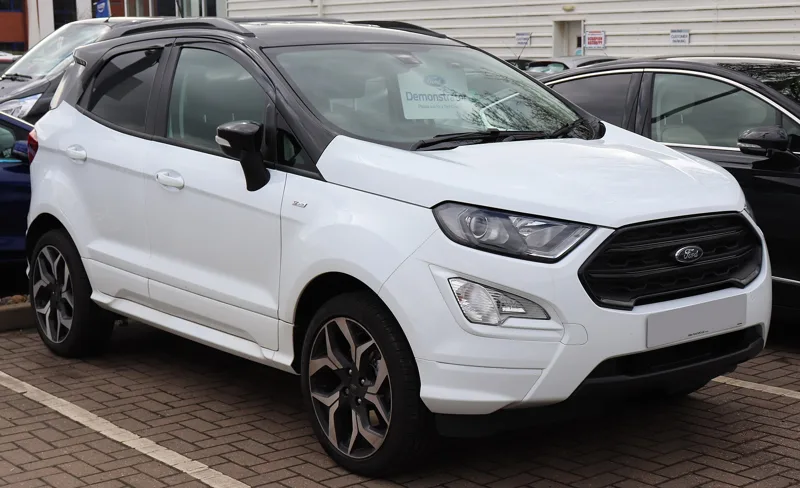
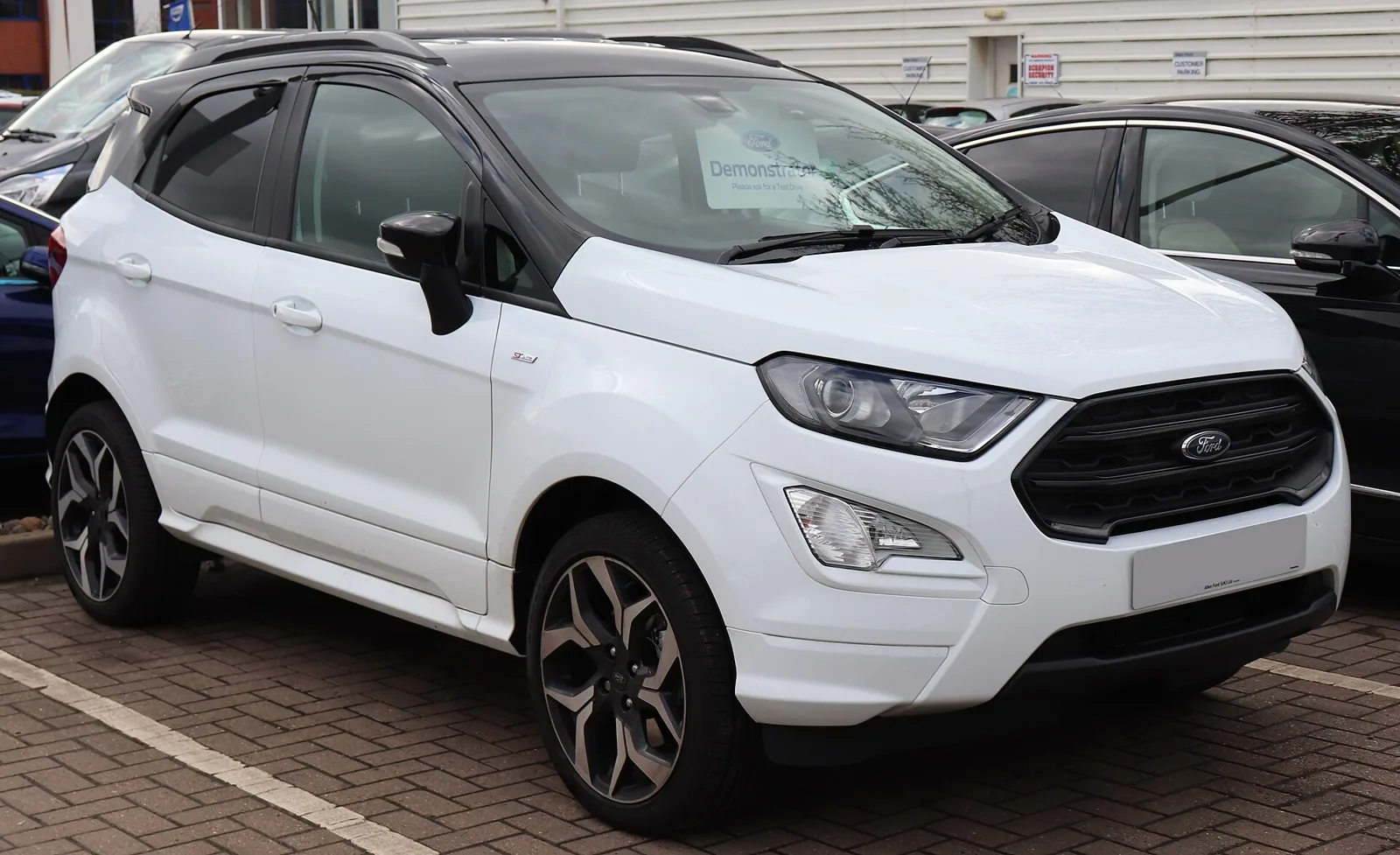
The EcoSport let Ford take early advantage of the government's lower taxes for cars under four metres, and Ford exports it from India to the European Union and the United States. The second-generation Figo arrived first as a sedan, the Figo Aspire, and in 2018 the Freestyle appeared as a crossover version of the face-lifted hatchback. In 2019 the company opened talks with Mahindra on a new venture, but those plans had been cancelled by April 2021.
Ford India's sales rose 172 percent in the year the Figo arrived, and the plants that built it were sold within a decade.
What was the Ford Ikon?
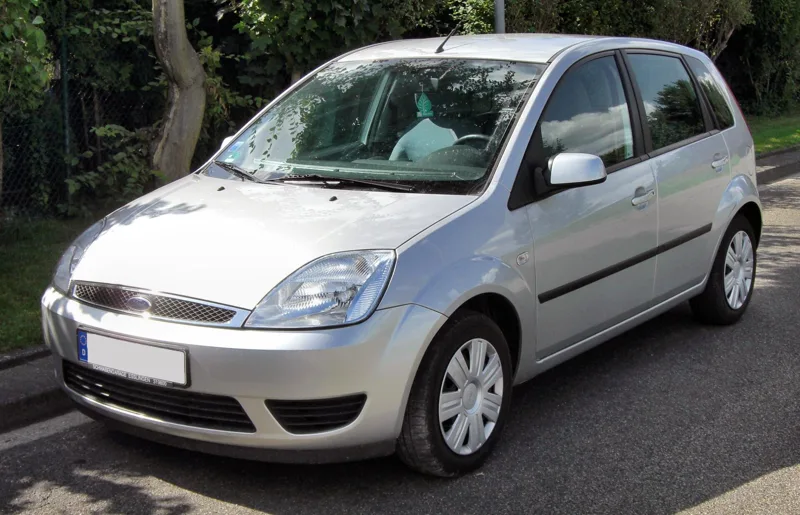
The Ford Ikon was a subcompact first sold at the end of 1999 as the sedan version of the Fiesta hatchback. The first generation launched in New Delhi in November 1999, was based on the fourth-generation Fiesta, and was built at Ford's factory in Chennai.
It was reportedly designed specifically for India, after company officials decided that a car tailored to the market could do better than the global models. Elsewhere it was sold in South America and China as the Fiesta Sedan. Assembly began in South Africa and Mexico at the start of 2001, and from 2003 Changan Ford built it in China with a four-speed automatic, ABS with electronic brake force distribution, a CD changer and front airbags.
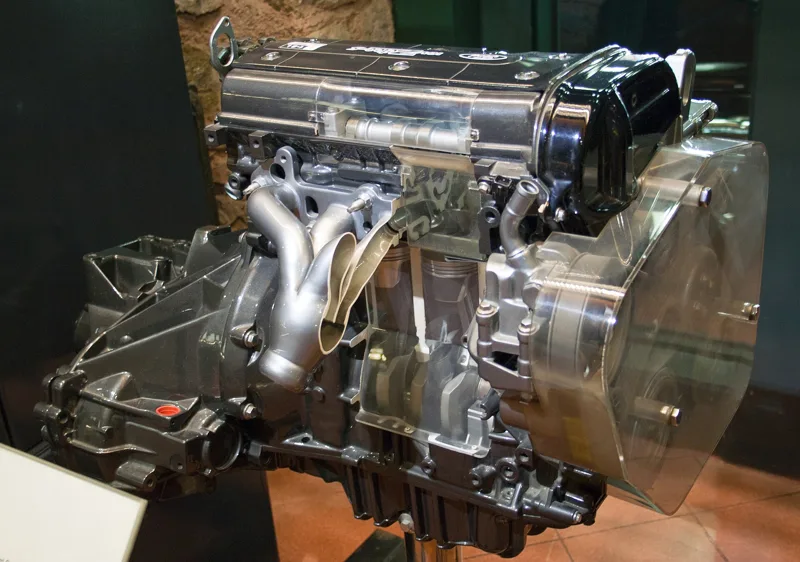
Early Ikons had a 1.3-litre single-overhead-cam petrol engine with fuel injection and 69 hp (51 kW). A 1.6-litre petrol came at the end of 2002 and a 1.8-litre diesel during 2003. Flair buyers got a tachometer, air conditioning, central locking, electric windows, power steering and side-impact beams, plus a new jeans blue paint option. A seven-seater Ikon Estate was started in late 1998 and shown in March 1999, but packaging limits produced awkward proportions and the project was cancelled soon afterwards.
In November 2008 the Ikon was facelifted with a new common-rail Duratorq diesel of 68 hp (51 kW) and 160 Nm (120 lb ft) to sit alongside the 1.3 petrol. Changes included a CD/MP3 player, new seat covers, a rear spoiler, alloy wheels, remote central locking, an LCD odometer, redesigned headlamps and clear tail lamps. The boot held 400 litres (14 cu ft). The car left production in early 2011 when the sixth-generation Fiesta arrived in India, and the Fiesta Classic, the fifth-generation saloon sold there since 2005, took its place.
How did the second-generation Ikon differ around the world?
The fifth-generation Fiesta produced two sedans, one in India and one in Brazil, and both were sold as Fiestas at home. Only South Africa and Mexico used the Ikon name for them. The Indian car launched in October 2005 as a sedan only, with its own exterior and an interior much like the European one.
South Africa received it as the Ikon in September 2007 with a 1.4 or 1.6-litre twin-cam petrol engine or a 1.4-litre common-rail turbodiesel, all with five-speed manual gearboxes. A June 2008 facelift reached South Africa in February 2009 with a new front end and 15-inch alloy wheels. It measured 4,282 mm (168.6 in) long on a 2,486 mm (97.9 in) wheelbase, and its boot held 430 litres (15 cu ft).
The Brazilian sedan was introduced in September 2004 and facelifted in January 2007 and April 2010. Mexico took the second facelift as the Ikon in 2010, then added the Ikon Hatch a year later, a hatchback imported from India, where it was called the Figo. The sedan left the Mexican range in February 2012. The sedan used a 1.6-litre single-cam engine of 95 hp (71 kW), and the hatch a 1.6-litre Duratec twin-cam with 98 hp (73 kW) and 142 Nm (105 lb ft). The Mexican sedan was 4,227 mm (166.4 in) long with a 482 litre (17.0 cu ft) boot.
What was the first-generation Ford Figo?
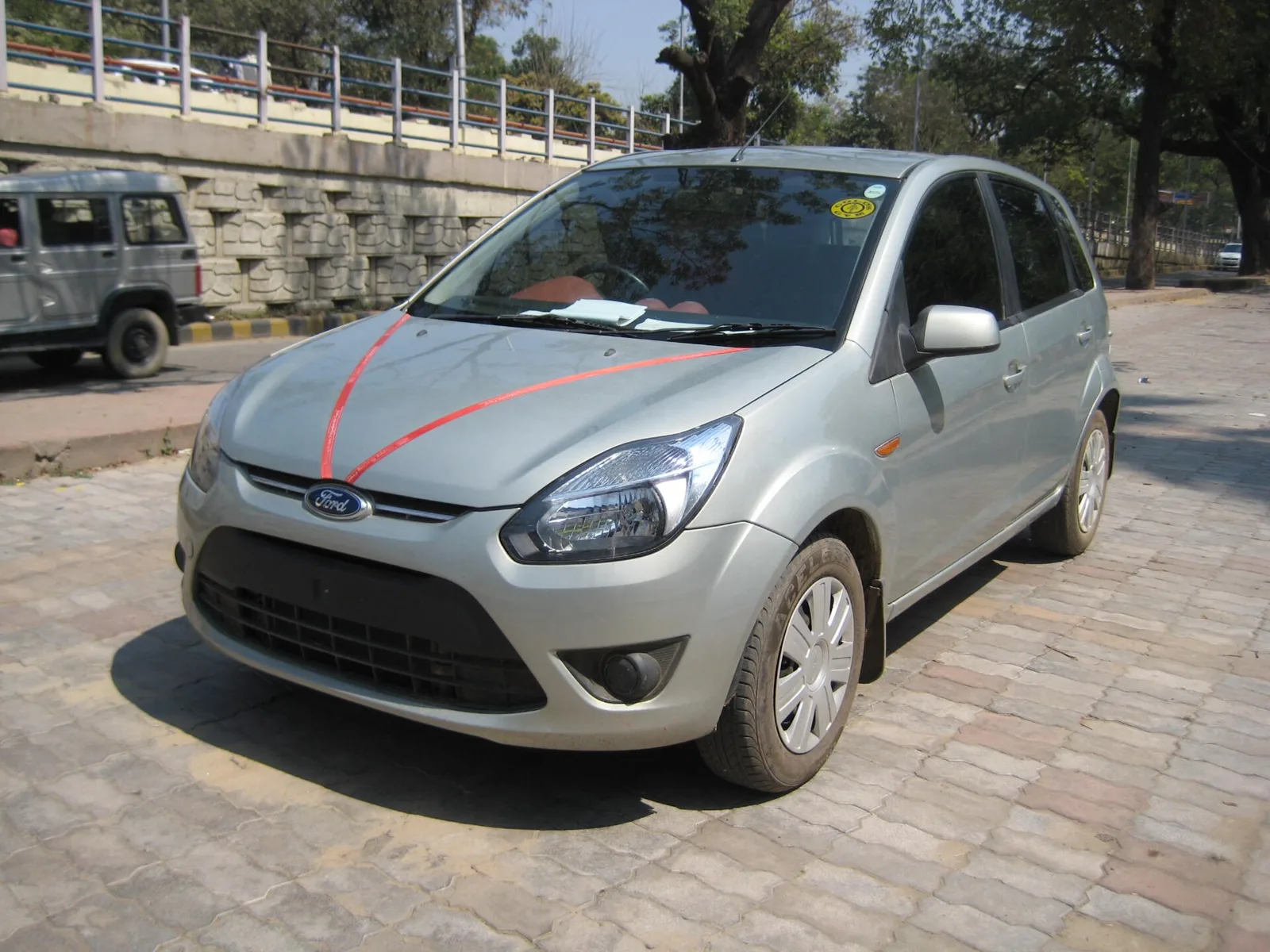
The Ford Figo was a subcompact hatchback built in Chennai and later Sanand and sold in emerging markets from March 2010 to 2021. Ford unveiled it in Delhi in September 2009 on the Fiesta Mk5 (B256) body with revised front and rear ends. The name is Italian slang for cool.
It went on sale in March 2010, and by July there were 25,000 bookings across all variants. The facelift of 15 October 2012 added a larger hexagonal grille and redesigned lamps, and the car reached South Africa in January 2013. In India it came with petrol or diesel engines, five-speed manual gearboxes and power steering, both meeting Bharat Stage IV rules. The diesel was the 1.4-litre Duratorq also used by the Ikon and Fiesta, and the petrol was a 1.2-litre Duratec. Ford quoted around 12.5 kmpl in the city and 15.5 on the highway for the petrol, and 16 and 19 for the diesel.
Trims were LXI, EXI, ZXI and Titanium, and the Titanium had alloy wheels, dual airbags and ABS as standard. Brakes were ventilated discs at the front and drums at the rear. Middle Eastern buyers had a 1.4 manual or a 1.6 with a four-speed automatic like the Focus MKII, and South Africa had a 1.4 of 62 kW (84 PS; 83 bhp) in Ambiente and Trend models.
The Figo was awarded 20 Indian automotive industry awards in 2010, more than any other car, and took the 2011 Indian Car of the Year title. It finished second in South Africa's 2011 Car of the Year awards. The 100,000th Indian-market Figo was delivered 15 months after launch. The 200,000th sold in August 2012 after 29 months and the 300,000th was made in the first week of August 2013, after 41 months.
How did the Figo fare in crash tests?
An Indian Figo with no airbags and no ABS received zero stars for adult occupants and two for toddlers from Global NCAP in 2014. Dual front airbags were available on a premium package. The Figo Aspire without ABS earned three stars for adults and two for toddlers from Global NCAP in 2017.
A basic Indian-built Figo in Latin American specification got four stars for adults and for toddlers from Latin NCAP in 2019. Ford India also recalled about 42,300 Figo and Figo Aspire units over a fault in the Restraint Control Module software, which could stop airbags deploying in some collisions. Ford offered a free software upgrade for every car built up to 12 April 2016.
What happened with the Figo advertising?
Print advertisements for the Figo made by the agency JWT India depicted gagged and bound women in a car boot, under the tagline Leave your worries behind. Ford had not approved them. JWT used a generic approval for other poster work as cover for entering them into the GoaFest 2013 awards and a website that collected advertising.
Ford said the posters broke the standards of professionalism and decency it expects from itself and its agencies, and JWT India's parent, WPP, apologised. The agency's chief creative officer and a creative director resigned, and reports said ten other staff lost their jobs.
What changed with the second-generation Figo?
Ford launched the B562 Figo in 2015, six years after the first. It had a grille with an Aston Martin-esque look, chromed on the top Titanium and Titanium+ trims and painted black or silver on lower ones. Three engines were offered: a 1.2-litre petrol with 88PS and 112Nm and a five-speed manual, a 1.5-litre petrol with 112PS and 136Nm available only with a six-speed dual-clutch gearbox, and a 1.5-litre diesel with 100PS and 215Nm.
The Figo S added stiffer suspension, a rear sway bar and bigger wheels. Dual front airbags were fitted to every variant except the base car, which had a driver airbag only, and the top version carried six. MacPherson struts with an anti-roll bar sat up front, with a semi-independent twist beam at the rear. The MyFord Dock, first seen on the Figo Aspire, let occupants charge smart devices and use them for navigation. Ford relaunched the Figo in February 2020 to meet BS6 norms, effective April 2020.
In 2018 the Freestyle appeared, a crossover-styled Figo slotted between the hatchback and the EcoSport. It used a 1.2-litre petrol or a 1.5-litre diesel with a five-speed manual, in Titanium and Titanium+ trims.
How big did Ford India become, and why did it leave?
The main plant at Maraimalai Nagar, 45 kilometres (28 miles) from Chennai, could build 150,000 cars on two shifts and 200,000 on three. With the Figo launch Ford invested $500 million to double its capacity to 200,000 vehicles, and added an engine plant for 250,000 engines a year, which opened in January 2010. In 2012 a further $72 million raised engine capacity to 330,000. The EcoSport followed in June 2013 with a $142 million investment.
The Sanand plant in Gujarat was announced as a $1 billion project on 460 acres, with capacity for 270,000 engines and 240,000 vehicles a year. It began production in 2014, and Ford India expected the two plants together to reach 440,000 cars and 610,000 engines. The company exported 40 percent of its engines and 25 percent of its cars to 35 countries, and by April 2016 had over 376 outlets for sales and service spread across 209 cities.
Sanand was aimed at 20,000 Figo and Aspire units a month. Reports said Figo hatchback sales fell 60 percent between October 2015 and March 2016, and Aspire sales were down 74 percent from their August 2015 launch, which cut production to 10,800 a month. On 9 September 2021 Ford said it would stop manufacturing in India, citing mounting losses and no route to sustainable profit. The Figo, Endeavour and EcoSport ended with the closure of the Chennai and Sanand plants, although a Mexican-market Figo stayed on sale until 2021.
The wind-down continued in stages. Kotak Mahindra Prime bought Ford Credit India's vehicle finance portfolio in December 2021. In February 2022 Ford said it would return as an electric vehicle maker, then scrapped the plan indefinitely in May. In August 2022 it announced the sale of the Gujarat plant to Tata Motors for INR 7.26 billion, about US$91.5 million, and leased back some facilities to build engines for export. Ford still owns the closed Chennai plant, and since 2021 the Indian business has focused on a service network, parts distribution and extended warranties.
Ikon and Figo compared
| Model | Years | Body | Markets and notes |
|---|---|---|---|
| Ikon, first generation | 1999 to 2011 | Four-door sedan | India, then South Africa and Mexico from 2001; 69 hp 1.3 at launch |
| Ikon, second generation | 2007 to 2015 | Sedan, plus Ikon Hatch in Mexico | South Africa and Mexico used the Ikon name |
| Figo, first generation | 2010 onwards | Hatchback | 25,000 bookings by July 2010; 300,000th built in August 2013 |
| Figo, second generation | 2015 to 2021 | Hatchback, with Aspire sedan and Freestyle | Relaunched February 2020 for BS6 |