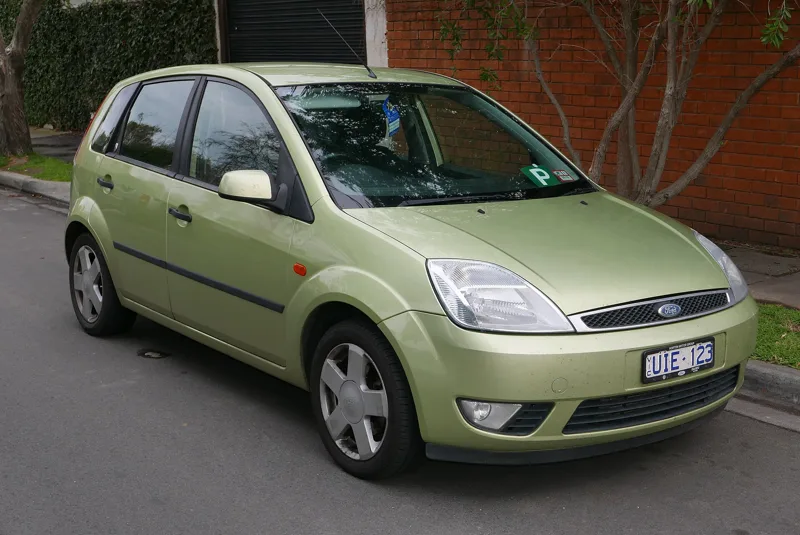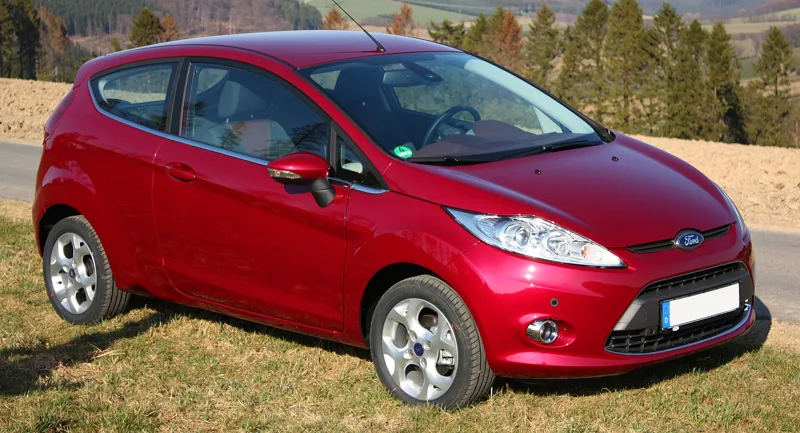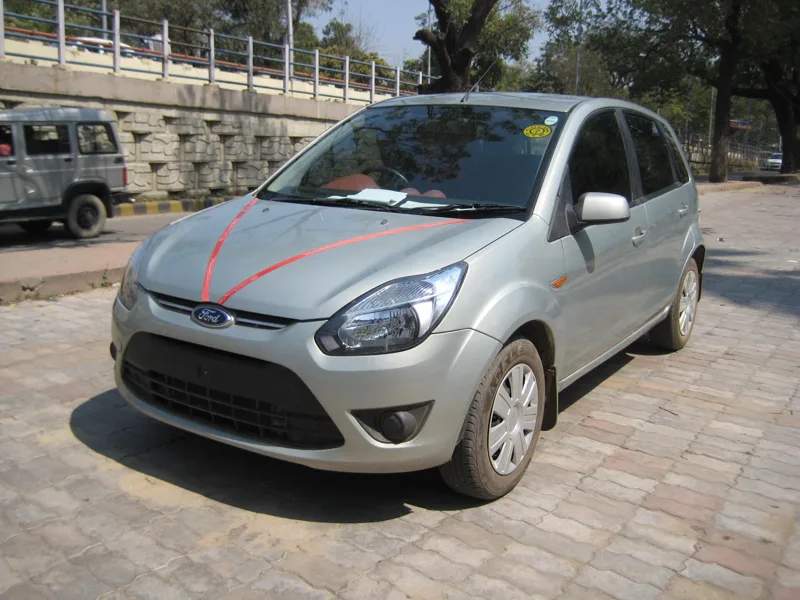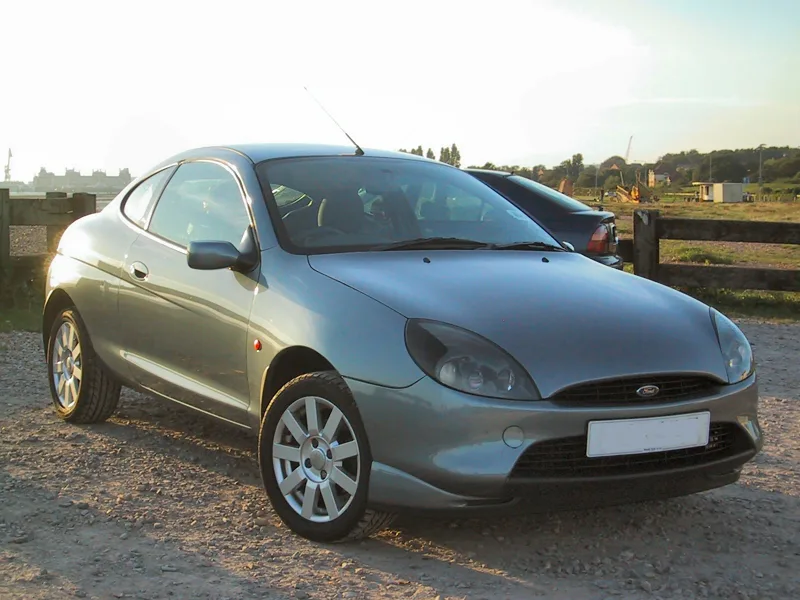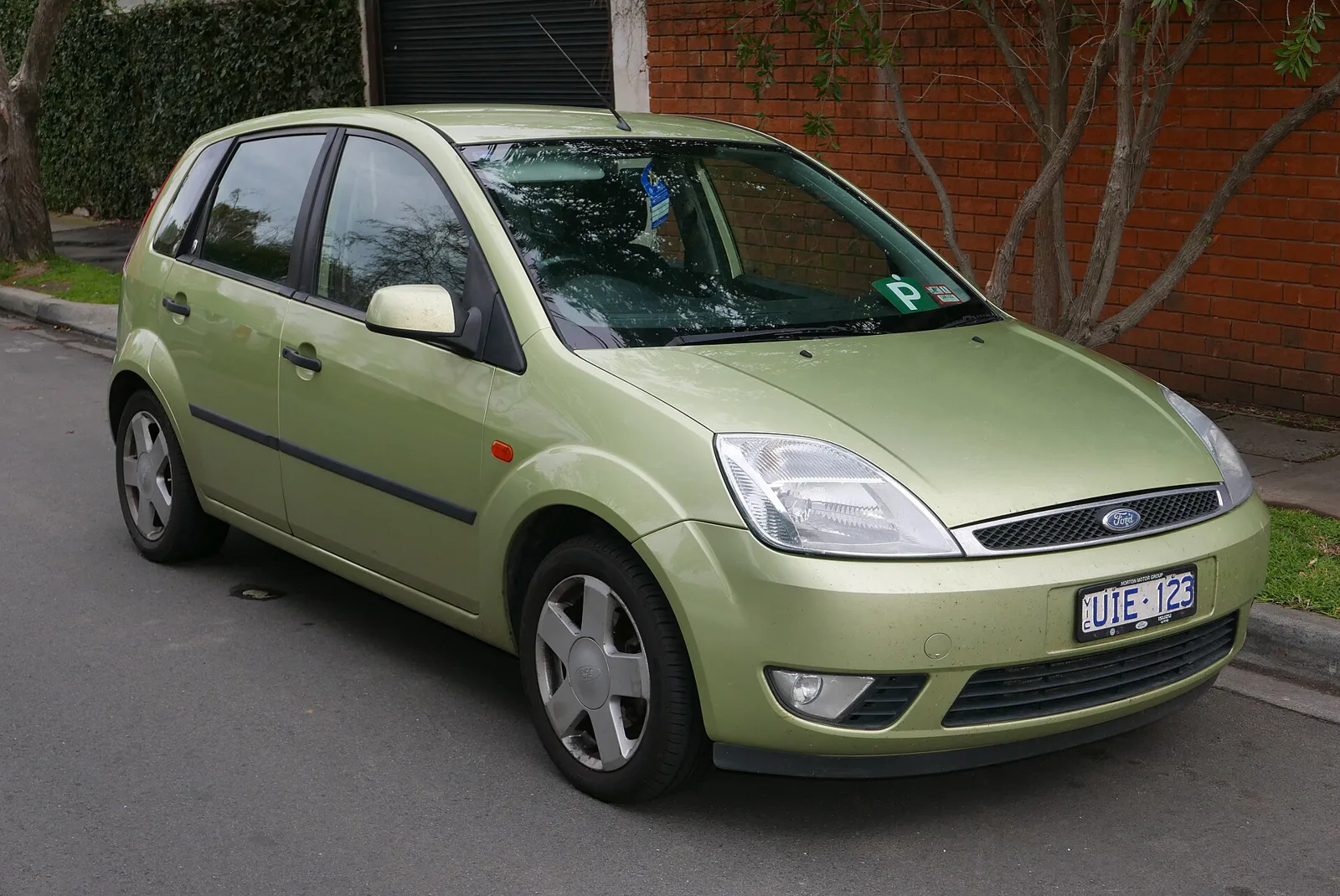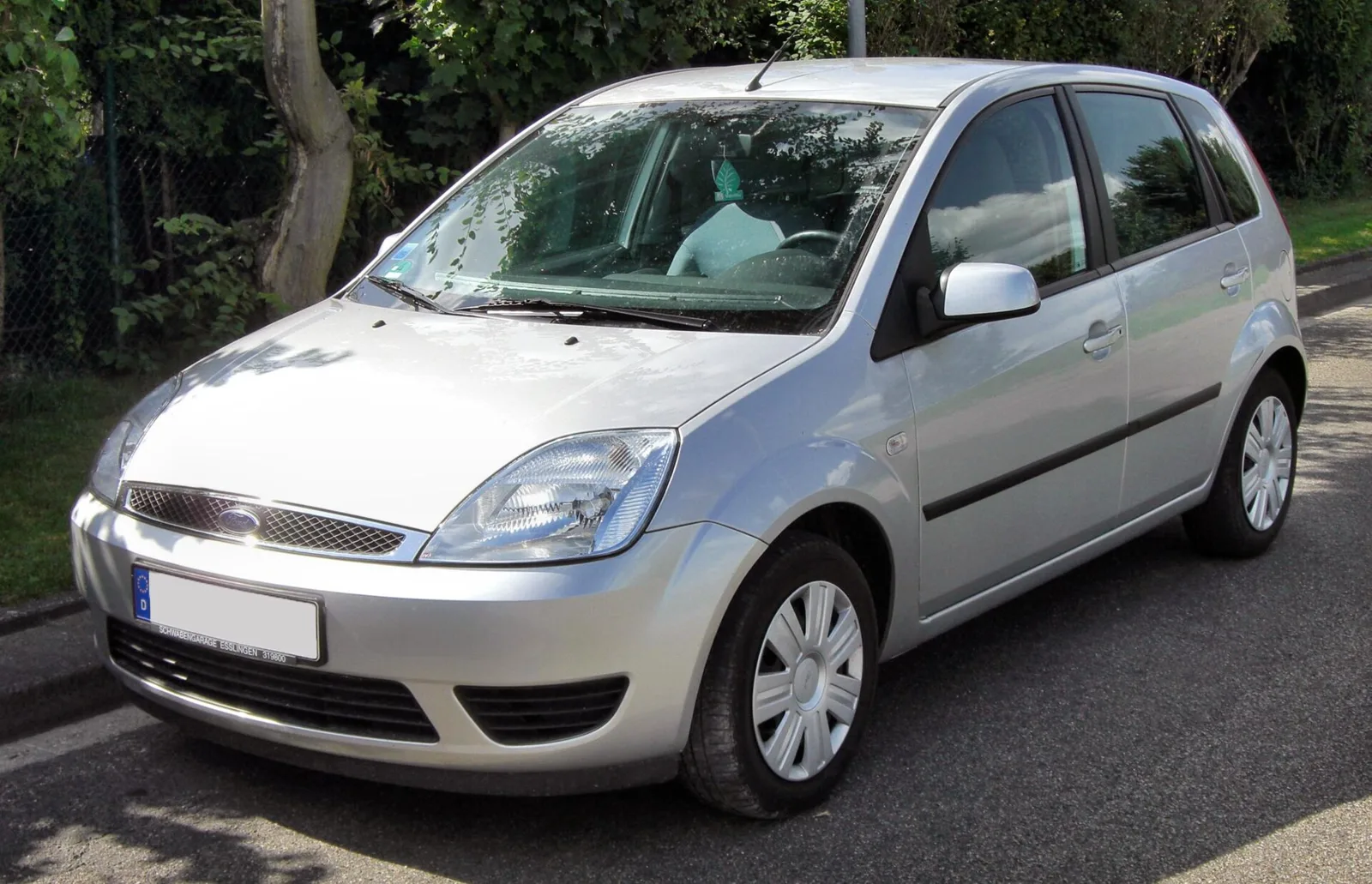
The fifth-generation Fiesta brought ABS and airbags as standard, a 2005 facelift that revived sales, a 2.0-litre ST and sales across Europe, Asia and South America.
Launched in 2002, this fifth-generation supermini was the first Fiesta with ABS and airbags as standard. It later sold in Mexico and Brazil and remains the sales high-water mark among earlier Fiesta generations.
The Ford Fiesta Mk5 was the fifth generation of Ford's supermini, built in Europe from April 2002 to 2008. Production continued in Mexico until 2010 and in Brazil until 2014. It became the best-selling Fiesta generation to date, and it was the first Fiesta sold in Asia and Australasia, where it replaced the Kia-based Festiva.
When did the Mk5 Fiesta arrive?
The all-new fifth-generation Fiesta was unveiled on 1 April 2002, and production started at the Almussafes plant on 29 April 2002. Most of its engines were carried over from the previous car, but they were renamed Duratec, because the Zetec name was now kept for the sportier models. The push-rod 1.3-litre was at first offered in the UK, but it was quickly replaced by a RoCam 1.3-litre, and both were sold as the Duratec 8v.
The launch trims were Finesse, LX, Zetec and Ghia, and limited editions followed soon after. The Mk5 was the first Fiesta to offer anti-lock brakes and passenger airbags as standard. Ford described the generation as ergonomically and mechanically more advanced than any previous Fiesta.
Duratec engines, a sharper 2005 facelift and a 2.0-litre ST made the Mk5 the best-selling Fiesta generation to date.
What engines did the Mk5 Fiesta offer?
The petrol range covered 1.25, 1.3, 1.4, 1.6 and 2.0-litre engines. The diesel options were an 8-valve 1.4 and a 16-valve 1.6 Duratorq TDCi, both common-rail units built in a joint venture with PSA.
The sporting end of the range was served by the Fiesta ST, which used a 2.0-litre Duratec petrol engine and is described in its own section below.
How did the Mk5 reach Asia and Australasia?
Asia and Australasia were new markets for the Fiesta. There, the car replaced the Kia-based Festiva. Cars sold in those markets were 1.6-litre LX three-door or five-door models, Zetec three-doors or Ghia five-doors. This was the first time the Fiesta had been marketed in those regions.
Japan received a short run. From 2004 to 2007 the Fiesta was sold there, sharing its platform with the Mazda Demio. It was offered only as a five-door hatchback with the 1.6-litre engine in GLX trim. A Fiesta ST was offered there in 2005. A small batch of 50 Fiesta Sportizm cars was also sold. These were based on the 1.6-litre Ghia, with sports body kits, a rear spoiler and Sportizm badges, and they came in Colorado Red only.
How was the Fiesta sold in South America?
In Brazil and Argentina a Fiesta saloon arrived in late 2004. Brazilian cars used 1.0-litre and 1.6-litre 8v Flex Rocam engines that could run on ethanol, petrol or any mixture of the two. Their internal codenames were B256 for the five-door and B257 for the three-door. The car sold under different names in each country, including Fiesta One in Argentina, Fiesta Move in Venezuela and Fiesta Rocam in Brazil.
Across the other Mercosur countries the standard engine was a 1.6-litre 98 bhp (73 kW) SOHC Zetec, with a choice of a four-speed automatic or a five-speed manual. A 1.4-litre diesel with 68 bhp (51 kW) was also available. Colombia had a supercharged 1.0-litre 8v Rocam with 96 bhp (72 kW), which was discontinued in 2009 and replaced by the Mark VI imported from Mexico. Chile imported its Fiesta from Mexico because the Mercosur model did not meet its requirements.
The South American car was facelifted in early 2007 as a 2008 model, with new rectangular headlights and a new grille. A further facelift in early 2010, for the 2011 model, brought headlights and a grille similar to those of the Mark VI in other markets, while keeping the rest of the car largely unchanged.
What happened to the Mk5 in Mexico and India?
In Mexico the fifth-generation car was sold until 2010, when it was replaced by the Ikon Hatch. The Ikon Hatch was a Ford Figo imported from India, and it was still based on the fifth-generation Fiesta. The change coincided with the 2010 facelift, which also renamed the Fiesta saloon as the Ikon. The Ikon was discontinued in 2012, after which the Ikon Hatch was sold alongside the sixth-generation Fiesta.
India had its own story. Ford sold the Ikon, based on the Mark IV, in parallel with the fifth-generation Fiesta for the saloon market until April 2011. The Fiesta went on sale in India in September 2005, with a 1.6-litre Duratec petrol or a 1.4 TDCi diesel, and a sporty 1.6 S was also offered. Its bodywork was specific to India and was not related to the Mark V sedan sold in Latin America. Demand was good from the start, and more than two thirds of early sales were of the more economical diesel.
When Bharat IV emission rules came into force in metropolitan areas, the Ikon was discontinued. Ford then launched the Fiesta Mark VI at a lower price, with new features including dual airbags. In 2010 the Ford Figo joined the Indian range as a hatchback based on the Mark V model. In April 2011 the Mark V was renamed the Ford Fiesta Classic, and in July 2012 it became simply the Ford Classic. A Titanium version was added at that point, with a 1.6-litre Duratec petrol giving 101 PS (74 kW) or a 1.4 TDCi diesel giving 68 PS (50 kW).
What did the 2005 facelift change?
In November 2005 Ford launched a revised version of the fifth-generation Fiesta for the 2006 model year. This Mk5.5 facelift brought new bumpers, a new grille, new headlamps, new rear lamps, redesigned door mirrors and thicker body side mouldings. Some models had body-coloured handles and mirrors, and new colours included Tango Red, Amethyst, Sublime and Apple.
The interior was also reworked to improve the sense of quality and space. The new fascia had easier-to-read analogue instruments and a soft-feel upper panel, which answered criticism of the hard and cheaply textured original. The facelift added a set of larger-car features, including Voice Control, Bluetooth, a trip computer, electronic automatic climate control, rain-sensing wipers, automatic headlights, power-fold door mirrors and MP3 connectivity.
In the UK the new features were promoted in a "Clever Fiesta, Stupid Dogbot" television campaign and a Ford microsite. The UK line-up at launch covered the Studio, Style, Style Climate, Zetec, Zetec Climate, Zetec S, ST and Ghia, and the Ghia was the last Fiesta to be sold with that trim.
Which limited editions did the Fiesta get?
The Zetec S Anniversary was a limited run of 400 cars. It came in Radian Yellow with a chequered roof, black mirrors and door handles, tinted glass, 16-inch alloy wheels, a black roof spoiler, sports seats, leather trim, an alarm and an iPod socket. It went on sale in the UK in March 2007 for 12,595 pounds. The car was marked as 31 years old, reflecting the age of the original Fiesta name.
The Zetec S Celebration was another run of 400 cars, in Celebration Green with a black and white chequered roof decal and a unique identity number. It had Ebony Haze leather, privacy glass, Panther Black door mirrors and roof spoiler, 16-inch alloy wheels, air conditioning, a trip computer, electric windows and a CD player with a portable music socket. It also had sports front seats and lowered sports suspension, and it was priced at 12,595 pounds.
The Zetec S Red was a 400-car edition in Colorado Red, with a monochrome chequered roof decal, dark rear privacy glass, heated electric mirrors and a Quickclear heated windscreen. It was sold for 13,000 pounds. The ST 500, a limited run of 500 Fiesta STs, had 17-inch black alloys with red brake calipers, carbon fibre pattern trim, a Sony audio system and heated ebony leather seats. It cost 15,000 pounds.
Ford also released the Zetec Blue in November 2007 as a farewell to the UK Mk5. It came as a three- or five-door in the 1.25 and 1.4 petrol and 1.4 TDCi diesel forms, from 9,995 pounds. It had a blue seat trim, 16-inch alloys and a Sony CD system. In summer 2008 Ford added Bluetooth, Voice Control and the Technology Pack as standard, before the Mk6 arrived.
What was the Fiesta ST?
The Fiesta ST, badged as the XR4 in Australia, was the performance version of the Mk5. It used a 2.0-litre Duratec petrol engine rated at 150 PS (110 kW; 148 bhp), and it reached a top speed of 129 mph (208 km/h). Its features included 17-inch alloy wheels, disc brakes on all four wheels, different front and rear bumpers, side skirts, body-coloured handles and bump strips. Partial leather seats came as standard, and full heated leather was an option, with ST logos on the front seat backs and the steering wheel.
In Australia the car used the XR badge rather than the ST badge, to match the other Ford sports models sold there. The Fiesta ST was shown at the 2004 Geneva Motor Show.
Mountune Performance upgrades were offered for the ST from March 2008 through specialist British Ford dealers. They were developed by Roush Technologies, which owns the Mountune Racing motorsport brand. The Stage 1 package cost 1,435 pounds and added a high-flow catalyst, a tubular manifold and a recalibrated engine producing 165 PS (121 kW; 163 bhp). The Stage 2 package cost 1,838 pounds and added new camshafts and valve springs, giving 185 PS (136 kW; 182 bhp).
What concepts did Ford show with the Fiesta?
The Fiesta RallyeConcept was a British three-door concept designed by Ford RallyeSport and Ford Design Europe for the Super 1600 rally category. It was unveiled at the 2002 Birmingham Auto Show. Its 1.6-litre Duratec was rated at 200 bhp (150 kW; 200 PS), and it had a four-into-two-into-one Arvin Meritor exhaust, a 6-speed Hewland sequential gearbox, a MacPherson strut front and a twist-beam rear. The 15-spoke magnesium wheels wore 18-inch Pirelli P-Zero tyres.
The Fiesta RS concept followed on from the RallyeConcept. It kept the front-bumper cooling vents, deep side rockers, white ceramic-coated brake calipers and a large rear spoiler. It had 18-inch alloy wheels on low-profile tyres, extended wheel arches and lowered, stiffened suspension, and its engine was rated at over 180 bhp (130 kW).
How did the Mk5 sell in Britain?
For years the Fiesta had been outsold in Britain by rivals such as Vauxhall's Corsa. The facelift changed that. In February 2006 Ford announced that its sales for the previous month were up by 25%. The Fiesta was also named Britain's most popular supermini in both 2006 and 2007, its first such title since 2001.
Across the generation the car became the best-selling Fiesta to date. The Mk5 was built at Almussafes for much of its life, and it went on to be made in Mexico and Brazil as well.
What are the Ford Fiesta Mk5 specifications?
| Specification | Detail |
|---|---|
| Production span | April 2002 to 2008 in Europe; Mexico to 2010; Brazil to 2014 |
| Unveiled | 1 April 2002; production from 29 April 2002 at Almussafes |
| Petrol engines | 1.25, 1.3, 1.4, 1.6 and 2.0 litres |
| Diesel engines | 8-valve 1.4 and 16-valve 1.6 Duratorq TDCi |
| Fiesta ST engine | 2.0 L Duratec, 150 PS (110 kW; 148 bhp), top speed 129 mph (208 km/h) |
| Mercosur engine | 1.6 L 98 bhp (73 kW) SOHC Zetec |
| Colombian engine | 1.0 L 8v supercharged Rocam, 96 bhp (72 kW) |
| India Classic | 1.6 L Duratec petrol, 101 PS (74 kW); 1.4 TDCi diesel, 68 PS (50 kW) |
| RallyeConcept | 1.6 L Duratec, 200 bhp (150 kW; 200 PS) |
| Mountune Stage 2 | 185 PS (136 kW; 182 bhp), GBP 1,838 |
| Britain's top supermini | 2006 and 2007 |