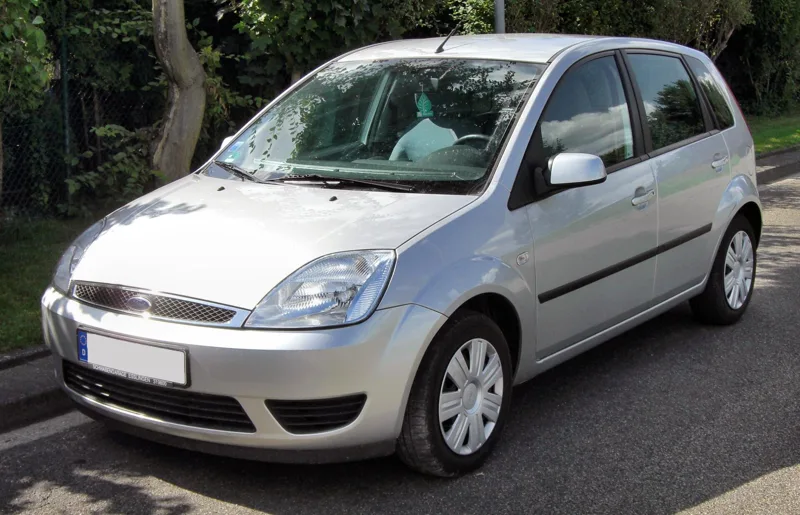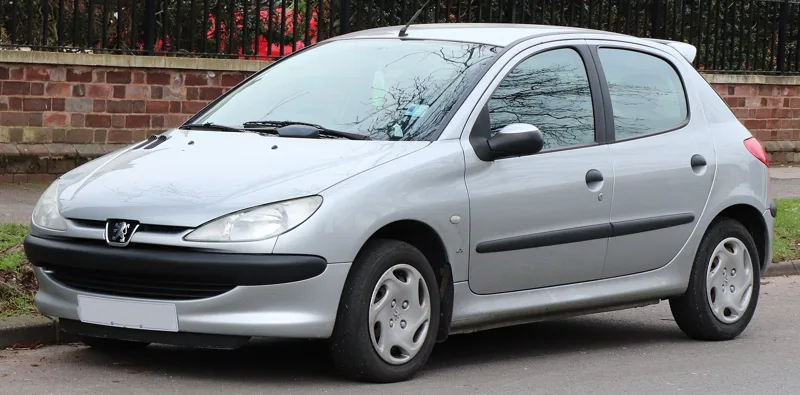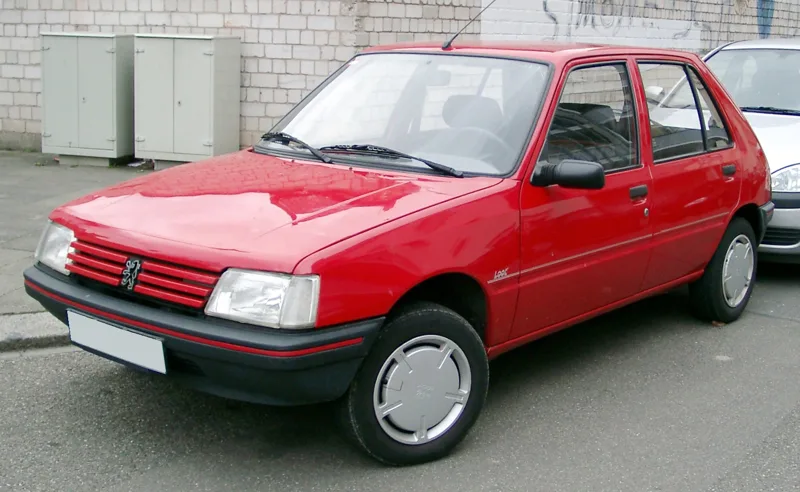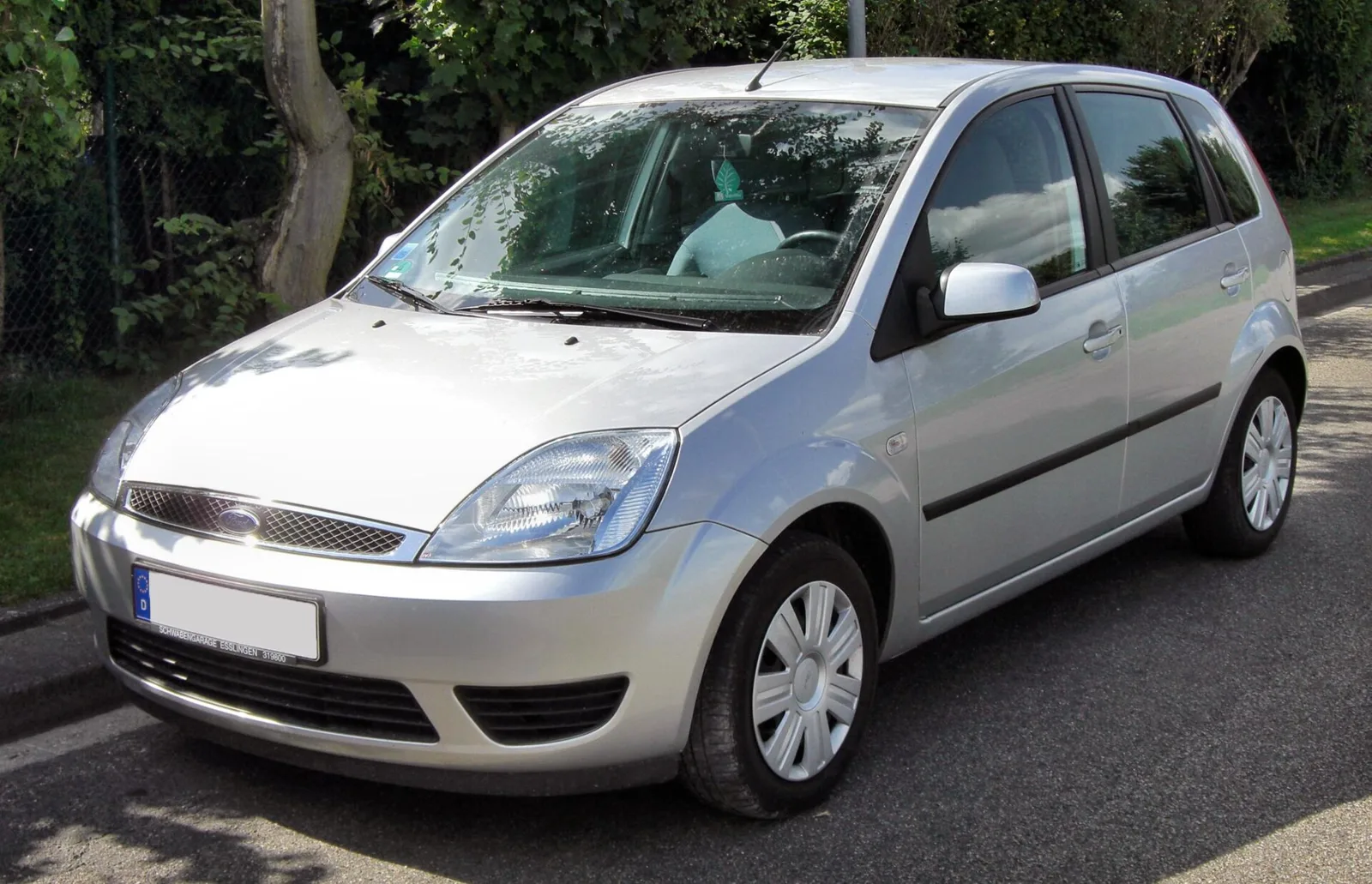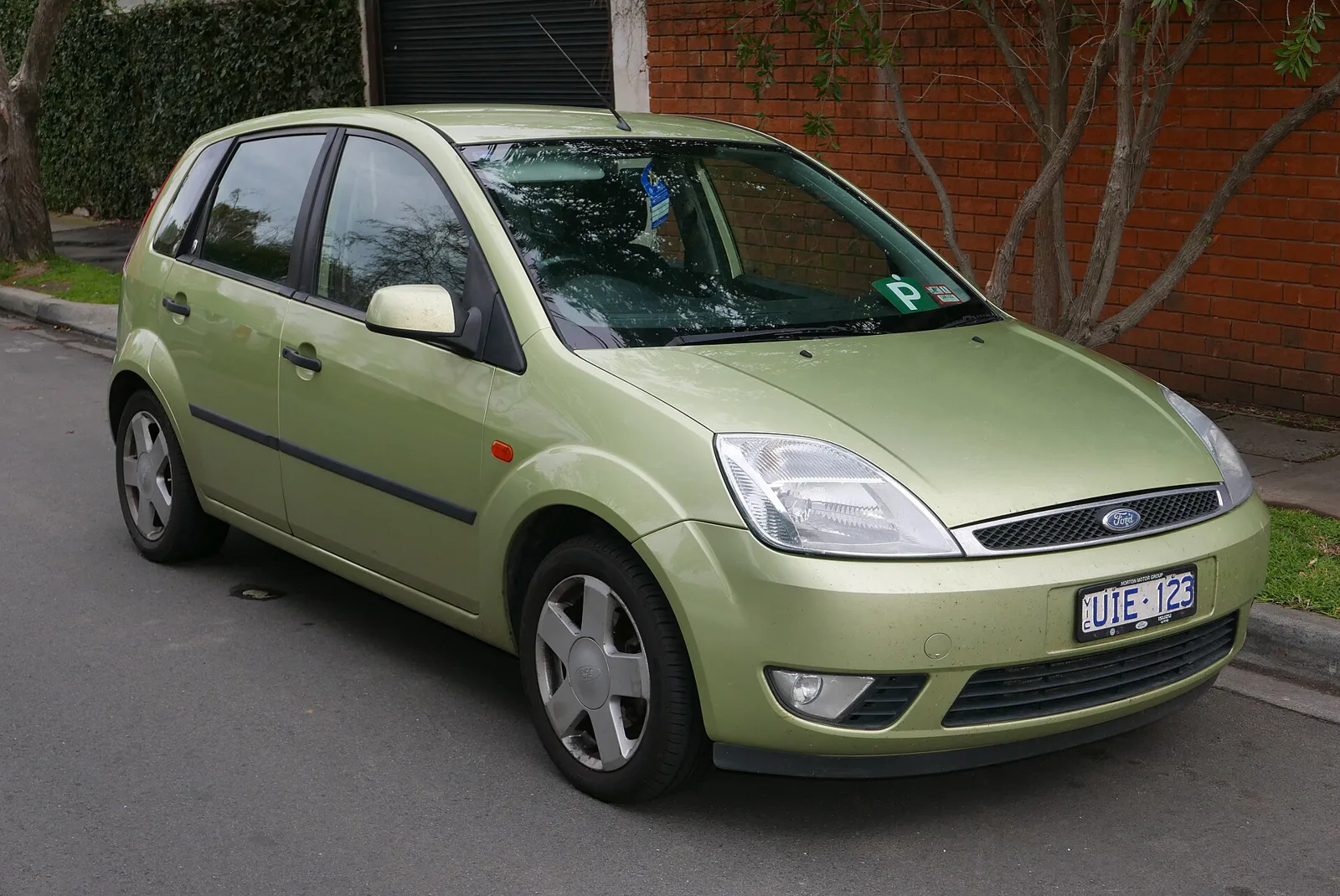
Two superminis from the turn of the millennium, one from Ford's Almussafes plant and one French replacement for the 205, set against each other on engines, hot models and sales.
The Ford Fiesta Mk5 and Peugeot 206 were built for the same supermini buyers in the early 2000s. The 206 GTi 180 offered the quickest sprint here, while the Fiesta offered a broader engine range and the stronger British sales record.
The Ford Fiesta Mk5 and the Peugeot 206 arrived within four years of each other and fought for the same European supermini buyers. The Fiesta was unveiled in April 2002, and the 206 had reached showrooms in September 1998. Each was the car its maker needed at the time, and each sold very well.
Were the Fiesta and 206 rivals?
They were. The 206's own history names the Fiesta as one of the superminis that kept selling strongly while the 205 was being phased out. By the time the 206 arrived, the Fiesta had become a benchmark that Peugeot had to match.
The two cars were built for the same kind of buyer but from different starting points. The 206 was a late replacement after Peugeot misjudged the market, while the Fiesta Mk5 was the fifth generation of a long-running model.
Two superminis of the early 2000s, one with the quickest hot hatch and the other with the wider range and the bigger British sales story.
How did the Fiesta Mk5 arrive?
The fifth-generation Fiesta was unveiled on 1 April 2002, and production started at the Almussafes plant on 29 April 2002. Production in Europe ended in 2008, while the Mexican and Brazilian lines ran on until 2010 and 2014.
The generation became the best-selling Fiesta to date. It also marked the Fiesta's arrival in Asia and Australasia, where it took over from the Kia-based Festiva. Most of its engines were carried over from the earlier car, though Ford renamed them Duratec, keeping the Zetec name for sportier models.
How did the 206 arrive?
The 206, codenamed T1, was approved on 7 April 1994 by Jacques Calvet, then Peugeot's president. The launch was planned for 1997, and it came in September 1998 as a hatchback, after Peugeot had stepped back from directly replacing the 205.
Peugeot's plan was for the 106, which arrived in 1991, to win the cheaper buyers from the 205 range, with the 306 of 1993 taking the higher end. That plan failed. Superminis such as the Fiesta and the Polo kept gaining ground, and Peugeot was losing sales fast before the 206 appeared.
Specifications side by side
| Specification | Ford Fiesta Mk5 | Peugeot 206 |
|---|---|---|
| Built | April 2002 to 2008 in Europe | September 1998 to 2024 in various markets |
| Body styles | Three and five-door hatchback; saloon in some markets | Hatchback, CC coupe cabriolet, SW estate, SD saloon |
| Petrol engines | 1.25, 1.3, 1.4, 1.6 and 2.0 litre | 1.1, 1.4 and 1.6 litre; 2.0 GTi from 1999 |
| Diesel | 1.4 and 1.6 TDCi common rail, built with PSA | 1.9 litre; HDi common rail later |
| Hot model | Fiesta ST, 150 PS (110 kW; 148 bhp) from a 2.0 Duratec | GTi 180, 175 bhp (130 kW; 177 PS) from 2003 |
| Top speed | 129 mph (208 km/h) on the ST | 220 km/h (137 mph) on the GTi 180 |
| 0-100 km/h | Not published for the ST | 7.4 seconds on the GTi 180 |
| Sales | Best-selling Fiesta generation to date | 8,358,217 cars sold by 2012 |
Which car was quicker?
On the published figures, the 206 GTi 180 has the stronger sprint record, reaching 100 km/h in 7.4 seconds and topping out at 220 km/h (137 mph). The Fiesta ST's top speed was 129 mph (208 km/h), and its sprint time is not part of this comparison.
The two cars were measured on different scales, and the Fiesta ST's top speed is quoted in mph. That makes a fair ranking hard, so the buyer should look at the specific trim rather than the badge.
How did the Fiesta's engines work?
The Mk5 covered a broad range, from 1.25, 1.3, 1.4, 1.6 and 2.0-litre petrol engines to the Duratorq TDCi common-rail diesels in 1.4 and 1.6 forms. The diesels were built in a joint venture with PSA, the group behind the 206's own engines.
The initial 1.3-litre push-rod engine was swapped for a RoCam 1.3 in the UK, and both were sold under the name Duratec 8v. In Mercosur countries, a 1.6-litre 98 bhp (73 kW) SOHC Zetec was standard, with a choice of a four-speed automatic or five-speed manual gearbox.
South American buyers could also choose a 1.4-litre diesel with 68 bhp (51 kW). In Brazil, 1.0 and 1.6-litre flexible-fuel engines ran on ethanol, petrol or any mix of the two.
How did the 206's engines differ?
The 206 began with 1.1, 1.4 and 1.6-litre petrol engines and a 1.9-litre diesel. An HDi version with common-rail injection followed later, and the diesel gave petrol-like performance with diesel economy.
The 2.0-litre GTi arrived in 1999 with a top speed of 210 km/h (130 mph). The tuned GTi 180, sold as the RC on the Continent, used a 2-litre EW10J4S engine with variable valve timing to produce 175 bhp (130 kW; 177 PS).
Where the Fiesta's range is wide, the 206's line-up relied on a petrol core, and the 1.4-litre XR was its best-selling version. The GTi 180's sprint of 7.4 seconds to 100 km/h stands out in this pair.
What did the Fiesta's sporty models offer?
The Fiesta ST was the performance model, with a 2.0-litre Duratec petrol rated at 150 PS (110 kW; 148 bhp). It came with 17-inch alloy wheels, disc brakes at all four corners, different bumpers and side skirts, and an ST badge on the seat backs and steering wheel. The car was shown at Geneva in 2004.
In Australia the ST became the Fiesta XR4, which took the XR badge used on other sporting Fords sold there. Concepts also appeared, including the RallyeConcept built for the Super 1600 rally class, with a 200 bhp (150 kW; 200 PS) 1.6 Duratec and a six-speed sequential gearbox.
Tuners also got involved. Mountune's Stage 1 upgrade, costing 1,435 pounds, raised the ST to 165 PS (121 kW; 163 bhp). Stage 2, costing 1,838 pounds, brought it to 185 PS (136 kW; 182 bhp). A limited run of 500 ST 500 cars, priced at 15,000 pounds, added carbon-pattern trim and a Sony audio system.
How did the facelifts change the two cars?
The Fiesta's facelift arrived in November 2005 for the 2006 model year. It brought new bumpers, grille, headlamps and rear lamps, along with a new fascia and softer materials after complaints about the original's hard plastics.
The revised car also gained technology usually found in larger cars, including Bluetooth, voice control, rain-sensing wipers and automatic headlights. Ford promoted the changes in the UK with a Clever Fiesta, Stupid Dogbot television campaign.
The 206 had its own changes. Its 2003 facelift brought clear headlights, new rear clusters and side repeaters. The 206+ followed in February 2009, with a new front end styled in the manner of the 207.
Which car sold better?
Both cars had strong sales records. The Fiesta Mk5 is the best-selling Fiesta generation to date, and in Britain the Fiesta was the most popular supermini in 2006 and 2007, its first such result since 2001.
The 206 ranked among Europe's top sellers between 2001 and 2003, and it won the UK's best car of the year title three years running, from 1998 to 2001. Peugeot marked the five millionth unit on 26 May 2005, and it is the brand's top model, with 8,358,217 units shifted by 2012.
Ford's sales recovery came after a period in which the Fiesta had been outsold by rivals such as the Vauxhall Corsa. In February 2006 Ford reported that sales in the previous month were up 25% on the figure for the earlier model.
How did the Fiesta sell in Asia, Japan and India?
The Fiesta reached Asia and Australasia for the first time with this generation. Fiestas sold there were all 1.6-litre LX three or five-door, Zetec three-door or Ghia five-door cars, replacing the Kia-based Festiva.
Japan had a short run, on a platform shared with the Mazda Demio. Only a five-door hatchback was offered, with the 1.6-litre engine in GLX trim, and the ST appeared there in 2005 alone. A Sportizm version was limited to 50 cars and wore Colorado Red paint with sporty body kits.
In India, Ford sold a four-door saloon alongside the Ikon, from September 2005. It came with a Duratec petrol unit or a 1.4 TDCi diesel, and more than two-thirds of early sales were of the economical diesel. Production of the Ikon ended once Bharat IV emission rules applied to metropolitan areas.
What did the 206's body styles add?
The 206 CC coupe cabriolet was shown in Paris in September 2000, based on the 20Coeur concept. Its powered folding roof used the Georges Paulin mechanism, whose lineage runs back to the 1935 Peugeot 402 Eclipse coupe, and Heuliez made the roof-trunk modules at Cerizay before final assembly at Mulhouse. Production stopped in early 2008.
The SW estate, codenamed T12, followed in March 2002 and had a reinforced rear axle to carry the extra weight. By the end of its run, 366,000 had been built. Sales ended in July 2006 when the 207 SW took over.
Outside Western Europe, the 206 SD saloon was developed with Iran Khodro, and it went on sale in Iran in 2006. Peugeot also offered an off-roader version, the Escapade, in selected South American markets, built from the SW station wagon with a 1.6-litre 16-valve engine.
How did the Fiesta's safety and special editions compare?
The Mk5 was the first Fiesta to offer anti-lock brakes and passenger airbags as standard. Its overall score in the crash tests was 24.84 out of 37, which gave buyers a benchmark to weigh against rival superminis.
Ford's limited editions were modest in number. The Zetec S Anniversary was a run of 400 cars with Radian Yellow paint and a chequered roof, and it reached UK showrooms in March 2007 at 12,595 pounds. The Zetec S Celebration, another 400-car run, was priced at the same level, while the Zetec S Red came in at 13,000 pounds.
The Zetec Blue was announced in November 2007 as a farewell for the UK Mk5, with prices from 9,995 pounds. Its specification was lifted in the summer of 2008 with Bluetooth, voice control and the Technology Pack as standard.
How did the 206's hot model and the Fiesta's ST compare on the road?
The Fiesta ST and the 206 GTi 180 both came from the same kind of brief, a sporting supermini with a punchy petrol engine and sharper suspension. The ST made 150 PS (110 kW; 148 bhp) from its 2.0-litre Duratec, while the GTi 180 made 175 bhp (130 kW; 177 PS).
Ford's ST gained 17-inch wheels and disc brakes at every corner. The GTi 180 had 17-inch alloys too, along with racing bucket seats and a shorter gear linkage, so the comparison comes down to character as much as numbers.
Which car suits which buyer?
A buyer who wants the sharpest sprint figures and a rally-bred French hot hatch will look at the 206 GTi 180. The GTi 180 reaches 100 km/h in 7.4 seconds, which is the quickest time in this comparison.
A buyer who wants a wide choice of engines, tuner support and a supermini that topped the British sales charts will find more in the Fiesta. The ST, the Mountune upgrades and the limited editions give it plenty of character.
Neither car is better across the board. The 206 has the faster hot model on the figures here, while the Fiesta offers the broader engine range and the bigger British sales story.