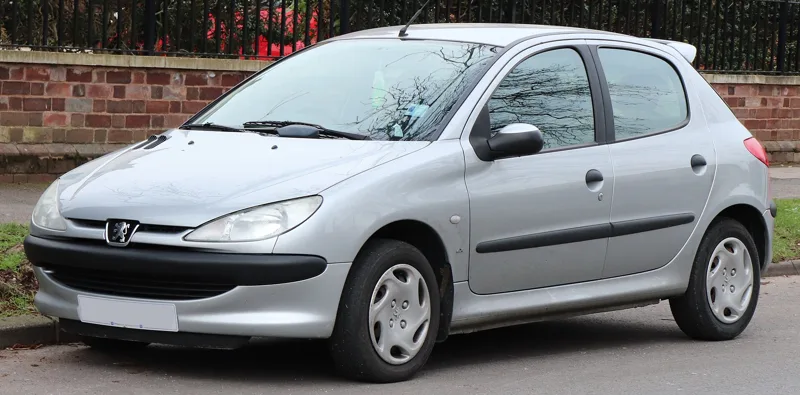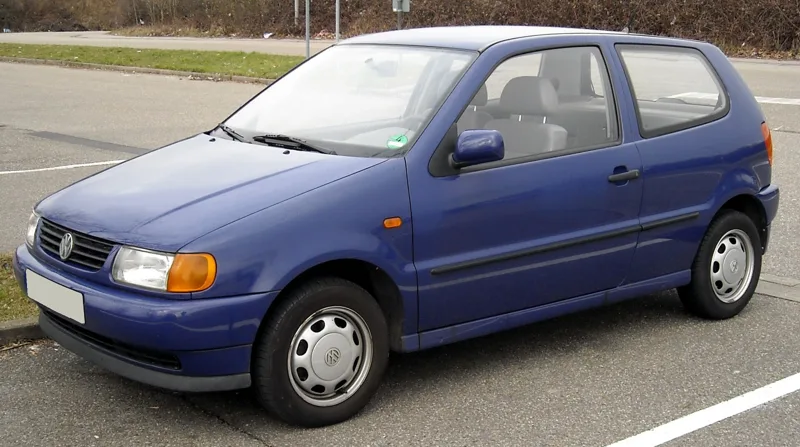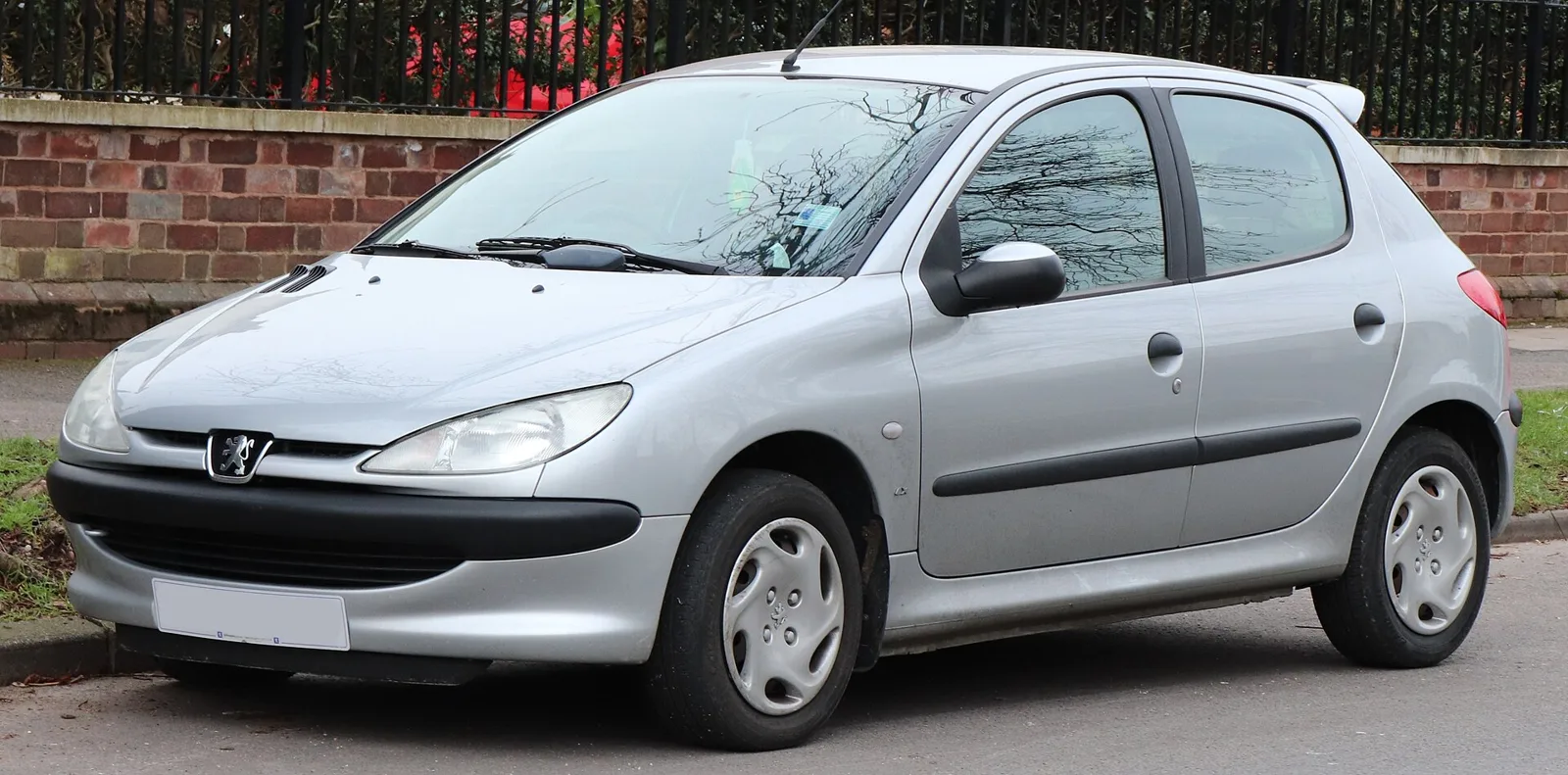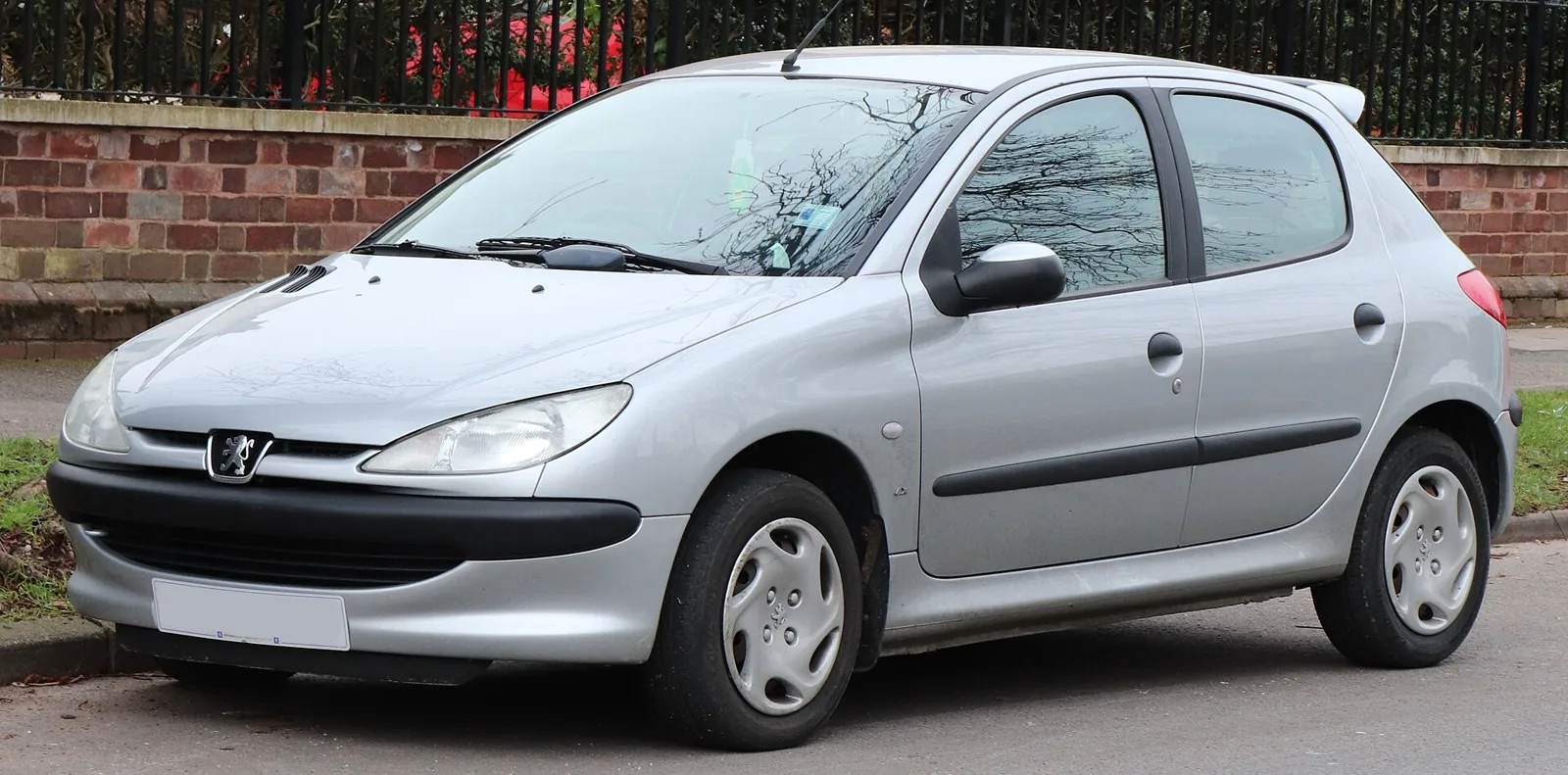
The Peugeot 206 and the Volkswagen Polo Mk3 both arrived in the late 1990s and sold strongly across Europe, but they took different routes to the top of the class.
The Peugeot 206 and Volkswagen Polo Mk3 both arrived in the late 1990s to compete in the European supermini class. The 206 GTi 180 was the quickest car here, while the Polo offered a wider choice of engines and trims.
The Peugeot 206 and the Volkswagen Polo Mk3 were both supermini launches from the mid-1990s, and both sold in large numbers across Europe. The Polo Mk3 arrived in 1994, while the 206 followed in September 1998 as Peugeot's replacement for the 205. The two cars shared a segment, but they came from different thinking about what a small car should be.
Were the 206 and Polo Mk3 rivals?
They were, in the way that matters most to a supermini buyer: they competed for the same showroom visit. Peugeot had left a hole in its line-up, and by the time the 206 arrived the Ford Fiesta and the Volkswagen Polo were both selling well and gaining ground.
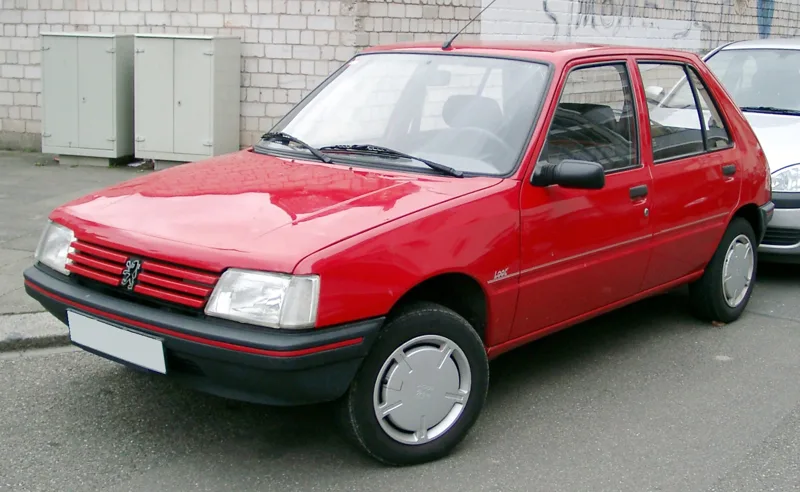
That hole was the reason the 206 existed. Peugeot had chosen not to replace the 205 directly, believing small cars had stopped being worth the money, and the 106 and 306 were meant to share its buyers. That plan did not hold, and the company was losing sales quickly before the 206 appeared as a late answer.
Two supermini answers to the 1990s, one built for rally pedigree and the other for a wide choice of engines.
How did the 206 come to market?
Jacques Calvet, then Peugeot's president, signed off the 206 development programme, codenamed T1, on 7 April 1994, with a launch planned for 1997. The design was fixed six months after that approval. Counting from design freeze, production began 34 months later.
The programme cost 6.3 billion francs. It was the first Peugeot designed around a digital mock-up and crash simulations, and the prototype was tested on the Belchamp circuit in the Valentigney forest. Because the 106 shared its platform with the Citroen Saxo, Peugeot had no suitable in-house base, so it built a new front-drive platform for the 206.
Where did the Polo Mk3 come from?
The Polo Mk3, codenamed Typ 6N, was unveiled on 31 August 1994 and reached the UK that October. It was the first all-new Polo since the Mk2 of 1981, although the Mk2 had received a major restyle in 1990.
The Mk3 also brought five doors to the Polo range, alongside three-door versions. Volkswagen was late to that party, lagging the class by years, so the five-door Polo arrived well after several rivals had offered the body style.
The platform was new, although the dashboard and some engines and rear suspension parts were shared with the SEAT Ibiza Mk2, which had gone on sale a year earlier. Outwardly, the Polo looked nothing like its SEAT cousin.
Specifications side by side
| Specification | Peugeot 206 | Volkswagen Polo Mk3 |
|---|---|---|
| Launch | September 1998, hatchback | Unveiled 31 August 1994; UK October 1994 |
| Body styles | Hatchback, CC coupe cabriolet, SW estate, SD saloon | Three and five-door hatchback; saloon and estate from 1995 |
| Petrol engines | 1.1, 1.4 and 1.6 litre; 2.0 GTi from 1999 | 1.0, 1.4 and 1.6 litre; 1.6 GTI from 1998 |
| Diesel | 1.9 litre; HDi common rail later | 1.9 litre; 1.4 TDI three-cylinder from 1999 |
| Hot model | GTi 180 with 175 bhp (130 kW; 177 PS) from 2003 | GTI with 125 PS (92 kW) 1.6 16V from 2000 |
| 0-100 km/h | 7.4 seconds on the GTi 180 | 9.1 seconds on the 1998 GTI |
| Top speed | 220 km/h (137 mph) on the GTi 180 | 190 km/h (118 mph) on the 16V 100 PS |
| Production | 1998 to 2024 in various markets | 1994 to 2002 |
Which car was quicker?
The fastest model in the published figures is the 206 GTi 180, which reached 100 km/h from rest in 7.4 seconds. The Polo's quickest car, the 1998 GTI, took 9.1 seconds to the same mark.
The Polo's sporting range had its own limits. Its 16V 100 PS model needed 10.6 seconds to 100 km/h and reached 190 km/h (118 mph), which left it behind the sporting Ibiza, the car that used a 2.0-litre 16-valve engine.
How did the 206's hot models develop?
The 2.0-litre GTi came along in 1999 with a top speed of 210 km/h (130 mph). In 2003 the GTi 180 and RC arrived, a pair of cars intended to honour Peugeot's rallying results between 2000 and 2003 and to echo what the 205 GTi had done in the 1980s.
The GTi 180 ran a 2-litre EW10J4S engine with variable valve timing, producing 175 bhp (130 kW; 177 PS). Its 17-inch alloys and racing bucket seats matched the engine, and a short-shift gear linkage with altered first and second gear ratios sharpened the drive.
The 206 Grand Tourisme was built to homologate the 206 World Rally Car. The rules demanded at least 4.0 metres of length, so the road car gained body extensions to stretch it from 3.83 metres. Some 4000 cars were made, 600 of them right-hand drive for the UK.
How did the Polo Mk3's hot models work?
Peugeot had its 205 GTI, while Volkswagen waited until 1998 for a Mk3 GTI. That car was limited to 3000 units and sold only in continental Europe. It used a 1.6 16V engine with 120 PS (88 kW), 15-inch BBS alloys, and could reach 100 km/h in 9.1 seconds.
The 16V, which replaced the GLX, used a 1.4 16V engine that Volkswagen tuned to 100 PS (74 kW) as standard. It proved one of the most popular Mk3 versions among tuners, although the Polo GTI was often judged expensive for the performance it gave.
From 2000 to 2002 the GTI returned with a 1.6 16V producing 125 PS (92 kW), with variable valve timing. That made it the most powerful Polo the factory had built up to that point, and it came with Climatronic air conditioning, Xenon headlights and BBS split rims.
How did the engines and trims of each car differ?
The 206 started with 1.1, 1.4 and 1.6-litre petrol engines and a 1.9-litre diesel, with an HDi common-rail version following later. The 1999 GTi and 2003 GTi 180 gave it sharper options at the top of the range.
The Polo's first engines were a 1043 cc unit with 45 PS (33 kW; 44 hp) and a 1272 cc unit with 55 PS (40 kW; 54 hp), joined by a new 1598 cc unit. A new 1.4 replaced the 1.3 in October 1995, and in September 1996 a 999 cc multi-point injection engine with 50 PS (37 kW; 49 hp) took over from the 1043.
UK trim levels ran from L, CL and GL to GLX and 16v, with later names including E, S, SE and GTi. Trim levels differed from country to country, which made the Polo's range harder to compare across Europe.
How did the 206 and Polo sell?
The 206 did well across the Continent, and in the early 2000s it ranked among Europe's most-bought cars. In Britain it won the best car of the year title three years running, between 1998 and 2001, and the 1.4-litre XR was its most popular version.
Peugeot marked the five millionth 206 on 26 May 2005. It is the brand's top seller, with 8,358,217 cars sold by 2012, and by 2020 Autocar had counted it among the most long-lived single-generation cars.
The Polo Mk3 also sold well in the UK, competing with the Fiat Punto and the Nissan Micra. It collected the 1995 What Car? Car of the Year award, followed by the 1997 Which? Best Supermini title and the 1998 Top Gear Best Supermini title.
How did the facelifts change the two cars?
The 206 gained a facelift in 2003, with clear headlights, new rear clusters, new side repeaters, chrome badges and a new colour range. The 206+ followed in February 2009 with a new front end, styled in the manner of the 207.
The Polo's facelift arrived in 1999, with new headlights and bumpers and an interior based on the Lupo's. Volkswagen said 70% of the components were new, even though the bodyshell was not fully redesigned. Power steering, antilock brakes and twin airbags became standard.
After the facelift the Polo offered thirty-two models with seven engines, which Volkswagen claimed was the widest choice the model had ever had. The 1.4 TDI was regarded as the best engine in the range for its reliability, economy and relative power.
What did the 206's body styles add?
The CC coupe cabriolet was debuted in Paris in September 2000. It grew from the 20Coeur concept, which had appeared at the Geneva Motor Show two years earlier, and it used a powered folding roof, a mechanism whose lineage traces back to the 1935 Peugeot 402 Eclipse coupe.
The roof-trunk modules were made by Heuliez, a specialist in short runs for niche markets such as convertibles and estates, while final assembly took place at Mulhouse. Production of the CC stopped in early 2008, and the 207 CC took its place.
The SW estate, with the codename T12, reached production in March 2002 at the Ryton plant. It had a reinforced rear axle to carry the extra weight, and by the end of its run 366,000 had been built. Its assembly moved to Poissy in 2007, and sales ended in July 2006 when the 207 SW took over.
Where were the two cars built?
The 206 was mainly made at Peugeot's Poissy and Mulhouse plants in France until December 2012, with Ryton in Coventry also producing it. Ryton was closed when the 207 arrived, and 206 production there ended on 12 December 2006, with the work moved to Slovakia.
Outside Europe the 206 was built in Iran, Chile, Argentina, Brazil, Uruguay, China, Indonesia and Malaysia. Brazilian output began at Porto Real in 2001, and Argentina's Villa Bosch plant built it from July 1999 until 7 December 2016.
The Polo's saloon and estate outlived the hatchback, which ended in 2001, and they stayed in production until 2003. In Argentina the saloon was facelifted in 2004.
How did the Polo Mk3 sell outside Europe?
In Argentina Volkswagen built the Polo Classic, a version of the Mk3 saloon that was sold as the Derby in Mexico, alongside the Caddy van, which shared its platform and front end. The Polo Classic and the Caddy have been produced there since 2000, and all the facelifted models are Argentine-built.
Latin America had trim levels of its own, although some names echoed the European ones. The CL and GL were offered in Brazil from 1996, and they were similar to their European counterparts, though slightly dearer because of import tariffs.
Which car suits which buyer?
A buyer who wants a sharper hot hatch with a rally pedigree will find more in the 206 GTi 180. A buyer who wants a long-running French supermini with a big sales history will also find that in the 206.
A buyer who wants a Volkswagen-badged car with a wide range of engines and body styles will look at the Polo Mk3. Its 1.4 TDI was the sensible pick for economy, and the GTI was the performance choice.
Neither car is better across the board. The 206 has the bigger sales story and the faster figures in this comparison, while the Polo offers a reputation for build quality and a wider choice of trims and engines.