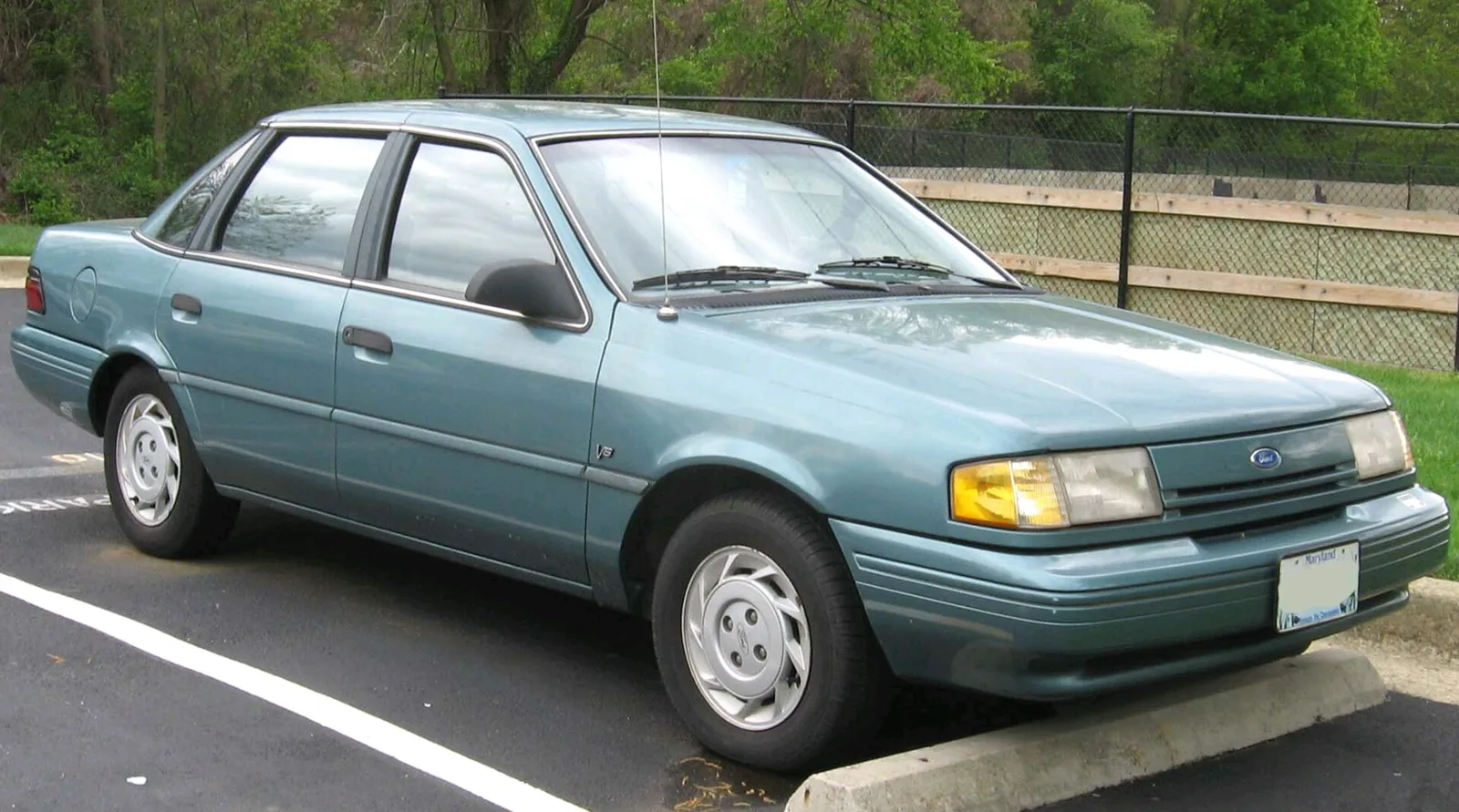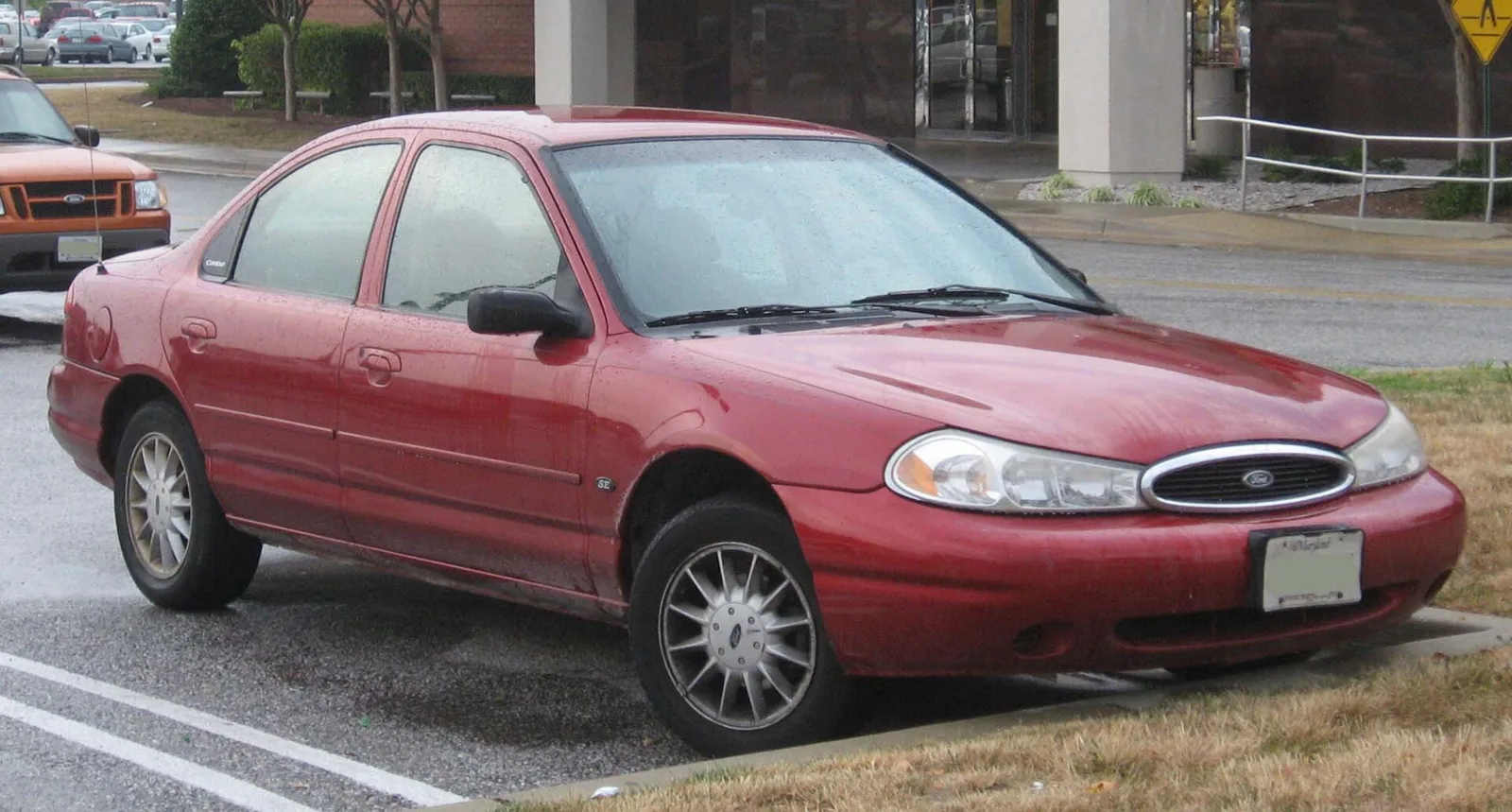
How the CDW27 world car became a Contour in North America, with Zetec and Duratec engines, ST and SVT performance models and a short, complicated life.
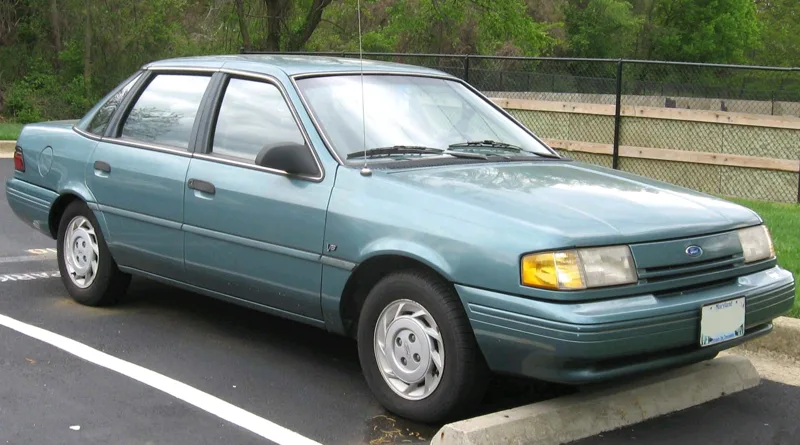
Sold in North America from 1995 to 2000, the Contour was a four-door saloon on the CDW27 platform that the European Mondeo also used. It came with 2.0 and 2.5 litre engines, and the SVT version was its performance flagship.
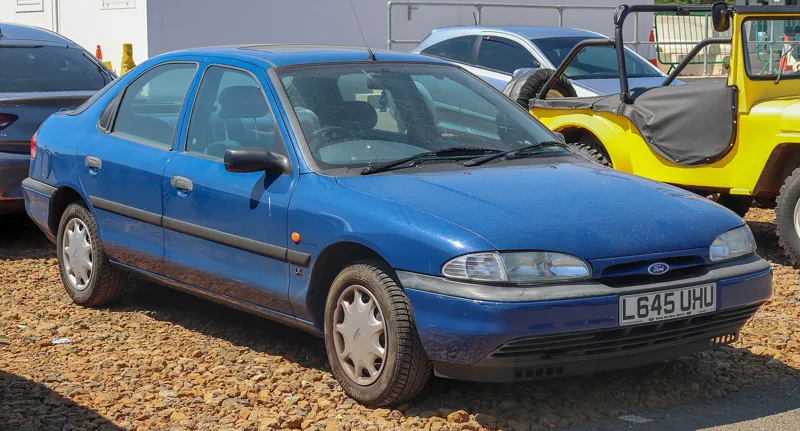
Few mid-size Fords have a split identity like the Contour. It was the North American face of the first-generation Mondeo, sold between the 1995 and 2000 model years, and it shared the CDW27 platform with its European sibling. The two cars had far less in common than Ford's world car billing suggested, but the Contour carried the same core idea into a different market.
What was the Ford Contour?
The Ford Contour was the North American version of the first-generation Ford Mondeo, sold from 1995 to 2000 as a four-door sedan. It replaced the Tempo and Topaz, used 2.0 and 2.5 litre engines and was produced at Kansas City Assembly in Missouri.
Cuautitlan Assembly also built the car from 15 August 1994. Although officially a mid-size car, the Contour was among the smallest sedans in its segment, and its interior room became a point of criticism.
Body structure, powertrain and suspension were all shared with the European car, so the Contour was an adapted version of the Mondeo rather than a straight copy. Its Mercury twin, the Mystique, followed the same route with different trim and badging.
A world car on paper, the Contour was a North American Mondeo with a different face and a short life.
Why was the Mondeo developed?
The Mondeo was started in 1986, just before the Sierra received a major facelift, and it was meant to replace the Sierra in Europe. Ford planned it as a world car, and the design cost US$6 billion, which made it a very costly new-car programme for the time.
Design and marketing were shared between Ford USA in Dearborn and Ford of Europe. The codename CDW27 showed that the car straddled the C and D size classes, and John Oldfield led the project from Ford Dunton in Essex.
The Mondeo shared very little with the Sierra. Ford confirmed a front-wheel drive replacement during the design phase, but the Nissan Primera launch in 1990 forced major changes, because the Japanese car became the benchmark that Ford had to beat.
Ford of Europe was losing heavy sums at the time, and its products had a reputation for being designed by accountants rather than engineers. The new car had to be good and it had to sell. Production began on 23 November 1992, and sales followed on 22 March 1993.
How did the Mondeo's design differ from the Sierra?
Unlike the Sierra, the Mondeo was front-wheel drive in its most common form, with four-wheel drive available on the Mk I only. The floor pan was designed to accept almost any drivetrain, which left the front footwells more cramped than expected for a car of its size.
That flexibility had a cost. The floor pan produced an intrusive bellhousing cover and a transmission tunnel that was mostly disused. Ford answered with new manual and automatic transmissions and a more sophisticated suspension design, which gave the car its reputation for handling and ride.
The automatic gearbox used electronic control with sport and economy modes, plus switchable overdrive. Subframes at the front and rear gave it the refinement of an executive car.
What safety equipment did the Mondeo come with?
Every version of the Mondeo came with a driver airbag from launch, and that feature helped the car win European Car of the Year for 1994. Side-impact bars, seat belt pretensioners and ABS on higher models were standard as well.
Interiors were usually well appointed, with velour trim, central locking and power windows. Higher-specification cars added leather seats, trip computers, an electric sunroof and a CD changer, which pushed the car further upmarket.
What changed in the 1996 facelift?
The mid-cycle Mk II facelift, launched in October 1996, tackled bland styling, weak headlights and cramped rear legroom. It brought a new grille, larger lighting units and a full-sized driver airbag, and it earned a 3-star Euro NCAP rating.
The facelift was the answer to three of the original car's main complaints. Its headlights had been a weak point, and the reflectors had yellowed quickly. Rear legroom was also on the list of changes.
Ford revised the Zetec engine thoroughly in 1998, giving it better refinement at high revs. That same year, the Cougar coupe arrived in Europe, launched in December 1998 on the Mk II Mondeo platform with a body shell of its own.
Which engines did the Mondeo use?
The Mondeo used Ford's Zetec engines, first seen in 1991 in the Escort, Orion and Fiesta, in 1.6, 1.8 and 2.0 litre sizes. Power ranged from 90 PS (66 kW) for the 1.6 to 136 PS (100 kW) for the new 2.0.
An alternative was the Endura-D 1.8 litre turbo-diesel. It came from an older diesel design and was never a strong competitor to the best European diesels, and it was dropped in 2000.
A 2.5 litre Duratec V6 arrived in 1994 with 170 PS (125 kW). Its 24-valve layout gave smooth running, and it was first branded 24v on the Mk I before being badged as the V6. The engine was introduced mainly for markets where four-cylinder petrol engines were not favoured.
How did the ST and SVT models perform?
The ST24 arrived in 1997 as the first Mondeo sold under the ST brand, with 170 PS (125 kW) and a 0-62 mph (100 km/h) time of 8.0 seconds. The ST200 followed in 1999 with 205 PS (151 kW) and reached 0-60 mph (97 km/h) in around 7.7 seconds.
The ST24 came with a Rally Sport appearance kit, sports suspension and half-leather sports bucket seats. Its top speed was 148 mph (238 km/h), and it was positioned as a sportier side to the full range rather than a volume seller.
The ST200 used a tuned version of the V6 with a different throttle body, camshafts and flywheel. It came with Recaro leather seats, 17-inch alloys and digital climate control, and it reached 151 mph (243 km/h). Imperial Blue was the launch colour, and 73 Diamond White cars went to UK police forces.
The North American answer was the SVT Contour, built by Ford's in-house Special Vehicle Team at Kansas City Assembly. It used a 2.5 litre V6 rated at 195 hp (145 kW) in 1998 and 200 hp (149 kW) from 1999, with a five-speed manual gearbox and upgraded brakes and suspension.
What trims did buyers get?
UK buyers of the first Mondeo could choose from Base, Aspen, LX, GLX, 24v, Si, Ghia and Ghia X in the 1992 to 1996 range. The 1996 to 2000 range added Zetec, Zetec-S and the sporting ST variants, while the Mystique offered GS and LS trims in North America.
Special editions added colour and character. The Ultima ran from 1993 to 1994, and a limited run of 2.0 Si cars in Citrine Yellow came with a full RS bodykit in 1993 and 1994. About 50 of those cars were tuned by Hendy Ford to around 150 PS.
The SVT Contour was offered in Silver Frost, Toreador Red and Black Ebony in 1998, and North American SE Sport cars had 9-inch Sport Drum rear brakes. Leather on the LS Mystique became standard in 1998.
How did the model years change the Contour?
The Contour changed in steps rather than in one redesign, and each year brought new equipment or tuning. The main milestones are set out below.
- 1996: the Mk II facelift arrived in October, with a new grille, larger lighting and a full-sized driver airbag.
- 1997: the SVT Contour was built from 1997 to 2000, and the ST brand was introduced to the Mondeo range.
- 1998: the SVT Contour debuted at 195 hp (145 kW), the Zetec engine was revised, and mid-year SVT changes refined the chassis.
- 1999: the ST200 launched with 205 PS (151 kW), the SVT rose to 200 hp (149 kW), and Mystique production ended on 23 December 1999.
- 2000: the Endura-D diesel was dropped from the Mondeo, the second generation replaced the first, and the last Contour rolled off the line on 19 October 2000.
How did the Contour sell in North America?
Sales were weak. The Contour was priced above the Tempo it replaced, and a base 1995 car cost $13,310, which was over $2,000 more than a base 1994 Tempo. That gap priced it out of reach for returning Tempo buyers.
Customers in the Contour's price range were drawn to the Taurus, which was larger and offered better value, or to the cheaper Escort. Ford's 1996 redesign of the Taurus was priced higher and received poorly, so Ford discounted it heavily and cut its base price again and again.
The Chrysler Cirrus, launched for 1995, matched the Contour's design and driving dynamics and was a serious rival in the same space. Ford withdrew the Mondeo from North America and Australia in 2000.
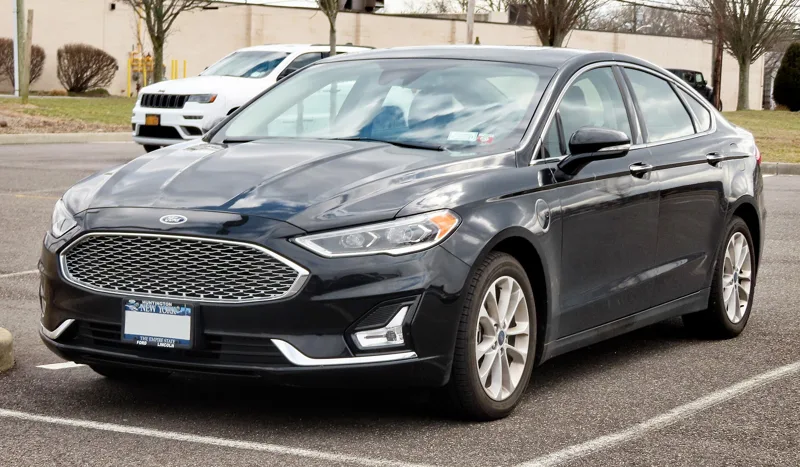
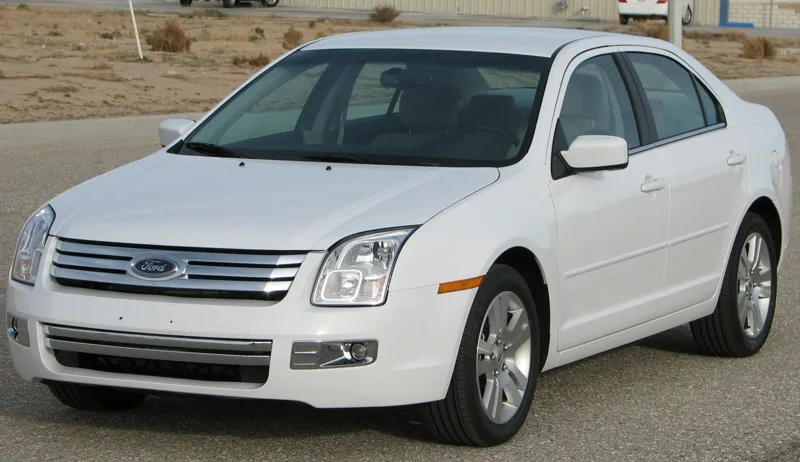
One theory held that North American and Australian executives were unenthusiastic about a car developed largely in Europe, and that they were content to see it fail in favour of their own models. The car returned to North America in 2012 as the redesigned 2013 Fusion under the One Ford plan, and that version proved successful.
How did the Mondeo sell in Europe and beyond?
In Europe the Mondeo was an immediate success. It won European Car of the Year for 1994, was Britain's third-best selling new car from 1996 to 1998, and slipped to sixth place in 1999 as the Vauxhall Vectra gained ground.
Australia was less kind. The Mondeo never became a sales success there, and Ford Australia withdrew from the medium-sized segment, arguing that it was in decline. A later Mondeo returned to Australia in 2007 with an all-new model.
In 2006, the Used Car Safety Ratings assessed the Australian Mondeos from 1995 to 2000 as providing significantly better than average protection for occupants in a crash.
How did critics and crash testers rate the Contour?
Critics liked the car's handling and ride. Edmunds praised both, and named the SVT Contour the most wanted sedan under $25,000 for 1999. Car and Driver put the Contour on its Ten Best list for 1995, 1996 and 1997, and Automobile magazine named it an All Star for 1995 to 1998.
Car and Driver later apologised in 2009 for including the Contour on that list. Crash testing was less generous: the IIHS gave the car a Poor rating in frontal crash testing and a Marginal structural rating, while the NHTSA test gave five stars for driver and passenger.
What were the Mondeo and Contour specifications?
| Model | Engine | Output | Other detail |
|---|---|---|---|
| Contour | 2.0 L Zetec I4 | 125 hp (97 kW) | Five-speed manual standard; four-speed automatic optional |
| Contour | 2.5 L Duratec V6 | 170 hp (125 kW) | Standard on SE trim |
| SVT Contour (1998) | 2.5 L Duratec V6 | 195 hp (145 kW) | Five-speed manual only |
| SVT Contour (1999 and 2000) | 2.5 L Duratec V6 | 200 hp (149 kW) | Built from 1997 to 2000 |
| Mondeo ST24 | 2.5 L Duratec V6 | 170 PS (125 kW) | 0-62 mph (100 km/h) in 8.0 seconds; 148 mph (238 km/h) |
| Mondeo ST200 | 2.5 L Duratec V6 | 205 PS (151 kW) | 0-60 mph (97 km/h) in around 7.7 seconds; 151 mph (243 km/h) |
| Mondeo 1.6 Zetec | 1.6 L | 90 PS (66 kW) | Zetec family first seen in 1991 |
| Mondeo 1.8 Zetec | 1.8 L | 115 PS (85 kW) | Zetec family |
| Mondeo 2.0 Zetec | 2.0 L | 136 PS (100 kW) | Launched as the new 2.0 L Zetec |