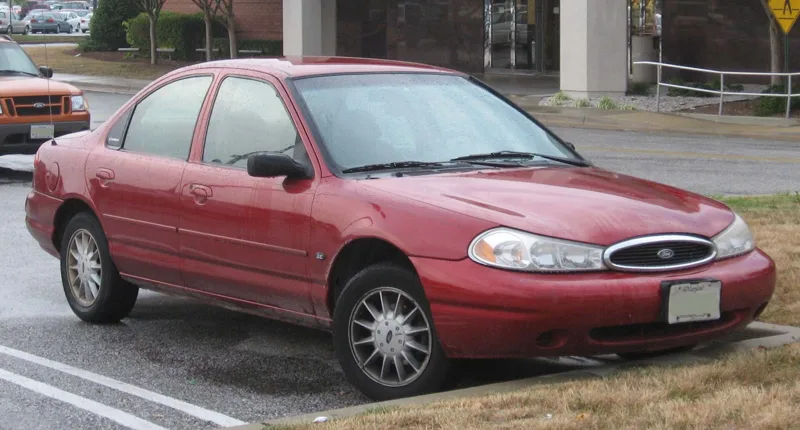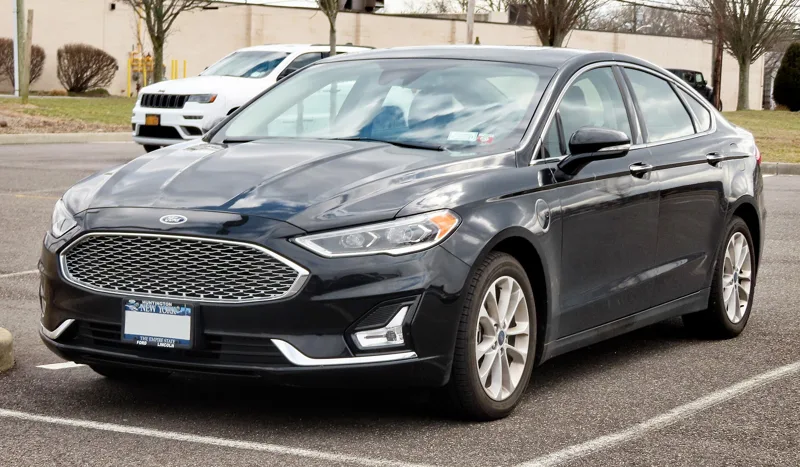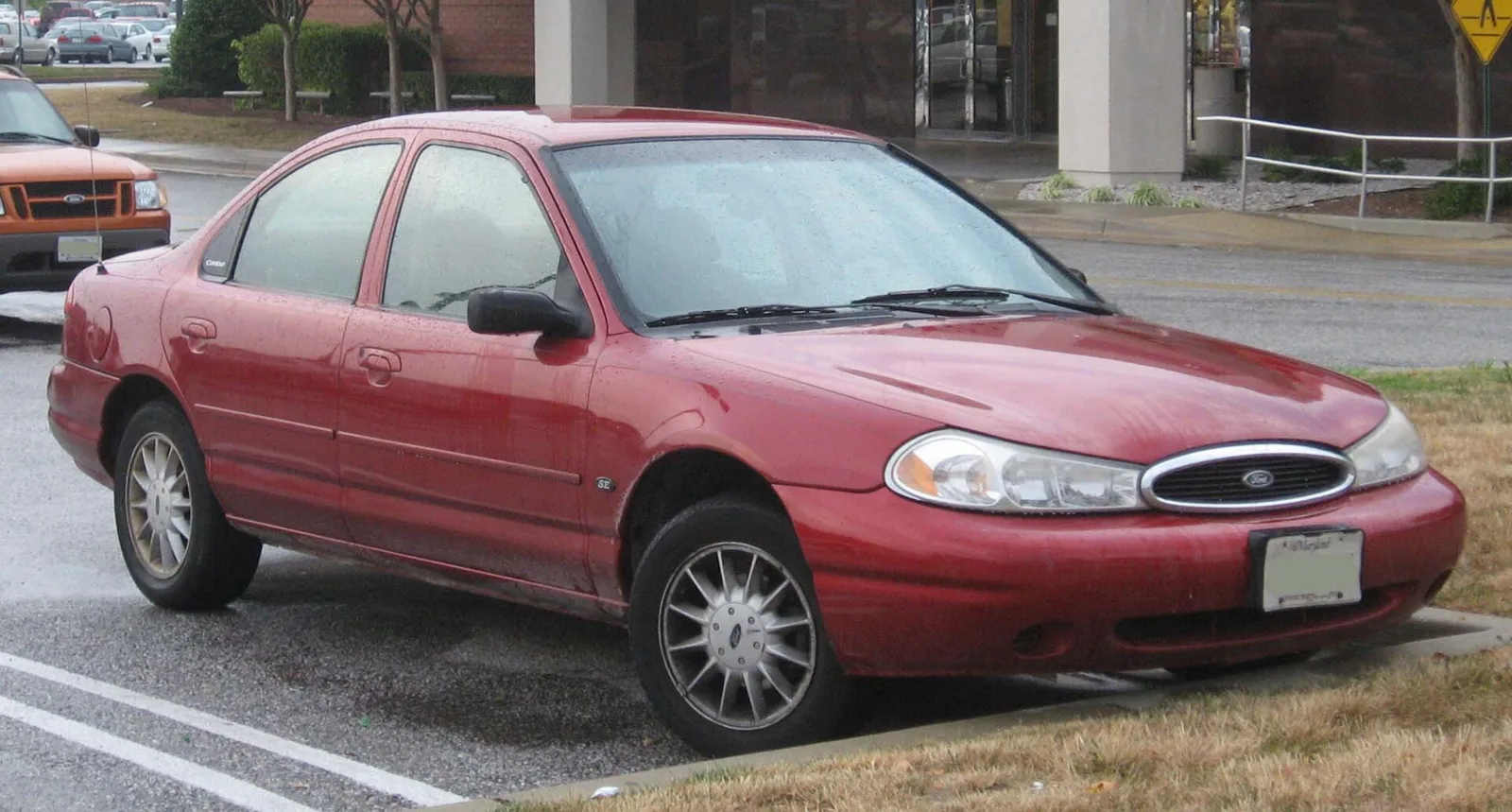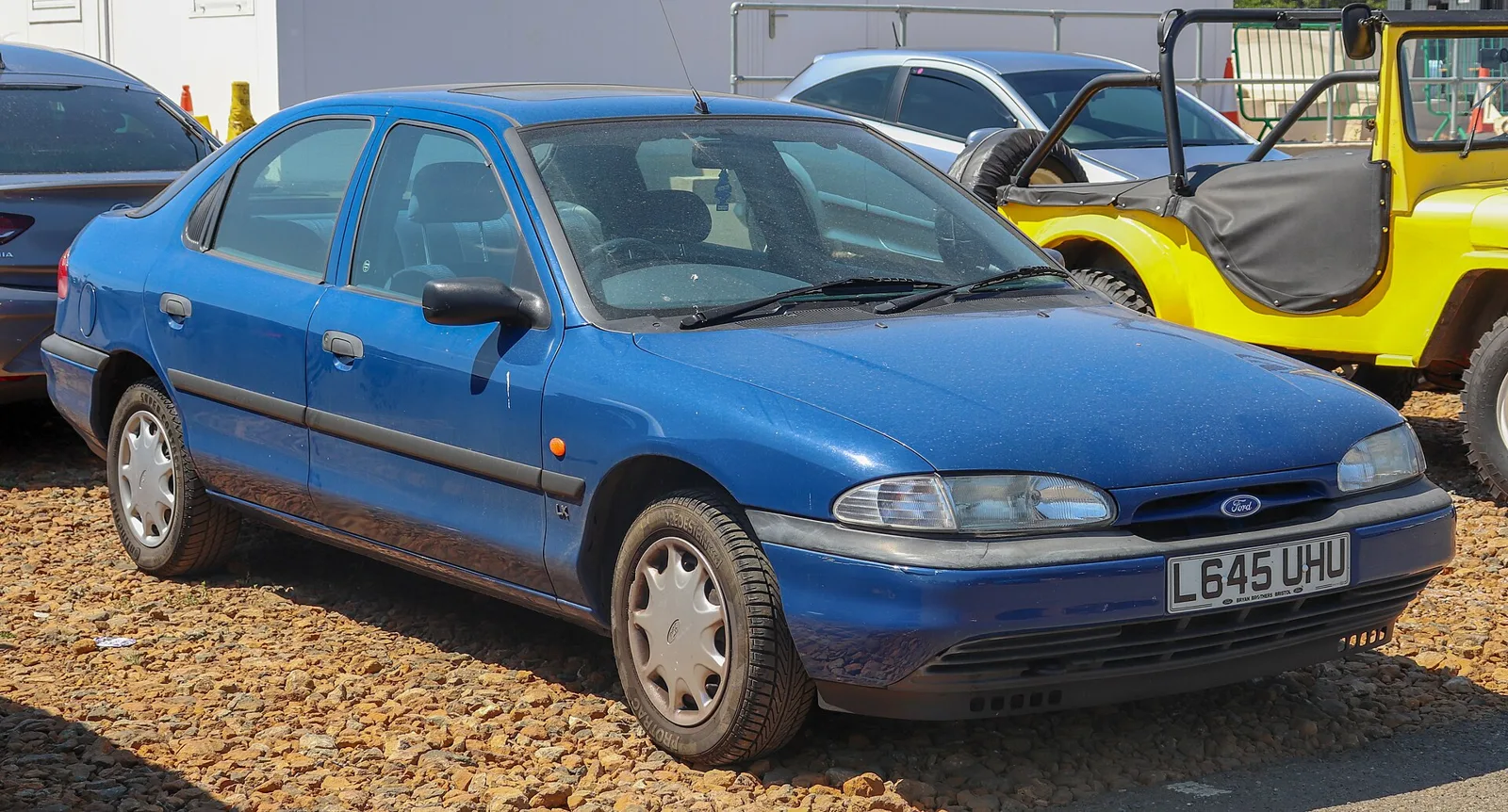
Ford's Mondeo, sold in North America as the Contour, and Nissan's Primera were launched within two years of each other as front-drive family cars, each shaped by the other's benchmark.
The Ford Mondeo I, sold in North America as the Contour, went on sale in March 1993 as a mid-size family car and cost US$6 billion to develop. The Nissan Primera first appeared in Japan in February 1990 as a front-drive family car, and it was sold in the United States as the Infiniti G20 from 1998 to 2002.
The Ford Contour and the Nissan Primera were both mid-size family cars for the 1990s, built for buyers who wanted a sensible front-drive sedan with some polish. Ford's car was known as the Mondeo in Europe and the Contour in North America. Nissan's was the Primera in Europe and Japan, and the Infiniti G20 in the United States. The two cars were shaped by each other, since the Primera became a benchmark that Ford had to beat.
When did the Mondeo and the Primera arrive?
The Ford Mondeo I, the first generation of the car, began on 23 November 1992, with sales starting on 22 March 1993. It is also known as the Mk I Mondeo, and the 1996 facelift versions are usually called Mk II. In North America the Contour and the Mercury Mystique replaced the Tempo and Topaz, and in Europe the Mondeo replaced the Sierra.
The Nissan Primera first went on sale in Japan in February 1990 and reached Europe in September 1990, where it replaced the Bluebird in the United Kingdom. The first generation was known as the P10. It was produced from 1990 to 2008 for the Japanese and European markets, and the Primera name returned in 2026 on a battery electric car built on the N7 platform.
The Primera's name comes from the Spanish word for first, in its feminine form. Nissan had built the Bluebird at its Washington plant in Tyne and Wear since 1986, and the Primera was designed with European buyers in mind.
A Ford world car that cost US$6 billion and a Nissan family saloon that set the benchmark it had to beat.
How did Ford develop the Mondeo?
The Mondeo was instigated in 1986, just before its Sierra predecessor received a major facelift. Its design cost Ford US$6 billion, which made it one of the most expensive new-car programmes of its time. The design and marketing were shared between Ford USA in Dearborn and Ford of Europe, and the codename CDW27 signified that the car straddled the C and D size classes as a world car.
The Mondeo was a completely new design that shared very little with the Sierra. Its usual layout was front-wheel drive, and four-wheel drive existed only on a rarer Mk I version. The floor pan was designed to accept almost any drivetrain, which made the front footwells feel more cramped than the size of the car suggests. The programme manager from 1988 was David Price, and the project head was John Oldfield.
Ford had planned to replace the Sierra by 1993, but the launch of the Nissan Primera in 1990 led it to make major changes to the final product. Ford had earlier used the 1986 Honda Accord as its benchmark, but the Primera became the benchmark car in the sector. The Mondeo also had to repair the reputation of Ford of Europe, which had been losing hundreds of millions of dollars and was seen as building cars designed by accountants.
Ford fitted the Mondeo with a long list of equipment for its time. Higher versions could have adaptive damping, self-levelling suspension on top estate models, traction control on V6 and four-wheel-drive cars, and a heated front windscreen branded Quickclear. Interiors were usually well appointed, with velour trim, central locking, power windows, power mirrors and flat-folding rear seats.
In the UK the 1992 to 1996 range ran from a basic Base and Aspen to the LX and GLX, with Ghia and the top Ghia X at the head of the line. The Si was a sports version with a 2.0 litre engine, and the 24v carried the 2.5 litre Duratec V6 with sports seats. Special editions included the Ultima, from 1993 to 1994, and the Verona, from 1995 to 1996.
How did Nissan develop the Primera?
Nissan showed the Primera X concept at the 1989 Tokyo Motor Show as part of Project 901, its performance vision for 1990, and it showed the UV.X concept at the 1989 Frankfurt Motor Show. The design was specifically targeted at European buyers, and the car was a front-wheel drive model with a conventional chassis.
The Primera was the first Nissan to use multi-link front suspension on a front-wheel drive car. It came with a five-speed manual gearbox and, in some versions, a four-speed automatic. Its design was closer in spirit to the European market than the Japanese one, and a British-built five-door was even exported back to Japan as the Primera UK GT.
In the United States, the Primera was rebadged as the Infiniti G20, the entry-level luxury sports sedan for the Infiniti brand. The G20 was based on the Japanese Primera and used a narrower body to remain within the Japanese compact class tax bracket. Nissan sold it in the United States from 1998 to 2002, when it was replaced by a version of the Skyline-based Infiniti G35.
What engines did the two cars use?
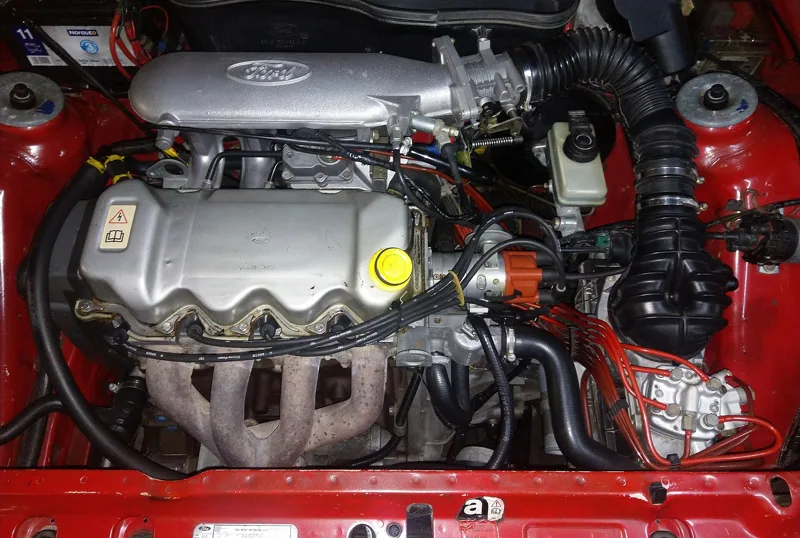
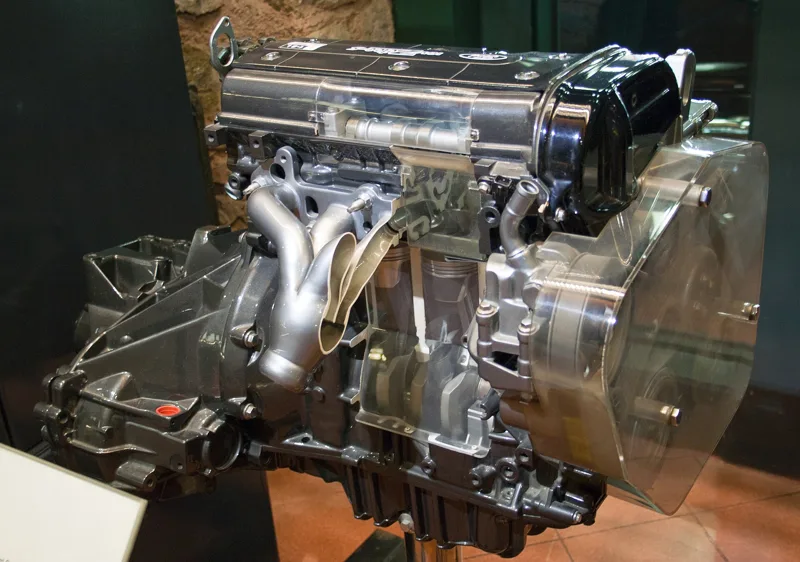
The Mondeo used Ford's new Zetec engines, first seen in 1991 in the Escort, Orion and Fiesta. Three versions of the 16-valve unit were used: a 1.6 litre rated at 90 PS, a 1.8 litre at 115 PS, and a new 2.0 litre at 136 PS. The Endura-D 1.8 litre turbodiesel was an alternative, and it was dropped in 2000.
In 1994 the Mondeo added the 2.5 litre Duratec V6, rated at 170 PS. It was first unveiled in the North American Contour and was smooth, with chain-driven camshafts and an extra butterfly valve in the lower inlet for better low-speed torque. The engine later became the basis of the ST24 flagship in 1997.
The Primera's first engines were a 1.6 litre carburettor unit that was not sold in Japan, and 1.8 and 2.0 litre fuel-injected petrol engines. A 2.0 litre diesel followed from 1992. The ZXe, later renamed eGT, produced 150 PS from its 2.0 litre engine and had a claimed top speed of 219 km/h (136 mph). In Japan the rare Autech version was tuned to 180 PS.
How did the cars change over their lives?
The Mondeo's mid-cycle facelift in October 1996 addressed its bland styling, poor headlight performance and cramped rear legroom. The most notable change was a new grille and larger wraparound lighting units, and the car gained a full-size driver airbag in place of the smaller euro-bag. In Euro NCAP testing the Mk II earned a three-star rating, which was average for rivals of its time.
The Mondeo won the European Car of the Year title for 1994, and its driver airbag, which was standard on every version from launch, helped it earn that award. Safety was a high priority, with side-impact bars, seat belt pretensioners and anti-lock brakes on higher models as standard.
The second generation, the P11, debuted in Japan late in 1995 and reached Europe in autumn 1996. It used multi-link front and multi-link beam rear suspension, and the estate was based on the Primera platform. A facelift in August 1999 gave it projector headlamps and the flying wing grille. The third generation, the P12, arrived in Japan on 30 January 2001 with a more radical design.
The Mk II facelift also brought a revised Zetec in 1998, which was far more refined at high revolutions. In December 1998 Ford released the Cougar in Europe, a sports coupe that used the Mondeo's engines, transmissions and floorpans with a body of its own. The Mondeo's sporting side grew through the ST brand, which arrived with the ST24 in 1997 and was followed by the limited ST200 in 1999, with a 205 PS SVT version of the V6.
The Primera's trim names changed as it aged. At launch there were six levels, L, LS, SLX, GS, GSX and ZX, and the ZX carried a 2.0 litre engine rated at 150 PS. A 1992 facelift brought L, LX, SLX, SGX and eGT, and a warm hatch called the SRi joined the line in 1994. Equation then replaced the L as the entry trim, and a rare 4x4 option, about 1,000 cars in Europe and known as the T4 in Japan, used the 150 PS engine.
The Primera also raced. The factory-backed RML team won the British Touring Car Championship manufacturers' and team titles in 1998 and 1999, and the Independents' Cup in 1999 and 2000. In 2000 a limited STCC edition of 1,000 cars was built for Scandinavia, lowered by 25 mm and fitted with a larger wing. The third generation, launched in January 2001, was Nissan's first all-new car since its alliance with Renault. Falling sales led to the Primera's withdrawal from the UK market in November 2006.
How do the two cars compare side by side?
| Feature | Ford Contour (Mondeo I) | Nissan Primera (P10) |
|---|---|---|
| Launch | Unveiled 23 November 1992; sales 22 March 1993 | Japan February 1990; Europe September 1990 |
| Development | Ford design cost US$6 billion | Not given |
| Drive | Front-wheel drive; four-wheel drive on Mk I | Front-wheel drive with multi-link front suspension |
| Body styles | Saloon, hatchback and estate | Four- and five-door saloons; estate in Japan |
| Petrol engines | 1.6, 1.8 and 2.0 litre Zetec; 2.5 litre Duratec V6 from 1994 | 1.6 carburettor, 1.8 and 2.0 litre petrol |
| Diesel | 1.8 litre Endura-D turbodiesel | 2.0 litre diesel from 1992 |
| North American name | Contour and Mercury Mystique | Infiniti G20, 1998 to 2002 |
| Recognition | European Car of the Year, 1994 | Not given |
| Successor | Second generation in 2000 | Second generation 1996; third 2001 |
Which buyer suits each car?
The Mondeo suited buyers who wanted a roomy, well-equipped family car with a range of engines up to the 2.5 litre V6, and who valued Ford's safety focus, including its driver airbag from launch. Higher-specification models added leather seats, trip computers and an electric sunroof.
The Primera suited buyers who wanted a front-drive family car with advanced suspension for its class and a choice of petrol and diesel engines. Its sporty eGT version and its Japanese tuned Autech models gave it an enthusiast appeal.
Neither car is shown to be better overall. The Mondeo was the more expensive programme and the more ambitious world car, while the Primera set the benchmark that the Mondeo had to chase. The better choice depends on whether a buyer wants Ford's European family car or Nissan's sharper, more sporting alternative.