A Suffolk workshop turned into a Leeds-based builder of racing cars, kit cars and sports cars, from the G4 and G12 to the G50 and G60.
Ginetta grew from a 1958 Suffolk workshop run by four brothers into a Leeds-based maker of kit cars, race cars and road sports cars such as the G50 and G60. Its ownership and premises changed several times along the way.
Ginetta Cars is a British specialist builder of racing and sports cars, now based in Garforth near Leeds. It began in 1958 as a Suffolk venture run by four brothers, moved through several towns and owners, and has built everything from kit cars to a Le Mans prototype. The business has changed hands more than once, yet its cars have kept a close link to motor racing.
Who founded Ginetta and how was the business run?
Ginetta was founded in 1958 in Woodbridge, Suffolk, by four Walklett brothers. Bob ran the company as managing director. Douglas handled mechanics and electrics, while Ivor designed the cars and Trevers styled them alongside him.
The car built in 1957 later became known as the G1, and it was based on a pre-war Wolseley Hornet six. The G2 that followed in 1958 was a cycle-fendered special using Ford 10 HP mechanicals. The brothers also offered the Fairlite, a glass fibre kit body for a Ford 8 or 10 HP chassis, priced at 49 pounds sterling.
From Woodbridge the company moved to Witham, Essex, in 1962. Between 1972 and 1974 it used larger premises in Ballingdon Street, Sudbury, before returning to Witham, and in 1988 the Walkletts moved the company north to Scunthorpe, where there was room to expand.
From a Suffolk workshop with four brothers to a Leeds factory building GT cars and a Le Mans prototype.
How did the G4 become Ginetta's breakthrough?
The glass fibre G3 arrived in 1959 and was succeeded by the G4 in 1961. Unlike the earlier cars, the G4 could be used as an everyday car while remaining competitive in motorsport. About 500 were built before production stopped in 1968.
The G4 was revived in 1981 as the Series IV, which was 2 in (51 mm) wider and 3 in (76 mm) longer than the Series III. Production of that version ended in 1984.
What was the G10 and why did it matter?
The G10 was launched at the 1965 racing car show as a more powerful racer. It weighed around 2,000 lb (900 kg) and used a 289 cu in (4.7 L) V8 from the Ford Mustang. It won at its debut at Brands Hatch, but Ginetta could not homologate a road version, so only three were built.
Works driver Chris Meek took the win with a prototype at Brands Hatch, beating a Jaguar E-Type that was then considered the most successful GT racing car. The G11 followed as a street-legal version with an MGB 1800 engine, but slow deliveries of that engine kept output to a handful of cars.
Why was the G12 so successful on track?
The G12, unveiled in 1966, used a 1.0-litre Cosworth SCA inline-four and dominated its class, winning the 1,150 cc MN series. Its tubular steel space frame carried removable bodywork, which made repairs easier, and it also found success in hill climb events. About 28 were built.
Its suspension combined Triumph-derived uprights and double wishbones at the front, with Triumph-sourced Girling disc brakes at both ends. Larger engines were fitted later, including an Aston Martin V8, but those were less successful. One G12 was converted into the Jerboa SP.
The G15 followed in 1967 with a rear-mounted 875 cc Sunbeam Imp engine. It was a two-seat coupe with a glass fibre body on a tube chassis, and about 800 were built from 1967 to 1974. Type approval meant that complete Ginetta cars could be sold for the first time.
How did Ginetta survive the 1970s and 1980s?
The G21 arrived in 1970 as a larger car with a 1.7-litre Rootes four-cylinder or a 3.0-litre Ford Essex V6. Only 80 were produced before production ended in 1974, when the oil crisis hit. Ginetta later leaned on kit cars and the GRS Tora estate, which sold about 320 across all variants.
The GRS Tora grew out of a 1968 Hillman Hunter that Trevor Walklett owned, a car put up because of rust. Inspired by the Dutton Sierra estate kit car, Ginetta created a Range Rover-inspired fibreglass estate body for the Hunter's underpinnings. The Mark I was first shown in October 1982 and went on sale the following year.
The Mark II, from August 1984, relocated the fuel tank and gave the car a full-height rear gate. Tora production had been winding down since 1988, but a four-door Mark III estate on Cortina underpinnings was shown at the July 1989 Newark Kit Car Show. Only two were built, and Ginetta returned to sports cars.
How did Ginetta return to kit cars at Scunthorpe?
After the reorganisation, Ginetta moved to Scunthorpe and began making cars in kit form again. The G26 was the first model to arrive, in 1984, and it was followed by the G28, G30 and G31, all of which used Ford parts. The G26 line totalled about 370 cars with its derivatives.
The G26 used Ford Cortina Mk3 and Mk4 drivetrain parts in a galvanised steel chassis of Ginetta's own construction, with fibreglass bodywork and Ford Fiesta steel doors. The G28's taller bonnet line made room for Ford's Cologne V6. Some 280 G26s were built, and around 70 of the G31 were finished.
What were the G27, G33 and G34?
The G27 was a two-seat sports car introduced in 1985 and derived from the G4. Designed by Mark Walklett, it used front suspension from the Triumph Vitesse and a modified Jaguar independent rear suspension, and it could take a range of engines up to the Rover V8.
The G33 speedster arrived in 1990. It was usually fitted with a Rover V8 and was smoothed off in appearance, with a windscreen that had a body-coloured frame. The G34 offered a turbocharged Volvo four-cylinder, sold only as a fully built and type approved car. After considerable delays, 21 were built by the Swedish importer in 1997 and 1998.
The G32 was a mid-engined car that re-entered complete car production with a choice of 1.6-litre or 1.9-litre four-cylinder engines. In 1990 the G32 coupe cost 13,700 pounds sterling, the convertible 14,600 pounds sterling and the G33 17,800 pounds sterling. It used a significant number of Ford Fiesta parts.
Who owned Ginetta after the Walkletts?
The Walklett brothers sold Ginetta on 7 November 1989 to a group of enthusiasts headquartered in Sheffield, with Martin Phaff as managing director. The company was in a strong financial position at the time of sale, but under Phaff it hit troubled times. The Walkletts went on to retire.
Trevor and Ivor Walklett then formed Design And Research Engineering, known as DARE, to make new copies of older Ginetta designs such as the G4 and G12, which were in demand in Japan. In 1994 the Swedish importer, Ingemar Engstrom, formed Gin1Car AB to build a Volvo-engined version of the G34. Production started in 1997 and ended the following year.
How did Lawrence Tomlinson change Ginetta?
In late 2005 Ginetta was acquired by LNT Automotive, a company run by racing driver, engineer and businessman Lawrence Tomlinson. In mid-2007 the company moved to a factory near Leeds, with a target of 200 cars a year. Tomlinson himself drafted the base specification for the G50.
The G50 marked 50 years of Ginetta production and became a successful GT4 car. It used a 3.5-litre V6 producing 224 kW (300 hp; 305 PS). In 2007 it finished second in its first race, in the European GT4 Cup at Nogaro in France, and it was launched at Autosport International in early 2008 with its sister car, the G50 GT4.
Together the G50 and G50 GT4 became Ginetta's best-selling cars.
What is the Michelin Ginetta GT4 SuperCup?
The Michelin Ginetta GT4 SuperCup runs one class of G50 and G55 cars in support of the British Touring Car Championship. It began as the G50 Cup in 2008, moved to support the BTCC in 2009, and became the GT4 SuperCup in 2011 when the G55 arrived.
The 2014 season was to be the fourth running of the series and the first in which the G50 GT4 and G55 GT4 were consolidated into one class. A balance of performance test was used to equalise the two models. The Protyre Motorsport Ginetta GT5 Challenge offered a lower-cost single-make alternative over seven race weekends.
How did the G55 and G60 develop?
The G55 Cup car arrived in 2011 for the Ginetta GT Supercup, with a 3.7-litre V6 producing 380 hp (283 kW; 385 PS). The G55 GT3 was the larger version, which gave GT teams a 4.35 L V8. In October 2011 Ginetta launched the G60, a two-door mid-engine sports car with a Ford-sourced V6.
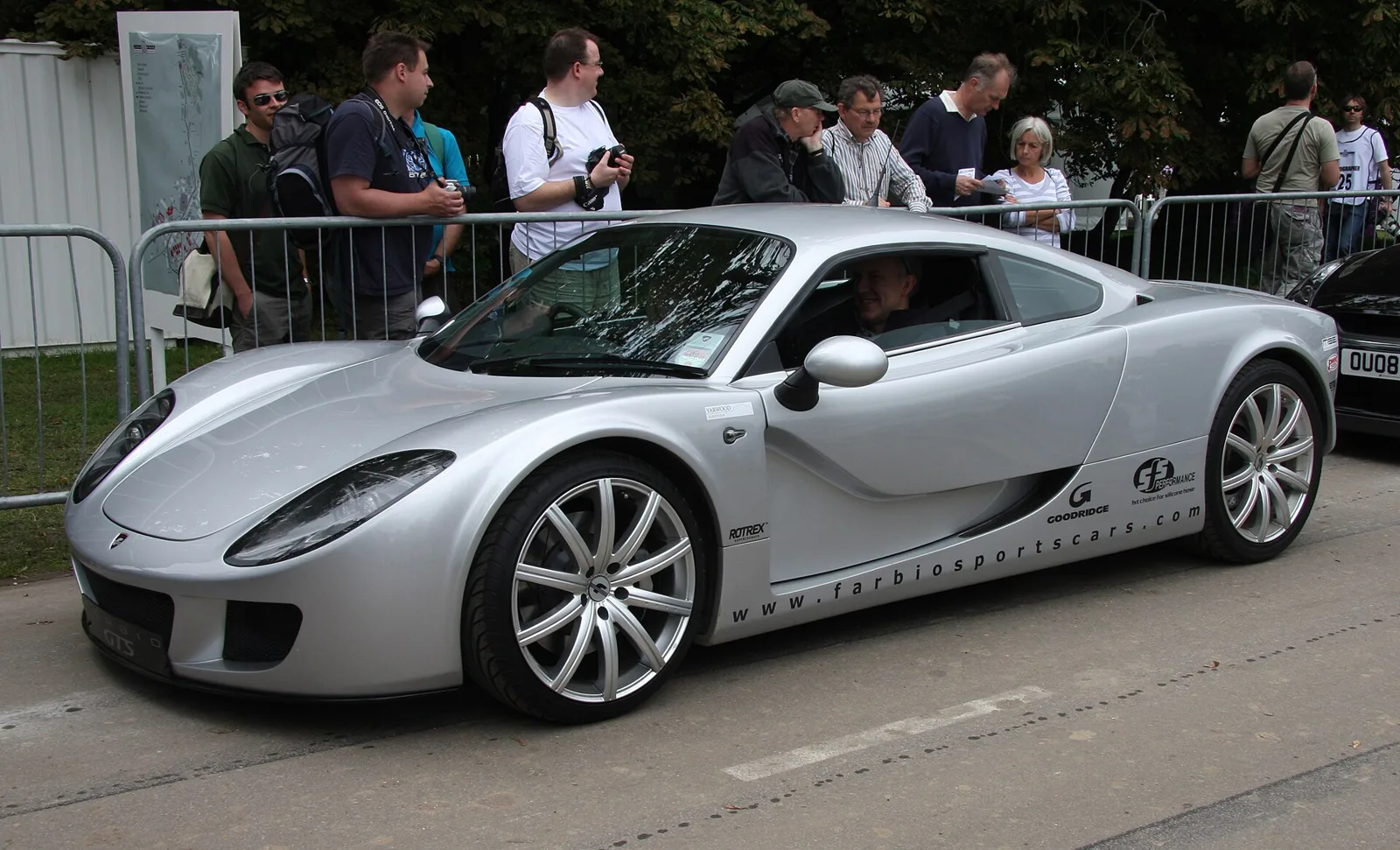
In March 2010 Ginetta had acquired the Somerset-based sports car maker Farbio, and its F400 was redeveloped and rebranded as the G60. The car shares its 3.7-litre V6 with the G55 GT3 and reaches 0-97 km/h (0-60 mph) in 4.9 seconds, with a top speed of 266 km/h (165 mph).
What is the G40 family?
In 2010 Ginetta replaced the older G20 race car in the Ginetta Junior series with the G40J. Following its success, Ginetta introduced a G40 Challenge car for adult racers, which produces 123 kW (165 hp) and competes in the Challenge series.
Ginetta unveiled its second road car, the G40R, in 2011. It was designed to mimic the Walklett brothers' original vision of a race car for the road, and it accelerates from 0-97 km/h (0-60 mph) in 5.8 seconds.
Did Ginetta race at Le Mans?
Ginetta entered the top class with the G60-LT-P1, an LMP1 car developed in 2017. For the 2018-19 FIA World Endurance Championship it ran two of them in conjunction with TRSM Racing Manor. At the 2018 24 Hours of Le Mans the #5 car took fifth place in its class, while the #6 car retired after 10 hours with persistent electrical problems.
Ginetta also supplies customer LMP3 cars for the European Le Mans Series, the Asian Le Mans Series and the IMSA Prototype Challenge.
What are the key Ginetta specifications?
| Model | Key figures |
|---|---|
| G1 | Based on a pre-war Wolseley Hornet six |
| G2 | Cycle-fendered special with Ford 10 HP mechanicals (1958) |
| G4 | About 500 built before production stopped in 1968 |
| G4 Series IV | 2 in (51 mm) wider and 3 in (76 mm) longer than Series III; 1981 to 1984 |
| G10 | 289 cu in (4.7 L) Ford V8; three built |
| G12 | 1.0-litre Cosworth SCA; about 28 built |
| G15 | 875 cc Sunbeam Imp engine; about 800 built, 1967 to 1974 |
| G21 | 1.7-litre Rootes or 3.0-litre Ford Essex V6; 80 built |
| G32 | 1.6-litre or 1.9-litre four-cylinder; coupe at 13,700 pounds sterling in 1990 |
| G50 | 3.5-litre V6, 224 kW (300 hp; 305 PS) |
| G55 | 3.7-litre V6, 380 hp (283 kW; 385 PS) |
| G60 | 0-60 mph (0-97 km/h) in 4.9 seconds; 266 km/h (165 mph) top speed |
How is Ginetta remembered?
Ginetta is remembered for the G4, the G12 and the G50, and for a long line of kit cars and racing machines built in Britain. The company has been written about in books, including Bob Walklett's 1994 account of 31 years of the business and John Rose's 1988 illustrated history.
The G4 has its own history too, which T. Pyman covered in 2004. Together these books document the company's early years, from the Suffolk workshop to the Essex and Scunthorpe factories, and the Ginetta Owners Club serves owners of its cars.
What came after the G60?
After the G60, Ginetta's line-up widened into junior racing, challenge cars and road cars. The G40J and G40 Challenge cars served the racing side, while the G40R became the second road car. In 2021 the G56 was launched.
At the Geneva International Motor Show on 5 March 2019 Ginetta announced the Akula, a supercar with a 6.0-litre Chevrolet LS2 V8 producing 600 hp (447 kW; 608 PS). The name is Russian for shark.