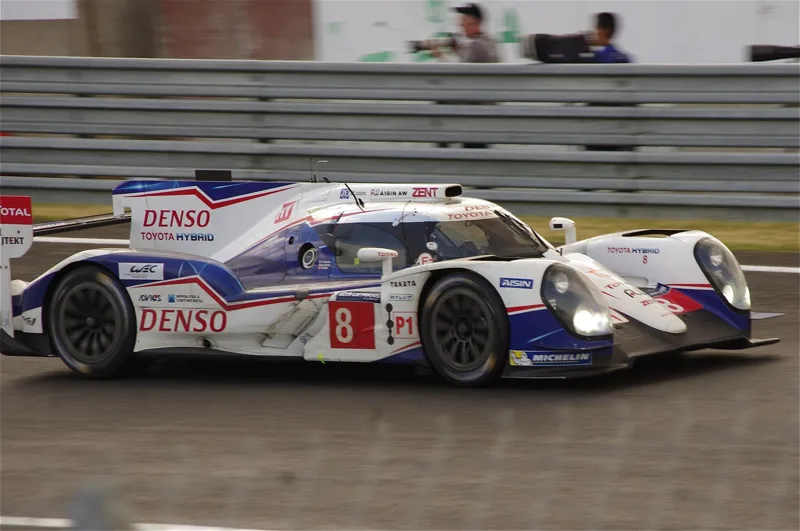
Alonso, Buemi and Nakajima took Toyota's first Le Mans win, a race lead that passed between two cars for most of the first half and a Porsche that marked its 70th anniversary.
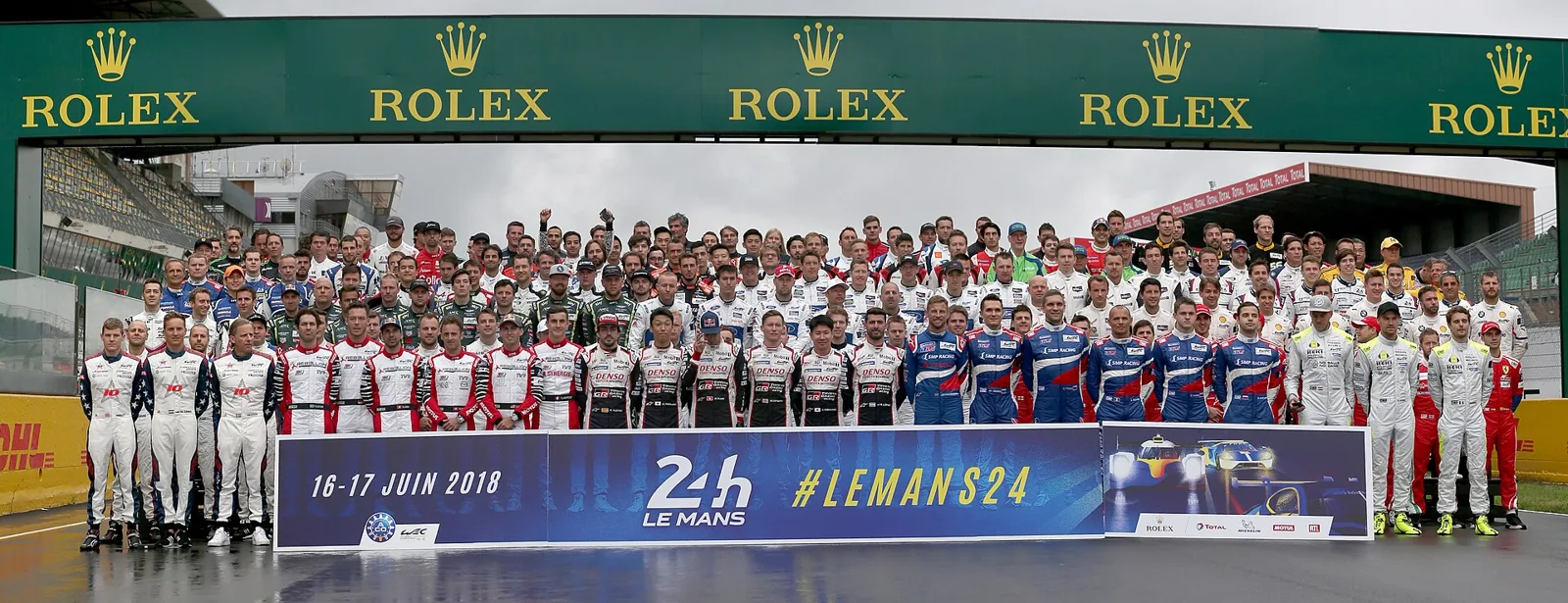
The 86th 24 Hours of Le Mans was held from 16 to 17 June 2018 and won by Fernando Alonso, Sebastien Buemi and Kazuki Nakajima in a Toyota TS050 Hybrid. It was Toyota's first win at the race, achieved at its 20th attempt.
Alonso, Buemi and Nakajima took the 86th 24 Hours of Le Mans for Toyota, its first overall win at the race after 19 earlier attempts. The race formed the second leg of the 2018-19 World Endurance Championship season, and the lead passed between the two Toyotas for most of the first half.
What was the 2018 24 Hours of Le Mans?
The 86th running ran across 16 and 17 June 2018 on the Circuit de la Sarthe, near Le Mans in France. The Automobile Club de l'Ouest has organised the event since 1923, and it pits prototypes and grand touring cars against the clock for 24 hours.
Thirty-six of the 60 entries competed in the series, and the race was one of eight endurance rounds that season. About 256,900 spectators attended the event.
A test day took place on 3 June, two weeks ahead of the race. The dates had been fixed at the FIA World Motor Sport Council meeting in Geneva on 19 June 2017.
Toyota's first Le Mans win came at the 20th attempt, after a race lead that passed between its two cars for most of the first half.
How did the circuit change for 2018?
The Porsche Curves were reworked after the 2017 race to make them safer. Barriers were pulled back from the inside of the final right-hander, and a paved run-off area and escape roads took their place. The outside barriers had been changed in the same way the year before.
That reshaping shortened the lap by 3 m (9.8 ft). A new starting gantry 145 m (476 ft) farther up the main straight was built to give cars more room at the start, while the finish and the timing points stayed at the exit of the Ford Chicane.
How did the championships stand before Le Mans?
Toyota's Alonso, Buemi and Nakajima led the LMP Drivers' table on 26 points, eight clear of the sister car of Conway, Kobayashi and Lopez. Rebellion's Beche, Laurent and Menezes were three further back.
ByKolles were fourth on 12 points, with SMP's Aleshin and Petrov fifth on 10. In the LMP1 teams' table Toyota sat 11 points ahead of Rebellion, and ByKolles were three points further back.
The GTE drivers' table was topped by the Ford trio of Johnson, Mucke and Pla on 25 points. Porsche's Christensen and Estre were second, with AF Corse's Rigon and Bird third, and Porsche held a four-point edge over Ford in the manufacturers' table.
How were the automatic entries decided?
Teams that won their class at the 2017 race were given automatic places. Champions of the European Le Mans Series, the Asian Le Mans Series and the Michelin GT3 Le Mans Cup also received invitations, as did the runner-up in the 2017 ELMS LMGTE championship.
Two IMSA SportsCar Championship teams were chosen automatically, whatever their performance or class. Teams were allowed to switch cars from one year to the next, but not to change class.
On 5 February 2018 the ACO published its first list of automatic entries. Porsche's LMP team had left the WEC after 2017, and FIST-Team AAI decided to concentrate on GT3 cars.
JDC-Miller Motorsports had earned its place through Misha Goikhberg's Jim Trueman Award, but it gave up the invitation on 9 February, citing financial trouble.
What did the full entry list look like?
On 9 February the ACO revealed 60 cars, plus nine reserves, at a press conference during the Retromobile show in Paris. The WEC guaranteed 36 entries, while the ELMS supplied 13, IMSA seven and the ALMS three, and one purpose-built Le Mans slot made up the rest.
The list was balanced between the two categories, with 30 cars in the LMP classes and 30 in LMGTE.
Why was Garage 56 absent in 2018?
The ACO had hoped to keep the Garage 56 concept, which dates from 2012 and gives a 56th place for new technology. Panoz and Green4U Technologies had planned to use it for the Green4U Panoz Racing GT-EV.
That car was to be an all-wheel-drive machine with an electric motor on each axle and a battery that could cover 90 to 110 mi (140 to 180 km), built in a tandem LMP body. On 8 February the ACO said the concept would be dropped for 2018, citing a lack of feasible options.
How did the reserve list shrink?
Nine reserves were named at first: six in LMP2 and three in LMGTE Am. ARC Bratislava pulled out of ELMS LMP2 on 11 February, after its Ligier had landed eighth on the reserve list.
IDEC Sport withdrew its reserve Ligier six days later, so the team could focus on its No. 28 entry. By the test day only two reserves remained, after five of the seven entries had dropped out: a KCMG Dallara P217 and a Racing Engineering Oreca 07.
What did the balance of performance changes do before Le Mans?
The FIA Endurance Committee tried to even out the LMP classes and the LMGTE field. Non-hybrid LMP cars had their fuel flow cut from 110 kg/h (243 lb/h) to 108 kg/h (238 lb/h), while the Toyota TS050 Hybrid was left untouched.
In LMGTE, the Aston Martin Vantage gained 5 kg (11 lb). The BMW M8 GTE took on 13 kg (29 lb) and lost some power, the Ferrari 488 GTE added 11 kg (24 lb), and the Ford GT was 12 kg (26 lb) heavier with more turbo boost.
The Porsche 911 RSR was given a narrower air restrictor, 0.6 mm (0.024 in) smaller, which cut its output. In LMGTE Am, the Aston Martin and Porsche faced lower top speeds from smaller restrictors, and the Ferrari had less turbo boost.
What happened on the test day on 3 June?
Teams had to log eight hours of track time across two sessions. Toyota topped the morning with Alonso's No. 8 TS050 at 3:21.468, while Laurent's No. 3 Rebellion was the quickest non-hybrid car.
Behind them came Senna's Rebellion and Sarrazin's No. 17 SMP BR1. Seven Orecas topped LMP2, with Imperatori's No. 26 G-Drive car seven-tenths quicker than Chatin's No. 48 IDEC.
Ford filled the first four places in LMGTE Pro. Priaulx's No. 67 led Mucke's No. 66 with a 3:53.008 lap.
Late on, Sorensen's No. 95 Aston Martin and Newey's No. 35 SMP Dallara made contact in traffic. Sorensen hit a barrier hard beside the track, which brought the session to an early end with 51 minutes still to run.
Sorensen was unhurt and was checked at the circuit's medical centre before being released, while Aston Martin used a spare chassis. The fastest LMGTE Am lap belonged to Keita Sawa in the Clearwater Ferrari, at 3:58.967.
What did the second test session show?
The second session started half an hour early to give teams extra time on track. Kobayashi led at first in the No. 7 car, but Alonso's 3:19.066 went to the top.
Beche's Rebellion moved into second, and Lotterer's lap put the other Rebellion fourth. Berthon improved the LMP2 pace, lifting DragonSpeed ahead of Chatin and G-Drive's Vergne and Vaxiviere.
In LMGTE Pro, the No. 93 Porsche of Patrick Pilet and the No. 91 of Bruni passed Priaulx's No. 66 and Pla's No. 67 Ford.
Andlauer put the Dempsey-Proton Porsche ahead of Fisichella's Spirit of Race Ferrari in LMGTE Am. Two safety car periods followed: one after Pier Guidi's AF Corse Ferrari crashed at Tetre Rouge, and one after Felix da Costa's BMW crashed in the Porsche Curves.
What changed in the balance of performance after testing?
A second round of changes followed the test. The Aston Martin Vantage GTE gained turbo boost and 4 L (0.88 imp gal) of fuel volume, while BMW and Ford also had their turbo ratios nudged up.
The Ford's fuel allocation was cut by 2 L (0.44 imp gal), and the Corvette C7.R, BMW and Ford all took on weight. Porsche was left alone.
In LMGTE Am, the Aston Martin was given 2 L (0.44 imp gal) more fuel, and Porsche and Ferrari were untouched.
What did the four-hour practice show?
The only free practice session, four hours long, ran on 13 June. Rain was forecast for the following day, so many teams pushed hard in case the first qualifying session set the grid. Kobayashi set the fastest time in the closing 20 minutes, a 3:18.718 lap that was half a second ahead of Buemi.
Laurent and Hanley were third and fourth, and SMP's Jenson Button completed the top five. Oreca cars filled the top five in LMP2, with Vergne quickest at 3:26.529, and Chatin, Duval, Berthon and Gommendy followed.
Jeffri's No. 37 Jackie Chan car was damaged at Indianapolis corner and never returned to the circuit. Porsche led the top three in LMGTE Pro at 3:50.819, with Vanthoor's No. 92 out front until Patrick Pilet passed him 20 minutes from the end.
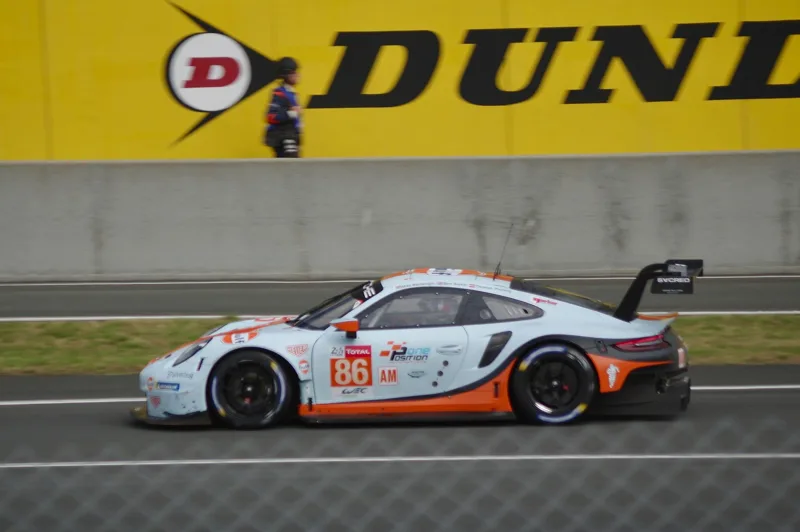
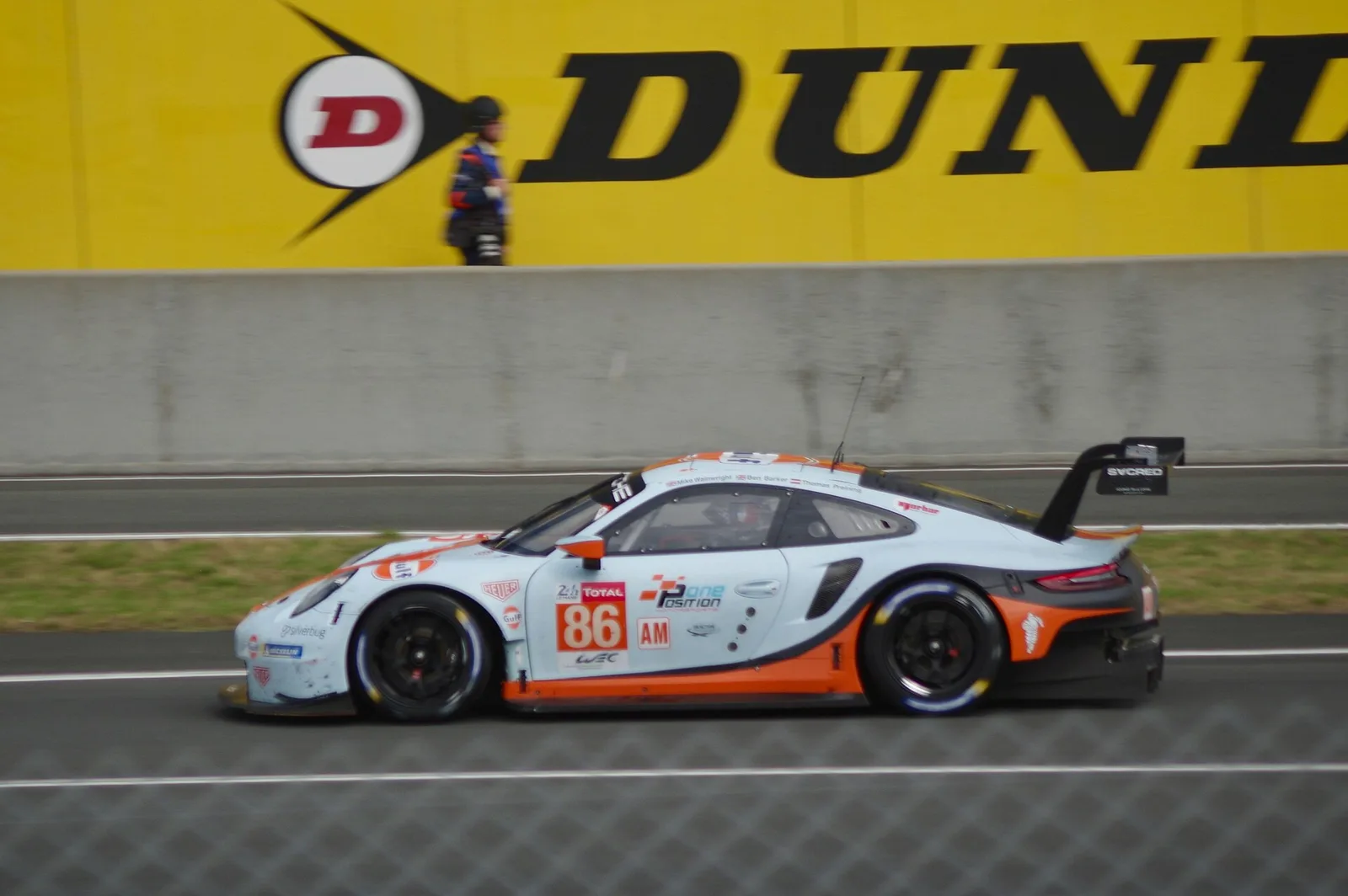
Pla was fourth, the top non-Porsche, and Molina's No. 71 car, an AF Corse Ferrari, took fifth. Pilet hit trouble at the exit of the first Mulsanne Chicane and damaged his No. 93 car against a tyre wall, scattering debris. Wainwright left his No. 86 Gulf car stuck at the Dunlop Curve, which required a local slow zone.
How did the first qualifying session set the grid?
The first session began late on Wednesday in dry weather. Lopez led at first for Toyota, then Nakajima posted 3:17.270 eight minutes from the end, and nobody bettered it, so the No. 8 car took provisional pole.
Sarrazin's SMP was the quickest non-hybrid in third, with Senna and Menezes for Rebellion close behind. The LMP2 benchmark was Chatin's 3:24.956, with Duval second, and Vergne, Maldonado and Lapierre followed in third to fifth.
Porsche led LMGTE Pro with its first two cars, and Bruni's 3:47.504 reset the category lap record on his first attempt.
Race result highlights
| Finish | Crew and car | Notes |
|---|---|---|
| 1st | Alonso, Buemi, Nakajima (Toyota No. 8) | Toyota's first Le Mans win, at the 20th attempt |
| 2nd | Conway, Kobayashi, Lopez (Toyota No. 7) | Two laps behind the winners |
| 3rd | Laurent, Menezes, Beche (Rebellion R13) | Podium in the LMP1 class |
| LMP2 | Lapierre, Thiriet, Negrao (Signatech Alpine) | Class win |
| LMP2 second | Capillaire, Hirschi, Gommendy (Graff-SO24) | Second in class |
| LMP2 third | de Sadeleer, Owen, Montoya (United Autosports Ligier) | Third in class |
| LMGTE Pro | Christensen, Estre, Vanthoor (Porsche No. 92) | Class win on Porsche's 70th anniversary |
| LMGTE Pro second | Lietz, Bruni, Makowiecki (Porsche No. 91) | Second in class |
| LMGTE Am | Campbell, Ried, Andlauer (Dempsey-Proton) | Class win |
How did the race turn in Toyota's favour?
The No. 8 car of Alonso, Buemi and Nakajima started from pole, and the sister Toyota of Conway, Kobayashi and Lopez swapped the lead with it for most of the first half. Buemi was then handed a minute-long stop-and-go for speeding through a slow zone.
The slow zone was there because of a night-time accident. Alonso and Nakajima regained the lead in the 16th hour and held it to the flag, giving Toyota its first Le Mans victory at the 20th attempt.
The sister Toyota finished two laps down in second, and Rebellion's Laurent, Menezes and Beche took third.
What happened in the LMP2 and LMGTE classes?
G-Drive's Oreca 07, crewed by Rusinov, Pizzitola and Vergne, led LMP2 for 360 consecutive laps and crossed the line first in the class. It was later disqualified for an illegal refuelling part, and G-Drive lost its appeal.
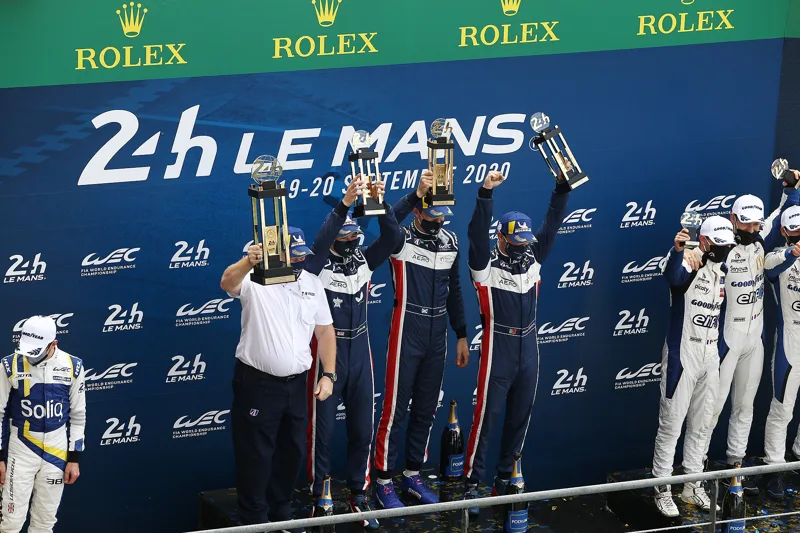
Signatech Alpine's Lapierre, Thiriet and Negrao took the class win, with the Graff-SO24 car second and the United Autosports Ligier third.
Porsche won both LMGTE categories on its 70th anniversary at Le Mans. The LMGTE Pro winners were Christensen, Estre and Vanthoor in the No. 92 car, with the No. 91 911 RSR finishing in front of the rest, while Dempsey-Proton's Campbell, Ried and Andlauer took LMGTE Am.
What did the result do to the championships?
Alonso, Buemi and Nakajima stretched their LMP Drivers' lead to 20 points over Conway, Kobayashi and Lopez. Beche, Laurent and Menezes stayed third, while Lapierre, Thiriet and Negrao climbed to fourth after their LMP2 win.
In the GTE Drivers' table, Christensen and Estre replaced Johnson, Mucke and Pla at the top. Toyota's LMP1 Teams' advantage over Rebellion grew to 27 points, and Porsche pulled further ahead of Ford in the manufacturers' table with six rounds still to run.
Why does the 2018 Le Mans race still matter?
It ended Toyota's 19 attempts without an overall win at the race. It also fell on Porsche's 70th anniversary, which the marque marked with two class wins.
The entry rules, the balance changes and the reserve list all shaped the field, and they show how much work goes into a Le Mans season before the flag drops.