Toyota's second straight Le Mans win, a new full course yellow system and a Ford GT disqualified for an oversized fuel tank.
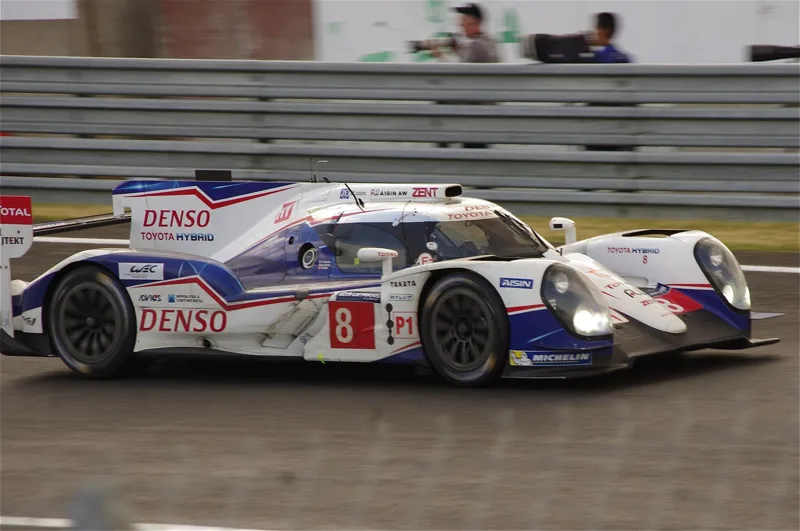
The 2019 24 Hours of Le Mans, the 87th running, was won by Fernando Alonso, Sebastien Buemi and Kazuki Nakajima in a Toyota TS050 Hybrid on 15 to 16 June 2019. It was Toyota's second consecutive win at the Circuit de la Sarthe.
Toyota's crew of Alonso, Buemi and Nakajima took the chequered flag at Le Mans for the second year running. Their win came under a new full course yellow system, and the race closed out the 2018-19 World Endurance Championship.
What was the 2019 24 Hours of Le Mans?
The 87th running of the event was held over 15 and 16 June 2019 on the Circuit de la Sarthe, close to the town of Le Mans in France. It ended the 2018-19 season of the FIA World Endurance Championship and was the series' second trip to Le Mans that season.
The Automobile Club de l'Ouest has organised the race since 1923. Each entry is driven by a three-person crew, and the cars are split between prototype and grand touring classes. Roughly 252,500 spectators came to watch.
A test day fell on 2 June, two weeks before the race, and every entrant was required to take part in it.
Toyota's second straight Le Mans win came under a new full course yellow system, with the grid settled only in April.
What was at stake in the championships before Le Mans?
Toyota's Alonso, Buemi and Nakajima held the LMP lead on 160 points, 31 in front of Conway, Kobayashi and Lopez. Porsche's Christensen and Estre topped the GTE standings on 140 points, 36 ahead of Bruni and Lietz, and 38 points were still on offer at Le Mans.
Conway, Kobayashi and Lopez could only take the LMP title by winning and needing Alonso, Buemi and Nakajima to finish eighth or lower. Their Toyota had started from pole, so the race offered them a route to the title.
Christensen and Estre required an eighth-place finish or better to secure the GTE crown, while Bruni and Lietz had to win and hope their team-mates struggled. Toyota had already taken the LMP1 teams' title, and Porsche the manufacturers' title for GTE.
What regulation changes did the ACO make for 2019?
The ACO reworked its safety procedures after team managers complained about the way a two-lap Porsche win in LMGTE Pro had been handled in 2018. The result was full course yellow flags, under which cars had to drop to 80 km/h (50 mph) after a crash, and they were used at Le Mans for the first time.
Full course yellow replaced the older approach of deploying three safety cars and running slow zones as the usual way to neutralise the race. The new flags became the preferred tool for slowing the field.
Pit lane entry was permitted during safety car conditions, and cars could leave before a second safety car went past. That allowed teams to rejoin the same group of cars when racing resumed.
How was the entry list built?
The ACO Selection Committee logged 75 applications between 20 December 2018 and 30 January 2019. Organisers originally aimed for 60 cars, yet 62 were allowed to race because the committee did not want to shut out applicants it judged to be of a high standard.
Automatic places went to teams that had won their class at the 2018 race, and to champions of the European Le Mans Series, Asian Le Mans Series and Michelin Le Mans Cup. The ACO also handed two IMSA teams automatic places whatever their performance.
The field was announced in two parts. The first 42 cars were named on 11 February, while the remaining starters and 10 reserves came on 1 March, a timetable the ACO linked to the format of the 2018-19 WEC.
Counting the guaranteed slots, the WEC supplied 34 cars, the ELMS 15, IMSA nine and the ALMS five, leaving one purpose-built Le Mans slot.
How did the reserve list change the field?
Spirit of Race pulled its Ferrari 488 GTE Evo on 21 March for family reasons, and Duqueine Engineering's Oreca 07 moved up to take its place. Michael Shank Racing also dropped its Oreca 07 from the reserve list that day, having been ninth in line.
On 16 April, when the ACO said two extra temporary pit garages would be built to take the count to 62, United Autosports' No. 32 Ligier and the No. 20 Oreca from High Class Racing moved up from the reserves.
After the Ebimotors LMGTE Am car also left the list, five reserves were still waiting: Eurasia Motorsport, Panis-Barthez Competition, IDEC Sport, the Project 1 team and TF Sport.
Why did the balance of performance change before Le Mans?
The FIA Endurance Committee adjusted the technical equivalence in LMP and the LMGTE balance of performance to even out each category. Non-hybrid LMP1 cars saw their fuel flow ceiling lifted to 115 kg/h (250 lb/h), up from 108 kg/h (240 lb/h), while the Toyota TS050 Hybrid remained at 80 kg/h (180 lb/h).
Minimum weights were fixed too. The Toyota had to weigh at least 888 kg (1,958 lb), turbocharged non-hybrids 833 kg (1,836 lb), and non-turbocharged privateer cars 816 kg (1,799 lb).
In LMGTE Pro, the Porsche 911 RSR picked up 2 kg (4.4 lb) of ballast and the BMW M8 GTE 9 kg (20 lb), while the Ford GT's weight rose by 12 kg (26 lb). The Aston Martin Vantage, Corvette C7.R and Ferrari 488 Evo each shed 7 kg (15 lb).
The Ford in LMGTE Am carries 13 kg (29 lb) more than the Ferrari 488 GTE. Porsche was left unchanged, while the 2017-specification Aston Martin Vantage lost 4 kg (8.8 lb).
What did the test day on 2 June show?
Every entrant had to put in eight hours of running over two sessions. Toyota topped the morning with a 3:21.875 lap from Buemi, and Lopez held second place until Buemi's effort beat him.
Menezes' Rebellion was third, and the SMP cars of Petrov and Sarrazin filled fourth and fifth. In LMP2, Albuquerque's United Autosports entry led with 3:32.245.
Buemi returned early in the second session at 3:20.068 and then trimmed that to 3:19.440, the best of the day. Conway pushed the No. 7 Toyota into second, while Ho-Pin Tung cut the LMP2 mark to 3:28.504.
Mechanical trouble affected Jordan King's Jackie Chan car and Marco Sorensen's Aston Martin, and Paul-Loup Chatin ended up in a tyre barrier at the Indianapolis corner. Rockenfeller's Corvette topped LMGTE Pro with 3:54.001, only three-hundredths of a second ahead of Tincknell's Ford.
What changed in the balance of performance after testing?
After testing, the ACO adjusted the LMP1 equivalence again. Normally aspirated cars were capped at 50.8 kg (112 lb) of fuel per stint and turbocharged cars at 48.4 kg (107 lb), while Toyota had a one-lap per stint fuel advantage reinstated, dating back to the 2018 race.
Every LMGTE car was also given a tank enlarged by 1 L (0.22 imp gal) over the one used in testing.
What happened in the four-hour practice session?
The only free practice took place on 13 June, lasting four hours, in changeable weather that sent several cars off. Vandoorne led until the last half-hour, and then Kobayashi posted 3:18.091 when fewer than two minutes remained.
Rebellion's Menezes was third and Alonso fourth, with Bruno Senna's No. 1 car in fifth. Chatin's IDEC car led LMP2 ahead of Maldonado's DragonSpeed car and Vergne's No. 26 G-Drive entry.
Christensen's No. 92 911 RSR set the pace in LMGTE Pro at 3:52.149, Jaminet's No. 94 was second and Bird's No. 71 AF Corse Ferrari third. Matt Campbell's efforts put Porsche on top of LMGTE Am.
Satoshi Hoshino's No. 88 Dempsey-Proton car hit a barrier after a gravel-trap slide in the Porsche Curves, and the full course yellow was needed to bring it back to the pits.
Later, Tracy Krohn put the sister No. 99 car into a crash on the Mulsanne Straight. Debris removal and barrier repairs halted the session for three-quarters of an hour.
Krohn went to hospital for checks and was told to sit out a week of racing. The team then withdrew the No. 99 Porsche rather than move it into LMGTE Pro alongside Patrick Long and Niclas Jonsson.
How did qualifying set the grid?
The opening qualifying session started late on Wednesday night, in clear conditions on a dry track. Kobayashi put Toyota at the front early with 3:17.161, and Orudzhev's No. 17 SMP and Laurent's No. 3 Rebellion were the top two non-hybrid LMP1 cars.
With 46 minutes to go, Roberto Gonzalez spun his DragonSpeed car at the Ford Chicane's entrance. Rejoining, he collided with Conway's Toyota, which had no view of him, and Conway was thrown airborne over the front bodywork of Gonzalez's car. Both drivers were unhurt, and debris covered the circuit.
Rebuilding the Toyota took 20 minutes, since the car was constructed around a new monocoque. Once the session ended, the No. 7 car's monocoque was swapped out after inspectors found a deep crack. Conway and Gonzalez shared the blame, and Conway received a three-minute stop-and-go penalty, suspended.
Tincknell's No. 66 Ford headed LMGTE Pro at 3:49.530, after Garcia's No. 64 Corvette lap was struck out for being set under yellow flags. Tandy's No. 93 Porsche sat 0.028 seconds back in second, with Lynn's No. 97 Aston Martin third.
Porsche took the top three in LMGTE Am, with Cairoli's No. 77 Dempsey-Proton car quickest, ahead of Bergmeister's No. 56 Project 1 entry and Andlauer's sister Dempsey-Proton car.
Thursday's opening session lifted lap times in every class. Kobayashi moved provisional pole to 3:15.497, with Nakajima up to second.
How did the race finish?
Alonso, Buemi and Nakajima took the win for Toyota, with the No. 7 car of Conway, Kobayashi and Lopez almost 17 seconds back in second. It was Toyota's second straight Le Mans victory.
Lopez slowed in the 23rd hour after a wired tyre pressure sensor falsely flagged a puncture on a tyre that proved sound. That car had started from pole and still finished second.
Which other classes produced winners?
Signatech Alpine's trio of Nicolas Lapierre, Andre Negrao and Pierre Thiriet took LMP2, ahead of Jackie Chan DC Racing's Oreca 07 of Ho-Pin Tung, Gabriel Aubry and Stephane Richelmi. AF Corse's James Calado, Alessandro Pier Guidi and Daniel Serra won LMGTE Pro in their 488 GTE Evo.
The class win arrived on the seventieth anniversary of Ferrari's maiden overall success at Le Mans. Lietz, Bruni and Makowiecki brought their Porsche 911 RSR home second in the class.
Ben Keating, Felipe Fraga and Jeroen Bleekemolen drove Keating Motorsports' Ford GT, which led most of LMGTE Am and was first over the line. The car was later excluded over an oversized fuel tank, and the class went to the Porsche entered by Project 1 Racing, crewed by Bergmeister, Lindsey and Perfetti.
Race result highlights
| Finish | Crew and car | Notes |
|---|---|---|
| 1st | Alonso, Buemi, Nakajima (Toyota No. 8) | Second consecutive Le Mans win for Toyota |
| 2nd | Conway, Kobayashi, Lopez (Toyota No. 7) | Almost 17 seconds behind the winners |
| 3rd | Laurent, Menezes (Rebellion) | Ahead of Aleshin and Petrov |
| 4th | Aleshin, Petrov, Vandoorne (SMP No. 11) | Fourth overall |
| 5th | Jani, Lotterer (Rebellion) | Fifth overall |
| LMP2 | Lapierre, Negrao, Thiriet (Signatech Alpine) | Class win; Jackie Chan DC Racing second |
| LMGTE Pro | Calado, Pier Guidi, Serra (AF Corse) | Class win; Porsche 911 RSR second |
| LMGTE Am | Bergmeister, Lindsey, Perfetti (Project 1 Racing) | Inherited the win after the Keating Ford was disqualified |
What did the result mean for the championships?
The LMP Drivers' Championship went to Alonso, Buemi and Nakajima by 41 points from Conway, Kobayashi and Lopez. In GTE, Christensen and Estre finished tenth in LMGTE Pro and took the drivers' title with 155 points.
Calado and Pier Guidi, the LMGTE Pro class winners, took second in the GTE standings after passing Bruni and Lietz at the end of the season.
Why does the 2019 race still matter?
It gave Toyota back-to-back wins at Le Mans and closed out the 2018-19 World Endurance Championship. The race also showed the ACO's attempt to make the event safer, with full course yellow in use instead of three safety cars for the first time.
The entry list was not complete until mid-April, when two more cars were promoted from the reserve list, so the field took shape gradually through the spring.