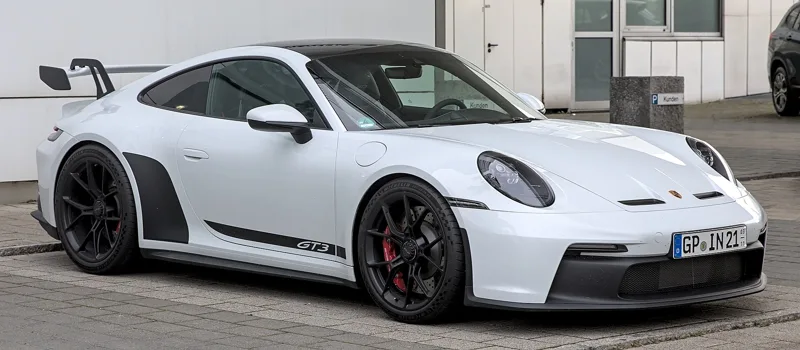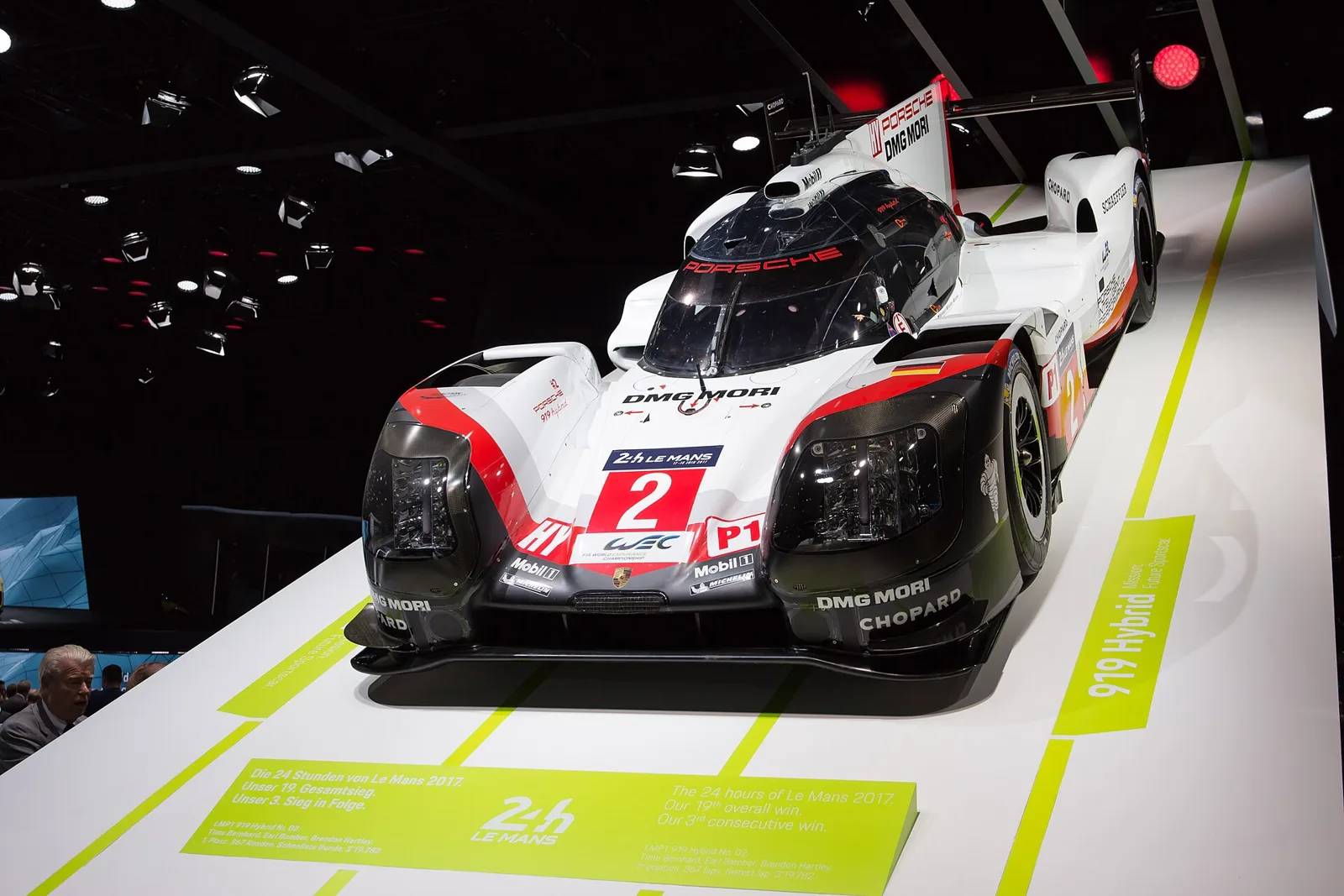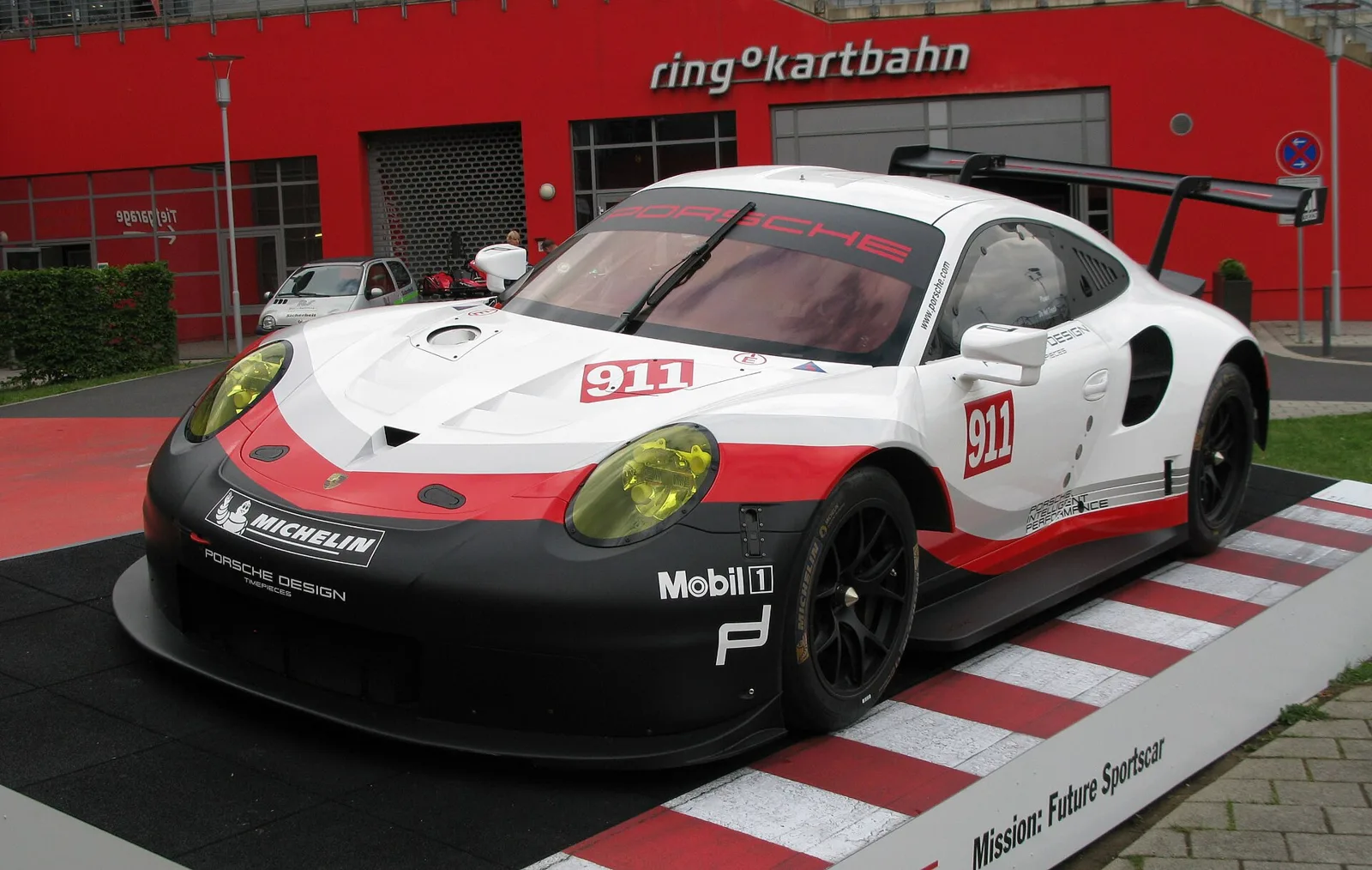
Two decades of Porsche GT racers, from the 1999 996 GT3 R to the 991.2 RSR that made its racing debut in the 2019-20 WEC season.
The Porsche 911 RSR is a line of GT racing cars that Porsche built for endurance racing in the GTE class. It grew out of the 996 GT3 R of 1999, and the 2013 991 RSR was followed by a mid-engined car for 2017.
Porsche's RSR badge covers a family of GT racers built at the Motorsport Center in Weissach. The line began with the 996 GT3 R in 1999, and each generation followed the GT rules of its time. The 2017 model reversed the car's layout by moving the engine ahead of the rear axle.
How did the RSR family begin?
The RSR family began with the 996 GT3 R, created in 1999 from the Porsche 996 GT3. It made its debut at the 1999 24 Hours of Le Mans, run by Manthey-Racing and Champion Racing as unofficial representatives of the factory.
The class context matters. After the GT1 class was dropped, the ACO planned a GT3 class below the GTS from 1999, and the FIA advertised it as N-GT from 2000. After the FIA and ACO aligned their GT rules in 2005, the class was renamed GT2. In 2011 the ACO renamed it GTE and divided it into GTE-Pro for professionals and GTE-AM for amateurs.
Porsche has been in the GT3 class since 2006 with the 911 GT3 R. That car targets customers and takes its basis from the one-make cup car used in the Carrera and Supercup series. The GTE cars, by contrast, were factory-supported machines, so the two lines of car served different buyers.
The 911 also formed the basis for higher classes, with the Porsche 911 GT1 and the Porsche 911 GT2 as separate racers built on the same road car platform.
A line of GT racers that kept its name while moving from a rear-engined layout to a mid-engined one.
What made the 996 GT3 RSR successful?
The 996 GT3 R won every run of the 2000 FIA GT Championship in the N-GT class. In 2001 the car became the 996 GT3 RS, which then won overall at the 2003 Daytona 24 Hours. The 2004 996 GT3 RSR added a sequential gearbox and more power to the same formula.
In the 2000 FIA GT Championship the 996 GT3 R was the dominant car in its new class. The same year the factory-supported Phoenix Racing team won the 24-hour race at the Nurburgring,
The 996 GT3 RS followed in 2001. Jorg Bergmeister and Timo Bernhard beat much more powerful prototypes to win the 2003 24-hour race at Daytona. The same year Stephane Ortelli, Marc Lieb and Romain Dumas won the Spa-Francorchamps 24 Hours in an NGT car, the first time that class had won there in the history of the FIA GT Championship.
The 996 GT3 RSR, which made its debut in 2004, is recognisable by its teardrop-shaped headlights. Its engine output rose from 415 to 455 hp, and it gained a sequential six-speed gearbox. By 2006 the racing versions had seven class wins at Le Mans, plus five class wins and one overall victory at Spa. Almost 200 racing cars of this type were produced.
How did the 997 GT3 RSR develop?
The 997 GT3 RSR arrived at the 2007 24 Hours of Le Mans. Its engine had grown to 3.8 litres, giving an output of 342 kW (465 hp). Manthey Racing ran the early cars, which had finished 14th and 15th at the 2006 Spa 24 Hours.
From 2007 the car was offered to customers, and 35 units were produced over the winter. Manthey Racing won the Nurburgring 24-hour race with the car in 2007, 2008, 2009 and 2011.
For 2009 the car received a major overhaul. The new front had large cooling openings and ventilation ducts on the bonnet, and the displacement grew to four litres. The air flow limiter reduced output to 331 kW (450 PS), and the engine peaked at 9,400 rpm. Twenty copies were planned for the overhaul.
The revised car first raced at the 2009 12 Hours of Sebring, where the factory teams took a double pole. In the race Jorg Bergmeister, Patrick Long and Marc Lieb narrowly missed the GT2 podium after two collisions. Lieb and Lietz then took the class at the 1000 km race in Barcelona, a round of the Le Mans Series.
Porsche unveiled the last 997 RSR in November 2011. The body was widened by 48 mm, which allowed front wheels 30 mm larger, and the bonnet air scoop was removed in favour of extra intakes in front of the rear fenders. The sales price was 498,000 euros plus country-specific VAT, and customer deliveries began in January 2012.
What changed with the 991 RSR in 2013?
The 991 RSR debuted in 2013 and was based on the Carrera 4S rather than the GT3, because the GT3 street car arrived too late for homologation. Porsche avoided calling it a GT2 RSR, since the GT2 series used turbocharged engines, and kept the naturally aspirated 4.0-litre M97/82 unit.
A major development goal was better weight distribution. The fuel tank sat at the front for packaging reasons, so the fill level changed the balance of the car. Carbon fibre reinforced plastic was used for the fenders, bonnets, doors, underbody, wheel arch linings, rear wing and dashboard to cut weight.
The GTE rules allowed technical waivers to offset the disadvantages of a rear engine. Waivers were approved for the side air intakes, the vehicle width, the underbody height, the front double wishbones and the engine. The number of waivers was not actively communicated.
Manthey Racing had been promoted to a Porsche works team from 2013, and it ran the car in the WEC. For 2016 the GTE rules changed to lift performance and to separate the cars from the GT3 machines. Porsche adapted the 911 RSR by moving its rear wing higher and further back, but the car could not use the new freedoms fully, and it was inferior to the Ford GT and the Ferrari 488 that season. The 2016 rules were also meant to improve driver safety.
Why did the 2017 911 RSR change layout?
The 2017 911 RSR was a clean break from the earlier cars. Its chassis, engine and transmission were all redesigned. Porsche reversed the engine and gearbox, making the car mid-engined with the engine ahead of the rear axle. That improved weight distribution and made room for a wider, taller rear diffuser under the new GTE regulations.
Porsche described the engine position as in front of the rear axle, a term it used for the 911 GT1 as well. Because the gearbox was flatter than the engine, the diffuser could be wider and higher. The rear wing moved to the top of the wing blade to remove interfering contours and improve the interaction between diffuser and wing.
Porsche kept a naturally aspirated engine even as rivals moved to turbos. The engine was still naturally aspirated, a 4.0-litre flat six based on the GT3 R and GT3 Cup units with direct injection. Depending on the restrictor it produced around 375 kW (510 hp). Porsche chose it over a turbo because turbo technology carried a weight disadvantage of 15 kg to 40 kg, along with more space and cooling needs.
The 2017 car also brought a double-wishbone front axle and a collision avoidance system. A monitor in the cockpit showed the faster prototypes early, even in the dark. Manthey Racing took the top two places in GTE Pro at the 2018 24 Hours of Le Mans and went on to win the 2018-19 FIA World Endurance Championship.
How was the 991.2 RSR different?
The 991.2 RSR was shown at the 2019 Goodwood Festival of Speed, and about 95 percent of it was redeveloped from the 2017 car. Only parts such as the headlights, brakes, clutch, driver's seat and some chassis components carried over. Its racing premiere came in the 2019-20 WEC winter season.
The main goal was better road holding in long, medium-fast corners. The exhaust moved to two tailpipes that exit at the side in front of the rear wheels, because scraps of rubber collected on the old central exhaust could ignite. The central pipes also risked damage in a duel and restricted the diffuser's design. The exhaust of the 2017 model had been only an emergency solution.
The naturally aspirated flat six was enlarged to 4.2 l for better torque, with almost the same output. The 991.2 RSR raced in GTE Pro from the start of the 2019-20 WEC winter season, while the previous model stayed in the IMSA WeatherTech SportsCar Championship until the end of 2019.
Series production of the road car stopped at the end of 2019, and the 992 successor reached customers around the same time.
How do the RSR generations compare?
| Generation | Debut | Engine and output | Defining change |
|---|---|---|---|
| 996 GT3 RSR | 2004 | Output rose from 415 to 455 hp | Sequential six-speed gearbox |
| 997 GT3 RSR | 2007 | 3.8 litres, 342 kW (465 hp) | Four litres and 331 kW (450 PS) after the 2009 overhaul |
| 991 RSR | 2013 | 4.0-litre naturally aspirated M97/82 | Based on the Carrera 4S |
| 2017 911 RSR | 2017 | 4.0-litre flat six, around 375 kW (510 hp) | Mid-engined layout |
| 991.2 RSR | 2019 | 4.2 l | Side-mounted exhausts |
What is the legacy of the RSR?
The RSR name ran from the 1999 996 GT3 R to the 991.2 RSR of 2019, and it covered a long run of GT racing success. The GT3 R name marked the customer line, while the RSR name marked the factory-supported car. Its record included class success at Le Mans and Spa, along with the 2018-19 FIA World Endurance title.
Each generation applied the same basic idea, a 911 adapted to the GT rules of its time, but the layout changed the most in 2017 when the engine moved ahead of the rear axle. The later cars were built at the Motorsport Center in Weissach, alongside Porsche's other racing cars.
For customers, the GT3 R line remained the accessible route into GT racing, while the RSR was the factory-backed design. Together they covered the two main sides of Porsche's GT programme.