Toyota's third straight win, a field thinned by withdrawals to 59 cars and a race shaped by bubbles, quarantine and a late date change.
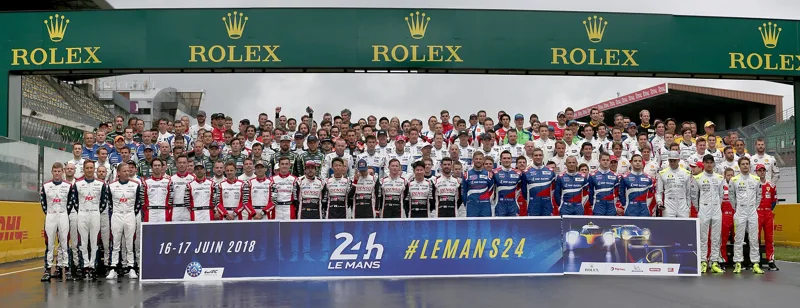
The 88th 24 Hours of Le Mans took place on 19-20 September 2020 behind closed doors, after being postponed from June. Toyota's No. 8 car of Buemi, Hartley and Nakajima won, while Rebellion finished second. The race was the penultimate round of the 2019-20 World Endurance Championship.
The 88th 24 Hours of Le Mans was held on 19-20 September 2020 behind closed doors. Toyota's No. 8 car of Sebastien Buemi, Brendon Hartley and Kazuki Nakajima won, Toyota's third successive Le Mans victory, while the Rebellion R13 finished second and the TF Sport Aston Martin took LMGTE Am by 49 seconds.
Why was the 2020 race held in September?
The race had been set for 13 and 14 June, but the COVID-19 lockdown in France forced a move to 19 and 20 September. The ACO and the FIA also wanted to avoid the shorter daylight hours and poor weather later in the year. It became the seventh and penultimate round of the 2019-20 World Endurance Championship.
Pierre Fillon, the ACO president, said the race was not cancelled because many teams had built their economic models around it. Global travel limitations also had to be taken into account.
Toyota's third straight Le Mans win came in a race run behind closed doors and in a September that nobody had planned for.
How did the race handle COVID-19 rules?
The race ran behind closed doors after discussions with the local Sarthe Prefecture. Only 5,000 people were admitted to the track, and all of them had to test negative for the virus and wear a face mask. Teams were required to remain in their bubbles and not communicate with other squads.
Earlier plans had included ten social bubbles, called fan villages, of 5,000 people each. Those were dropped after COVID-19 cases rose in France during the preceding month.
What changed on the circuit before the race?
Work at the exit of Mulsanne Corner extended the gravel traps, moved some of the safety fencing back at different points, and laid a larger, wider and thicker layer of asphalt on both sides. The FIA had asked for the work to reduce the disruption caused when a car went off. It began in March 2020 and was finished in June.
Who was entered for the race?
The ACO received 75 applications before the 18 December 2019 deadline and granted 62 invitations. The list of 62 cars plus ten reserves was published on 28 February, with 30 WEC entries, 18 from the ELMS, seven from IMSA, five from the ALMS and two one-off entries.
Automatic invitations went to teams that had won their class at the 2019 race, or had won the ELMS, ALMS or Michelin Le Mans Cup championships. Second-place ELMS teams in LMP2 and LMGTE also earned places, and the ACO chose two IMSA teams regardless of their performance.
The ELMS LMP3 champion had to field an LMP2 entry, the ALMS LMP3 champion could choose LMP2 or LMGTE Am, and the 2019 Michelin Le Mans Cup Group GT3 champion was invited into LMGTE Am. The final list of automatic entries was announced on 25 February 2020.
Two all-female line-ups took part, the Richard Mille Racing Team in LMP2 and Iron Lynx in LMGTE Am. It was the first time since 1977 that Le Mans had seen two all-female crews in the same race.
Garage 56 was reserved for a new-technology entry. SRT 41, founded by the quadruple amputee racing driver Frederic Sausset, had an operational deal with Graff Racing for an adapted Oreca 07-Gibson. It withdrew in April 2020 because the pandemic had left too little time to prepare, and Sausset applied for the 2021 race.
Which teams withdrew?
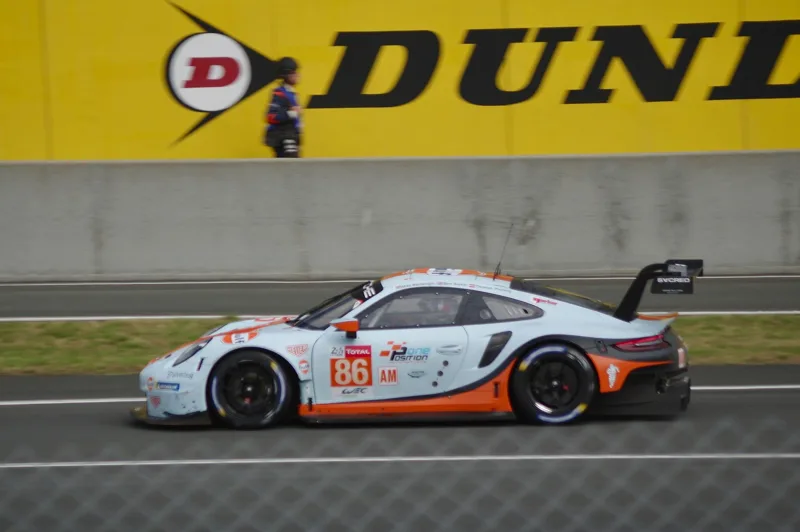
Porsche withdrew both CORE Autosport 911 RSR-19s in May, cutting its LMGTE Pro line-up from four cars to two. Corvette Racing also withdrew both of its C8.Rs, which meant the team would miss Le Mans for the first time since 2000.
The revised entry list on 18 June brought in four replacements from the reserve list, including a Ferrari from Spirit of Race and a Porsche from Proton Competition. Team LNT withdrew one of its Ginettas, and its second entry withdrew on 11 September, which took the field to 59 cars.
How did the reserve list work?
Ten entries were held in reserve, and the first reserve replaced the first withdrawal, whatever its class. That rule mattered as Porsche and Corvette stepped back, and it was used again as other entries fell away through the summer.
Performance Tech Motorsports pulled its Oreca 07 from the list, and Rick Ware Racing withdrew its Riley Mk. 30. GEAR Racing withdrew its LMGTE Pro Ferrari 488 GTE Evo, and High Class Racing cut its involvement to a single LMP2 car.
In August WeatherTech Racing moved its Ferrari 488 GTE Evo from LMGTE Am to LMGTE Pro after a driver line-up change. Carlin's Dallara P217 and Kessel Racing's LMGTE Am Ferrari then withdrew, and Iron Lynx added a third Ferrari to the LMGTE Am class.
What balance of performance changes applied?
The Toyota TS050 Hybrid received 7 kg (15 lb) of ballast, and privateers were allowed 11 laps of fuel per stint. The Aston Martin Vantage GTE gained turbo boost and 1 L (0.22 imp gal; 0.26 US gal) of extra fuel capacity.
The Porsche 911 RSR-19 gained 20 kg (44 lb) of ballast and a 0.3 mm (0.012 in) larger air restrictor. The LMGTE Am Aston Martin, Ferrari and Porsche cars each added 10 kg (22 lb).
There was no official test day, the first time since 2010 that the ACO had skipped one. Drivers who had not entered the race in the previous five years had to drive at least ten laps in the first two practice sessions and complete a simulator test.
How did practice go?
Nakajima set the fastest lap of the first practice on 17 September, a 3:21.656 in the No. 8 Toyota. Buemi's 3:19.719 topped the second session, and Tristan Gommendy's Duqueine car set the fastest LMP2 time of the night in the third at 3:28.013.
The first practice saw the Orecas take the first five LMP2 places, with Kenta Yamashita quickest at 3:29.873. Steve Brooks beached his Porsche in the gravel at Indianapolis corner, causing a stoppage.
The second practice was also disrupted. Paul Lafargue crashed his IDEC Sport car exiting the second Mulsanne chicane. Dwight Merriman was hurt in a heavy accident at the Porsche Curves, and the FIA medical delegate ruled him unfit, so Patrick Pilet replaced him.
The night session was stopped when Bonamy Grimes lost control of a Red River Sport Ferrari under braking for the first Mulsanne chicane. Bruno Spengler had also crashed the ByKolles car earlier in the night.
How did the pole and the start shape the race?
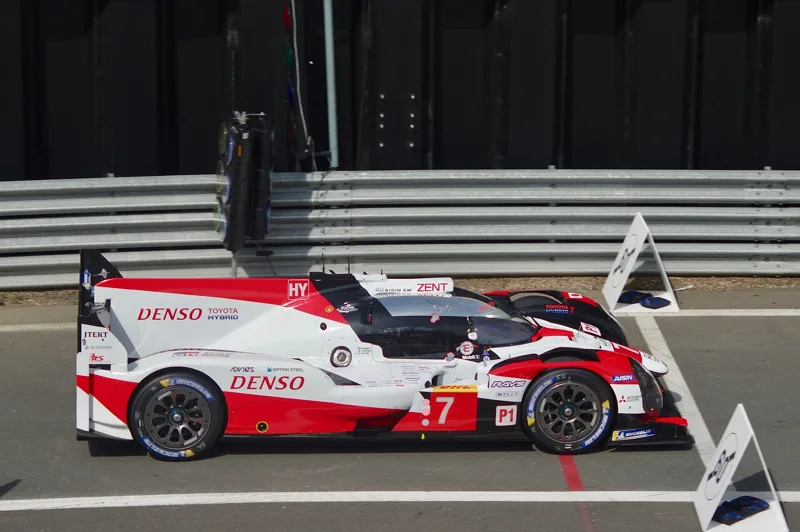
Mike Conway, Kamui Kobayashi and Jose Maria Lopez started from pole in the No. 7 Toyota after Kobayashi set the overall fastest lap in the Hyperpole session. The trio led most of the first half of the race.
Kobayashi then had to drive the car into the garage with mechanical problems, which dropped the No. 7 to fourth in LMP1. Buemi, Hartley and Nakajima took over the lead, and they held it to the finish.
Who won, and what was the final order?
Toyota's No. 8 car won with Buemi, Hartley and Nakajima at the wheel, its third successive Le Mans win. Buemi and Nakajima took their third Le Mans victories, and Hartley his second.
| Class | Position | Crew and result |
|---|---|---|
| LMP1 | Winner | Toyota TS050 Hybrid No. 8: Buemi, Hartley and Nakajima |
| LMP1 | Second | Rebellion R13: Gustavo Menezes, Norman Nato and Bruno Senna, the highest non-hybrid car |
| LMP1 | Third | Toyota No. 7: Conway, Kobayashi and Lopez |
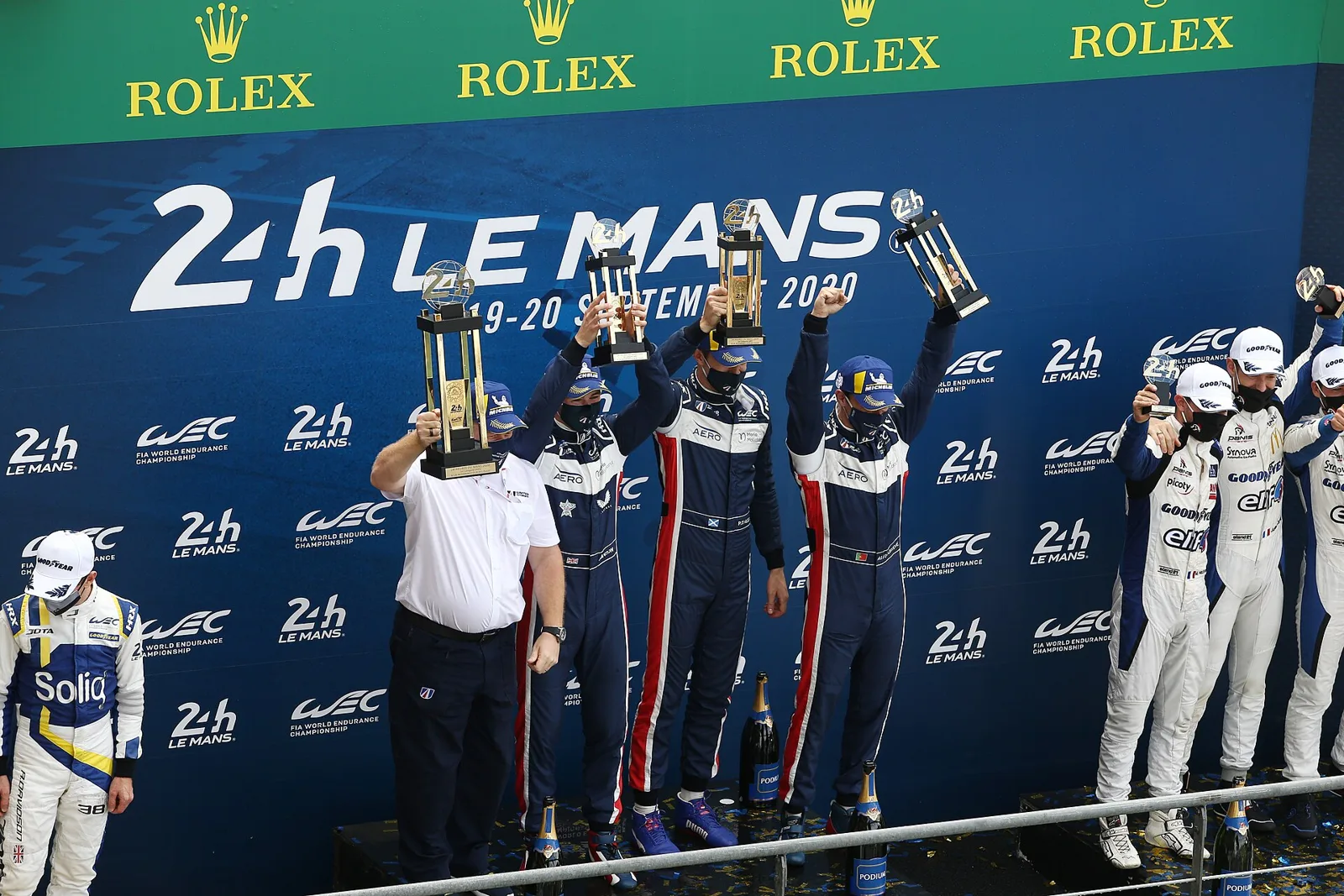
| LMP2 | Winner | United Autosports: Albuquerque, Hanson and di Resta |
| LMGTE Pro | Winner | Aston Martin Vantage GTE: Lynn, Martin and Tincknell |
| LMGTE Am | Winner | TF Sport, 49 seconds ahead of Dempsey-Proton |
In LMP2, Jota finished almost 33 seconds behind the winners in second, with Panis Racing third. AF Corse took second in LMGTE Pro behind the Aston Martin.
What did the result mean for the championship?
Buemi, Hartley and Nakajima led the LMP drivers' championship by seven points after the result, with Conway, Kobayashi and Lopez second. Toyota and Aston Martin both clinched their team titles with one race of the season left.
In GTE, Lynn and Martin moved to within 15 points of their team-mates Marco Sorensen and Nicki Thiim. Menezes, Nato and Senna stayed third in the LMP drivers' standings.