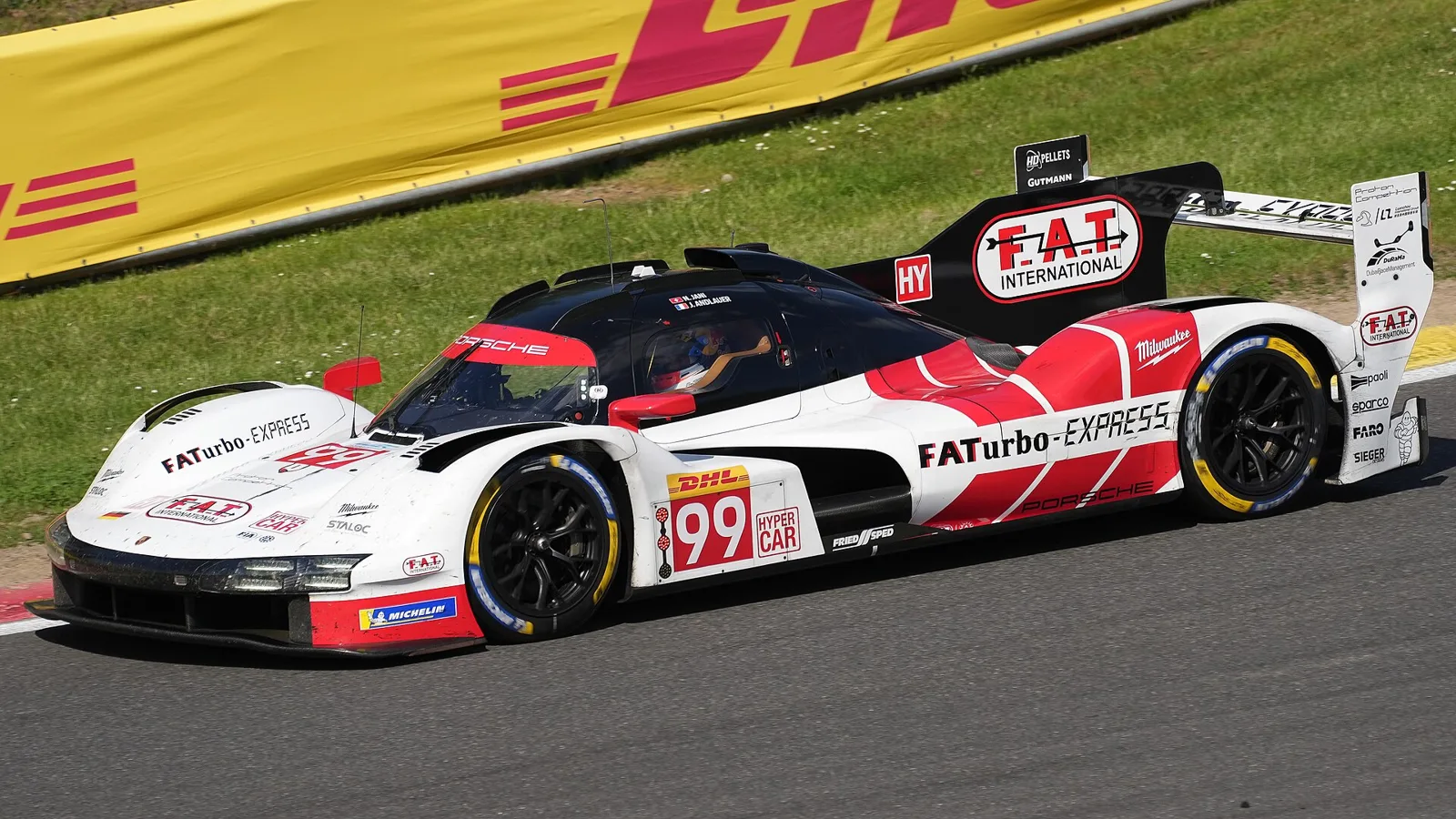
A family-run team from Ummendorf, founded in 1996, that rose from GT2 privateer entries to a 2010 Le Mans class victory and a run of Teams' titles.
Proton Competition is a German team founded by Gerold Ried in 1996 and now run by his son Christian. It won the GT2 class at the 2010 Le Mans 24 Hours and the inaugural Intercontinental Le Mans Cup that year.
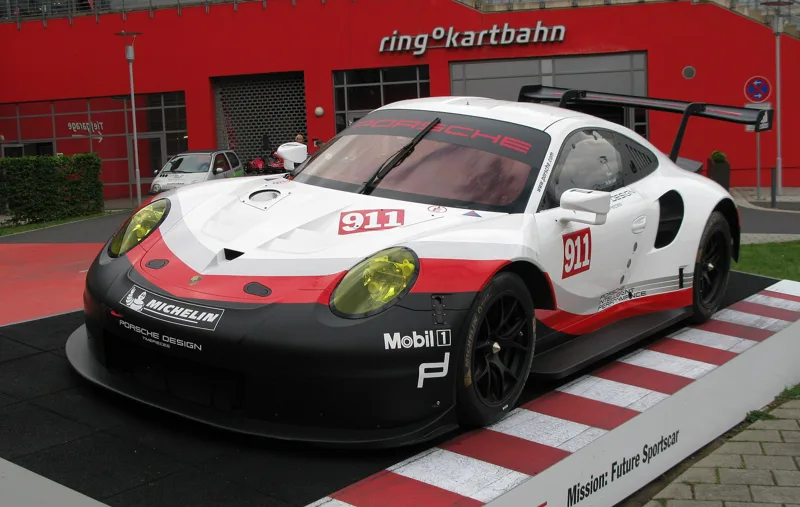
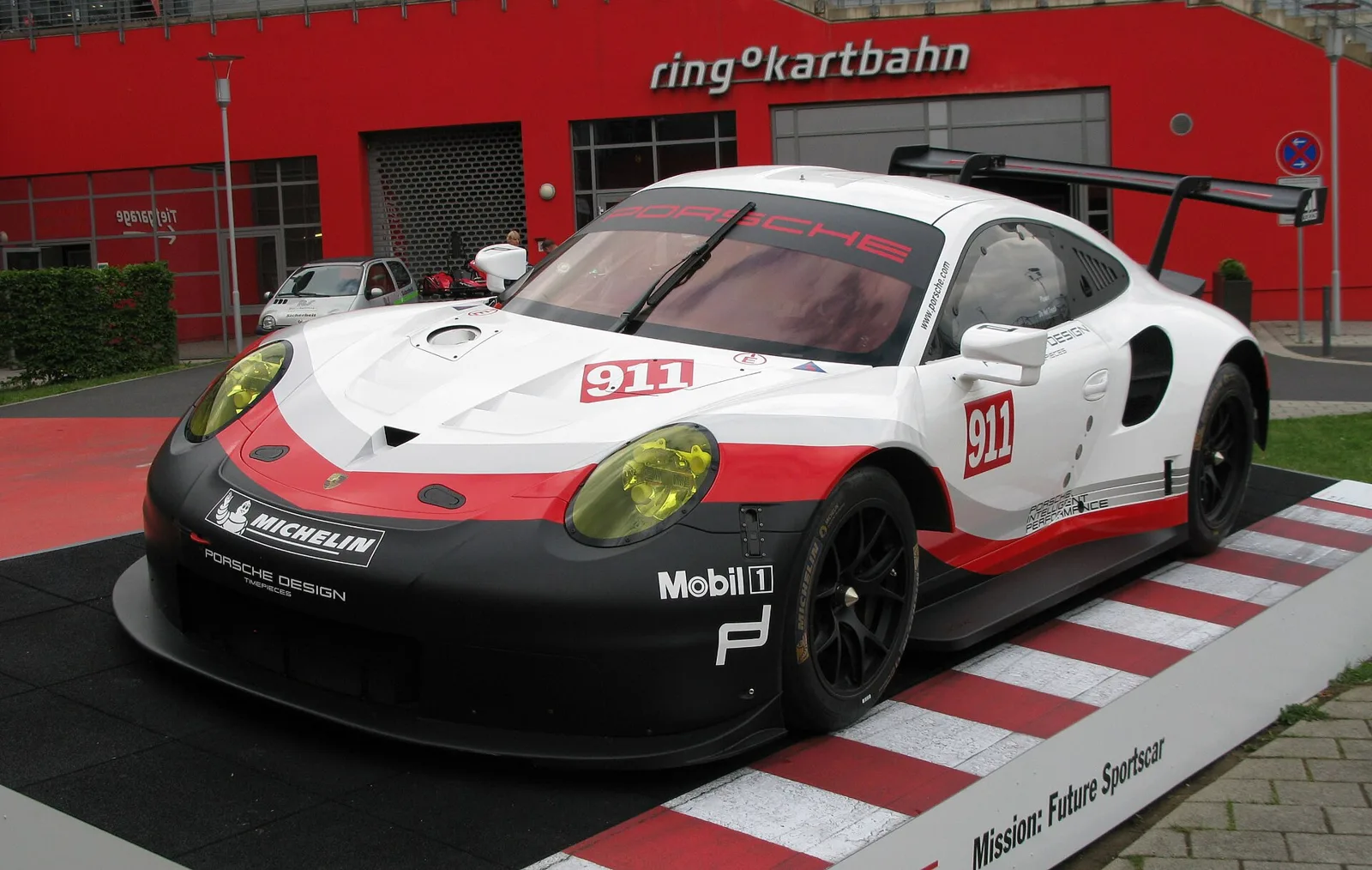
Proton Competition is a German auto racing team based in Ummendorf, Baden-Wuerttemberg. It was founded by Gerold Ried in 1996, and it is now owned by his son Christian Ried. The team has run mainly Porsche sports cars, and it won the GT2 class at the 24 Hours of Le Mans in 2010.
What is Proton Competition today?
Today the squad's World Endurance Championship line-up pairs a customer Porsche 963 with a Ford Mustang GT3 that has factory support. It also races an Oreca 07 and a Porsche 911 in the European Le Mans Series, and it runs in the IMSA SportsCar Championship.
The team also prepares Porsche 911s for the Iron Dames programme. It has been known under several names over the years, including Dempsey-Proton Racing and Team Felbermayr-Proton.
A Porsche privateer that became a Le Mans class winner and a series champion, under a family's ownership.
How did the team begin?
Gerold Ried founded the team in 1996 and entered two GT2-spec Porsche 911 GT2s in the BPR Global GT Series. Cars No. 51 and No. 69 each scored six points in the Teams' Championship, which gave the team a steady start.
In 1997 Proton ran one 911 GT2 in the inaugural FIA GT Championship and earned only one point. It also raced at the Daytona 24 Hours and finished 27th overall that year.
What were the lean years between 1998 and 2003?
Between 1998 and 2002 the team had little success. It raced the same 911 GT2 with the father and son partnership of Gerold and Christian Ried, who were its main drivers during that period.
In 2003 Proton moved down a class to N-GT after buying a Porsche 996 GT3-RS. It picked up only one point in the season, at the final round in Monza.
How did the team recover in 2004 and 2005?
Results improved in 2004, when the team finished fourth in the Teams' Championship. Its best race finish was third at the opening round in Monza, where it had also scored its single point in 2003.
In 2005 Proton finished second in the Teams' Championship with 45 points. A GT2 class dominated by Gruppe M Racing left the team about 135 points behind, since Gruppe M won every GT2 race that season.
What changed when Felbermayr joined?
For 2006 the team changed its name to Team Felbermayr-Proton after Horst Felbermayr Sr. became part of the team. It also moved from orange and red with black to a light blue livery that is similar to the one it uses today.
The change brought less success than 2005, and the team finished fifth in the Teams' Championship. The driving pairing of Christian Ried and Horst Felbermayr Jr. finished eleventh in the drivers' standings.
How did the Le Mans Series years begin?
In 2007 the team progressed into the Le Mans Series with three cars in the GT2 class. Car No. 77, a Porsche 997 GT3-RSR driven by Marc Lieb and Xavier Pompidou, took second in the Teams' Championship, only three points behind Virgo Motorsport.
Car No. 77 won three of the six races that season, and Lieb and Pompidou took second in the drivers' standings. In 2007 the team also made its 24 Hours of Le Mans debut with Seikel Motorsport. The No. 71 car qualified 52nd of 54 and retired after 68 laps with an electrical problem.
How did the 2008 season compare?
In 2008 the team raced two cars in the Le Mans Series. Lieb and Alex Davison drove car No. 77, which again finished second in the Teams' Championship, five points behind Virgo Motorsport. Car No. 88 finished eighth.
At the 2008 Le Mans 24 Hours the team had its full debut without Seikel. Car 77 qualified second in class but finished fifth in class and 27th overall.
Why was 2009 the team's best season?
The 2009 season was Felbermayr-Proton's most successful to date. Car No. 77 won three of the five races and took the Teams' Championship by one point ahead of JMW Motorsport. Lieb and Richard Lietz also won the drivers' title by a single point.
At Le Mans in 2009 car 77 ran out of fuel after 24 laps, and a second car, No. 70, retired on the 102nd lap. The team finished its year at the inaugural Asian Le Mans Series round at Okayama, where its two cars finished second and fourth in class.
How did the team win Le Mans in GT2?
In 2010 car 77 again won three of the five races, and the squad finished 21 points clear of AF Corse. Lieb and Lietz kept their drivers' crown, finishing 21 points clear of the AF Corse line-up of Jean Alesi, Giancarlo Fisichella and Toni Vilander.
That year the team also won the inaugural Intercontinental Le Mans Cup with 72 points, 15 points ahead of AF Corse. The series awarded titles to teams and manufacturers rather than drivers.
At the 2010 Le Mans 24 Hours, car 77 claimed the GT2 class, ahead of Ferrari, Corvette and other Porsche factory teams. Wolf Henzler took his first class victory at Le Mans in that race, and Marc Lieb and Richard Lietz each added a second class win.
What happened in 2011 and 2012?
In 2011 the Le Mans Series split GT2 into LM GTE Pro and LM GTE Am. Proton raced one car in each class. Car 77 finished third in the GTE Pro Teams' Championship, and the Am Porsche picked up a win in the opening round at Paul Ricard.
At the 2011 Le Mans 24 Hours, car 77 was the only one of the team's cars to finish, in fourth in class. The team's Am car was ended near dawn when a Corvette tried to lap it and spun into it, injuring Horst Felbermayr Sr.
For 2012 Proton announced plans to run two cars in the inaugural FIA World Endurance Championship, with Lieb and Lietz in the GTE Pro car and Christian Ried and Gianluca Roda in the Am car.
What are the team's key results at a glance?
| Year | Driver or car | Event | Result |
|---|---|---|---|
| 1996 | Cars 51 and 69 | BPR Global GT Series | Six points each in the Teams' Championship |
| 2005 | Team | Le Mans Series | Second in the Teams' Championship |
| 2007 | Car 77 | Le Mans Series | Second in the Teams' Championship, three points behind |
| 2009 | Car 77 | Le Mans Series | Teams' Championship by one point |
| 2010 | Car 77 | 24 Hours of Le Mans | GT2 class win |
| 2010 | Team | Intercontinental Le Mans Cup | Series title with 72 points |
| 2011 | Car 77 | GTE Pro | Third in the Teams' Championship |
| 2015 | Dempsey/Proton Porsche | 24 Hours of Le Mans | Second in the GTE-Am class |
Why does Proton Competition matter?
Proton Competition matters because it shows how a family-run German team can grow from privateer entries into a Le Mans class winner. Its Porsche programmes and its long run of Teams' titles give it a respected place in endurance sports car racing.
The team's story also shows how depth matters in endurance racing. Its success came from a stable core of drivers, a dependable car and a willingness to adapt through several name changes and series.