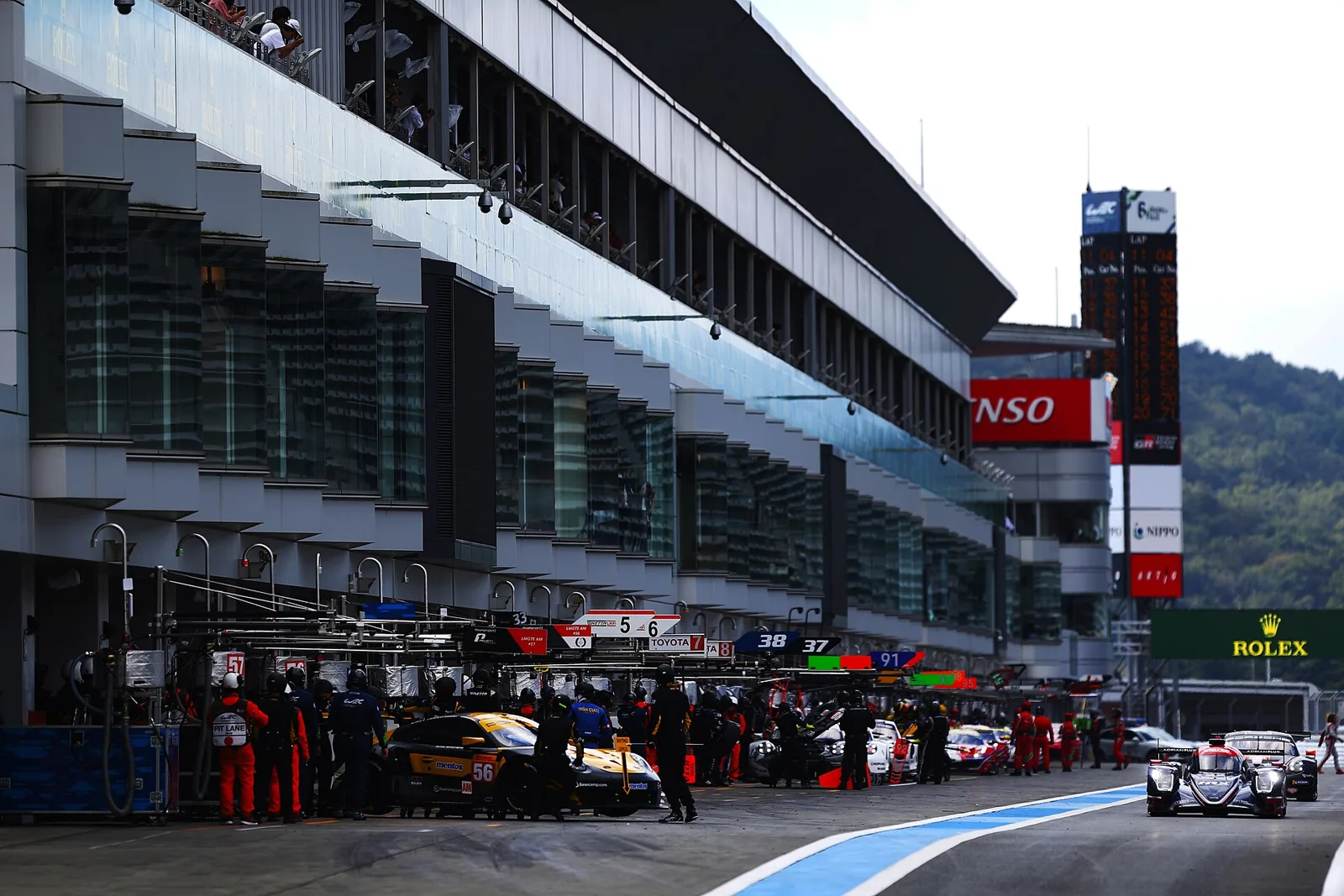
Two front-row cars tangled on the opening lap, a Toyota inherited the lead from fourth on the grid and the first 8-hour race in Bahrain ended in a one-two.
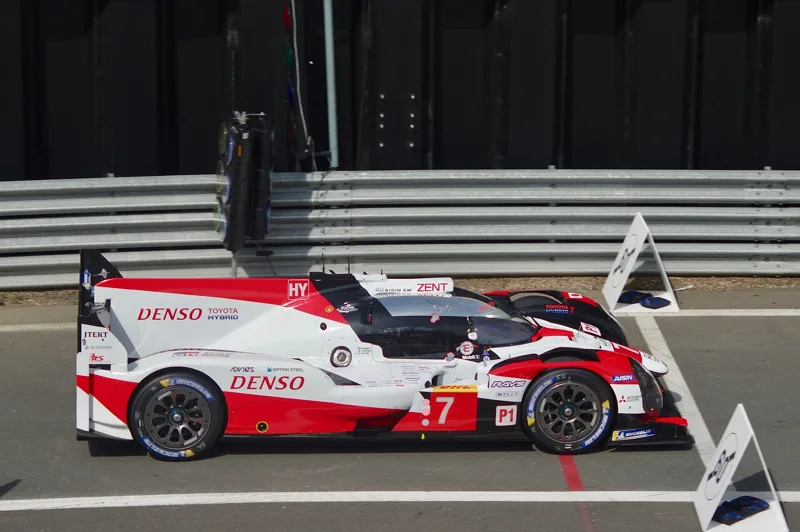
Toyota Gazoo Racing's No. 7 car won the 2019 8 Hours of Bahrain on 14 December 2019, the fourth round of the 2019-20 World Endurance Championship. Kamui Kobayashi, Mike Conway and Jose Maria Lopez drove it to the win after the lead passed to them on the opening lap.
Toyota Gazoo Racing won the 2019 8 Hours of Bahrain without leading at the start. Two front-row cars tangled at Turn 2, and the No. 7 Toyota, which had begun fourth, slipped through to take the lead. The sister No. 8 car finished second, so Toyota completed a one-two in the first 8-hour race held in Bahrain.
Why was the Bahrain race an 8-hour event?
The 2019 race was the fourth round of the 2019-20 FIA World Endurance Championship, held on 14 December 2019 at the Bahrain International Circuit. It was the inaugural running of an extended 8-hour format, and the event had previously been run as the 6 Hours of Bahrain. The championship returned to Bahrain for the first time since 2017.
Elsewhere, the 2019-20 calendar was unveiled at the 2018 6 Hours of Silverstone. It listed eight races on five continents, starting at Silverstone in September 2019 and finishing with the Le Mans 24 Hours in June 2020.
For the first time the series added 4 and 8 hour races, at Silverstone, Shanghai and Bahrain. A fan survey had shown an overwhelming preference for 6, 12 and 24 hour events, so the new distances went against what the fans had asked for.
A first-lap collision handed Toyota the lead, and a driveline failure at Rebellion sealed the one-two.
Who was on the entry list for Bahrain?
A provisional entry list was issued on 12 November 2019, with 31 cars spread across four classes. All four full-season LMP1 entrants were listed, alongside nine LMP2 cars, including the guest G-Drive Racing Aurus 01 driven by Jean-Eric Vergne, Roman Rusinov and Job van Uitert.
The GTE classes had no additional cars. All six full-season GTE-Pro cars and eleven GTE-Am cars were entered. Most race seats were filled at that stage, but two Team LNT Ginetta G60-LT-P1 seats and the No. 88 Dempsey-Proton Racing Porsche were not.
Separately, the lineups changed in the final weeks. Team LNT announced on 26 November that Chris Dyson would replace Egor Orudzhev, and on 10 December Khaled Al Qubaisi and Adrien De Leeneer were confirmed for the No. 88 Porsche in place of Angelo Negao and Will Bamber. Team Project 1 brought Larry ten Voorde back for a second race, and Ben Keating and Jeroen Bleekemolen took over the No. 57 car from Felipe Fraga, who was racing in the Stock Car Brasil finale.
How did qualifying set the grid?
The No. 1 Rebellion R13 of Norman Nato and Bruno Senna took pole in LMP1 with an average lap of 1:42.979, ahead of the No. 5 Ginetta G60-LT-P1 of Charlie Robertson and Ben Hanley. In LMP2 the No. 22 United Autosports car took the team's first WEC pole, 0.292 seconds clear of the No. 37 Jackie Chan DC Racing Oreca.
Toyota's two TS050 Hybrids started on the second row. Brendon Hartley and Kazuki Nakajima out-qualified the No. 7 pair of Mike Conway and Jose Maria Lopez by less than a tenth of a second, and the No. 8 car was 0.863 seconds off the pole Rebellion. The No. 6 Team LNT car finished fifth in the session.
In GTE-Pro the No. 91 Porsche of Richard Lietz and Gianmaria Bruni took class pole with an average of 1:56.485. The sister No. 92 car of Kevin Estre and Michael Christensen was 0.060 seconds behind, and the AF Corse Ferraris of Calado and Pier Guidi, and the Aston Martin of Sorensen and Thiim, were the other front-runners.
Beyond that, in GTE-Am, Ben Keating claimed his first WEC class pole in the No. 57 Team Project 1 Porsche with Larry ten Voorde. The No. 54 AF Corse Ferrari was second, and the No. 88 Porsche of Dempsey-Proton Racing completed the first three.
What decided the opening lap?
On the first lap the front-row cars of Bruno Senna and Charlie Robertson collided at the Turn 2 kink. Conway in the No. 7 Toyota slipped through the chaos from fourth on the grid and took the lead, and he pulled clear while the pole car and the second-placed Ginetta were left behind.
Robertson lost two laps to repairs after the contact, and Sebastien Buemi lost seven positions in the No. 8 Toyota. For the first half hour the LMP2 cars ran ahead of every LMP1 car except the leading Toyota, and the No. 22 United Autosports car was in second place overall for a time.
Senna said afterwards that he should have forced Robertson off the track, because he believed the contact had upset the electronic shifting system on his car. Rebellion's team manager Bart Hayden disagreed, saying the shifting motor sat on the side of the car away from Robertson's Ginetta, which made the link very unlikely.
How did the lead change hands through the race?
Rebellion lost second place in the third hour after a suspected driveline problem forced the No. 1 car into the pits. The car lost 3 laps and fell outside the top ten, and the Toyota cars then held a one-two that they kept until the flag.
Gustavo Menezes had been 50 seconds clear of Brendon Hartley in the No. 8 Toyota when the No. 1 stopped. At the end of the fourth hour Lopez held a gap of more than one minute over Nakajima in the sister car.
The Ginetta No. 6 used the Rebellion problem to move into third, one lap down on the leading Toyota. Its sister No. 5 car stopped with a mechanical failure after the fifth hour, and the No. 6 came into the garage during the penultimate hour, so neither Ginetta reached the flag.
Why did Toyota's win look unlikely at first?
Toyota's technical director Pascal Vasselon admitted that a one-two was unlikely early on, because of the success ballast carried by the cars. The team had benefited from the misfortune of the privateers, which opened the way to the one-two. The one-two came about because Rebellion's misfortunes left the leading Toyotas unchallenged.
Buemi described the No. 8 crew as driving in survival mode after a series of incidents. The most serious came when Nakajima made contact while lapping a Ferrari 488 GTE, which damaged the floor and rear deck of the Toyota and cost it downforce.
Vasselon said the floor was not changed because the job would have taken too long, and that the time lost could have cost the car its second place. Rebellion's electronic shifting motor failure also meant the team lost its chance at the win, even though its car had a largely trouble-free second half.
Who won the LMP2 class?
United Autosports' No. 22 Oreca 07 took the LMP2 win with Paul di Resta, Philip Hanson and Filipe Albuquerque. The car led most of the race and finished 21 seconds clear of the Jota Sport entry, the team's first WEC class victory.
A full course yellow with 40 minutes left helped several of the leaders avoid an extra fuel stop. That period was a key break for the guest G-Drive Racing Aurus 01, which kept fourth place behind the Jackie Chan DC Racing Oreca 07, with Ho-Pin Tung, Will Stevens and Gabriel Aubry aboard.
The Signatech Alpine A470 of Andre Negrao, Pierre Ragues and Thomas Laurent completed the top five in LMP2.
Who won the GTE-Pro class?
Marco Sorensen and Nicki Thiim won GTE-Pro for Aston Martin in the No. 95 Vantage GTE, just under fourteen seconds ahead of the No. 71 AF Corse Ferrari of Miguel Molina and Davide Rigon. Molina was handed a late drive-through penalty for spinning his wheels during his final scheduled stop.
The result was Aston Martin's second GTE-Pro win of the season, earned in a race fought out in the desert between the two manufacturers. A quicker final stop had put Sorensen in front during the last hour, and the penalty then removed Molina's chance of winning.
Calado had first passed Maxime Martin for third, but the move was judged to be beyond track limits, and he handed the place back with 20 minutes remaining. He and Pier Guidi finished fourth in class, while Martin and Alex Lynn took third in the No. 97 Aston Martin.
The Porsches had a difficult afternoon. Bruni's No. 91 car had a right-rear puncture and finished fifth in class. The No. 92 car suffered a damper failure and came home sixth in class, seventh overall in GTE.
Who won the GTE-Am class?
Team Project 1's No. 57 Porsche won GTE-Am with Ben Keating, Jeroen Bleekemolen and Larry ten Voorde. It finished more than 30 seconds clear of the factory No. 98 Aston Martin of Ross Gunn, Paul Dalla Lana and Darren Turner, and Keating took his first WEC win.
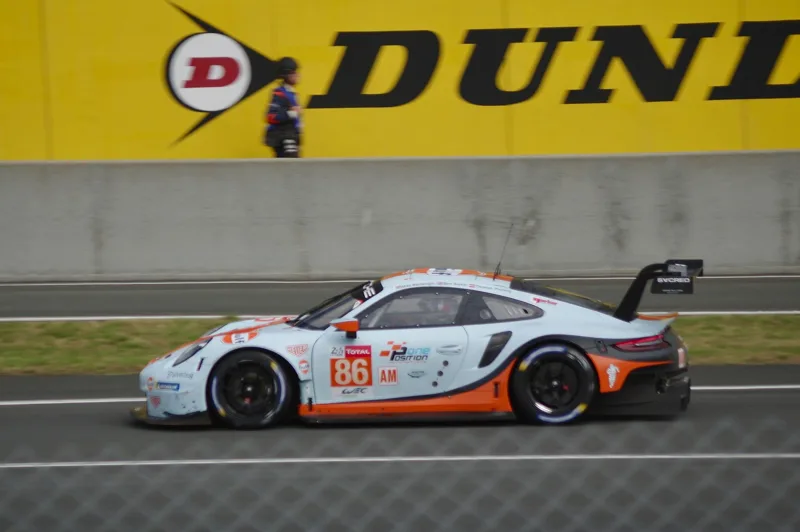
The No. 86 Gulf Racing Porsche took third in class, its first class podium of the 2019-20 season. The sister No. 56 car had been running first and second in the class early on before exhaust problems sent it to the garage in the second hour, and it dropped down the order.
TF Sport, the GTE-Am championship leaders, lost its No. 90 Aston Martin to fuel starvation with two hours to go. It was one of two retirements in the Pro-Am class, and the team had been chasing a third straight class win.
Was the Toyota one-two a result the team had planned?
Not quite. Toyota's own view was that a one-two was unlikely at the start, because of the success ballast, and the team had gained from Rebellion's misfortunes. The result came as much from those problems as from pace on the day.
The floor and rear deck had taken the damage from the lapping incident, and the crew drove on with that loss of downforce for the rest of the race.
Rebellion's Senna finished third overall. He regretted the opening-lap contact, which he believed had upset the car's shifting system and forced a lengthy repair in hour three. Team manager Hayden still rejected any strong link between the two incidents.
What did the tyre change mean for the teams?
High Class Racing dropped Goodyear as its tyre supplier and switched to Michelin from the Lone Star Le Mans onwards. The team ran Michelin tyres for the first time in the post-race test. The team had run Goodyear tyres until that point in the season.
How many laps did a car need to be classified?
A car had to complete at least 180 laps to be classified, which was 70 per cent of the winning car's race distance. Both Ginetta cars fell short after their retirements. The rule applied to every class, so each car needed that distance whatever its position.
Cars short of that distance do not receive a classified finish, however far they run.
Bahrain 2019 class winners
| Class | Car | Drivers | Result |
|---|---|---|---|
| Overall | No. 7 Toyota TS050 Hybrid | Kamui Kobayashi, Mike Conway, Jose Maria Lopez | Won; No. 8 Toyota one lap behind |
| LMP2 | No. 22 Oreca 07, United Autosports | Paul di Resta, Philip Hanson, Filipe Albuquerque | Won 21 seconds clear of Jota Sport |
| GTE-Pro | No. 95 Aston Martin Vantage GTE | Marco Sorensen, Nicki Thiim | Won by just under fourteen seconds |
| GTE-Am | No. 57 Porsche 911 RSR, Team Project 1 | Ben Keating, Jeroen Bleekemolen, Larry ten Voorde | Won over 30 seconds clear |