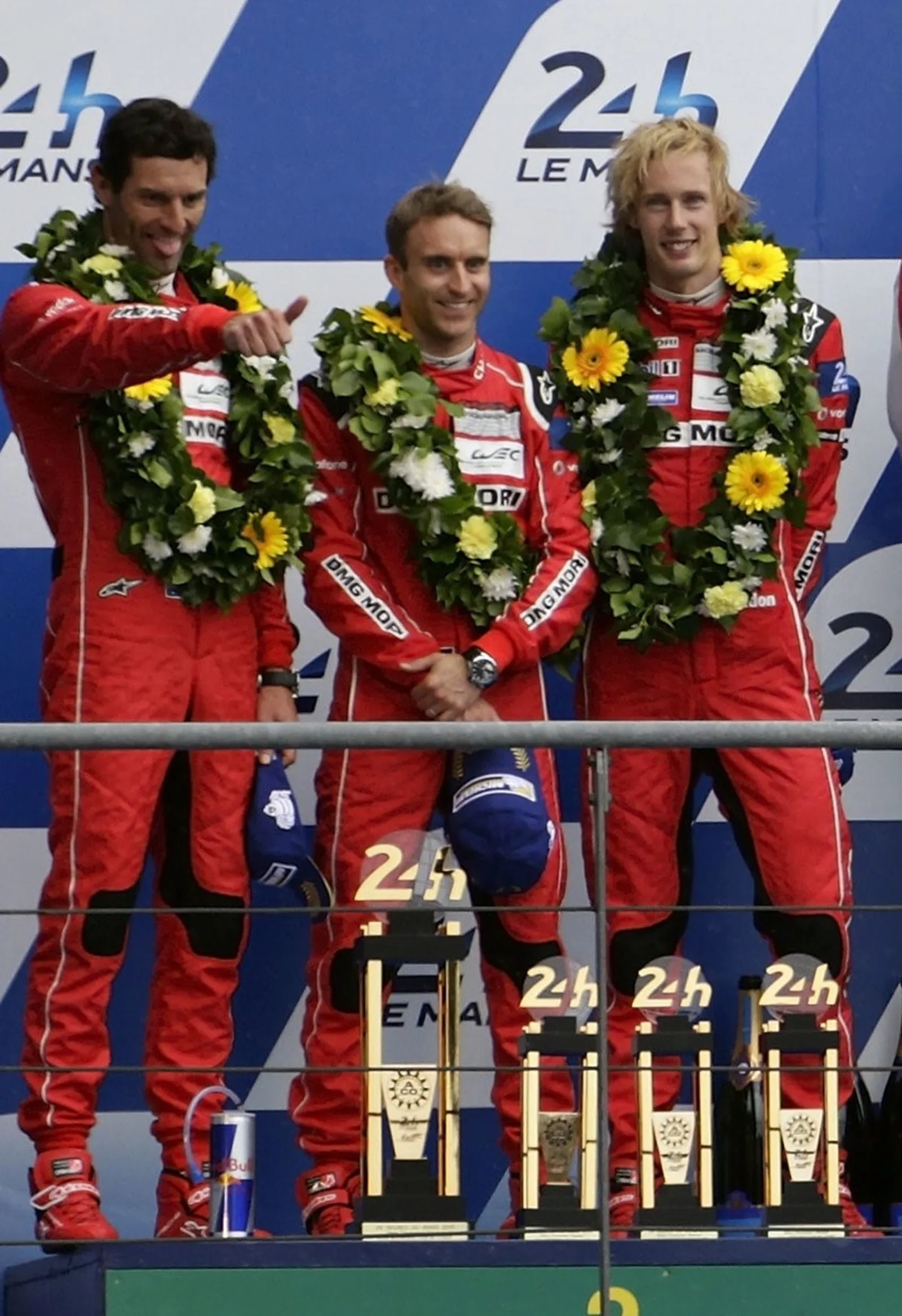
Timo Bernhard, Mark Webber and Brendon Hartley won the drivers' championship for Porsche in the final round, as the German marque also took the manufacturers' crown in a season that added Nissan and a Nurburgring round.
Porsche swept the top manufacturer honours in 2015, with its trio of Bernhard, Webber and Hartley taking the drivers' title in the last round. Audi finished 80 points adrift in the manufacturers' table, and Nissan made its debut as a manufacturer in LMP1.
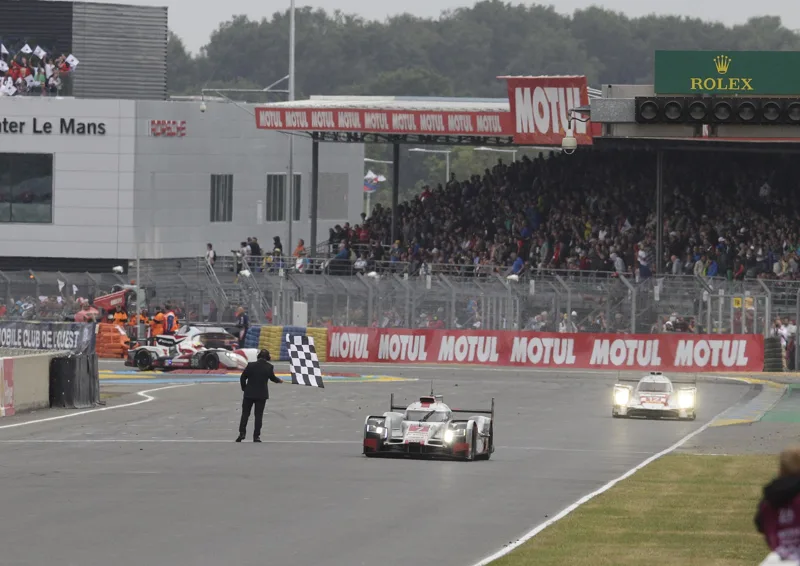
The 2015 FIA World Endurance Championship was the fourth season of the series, co-organised by the FIA and the Automobile Club de l'Ouest. Porsche clinched the manufacturers' crown at the 6 Hours of Shanghai, finishing 80 points ahead of Audi, and the Porsche trio of Timo Bernhard, Mark Webber and Brendon Hartley won the drivers' title in the final round of the eight-race season.
The season ran from Silverstone in April to Bahrain in November and took in the 83rd 24 Hours of Le Mans. It was a year of consolidation for Porsche and a debut year for Nissan, as the series settled its LMP1 category after a year of split classes.
Who won the 2015 titles?
Bernhard, Webber and Hartley won four consecutive races during the season, which gave them the drivers' championship in the final round. Audi's trio of Andre Lotterer, Benoit Treluyer and Marcel Fassler were runners-up, and Porsche's Marc Lieb, Romain Dumas and Neel Jani finished third in the standings. The result showed the depth of Porsche's factory driver pool, as three different crews were in the championship picture at the end.
In the GT classes Porsche also took the manufacturers' cup at the last event, overhauling the advantage Ferrari had held earlier in the year. Richard Lietz of Porsche took the GT drivers' cup, finishing ahead of Gianmaria Bruni and his AF Corse teammate Toni Vilander, who had held the trophy for three straight seasons. The GT title race was therefore settled between the same manufacturers that fought the prototype championships.
| Title | Champion | Notable detail |
|---|---|---|
| World Endurance Drivers' Championship | Timo Bernhard, Mark Webber, Brendon Hartley | Four consecutive race wins |
| World Endurance Manufacturers' Championship | Porsche | Clinched at the 6 Hours of Shanghai, 80 points ahead of Audi |
| World Endurance Cup for GT Drivers | Richard Lietz | Ahead of Gianmaria Bruni and Toni Vilander |
| World Endurance Cup for GT Manufacturers | Porsche | Won the final event, overhauling Ferrari |
| LMP1 Private Teams | Rebellion Racing | Fourth trophy for the team |
| FIA Endurance Trophy for LMP2 | G-Drive Racing | Rusinov, Canal and Bird |
| FIA Endurance Trophy for LMGTE Pro teams | Porsche Team Manthey | Ahead of AF Corse |
| FIA Endurance Trophy for LMGTE Am | SMP Racing | Shaitar, Basov and Bertolini |
Rebellion Racing won the LMP1 privateer trophies, with Mathias Beche and Nicolas Prost taking the drivers' trophy despite missing the first two rounds of the championship. For Rebellion it was its fourth trophy, and for Beche and Prost their second consecutive title. G-Drive Racing secured the LMP2 class trophies with Roman Rusinov, Julien Canal and Sam Bird, ahead of the KCMG team.
Porsche's double of drivers and manufacturers came from consistent finishing and a factory operation that could field three crews in contention.
How did the 2015 calendar change?
The ACO published the provisional calendar at the 2014 6 Hours of Fuji, and the World Motor Sport Council confirmed it in Doha soon afterwards. It remained much the same as 2014, with one important exception: the 6 Hours of Sao Paulo was replaced by the 6 Hours of Nurburgring. Plans for a new pit complex at Interlagos meant the Brazilian round could not return in 2015.
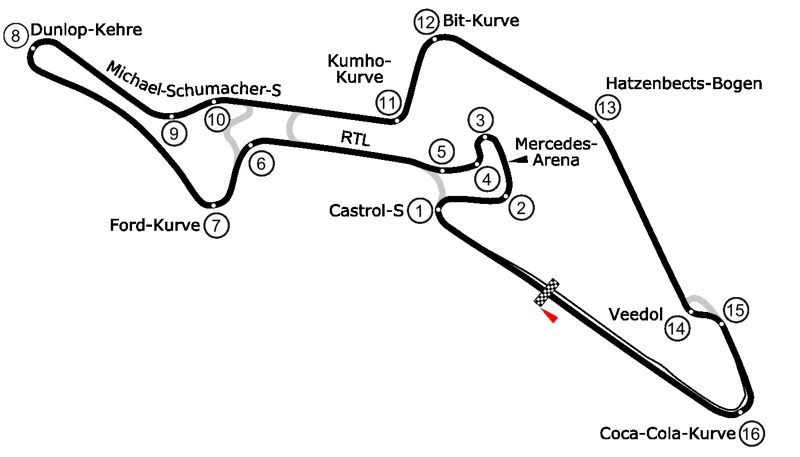
The Nurburgring round was the series' first visit to Germany. It was held after the 24 Hours of Le Mans and before the 6 Hours of Circuit of the Americas, which cut three weeks from the gap between those two events compared with the 2014 schedule. The change gave the season a slightly tighter shape in the middle, with the Le Mans and Nurburgring weekends sitting close together.
Which manufacturers and teams entered?
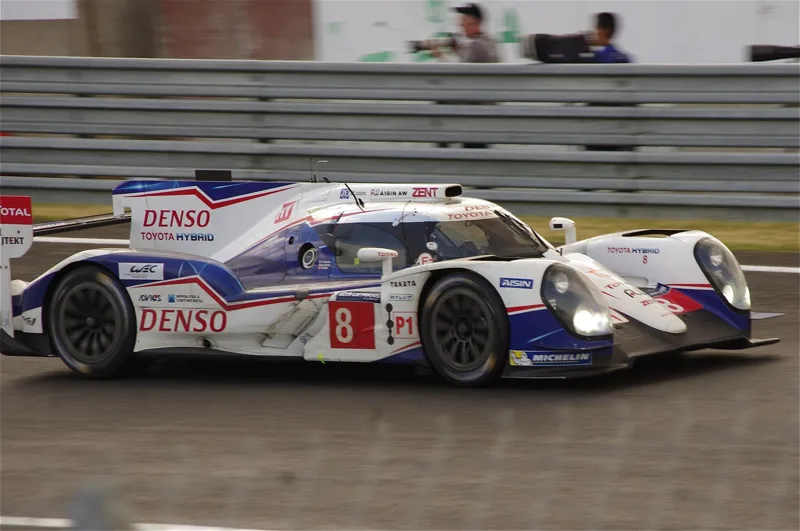
The FIA unveiled 35 cars on 5 February 2015, across four categories: LMP1, LMP2, LMGTE Pro and LMGTE Am. The LMP1-H and LMP1-L classes of 2014 were merged again into a single LMP1 category, which let privateers race against the factory teams. Nissan joined as a manufacturer, having supplied engines in LMP2 since the series began in 2012, with its GT-R LM Nismo using a unique front-engine, front-wheel-drive layout.
Nissan's drivers included Michael Krumm, the FIA GT1 World Champion, Olivier Pla, who had come across from G-Drive Racing, and Max Chilton, who had raced in Formula One. Harry Tincknell, Jann Mardenborough and Alex Buncombe, all LMP2 veterans, were the team's regular drivers for the season, while Lucas Ordonez, Mark Shulzhitskiy and Tsugio Matsuda, a defending Super GT champion, drove the third entry at Le Mans. Marc Gene was scheduled to race for Nissan but stepped back into an advisory role, and Shulzhitskiy joined the team in his place. Porsche kept its 2014 line-up and added Nico Hulkenberg, the Force India driver, to the third 919 Hybrid for Le Mans alongside Nick Tandy and Earl Bamber. Audi promoted Oliver Jarvis after Tom Kristensen retired, partnering Lucas di Grassi and Loic Duval, while its second car kept the crew of Marcel Fassler, Benoit Treluyer and Andre Lotterer, who had won the 2012 championship. Audi's two R18 cars were its strongest hope of the year, and that second crew finished runner-up in the drivers' table.
Toyota's defending drivers' champions, Anthony Davidson and Sebastien Buemi, gained a new co-driver at Toyota when Kazuki Nakajima moved from the sister car to replace Nicolas Lapierre, and Mike Conway was promoted to fill Nakajima's former seat. Rebellion Racing decided to forgo Toyota engines and switch to the AER power unit used by Team ByKolles, which forced the team to miss the first races while its cars were adapted. Daniel Abt joined the No. 13 car at Rebellion. Team ByKolles kept the CLM P1/01 it had campaigned in the second half of 2014, with Pierre Kaffer retained alongside Simon Trummer, and Vitantonio Liuzzi returned after driving the Lotus in LMP2 in 2013. Rebellion's No. 12 car kept its line-up unchanged.
What did the LMP2 and LMGTE classes look like?
The LMP2 class rebounded from its smallest size in history, with ten entries in 2015 after only four full-season cars had competed the year before. Defending champions SMP Racing did not return, but OAK Racing came back under its own banner and G-Drive Racing expanded to two cars. KCMG replaced its Oreca 03 with the newer 05 chassis, and Strakka returned with an unchanged programme after the previous year's delays. Signatech, the defending European Le Mans Series champion, kept Nelson Panciatici and Paul-Loup Chatin, the series' drivers' champions there, and added Vincent Capillaire, running an Oreca-based A450 with Nissan power and Alpine backing. Morand Racing partnered the Japanese firm SARD, and Extreme Speed Motorsports moved over from the United SportsCar Championship with HPD-Hondas, becoming the only North American team in the series.
In LMGTE Pro, Porsche, Ferrari and Aston Martin remained the only manufacturers. AF Corse kept its three-time champions Gianmaria Bruni and Toni Vilander in the lead car, while Aston Martin expanded to three cars after Young Driver's entry moved up from the Am class. Porsche Team Manthey kept its drivers largely unchanged, with Michael Christensen taking over the No. 91 seat from the promoted Nick Tandy, while Robert Bell took over the seat vacated by Bruno Senna. In LMGTE Am, AF Corse dropped from two entries to one, crewed by Francois Perrodo, Emmanuel Collard and Rui Aguas after the pair left Prospeed Competition. Viktor Shaytar moved from LMP2 into SMP's Ferrari alongside Aleksey Basov and Andrea Bertolini, and Gianluca Roda and Paolo Ruberti joined Larbre after 8 Star did not return with 2014 Am champion Kristian Poulsen. Meanwhile, while Proton Racing stayed in the series and Larbre Competition returned, with the first customer Chevrolet Corvette C7.R.
What regulation changes shaped the season?
The FIA's World Motor Sport Council approved changes in December 2014 that limited tyres at each race weekend, bar Le Mans. LMP1 and LMGTE cars were allowed four sets in practice and six in the race, while LMP2 kept three and four. Tyre makers were no longer allowed to refuse a supply programme to a team, and qualifying was changed so that only each driver's best lap counted.
A second round of changes came in March 2015. LMP1 teams faced limits on the number of people involved in operations, a single hybrid drivetrain design was homologated, and each car could use only five engines over the season, with seven for debutants. Teams could add ballast to cars whose drivers averaged under 80 kg (180 lb), and the qualifying session was reduced from 25 minutes to 20 because teams needed only two laps rather than four.
How were points awarded?
Entries had to complete the timed race and cover at least 70% of the winning car's distance. A bonus point went to the pole-winning car in each category, and the 24 Hours of Le Mans carried double points. A race needed at least three laps under green flag conditions before any points were awarded.
The series offered five drivers' titles. The World Championship was reserved for LMP1 and LMP2 drivers, a World Cup for GT drivers was available in LMGTE, and three FIA Endurance Trophies were awarded to drivers in LMP2, LMGTE Am and the privateer LMP1 entries.
What were the final standings?
Porsche's championship was built on a steady stream of results. The trio's four straight wins were the backbone of the title, and they clinched it in the final round, ahead of Audi's Lotterer, Treluyer and Fassler. Lieb, Dumas and Jani were third. In the manufacturers' table, Porsche beat Audi by 80 points, which was the decisive margin over the year.
The GT results were just as tight. Lietz's drivers' title came over Bruni and Vilander, and Porsche Team Manthey won the LMGTE Pro team trophy ahead of AF Corse. In LMGTE Am, SMP Racing's crew of Viktor Shaitar, Aleksey Basov and Andrea Bertolini took the trophy, ahead of AF Corse's amateur entry.
Why does the 2015 season matter?
The 2015 season was a year of consolidation. Depth mattered as much as the headline titles. The LMP2 field rose to ten cars, the LMGTE Am class gained the return of established operators, and privateers in LMP1 kept their own trophies, which gave the series a broader base than the factory teams alone. Porsche showed that a factory operation with a strong driver pool could take the top titles, while Nissan's arrival and a single LMP1 class open to privateers gave the prototype category more variety. The Nurburgring round added a new venue to the calendar and changed the rhythm of the middle of the season.
The regulation changes of 2014 and 2015 were also part of a wider effort to control costs and limit the work of manufacturers. Limits were placed on the number of days teams could test outside races, and the series proposed changes to the minimum and maximum drive-time allowances for LMP1 and LMGTE Pro drivers. The limits on personnel, engines and test days show how the series was trying to balance competition with spending. For Rebellion, Beche and Prost, the privateer trophies confirmed a strong run of results despite a slow start.