The No. 17 Porsche took its first World Endurance Championship victory after a fuel-consumption penalty swung the lead and a late Audi challenge came up short.
The 2015 6 Hours of Nurburgring was the fourth round of the FIA World Endurance Championship, held on 30 August 2015. It was the inaugural running of the event as part of the championship, and a crowd of 62,000 attended the weekend.
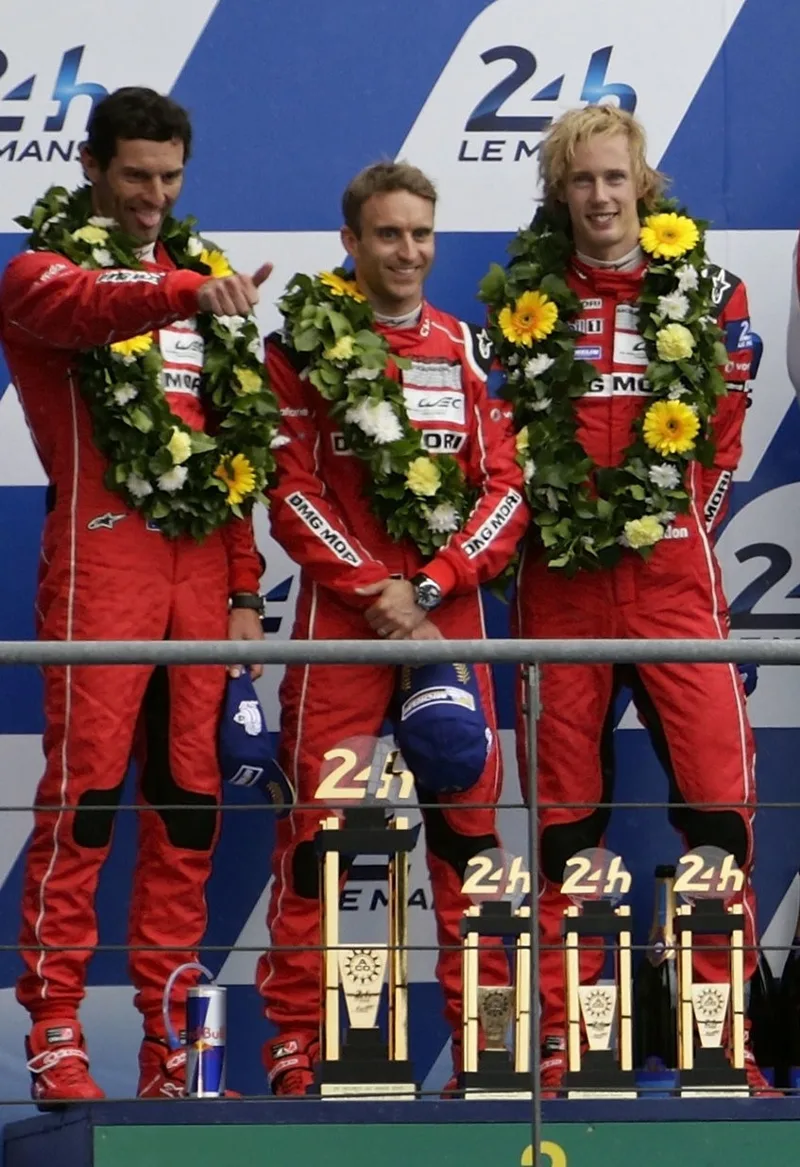
The No. 17 Porsche won the 2015 6 Hours of Nurburgring on 30 August 2015, the first World Endurance Championship victory for Timo Bernhard, Brendon Hartley and Mark Webber. It was the inaugural WEC running at the Nurburgring, and the lead changed hands after the pole-sitting Porsche was penalised for excess fuel use at its first stop.
Who won the 2015 6 Hours of Nurburgring?
The No. 17 Porsche won, with the No. 18 Porsche of Lieb, Dumas and Jani second. The No. 7 Audi of Lotterer, Fassler and Treluyer completed the podium in third place.
Webber drove the car across the line at the end, which gave the crew its first outright victories in the World Endurance Championship. The race was the fourth round of the 2015 championship from eight.
A Porsche penalised for fuel use still won the race, after pit stops and a late Audi challenge decided the top three.
Why was the pole-sitting Porsche penalised?
Lieb, Dumas and Jani took pole and led until penalties for excessive fuel consumption were issued at the first pit stop. Lieb's five-second stop-and-go penalty came after a faulty sensor, and the consequence allowed the sister Porsche to move to the front.
Lieb took his pit stop five minutes later and came out narrowly ahead of Webber. He then forced Webber off the circuit at the second turn, which kept the Porsche crews fighting for position.
Lieb's car had been the quickest in qualifying, so the penalty took away the advantage that the car had built up on the grid. The win therefore went to the crew that had started behind it.
How did the race start?
The race started at 13:00 Central European Summer Time. Jani kept his pole advantage into the first corner with Bernhard second, while Shaytar made a poor getaway and fell to third in LMGTE Am behind two Porsches.
Jani opened a three-second advantage by the start of the third lap, and Makowiecki moved in front of Sorensen for third in LMGTE Pro. Stanaway made slight contact with his teammate Mucke while passing him for sixth, and Mucke then fell behind Long.
Makowiecki was adjudged by the stewards to have jumped the start, and they gave him a drive-through penalty after eight minutes. That promoted his teammate Christensen into third in class.
How did the first hour unfold?
A full course yellow came out after Bruni slowed with an electrical fault and stopped at the Dunlop hairpin. Calado then had a problem with his car, which let Christensen take the LMGTE Pro lead. The first pit stops for driver changes followed after 44 minutes.
Bernhard and Fassler both drove into the pit lane with slow punctures. Webber relieved Bernhard, and Fassler moved to second after the stop, while the No. 18 Porsche had its front nose replaced.
Nick Heidfeld's Rebellion shut down after debris lodged in its master switch and set off the fire extinguisher on the start-finish straight. Heidfeld restarted and returned to the pit lane for a new extinguisher, and Kane ran into the gravel at the last corner and dropped to seventh in LMP2.
Who led the GT classes early on?
Lietz held the LMGTE Pro lead for much of the early running, while Bamber retook the LMGTE Am lead. Rigon benefited from fast work by his pit crew and moved up to second in his class.
Webber began to pull clear of Fassler, and he was soon less than forty seconds behind his teammate Lieb. Lieb was given a five-second stop-and-go for excess fuel use, traced to a faulty sensor.
Lauda then led LMGTE Am, with Agias second and Christian Ried third. Patrick Dempsey lost third to Perrodo in the class, while Dalla Lana and Al Qubaisi ran closely behind each other until the latter fell back.
How did the second half of the race go?
A second full course yellow followed after Al Qubaisi spun into the gravel at the Dunlop hairpin, leaving debris on the racing line. A third came when Kaffer's rear wing detached from his ByKolles and landed on the racing line.
Dumas was twice penalised, with a half-minute stop-and-go and a one-minute infringement that he had to serve on consecutive laps. After serving both, he was two laps behind Hartley.
Capillaire spun after going too fast into the Veedol chicane, which brought out the fourth full course yellow. The leading Porsches and two Audis used the caution to make their stops, and the Strakka car of Nick Leventis was pushed into its garage with rear damage.
How did the second round of pit stops change the order?
The second round of pit stops for all the LMP cars came soon after the first, when Tandy handed over to Howson and Webber gave way to Hartley. Hartley then took over first place, and Rusinov's No. 26 G-Drive car held a nine-second advantage over Howson after a quicker stop.
How did the final hours decide the podium?
Di Grassi's Audi moved up through the closing stint and took third from Jani at the Dunlop hairpin. It then passed Treluyer for second, and Lotterer finished third after di Grassi let him through in the final five minutes.
Dalla Lana went off the circuit on his 129th lap, and Bertolini slipstreamed past him at the first corner for the LMGTE Am lead. The last pit cycle began four minutes later: Webber took over the No. 17 Porsche, and Lieb climbed into the sister car.
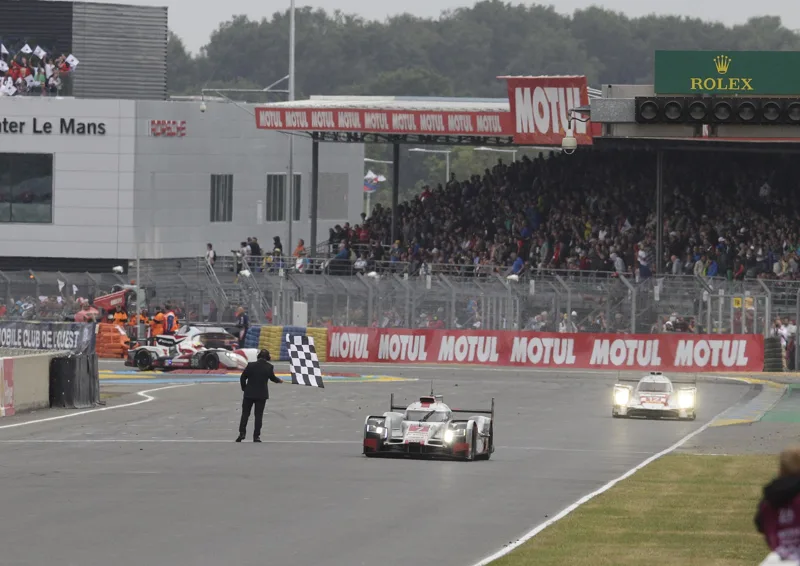
Di Grassi closed to 4.2 seconds of Lieb, who responded by pushing the gap back to five seconds before he hit the No. 36 Signatech Alpine and sustained minor front-right bodywork damage. Webber took the chequered flag a lap ahead of Lieb.
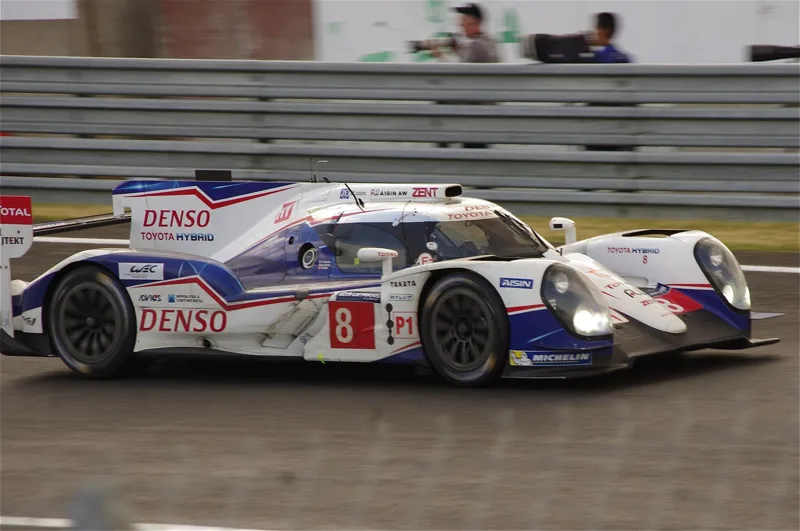
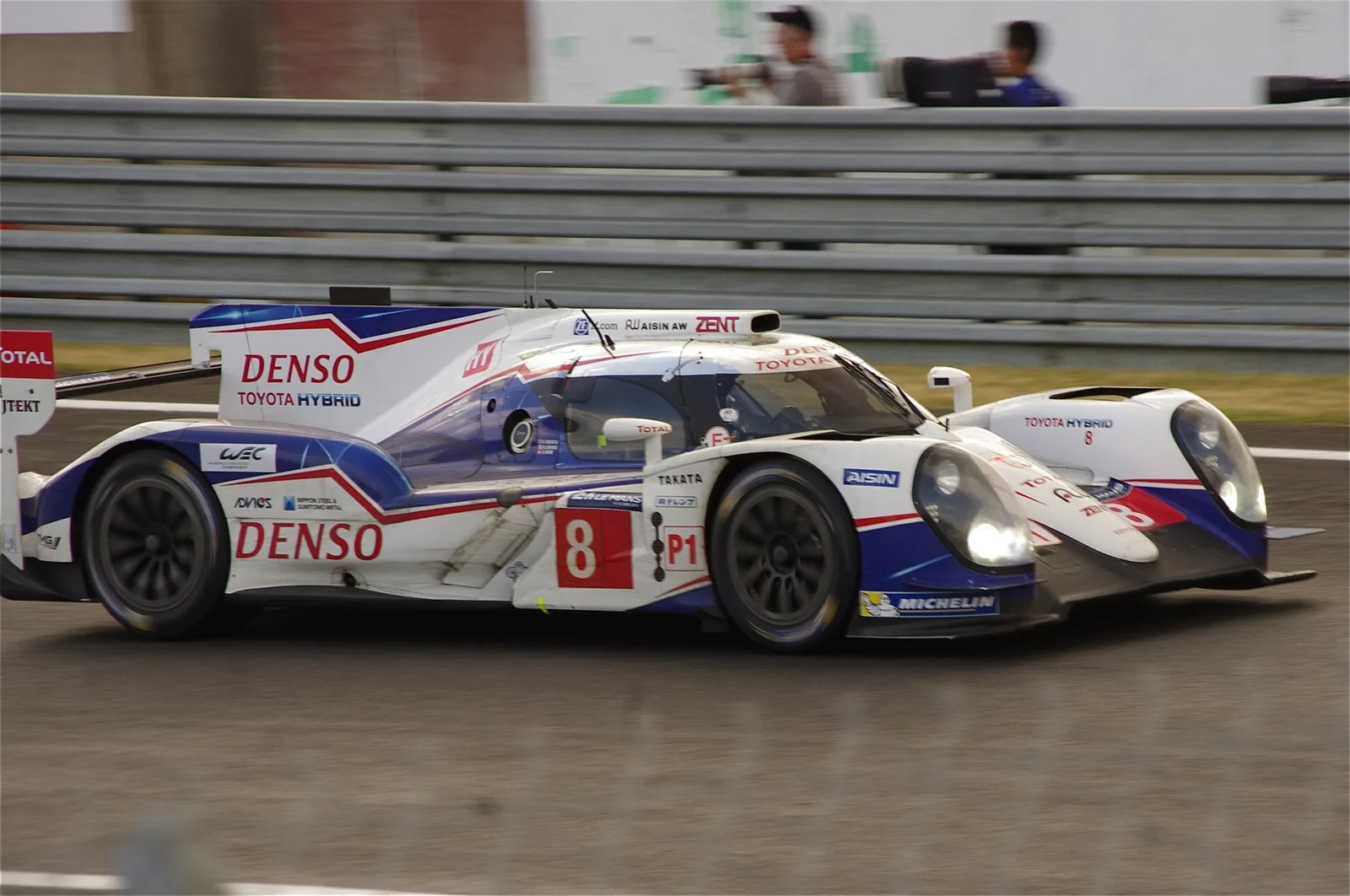
Toyota was off the pace of both manufacturers: its No. 1 car took fifth, three laps down, and the No. 2 car finished sixth, a lap further back.
What happened in LMP2 during the race?
Tandy held a twenty-second advantage at the front of LMP2 during the race, and his KCMG Oreca was quicker than the ByKolles car he passed for seventh overall. The class order was settled in the closing hours by a series of small errors.
Pantciatici initially capitalised on Kane's error at the final corner, but a power fault left his car open to Ryan Dalziel, who moved into a race-high fifth in class.
Gonzalez glanced the Larbre Corvette, which let Canal take over second in LMP2. Watts got ahead of Chatin for fifth before the first corner, in a battle that ended in his favour. Fifteen minutes into the race, Derani had passed Panciatici on the outside for third in LMP2.
Kane passed the Signatech Alpine for fifth in class before a driving error at the final corner dropped him to seventh.
Who moved up in the GTE battle?
Makowiecki began to regain positions in LMGTE Pro, overtaking Mucke for fifth. Emmanuel Collard had lost third to Lamy, and he then fell to fourth when Ruberti moved in front of him.
Lamy gained another place in LMGTE Am by passing Shaytar around the outside at the first corner, after the two cars touched lightly.
Lietz retained the LMGTE Pro lead in the second hour, with Rigon benefiting from fast work by his pit crew to move up to second in class.
Class results
| Class | Winning crew and car | Second place |
|---|---|---|
| Overall (LMP1) | Bernhard, Hartley and Webber, No. 17 Porsche | Lieb, Dumas and Jani, No. 18 Porsche |
| LMP2 | Howson, Bradley and Tandy, No. 47 KCMG Oreca 05 | Bird and Derani, G-Drive Racing |
| LMGTE Pro | Lietz and Christensen, No. 92 Porsche | Pilet and Makowiecki, the sister Porsche |
| LMGTE Am | Shaytar, Bakov and Bertolini, No. 72 SMP Racing Ferrari | Dalla Lana, Lamy and Lauda, No. 98 Aston Martin |
KCMG's win was its second consecutive LMP2 victory of 2015, and Tandy kept his advantage through the final hour. The No. 98 Aston Martin finished second in LMGTE Am.
What did the result do to the championship?
Lotterer, Fassler and Treluyer still led the drivers with 95 points, but their advantage was cut by three. Bernhard, Hartley and Webber moved up to second, 17 points behind.
Lieb, Dumas and Jani moved into third, and Tandy fell to fourth after finishing seventh overall. Bamber and the absent Hulkenberg rounded out the top five. Porsche increased its manufacturers' lead to 184 points, 33 ahead of Audi, and Toyota remained 62 points back with four rounds left.
How did the GT classes finish?
Lietz and Christensen took the LMGTE Pro win in the No. 92 Porsche, and the sister car of Pilet and Makowiecki finished second despite two penalties. In LMGTE Am, Shaytar moved past Dalla Lana in the last half hour to win for the SMP Racing Ferrari.
The AF Corse Ferrari of Rigon and Calado completed the LMGTE Pro podium in third. Agias finished third in LMGTE Am despite spinning in the final ten minutes.
How did the balance of performance change before the race?
The FIA Endurance Committee changed the balance of performance after Le Mans. Aston Martin's air restrictor was reduced by 0.5 millimetres, and the Porsche 911 RSR lost 10 kilograms in LMGTE Pro. The Ferrari 458 Italia GTEs in LMGTE Am gained 15 kilograms.
The Chevrolet Corvette C7.R had its fuel capacity increased by 5 litres, with a larger refuelling restrictor. In LMP1, Porsche and Toyota saw their petrol energy trimmed by 2.2%, and Audi's diesel energy was nudged up by 0.44%.
Who was in the field?
Thirty-one cars were officially entered, with the bulk in LMP1 and LMP2. Porsche, Toyota and Audi Sport Team Joest each ran two LMP1 cars, and Rebellion Racing and Team ByKolles were the privateers.
Strakka switched from a Dome S103 to a Gibson 015S for the rest of the season. OAK Racing pulled its No. 35 Ligier from the entry list, and Zoel Amberg was withdrawn on medical grounds, with Archie Hamilton taking his place in the No. 43 Morgan.
Nick Tandy returned to KCMG after two races with Porsche. Earl Bamber replaced Klaus Bachler in the No. 88 Proton Porsche, and Roald Goethe was declared fit after fracturing two vertebrae at Le Mans.
What was the championship like before the race?
Lotterer, Treluyer and Fassler led the drivers with 80 points, twenty ahead of Tandy in second. Porsche led the manufacturers with 140 points, sixteen ahead of Audi.
Audi had dominated the opening two rounds, and Porsche had won the 24 Hours of Le Mans. The trio of Lieb, Dumas and Jani had secured two consecutive second-place finishes, while Bernhard, Webber and Hartley placed second at Le Mans.
What was the track like for the race?
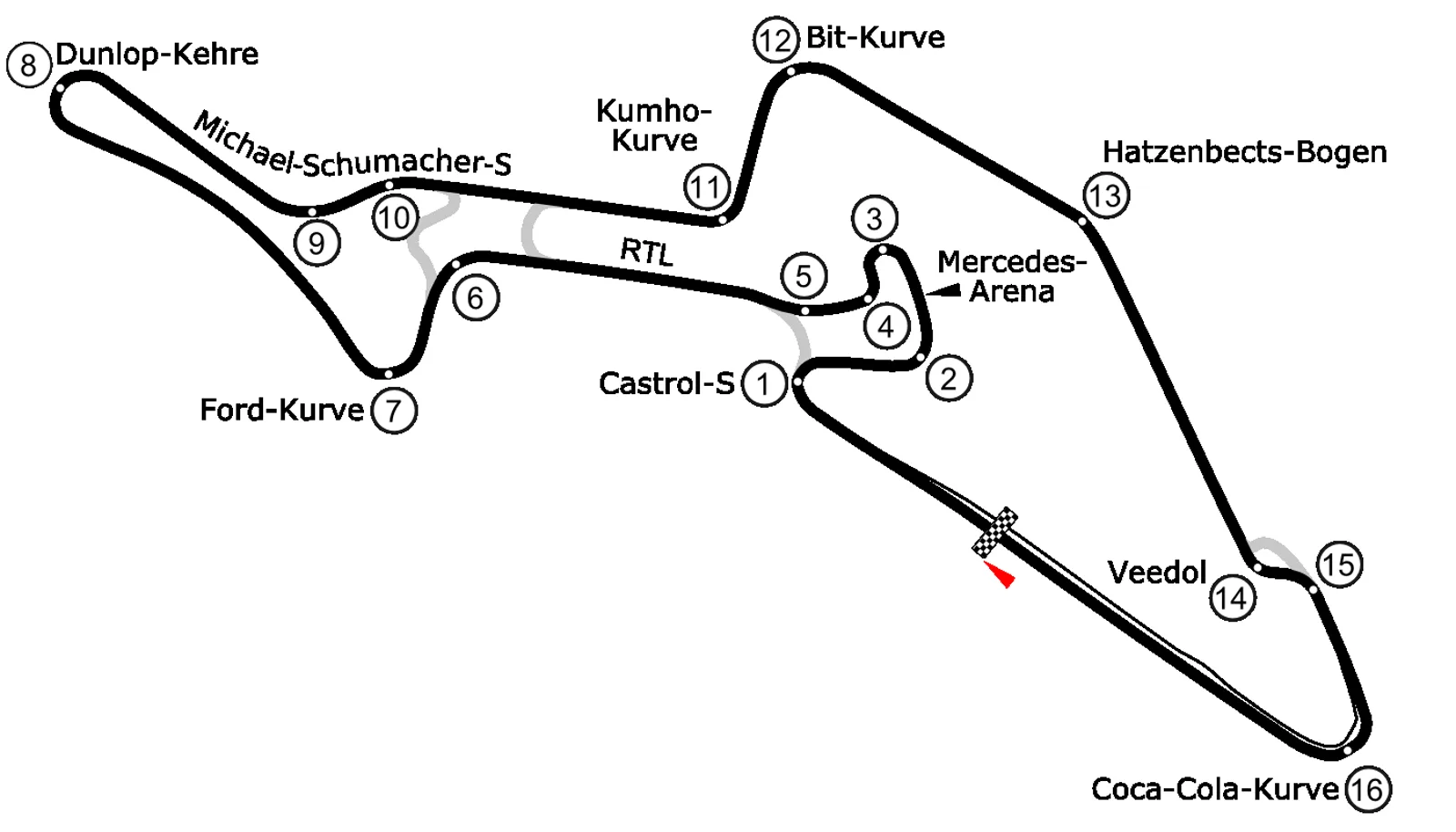
The race was the first world sports car championship round at the circuit since the 1991 430 km race. It ran on a modified version of the 16-turn 5.148-kilometre layout that lacked the Veedol chicane.
Air temperatures were between 28 and 30.2 degrees C, and the track ran between 27 and 39 degrees C. Crowds of 62,000 attended the race weekend.