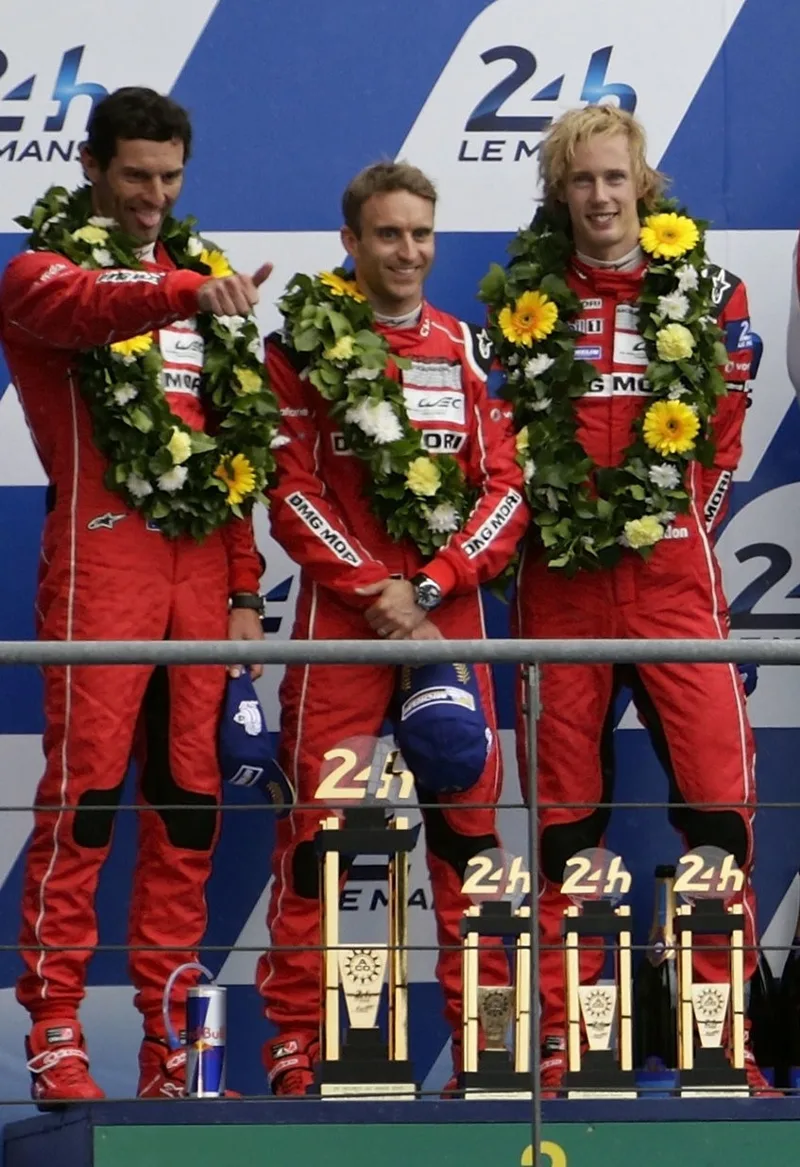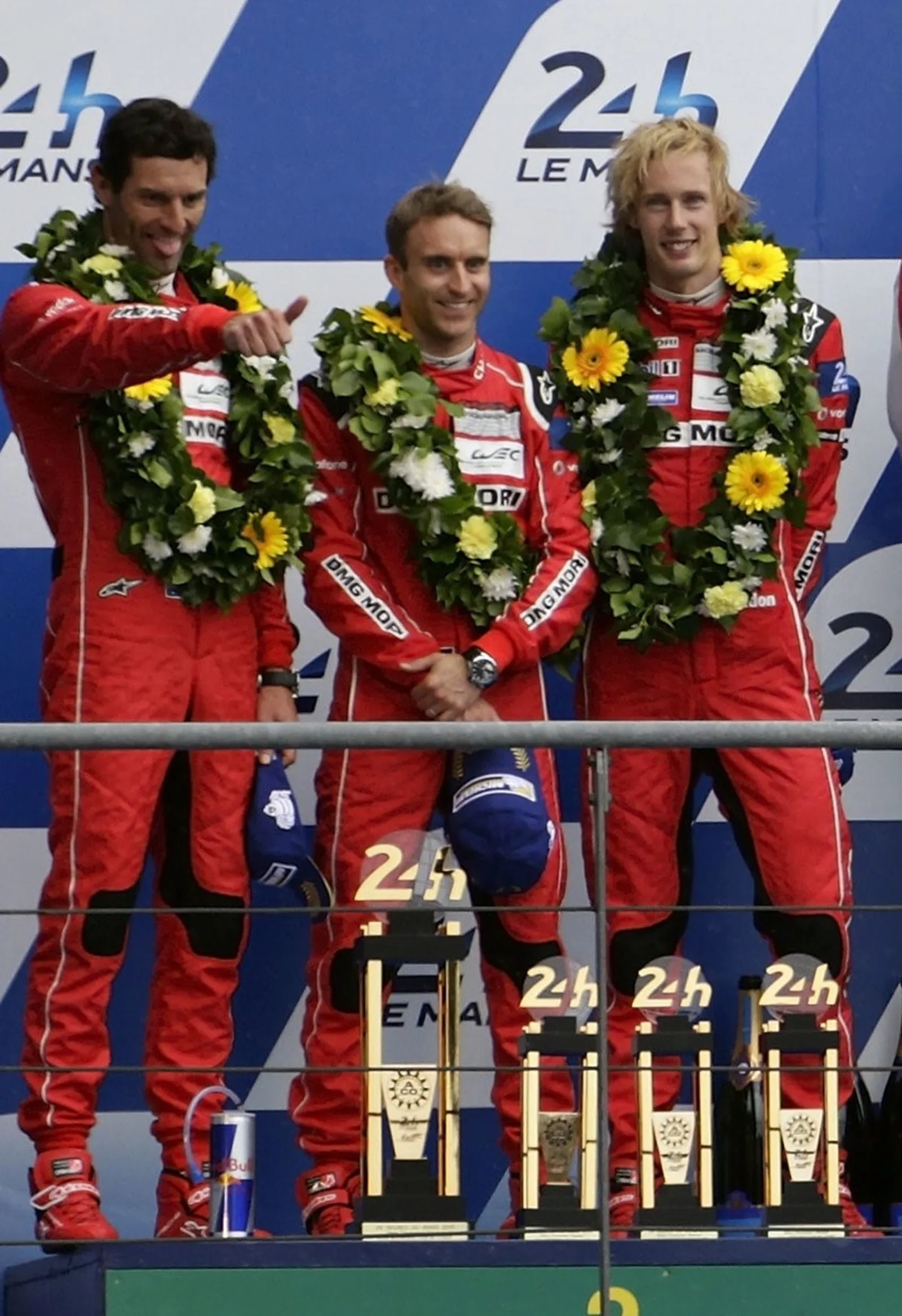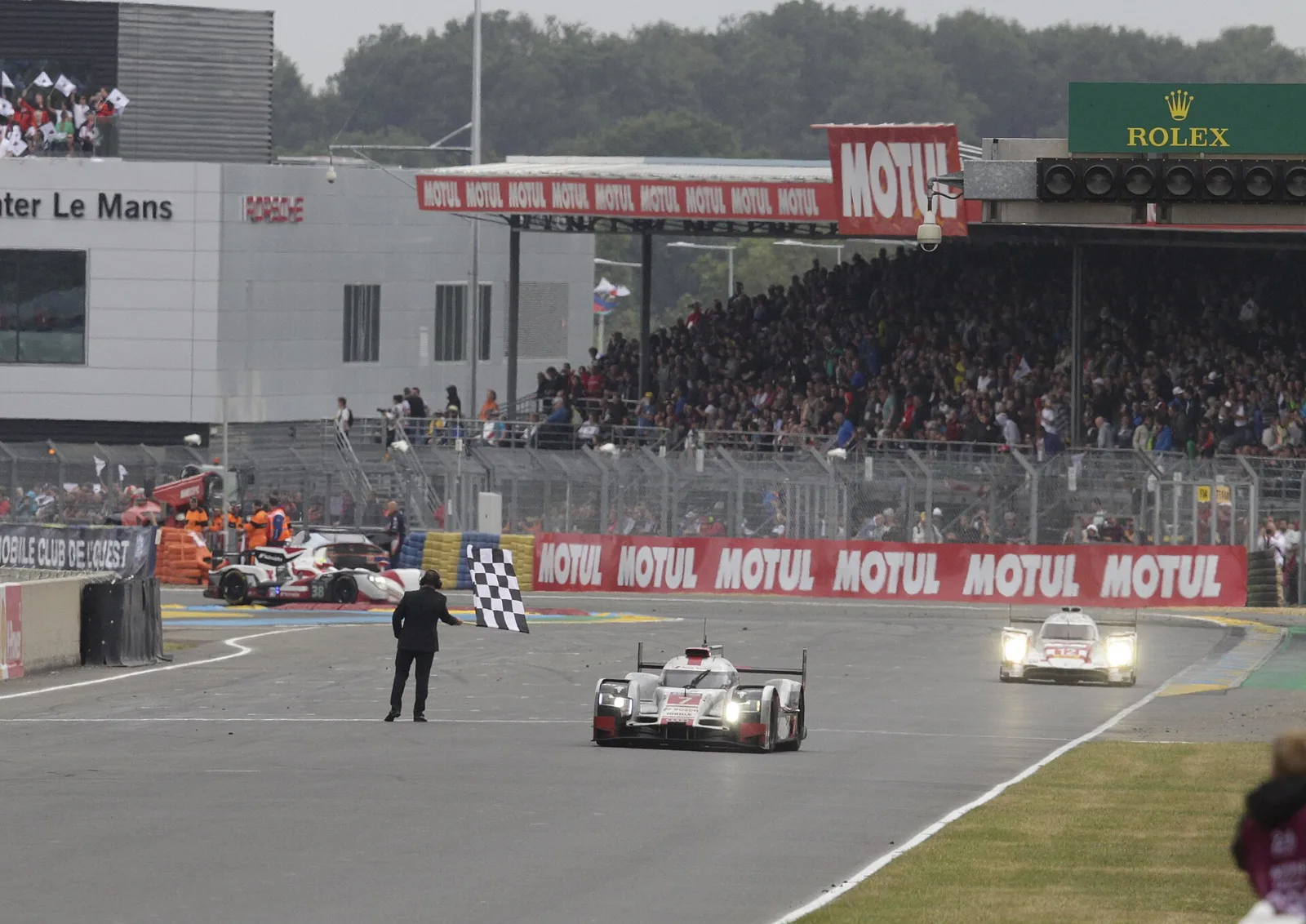
The sister car of the pole-sitter won the 83rd race for Porsche, its first overall win at Le Mans since 1998, and handed the manufacturers' championship lead to Porsche.
The 2015 24 Hours of Le Mans was held from 10 to 14 June at the Circuit de la Sarthe, close to Le Mans in France. Nick Tandy, Earl Bamber and Nico Hulkenberg won for Porsche, which had last won overall at the event in 1998.
The 2015 24 Hours of Le Mans was the 83rd running of the race, and it was won by a Porsche 919 Hybrid driven by Nick Tandy, Earl Bamber and Nico Hulkenberg. It was Porsche's seventeenth overall victory at the event and its first since 1998. Attendance hit a record 263,500, and the pole had gone to the Porsche that Neel Jani, Romain Dumas and Marc Lieb shared, after Jani's lap set a new track best in qualifying.
Where did the championship stand before Le Mans?
Audi Sport Team Joest led the drivers' standings before the race, and Andre Lotterer, Benoit Treluyer and Marcel Fassler had 50 points, 14 ahead of Romain Dumas, Neel Jani and Marc Lieb. Mike Conway, Stephane Sarrazin and Alexander Wurz were a further 14 points back in third.
Going into Le Mans, Audi topped the manufacturers' table on 70 points, with Porsche 17 back in second. Toyota was third on 47 points. Audi had dominated the season so far by winning the first two races, while the Dumas, Jani and Lieb Porsche had twice finished second.
Porsche returned to the top of Le Mans in 2015, and the championship lead moved with it.
What changed on the circuit for 2015?
The Automobile Club de l'Ouest, which runs the race, revised its slow zone system after the zones were introduced in 2014. Slow zones were now allowed 80 km/h (50 mph) rather than 60 km/h (37 mph), and their count grew from 19 to 35. Each zone also gained a new lighting system to help marshals.
From this race on, LMP cars had to carry extra flashing rain lights. The change followed a collision between two prototypes in the rain at the 6 Hours of Spa-Francorchamps, which had been caused by low visibility.
The circuit itself was also altered. It was widened on the road from Mulsanne Corner to the Corvette Curves, and the road from Mulsanne to Indianapolis and from Indianapolis to the Porsche Curves was widened too, although the kerbs stayed where they were. At the Porsche Curves the first corner now has wider run-off, SAFER barriers line the inside wall, and the Corvette corner has a gravel trap.
Who was on the entry list?
Teams that had taken a class win at the previous running earned automatic places, as did champions of sister Le Mans series, including IMSA, the European series and the Asian series. All full-season entries in the World Endurance Championship also received an invitation.
The ACO published its first list of automatic invitations on 15 December 2014. A team that earned one could switch to a newer car for the new season, but it could not change class. In the European series, the LMGTE champion and runner-up could pick either the Pro or the Am category.
The final entry list had 56 cars plus seven reserves. Of the 56 starters, 35 were WEC regulars, 13 came through the European series, three from IMSA and two from the ALMS, and one-off teams filled the remaining places. Reserve places were restricted to LMP2 and LMGTE Am.
Algarve Pro Racing pulled out of its reserve LMP2 place. When a second SARD-Morand entry dropped out of the World Endurance Championship, Riley Motorsports moved up from the reserve list. Five reserves were still waiting at the end of that process.
How did the pre-race test go?
Track time came on 31 May, when the 56 entries and four reserve cars shared the circuit. Both four-hour blocks ran in a mix of conditions, with showers passing over the region repeatedly. Neel Jani set the early fastest time, 3:21.945, in the No. 18 Porsche, but Brendon Hartley went quicker, to 3:21.061, aboard the sister No. 17 car.
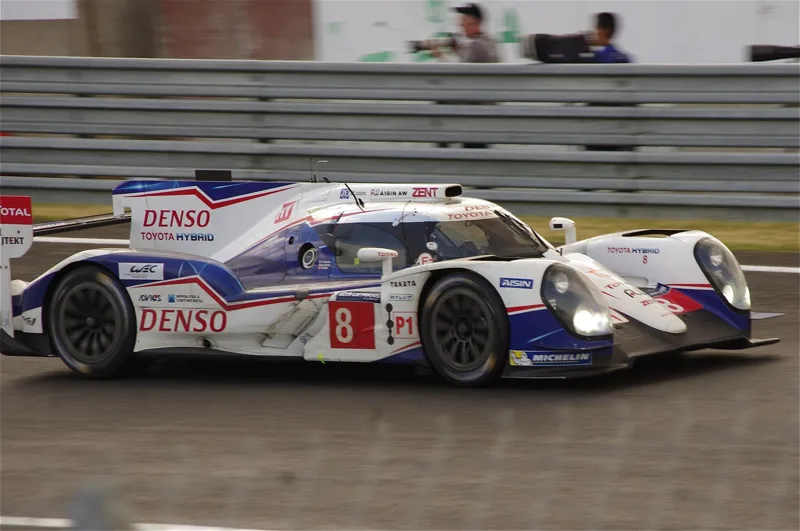
Audi's best was 3:22.307 by Marco Bonanomi in the No. 9 car, and Toyota could only manage 3:25.321. In LMP2, Laurens Vanthoor set the best time in the No. 34 OAK Ligier-Honda, while Darren Turner's Aston Martin topped LMGTE Pro. The Nissan GT-R LM Nismo cars made their first appearance in the World Endurance Championship, but they were not on the pace of the LMP1 field.
The following day, the Audi, Porsche, Toyota and Nissan prototypes ran unofficially on the shorter Bugatti circuit, checking components before the race.
What happened in the Wednesday practice?
Four hours of practice were held on Wednesday afternoon, and again the conditions were variable and wet. The No. 17 Porsche led the session, with Mark Webber setting the fastest lap at 3:21.362. Loic Duval's Audi came within half a second with a 3:21.950 lap.
Richard Bradley alone set a time below 3 minutes 40 seconds in LMP2, posting 3:39.897, a full second clear of the OAK Ligier-Honda in No. 34. KCMG's car came to rest at the first Mulsanne chicane, which brought out a red flag, and then Mark Patterson spun in the Porsche Curves and hit the barrier. Patterson was not hurt.
Aston Martin topped the LMGTE Pro times again, with Richie Stanaway's No. 99 car posting 3:55.895. Behind them came the Corvette in No. 64 and the Aston in No. 97. In LMGTE Am, Mathias Lauda's No. 98 Aston Martin stayed in front, just short of two seconds clear of the pair of Proton Porsches.
How did qualifying set the grid?
Qualifying ran in three sessions to set the starting order, with each team's quickest driver counting. The first timed laps of the Wednesday night session immediately broke the track record in its current configuration. Setting his first flying lap, Bernhard posted 3:17.767 aboard the No. 17 Porsche, nearly a second inside the 2008 record. Jani then went to 3:16.887 in the No. 18 Porsche to take provisional pole.
Behind them the Audi trio came through, Duval leading that group but almost three seconds short of the pole time. Sarrazin was the best of the Toyotas in the No. 2 car, roughly two seconds off the Audi pace. Nissan improved to 3:38.468, which was more than twenty seconds slower than pole. In LMP2, Bradley's 3:38.032 in the KCMG Oreca-Nissan was close to a full second clear of the Greaves Motorsport Gibson-Nissan.
Rookie Gaetan Paletou crashed the Greaves car into the barriers at Mulsanne Corner, and it was towed back to the garage. That was the only stoppage in the session. Aston Martin controlled the LMGTE classes early in qualifying, and Stanaway's effort of 3:54.928 with the No. 99 car was the quickest.
Thursday's sessions brought no rain, despite forecasts. Both sessions were dry and clear, with heat and humidity hanging over the circuit. Nick Tandy set the session's best with 3:18.862, yet his Porsche still sat third on the provisional grid, because the team was allowed another run. TDS Racing was the fastest LMP2 car, with 3:40.441.
Twice the session was stopped for accidents. Duncan Cameron spent roughly 15 minutes wedged in a gravel trap in his AF Corse Ferrari. Next, debris jammed Jan Magnussen's Corvette C7.R throttle open, and he struck the barriers twice at the Porsche Curves. Repairs to the barriers ended that session early, but organisers tacked half an hour onto the last one. The Corvette could not be repaired, and the team withdrew because it had not brought a spare chassis to Le Mans.
As the temperatures cooled in the final qualifying session, more than a third of the field improved, but Jani's pole time was not challenged. Audi No. 7 led with 3:20.967, still more than four seconds off pole. The No. 26 G-Drive Ligier-Nissan took second in LMP2, while Greaves stayed third. The No. 67 AAI Porsche burst into flames during the session, and qualifying stopped for almost half an hour.
Porsche's pole was its sixth consecutive in the World Endurance Championship, a run that began at the 2014 Six Hours of Shanghai. That also marked Porsche's first pole at Le Mans since 1997.
How was the warm-up session?
Saturday morning brought a 45-minute warm-up under dry skies. Filipe Albuquerque, in the No. 9 Audi, posted the quickest time of 3:19.423, with the sister Audis of Jarvis and Fassler behind him in second and third. Mitch Evans set the best LMP2 lap at 3:39.559.
Before the race, Gianluca Roda crashed heavily at the Porsche Curves, damaging the front right of his Larbre Competition Corvette. Stefan Mucke was quickest in LMGTE Pro in the No. 97 Aston Martin, and Klaus Bachler was fastest among the LMGTE Am drivers in the No. 88 Proton Porsche.
How did the race start?
The start came on a dry and sunny afternoon, with air temperatures between 19 and 22 degrees Celsius (66 and 72 degrees Fahrenheit) and the track between 23 and 25 degrees Celsius (73 and 77 degrees Fahrenheit). The crowd was another record, 263,500. Bill Ford, executive chairman of the Ford Motor Company, waved the French tricolour at 15:00 Central European Summer Time to start the race.
Fifty-five cars took the start after the Corvette withdrew. The No. 23 Nissan lost the first laps while its clutch was being fixed. Bernhard had passed Jani on the opening lap, and by the end of lap two all three Audis were ahead of the No. 19 Porsche.
Who won the race?
The sister car of Tandy, Bamber and Hulkenberg won, with Le Mans rookies Bamber and Hulkenberg sharing the win with Tandy. Mark Webber, Brendon Hartley and Timo Bernhard finished second in the other Porsche, a lap behind the winner, and the Audi of Treluyer, Fassler and Lotterer took third, a further lap back.
The race was Porsche's seventeenth overall victory, and its first since 1998. The LMP2 class was won by the KCMG Oreca-Nissan of Richard Bradley, Matthew Howson and Nicolas Lapierre, which led all but nine laps. At the flag the KCMG crew led Jota Sport's Gibson-Nissan by just 48 seconds.
Corvette Racing's first class win since 2011 came even though the team had lost one of its two cars to an accident in qualifying. Gavin, Milner and Taylor finished five laps clear in LMGTE Pro, ahead of the AF Corse Ferrari. The No. 98 Aston Martin ran at the front of LMGTE Am for most of the race before Paul Dalla Lana crashed it at the Ford Chicane in the last hour. The class then went to the SMP Racing Ferrari crewed by Viktor Shaytar, Aleksey Basov and Andrea Bertolini.
| Class | Winning crew | Detail |
|---|---|---|
| Overall (LMP1) | Tandy, Bamber, Hulkenberg (Porsche) | Seventeenth overall Porsche victory, first since 1998 |
| LMP2 | Bradley, Howson, Lapierre (KCMG) | Led all but nine laps; 48-second margin |
| LMGTE Pro | Gavin, Milner, Taylor (Corvette) | First class win for Corvette since 2011 |
| LMGTE Am | Shaytar, Basov, Bertolini (SMP Ferrari) | Won after Aston Martin crashed in the final hour |
What did the result do to the championship?
After the race, the Audi crew of Lotterer, Treluyer and Fassler still led the drivers' table on 80 points, a margin of 20 over Tandy. The Dumas, Jani and Lieb crew had dropped from second to fourth, while Bernhard, Hartley and Webber sat fifth.
Porsche took over at the top of the manufacturers' table on 140 points. Audi trailed by 16 points, and Toyota sat third, 69 points off the lead, with five races still to run.