Lotterer, Fassler and Treluyer covered a record-breaking distance at Spa after a race of penalties, a practice crash and a long duel with Porsche.
The 2015 6 Hours of Spa-Francorchamps was the second round of the 2015 FIA World Endurance Championship, held on 2 May 2015. Audi's No. 7 car of Lotterer, Fassler and Treluyer won after 176 laps, ahead of the Porsche of Lieb, Dumas and Jani.
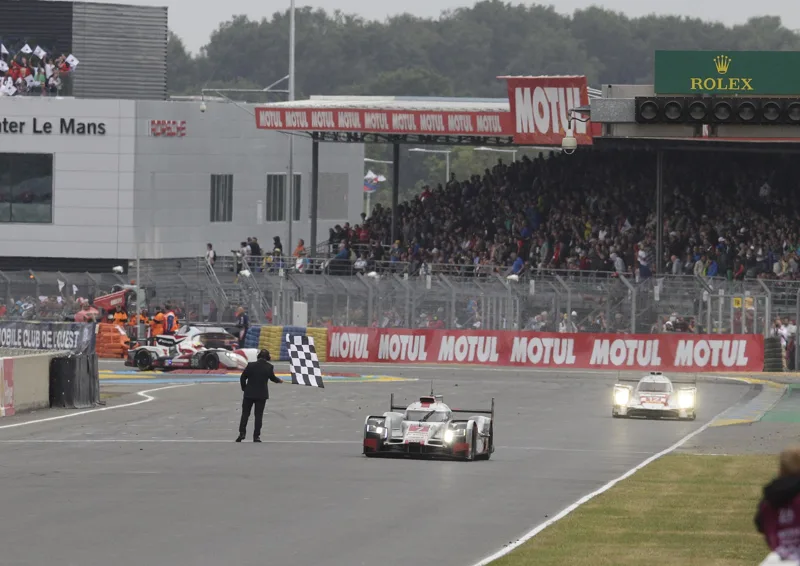
Audi's No. 7 car won the 2015 6 Hours of Spa-Francorchamps on 2 May 2015, covering 176 laps over a record-breaking distance. The win came after a race of penalties and a long battle with Marc Lieb, and it gave the Audi crew a firm grip on the drivers' championship.
Why does Spa matter in the endurance calendar?
Endurance racing began at the Circuit de Spa-Francorchamps in 1924, with the Spa 24 Hours. The six-hour race joined the World Endurance Championship in 2012, and many see it as a final preparation event for the 24 Hours of Le Mans.
Thirty-nine years after 1924, the track began holding 500 km (310 mi) World Sportscar Championship races, which later grew to 1,000 km (620 mi). Those races were cancelled after the 1975 running because of modern safety concerns, and they returned in 1982 on a reconfigured layout that stayed until 1990.
Endurance sports car racing came back to Spa in 1999. The 2015 race was the fourth running of the event as part of the championship, and the second of eight scheduled endurance races that season.
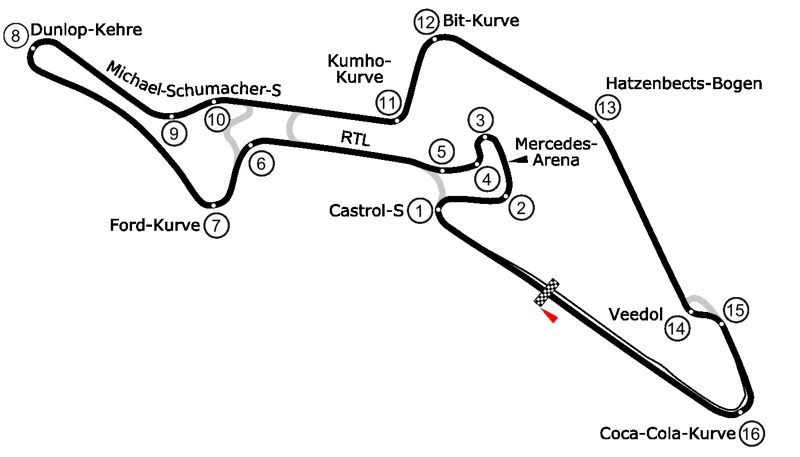
The 20-turn circuit is 7.004 km (4.352 mi) long. The race was confirmed for the 2015 schedule at a Doha meeting on 3 December 2014.
Audi's No. 7 car covered a record-breaking distance at Spa, but penalties and a practice crash shaped the whole weekend.
Who was in the field?
Thirty-four cars were officially entered, mostly in LMP1 and LMP2. Audi Sport Team Joest and Porsche each ran three LMP1 cars, while Toyota brought two, and Team ByKolles was the only privateer in the category.
Rene Rast, Marco Bonanomi and Filipe Albuquerque made their first appearances in the 2015 championship in Audi's No. 9. Hulkenberg, Earl Bamber and Nick Tandy entered LMP1 for the first time in their careers in Porsche's No. 19.
Rebellion Racing did not take part, and Christian Klien returned to compete for ByKolles after originally intending to race only at Silverstone. Nicolas Lapierre filled in for KCMG while Tandy drove for Porsche.
Mitch Evans made his first sports car appearance alongside Simon Dolan and Harry Tincknell at Jota Sport. In LMGTE Pro, Nicki Thiim was absent for the ADAC GT Masters, so the No. 95 Aston Martin ran with two drivers, Marco Sorensen and Christoffer Nygaard.
Who won the 2015 6 Hours of Spa-Francorchamps?
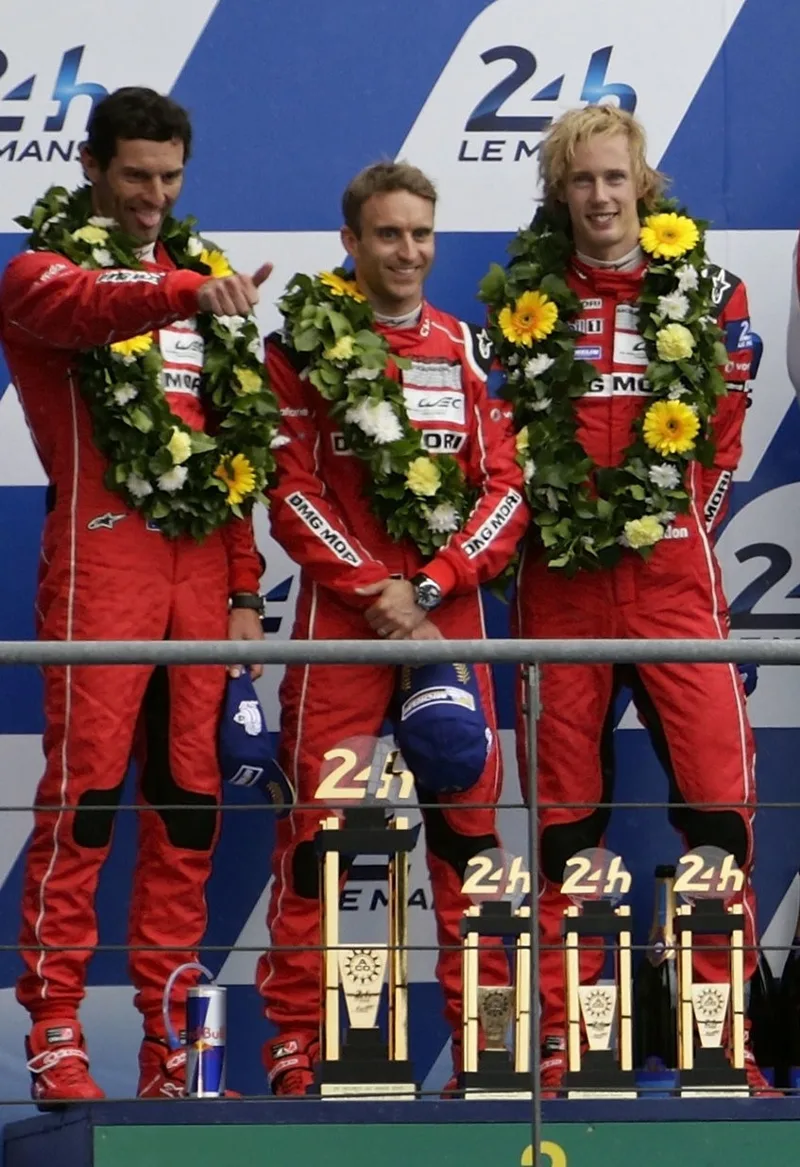
The No. 7 Audi of Andre Lotterer, Marcel Fassler and Benoit Treluyer won, completing 176 laps. Lieb, Dumas and Jani finished second, 13.424 seconds behind, and Bernhard, Hartley and Webber took third, one lap down. The race was held on 2 May 2015, with 54,000 people attending the weekend.
The win was Audi's second consecutive overall victory of the season, following the earlier round at Silverstone. Lotterer, Fassler and Treluyer had already led the drivers' table before the race, and the result added to their advantage over the Porsche crew.
How did the lead change hands?
Bernhard's Porsche started from pole and held the lead until the penalty on lap 17 promoted Jani. Treluyer then took over the lead at Pif Paf, and Lieb repassed him on the Kemmel straight, so the top two traded places several times in the closing hours.
Treluyer had been under eight seconds ahead of Lieb as the final hour began. Lotterer had handed the car to Treluyer during a pit stop, and Lieb had made his own stop for new tyres before Jani climbed aboard the No. 18 car.
Jani closed to two seconds of Treluyer at lap 154 and passed him with hybrid boost on the Kemmel straight. The duel then ran on to the closing laps of the race.
How did the race unfold in its first hours?
Hartley held pole into the first turn, and Lieb passed Tandy for second at the first lap's conclusion. Fassler then moved to third at the Bus Stop chicane, but Tandy reclaimed the position shortly afterwards.
Jota Sport was given a drive-through after its car, driven by Tincknell, jumped the start, and Bird moved to the front of LMP2 once the Jota car was penalised. Most of the field made its first scheduled pit stops before the first hour had passed.
Hartley locked his front brakes at the Bus Stop chicane and went straight on, rejoining the track through a marshal's post. Fassler crossed the white line at the pit lane entry, and the stewards reprimanded Audi.
What did the penalties do to the order?
Hartley received a 15-second stop-and-go penalty for track limits and for endangering marshals, and Bernhard took it on lap 17. Estre took a drive-through after colliding with Tandy, and Jota Sport was penalised for jumping the start. Those penalties reshaped the leaderboard in the first hours.
Patrick Dempsey's No. 77 car spun at the Bus Stop chicane, and several drivers had to take evasive action. Trummer's car had back-end technical problems and he retired, and Dempsey's co-driver Seefried later struck the left-hand tyre barrier heavily before Pouhon.
How did the leaders trade places late in the race?
Lotterer had been lapping in the 1:58 range, which allowed him to run 12 seconds behind Dumas. Dumas then extended his advantage to 19 seconds, and later to 24 seconds, with di Grassi third.
Lieb ran wide while lapping a slower car at the Stavelot corner exit, and Lotterer retook the lead after the No. 18 Porsche's driver change took longer than expected. Lotterer drove defensively into Les Combes to keep the position.
Treluyer took over from Lotterer during a pit stop, and Lieb regained the lead.
How did qualifying set the grid?
Bernhard took pole at 1:54.767 in the No. 17 Porsche, 0.027 seconds faster than Hartley. The sister No. 19 Porsche of Tandy was 0.257 seconds behind its teammates on the front row, and Lotterer improved to 1:55.114 while Fassler could not better his co-driver's time.
The LMP2 pole went to Bird and Canal at 2:07.761. In LMGTE Pro, Stanaway and Rees took pole in the No. 99 Aston Martin at 2:16.840, and in LMGTE Am, Dalla Lana and Lamy took pole in the No. 98 Aston Martin.
KCMG's No. 47 had its lap times deleted when scrutineers found the front skid block lacked rigidity. That car had to start from the pit lane with a 30-second penalty.
What happened in practice?
The opening practice session was held in heavy rain, and Lieb's car set the first fastest time at 2:16.616. Kazuki Nakajima hit the back of Jarvis's car at 12G at Les Combes, and he was found to have a fractured vertebra, which ruled him out of the race.
Toyota's test and reserve driver Kamui Kobayashi was in Japan, so the No. 1 Toyota ran as a two-driver entry for the rest of the weekend. The second session was also affected by heavy rain, and Bamber set the fastest time at 2:25.495.
The final practice session was dry, which allowed faster laps. Lotterer set the quickest time of the weekend so far at 1:57.368.
Why did the rain lights become a rule?
After Nakajima's crash, calls grew for brighter flashing rain lights on the cars. The FIA and the ACO then required every LMP car to carry additional flashing rain lights at the rear from Le Mans onward, after the Endurance Committee observed them improving visibility in wet weather.
What did the drivers say after the race?
Treluyer called it a tough lights-to-flag job and said it was huge fun. Lotterer said the race was no holds barred and very fun, especially at Spa. Dumas said he found dry-weather driving difficult, while Webber said the team had too many own goals.
Lieb said his battle with Treluyer was great and that the contact between the two was part of motor racing. Jani said he did not win but praised his car, and Bernhard said the team gave its best effort to stand on the podium despite the stop-and-go penalty.
How did the teams react to the crash?
Anthony Davidson called what happened to his co-driver every driver's worst nightmare and asked for brighter rain lights. Pascal Vasselon, Toyota's technical director, thought that a slow reaction by Nakajima and the lack of flashing rain lights had both played a part.
Christopher Reinke, Audi Sport's Le Mans Prototype manager, said the measure had been discussed but was complex. The ACO's sporting manager Vincent Beaumesnil was unsure that brighter lights would have helped Nakajima.
Class results
| Class | Winning crew and car | Second place |
|---|---|---|
| Overall (LMP1) | Lotterer, Fassler and Treluyer, No. 7 Audi | Lieb, Dumas and Jani, No. 18 Porsche |
| LMP2 | Dolan, Tincknell and Evans, No. 38 Jota Sport | G-Drive Racing, No. 26 |
| LMGTE Pro | Rees, Stanaway and MacDowall, No. 99 Aston Martin | Porsche Team Manthey |
| LMGTE Am | Dalla Lana, Lauda and Lamy, Aston Martin | No. 83 AF Corse Ferrari |
The Jota Sport car had its start penalty and still won LMP2, after Evans passed Canal and held the class lead for most of the race. It was Evans's first LMP2 win in the championship, and the second for Tincknell and Dolan. Porsche Team Manthey finished second and third in LMGTE Pro after Bruni's pit stop infringement dropped his car down the order.
What did the result mean for the championship?
Lotterer, Fassler and Treluyer extended their drivers' lead to 14 points over Lieb, Jani and Dumas. Audi led the manufacturers with 70 points, 17 ahead of Porsche, while Toyota trailed by a further six points with six races left in the season.
Wurz, Conway and Sarrazin moved up to third in the drivers' table with 22 points. Bernhard, Webber and Hartley reached fifth with 17 points, and the next round was the 24 Hours of Le Mans.
How did the Aston Martins take the LMGTE Pro lead late on?
Bruni passed MacDowall using the kerbs at the Bus Stop chicane to claim the LMGTE Pro lead late in the race. Rees then took over the class lead and kept it to the flag, after Bruni was given a one-minute stop-and-go penalty.
The penalty came because a mechanic lost his grip on the right-rear wheel nut and dropped his wheel gun over the white line marking the pit lane's working zone. Turner held third for a time, but when he made a pit stop, Lietz and Muller moved into second and third in the class.
In LMP2, smoke bellowed from the left exhaust of Bird's car, and he drove to the garage for diagnosis.
How did the GT classes finish?
In LMGTE Pro, Rees, Stanaway and MacDowall took the class win in the No. 99 Aston Martin, their first WEC class victory as a crew. The result came after Bruni's pit stop infringement, and Porsche Team Manthey took the next two places.
In LMGTE Am, Dalla Lana, Lauda and Lamy won, their second consecutive win in the class, while the No. 83 AF Corse Ferrari of Perrodo, Collard and Aguas finished second. Shaitar's SMP Racing entry was third in the class.