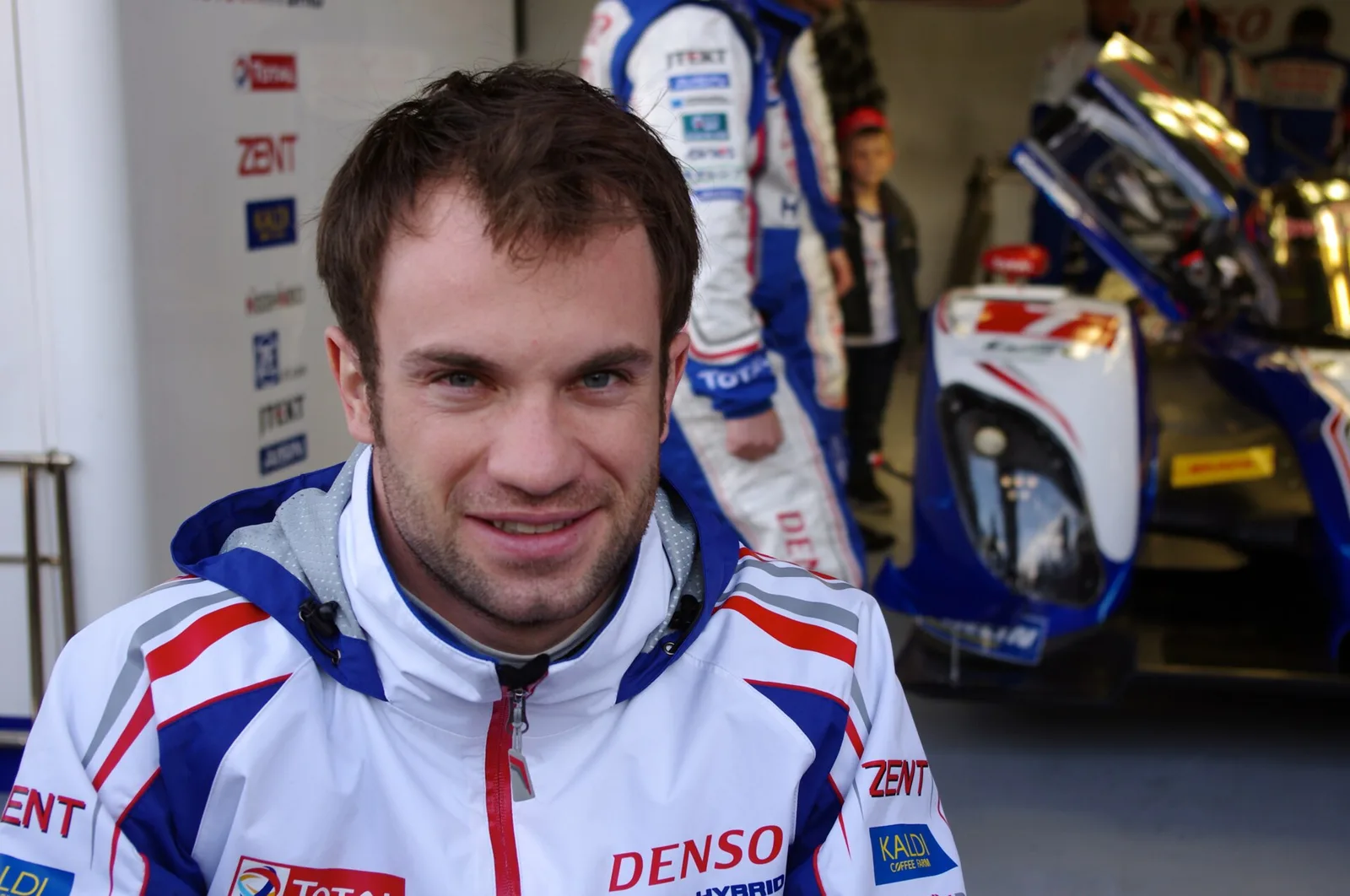
A French driver who won the Macau Grand Prix, became a Toyota and Alpine factory driver and later ran a team as principal.
Nicolas Lapierre is a French former driver who won four LMP2 class races at Le Mans and the 2003 Macau Grand Prix. He drove for Toyota and Alpine in the World Endurance Championship, then led Cool Racing as team principal before retiring in 2024.
Nicolas Lapierre is a former French professional racing driver and team principal. He is best known for four LMP2 class victories at Le Mans, two wins at the 12 Hours of Sebring and the 2003 Macau Grand Prix. He spent his most successful years as a factory driver for Toyota and then Alpine, before retiring in 2024.
His career covered single-seaters, GP2 and A1 Grand Prix, then a long period in endurance sportscars. He moved from Toyota's hybrid programme to LMP2 and then to Alpine's Hypercar team, and he ended up running a team of his own.
Who is Nicolas Lapierre?
Nicolas Camile Bernard Lapierre was born on 2 April 1984 in Thonon-les-Bains, France. He started in karting in 1993, and he had finished third in the French championship by 1996 and sixth in the European championships a year later. He reached the finals of the European Junior Championship in 1998 before moving into French Formula Renault in 1999.
Lapierre is known for turning a quiet start into a long run at the top of endurance racing. His single-seater years were a learning period, and his real success came when he moved to sportscars and stayed with factory teams.
Macau in 2003, four LMP2 class wins at Le Mans and an Alpine career that ended with a podium at Fuji.
How did Lapierre progress through single-seaters?
He stayed in French Formula Renault in 2000 and 2001, with two races in the Formula Renault 2000 Eurocup in 2001. In 2002 he returned to French Renault, drove a full season of the 2000 Eurocup and contested some French Formula Three races.
In 2003 he moved to the Formula Three Euroseries with the Signature team. The season brought one podium and one pole, and he finished 11th overall. He still made his name that year, winning the Macau Grand Prix. In 2004 he returned to Signature, won at Pau, took two wins at the Hockenheimring and finished third in the standings.
What was Lapierre's time in GP2 and A1 Grand Prix like?
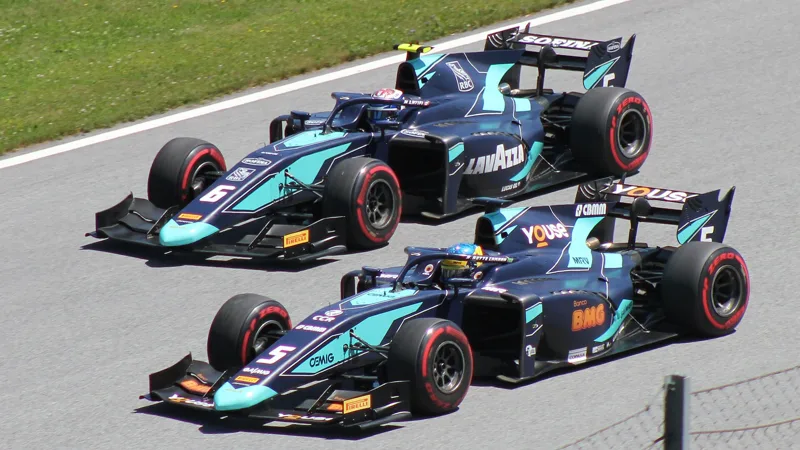
Lapierre progressed to the restructured GP2 Series in 2005, partnering Heikki Kovalainen at Arden International. He scored the first pole position in the championship's history, but he was unable to start the race. He finished 12th in the standings with one podium, while Kovalainen finished second.
At the end of 2005 and into 2006 he drove for A1 Team France in A1 Grand Prix. He took wins in both the sprint and feature races in Germany and Australia, plus a feature in Dubai and a sprint in Indonesia, and his results helped the team take the championship.
He stayed with Arden in GP2 in 2006. Three podiums in the opening three rounds promised a strong year, but a crash caused by a competitor at Monaco left him with two compressed vertebrae, and he missed two rounds. He finished ninth overall. In 2007 he moved to DAMS in GP2, won his first series race in the Bahrain sprint, and ended a difficult year 12th in the standings.
How did Lapierre's sportscar career begin?
Lapierre competed in the GT1 category at the 2007 Le Mans 24 Hours for Team Oreca. He made a full-time switch to sportscars in 2008, joining Oreca-Matmut in the LMP1 class of the Le Mans Series, where he shared the car with former Formula One driver Olivier Panis. The duo retired from three races but claimed a podium at the 1000 km of Spa.
The following year he and Panis scored two poles and won the season-ending race at Silverstone. Lapierre also finished fifth at Le Mans that year alongside Panis and Soheil Ayari. In 2010 he finished second in the Le Mans Series drivers' championship, driving a Peugeot 908 HDi FAP. He won from pole at the Algarve, and at Le Mans he and his teammates were fighting for the podium until an oil fire ended the team's race on the Sunday morning.
In 2011 he focused on the new Intercontinental Le Mans Cup. He beat the Peugeot works entry to win the opening race at Sebring, a result that helped the team to fourth in the standings.
What did Lapierre achieve as a Toyota factory driver?
In 2012 Lapierre became a factory driver for Toyota in the new FIA World Endurance Championship. He and Alexander Wurz drove the Toyota TS030 Hybrid No. 7 from the Le Mans 24 Hours onwards. He briefly led at Le Mans before an engine failure ended the car's race, but the team finished third in the standings, and Lapierre and Wurz won at Sao Paulo, Fuji and Shanghai.
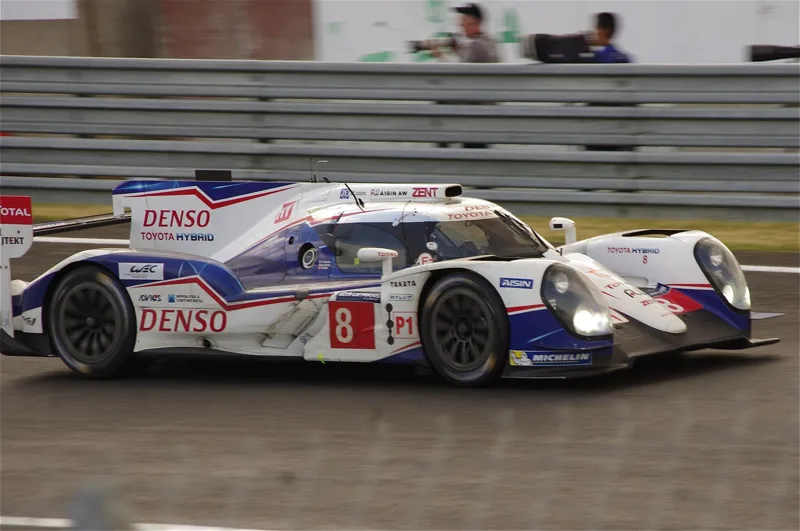
The 2013 season was harder early on, with a retirement at Spa and missed races. A win in Japan, where wet weather stopped the race after 16 laps behind the safety car, and second from pole in China brought the team back to fourth in the standings. In 2014 Lapierre's final Toyota season took him to victories at Silverstone and Spa for the No. 8 car, and his best Le Mans result, third overall.
Why did Lapierre leave Toyota?
Toyota dropped Lapierre after the 2014 season, citing personal reasons. Those reasons were said to involve a family member's serious illness, but there were also rumours that the manufacturer was reacting to two accidents he had suffered in wet conditions at Le Mans and Austin. He had been confirmed for the 2015 season, but he lost his race seat in January 2015.
He then stepped down into LMP2 with KCMG, taking part in three WEC races alongside Richard Bradley and Matthew Howson. He finished each race on the class podium, and his LMP2 win at Le Mans that year came for KCMG after a controlling drive. He also won the final round of the European Le Mans Series with Thiriet by TDS Racing, and he drove the last four events of the World Touring Car Championship for the Lada works team.
How did Lapierre become a multiple LMP2 winner?
Lapierre made LMP2 his home from 2016, driving for Signatech Alpine in the WEC with Gustavo Menezes and Stephane Richelmi. The squad collected seven podiums, among them a class victory at Le Mans, and it took the title with three further wins. In the European Le Mans Series he raced for DragonSpeed, where two retirements prevented a title fight, but he finished fourth overall after winning from pole at Spa.
In 2017 he returned to Alpine and scored five successive podiums and a win in Austin, which carried the team to third in the standings. He also drove the third Toyota entry at Spa and Le Mans that year.
For the 2018-19 WEC Super Season he returned to Alpine full-time with Andre Negrao and Pierre Thiriet. The trio finished on the podium in all eight races and won the LMP2 title. Both of their wins came at Le Mans, the first in 2018 after a disqualification of G-Drive Racing, and the second in 2019. Those two class wins brought his Le Mans class victories to four.
What did Lapierre do as a team principal?
Lapierre moved to Cool Racing in 2019 after a final season with DragonSpeed, and he raced for the team in the European series. The team won its maiden WEC race at the opening round at Silverstone in the 2019-20 season. At the end of 2020, when the team finished sixth of eight in the series, Lapierre became its team principal, and the outfit was renamed Cool Racing/CLX Motorsport, with the L in CLX standing for Lapierre.
He drove for Alpine's Hypercar programme in 2021 in the grandfathered Alpine A480 alongside Matthieu Vaxiviere and Andre Negrao. The trio finished all six races on the podium and placed third in the championship. The team won the shortened Sebring race in 2022 and then the Monza round, but it lost the championship lead to the No. 8 Toyota.
How did Lapierre's final seasons play out?
From 2023 Lapierre focused on the LMP2 Pro-Am class of the European Le Mans Series with Cool Racing, alongside Alexandre Coigny and Malthe Jakobsen. They won Pro-Am races at Spa and Algarve, but the team narrowly lost the title to the AF Corse crew in the final round. That trio also finished second in the Pro-Am class at Le Mans.
In 2024 he returned to Alpine's WEC lineup, driving the No. 36 A424 with Matthieu Vaxiviere and Mick Schumacher. He announced his retirement on 2 October 2024, before the season finale in Bahrain. His final race was the 6 Hours of Fuji, which ended with third place on the podium. He said he would focus on his team principal role at Cool Racing, and two days later he was named sporting director for Alpine's endurance team for 2025.
How does Lapierre's record look overall?
| Season | Series | Team | Highlight |
|---|---|---|---|
| 2003 | Macau Grand Prix | Signature | Winner |
| 2004 | Formula Three Euroseries | Signature | Third overall; wins at Pau and Hockenheimring |
| 2006 | A1 Grand Prix | A1 Team France | Team championship; wins in Germany, Australia, Dubai and Indonesia |
| 2010 | Le Mans Series | Oreca-Matmut | Second in the drivers' championship |
| 2013 | FIA WEC | Toyota | Victory in Japan; fourth overall for the team |
| 2015 | FIA WEC | KCMG | LMP2 win at Le Mans |
| 2016 | FIA WEC | Signatech Alpine | LMP2 championship |
| 2018 | FIA WEC | Alpine | LMP2 title and Le Mans class win |
| 2021 | FIA WEC | Alpine | Third in the championship |
| 2024 | FIA WEC | Alpine | Third at the 6 Hours of Fuji |