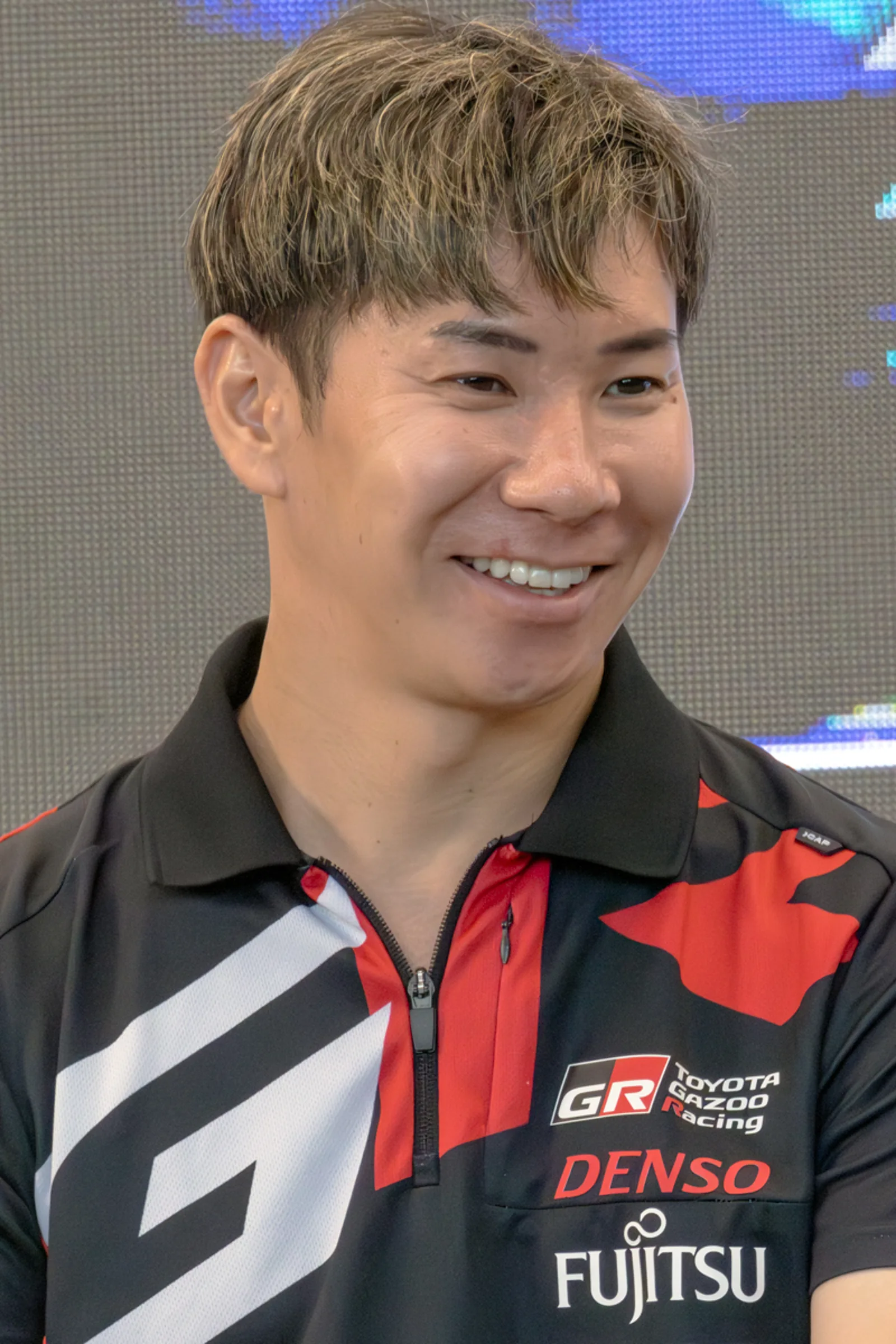
A Japanese driver's climb from Amagasaki karting to a Sauber podium, two WEC crowns with Toyota and a role running the manufacturer's programme.
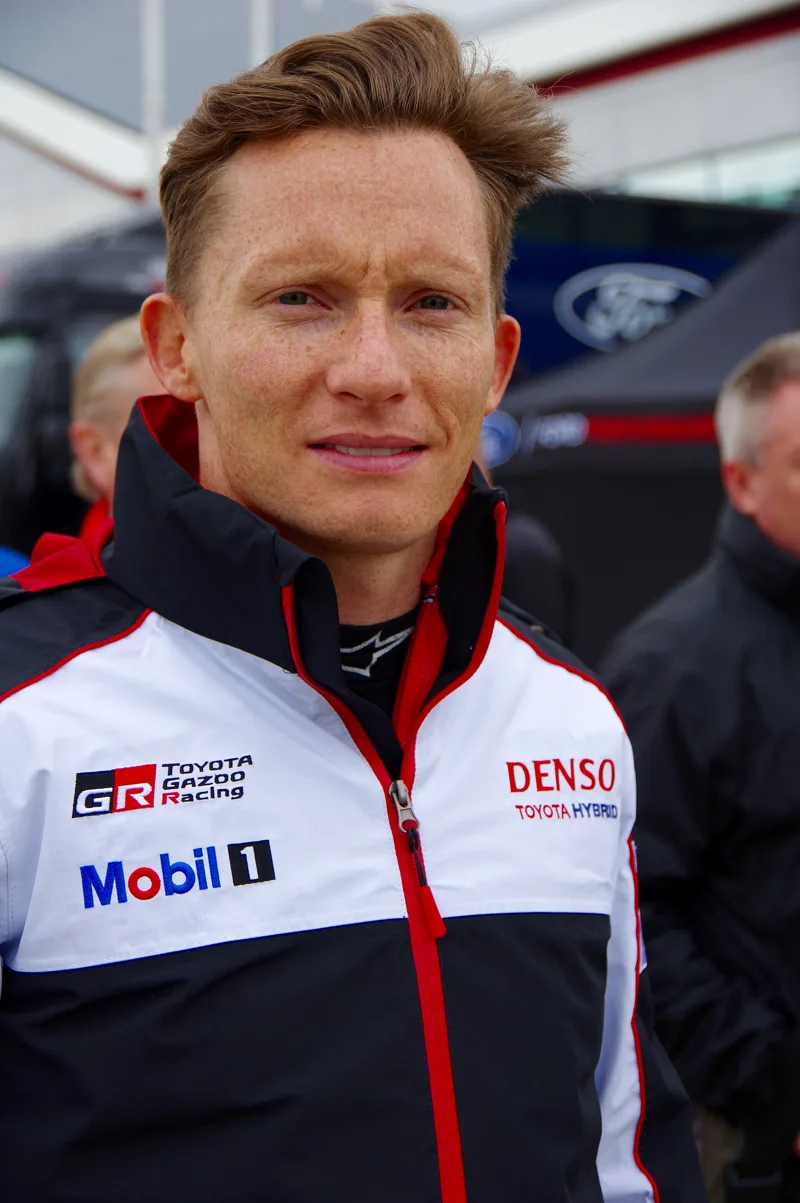
Kamui Kobayashi is a Japanese racing driver who competed in Formula One from 2009 to 2014. In endurance racing he won two FIA World Endurance Championship titles and the 24 Hours of Le Mans in 2021 and 2026, all with Toyota.
Kamui Kobayashi is one of the few Asian-born drivers to finish on a Formula One podium, and his later career moved into sports car racing and team management. He finished third at the 2012 Japanese Grand Prix for Sauber, then became a Le Mans winner for Toyota. Since 2022 he has also run Toyota's World Endurance Championship programme.
Across his career he has raced in karting, Formula Renault, Formula 3, GP2, Formula One, Super Formula, Super GT and NASCAR. The thread through all of it is a driver who kept reinventing his role within the sport.
Where did Kamui Kobayashi start in motorsport?
Kobayashi began karting in 1996, aged nine, in Amagasaki in Hyogo Prefecture, near Kobe. He took four karting titles over the next seven years and joined Toyota's Driver Academy in 2004. He then won both the Italian and European Formula Renault championships before moving up to Formula 3.
Kobayashi went from a Formula One podium for Sauber to Le Mans victories and a team principal role at Toyota.
How did his single-seater and GP2 years unfold?
In 2006 he joined ASM Formule 3 in the Euro Series alongside Paul di Resta and Sebastian Vettel. He took three podiums, finished eighth overall and won the Rookie's Championship. That year he also contested the Masters of Formula 3 and the Macau Grand Prix, where he started from pole but finished 19th.
In 2007 he took his first Formula 3 win at Magny-Cours, a support race for the French Grand Prix, and finished fourth in the Euro Series. That same year Toyota named him one of its Formula One test drivers, alongside Kohei Hirate.
In GP2 he won his first race in only the second round of 2008, a sprint at Catalunya. A tangle with Romain Grosjean led to a penalty for the Frenchman and handed the win to Kobayashi. He finished sixteenth in the championship that year and again in 2009, but he won the GP2 Asia Series with two race wins and a round to spare.
How did his first Formula One years unfold?
Kobayashi was named Toyota's third driver on 16 November 2007, and he made his debut at the 2009 Brazilian Grand Prix after Timo Glock was injured. He qualified eleventh and finished tenth, later promoted to ninth. In Abu Dhabi the same year he qualified twelfth and finished sixth, scoring his first world championship points.
Toyota withdrew from Formula One before 2010, so Kobayashi joined Sauber, partnered first by Pedro de la Rosa. He scored his first points at the Turkish Grand Prix, finished the season with 32 points, and outqualified his teammates eleven times to their eight. He was seventh in Japan after starting 14th.
In 2011 he took fifth at Monaco, his best result to that point, and seventh in Canada after a strategy gamble on wet tyres. His career high came in 2012 at the Japanese Grand Prix, where third place gave him his maiden podium. He became the first Japanese driver to finish on a podium in Japan in 22 years.
What were his best Formula One results?
His best Formula One results were a third place at the 2012 Japanese Grand Prix and a fourth place at the German Grand Prix that same year. He also qualified second for the Belgian Grand Prix in 2012, although a first-corner accident left him 13th in the race.
That 2012 season ended twelfth in the drivers' championship with sixty points. Sauber did not keep him for 2013, and he opted to pursue a competitive drive for 2014 rather than a 2013 seat.
How did he win at Le Mans?
Kobayashi won the 24 Hours of Le Mans in 2021 from pole, sharing the car with Mike Conway and Jose Maria Lopez. He won again in 2026, which makes him a two-time winner, both times with Toyota. Before that, in 2013, he had finished fifth in GTE-Pro with AF Corse in a Ferrari 458 GT.
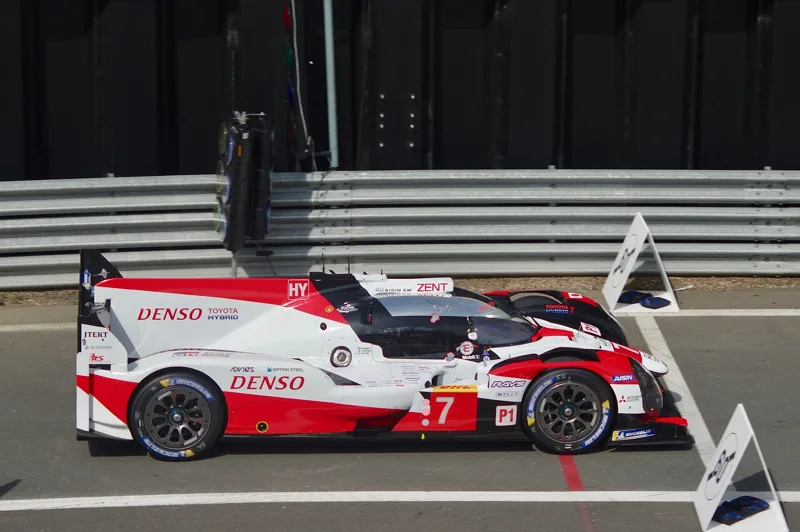
He joined Toyota Gazoo Racing as an LMP1 driver in February 2016 and scored his first WEC race win at the 6 Hours of Fuji that year. In 2017 he set the Circuit de la Sarthe lap record of 3:14.791. He then shared the 2019-20 and 2021 WEC titles with Conway and Lopez.
Outside the championship he also won the 24 Hours of Daytona in 2019 and 2020 with WTR. In 2021 he became the fourth Japanese driver to win at Le Mans, after Masanori Sekiya, and only the second to do so for a Japanese manufacturer.
Super Formula, Super GT and NASCAR
He joined Team LeMans for the 2015 Super Formula season and scored three podiums on his way to fifth in the championship. In 2017 he moved to KCMG, where he stayed for over seven years and clinched four second-place podiums. He then moved to KDDI TGMGP TGR-DC, alongside rookie Rikuto Kobayashi.
He made a one-off Super GT GT500 debut in 2017 with Racing Project Bandoh, then raced a full season with SARD in 2018. On 7 June 2023 he was announced for the NASCAR Cup Series, driving a No. 67 Toyota Camry for 23XI Racing at the Indianapolis road course, where he finished 33rd. He returned in 2024 at Circuit of the Americas and finished 29th.
Why does he also run Toyota's WEC team?
In December 2021 Toyota named Kobayashi as successor to Hisatake Murata as team principal of its WEC programme. He combined that management role with his driving duties. Toyota then won three consecutive World Manufacturers' Championship titles from 2022 to 2024 under his leadership.
In June 2025 he returned to a Formula One car for the first time in eleven years, testing a Haas VF-23 at Circuit Paul Ricard. The test reflected the close ties between Haas and Toyota Gazoo Racing.
How did he join Sauber and build a reputation?
Kobayashi's Sauber deal for 2010 was confirmed on 17 December 2009, and he completed his first laps in the new C29 chassis during winter testing on 2 February. Teamed with Pedro de la Rosa, he quickly gained a reputation as a skilled overtaker who could brake later than rivals several car lengths in front of him.
Early results were mixed. A front wing failure at the Australian Grand Prix sent him into a barrier, and the rebound caused a three-car crash that also involved Nico Hulkenberg and Sebastien Buemi. At the Chinese Grand Prix he was caught in a three-way collision on the first lap, which made his retirement the only one among the opening four rounds.
Results improved through the middle of the year. He scored his first points in Turkey, finished seventh at Valencia after passing Fernando Alonso and Buemi on fresh tyres in the closing laps, and took sixth at Silverstone. Commentators noticed how aggressive his overtaking was, and many described him as one of the sharpest passers on the grid.
What went wrong at Caterham in 2014?
Kobayashi joined Caterham for 2014 alongside Marcus Ericsson, but a brake failure sent him into Felipe Massa at the Australian Grand Prix start. In Malaysia he ran as high as eighth and finished thirteenth, which helped the team reach tenth in the constructors' table before a later demotion to 11th. That early promise did not last through the season.
The season then became unsettled. On 20 August 2014 the team announced that Andre Lotterer would replace Kobayashi for the Belgian weekend. Lotterer later declined a further offer, and the seat was taken in practice at Monza by Roberto Merhi, who was chasing a Super Licence, so Kobayashi returned for the Italian Grand Prix.
Kobayashi made his unhappiness clear. The team's driver plans had changed at short notice, leaving his own future uncertain. The episode closed his Caterham chapter, and his next steps lay in Japanese racing and endurance sport.
How did the 2012 season unfold?
In 2012 Kobayashi finished sixth in Australia and retired in Malaysia with brake trouble. He then started third in China, dropped back to tenth but set the fastest lap, and finished fifth in Spain after passing Jenson Button and Nico Rosberg. That run built the form behind his podium season.
Points came less often after that. He finished in the points once in the next four races, ninth in Canada, and he took fourth at the German Grand Prix after a post-race penalty for Sebastian Vettel moved him up from fifth on the road. He retired late at Hungary, then qualified a career-best second for Belgium, only to be caught up in a first-corner accident with four other drivers.
He carried on from Belgium and finished thirteenth, the only one of the five involved to continue. The Japanese Grand Prix then brought third place, the podium that defined his Sauber years.
Recognition and background
Kobayashi was named after Kamuy, a divine being in Ainu mythology, and the letters of his name echo three kanji from a phrase about enabling great dreams. His name is therefore tied to an early sense of ambition.
In April 2013 he received the Outstanding Achievement in Sport Award at The Asian Awards in London. He is also the third FIA world champion from Japan, following Toshi Arai and Kazuki Nakajima.
What does his career summary show?
His career summary shows a driver who moved between categories without losing his grip on endurance racing. The table below lists the main stages, from Formula 3 to his current team management role.
| Years | Series | Team | Highlights |
|---|---|---|---|
| 2006 | Formula 3 Euro Series | ASM Formule 3 | Eighth overall, Rookie's Championship |
| 2007 | Formula 3 Euro Series | ASM Formule 3 | Fourth overall, first Formula 3 win |
| 2008-2009 | GP2 Series | Various | Sixteenth in the championship both years |
| 2009-2014 | Formula One | Toyota, Sauber, Caterham | Third at the 2012 Japanese Grand Prix |
| 2015 onwards | Super Formula | Team LeMans, KCMG, TGMGP | Fifth in the 2015 championship |
| 2016 onwards | WEC | Toyota Gazoo Racing | Le Mans winner in 2021 and 2026 |
| 2022 onwards | Toyota WEC programme | Team principal | Three consecutive manufacturers' titles |