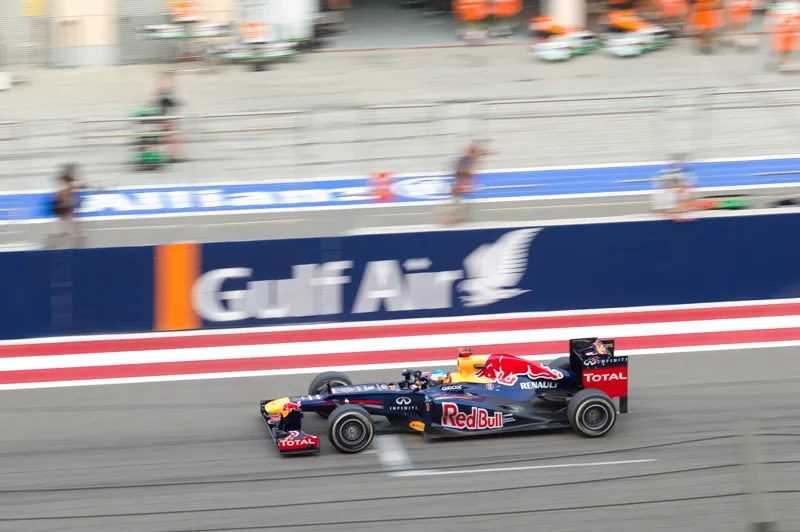
Sebastian Vettel dominated from pole at Suzuka, while Kamui Kobayashi's third place gave Japan a podium finish it had waited years to see.
Sebastian Vettel won the 2012 Japanese Grand Prix at Suzuka for Red Bull, leading every lap from pole. Felipe Massa finished second for Ferrari, while Kamui Kobayashi took third for Sauber in front of his home crowd, the first Japanese podium since 2004.
Suzuka staged the 2012 Japanese Grand Prix on 7 October, round 15 of the championship, in Mie Prefecture. Sebastian Vettel started from pole, led every lap and won by 20 seconds. Kamui Kobayashi's third place was the first home podium for a Japanese driver since Aguri Suzuki in 1990, and it made the afternoon one of the most memorable at the circuit.
Who won the 2012 Japanese Grand Prix?
Sebastian Vettel won for Red Bull, taking his 24th career victory and his second grand slam. Felipe Massa was second for Ferrari, and Kamui Kobayashi finished third for Sauber. It was his second consecutive win of the 2012 season. The result also kept Vettel in the championship hunt against Alonso.
Massa's second place ended the longest streak a Ferrari driver had ever endured without a podium, and it was his first since the 2010 Korean Grand Prix. Kobayashi's result was his first and only Formula One podium. It was the 38th running of the Japanese Grand Prix, and the first Japanese podium finisher since Takuma Sato in 2004.
A home podium at Suzuka, a grand slam from pole and a first-corner crash that reshaped the early laps.
How did Vettel take the grand slam?
Vettel took pole, led every lap and set the fastest race lap, which made it his second grand slam. His first came at the 2011 Indian Grand Prix. It was his fourth successive pole at Suzuka, and it kept his record at the circuit unbroken during that run.
The qualifying session gave Red Bull a front-row lock-out, with Mark Webber second behind Vettel. It was the first front-row lock-out for the team that season. The pole was Vettel's 34th, which moved him into third on the all-time list behind Michael Schumacher and Ayrton Senna.
Webber's race was effectively over after the first-corner incident, and he finished ninth. Vettel's race was never in doubt once the field had settled. Hamilton's title hopes were fading at this stage, while Vettel's pole at Suzuka had made him the favourite. He built a three-second lead soon after the safety car period ended, and he kept extending it at a steady pace. His victory margin of 20 seconds reflected how far ahead he was for most of the afternoon.
Why did the first corner crash matter so much?
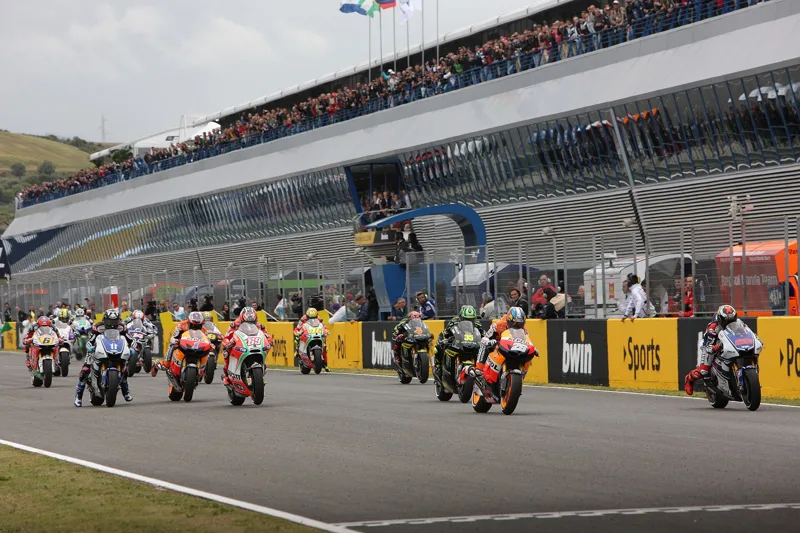
The race began with collisions at the first corner, and those early incidents brought out the safety car on the opening lap. Romain Grosjean ran into the back of Webber at turn 2 and spun him round, breaking his own front wing in the process.
Fernando Alonso was squeezed by Kimi Raikkonen, and contact from the Lotus caught his rear tyre. The puncture sent him spinning across the gravel, and he was the other retirement from the opening corner. Webber, Senna and Grosjean were each forced into the pits for replacement nose sections, and Webber had the hardest job because his car had to be recovered from the grass.
Some drivers benefited from the chaos. Jenson Button moved up five places to third, and Felipe Massa climbed six places to fourth after some opportunistic weaving. Grosjean was later handed a ten-second stop-go penalty for the collision. It was his seventh first-lap incident of 2012, and his eighth in the first two laps.
In his post-race interview Webber criticised Grosjean for the first-lap collision.
How did the title race change after Suzuka?
Alonso led the Drivers' Championship before the race with 194 points, 29 clear of Vettel. Alonso's first-lap retirement and Vettel's win cut the gap to just four points, with five races still to run. Lewis Hamilton, who was 50 points behind Alonso in fourth, saw his title hopes become increasingly slim.
Before the race Red Bull had 297 points, a 36-point cushion over McLaren, while Ferrari trailed by 52 and Lotus by 66. Mercedes had just 136 points. After the race the Red Bull lead over McLaren had grown to 41 points, and Ferrari was a further 20 points adrift in third.
Hamilton's future was also in the news that week. He was set to leave McLaren, where he had been since he was 13, and join Mercedes for three years when his contract ended. Sergio Perez was announced as his replacement at McLaren, and On the Thursday before the race, Michael Schumacher confirmed he was retiring from Formula One for a second time.
Which tyres did the teams run?
Pirelli brought its silver-banded hard compound as the harder prime tyre and its yellow-banded soft compound as the option. In the previous year the medium had been the prime tyre, so this was a harder choice for the teams. Every car used the option tyres in the second part of qualifying.
Vettel had been provisionally fastest on the prime tyres in the first part of qualifying, while Romain Grosjean set the session's fastest time on the softer compound. In the final part, the McLarens, Red Bulls and Lotuses each made two separate flying lap efforts, and the Red Bulls took the front row.
Vergne, Pic and Michael Schumacher started on the prime tyres, while every other driver chose the option. Schumacher later pitted on lap 37 and was the only driver still on the softer tyre at that point, having opted for a different strategy from the rest of the field.
What did practice reveal about the pace?
Practice showed McLaren near the front, with Jenson Button and Lewis Hamilton setting the first and second fastest times in the opening session. Mark Webber finished third, three tenths slower than Button, while Vettel ended the session down in seventeenth place.
Nico Rosberg set the fourth fastest time before abandoning his car out on track at the Esses with a minute left on the clock. Alonso, the championship leader, was eleventh, ahead of Sergio Perez and both Lotus cars, which had just introduced a new Double DRS to their machines.
Williams used its reserve driver, Valtteri Bottas, in place of Bruno Senna, and Bottas finished eighteenth. The session passed without serious damage. Michael Schumacher and Timo Glock ran across the gravel at Degner, and Romain Grosjean ran wide at Spoon.
How did qualifying shape the grid?
Vettel took pole ahead of Webber, though penalties did much of the shaping. Button's gearbox penalty dropped him from third to eighth, which lifted Kobayashi into third. That was the best qualifying position ever achieved by a Japanese driver at Suzuka.
Michael Schumacher qualified 13th, but a 10-place grid penalty for his Singapore collision with Jean-Eric Vergne sent him to the back of the field, to start 23rd. Vergne himself was given a three-place penalty for blocking Bruno Senna in the first part of qualifying. Lewis Hamilton qualified ninth after a poorly handling car, and he later complained about a set-up change.
The first part of qualifying saw Grosjean set the fastest time on the softer tyres, while Vettel had been fastest earlier on the harder prime tyres. Paul di Resta narrowly missed the final part of the session in twelfth. Felipe Massa was the last man out at the end, but he abandoned his lap and finished eleventh.
Vettel was reprimanded for holding Alonso up on his flying lap, but it did not affect his pole. Alonso said he could have been higher up the grid had Raikkonen not spun at Spoon. The yellow flags it brought out prevented Vettel and Webber from improving.
How did the middle of the race play out?
Pit stops reshaped the order through the middle laps. Button made the first scheduled stop on lap 13, and Kobayashi's stop on lap 16 promoted Massa to second. Vettel and Massa then pitted on lap 20 and kept their positions, with Massa having leapfrogged both Kobayashi and Button.
Vettel and Massa were the drivers showing the best pace when Button made his stop. Raikkonen and Hulkenberg pitted the following lap from fifth and eighth, and both had to make their way past Vergne and Kovalainen after their stops. The Caterham of Kovalainen had been impressing by running eleventh.
Perez tried the same move that had worked earlier at the hairpin, but Hamilton moved to the inside line and Perez carried too much speed. He slid into the gravel trap, which was the third retirement of the race. Senna had also been given a drive-through penalty on lap 22 for his contact with Rosberg at the start.
Hamilton and Kobayashi pitted on lap 31, one lap after Raikkonen, and Hamilton passed him at turn 1 on the following lap. Button, Massa and Vettel made their final stops on laps 35, 36 and 38, and all kept their places, with Kobayashi still in third.
How did the race finish?
Vettel finished first, Massa second and Kobayashi third, with Button fourth and Hamilton fifth in the McLaren cars. Raikkonen, Nico Hulkenberg, Maldonado, Webber and Ricciardo completed the top ten. Schumacher and di Resta just missed out in eleventh and twelfth, and di Resta had suffered a clutch failure at the race start.
Maldonado's eighth place was his fourth points-scoring finish of the season, and the first since his Spanish victory almost five months earlier. Michael Schumacher spent much of the race behind the Toro Rosso of Ricciardo, fighting for tenth place but never getting it. Romain Grosjean retired on the final lap with a gearbox problem.
Several drivers retired along the way. Sergio Perez lost control in the gravel trap at the hairpin on lap 19, and Narain Karthikeyan brought his HRT into the garage on lap 34 with vibrations. Charles Pic retired on lap 41 with engine failure, leaving the Suzuka field with fewer cars at the end.
| Position | Driver | Team | Note |
|---|---|---|---|
| 1st | Sebastian Vettel | Red Bull | Pole, fastest lap and every lap led; 24th career win |
| 2nd | Felipe Massa | Ferrari | First podium since the 2010 Korean Grand Prix |
| 3rd | Kamui Kobayashi | Sauber | Started third after Button's penalty; first Japanese podium since 2004 |
| 4th | Jenson Button | McLaren | Started eighth after a gearbox penalty |
| 5th | Lewis Hamilton | McLaren | Qualified ninth |
Why was Kobayashi's podium so important?
Kobayashi had first been fourth on the grid, and the stewards looked at whether he had slowed enough in a yellow flag area. He was allowed to keep his place because he had not used KERS or DRS as normal, so the result stood.
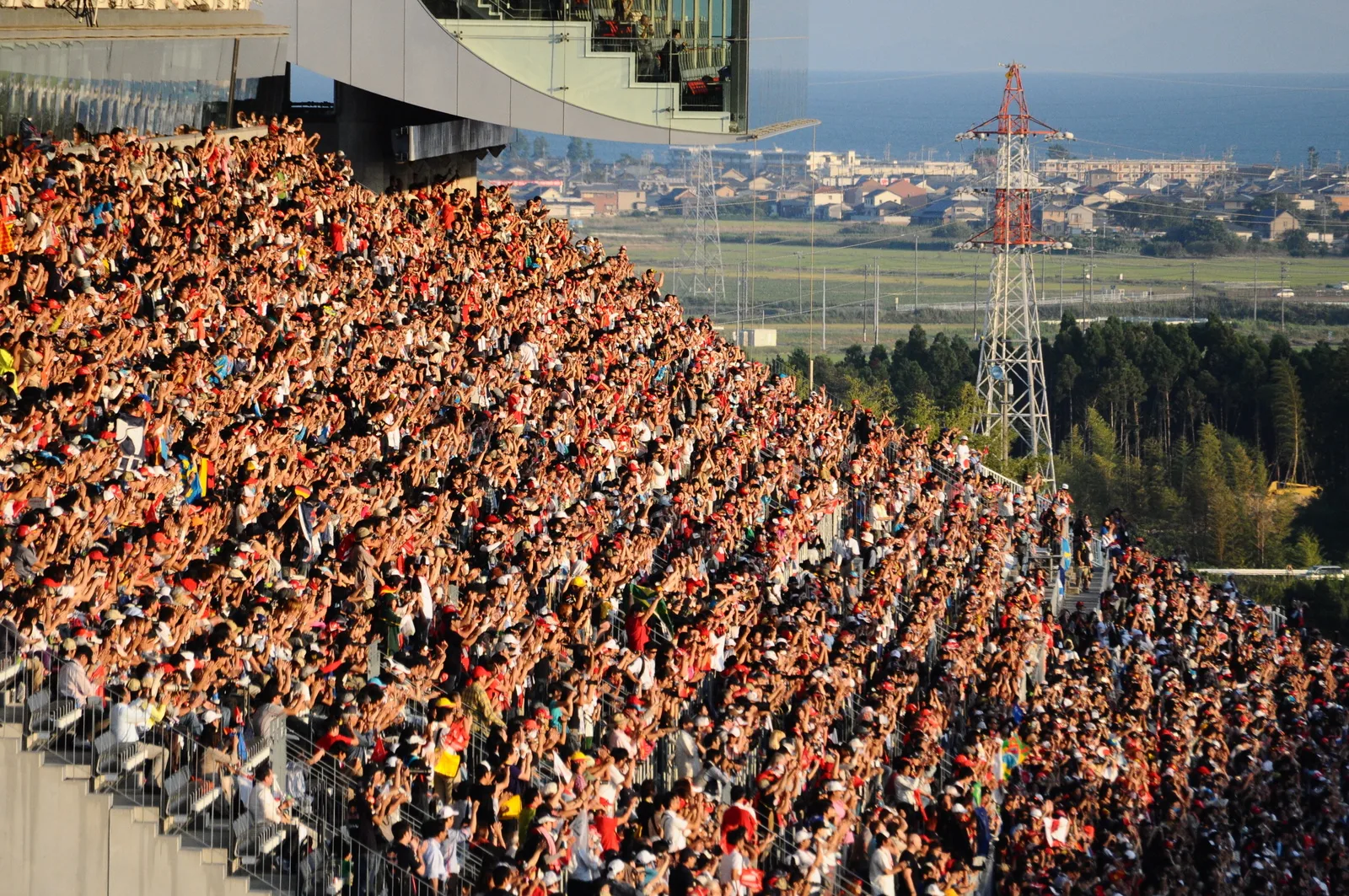
Kobayashi was the third Japanese driver to score a Formula One podium, and the first since Takuma Sato in 2004. It was also the first time a Japanese driver had finished on the podium at his home Grand Prix since Aguri Suzuki in 1990. The result came in front of his home crowd.
The podium also left a lasting mark on the record books. As of 2025 no Japanese driver had stood on a podium since, and Sauber had no further podium until the 2025 British Grand Prix. Asian drivers had no podium finish until the 2020 Tuscan Grand Prix.