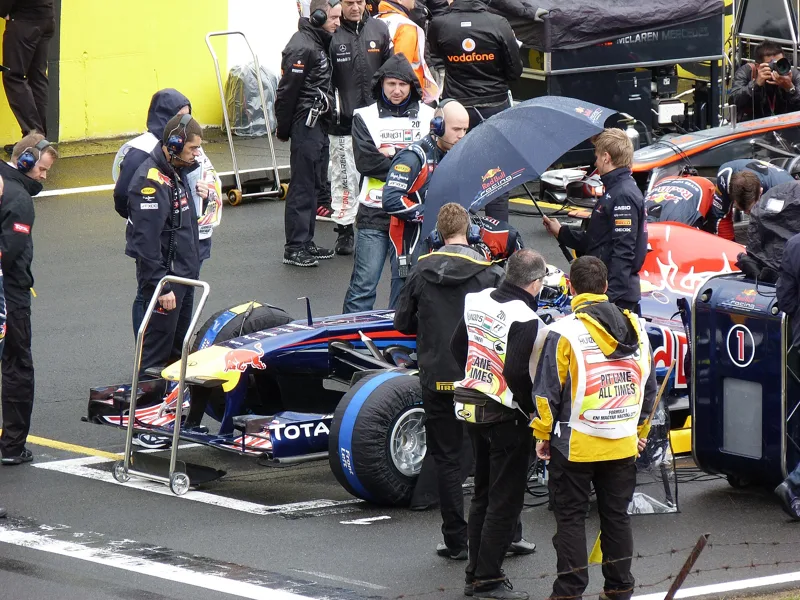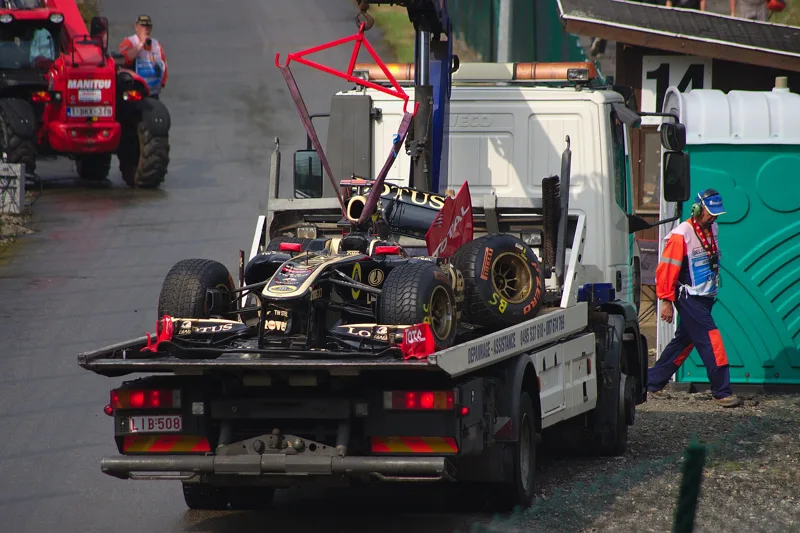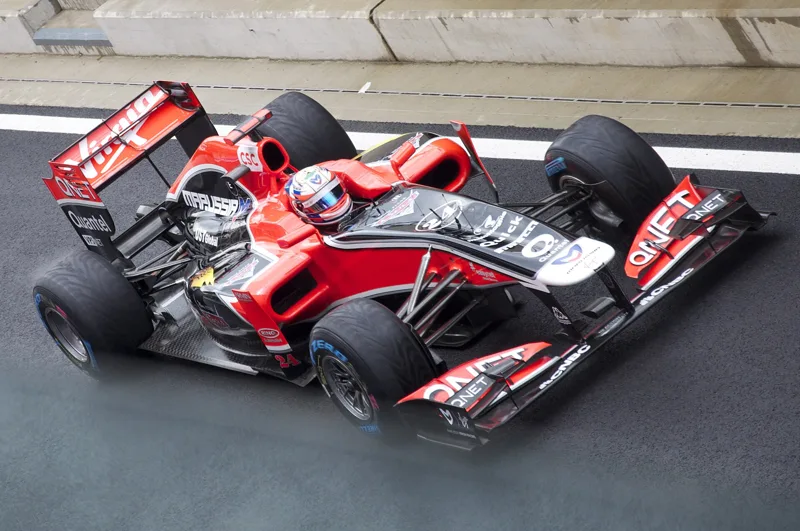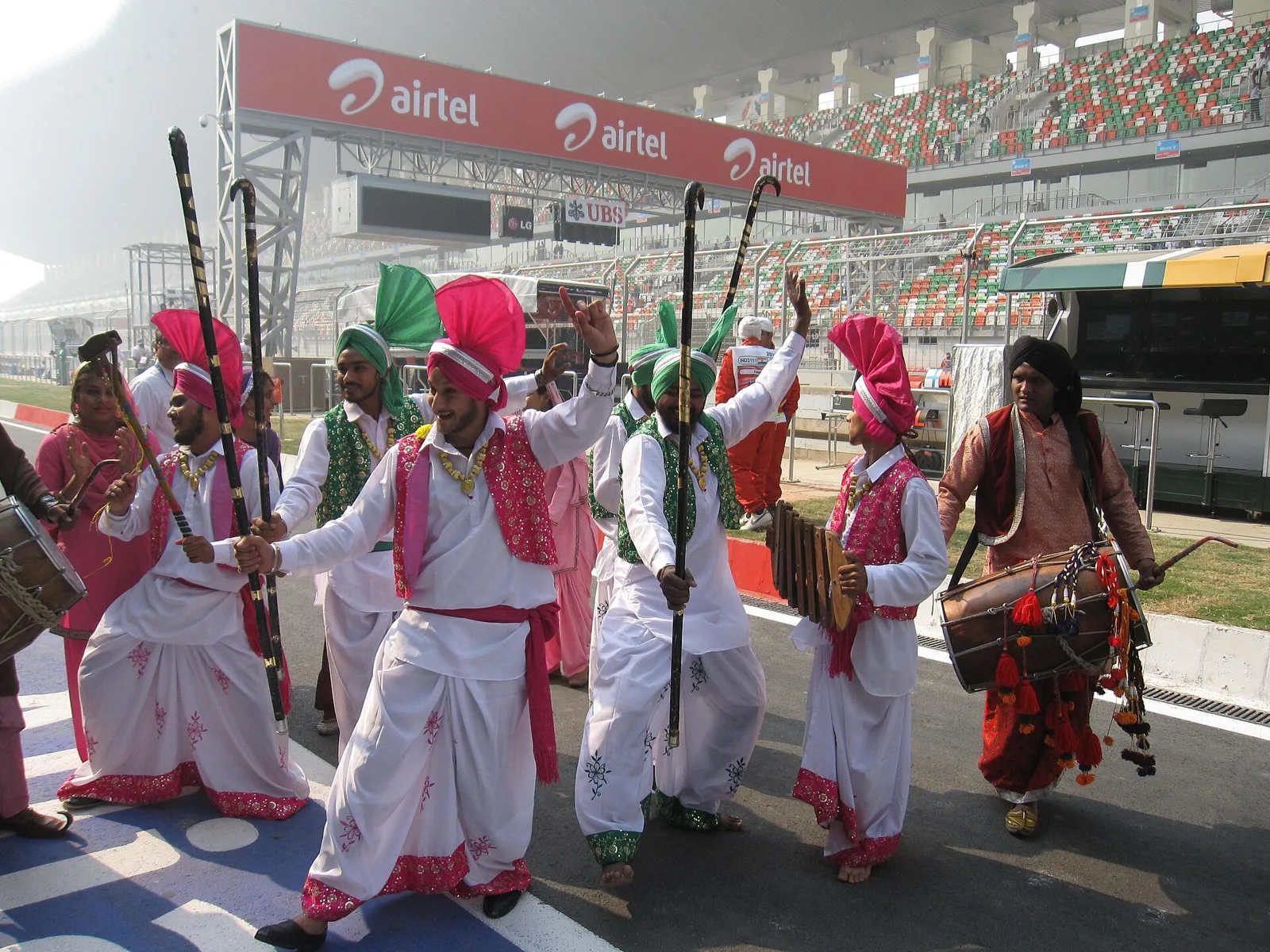
Sebastian Vettel took pole, led every lap and set the fastest time at the inaugural Indian Grand Prix, as a debut weekend of unfinished facilities and tax disputes played out around him.
Vettel won from pole at the Buddh circuit on 30 October 2011, the first race in South Asia. Button and Alonso completed the top three for McLaren and Ferrari. Vettel led every lap and set the fastest lap, completing his first Grand Slam.
The 2011 Indian Grand Prix was held at the Buddh International Circuit in Greater Noida on 30 October 2011, the seventeenth round of the season. It was the first Formula One Grand Prix in South Asia and the first to be held in India. Sebastian Vettel led every lap from pole, set the fastest lap of the race and claimed the first Grand Slam of his career, with Jenson Button second for McLaren and Fernando Alonso third for Ferrari.
Who won the 2011 Indian Grand Prix?
Sebastian Vettel won the 60-lap race for Red Bull Racing, leading every lap from pole position. He also set the fastest lap, which completed his first Grand Slam. Button finished second for McLaren after a strong start, and Alonso completed the podium for Ferrari in third.
Button got past Alonso into turn one and then Webber on the back straight, and he was second at the end of the lap. He held that place to the flag, while Vettel's pace kept him out of reach. Webber finished fourth, behind the McLarens and Ferrari.
The win was a milestone for Red Bull, and it came in a race that was less about the title than about history. Vettel's performance was the clearest demonstration of how dominant his car had been all year.
A first race in India, a Vettel pole-to-flag victory and a weekend of unfinished facilities and tax disputes.
What was the circuit like for its debut?
The circuit was designed by Hermann Tilke in association with the teams, and it was deliberately built to be one of the fastest on the calendar. Projected lap times were under one minute and twenty seconds, and the circuit was officially homologated on 1 September 2011.
Time spent in the pit lane was expected to be an important factor in race strategy. The race used two DRS zones and two detection points, as at the Italian Grand Prix that year. The first zone covered the pit straight, with its detection point on the exit of the penultimate corner. The second took in the second half of the long back straight.
The opening weekend had its problems. Teams reported construction issues such as power cuts, unfinished areas and bats roosting in the pit building. Mercedes team principal Ross Brawn praised the circuit and called hosting a race in India the right decision. Martin Brundle, by contrast, described the commentary booth as a cell with no window and nowhere near the track.
Who was in the Indian line-up?
Karthikeyan was back at HRT after Ricciardo had replaced him at Silverstone. Ricciardo moved to the car of Vitantonio Liuzzi, while Karthikeyan took his regular car back. Karun Chandhok had received support from Tony Fernandes to race, but the decision did not rest with him, and on the Tuesday before the race it was announced that he would not race.
Petrov took a five-place grid penalty for a collision with Schumacher in Korea. The race was also Felipe Massa's 150th Grand Prix start, which was a landmark for the Ferrari driver.
Pirelli brought its yellow-banded soft compound as the prime tyre and the silver-banded hard as the option. It was the only race of the season where the prime tyre was less durable than the option, which made strategy more complicated for the teams.
How did the first free practice session go?
The first Friday session was halted after five minutes by a stray dog on the track. Red flags came out while the animal was led away, and the session re-opened within five minutes. Chandhok then remained out to set the first flying lap of the circuit, while most drivers preferred an installation lap.
Michael Schumacher and Jenson Button were the early leaders, but Fernando Alonso's car lost power halfway through. The track was dusty, and drivers struggled for grip, with several running wide. Jaime Alguersuari spun into the barriers at the far end of the circuit fifteen minutes before the flag. Pastor Maldonado's Cosworth engine exploded, and he had narrowly avoided Chandhok, who had spun while laying rubber in the Lotus pit bay.
Hamilton was fastest at the end of the session, half a second ahead of Vettel and Webber. However, he had set his time while yellow flags were shown for Maldonado's stricken car, and he received a three-place grid penalty for it. Sergio Perez was given a three-place penalty for a similar offence.
What happened in the second practice session?
Felipe Massa topped the timesheets in the second session, 0.088 seconds ahead of Vettel and 0.224 seconds ahead of Alonso, who had recovered from his mechanical fault. Several drivers ran off the road, with turns six and seven causing trouble. Vitaly Petrov, Kamui Kobayashi, Sebastien Buemi and Adrian Sutil all went off there.
Maldonado spun into the gravel at turn nine but returned to the session. The session was red-flagged with forty minutes remaining when Jerome d'Ambrosio crashed at turn 12, after running wide at turn 11 and spinning on the slippery kerbing. The crash destroyed his rear wing and suspension, although the damage was largely cosmetic. Alguersuari was suspected of ignoring yellow flags at turn nine, but the team's telemetry showed he had slowed, and he escaped penalty.
The third session produced some of the fastest times of the weekend, as dust was cleaned from the circuit and drivers grew familiar with the layout. Vettel was fastest and became the first driver to set a time faster than 1:25.00, comfortably inside the projected lap times. Button was second, ahead of Webber and Hamilton.
The new front wing of the Ferrari cars attracted attention because it appeared to flutter, vibrating and sparking off the surface, particularly under braking into turn four. The FIA technical delegates looked into the problem, which stopped once the team replaced the front wing on Massa's car.
How did the first qualifying session unfold?
Qualifying began with many drivers on the softer option tyres, who drove a slower flying lap first to generate heat before setting a faster one. Petrov was quickest in the opening qualifying period, and Glock's gearbox failure left him outside the 107 percent window of the leader, so he needed permission to race, which was granted.
Jenson Button reported that his car lacked rear grip, and he was sixteenth in the final minutes of the session. Schumacher was seventeenth and Kobayashi eighteenth, both faster than Button, and he was forced to use a set of option tyres earlier than planned to advance. Narain Karthikeyan impeded Schumacher on his final lap through turns 10 and 11, and he later received a five-place penalty.
Kobayashi, Heikki Kovalainen, Jarno Trulli, Daniel Ricciardo, Karthikeyan, d'Ambrosio and Glock were eliminated, although their positions were subject to change once grid penalties were applied. Ricciardo's exit was a hard start to his Indian weekend.
How did the second and third sessions of qualifying go?
Vettel led the second qualifying period and was the only driver to dip under 1:25.000 all weekend. Jaime Alguersuari and Vitaly Petrov set identical lap times, both 1:26.319, and Alguersuari advanced because he had set his time before Petrov. Petrov finished eleventh, which became sixteenth after his penalty was applied.
Schumacher was twelfth after reporting a rear vibration, with di Resta and Maldonado close behind. Perez was later moved back to twentieth, because of a penalty for ignoring yellow flags in practice, and started behind Kobayashi and the Lotus cars.
The third session saw the top four drivers separated by one tenth of a second. Vettel set the early pace, ahead of Hamilton, Webber and Alonso. Jenson Button elected to do only one flying lap, and he finished fifth after Felipe Massa crashed in front of him and forced him to slow. Massa had hit the high kerb on the inside of turn eight, breaking his suspension and sending the car into the wall.
There was some contention over whether Button's lap was legal, since he had set it while yellow flags were displayed. Button said he had slowed as soon as he saw the accident, but that he had been following too closely to see the flags. The stewards took no action. Vettel took his 13th pole of the season, and Hamilton finished second before his penalty moved him to fifth.
How did the race begin in India?
Before the race a minute's silence was held for IndyCar driver Dan Wheldon and MotoGP rider Marco Simoncelli, who had died in racing accidents over the previous two weekends. Vettel kept the lead from the start, and Button had a good start, jumping Alonso and then passing Webber on the back straight.
Hamilton dropped behind Massa to sixth at the start, while Schumacher jumped from eleventh to eighth. Bruno Senna, from fourteenth, was in the points in tenth early on. Behind the leaders, carnage followed. Rubens Barrichello made slight contact with Maldonado, then speared sideways and collected Kobayashi, and Kobayashi hit Glock when he returned to the track.
Glock retired two laps later with suspension damage. Narain Karthikeyan hit the back of Jarno Trulli's Lotus at turn three, spinning the Italian off the track, and Trulli was slow for the rest of the race. The race was already a demanding one for the back of the field.
On lap nine Alguersuari used DRS to pass Senna for tenth. Maldonado then suffered a gearbox failure on lap 13, but he parked the Williams clear of the track, so no safety car was needed. Alguersuari passed Adrian Sutil the following lap to take ninth.
What were the pit stops and the collision?
The first pit stops began on lap 17. Webber, Alonso, Hamilton and Alguersuari all came in, and Alonso emerged behind Schumacher but quickly passed him. Massa and Rosberg stopped the following lap, and the leaders followed. Vettel and Button also pitted, and the order from before the stops was almost exactly restored.
The main talking point came when Hamilton attempted to pass Massa at turn five. The two cars collided, which was the fourth time that had happened in 2011. Massa continued without damage but was later given a drive-through penalty. Hamilton had to change his front wing. On the same lap Sebastien Buemi retired with an engine failure.
At the end of that lap Massa remained fifth, while Rosberg, Schumacher and Alguersuari were promoted to sixth, seventh and eighth. Hamilton was ninth, and Sutil was promoted to tenth by Buemi's retirement. Massa then dropped behind the Mercedes cars while serving his penalty, and he retired a lap later when his left-front suspension broke on a kerb.
Hamilton passed Alguersuari for eighth and later moved into seventh. Alonso's better second stop allowed him to emerge ahead of Webber in the battle for third. Bruno Senna pitted four laps from the end, which allowed Sutil and Perez back into the points.
How did the race finish?
Vettel finished comfortably ahead of Button, and Alonso held off a charge from Webber to complete the podium. Michael Schumacher led home teammate Rosberg for fifth, and Hamilton was the last car on the lead lap, in seventh. Alguersuari's eighth put Toro Rosso level with Sauber in the race for seventh in the constructors' table.
Vettel completed his first career Grand Slam with the fastest lap on the final lap, having led every lap from pole. At the time no one knew it would be his last win of 2011, since he had already secured the title in Japan and was one race away from maximum points for the season.
What was the taxation dispute about?
Six weeks before the race, reports emerged that the Indian government wanted to tax a share of the teams' earnings. Teams that finish in the top ten of the Constructors' Championship receive a percentage of the money paid to Formula One Management for television rights.
The threat led to suggestions that the teams could boycott the race. McLaren's Martin Whitmarsh, who was also chairman of the Formula One Teams Association, denied the claims and said the teams were exploring their options. On 14 September the organisers, JPSI, offered to pay the customs tax if needed. The Indian government later relented and offered the sport a full exemption.
The Supreme Court then sought an explanation from the Uttar Pradesh government about the tax exemption it had granted to the Jaypee Group. The case had been brought by a public interest litigation. On 21 October the Supreme Court imposed a temporary injunction, requiring the organisers to deposit 25 percent of ticket money into a separate account until the validity of the entertainment tax exemption was decided.
What about visa problems?
Further complications arose when several figures in the paddock had their visa applications rejected. A senior FIA figure warned that if the extended processing period continued, up to ninety percent of people involved in the sport might be unable to attend.
| Position | Driver | Team | Note |
|---|---|---|---|
| 1st | Sebastian Vettel | Red Bull | Pole, every lap led, fastest lap; first Grand Slam |
| 2nd | Jenson Button | McLaren | Held second from the first lap |
| 3rd | Fernando Alonso | Ferrari | Held off Webber in the closing laps |
| 4th | Mark Webber | Red Bull | Fourth place behind the McLarens and Ferrari |
| 7th | Lewis Hamilton | McLaren | Last unlapped runner after a penalty |