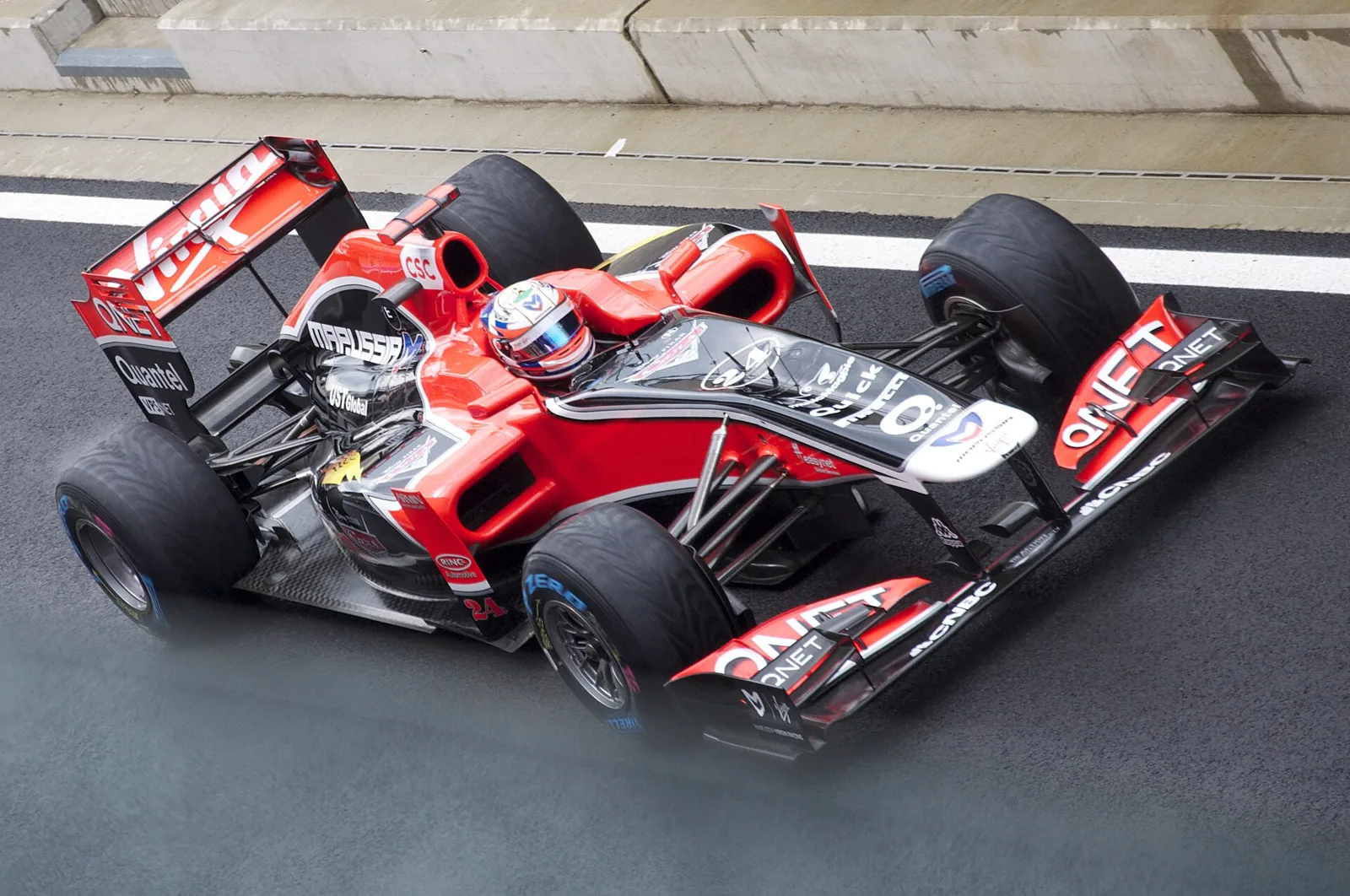
Fernando Alonso took victory in the wet-to-dry race at Silverstone, while the banning of the off-throttle blown diffuser and a late dispute over engine maps dominated the weekend.
Fernando Alonso won the 2011 British Grand Prix for Ferrari at Silverstone on 10 July 2011, the only win the team achieved that year. Sebastian Vettel was second and Mark Webber third for Red Bull, and Daniel Ricciardo finished nineteenth on his debut.
The 2011 British Grand Prix was held at Silverstone on 10 July 2011, the ninth round of the season. Fernando Alonso won for Ferrari, the only victory the team achieved that year, ahead of Sebastian Vettel and Mark Webber of Red Bull. The race also saw the debut of Daniel Ricciardo, and it was overshadowed by a row over the banning of the off-throttle blown diffuser.
Who won the 2011 British Grand Prix?
Fernando Alonso won the race for Ferrari, which was the only win the team achieved in 2011. He finished sixteen seconds ahead of Vettel, with Webber third for Red Bull. Lewis Hamilton finished fourth, Felipe Massa fifth, and Nico Rosberg sixth, five seconds ahead of Sergio Perez in a career-best result for the German.
The race was held in mixed conditions, with the track wet from the Arena to Chapel and dry in the other sections. Every team began on intermediate tyres, and the drivers had to nurse those tyres through the dry parts of the circuit. Staying out until the track was dry enough for slicks was a gamble, and it decided much of the order.
Vettel had begun from pole in the wet, but Webber took pole after the final period of qualifying. Alonso was helped by his strategy and his pace in the conditions, and Ferrari's victory offered the team relief after a difficult start to the season.
A wet-to-dry win for Alonso at Silverstone, and a diffuser and engine-map dispute that outlasted the chequered flag.
How did the reconfigured circuit shape the weekend?
The circuit had undergone a major reconfiguration for 2010, with the Arena loop bypassing the old Abbey, Bridge and Priory corners before rejoining at Brooklands. The 2011 race was the first to use the second stage of that reconfiguration, where the pits and the start-finish line now sit on the straight between Club Corner and the new Abbey.
Designers wanted the pit complex to be awkward, so that cars spent as little time as possible stationary. The entry lane branches off before Vale and Club, one of the slowest sections of the circuit, which lets a driver who is pitting keep accelerating while others slow for the corner. The pit lane is angled at five degrees to make the corner at its entry slightly faster.
Christian Horner noted that the pits were lower than the circuit, and he believed drivers would have to treat the corner at the pit entry as they would a corner on the circuit. The entry to the new Abbey had been re-surfaced after complaints from MotoGP riders in 2010, when a large bump on the racing line had been an issue.
The reconfiguration was not without controversy. The lower pit lane meant the garages were hidden from spectators by a retaining wall. Formula One Management reversed the intended pit order, putting the Red Bull, McLaren and Ferrari garages behind the wall, and moving the Lotus, Hispania and Virgin garages to the visible end. The change was believed to benefit guests in the Paddock Club suite above the far end of the pit lane.
Why was there only one DRS zone at Silverstone?
After trying two DRS zones in Montreal and Valencia, the FIA returned to a single zone at Silverstone. The activation point was placed before Aintree corner, which allowed drivers to use the system along the length of the Wellington Straight.
The weekend also brought a driver change. On 30 June it was announced that Daniel Ricciardo would replace Narain Karthikeyan at HRT. With Mark Webber driving for Red Bull, Ricciardo's debut meant that two Australian drivers raced in the same Grand Prix for the first time since the 1977 Austrian Grand Prix, when Alan Jones and Vern Schuppan competed.
How did practice go in the changing weather?
The first ninety-minute session was wet. Drivers switched to intermediates as a dry line formed, and times improved quickly. Mark Webber set the fastest time but ran out of fuel and stopped on the circuit. Michael Schumacher finished second and Rubens Barrichello third, before rain returned late in the session.
Kamui Kobayashi crashed heavily on the pit straight in the rain. Sauber repaired his car in time for the second session, where he finished third overall. The second session was wetter still, and almost half of its time passed before any driver took to the circuit. Felipe Massa finished quickest by almost eight-tenths over Nico Rosberg and Kobayashi.
The third session was the driest of the weekend, interrupted only by a brief shower early on. Sebastian Vettel finished fastest, six hundredths of a second ahead of Fernando Alonso and four-tenths quicker than Webber, whose progress had been hampered by an early gearbox problem. Schumacher had floor problems and finished eleventh.
How did qualifying produce a Webber pole?
All twenty-four cars went out at the start of the first qualifying period, because rain threatened. Webber set the fastest time, with Alonso, Maldonado and Vettel also near the top. Alguersuari and Buemi were caught out when heavy rain began and were eliminated, which let Heikki Kovalainen reach Q2 for the first time since the 2011 Spanish Grand Prix.
In the second period the drivers used a mix of hard, soft and intermediate tyres. Many were simply running sighting laps to find the best tyre for the conditions. Once the circuit rubbered in, Alonso and Lewis Hamilton set times two seconds faster than the rest of the field, and Massa went on to take the fastest time from Webber and Alonso.
Adrian Sutil was eliminated in eleventh, followed by Sergio Perez. Michael Schumacher qualified thirteenth, his first time outside the top ten at Silverstone in his career. Petrov and Heidfeld finished fourteenth and sixteenth in Renault's worst qualifying of the season.
In the final period Webber claimed his second pole that was three-hundredths clear of Vettel's best on their opening runs runs. The Ferraris of Alonso and Massa filled the second row. Hamilton qualified tenth after setting a lap on worn tyres before the rain arrived, and Vettel's pole was his 14th consecutive front-row start.
How did the race begin in the rain?
The race began on a track that was fully wet from the Arena to Chapel. Hamilton and Sergio Perez slid off before the start, and Perez damaged his front wing. Vettel beat Webber to the first corner, and Jenson Button passed Massa. Hamilton made up four places on the first lap after starting from tenth.
The two Renaults of Heidfeld and Petrov collided at Vale, nearly ending Petrov's race. Heikki Kovalainen and Jarno Trulli retired within the first ten laps because of gearbox problems. As the first pit stops approached, Schumacher collided with Kobayashi at Luffield and was given a ten-second stop-go penalty for causing an avoidable accident.
Kobayashi later received a similar penalty for an unsafe release that saw him drive over a wheel gun. He retired when his engine failed. Alguersuari and Buemi made progress from poor grid positions and passed Petrov. Paul di Resta was delayed in the pits because his team had Sutil's tyres ready, and he later made contact with Buemi at Copse, which damaged the Swiss driver's tyre and ended his race.
How did the second half of the race play out?
The second round of stops saw Vettel and Alonso enter together, but a mistake by the Red Bull mechanics delayed Vettel and allowed Alonso to take the lead. Vettel emerged third behind Hamilton, and Red Bull pitted him again so that he could run in clear air.
With less than ten laps to go, Hamilton was told to conserve fuel, which slowed him enough for Vettel and Webber to pass him. Webber was close enough to Vettel to attempt a pass on the final laps, and he ignored a team order not to pass him. He was unsuccessful and finished third.
On the final lap Massa caught Hamilton and attempted a move into Vale. Hamilton held his defensive line and could not slow in time, so they made contact. Massa was forced off through Club and crossed the line on the run-off. Hamilton won the battle by two hundredths of a second, and the stewards investigated but took no action.
Alonso won the race sixteen seconds ahead of Vettel and Webber, with Hamilton fourth and Massa fifth. Rosberg finished sixth, and Heidfeld salvaged four points in eighth place. Schumacher recovered from his penalty to finish ninth, and Jaime Alguersuari took the final points place in tenth, his third successive finish in the points. Ricciardo finished nineteenth and last on his debut.
What was the off-throttle diffuser ban?
The race also saw teams banned from using the off-throttle blown diffuser. Engines had been mapped to burn fuel whenever the driver lifted off the throttle, which sent exhaust gases over the diffuser and generated extra downforce. That extra downforce improved grip under braking and in slower corners.
The concept had been a source of controversy before. The FIA had banned it for the Spanish Grand Prix, only to recant the ban within twenty-four hours after discussions with its Technical Working Group, and Hispania had threatened a protest. Speculation then grew that Cosworth engines could not use the concept, because none of the Cosworth-powered cars were using it.
Charlie Whiting, the FIA technical delegate, ruled that off-throttle blown diffusers counted as a movable aerodynamic part, which broke the long-standing ban on those parts. Teams were limited to using ten percent of available throttle power under braking, with further restrictions to follow in 2012. Adrian Newey admitted that Red Bull had the most to lose, because the RB7 had been designed around the concept.
How did the engine map row develop?
A further row erupted on the Friday of the race weekend, when it emerged that the FIA had allowed Renault-powered teams a concession. The ban prevented engine maps simulating throttle conditions above ten percent, but Renault had argued that running at ten percent adversely affected its engine reliability.
That decision angered the Mercedes-powered teams, particularly McLaren. Christian Horner responded that the Mercedes teams had concessions of their own, relating to pressure in the crank case. The FIA agreed to review the Renault exemptions, and they were revoked before the final free practice session on Saturday morning. Early reports suggested the Mercedes concessions would stay.
Red Bull and McLaren sought clarification from Whiting, who called an extraordinary meeting of the Technical Working Group. The FIA said it was prepared to withdraw the rule change from the German Grand Prix, restoring the Valencia rules, which would give teams freedom over engine maps but require them to use the same maps between qualifying and the race. Team principals and technical chiefs failed to agree at an extraordinary meeting on Sunday morning, as Ferrari and Sauber refused to sign an agreement restoring the pre-Silverstone specification.
At a second meeting on Sunday afternoon, Ferrari and Sauber agreed to the proposal. The off-throttle blown diffuser ban stayed in place for the 2011 season, and the dispute left a lasting question about how the sport managed rule changes during a championship.