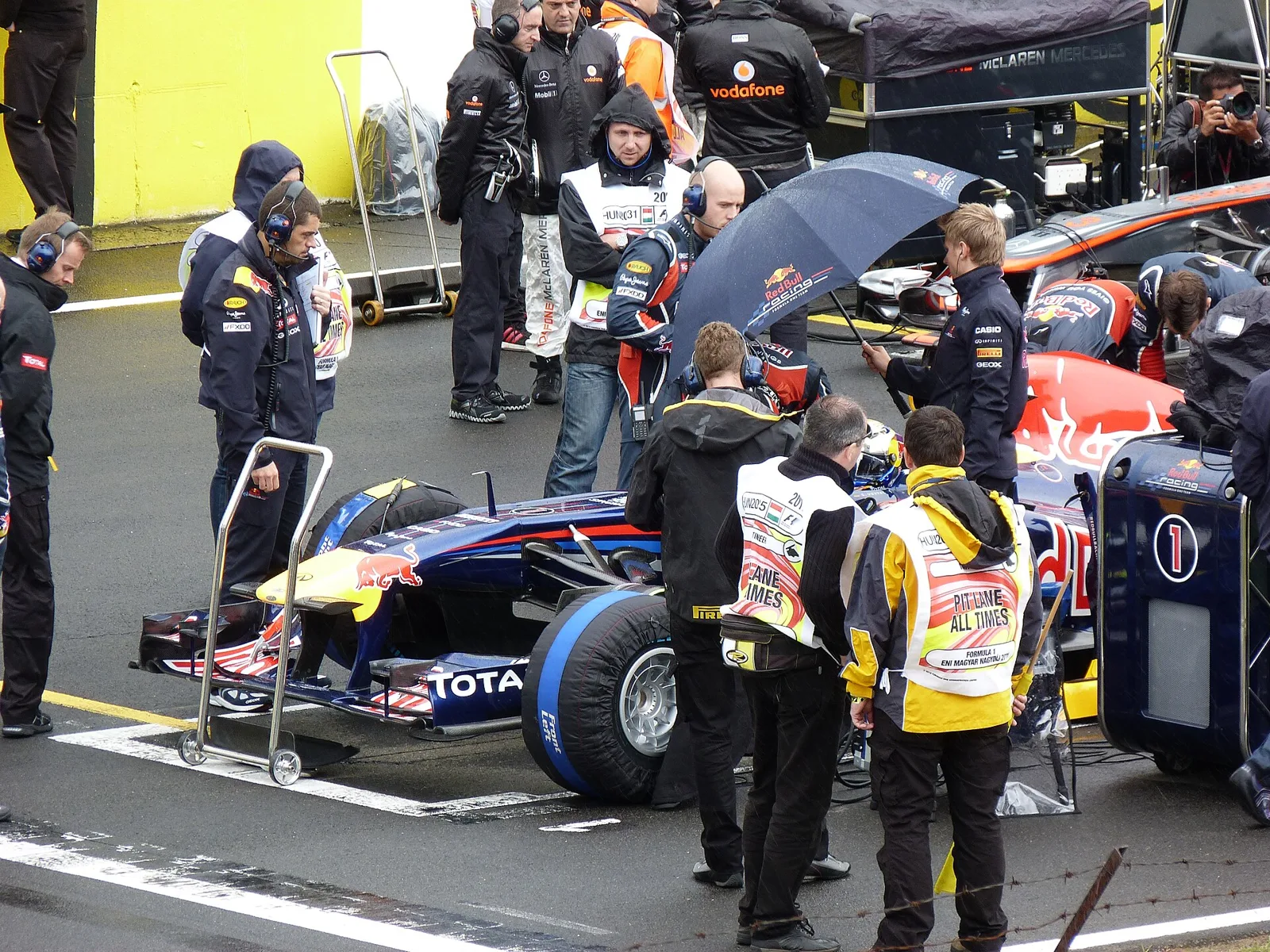
Jenson Button converted third on the grid into victory on his 200th Grand Prix start, while Sebastian Vettel's pole gave way to a slippery, wet-to-dry race.
Jenson Button won the 2011 Hungarian Grand Prix for McLaren after starting third, on his 200th Grand Prix start. Vettel finished second from pole for Red Bull and Alonso took third for Ferrari, in a race that set a record of 88 pit stops.
The 2011 Hungarian Grand Prix was held at the Hungaroring near Budapest on 31 July 2011, and it was the eleventh round of the season. Jenson Button won the 70-lap race for McLaren from third on the grid, on his 200th Grand Prix start. Sebastian Vettel, who had started from pole, finished second for Red Bull Racing, and Fernando Alonso took third for Ferrari.
Who won the 2011 Hungarian Grand Prix?
Jenson Button won from third, at the circuit where he had earlier taken his maiden victory. The race had been wet at the start and dried as it went on, so the drivers who timed their tyre changes best gained the most. Button switched to slicks a lap after Webber and kept the advantage through the stops that followed.
Button led from Vettel, while neither driver had pitted for intermediate tyres. Alonso finished third after a spin later in the race, while Hamilton took fourth and Mark Webber fifth.
A wet-to-dry race, a record number of pit stops and a McLaren win from third on the grid.
What was the championship picture before the race?
Vettel arrived at Budapest with 216 points, 77 more than Webber, after a lead that had dipped slightly in Germany. Hamilton had 134 points after his German win, and he was the only other driver to win more than one race that year.
Jenson Button had dropped to fifth in the standings on 109 points after two retirements in the previous two races. Red Bull still dominated the Constructors' table with 355 points, while McLaren were second on 243 and Ferrari third on 192. Mercedes and Renault trailed on 78 and 66 points.
The race was also notable for milestones. It was Button's 200th Grand Prix, and the hundredth race run with the 2.4-litre V8 engine, which had become compulsory in 2006. It was also the 100th Grand Prix for Nico Rosberg and for the Toro Rosso team, which made the weekend a busy one for historians of the sport.
Who changed the line-up for Budapest?
Jarno Trulli returned to Lotus after Karun Chandhok had driven in Germany. Bruno Senna made his first appearance of the season, replacing Nick Heidfeld in Renault's first practice session. Renault's Eric Boullier said the team was weighing Senna and Romain Grosjean as possible replacements for Heidfeld.
Sebastien Buemi received a five-place grid penalty for an avoidable accident with Heidfeld at the Nurburgring. Pirelli had brought a yellow-banded soft compound as the prime and a red-banded super-soft as the option. In the previous year Bridgestone had brought a white-banded medium as the prime, so the range was different.
How did practice look?
In the first practice session Lewis Hamilton topped the timesheet with 1:23.350, following his win at the Nurburgring the weekend before. Vettel was second at 1:23.564 and Fernando Alonso third at 1:23.642. Hamilton's pace was the early headline for McLaren.
In the second session Hamilton again set the best time, at 1:21.018. Alonso improved to 1:21.259 and Button was third at 1:21.322. Both Webber and Vettel failed to impress, and Red Bull broke the curfew on working hours to make drastic changes to the car. That extra work paid off for Vettel, who topped the timesheet at 1:21.168.
Alonso's best lap in that session was 1:21.468 and Button's 1:21.639. Hamilton, who had topped the first two sessions, could only manage 1:22.667 in the final session and was seventh fastest. The field was closer than the early times suggested.
How did qualifying unfold?
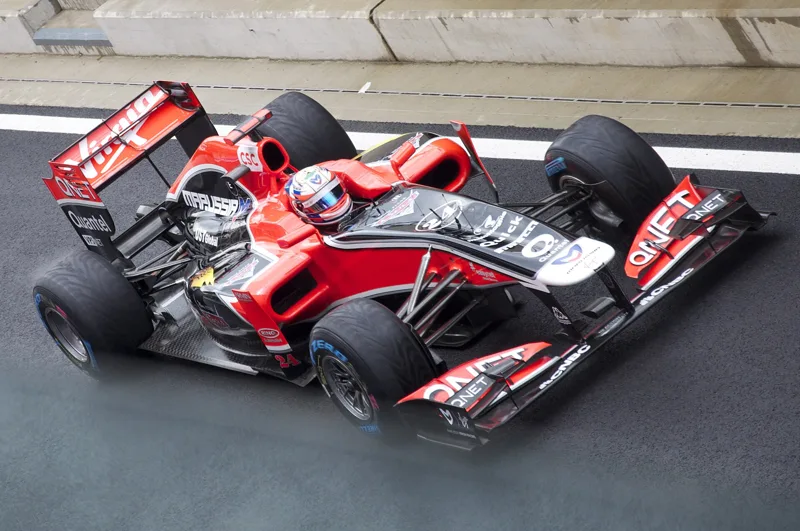
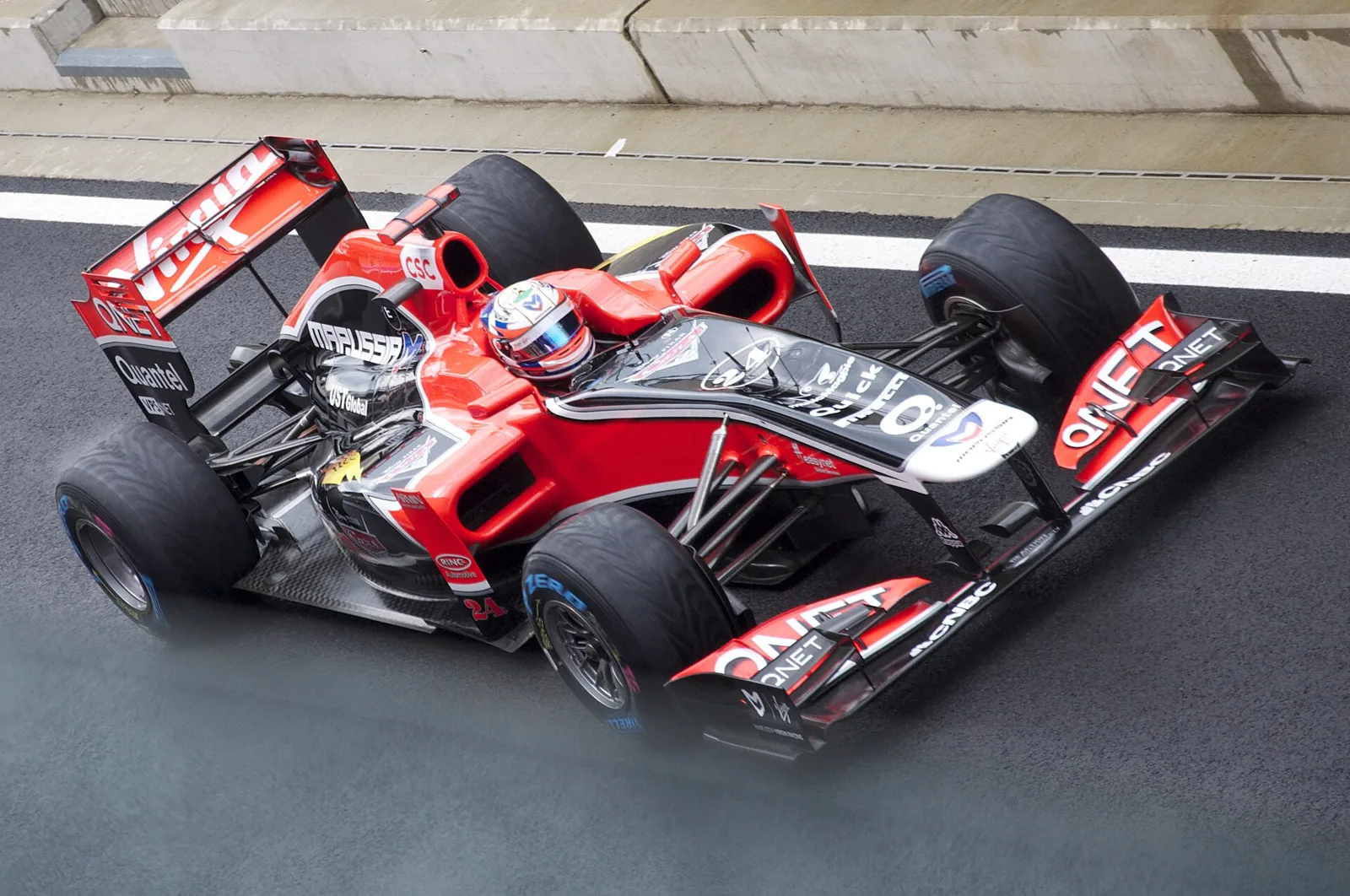
In Q1 the three newest teams fell out again. Vitantonio Liuzzi and Daniel Ricciardo were sandwiched by the Virgin cars of Jerome d'Ambrosio and Glock,. Buemi was the only driver to qualify on the softer compound. He ended up 18th on track, but started 23rd because of his penalty,.
Hamilton reached the third part with the sixth fastest time in Q2 on the prime tyre, while Red Bull and Ferrari had needed the option tyre. Alguersuari set the slowest Q2 time and dropped out, while Renault failed to make the top ten. Kamui Kobayashi and Paul di Resta narrowly missed out on Q3, and Heidfeld was 14th.
Sergio Perez opted not to go out in the third part to save tyres, and he started tenth. Rosberg qualified seventh and beat his teammate Michael Schumacher again, while Adrian Sutil was eighth. Only the three big teams made two timed runs, and they occupied the top six places.
Hamilton broke the 1:20 barrier for the first time that weekend. After the first runs Hamilton was fastest, with Vettel only slightly slower, but Vettel improved on his second run and took his eighth pole of the season. Hamilton lined up alongside him, and Button, Massa, Alonso and Webber came next in the order.
How did the race start?
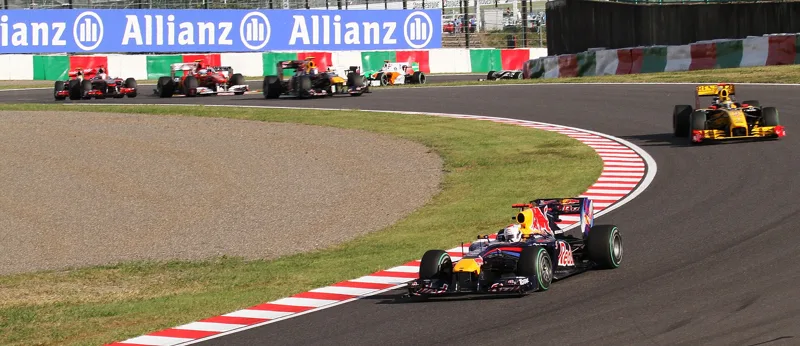
Mixed conditions had caused havoc in the support races, and the Grand Prix began on a wet surface. Button described the track as not very wet but slippery, which made it hard to get heat into the tyres. Because the conditions were not wet enough for full wets, all of the drivers began on intermediates.
Vettel led into the first corner, while Hamilton followed him after defending against Button, who was third. The Ferraris and Webber struggled to get off the line, and Rosberg and Michael Schumacher were fourth and fifth. Massa took seventh from Webber early on the first lap, and Alonso passed Schumacher for fifth at the final corner of the opening lap.
Vettel made a mistake at turn 3 on lap five and went wide, which handed Hamilton the lead. Hamilton then pulled away and was 5.5 seconds clear after ten laps. Massa spun in the slippery conditions and rejoined ninth, and Trulli became the first retirement with a water leak.
How did the pit stops shape the race?
As the track began to dry, Webber was the first to pit for slicks and immediately set quick sector times. Button changed a lap later, but the leading duo of Hamilton and Vettel, with Alonso, stayed out a lap longer. Vettel and Alonso conceded places to Button and Webber, who passed them before their slicks had fully warmed up.
Hamilton built a nine-second gap to Button by lap 20. Schumacher retired with a gearbox problem, and the field was then shuffled by a series of stops. Alonso made an unusually early third stop onto super-soft tyres to try to undercut Webber, who stayed out and took the soft tyre instead.
A brief shower made the circuit slippery again. Hamilton spun at turn 8, forcing di Resta off the track, and he was given a drive-through penalty for it. He elected to return to intermediates, but the track dried within two laps, forcing him to stop again for dry tyres. Kovalainen also retired, giving Lotus another double failure to finish.
In total the race set a record for the most pit stops in a single Grand Prix, with 88 stops. Button led from Vettel, and Hamilton slipped behind Massa and Webber before moving back up to fifth and then fourth in a fight with Webber.
What decided the finishing order?
Hamilton and Webber fought for fourth, and as they passed a congested midfield Webber was held up by a backmarker, which gave Hamilton the chance he needed. Over half a minute ahead, Alonso closed in on Vettel at a rate that could have made second possible, but he spun again and had to settle for third.
Button won his 200th Grand Prix, the scene of his maiden victory. Massa was sixth, having beaten Alonso in qualifying for the first time since the 2010 Belgian race. Di Resta triumphed in a midfield battle for seventh, and Buemi finished eighth, which meant the driver who started 18th had scored points for the fifth race in a row.
Rosberg dropped to ninth behind Buemi, and Alguersuari took the final point. Kobayashi's tyre-saving strategy failed to work, which left him outside the points. It was the fifth consecutive race in which the driver starting 18th had gone on to score points.
What did the result mean for the title?
The race extended Vettel's lead in the Drivers' Championship to 85 points over Webber, who finished fifth. Hamilton remained third in the standings, one point ahead of Alonso. Red Bull's lead over McLaren was cut to 103 points, and Ferrari was a further 65 points behind in third.
The race was also the last for Nick Heidfeld, whose departure from the Renault team was confirmed around the same time. For Button it was a win that marked the end of a long wait, and it changed the feel of the championship race. Vettel still led comfortably, but McLaren had shown that they could win.