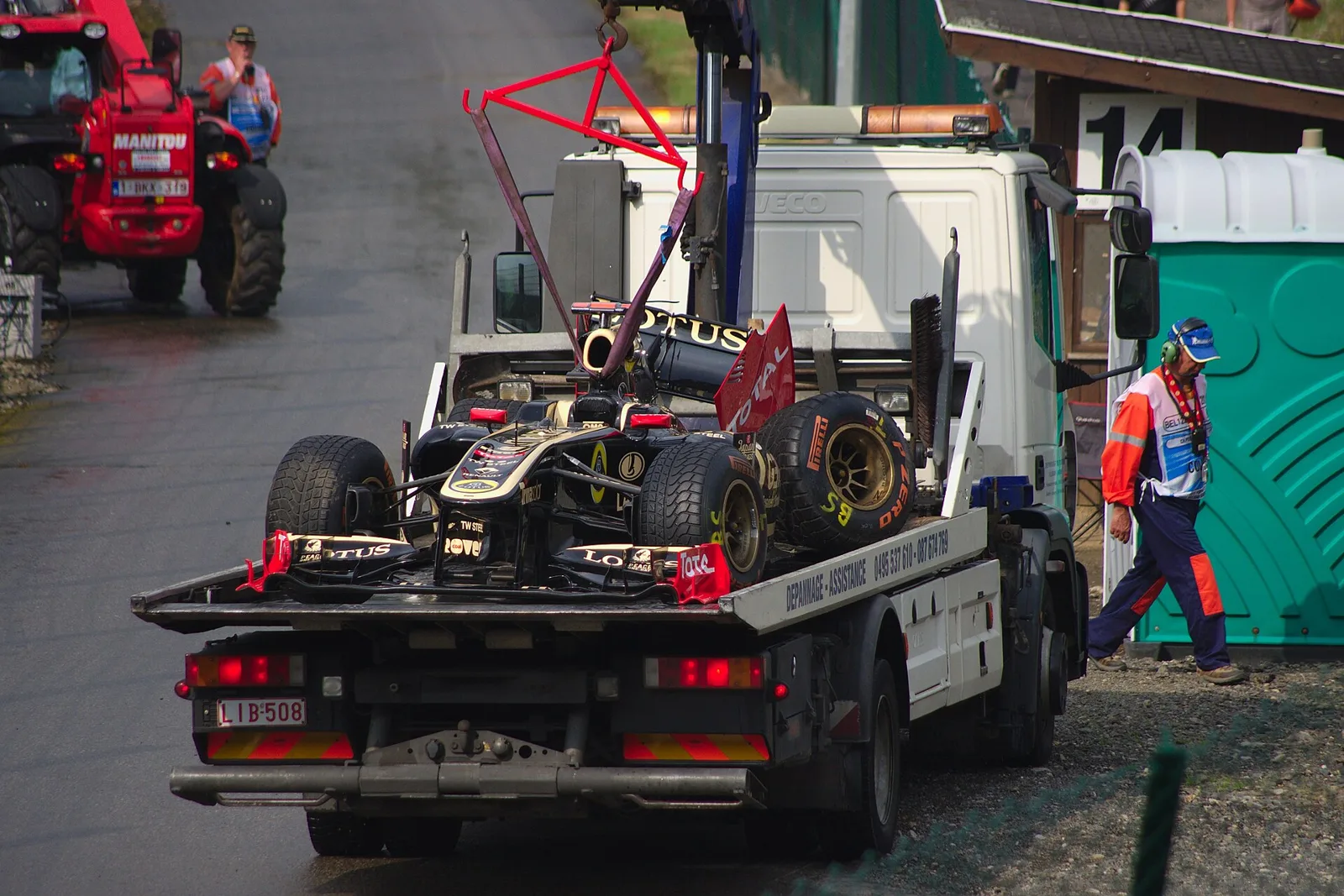
Sebastian Vettel converted pole into victory at Spa-Francorchamps, while a tyre-blistering row, a first-corner multi-car clash and Lewis Hamilton's exit at Les Combes dominated the afternoon.
Sebastian Vettel won the 2011 Belgian Grand Prix for Red Bull at Spa-Francorchamps on 28 August 2011, starting from pole. Mark Webber was second for Red Bull, and Jenson Button third for McLaren, with Vettel's lead in the drivers' table growing to 92 points.
The 2011 Belgian Grand Prix was held at the Circuit de Spa-Francorchamps on 28 August 2011, the twelfth round of the season and the 67th Belgian race. Sebastian Vettel started from pole and won the 44-lap race for Red Bull, with his teammate Mark Webber second and Jenson Button third for McLaren. The afternoon was shaped by a row about tyre blistering, a messy first corner and a series of collisions that removed several drivers.
Who won the 2011 Belgian Grand Prix?
Sebastian Vettel won the race from pole, and his win extended his lead in the World Drivers' Championship to 92 points over Webber. Webber finished second for Red Bull, and Button completed the podium for McLaren in third. Fernando Alonso, who had started eighth, finished fourth and moved into third place in the championship.
The result had a significant effect on the title race. Red Bull extended its Constructors' lead of 131 points over McLaren, and Ferrari were 64 further back in third. The points gap in the drivers' table was now so large that Vettel's position looked very hard to challenge.
Vettel also showed how his car could manage the tyres. Spa's long fast corners and changing conditions had been difficult for many, but his race pace was consistent throughout the afternoon.
A pole-to-flag win for Vettel at Spa, won in spite of tyre blistering, a messy first corner and a crash that ended Hamilton's afternoon.
What was the tyre blistering row?
In the build-up to the race several teams asked the FIA to make extra sets of tyres available. They had discovered blistering, a result of racing at excessively high temperatures that caused air bubbles to form under the top layer of rubber, and it appeared immediately after qualifying. Several drivers would have had to start on compromised tyres.
The FIA refused. It said the damage had been caused by extreme camber settings in the car set-up, not by an accident. Under the sporting regulations, teams may replace damaged tyres only when the damage follows an accident. Drivers could change their camber settings, but doing so would breach parc ferme rules and force them to start from the pit lane.
Pirelli later accused Red Bull Racing of putting it in an impossible position, because the team had lobbied for extra tyres after running outside the recommended camber settings. Paul Hembery, Pirelli's motorsport director, said the company would be more cautious when recommending settings for the Italian Grand Prix, so that blistering would not recur. The episode put the spotlight on how set-up choices affected tyre life.
How did the start go?
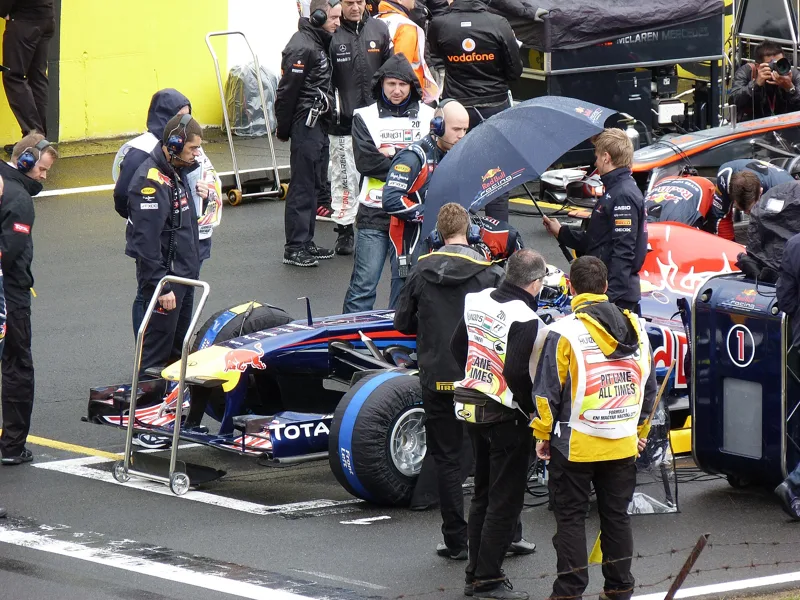
The start was messy, with two separate incidents at the first corner. Vettel started strongly, but Nico Rosberg made a fast start from fifth and briefly took the lead. Mark Webber made a poor start, and his Red Bull dropped into anti-stall. Those problems left the Australian to fight his way back.
Senna misjudged his braking into La Source and hit Jaime Alguersuari hard at the first corner. The impact pushed the Toro Rosso into the Ferrari of Fernando Alonso. Alonso escaped unscathed, but Alguersuari retired with front suspension damage. Senna pitted for repairs and was penalised with a drive-through for an avoidable accident. Glock hit di Resta as the field bunched up and was given a drive-through penalty of his own. The Lotuses spun trying to avoid the Glock and di Resta contact. Jenson Button's car was damaged by debris from Senna's Lotus, which forced a stop for a new front wing. A mirror went too, but he used the stop to change onto the softer option tyres.
How did the race develop in the first phase?
Nico Rosberg led the field through Eau Rouge for the first time, but he could not stop Vettel when the DRS zone was activated on lap three. Rosberg then spent the rest of his first stint being passed, while Michael Schumacher climbed to 15th on the first lap.
Sebastien Buemi in the second Toro Rosso was forced to retire after Sergio Perez hit him from behind and destroyed his rear wing. Hamilton pitted on lap 11 and gave up the lead to Vettel. The early stages had given the field plenty of drama, and the leaders' strategies were already starting to diverge.
Senna got a race seat for Spa after a Renault practice outing at the Hungaroring, taking over from Heidfeld. It was also two decades since Schumacher's debut at the 1991 Belgian race, and he marked the anniversary with a gold helmet.
The FIA banned DRS through Eau Rouge after drivers raised safety concerns, so the zone ran from Raidillon along the Kemmel Straight to Les Combes. Pirelli brought the white-banded medium as the prime and the yellow-banded soft as the option, a different choice from the previous year, when Bridgestone had brought a hard compound as the prime.
How did practice and qualifying set the grid?
The first Friday session was declared wet after a shower shortly before the pit lane opened. The Mercedes cars of Schumacher and Rosberg set the early pace, while Button was third, nine seconds adrift in the wet. Bruno Senna's return ended early when he spun at turn nine,.
The second Friday session was also rain-affected, but the gaps were smaller. Webber set the fastest time, four seconds faster than Schumacher's morning effort, with Alonso second and Button and Hamilton close behind. Vitaly Petrov finished 24th after a steering problem left him without dry running.
The Saturday morning session was wet again, and most drivers stayed in the garage until the final minutes. Webber was fastest once more, ahead of Hamilton and Alguersuari. Ferrari did very little running, and it finished 23rd and 24th, with Massa completing only seven laps and Alonso failing to set a time.
Qualifying began badly for Schumacher, who lost a wheel approaching Rivage and crashed on his warm-up lap. That left him 24th, his worst grid position of his career. As the circuit dried, Webber was fastest at the end of the first period, and Kovalainen squeezed into 17th at the last minute, eliminating di Resta.
Sutil crashed at the top of Eau Rouge in the second period when the rain returned, and race control had to red-flag the session with seven minutes remaining. Alonso then set the fastest time, while Button gave way to Hamilton so that he could take a clear lap. Button qualified 13th, and Sutil reached 15th despite causing the stoppage.
Vettel took his ninth pole of the season, ahead of Hamilton and Webber. Massa out-qualified Alonso in fourth, and Rosberg was fifth. Maldonado received a five-place grid penalty after an incident with Hamilton at the end of the second period, and Hamilton was reprimanded by the stewards for partly contributing to it.
What happened at Les Combes?
Two drivers made steady progress through the midfield. Jenson Button, already past his first stop for a new front wing, and Michael Schumacher, who began 24th, avoided the chaos at the first corner, were both well placed when the safety car came out on lap 13.
Kobayashi had not yet given up the position and was still on Hamilton's outside. Sauber and McLaren touched, and Hamilton slid into the barrier and retired. Kobayashi continued, but Daniel Ricciardo also stopped on the circuit after a vibration in his Hispania, retiring from 16th place.
The safety car prompted another round of stops. Alonso retook the lead by staying out, and Webber chose the same route to move up to second, ahead of Vettel, who had pitted. The race had become a fight between strategies rather than simple speed.
How did the race end?
When racing resumed on lap 17, Vettel quickly overtook Webber on the run down to Eau Rouge. He then went after Alonso down the Kemmel Straight, and although the Spaniard resisted the first attempt, Vettel overtook him into Les Combes on the following lap. He re-established his lead ahead of Alonso and Webber.
Button had been making progress through the field at a rate that suggested he could win. He inherited the lead on lap 32 after both Red Bulls pitted, but Vettel passed him on the Kemmel Straight and Button then had to pit for the final time, emerging behind Alonso and Webber. Alonso could not defend against Webber, nor against Button several laps later. Button briefly tried to catch Webber, but he chose not to risk an extra stop.
Michael Schumacher recovered from 24th to sixth, passing Rosberg on the approach to Les Combes. Sergio Perez retired when his suspension failed, but he limped back to the pits. The retirements had reduced the field, and the top of the order remained with the Red Bulls.
Vettel won by three seconds from Webber in second, with Button nine seconds behind in third. Alonso, short of grip for most of the race, took fourth ahead of Michael Schumacher and Nico Rosberg. Adrian Sutil was seventh, and Felipe Massa eighth, after a puncture on his out-lap forced him to pit again. Hamilton's own race was over after the collision, while Button's pace improved as the race went on.
Vitaly Petrov took ninth, though a brake failure cost him ten seconds and a likely eighth place on the last lap. Pastor Maldonado recovered from 21st on the grid to finish tenth. It was his first World Championship point, the first scored by a Venezuelan since Johnny Cecotto's 1983 result in the United States West race, and it also gave Cosworth its last points as an engine supplier to the sport at that time.
What did the drivers say after the race?
Hamilton had initially been critical of Kobayashi after their race-ending collision on lap twelve, saying it had cost him a podium place. Kobayashi denied any wrongdoing, saying he had kept as far to the side as possible to let Hamilton through, and that the only way to avoid contact would have been to leave the circuit.
Bruno Senna accepted that the collision with Alguersuari at La Source was his own error and miscalculation. He said he had misjudged the corner, which led to the chain of incidents at the start of the race.
Barrichello was 16th, behind Trulli and Kovalainen, after contact with Kobayashi at the Bus Stop had left him needing a new front wing. It was a difficult afternoon for the Williams driver. Pirelli said it had also learned from the episode. Ferrari's Alonso had struggled for grip all afternoon, and he finished in fourth place, which was a disappointing return for a driver of his experience.
| Position | Driver | Team | Note |
|---|---|---|---|
| 1st | Sebastian Vettel | Red Bull | Pole and win; extended lead to 92 points |
| 2nd | Mark Webber | Red Bull | Three seconds behind the winner |
| 3rd | Jenson Button | McLaren | Nine seconds behind the winner |
| 4th | Fernando Alonso | Ferrari | Struggled for grip; moved into third in the championship |
| 10th | Pastor Maldonado | Williams | First World Championship point after a start from 21st |