Audi's No. 2 car won after the race was halted for 77 minutes, while a Porsche's engine trouble ended its challenge and the Toyotas took the rest of the podium.
The 2014 6 Hours of Circuit of the Americas was the fourth round of the 2014 FIA World Endurance Championship, held on 20 September 2014. It was the only North American race of the season, and it took place in front of 50,334 spectators.
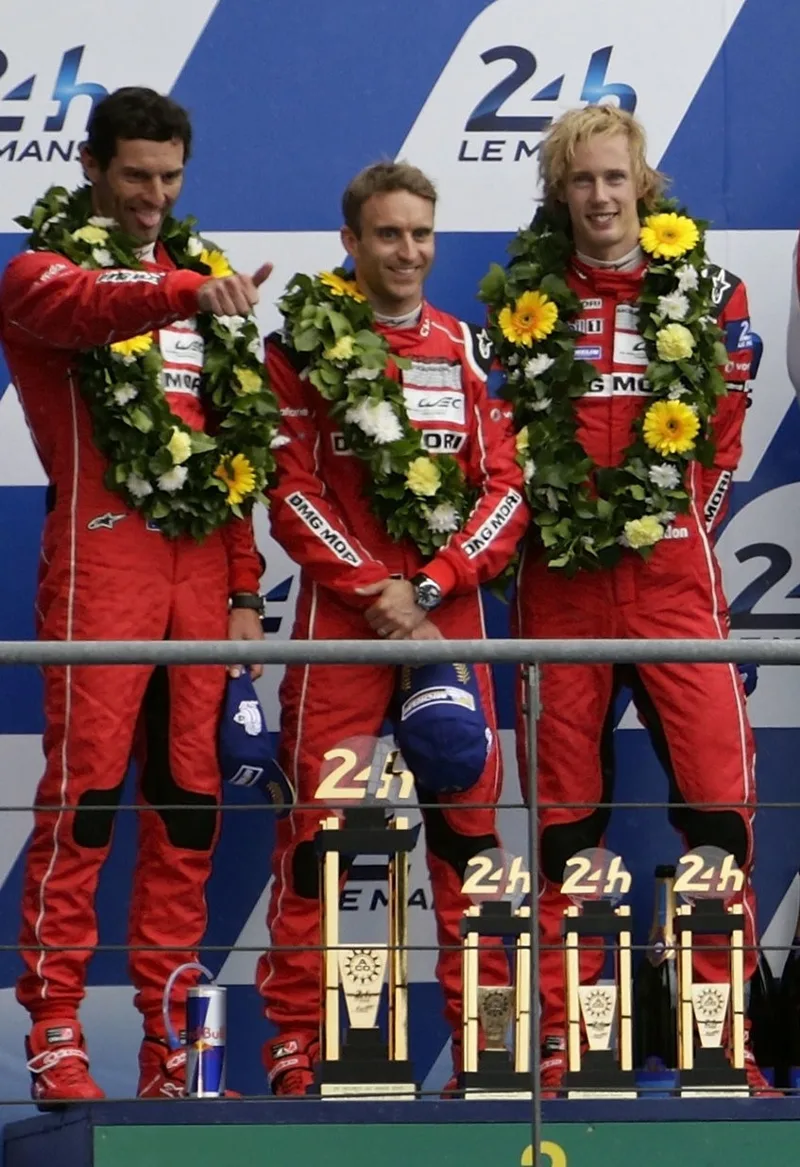
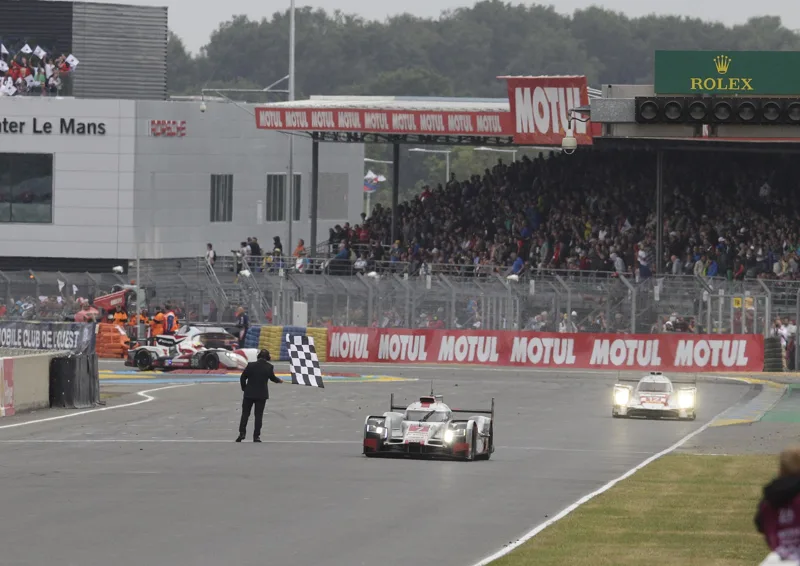
Audi's No. 2 car won the 2014 6 Hours of Circuit of the Americas on 20 September 2014, after a monsoon halted the race for 77 minutes. The stoppage reshuffled the order at the front, and the Audi crew of Fassler, Lotterer and Treluyer took the flag ahead of its sister car and a Toyota.
Who won the 2014 6 Hours of Circuit of the Americas?
The No. 2 Audi R18 e-tron quattro of Marcel Fassler, Andre Lotterer and Benoit Treluyer won. The sister No. 1 Audi of Loic Duval, Lucas di Grassi and Tom Kristensen finished 53 seconds behind, and the No. 8 Toyota of Buemi, Davidson and Lapierre took third.
It was Audi's second consecutive win of the season, following the 24 Hours of Le Mans. The No. 14 Porsche of Jani, Dumas and Lieb had led at one point, but its engine problems ended its challenge.
A monsoon, a 77-minute stop and an Audi finish after the wet-weather tyre calls had been made.
Where was the race held?
The race took place at the Circuit of the Americas near Austin, Texas, on a 3.427 mi (5.515 km) layout with 20 turns. It was the season's only North American race, and the second time the event had been held as part of the championship.
The race was held on 20 September 2014, following two days of practice and qualifying. Circuit officials, the Automobile Club de l'Ouest and the International Motor Sports Association agreed to run the race on the Saturday.
A two-day attendance of 50,334 spectators watched the event. The race was the fourth of eight rounds in the 2014 FIA World Endurance Championship.
How did the entry list shape the race?
Twenty-nine cars were officially entered, mostly in LMP1 and LMP2. Audi Sport Team Joest returned to defend the title it had won at the 2013 race, and three manufacturers were represented in LMP1.
Kazuki Nakajima was not available for the No. 7 Toyota because of a Super Formula commitment, so IndyCar driver Mike Conway replaced him. Loic Duval returned to Audi after a heavy crash in practice for Le Mans.
The Kodewa-backed Lotus team moved up from LMP2 with its new CLM P1/01, after missing the first three races because the car was not ready. James Rossiter, Christophe Bouchut and Lucas Auer were named as its drivers.
Extreme Speed Motorsports debuted an HPD ARX-03B-Honda with Scott Sharp, Ryan Dalziel and Ed Brown, while G-Drive Racing switched to the Nissan-powered Ligier JS P2.
Who were the privateers and newcomers?
Rebellion Racing was the other LMP1 privateer, and Lotus returned with its new CLM P1/01. In LMGTE Am, Krohn Racing ran a Ferrari 458 Italia for Tracy Krohn, Niclas Jonsson and Ben Collins.
Corvette Racing ran a Chevrolet Corvette C7.R in the company's first World Endurance Championship race outside the 24 Hours of Le Mans. Tommy Milner shared that car, while Wayne Taylor Racing's Jordan Taylor and Ricky Taylor were part of the same effort.
Enzo Potolicchio stopped driving for the rest of the season, and Jeff Segal took his place in the 8 Star Motorsports Ferrari. Segal was a 24 Hours of Daytona class winner, and Nicki Thiim was absent for the Sachsenring, so Richie Stanaway replaced him.
Nick Tandy replaced Richard Lietz in the Porsche Team Manthey entry, after Lietz could not recover from a fractured arm he sustained while practising at Virginia International Raceway. Patrick Pilet moved to the No. 92 car to partner Frederic Makowiecki.
What were the balance of performance changes?
The FIA Endurance Commission altered the balance of performance in LMP1 and LMGTE before the race. The two Audi R18 e-tron quattro cars had their engine power changed by 0.3 per cent, and the Aston Martins carried an extra 20 kilograms (44 lb) of ballast.
Audi's fuel flow was cut by one percent per hour, and its fuel capacity rose by 0.1 litres. The minimum weight of the LMP1 privateer cars dropped to 800 kilograms (1,800 lb), from the Le Mans limit of 810 kilograms (1,790 lb).
The CLM P1/01 and the Rebellion R-One received a four percent increase in maximum fuel flow rate, and their fuel energy per lap was cut by fifteen per cent.
How did practice go?
Three sessions came before the race: two 90-minute sessions and a one-hour session on Friday afternoon. The first session took place in overcast, cool weather, and Fassler's No. 2 Audi led the day's fastest lap of 1 minute and 51.136 seconds.
The second session was delayed for an hour by an electrical thunderstorm that caused localised flooding. Seventeen minutes in, Rigon ended up stranded off course between turns 17 and 18 in the No. 71 AF Corse Ferrari, and the red flag followed.
After the restart the rain let up, and Davidson's Toyota recorded the session's best lap of 2 minutes and 1.333 seconds. Kristensen placed the No. 1 Audi second, and Wurz's No. 7 Toyota was third.
The last session saw Kristensen top the timesheets in the No. 1 Audi, while Duval bettered his co-driver with a 1 minute and 49.480 second lap.
How did qualifying set the grid?
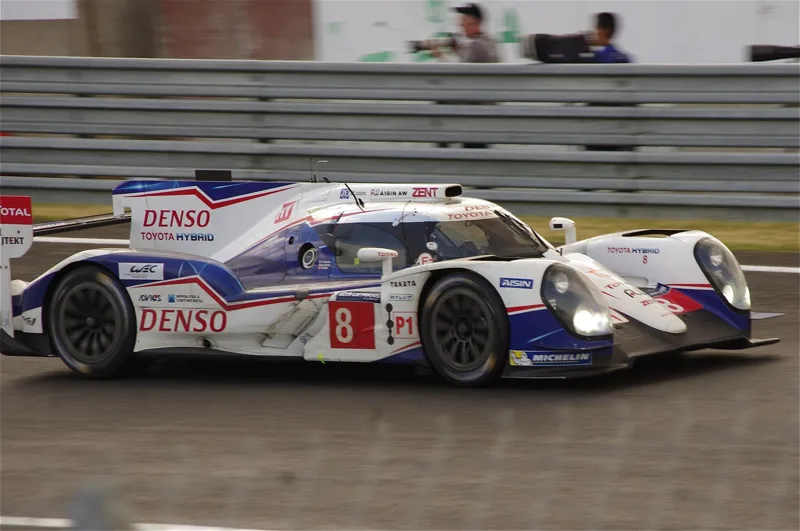
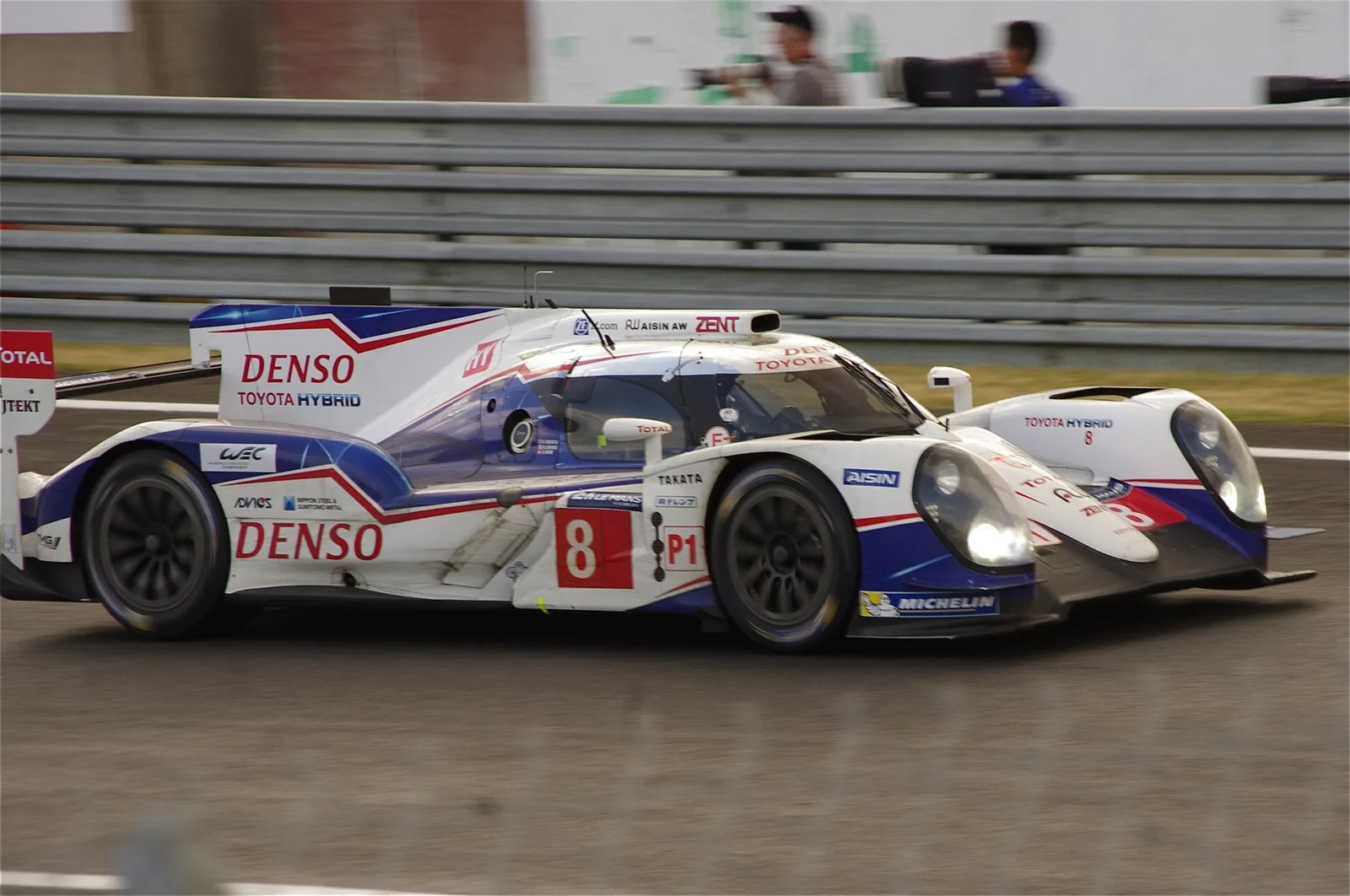
Toyota took pole with the No. 8 car of Buemi, Davidson and Lapierre, at a two-lap average of 1 minute and 49.093 seconds. It was the crew's first pole of 2014 and Toyota's third of the season.
Qualifying ran in two groups of 25 minutes on Friday, with the LMGTE cars going first.
Jani and Dumas qualified the No. 14 Porsche second, 1.190 seconds slower, after Jani's best lap was disallowed for energy recovery system limits. Hartley and Webber were third in the No. 20 Porsche.
Fassler and Lotterer put the No. 2 Audi fourth, from a second attempt by Fassler. Conway and Sarrazin took fifth in the No. 7 Toyota, and di Grassi's lap was deleted for energy recovery system limits after a computer glitch.
The class poles were taken by Kraihamer and Leimer in the No. 12 Rebellion R-One at 1 minute and 54.665 seconds in LMP1-L, Pla and Rusinov in the No. 26 G-Drive car at 1 minute and 58.075 seconds in LMP2, and Bruni and Vilander in the No. 51 AF Corse Ferrari at 2 minutes and 6.456 seconds in LMGTE Pro.
In LMGTE Am, Vaxiviere and Collard claimed their first LMGTE Am pole in the No. 75 ProSpeed Competition Porsche, at 2 minutes and 8.271 seconds.
What happened at the start?
The race started dry and clear, with air temperatures between 27 and 32 degrees C and track temperatures between 28 and 38 degrees C. Buemi led into the first corner and extended the No. 8 Toyota's lead to 40 seconds.
Buemi then lost 13 seconds after a half-spin, which let the sister No. 7 Toyota close the gap. The Audis moved ahead of both Porsches as the field settled into its first stint.
With four hours and 41 minutes left, light rain was reported in turn 11. It then turned into a monsoon that flooded the track.
Why was the race stopped?
A monsoon flooded the track, and five of the six LMP1-H cars aquaplaned off it. Race officials stopped the race after an hour and 35 minutes, and most of the cars were ordered to stop on the start/finish straight.
Officials allowed open-cockpit cars to be covered, and teams were permitted to demist their windscreens for better visibility. Several vehicles from the other three categories also aquaplaned, and drivers were circumspect as they moved to wet-weather tyres in the pit lane.
How did the race restart and finish?
Racing resumed 77 minutes later under safety car conditions, in fading light. The No. 2 Audi had been switched to intermediate tyres on a strategy call from its race engineer, Leena Gade, while its sister car stayed on dry tyres.
Jani briefly led outright, but the No. 14 Porsche lacked engine power and dropped behind Fassler and then Lotterer. A final fuel stop for Fassler gave the No. 2 Audi enough of an advantage to win.
The race finished with the No. 2 Audi 53 seconds clear of di Grassi's No. 1 car. Buemi took the No. 8 Toyota to third, completing the overall podium.
How did the LMP2 class take shape?
Extreme Speed Motorsports lined up third on the grid for its first WEC race, with Dalziel and Sharp in the HPD ARX-03b. Sharp appeared to struggle with the track conditions in qualifying, and the car finished third in the class.
The pole went to Rusinov and Pla in the No. 26 G-Drive car, the team's third pole of the season and its second in a row at the Circuit of the Americas. Howson and Matsuda started alongside them in the KCMG car. Matsuda had returned from a four-month break from prototype racing to drive for KCMG.
The KCMG Oreca finished ahead of the SMP and G-Drive cars after a race-long battle, and it was the team's first class win in the World Endurance Championship.
How did the GT classes perform?
Aston Martin took both GT classes at the Circuit of the Americas, with the No. 97 car winning LMGTE Pro and the No. 98 car winning LMGTE Am.
In qualifying, Bruni and Vilander's AF Corse Ferrari had taken the squad's fourth LMGTE Pro pole in a row.
In the first practice session Darren Turner's No. 97 Aston Martin was quickest late on in LMGTE Pro, and Stanaway helped the marque to fastest in LMGTE Am.
In the second session Makowiecki topped the LMGTE Pro time sheets in Porsche Team Manthey's No. 92. In the final session Lamy's No. 98 Vantage was fastest in LMGTE Am, with Ruberti's 8 Star Ferrari second.
Class results
| Class | Winning crew and car | Note |
|---|---|---|
| Overall (LMP1) | Fassler, Lotterer and Treluyer, No. 2 Audi | Second and third were Audi and Toyota |
| LMP1-L | Heidfeld, Beche and Prost, No. 12 Rebellion-Toyota | Dominated by a car that ran without trouble |
| LMP2 | Bradley, Howson and Matsuda, No. 47 KCMG Oreca 03R | The team's first WEC class win |
| LMGTE Pro | Mucke and Turner, No. 97 Aston Martin | Aston Martin also took LMGTE Am |
| LMGTE Am | Dalla Lana, Lamy and Nygaard, No. 98 Aston Martin | Aston Martin took both GTE classes |
KCMG came out on top of a race-long contest involving Extreme Speed Motorsports, SMP Racing and G-Drive. The No. 47 Oreca won the LMP2 category, taking the team's first class victory in the World Endurance Championship.
What did the result do to the championship?
Davidson, Lapierre and Buemi kept the drivers' lead on 96 points, but their advantage over Lotterer, Fassler and Treluyer fell to 11 points. Di Grassi and Kristensen were third with 72 points.
Beche, Heidfeld and Prost were fourth with 48 points, and Dumas, Jani and Lieb were fifth with 45 points. In the manufacturers' championship, Audi took the lead with 157 points from Toyota's 139.
Porsche stayed third on 82 points, with four races left in the season.