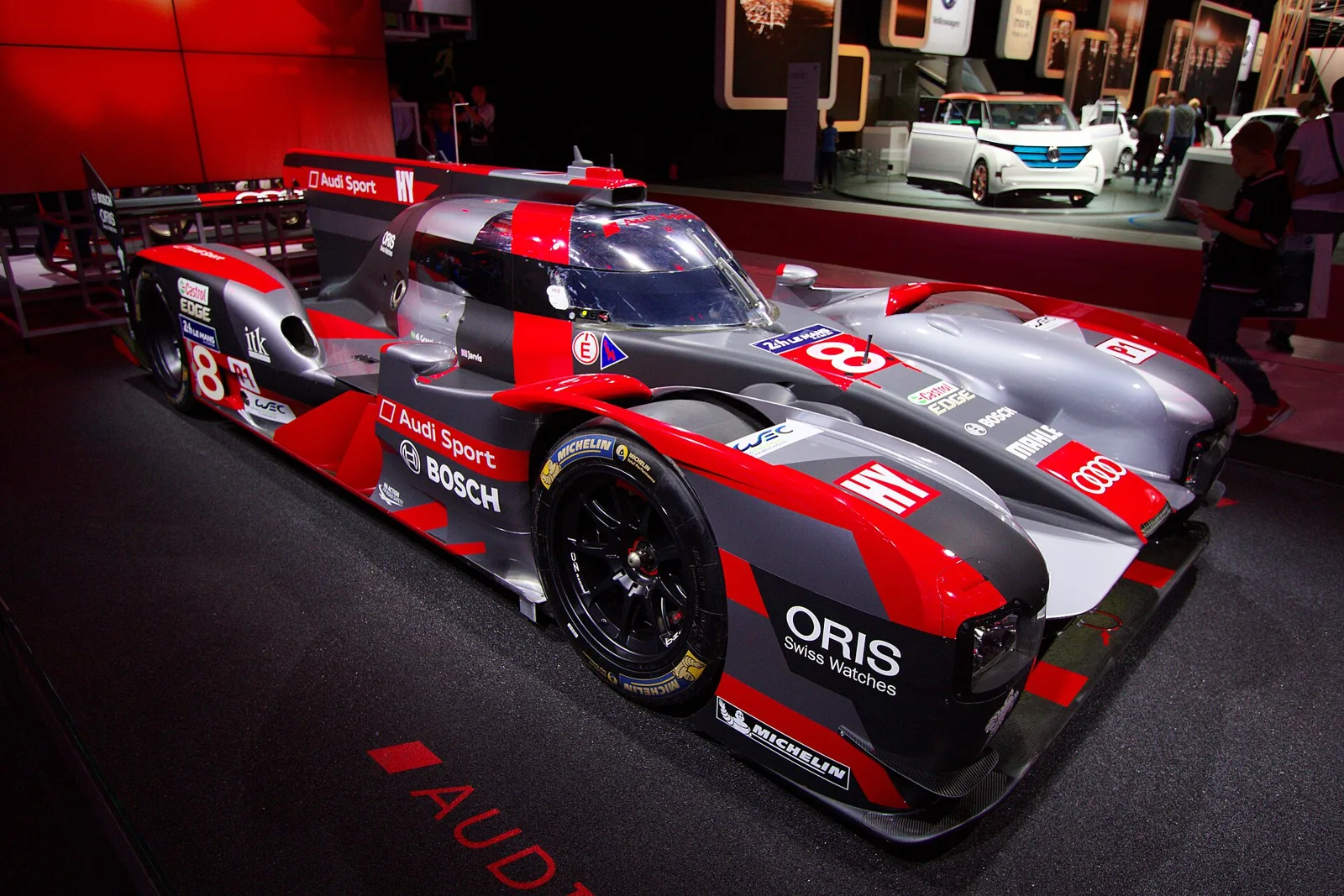
From a closed-cockpit diesel V6 to a flywheel hybrid that won Le Mans, the R18 carried Audi through three seasons of title fights before the 2016 exit.
The Audi R18 was a closed-cockpit Le Mans prototype with a 3.7 litre V6 diesel and, from 2012, a flywheel hybrid. It won Le Mans in 2011, 2012 and 2013, took the 2013 manufacturers' title and raced until Audi left the WEC after 2016.
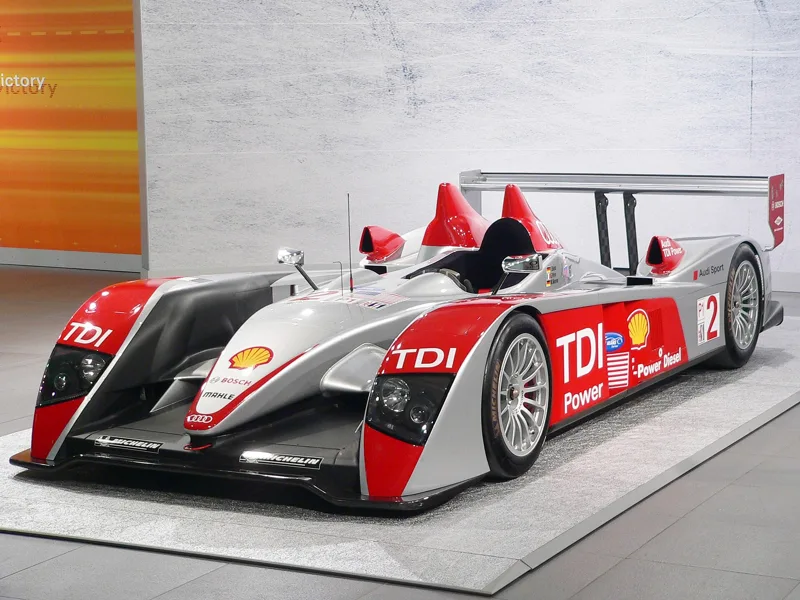
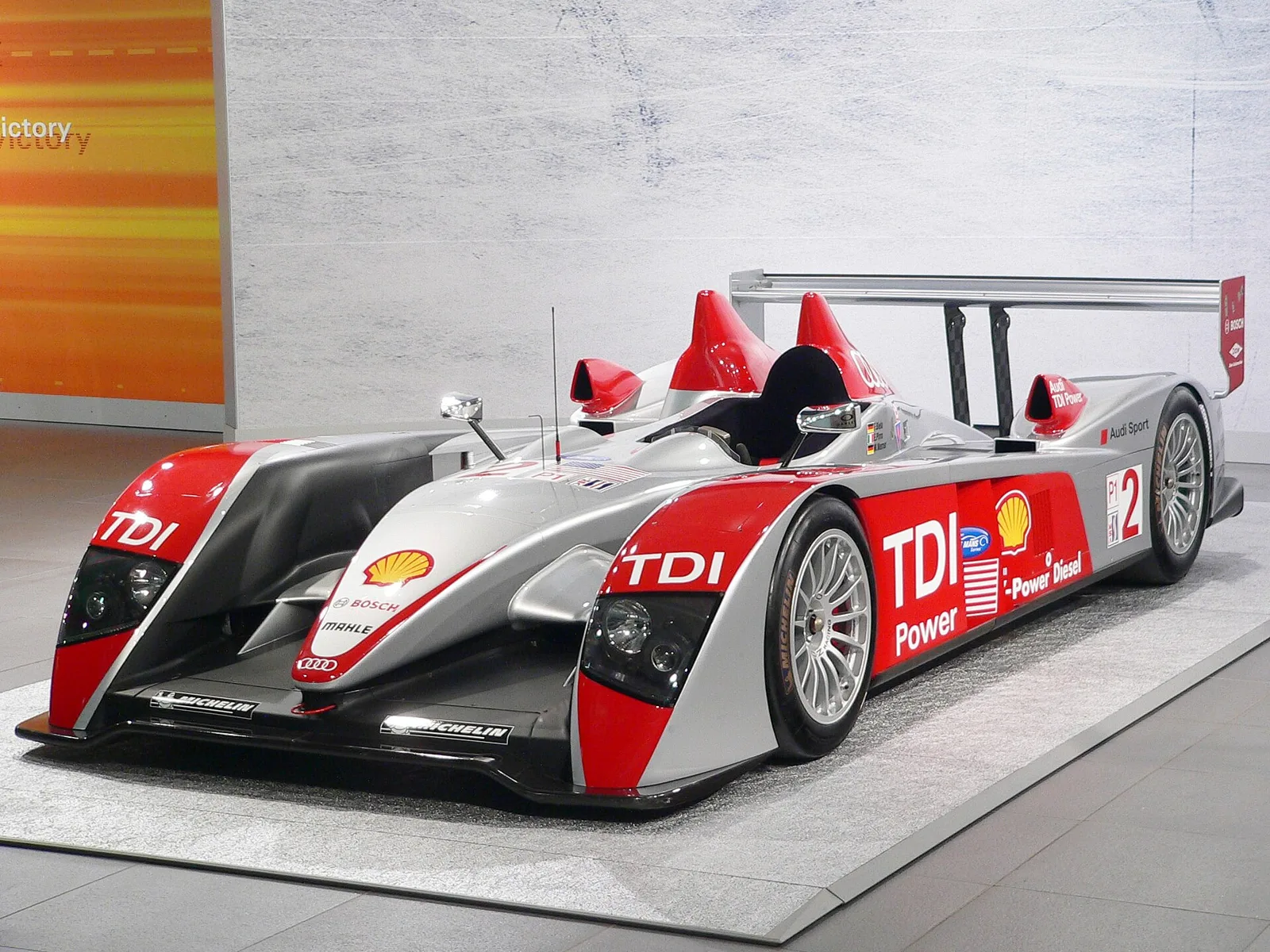
The Audi R18 was a series of Le Mans Prototype racing cars that Audi built as the successor to the R15 TDI. It was the first closed-cockpit Audi prototype since the 1999 R8C, and the first Audi racing car to use hybrid power. It won the 24 Hours of Le Mans in 2011, 2012 and 2013, and Audi used the car until it left the FIA World Endurance Championship after 2016.
Why did Audi move to a closed cockpit?
New rules introduced in 2011 cut the capacity of diesel engines, and with it their power and torque. Audi responded by moving to a closed cockpit to reduce drag, which was a way to keep efficiency up and maintain top speed. The R18 was the first Audi Le Mans prototype with that design since 1999.
The closed cockpit was heavier in principle, but Audi concentrated on saving weight. The R18 weighed 850 kg (1,870 lb), lighter than the R15, before 50 kg (110 lb) of ballast brought it to the 900 kg (1,984 lb) minimum. Its single-piece monocoque was reportedly as light as 70 kg (150 lb). The car's wheelbase was 64 mm (2.5 in) shorter than the R15's, because the V6 was smaller than the V10 it replaced.
Aerodynamic work was done in the Sauber wind tunnel at Hinwil in Switzerland, and Audi also tested the car in a climatic wind tunnel to study the effects of rain on visibility and the wipers. The climatic tests allowed Audi to remove the driver's air conditioning while staying within the regulatory temperature limits, which saved weight and gave some power back. A heated windscreen came from Audi's A4 DTM programme.
A closed-cockpit diesel V6 with a flywheel hybrid that won Le Mans in 2011, 2012 and 2013.
How did the R18's V6 engine differ from the R15?
The R18 used a new 3.7 L V6 diesel that had been in development since 2009. It had an aluminium alloy block and a 120 degree bank angle, which lowered the centre of gravity, allowed a hot-vee turbocharger layout and left room for a hybrid system.
A diesel particulate filter helped make its engine note quiet and kept exhaust soot low.
The engine was about 25% lighter than the R15's V10 and roughly as heavy as the petrol V8 of the R8. Audi put its output at more than 540 horsepower (403 kW; 547 PS), with 900 N m (664 lb ft) of torque. A single Garrett TR30R variable-geometry turbocharger replaced the twin units of the Peugeot 908 HDi FAP and the earlier R15 TDI.
The gearbox was a new six-speed unit custom-built by Xtrac, which was operated electrically rather than pneumatically, saving the weight of the pneumatic system. The car also carried LED headlights, which were a first for Audi.
How was the R18 launched and tested?
The launch took place on 10 December 2010 in Ingolstadt. After private testing of the initial specification at Sebring, the R18 appeared at the 2011 12 Hours of Sebring with a major revision that Audi called Evolution 2. It did not race there, as an updated R15 took the place of the R18 in that event.
Audi said the Evolution 2 car was 40 kg (88 lb) lighter than the first specification.
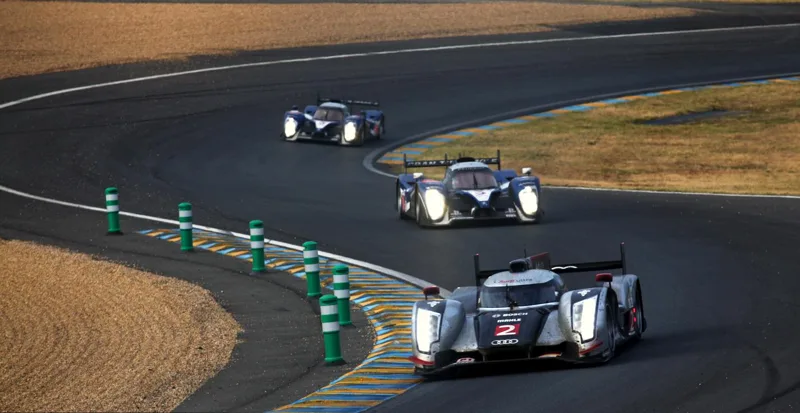
The R18 made its race debut at the 2011 1000 km of Spa in May, finishing third in the Intercontinental Le Mans Cup. At Le Mans that year, Allan McNish and Mike Rockenfeller were involved in collisions with GTE Ferraris, but the No. 2 car of Marcel Fassler, Andre Lotterer and Benoit Trelyer went on to win the race by 13.854 seconds. It was Audi's 11th win at the race in the previous 13 years.
Why did the RP2 hybrid win Le Mans in 2012?
For 2012 Audi introduced two cars, the R18 ultra without hybrid power and the R18 e-tron quattro with it. Both used a new chassis known as RP2, which was 85 kg (187 lb) lighter than the RP1 R18. Development of the RP2 began in February 2010, and the chassis could accommodate an electro-flywheel hybrid system at the front axle.
The hybrid used a 150 kW (201 hp; 204 PS) MGU-K on the front axle, which stored energy in a composite flywheel that could spin very fast. The flywheel came from the Williams F1 team, which had designed it but never raced it. The hybrid could only deploy above 120 km/h (75 mph), and while it was deploying the car produced more than 700 horsepower (522 kW; 710 PS).
Audi also changed the car to keep weight down. A new Xtrac gearbox had a carbon composite housing with titanium inserts, the monocoque was built with Dallara, and the brakes were Brembo units in a Formula One-style housing. Visibility was improved after the severe crashes of the 2011 Le Mans race, with larger windows and reworked head restraints.
At the 2012 Le Mans the e-tron quattro finished first and second, while the Ultra came third and fifth. The leading car covered 5,151.8 km with 33 pit stops. Audi had entered four cars at the race, and it also finished 1-2-3-4 at the 6 Hours of Spa-Francorchamps that year.
How did the R18 dominate the 2013 season?
In 2013 Audi used the hybrid system on every car and retired the non-hybrid Ultra. The RP3 kept the 500 kJ flywheel system from Williams Hybrid Power, but the MGU-K gave way to two Bosch units, each 74 kW (100 hp; 101 PS), that drove the front wheels. The result was four-wheel drive, quattro, and a smaller 58-litre fuel tank.
Audi added rear wing extensions and a blown diffuser, which used exhaust gases to keep turbulent air away from the rear diffuser. Off-throttle exhaust blowing burned fuel to keep the effect working, and media outlets noted that at Silverstone the 2013 car burned 21% more fuel while covering just 1.5% further than the previous year's car.
The season began with a win at Silverstone for the No. 2 car of Tom Kristensen, Allan McNish and Loic Duval. Audi took a 1-2-3 at Spa, with the No. 1 winning, and then won the Le Mans 24 Hours. Qualifying there was set by the No. 2 car at 3 minutes and 22.349 seconds, and Audi controlled the race from the start.
Audi then won at Sao Paulo, where the No. 1 took the victory, and at Austin, where the No. 2 car won 23 seconds ahead of Toyota. Fuji was the shortest race in FIA WEC history, with only eight green flag laps after a safety car start in heavy rain. The No. 1 won at Shanghai by 15 seconds, and at Bahrain the No. 2 retired while the No. 1 finished second.
| Season | Event | Result |
|---|---|---|
| 2011 | 24 Hours of Le Mans | Win by 13.854 seconds for the No. 2 car |
| 2012 | 24 Hours of Le Mans | e-tron quattro first and second, Ultra third and fifth |
| 2013 | 24 Hours of Le Mans | Win for the No. 2 car, with a 3:22.349 qualifying lap |
| 2013 | Shanghai | Win for the No. 1 by 15 seconds |
| 2013 | Manufacturers' title | Won by sixty-four and a half points |
| 2014 | Austin | Win for the No. 2 car, first and second Audi podium |
| 2015 | Silverstone and Spa | Two wins for the No. 7 car |
| 2016 | Spa-Francorchamps | Audi's first win of the season |
Audi ended the 2013 season with the manufacturers' title, a margin of sixty-four and a half points. The season was defined by fast race pace and good consistency.
What changed with the 2014 R18?
For 2014 Audi introduced an entirely new car called the RP4, which looked very different from the 2013 model. Its chassis was built with the Italian engineering firm YCOM rather than Dallara. A larger 4.0 L V6 made more than 400 kW (540 bhp), the front MGU more than 170 kW (230 hp), and the flywheel stored over 600 kJ.
The season started badly at Silverstone. In the first hour the No. 1 car crashed while leading in the rain at Woodcote, and its suspension damage ended its race. The No. 2 car was lost in hour four after Benoit Trelyer crashed into a wall and was trapped in the gravel. Both cars were classified as non-finishers, and they had to be rebuilt.
Spa was better, with the No. 1 second, the No. 2 fifth one lap down and the No. 3 sixth two laps down. Austin was more encouraging, as the No. 2 car won and the No. 1 finished second, with the first two Audi podium places. Audi took the lead in the manufacturers' championship after that race, 18 points ahead of Toyota.
The rest of 2014 was harder. At Fuji Audi scored 18 points against Toyota's 43, which allowed Toyota to move eight points ahead. At Bahrain Toyota's Anthony Davidson and Sebastien Buemi clinched the drivers' title, and the Toyota TS040 Hybrid proved the best all-round LMP1 car that year. At Sao Paulo, Porsche won its first race of the season, and Tom Kristensen's final race as a race car driver came there with the No. 1 car in third.
How did the R18 fare in 2015?
For 2015 Audi moved the car up to the 4 MJ hybrid class, which meant a more powerful front hybrid. The 4.0 L V6 produced 416 kW (558 bhp), and the front hybrid made 203 kW (272 bhp). The flywheel stored up to 700 kJ, and the car weighed 870 kg.
The aerodynamics were revised, with a slimmer engine cover and updated headlights.
The No. 7 car won at Silverstone, finishing about four and a half seconds ahead of the Porsche No. 18 after a battle in which both cars made pit stops. At Spa the No. 7 won by 13 seconds from the same Porsche, after a mistake dropped it from second to fourth early on. Audi's pace and pit strategy won both races, and the No. 7 gave Audi a 17-point lead over Porsche in manufacturers' points at that stage.
Le Mans was the turning point. The No. 19 Porsche won the race, and the No. 7 Audi finished third, two laps down, after its engine cover was lost in the sixteenth hour. The No. 8 finished fourth and the No. 9 was seventh. The result put Porsche sixteen points ahead of Audi in the manufacturers' points.
Shanghai and Bahrain were decided by Porsche. Porsche took the manufacturers' title at Shanghai with a 1-2, and at Bahrain the No. 18 Porsche held off the No. 7 Audi for the win. The drivers' title was taken by the No. 17 Porsche by five points, 166 to 161.
What was the final R18 season in 2016?
The 2016 R18 was revealed in March 2016 as a largely new car, with a slimmer nose and a smaller monocoque space that directed airflow to the underfloor. It weighed 875 kg and had a monocoque 4,560 mm long, which was the maximum length allowed. The hybrid moved to the 6 MJ class, and a battery replaced the flywheel.
The front motor generator could store and deliver over 355 kW (476 hp), but Le Mans limited it to 304 kW (408 hp). The engine still had a V6 TDI with a variable geometry turbocharger, and its fuel use was 32.4% lower than in 2011. The fuel capacity fell to 49.9 litres, while the engine's output was over 390 kW (520 hp).
The 2016 campaign opened with a Silverstone win, but after the race the car was disqualified over the thickness of its skid block, and Audi did not dispute the decision. Spa brought Audi's first counted win of the season, and the R18 also won at Bahrain. A third place at Le Mans and a second place in the manufacturers' championship were the season's other results.