How a turbo-diesel V12 built by Audi and Dallara became the first diesel race car to win the 24 Hours of Le Mans, then went on to win again in 2007 and 2008.
The Audi R10 TDI was a turbo-diesel LMP1 prototype built with Dallara. Its 2006 Le Mans victory was a first for diesel, and two more wins followed in 2007 and 2008 before rule changes ended Audi's open-cockpit lineage ahead of 2011.
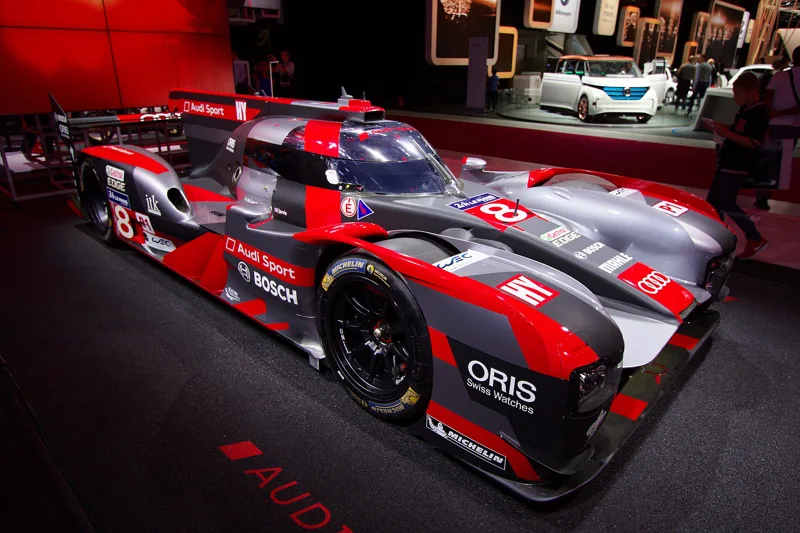
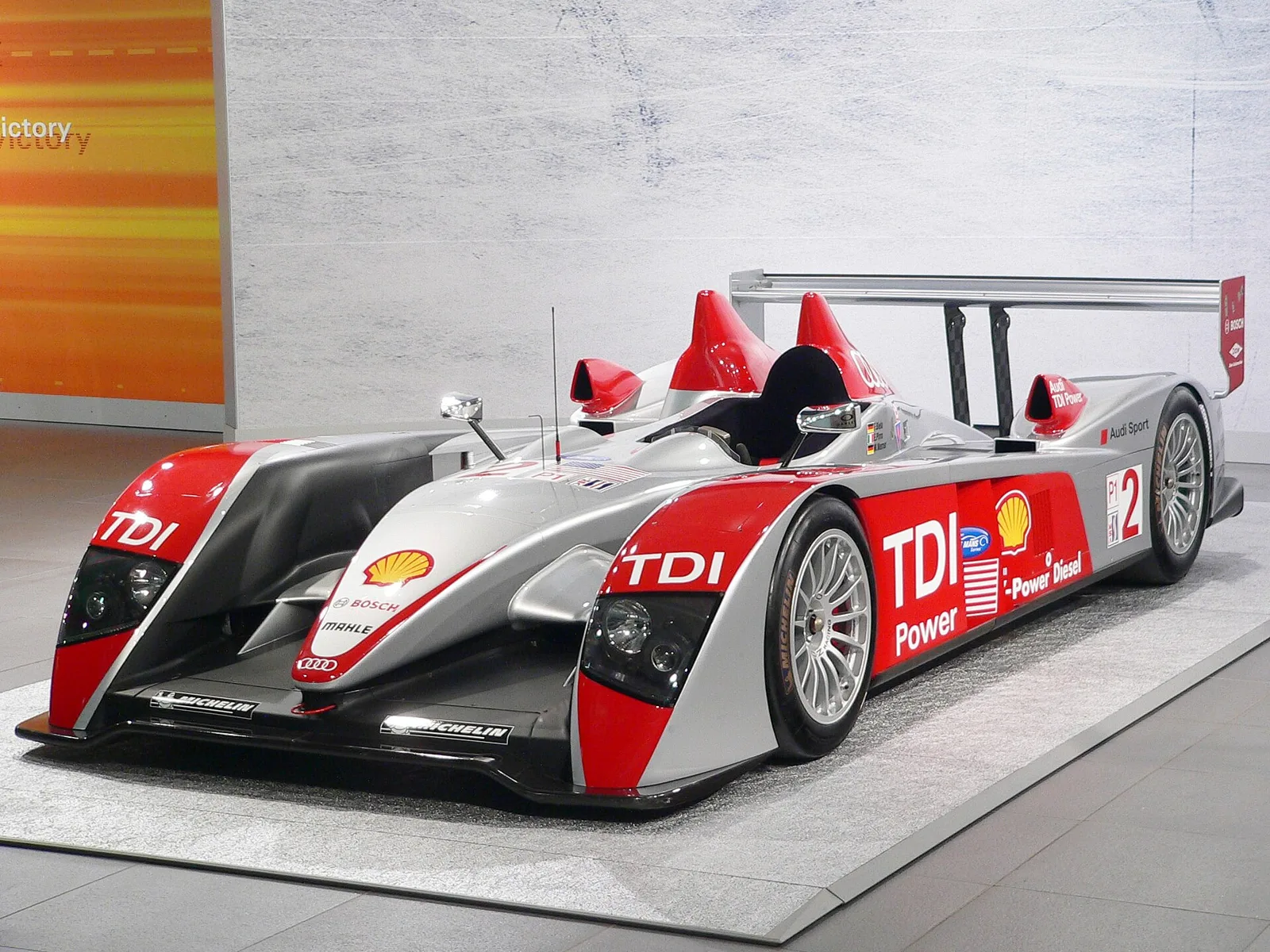
The Audi R10 TDI was a sports prototype designed and built by Audi with Dallara to the LMP1 regulations. It became the first diesel car to take victory at the 24 Hours of Le Mans in 2006, roughly 200 days after its unveiling in Paris, and it went on to win the race again in 2007 and 2008.
Why did Audi build a diesel race car?
The R10 grew out of Audi's own racing experience. Its predecessor, the R8 Le Mans Prototype, was an open-cockpit design built on lessons from the R8R. Audi kept to open cockpits until the closed-cockpit R18 TDI arrived in 2011, and the R8 dominated the LMP900 class from 2000, winning 63 of 79 races.
Diesel was the next step. In January 2002 Audi's head of engine technology, Ulrich Baretsky, discussed the future of racing with Automobile Club de l'Ouest officials over a beer in Ingolstadt. Half of the European cars on the market ran on diesel, so he suggested a diesel race car to Wolfgang Hatz, the head of engine development. Hatz saw the potential for technology to move between race and road cars.
Wolfgang Ullrich, head of Audi Motorsport, backed the idea because the American Le Mans Series was part of Audi's calendar and Audi wanted to bring its diesel road cars to the United States. He wanted to change the view that diesels were dirty, and he believed motorsport was the best way to show that a diesel could be sporty. Baretsky later met Ferdinand Piech, then chairman of the Volkswagen supervisory board, during the 2004 Le Mans race, and Piech gave the project the go-ahead.
A turbo-diesel V12 with more than 650 PS, and the first diesel car to win the 24 Hours of Le Mans.
How did the R10's engine work?
The first engine prototype was a production-based Audi V8 with a bore and stroke similar to the planned V12. Its first runs on the dyno came in early 2005, and by the R10's unveiling in December of that year it had completed around 1,000 hours of testing.
The block was a particular challenge, and Baretsky chose an aluminium-silicon alloy over cast iron because cast iron was too heavy.
A Bosch common rail system fitted piezoelectric injectors, and fuel reached the cylinders at more than 1,600 bar (23,206 psi). Each bank had its own Garrett turbocharger, limited to 2.94 bar (42.6 psi). Output exceeded 650 PS (478 kW; 641 hp) across 3,000 to 5,000 rpm, and torque reached 1,100 N m (811 lb ft). The Bosch Motronic MS14 engine control unit was bespoke, because Bosch had never written software for an engine this powerful.
The exhaust needed a diesel particulate filter, which Dow Automotive developed from a ceramic honeycomb structure. The filters were so effective that the exhaust was almost transparent, and the car ran about 5 dB quieter than the R8, at 105 dB. Audi placed the filters at the end of the exhaust pipes, which slightly disturbed the weight distribution. Baretsky said the team would have preferred them closer to the engine, but that would have put them in the middle of the rear axle.
The R10 also needed a new gearbox. Its torque curve meant a six-speed was unnecessary, so Xtrac supplied a five-speed pneumatically actuated sequential unit with a ZF Sachs ceramic clutch. The new gearbox was lighter than the R8's, with an aluminium case in place of the R8's magnesium one, and Bosch supplied the Acceleration Slip Regulation unit.
How efficient was the R10 compared with rivals?
The R10 was among the most efficient racing engines of its era. Its fuel use at the 2006 Le Mans was 41.05 L/100 km (5.73 mpg-US), and at the 2008 race, which was hampered by rain, 45.56 L/100 km (5.16 mpg-US). A 2007 Formula One car was said to use around 75 L/100 km (3.14 mpg-US) by comparison.
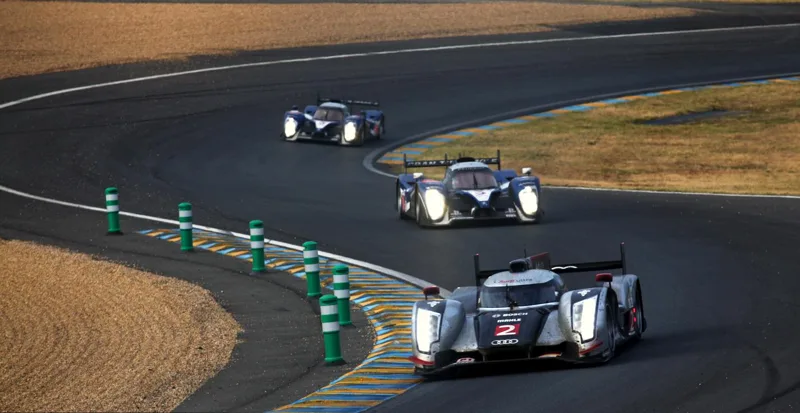
That efficiency let the R10 run longer stints than the R8. Victory in 2006 came with four more laps per stint than the closest rival, the petrol-powered Pescarolo-Judd. In 2008 the Peugeot 908 HDi FAP was the quicker car, but it needed to pit a lap earlier than the R10 for fuel, which helped Audi to victory.
How did the R10 win Le Mans in 2006?
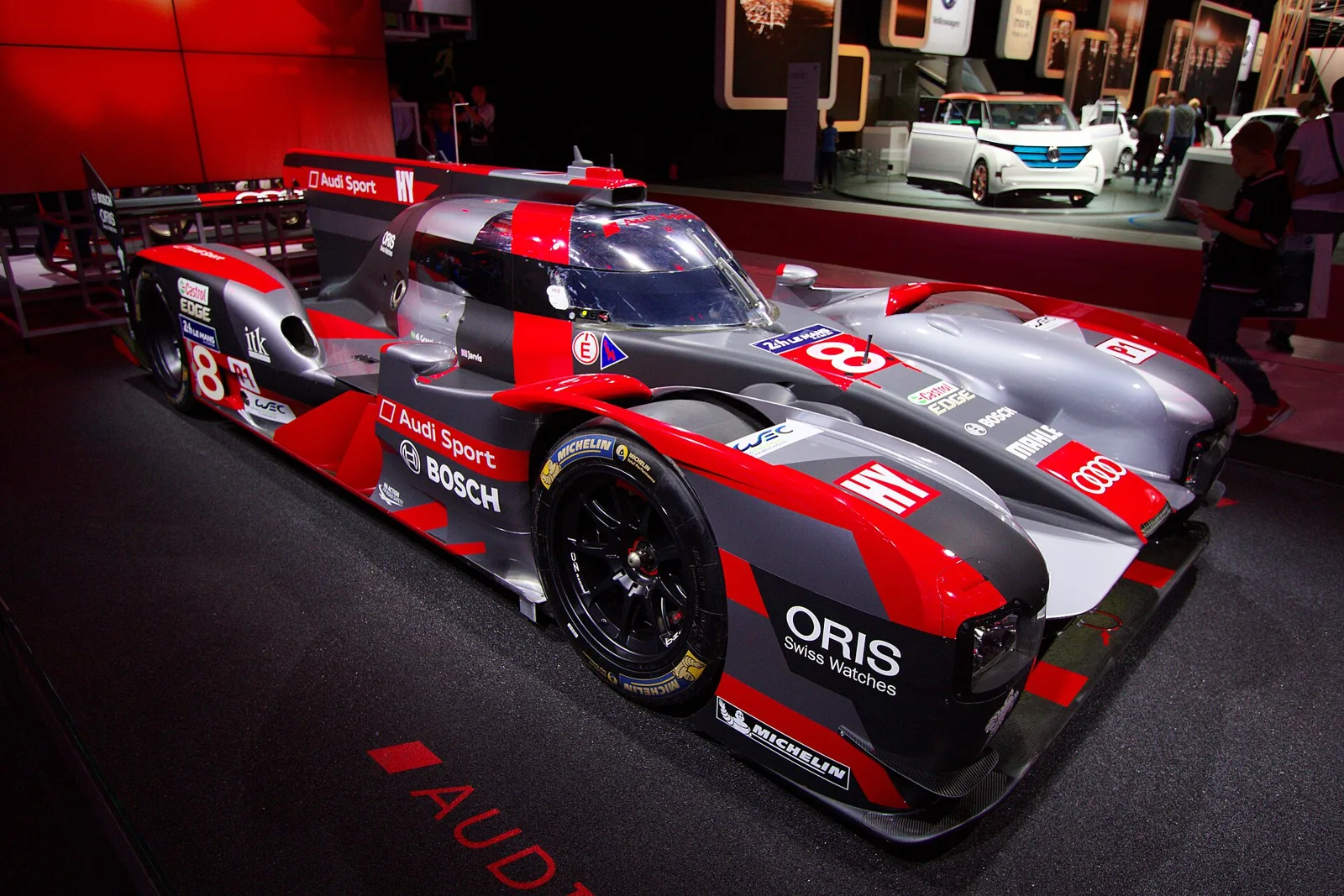
The R10 won the 2006 24 Hours of Le Mans, which made it the first diesel win at the event. Joest Racing ran the car at Le Mans, with Champion Racing campaigning it in the American Le Mans Series. The No. 8 car finished first after a record 380 laps, four laps ahead of the No. 17 Pescarolo-Judd.
The campaign did not start smoothly. A problem with the piezoelectric injectors appeared during qualifying, and it lasted through the race. Audi limited the distance each engine ran in qualifying to preserve them. Rinaldo Capello put the No. 7 car on pole at 3:30.466, with Marco Werner's sister No. 8 car close behind at 3:30.584.
In the race the No. 7 car pitted in the fourth hour to replace a failed injector. The fault was hard to trace, so Audi replaced the entire right-hand bank, and the car rejoined in 14th, six laps behind the leader. The No. 8 was not affected by the injector problem, and its only unscheduled stop came early the next morning for a gear cluster change.
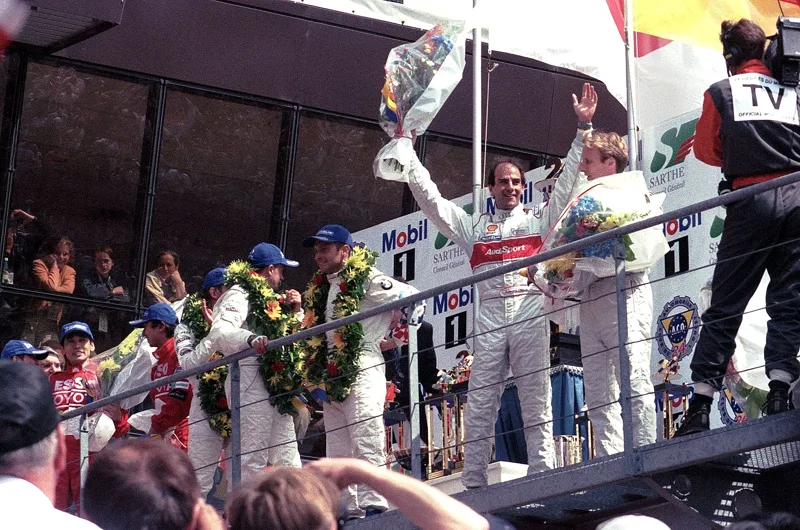
Tom Kristensen covered 16 laps on a single 90 L (23.8 US gal) tank of diesel and set the fastest lap, 3:31.211, on his way to the podium. The win also ended a long gap for diesel, the first such success in a major event since 1953, when a Cummins Special took pole at Indianapolis. Emanuele Pirro extended his consecutive podium finishes to eight.
The R10 then made an exhibition appearance in Britain at the 2006 Goodwood Festival of Speed, where Allan McNish raced a Harrier Jump Jet from a standing start over 1 km (0.6 mi). The R10 was the first to reach 241 km/h (150 mph), and then the Harrier overtook it and took off.
How did the R10 perform in the American Le Mans Series in 2006?
Champion Racing ran the R10 as Audi Sport North America. Frank Biela and Emanuele Pirro drove the No. 1 car, and Allan McNish and Rinaldo Capello drove the No. 2. The R10 was swapped for the R8 after Sebring, and the R10 did not return until the fifth round, the Utah Grand Prix.
Ullrich said the R10 still needed development, so the R8 covered the US races until Le Mans was done.
At the 12 Hours of Sebring, Tom Kristensen led every lap in the No. 2 car to give him a record fourth overall win at the event. The No. 1 car retired after cooling problems caused by tyre debris. At the Utah Grand Prix, Pirro set the fastest lap and overtook for a win by 0.314 seconds over Lucas Luhr's Porsche.
The championship was decided at Mosport, where McNish and Capello extended their lead to 49 points and clinched the drivers' title. By the season's end Audi had become the first manufacturer to win every race in the LMP1 class of the American Le Mans Series.
What did the R10 achieve in 2007?
Audi made only minor changes for 2007: lighter particulate filters, a more precise suspension, an improved Bosch control unit and a refined tyre construction from Michelin. Lucas Luhr and Mike Rockenfeller joined from Porsche, and the car's power band was reshaped to make it more driveable and frugal.
Audi ran three cars at the 75th 24 Hours of Le Mans. In the race, the Peugeot of Sebastien Bourdais led the early running before the Audis took over, and rain arrived late. Rockenfeller crashed the No. 3 R10 into a barrier near Tertre Rouge while the track was still damp, and his car retired. Rinaldo Capello's car later lost a wheel in the night, and he hit the barriers at the Indianapolis curve.
Frank Biela, Emanuele Pirro and Marco Werner won the race in the No. 1 car. The result gave Audi its fourth consecutive Le Mans win, covering 5,029 km (3,125 mi) at an average of 209.15 km/h (129.96 mph). The R10 reached a top speed of 351 km/h (218 mph) during the race. Pirro extended his podium run to nine, a record yet to be equalled.
In the ALMS, Audi's 2007 season started with a 12 Hours of Sebring win for the No. 2 car, which was Audi's eighth in a row there. At the new street circuit in St. Petersburg, McNish was penalised and dropped to eighth before he won, and Werner finished second. The streak of nine consecutive ALMS race wins ended at Long Beach, where Romain Dumas won in a Porsche RS Spyder.
What happened to the R10 after 2008?
In 2008 Audi entered the Le Mans Series for the first time, with Joest Racing running two cars against Peugeot's two-car effort. At Le Mans the No. 2 car of Rinaldo Capello, Allan McNish and Tom Kristensen won by just over four minutes from the No. 7 Peugeot.
The Peugeot was up to 3.5 seconds a lap faster in the race, but Audi's quick pit work and the R10's rain performance carried the day.
Audi also won the 2008 Le Mans Series constructors' title, and the No. 2 car of Mike Rockenfeller and Alexandre Premat took the drivers' and teams' titles. The ALMS was harder, because the Penske Porsches and multiple Acura teams were now also in the fight. At Detroit a rule infraction meant neither Audi finished in LMP1, the first time an R10 had failed to win in that class. McNish won at Petit Le Mans.
For 2009 the R10 was replaced in the works team by the R15 TDI, which had a smaller, lighter and more efficient TDI engine. Colin Kolles ran privately entered R10s at Le Mans in 2009 and 2010 with factory help on servicing. The best R10 finish in 2009 was seventh overall. In 2010 both Kolles cars failed to finish, because too much torque strained the gearbox.
| Year | Le Mans result | Notable figure |
|---|---|---|
| 2006 | Win for the No. 8 car | 380 laps, 215.4 km/h (133.8 mph) average |
| 2007 | Win for Biela, Pirro and Werner | 5,029 km (3,125 mi) at 209.15 km/h (129.96 mph) |
| 2008 | Win for Capello, McNish and Kristensen | Just over four minutes ahead of the Peugeot |
| 2009 | Privately entered R10, seventh overall | Best R10 result that year |
| 2010 | Two Kolles R10s, both retired | Gearbox strain from torque |
How is the R10 remembered?
The R10 remains one of Audi's most successful Le Mans prototypes, along with the R8. It entered 48 races and won 36 of them. Its 380-lap distance was a new record at the time, but it did not beat the distance record Helmut Marko and Gijs van Lennep set at the 1971 Le Mans race, which the R15 later broke.
The R10 also won the 2006 Autosport Pioneering and Innovation Award.
The changes made by the ACO brought an end to the open-cockpit lineage before the 2011 season. Turbodiesel engines shrank from 5.5 L (335.6 cu in) down to 3.7 L (225.8 cu in), and the fuel tank fell from 81 L (21.4 US gal) to 63 L (16.6 US gal). Aerodynamic efficiency became more important, and Ullrich said that the driver change was no longer the dominant factor in pit stop time.
Motor Sport magazine featured the 2008 winning trio in a 2014 special. McNish recalled that the car had to be thrown around, and that drivers had to attack every lap. Capello said the R10's front fascia was the most beautiful front end Audi Sport had produced in ten years.