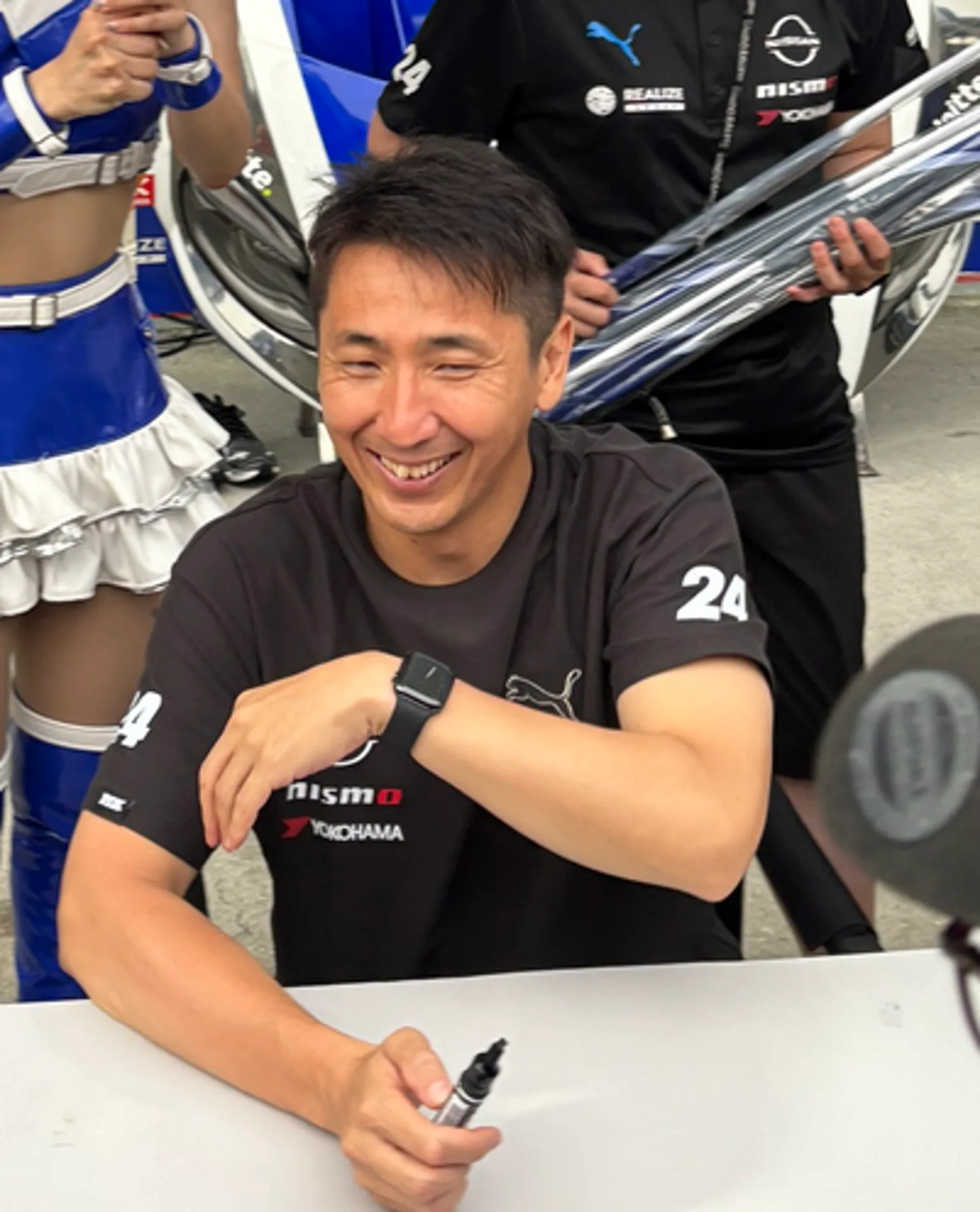
From Suzuka karting to the all-time GT500 wins record, Matsuda won Formula Nippon titles in 2007 and 2008 and two Super GT championships with Nissan.
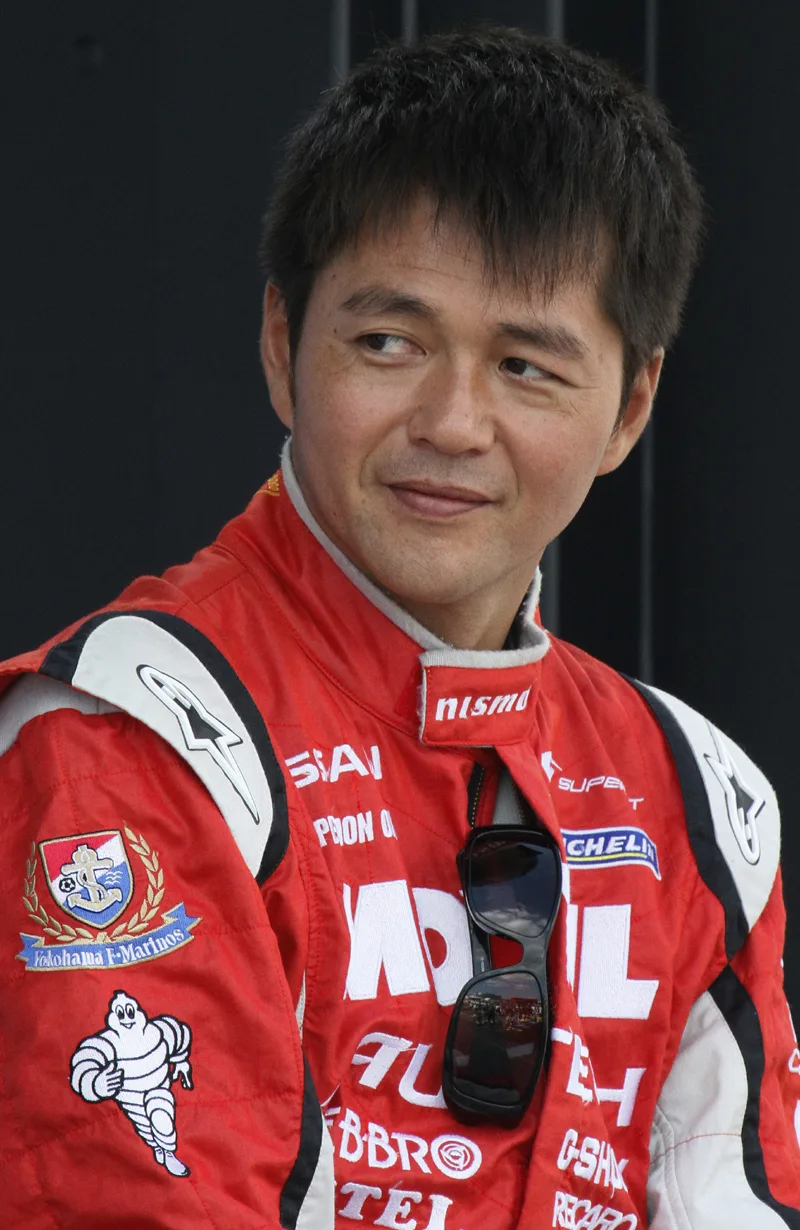
Tsugio Matsuda is a Japanese driver for Nissan and Kondo Racing who holds the Super GT record for GT500 wins. He won the GT500 title in 2014 and 2015 and the Formula Nippon title in 2007 and 2008. He was born in 1979 and is a KCMG ambassador in Super Formula.
Tsugio Matsuda is a Japanese racing driver who competes for Nissan and Kondo Racing in Super GT. He holds the all-time record for GT500 career wins, won the GT500 championship in 2014 and 2015, and earlier won back-to-back Formula Nippon titles in 2007 and 2008. He also serves as a team ambassador for KCMG in Super Formula.
Who is Tsugio Matsuda?
Matsuda was born on 18 June 1979. He has spent most of his career in Japan's top sports car and open-wheel series, racing for a long list of teams while staying with Nissan for much of his career in GT500.
His international work has been smaller in scale. He has taken part in the FIA World Endurance Championship and the Intercontinental GT Challenge for Nissan and its partner teams, and he has made appearances at Le Mans and in the Bathurst 12 Hour.
A karting graduate of Suzuka who became Super GT's most prolific GT500 winner and a two-time champion in his own right.
How did Matsuda start out in racing?
Matsuda began karting in 1993. In 1996 he won the ICA class of the CIK/FIA Asia-Pacific Championship at Suzuka, his home track. He then enrolled in the Suzuka Circuit Racing School Formula course in 1997, graduating alongside Toshihiro Kaneishi and the future two-time Indianapolis 500 winner Takuma Sato.
In 1998 he moved up to the All-Japan Formula Three Championship, racing for Satoru Nakajima. His first race win came at Twin Ring Motegi, a circuit that was new at the time, and he ended the series fourth. He stayed in All-Japan F3 for 1999 and finished fifth, then placed fourth in that year's Macau Grand Prix.
How did Matsuda make his mark in Formula Nippon?
While still in his first All-Japan F3 season, Matsuda stepped in for Koji Yamanishi with Nakajima Racing at Suzuka, the fifth round of that year's Formula Nippon calendar. Only weeks after turning 19, he came home sixth and picked up a championship point on debut.
His first full-time Formula Nippon season came two years later, alongside Toranosuke Takagi at Nakajima. In only his fourth race in the category, at Mine Circuit, he won. At 20 years, 11 months and 3 days old, he became the youngest Japanese winner in the category's history.
Matsuda then moved through several teams. He went from Nakajima to Cerumo in 2003, to Team 5Zigen in 2005, and to Team Impul in 2006. With Impul he had his best season to that point, with a win at Autopolis, six podiums and a pole, and he finished runner-up to Benoit Treluyer.
How did Matsuda win the 2007 title without a race victory?
Matsuda won the 2007 Formula Nippon championship without taking a race win. He was consistent through the year, with eight top-five finishes in nine races. The title was settled after the final round at Suzuka, when Takashi Kogure was disqualified after technical inspection and Matsuda was declared champion.
The title came after Takashi Kogure, who had been provisionally declared the winner of the last race and was champion-elect, was disqualified when his car failed post-race technical inspection. Matsuda was declared champion as a result.
Why was Matsuda's 2008 season his best?
Matsuda had his finest season in 2008. He won his first three races in a row, took four of the first five, and claimed five straight pole positions in that period. He clinched the title at Fuji with two races remaining.
The 2008 championship made him the first driver since the formation of Japan Race Promotion to win back-to-back Formula Nippon titles. He finished the year with five wins, six pole positions and seven podiums.
When did Matsuda's Formula Nippon career fade?
Matsuda slumped in 2009 and finished eleventh out of thirteen drivers. Joao Paulo de Oliveira replaced him for 2010, while Matsuda joined Kondo Racing from the fourth round. A lack of sponsorship then forced him to miss the 2011 season, although he returned for KCMG at the non-championship JAF Grand Prix at Fuji.
He rejoined Impul in 2012 as Oliveira's team-mate and finished second at Suzuka. He opened the 2013 Super Formula season with another second place at Suzuka. He raced in Super Formula from 1998 to 2013, and in 2019 he was appointed team principal of KCMG, a role he kept until 2023.
How did Matsuda's Super GT career begin?
Matsuda made his GT500 debut in the same year he moved to full-time Formula Nippon. He drove a McLaren F1 GTR for the privateer Team Take One at TI Circuit Aida. He finished fourth in that race and finished 19th in the championship after retiring from the last two rounds.
Full-time GT500 racing began in 2001 with Nakajima Racing. He scored his first career win at Twin Ring Motegi with that team, then partnered Ralph Firman in 2002. The pair won three races that season but lost the drivers' championship by a single point to Akira Iida and Juichi Wakisaka of Toyota Team LeMans.
After a few seasons with partner Andre Lotterer, Matsuda and Lotterer won the 2004 round at Motegi. In 2005 he finished second at the summer race at Fuji after a close battle with the eventual champion, Yuji Tachikawa.
How did Matsuda's time with Nissan unfold?
In 2006 Matsuda turned down an offer to stay at Honda, which he described as a mid-tier team, and joined Nissan's flagship NISMO team. Alongside Satoshi Motoyama he won his first race for Nissan at Autopolis that year. The Nissan years that followed produced most of his GT500 wins.
After two seasons he moved back to Team Impul with the Calsonic Nissan GT-R. He missed the fifth round at Sugo through illness but returned to win the 2008 Suzuka 1000km with Sebastien Philippe, and the two also won the Fuji finale. Team Impul's form dropped in 2009 and it managed only one podium that season.
Matsuda and Ronnie Quintarelli joined forces at Impul in 2010 and won their first race together at Sepang. Quintarelli later moved to MOLA, and Matsuda stayed at Impul with Joao Paulo de Oliveira, winning one race in each of their three seasons together.
How did Matsuda win the GT500 championship?
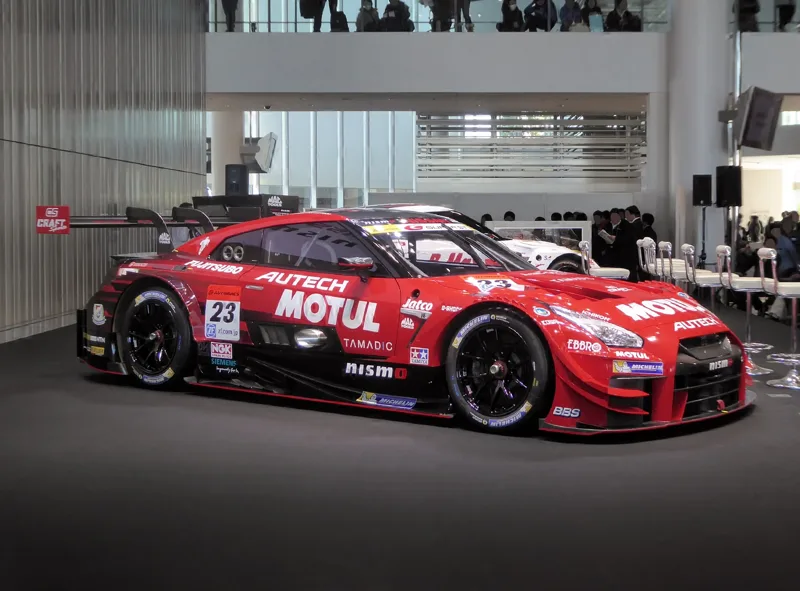
Matsuda returned to NISMO for 2014 and drove the No. 23 Motul Autech Nissan GT-R with Quintarelli. It was his first season on Michelin tyres, and NISMO ended its winless run in GT500 that had lasted since 2011, with a Nissan 1-2-3 at Autopolis.
Heading into the final round at Motegi, the pair were six points behind James Rossiter. They won the race from pole, and after a first-lap collision between Rossiter and Oliveira, Matsuda claimed his first GT500 championship in fifteen years.
The defence the following year was just as strong. The duo won the Fuji 500 km round on Golden Week and then took the penultimate round at Autopolis. They finished second in the final round to clinch the title, which gave them back-to-back championships.
What were Matsuda's GT500 results in later years?
In 2016 Matsuda and Quintarelli won the opening round at Okayama, which was Matsuda's 17th career win and gave him sole possession of the all-time GT500 wins record. They won the next round at Fuji 500 km for his 18th career win. Despite the opening double, they finished third in the final standings.
They finished second in the 2017 championship and third in 2019, though they did not win a race that year. In 2018 Matsuda became the first GT500 driver to win 20 races, at the Fuji 500 km. In 2020 the pair swept both 300 km races at Suzuka, and in 2021 Matsuda won his 23rd career race, in car number 23.
How did the 2023 Suzuka crash affect Matsuda?
In the third round of 2023 at Suzuka, Matsuda was caught up in a multi-car accident. His car spun off at the 130R corner, became airborne and crashed into the protective catch fence. He escaped serious injury and went on to race the rest of the season.
The season was not over for him. He won the opening race at Okayama, finished second at Sugo and Motegi, and ended the year third in points. He then moved to Kondo Racing for 2024, where he was partnered with GT500 rookie Teppei Natori.
How did Matsuda perform in endurance racing?
His first FIA World Endurance Championship start came at the rain-shortened 2013 6 Hours of Fuji in a Morgan LMP2. The following year he finished second in class at the 6 Hours of Silverstone and won the LMP2 class at the 6 Hours of Circuit of the Americas.
He reached the 24 Hours of Le Mans in 2015 as a reward for his GT500 title, driving the Nissan GT-R LM Nismo LMP1 with Lucas Ordonez and Mark Shulzhitskiy. That race ended after 115 laps because of a suspension failure, and it was his only LMP1 appearance. He returned to Le Mans in 2016 with KCMG, but a power steering failure ended his race as well.
From 2018 Matsuda raced in GT World Challenge Asia with KCMG and took part in the inaugural Suzuka 10 Hours. In 2019 he finished ninth overall at the 24 Hours of Nurburgring with Kondo Racing and sixth at the Suzuka 10 Hours, and he was a guest driver in the DTM championship finale at Hockenheimring.
Career summary by year
| Year | Series | Result |
|---|---|---|
| 1998 | All-Japan Formula Three | Fourth in the championship; first win at Twin Ring Motegi |
| Debut season | Formula Nippon and JGTC GT500 | Full-time Formula Nippon debut season; 19th in GT500 championship |
| 2006 | Formula Nippon | Runner-up to Benoit Treluyer; win at Autopolis |
| 2007 | Formula Nippon | Champion without a race win |
| 2008 | Formula Nippon | Champion; five wins, six poles, seven podiums |
| 2014 | GT500 | Champion with Quintarelli; first GT500 title after fifteen years in the sport |
| 2015 | GT500 | Back-to-back champion with Quintarelli |
| 2016 | GT500 | Okayama win for 17th career win; third in championship |
| 2023 | GT500 | Okayama win; third in championship |