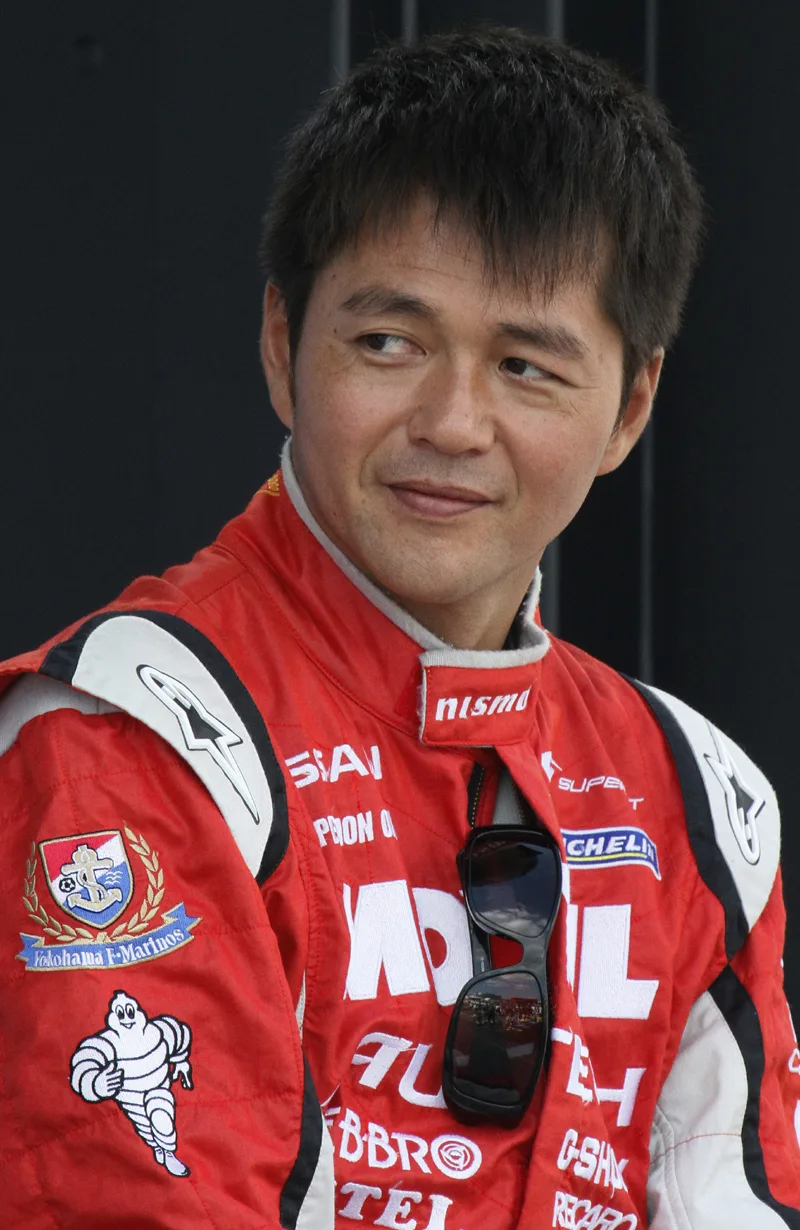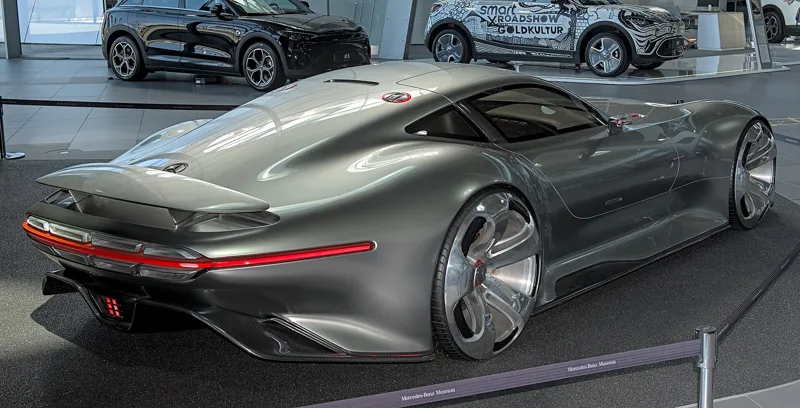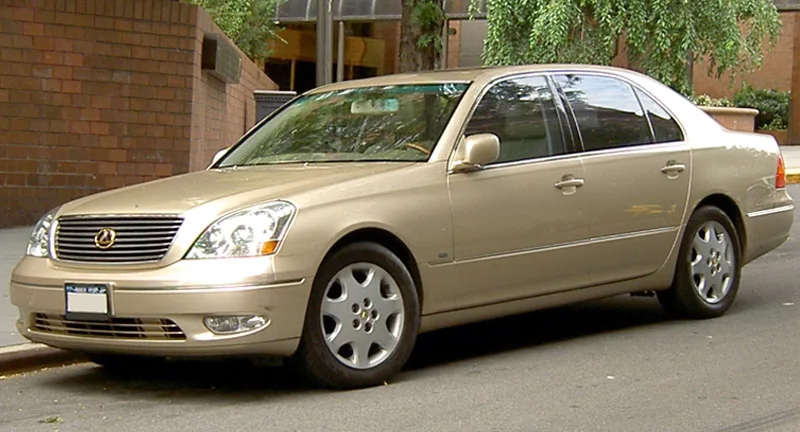
Four Japanese tuning companies: Impul for Nissan, TOM'S for Toyota, RE Amemiya for Mazda's rotary and a Kyoto firm that rebadged what it tuned.
Impul, TOM'S, RE Amemiya and Tommykaira are Japanese tuning companies. Impul modifies Nissans, TOM'S tunes Toyotas and Lexus models, RE Amemiya specialises in rotary Mazdas such as the RX-7, and Tommykaira renames tuned Nissans and Subarus and built the ZZ sports car.
In 1992 a Japanese tuning house set out to talk Toyota into Formula 1. TOM'S ran a feasibility study, set up a 40,000 sq. ft. research centre overseen by John Barnard, and even designed a paper car called the 011F. Toyota said no, the car was never built, and the Norfolk factory went to Volkswagen. That was one tuner at the far end of ambition. The Japanese tuning companies in this story, Impul, TOM'S, RE Amemiya and Tommykaira, each built a following around a narrow specialty, often with the factory's blessing.
TOM'S is the Toyota tuner that nearly took Toyota to Formula 1
The name stands for Tachi Oiwa Motor Sport. Nobuhide Tachi and Kiyoshi Oiwa founded the company in 1974, in the middle of an oil crisis, with the support of Toyota. A year later Toyota Motor Corporation formally recognised it as an authorised tuning shop. A garage in Tokyo's Tama area followed in 1978, and in 1981 the firm entered Japanese Formula 3 as an engine tuner. The head office is still in Tokyo.
The Toyota tuner TOM'S makes aftermarket parts for current Toyota models and has produced special editions of some Lexus models. Its list of complete cars runs from the Soarer, Supra and Celsior through the Chaser, Altezza and Alphard to modern machines such as the GR Yaris, GR Supra and GR86 Wide Body. In 1994 it marked its 20th birthday with a commemorative car, the TOM'S Angel T01, and a year later it produced the lightweight sports cars T101, T082 and T020. Its aero work also went into the number 36 Castrol TOM'S Supra, the 1997 GTC 500 champion driven by Michael Krumm and Pedro de la Rosa.
Each of these tuners built a following around a narrow specialty, often with the factory's blessing.
A Norfolk factory and the car that was never built
In 1987 TOM'S opened a base in Hingham, Norfolk, as TOM'S GB Limited. The site housed its engine shops and Glenn Waters's Formula 3 team, and later ran programmes in the Sportscar World Championship and the British Touring Car Championship. Then came the 1992 Formula 1 study. After Toyota turned down the idea, TOM'S sold the factory to Volkswagen in 1998 and pulled out of the European market.
What TOM'S has won in Japanese racing
Racing has been part of the company since 1974, as tuning partner, engine supplier or team, mostly with Toyota's factory-backed squads. Today it is heavily involved in Super GT, Super Formula and Super Formula Lights. Its racing arm has won the Japanese Formula 3 Championship 21 times, Super GT 11 times, Super Formula six times and Super Formula Lights four times. The Formula 3 series was renamed Super Formula Lights after FIA naming rules changed and promoters moved to Euroformula Open standards, and counting the titles since the change the team's record stands at 25, the latest in 2024.
The results beyond Japan are shorter but notable. From 1985 to 1993 TOM'S entered the 24 Hours of Le Mans, and its best finish was second in 1992 with a Toyota TS010. That year it also took a Group C title in the All Japan Sports Prototype Championship. It has won the Macau Grand Prix five times, in 1992, 1998, 1999, 2007 and 2008, the second-highest team total in the race's history. In touring cars it won the Japanese championship in 1994 with a Corona E and in 1997 with a Chaser.
Impul builds Nissans, and only Nissans
Impul is the Nissan tuner of this group. Hoshino Impul was founded in 1980 by Kazuyoshi Hoshino, a Nissan works driver, in Shizuoka Prefecture, and it is now based in Setagaya, Tokyo. It produces aftermarket parts exclusively for Nissans: bodykits, engine components and wheels.
The first product arrived within months, the IMPUL D-01 wheel, and Hoshino promoted it by fitting it to his Group 5 Silvia in a Fuji support series. In 1983 he formed Hoshino Racing Limited to promote the products, and in 1987 Impul offered its first fully tuned car, the IMPUL 630R, based on the Y30 Gloria and Cedric. After the racing operation moved to Gotemba in 2002, the company concentrated on tuning cars. Its work on the Infiniti M, which became the Impul 651S, and on the Nissan Juke touched bumpers, engines, brakes, tyres and exhaust. The common thread is a VIP style.
The Impul racing team and its sponsors
The team has run since 1983 and found success in the Japanese Touring Car Championship, Formula Nippon and Super GT. Hoshino himself won a JTCC race in the team's R32 GT-R in 1990. Masahiko Kageyama took the 1993 touring car title. Satoshi Motoyama was the Formula Nippon champion in 2001, 2003 and 2005, Benoit Treluyer won in 2006, and Tsugio Matsuda took both 2007 and 2008. From 1988 the team was run as part of NISMO alongside Hasemi Motorsport.
Calsonic backed the touring car effort from 1988 to 2022, and the partnership continued after the rebranding to Marelli, through to the end of 2024. In 2025 Tokyo Radiator, which Marelli primarily owns, took over in Super GT.
| Company | Founded | Base | Works on | Best known for |
|---|---|---|---|---|
| Impul | 1980 | Setagaya, Tokyo | Nissan | Wheels, bodykits, the 630R and a racing team |
| TOM'S | 1974 | Tokyo | Toyota and Lexus | Tuning parts and Super GT, Super Formula and Formula 3 titles |
| RE Amemiya | 1974 | Tomisato, Chiba | Rotary Mazdas | Rotary RX-7s in touge battles and Super GT |
| Tommykaira | 1986 | Kyoto | Nissan and Subaru, mostly | Rebranded tuned cars and the ZZ |
RE Amemiya RX-7 cars became mountain-pass legends
Isami Amemiya founded RE Amemiya Car in 1974 in Tomisato, Chiba Prefecture. The RE in the name alludes to the rotary engine, and the company is known for tuning rotary Mazdas. A rotary engine swaps pistons for a spinning triangular rotor, so tuning one is a different craft from tuning a conventional engine, and that is the niche the company claimed.
The RE Amemiya RX-7 is the car most people picture. It appears in the touge races on the Japanese show Hot Version, in which two cars chase each other along a mountain road in the cat-and-mouse style of Initial D. Its tuned FD3S RX-7 has taken on the Amuse and J's Racing Honda S2000s and an MCR-tuned Nissan R34 Skyline GT-R. A blue FD3S held the title of Maou, the Demon King, from 2004 through 2006. It lost the crown to the J's Racing car at the 2007 event, where conditions were wet, and the company won it back in 2009 with a green FD3S that beat the J's Racing S2000. In all, RE Amemiya has taken the Maou title four times with three different cars.
The fiction followed the real thing. In the Project D arc of the anime and manga Initial D, the FD and FC RX-7s driven by Keisuke and Ryosuke Takahashi wear RE Amemiya bodykits, and the blue FD3S and its GT300 racing counterpart both appear in Gran Turismo.
The only rotary in Super GT
RE Amemiya entered Super GT in 1995 as the series' lone rotary runner, with a 3-rotor 20B-powered RX-7 in the GT300 class. It took a GT300 win in 2006, followed by three more victories and 11 podiums. In 2009 it finished second in the GT300 championship, narrowly behind the Racing Project Bandoh Lexus IS350. Its last season was 2010, when it was third, behind Hasemi Motorsport and Autobacs Racing Team Aguri. The company has also competed in the D1 Grand Prix drifting series since 2004. In 2005 driver Masao Suenaga won at Fuji Speedway and ended the season as runner-up, one point behind Yasuyuki Kazama.
Tommykaira began with a Mercedes and ended up with its own car
Tommykaira was founded in 1986 in Kyoto and takes its name from Yoshikazu Tomita and Kikuo Kaira. Its parent company, Tomita Auto, dates back to 1968. Its first tuned car, in 1987, was a Mercedes-Benz 190E called the Tommykaira M19. The M30E, based on the 300E, followed. From 1988, however, the company turned exclusively to Japanese cars, signing contracts with Nissan and Subaru.
The first Nissan was a Skyline R31, tuned and renamed the M30. In 1993 came the Subaru Impreza (M20b) and the Nissan March (m13), and in 1994 the Subaru Legacy wagon (M20tb). Those four, the Skyline, March, Impreza and Legacy, soaked up most of the effort. The company also modified the 300ZX, Silvia, 350Z, R35 GT-R, Toyota Vitz and a range of kei cars.
Tommykaira renames what it tunes, with the manufacturers' consent: an Impreza becomes an M20b, a Nissan 350Z becomes a Tommykaira Z. The practice has parallels in Germany, where Ruf and Gemballa operate in a similar way with Porsches. It has also stirred debate over whether Tommykaira should count as a car manufacturer.
The numbers show how far the heavy tuning went, using the maximum figures listed for each model. The 1999 Tommykaira R34 GT-R was quoted at 530 PS and 534 N m. The 1989 M30Z, based on the Fairlady Z32, made 350 PS. The 2001 M20b-2.2 based on the Impreza WRX STi produced 355 PS and 441 N m, and the 2000 Legacy tb-2.2 made 315 PS. Production runs were small. Only 20 R32 M30 cars were made, 95 R32 R and RL, 50 R33 R and RL, 400 of the R33 M25, 35 of the R34 R, R-S and R-Z, and 199 of the R34 25R. About 105 Impreza M20b cars were built, though the real figure is unknown and the highest verified badge number is TK105.
The Tommykaira ZZ was a car of its own, built in England
By 1996 every Tommykaira was a modified Nissan or Subaru, but the brand had grown strong enough to attempt something original. The result was the ZZ, a sports car with a 1998 cc four-cylinder engine rated at 195 PS. Its date is quoted as anywhere from 1995 to 1997, and Gran Turismo 2 says it was manufactured and marketed in 1997.
The ZZ was built at Ironside Way in Hingham, Norfolk, England. The factory collapsed after Japan's Ministry of Transportation changed front-impact requirements in 1999 from European to US standards. In 2002 the car returned as the Leading Edge 190 RT, built by Breckland Technologies. The prototypes listed for the brand include a ZZ-S, a $90,000 ZZII powered by the RB26DETT engine, and a planned modernised ZZIII.
Rowen, a court case and a club for owners
At the height of the economic crisis in 2008, Tommykaira agreed a partnership with Rowen to make parts under its name, on condition that its owner, Mr Tomita, approved every design. Rowen capitalised the name as TOMMYKAIRA, which was one of many violations raised in court and led to the split. Rowen kept selling after losing the case, leaving an abundance of unauthorised products with an all-caps logo. Two cars were built under Rowen's short-lived tie-up, the GT-R R35 Silver Wolf Edition and the Toyota ist NCP61.
By around 2015 the dispute had ended and the brand, managed by Threeek's CEO Mr Tokitake, was independent again. A meeting with Mike Wyckoff of JDM Parts Ninja, formerly Japan Auction Parts, restarted production for Japan and overseas. In 2017 Threeek rebranded as GTS, Genuine Tommykaira Studio, which sells the brand in Japan, and JDM Parts Ninja is the exclusive distributor abroad. The R35 GT-R Tommykaira Edition appeared at the Thailand Auto Show in 2018.
Tommykaira Club International and the tuners today
Tommykaira Club International launched in the autumn of 2020, replacing local chapters in Japan with a global subscription club; yearly membership starts at $88 and the first official year was 2021. Its logo is the kanji read "tamashi", meaning spirit, chosen by a vote of enthusiasts from a list of five. TOM'S remains in the top Japanese series, and Impul's Super GT sponsorship passed to Tokyo Radiator in 2025.