How plug-in hybrids moved from 1969 concept cars and Prius conversions to the Volt, BYD's F3DM and a global market led by China.
Plug-in hybrids date back to early prototypes, but most commercial development happened after 2002. The first production plug-in hybrid was the BYD F3DM, sold in China from December 2008, and global sales reached 7.2 million in 2025.
Plug-in hybrids have a history of more than a century, although most of the commercial breakthroughs arrived after 2002. Early examples were often conversions of production hybrids, and the category revived as batteries improved and worries about oil supply grew. By December 2025 about 25 million plug-in hybrid cars were on the road worldwide.
The story runs from a 1969 concept car to a market that sold 7.2 million plug-in hybrids in 2025, and it passes through prototypes, conversion kits, a famous Prius application and a Chinese sedan that began the modern production era.
What is a plug-in hybrid?
A plug-in hybrid electric vehicle, or PHEV, pairs a combustion engine with an electric motor and a battery recharged from an ordinary household outlet. Earlier hybrids were sometimes charged from outside sources too, but the modern meaning is tied to that everyday connection.
The electric-only range is the key figure. A PHEV-20 can travel 20 miles, or about 32 km, without using its engine, and a PHEV-60 can cover a much longer distance on battery alone. That labelling convention is why a PHEV-20 may also be written as PHEV32km.
Plug-in hybrids went from one-off concepts and Prius conversions to a market of 7.2 million sales in a single year.
How early were plug-in hybrids built?
Hybrid vehicles were produced as early as 1899 by Lohner-Porsche. Experimental plug-in designs followed in magazine reports from 1969 and 1975, and Audi's Duo of 1989 was an early attempt at a plug-in car, though only ten are believed to have been made.
In July 1969 Popular Science featured the General Motors XP-883 commuter concept. Six 12-volt lead-acid batteries sat in the luggage area, a transverse DC motor drove the front wheels, and a 110 Volt AC outlet refilled the pack.
The September 1975 Popular Mechanics cover story described an experimental turbo-electric hybrid built by Harry Grepke. Eight 12-volt truck batteries were paired with a turbine genset, and Grepke asserted a battery-only range of 50 miles (80 km).
Audi's first Duo, based on the Audi 100 Avant Quattro, sent power to the rear wheels through a Siemens electric unit rated 12.6 bhp (9.4 kW), while a 2.3-litre five-cylinder engine at the front produced 136 bhp (101 kW). The car was less efficient on engine power alone than a standard Audi 100, and the idea never grew into a large series.
Dr Andy Frank began his hybrid work in 1971 at the University of California, Davis. He is credited with the modern PHEV idea, and his student teams later built operational prototypes that won national Future Car and Future Truck competitions.
Esoro's H301 of 1994 was a two-door, four-passenger plug-in sedan built in Switzerland. It weighed 710 kg (1,565 lb) and combined a 360 cc engine with a 34 kW AC induction motor, while a 9 kWh nickel-cadmium battery provided the electric range. Four of the prototypes are still on the road.
In 1998 Audi premiered a second Duo, based on the A4, at the Frankfurt Motor Show. Audi leased ten of them to Solarmobilverein Erlangen for a European urban distribution project, but few buyers were willing to pay twice the price of the diesel A4 they could otherwise buy, so about sixty were built before series production stopped.
How did plug-in hybrids return in the 2000s?
Research bodies and advocacy groups drove the revival. The Electric Power Research Institute sponsored a Hybrid Electric Vehicle Alliance in 2000, the US Department of Energy created a hybrid centre at UC Davis in 2001, and the CalCars group formed in 2002 to promote the technology.
The Renault Elect'Road went on sale in 2003 as a series hybrid derived from the Kangoo van. It offered a 150 km range from a 500 cc, 16 kW range-extender engine, and Renault sold about 500 of them, mostly in France, Norway and the UK, at roughly 25,000 euros each.
Most PHEVs built between 2003 and 2010 were conversions of production hybrids, particularly the Toyota Prius. Companies such as Hymotion, Manzanita Micro and Hybrids Plus sold add-on kits that added batteries and extended the electric-only range.
AC Propulsion's Alan Cocconi reworked a Volkswagen Jetta so that it ran as a plug-in series hybrid, backed by regulators and Volkswagen. The original engine gave way to a 120 kW motor fed by 8.7 kWh of lead-acid cells, while a 1.4-litre engine from a Volkswagen Lupo, mounted in the boot, supplied the charge.
In 2003 Toyota shipped the UC Davis Coulomb plug-in hybrid to Toyota City, where it was shown to about 250 engineers and executives from two of its main suppliers. Those demonstrations helped set up the Prius-based work that followed.
Some concepts aimed at the enthusiast market. In August 2006 PML Flightlink showed a MINI fitted with in-wheel motors at the British Motor Show. The company claimed 80 mpg, a 0 to 60 mph time of 4.5 seconds, a top speed above 150 mph and a range of 1,000 miles.
In September 2004 the CalCars PRIUS+ carried 130 kg (300 lb) of extra lead-acid batteries and covered 15 km (9.3 mi) on electricity alone in one trip. By the end of that year Frank's teams had built seven proof-of-concept prototypes, including Taurus and Sable sedans and a GM EV1.
DaimlerChrysler showed a Sprinter van PHEV in 2004 that could drive 30 kilometers on battery power. Four Sprinter PHEV vans were delivered to test fleets in 2005, and in August of that year four companies formed the Plug-In Hybrid Consortium to narrow the gap between suppliers and manufacturers.
What were the first production plug-in hybrids?
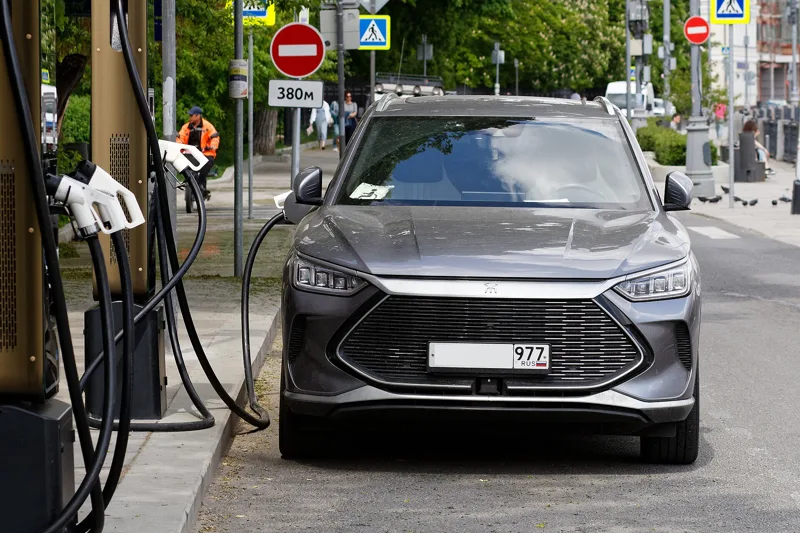
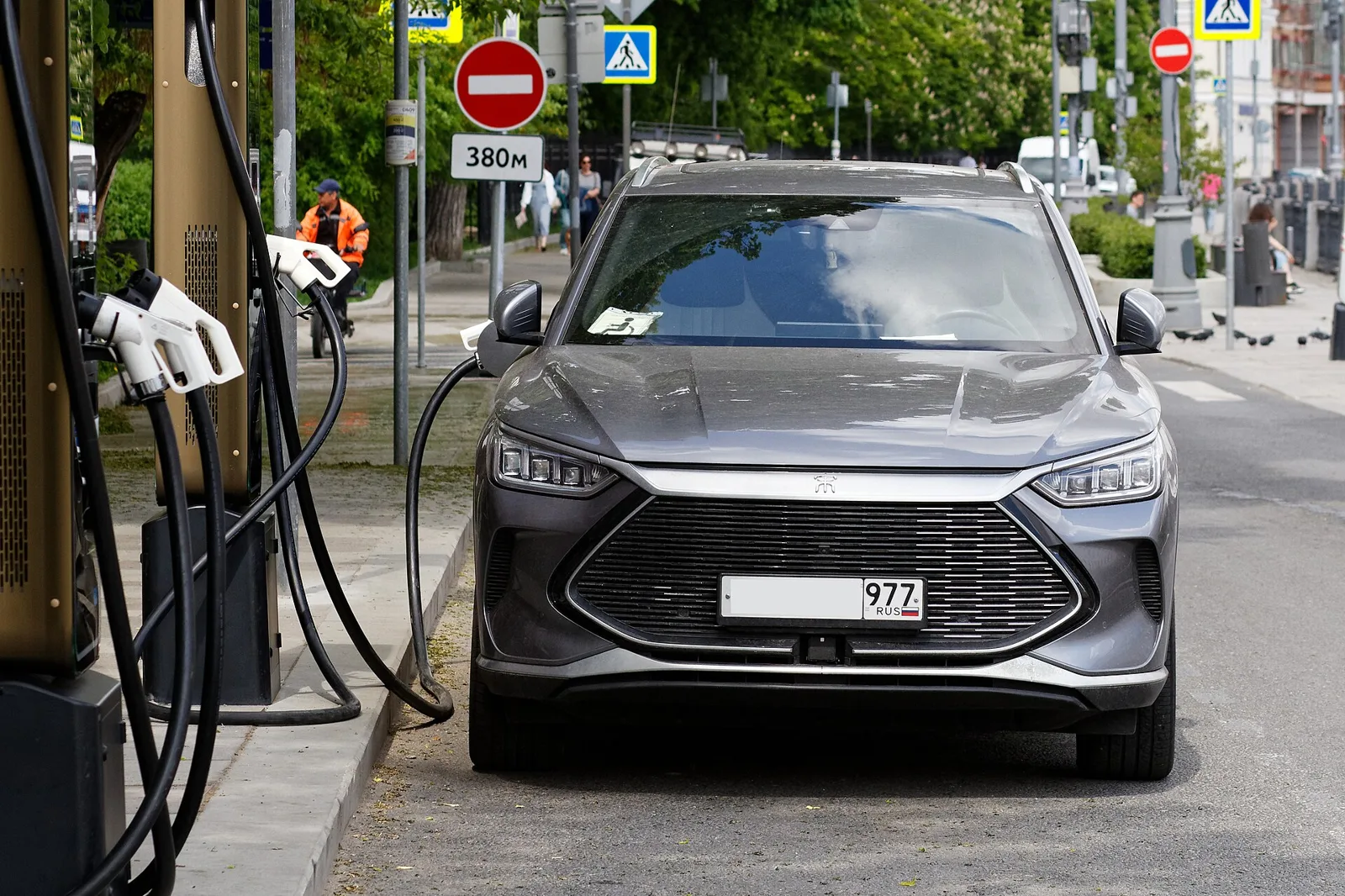
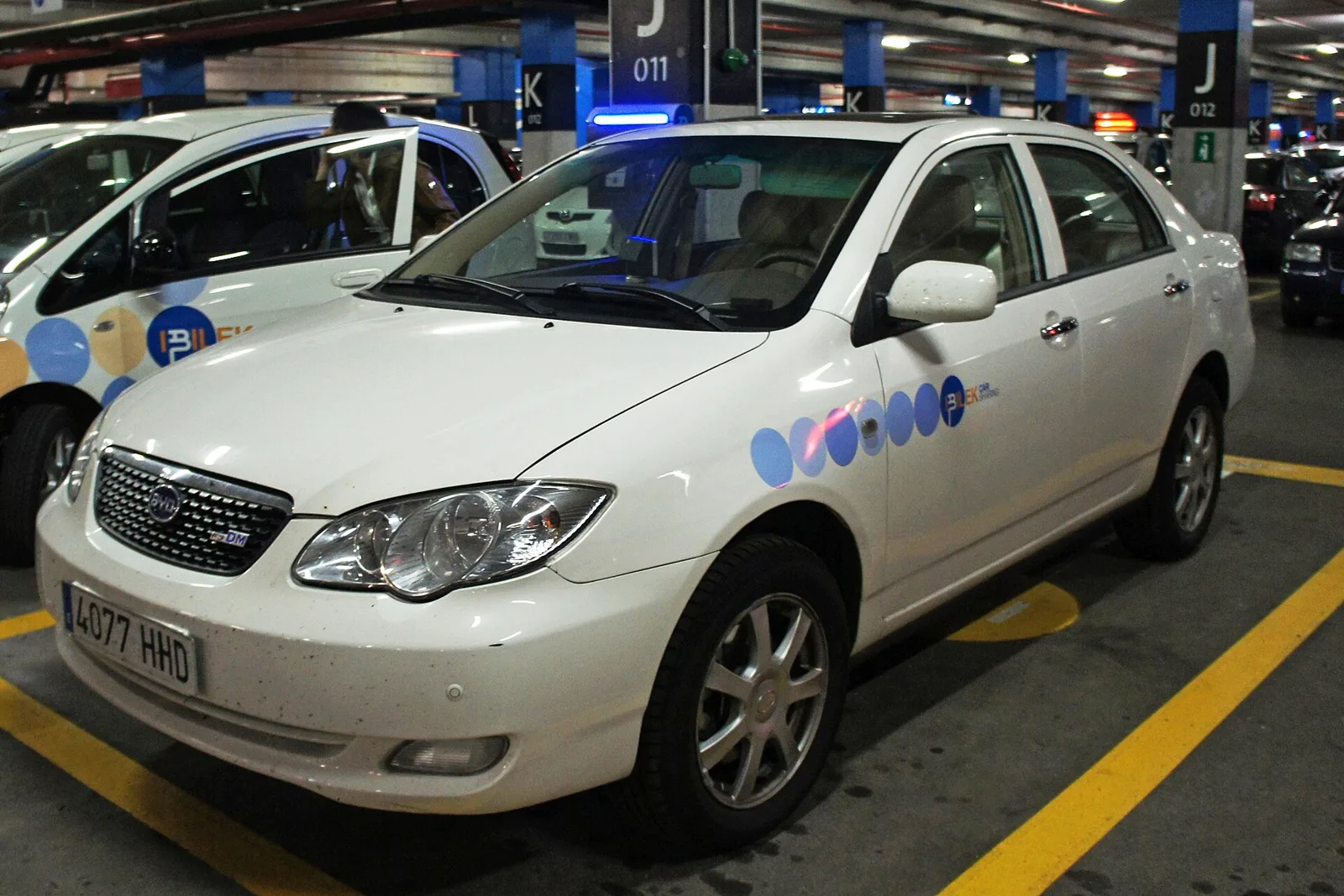
The BYD F3DM, a sedan sold in China from 15 December 2008, is recorded as the first production plug-in hybrid sold anywhere in the world. Its electric-only range was 100 km (62 mi), but it sold just 48 vehicles in its first year.
The F3DM was based on BYD's midsize F6 sedan and used iron-based batteries rather than lithium-ion cells, at a price of about US$22,000. BYD ended production in 2013 after low sales, and its successor, the Qin, began deliveries in China that December.
Toyota's plug-in Prius followed a different path. In July 2007 Japan certified it for public roads, the first automobile to receive such approval, and a demonstration programme involving 600 pre-production test cars started in late 2009.
The Chevrolet Volt was unveiled at Detroit in January 2007 as a PHEV-40 whose engine starts when 40% of the battery charge remains. The first factory-built car rolled out at Hamtramck on 31 March 2010, and US deliveries began in December 2010 with an electric range of 35 miles (56 km). Between the concept and the production car, engineers changed the body to cut the drag coefficient from 0.43 to 0.28.
Fisker's Karma reached US customers in July 2011 with a 32 miles (51 km) all-electric range. Production had reached 25 units a day by December 2011.
How did plug-in hybrid sales grow?
Worldwide volumes climbed from more than 300 vehicles in 2010, reached 222,000 in 2015, and hit 7.2 million in 2025. Volt-family sales passed 100,000 in October 2015, and Mitsubishi's Outlander PHEV passed the same mark in March 2016.
| Model | Year | Notable figure |
|---|---|---|
| Audi Duo (first iteration) | 1989 | 12.6 bhp (9.4 kW) rear-wheel motor; ten vehicles believed made |
| Esoro H301 | 1994 | 9 kWh nickel-cadmium battery; 710 kg (1,565 lb) weight |
| Renault Elect'Road | 2003 | 150 km range; about 500 sold |
| BYD F3DM | 2008 | 100 km (62 mi) electric range; 48 sold in first year |
| Chevrolet Volt | 2010 | 35 miles (56 km) EPA electric range; 326 delivered in 2010 |
| Fisker Karma | 2011 | 32 miles (51 km) all-electric range |
| Toyota Prius Plug-in | 2012 | 21,600 sold worldwide by 31 October 2012 |
| Mitsubishi Outlander P-HEV | 2013 | Over 25,000 sold through April 2014 |
| Chevrolet Volt, second generation | 2015 | 53 mi (85 km) electric range, up from 38 mi (61 km) |
Milestones came quickly after 2015. Over 284,000 light-duty plug-in hybrids found buyers in 2016, and by June 2016 about 640,000 highway-legal models had reached customers since December 2008, out of over 1.5 million plug-in electric cars.
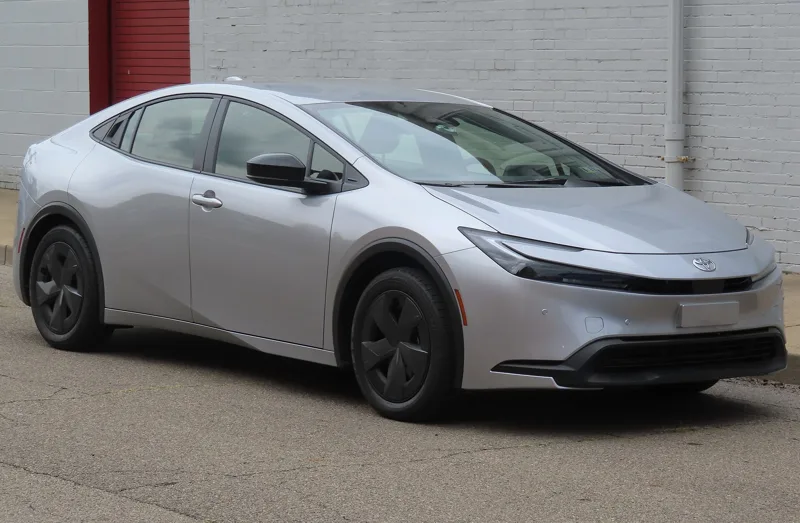
The second-generation Toyota Prius Prime reached 22 mi (35 km) of electric-only range, and Japan saw plug-in hybrid sales quadruple in 2017 after its launch.
Some early launches ran into trouble. The Ford C-Max Energi was rated at 100 MPG-e in electric mode when deliveries began in the US in mid October 2012, but owners could not match the sticker figure, and after a technical review the rating was cut to 88 MPG-e.
Premium brands joined in as well. On 1 December 2014 BMW said it planned plug-in variants for every core model, aiming to keep CO2 emissions below 100 g/km. The Volvo V60 Plug-in Hybrid, released in Sweden by late 2012, was billed as the first diesel model of its kind, and sales reached nearly 8,000 units in 2013.
Which governments backed plug-in hybrids?
Policy shaped uptake in each market. In the US, a tax credit enacted in October 2008 started at $2,500 plus $417 for each kWh of battery capacity above 4 kWh, while California regulators set a target of 58,000 plug-in hybrids for sale there from 2012 through 2014.
Ceilings rose with weight: $7,500 for lighter cars, $10,000 for vehicles under 14,000 pounds, and $12,500 for trucks under 26,000 pounds. The credit began phasing out after the first 250,000 qualifying vehicles were sold.
China's New Energy Vehicle credit scheme, announced in September 2017, required PHEVs to reach 31 miles (50 km) before they could earn credits. In February 2018 China also lowered its subsidy level for PHEVs.
Why did General Motors end the Volt?
General Motors stopped building every plug-in hybrid in 2019, the Chevrolet Volt included, and shifted its attention to battery cars such as the Bolt. The company had been selling each Volt at a loss, and Bob Lutz described the car as a stepping stone to full electrics.
Ford took a different view in 2019 by launching the Kuga and Explorer plug-in hybrids, arguing that there is no one-size-fits-all answer to electrification. That year global PHEV sales fell 10% from 2018, while battery electric sales rose 14%.
Where are plug-in hybrids most common?
China leads with 15 million units in stock as of December 2025. The United States comes second with 1.9 million vehicles, and Germany holds 1.1 million, the UK 860,000 and France 810,000.
BYD's Song Plus was the best-selling plug-in hybrid in the half year to June 2025, with 188,500 units, or 5.4% of all PHEV sales. BYD models took seven of the top ten places, while the Li Auto L6 sold 96,400 units in the same period.
About 25 million PHEVs were in service in December 2025, against 75 million plug-in electric cars in total.