How GM engineered, built, priced and sold its 2010 plug-in with a petrol range extender, and how a battery fire investigation tested it.
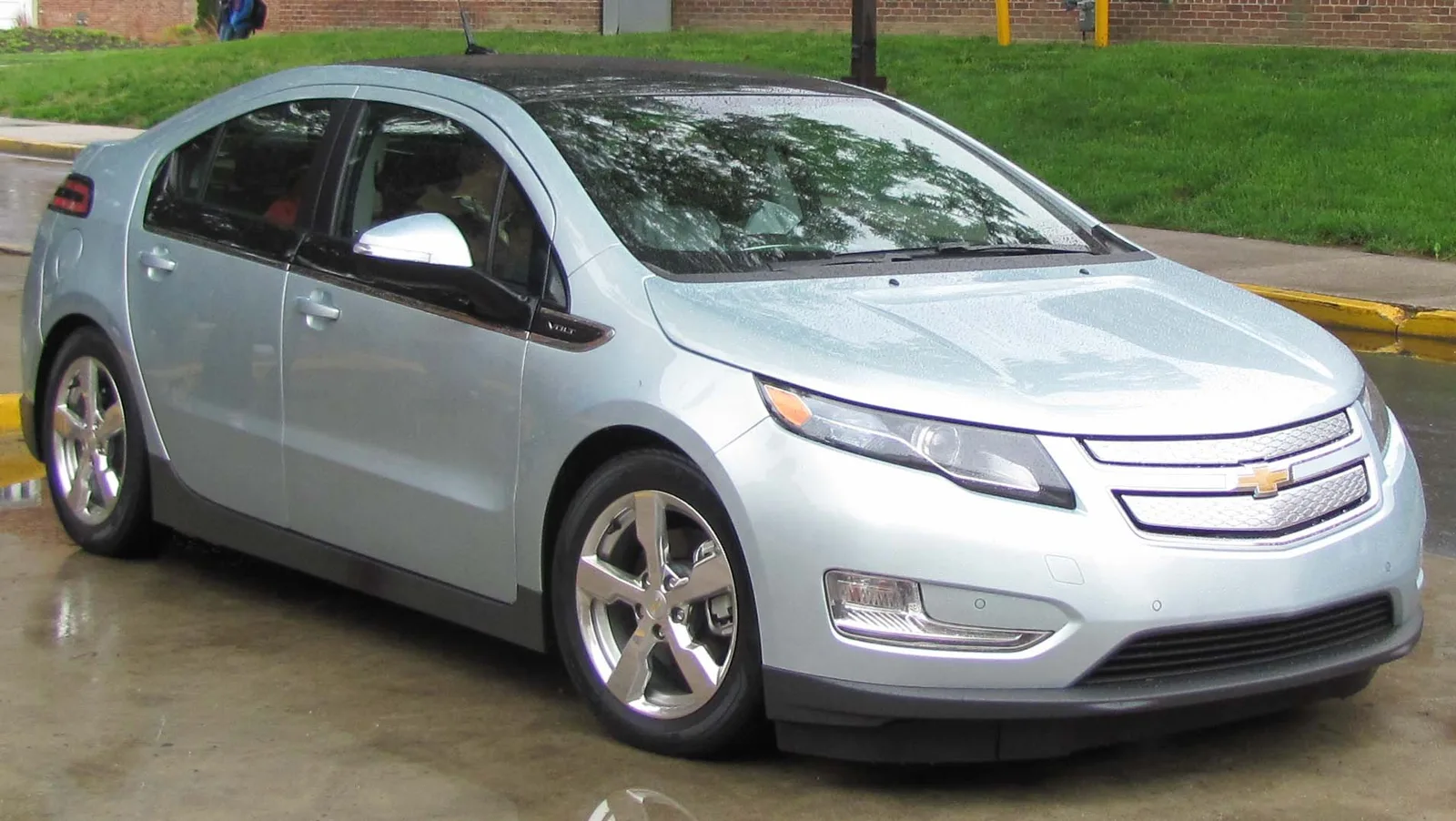
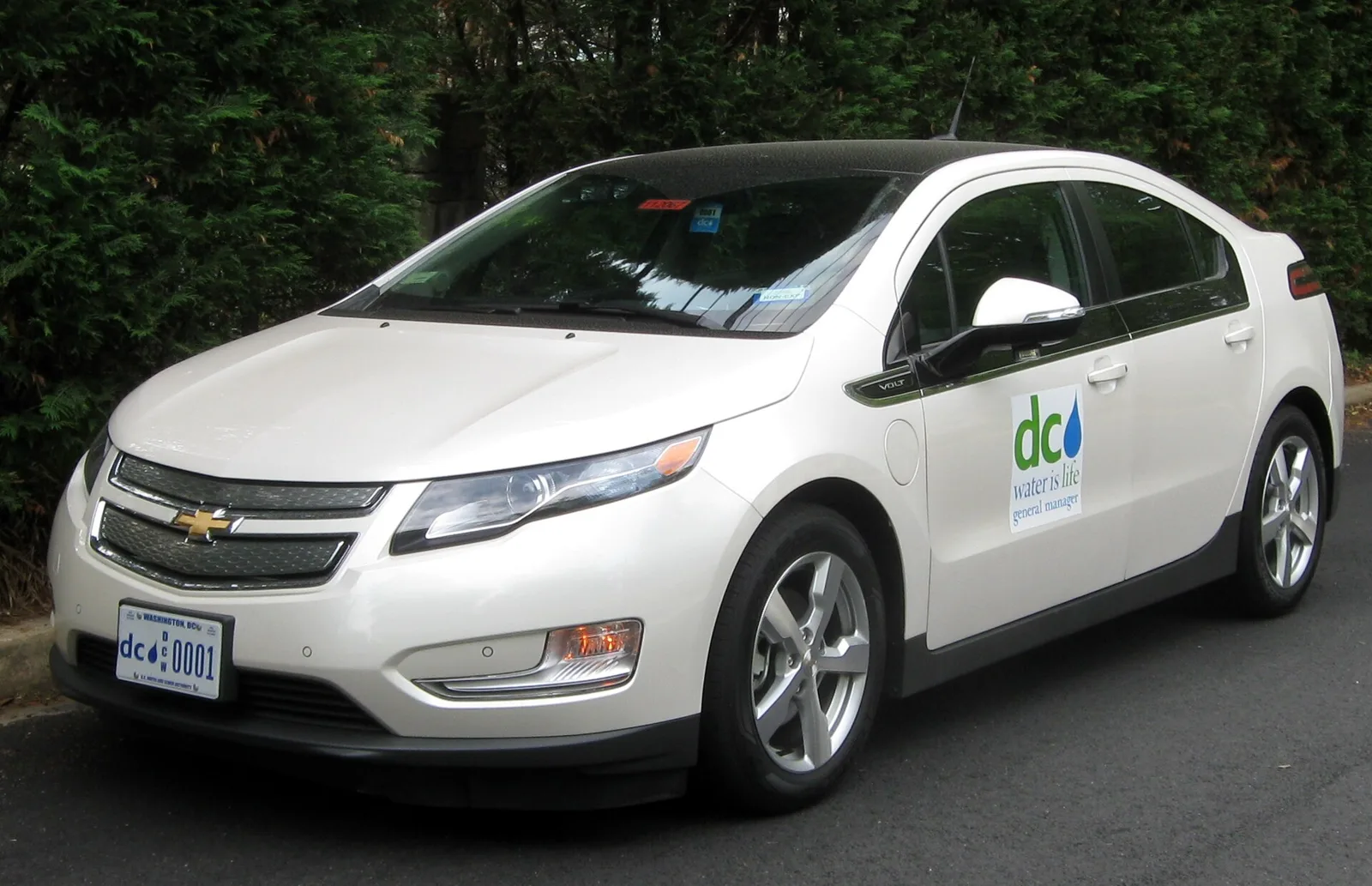
The Chevrolet Volt was a General Motors plug-in car built from 2010 to 2015. It ran on electricity until its battery reached a set level, then used a 1.4 L petrol engine to drive a 55 kW generator, with a 16 kWh battery at its heart.
The Chevrolet Volt is a five-door liftback that runs on electricity until its battery reaches a set level, then switches to a small petrol engine that generates power. General Motors built the first generation at its Hamtramck plant from November 2010 until production ended in May 2015. The car was designed around electric driving for everyday trips and a generator for longer ones.
Why did General Motors build the Volt?
General Motors began the project in 2006 under Robert Lutz, who wanted to rebuild the company's green image after the EV1 program. Engineers chose a range-extender design over a pure electric car to deal with battery cost, range anxiety and a thin public charging network.
The EV1 program had produced a billion-dollar loss in the 1990s, so the new car was built to avoid the same problems. Jon Lauckner, who ran global program management, sketched the powertrain layout and steered the team towards a range extender.
The project was nicknamed the iCar, a nod to Apple's iPod. The show car first appeared in January 2007 at the North American International Auto Show, and its aim was a car that looked like a conventional family model rather than an experiment.
A plug-in that drives on electricity first, with its petrol engine working as a generator for most of the journey.
How does the Volt's range extender work?
The Volt runs as a battery electric car until its battery drops to a preset level. At that point a 1.4 L four-cylinder engine turns a 55 kW generator, which sends power mostly to the electric motor and any surplus to the battery.
The engine is compact and naturally aspirated, rated at about 80 hp (60 kW). The electric motor delivers 111 kW (149 hp) and 370 Nm (273 lb ft), so the car has solid pulling power whether it is running on battery or on the generator.
At speeds above about 30 mph (48 km/h) the engine can link mechanically through a clutch, and the control system then picks the most efficient mode. GM says this lifts high-speed efficiency by 10% to 15%.
GM avoided the word hybrid for this system. It calls the Volt an extended range electric vehicle, a label that reflects how most trips are driven on electricity with the engine acting as a generator.
Once the battery reaches that threshold, the generator holds the charge near the lower level, so the car keeps moving without a plug. Only a grid connection refills the battery fully, which is why owners who charge at home each night spend most of their driving on electricity.
How did the concept become the production car?
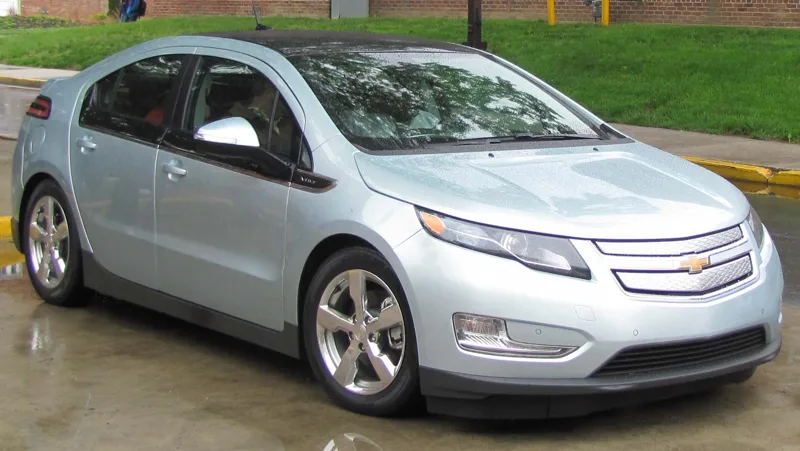
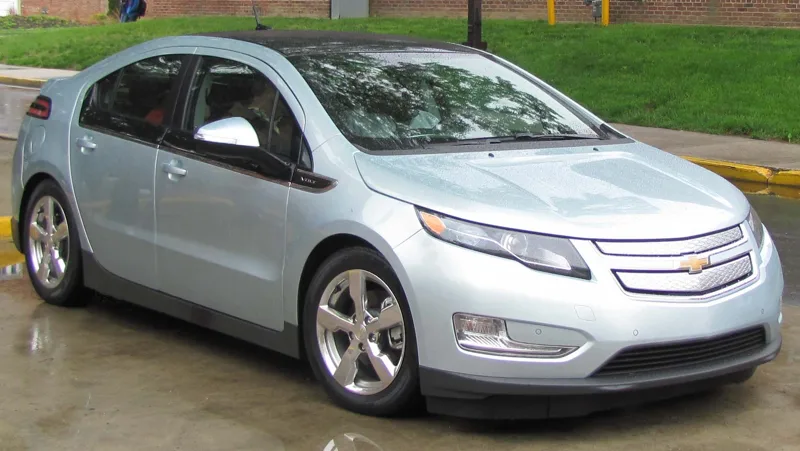
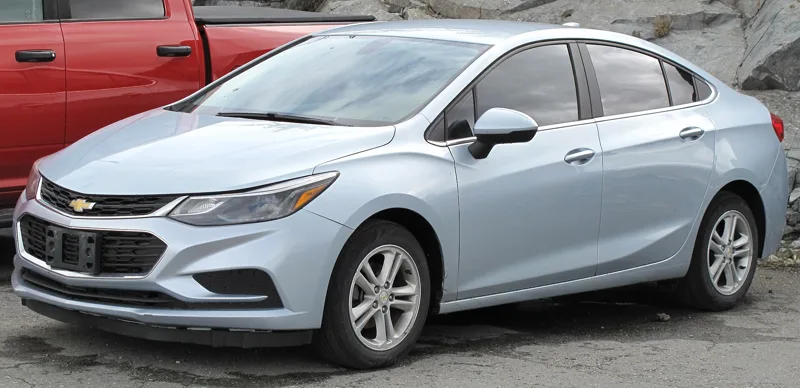
The concept seated five, but the production Volt seats four because a raised central tunnel houses the T-shaped battery pack. The production car also moved onto GM's Delta II platform, which it shared with the Chevrolet Cruze, to keep costs under control.
Design work mainly targeted drag. The concept's drag coefficient of 0.43 Cd fell to 0.28 Cd for production, although that still sat above the 0.25 of the Toyota Prius. Bob Boniface's team spent about 500 hours (21 days) in the wind tunnel refining the shape.
Designers deliberately avoided the roofline of the second-generation Prius, which they saw as the stereotype of a hybrid. Boniface led the design from concept to production, and an E-Flex group that grew to 50 designers and engineers worked on the body.
Engineering cost pressure pushed the expected base price to around US$40,000.
How was the battery pack developed?
The Volt used a 16 kWh lithium-ion pack sized for a 40-mile (64 km) electric range. GM narrowed about 25 cell chemistries from roughly 24 makers, then tested the packs at its Warren laboratory, which had 160 test channels, 42 thermal chambers and 32 battery cyclers.
In June 2007 GM chose Compact Power and Continental Automotive Systems. Compact Power used cells from LG Chem, while Continental used lithium iron phosphate cells from A123Systems, and CPI was picked for the first production battery in October 2008.
The packs faced hard testing. Engineers used a shaker table to simulate potholes and thermal chambers to simulate temperature extremes, checking the packs under conditions a car would meet on real roads.
To protect the cells, GM limited the usable state of charge to 80% of capacity. The battery management system ran over 500 diagnostics, ten times per second, and 85% of those checks looked at safety while 15% monitored performance and life.
The 2011 battery stored 16 kWh with 10.4 kWh usable, and its 197 kg (435 lb) weight came from 288 cells in nine modules. Its cooling circuit resembles an engine's, with aluminium fins between paired cells to keep temperatures even.
Battery life was a central concern, because the car would be charged every night for years. The aim was a pack that would last at least ten years with limited degradation, and that goal shaped both the chemistry and the usable window.
What are the Chevrolet Volt specifications?
The 2011 Volt combined a 16 kWh battery and a 111 kW (149 hp) electric motor with a 1.4 L range extender. Its 12 US gal (45 L) tank gave a total range of about 640 mi (1,030 km), and a 240 V charge took around four hours.
| Specification | Detail |
|---|---|
| Body style | Five-door liftback |
| Battery (2011) | 16 kWh lithium-ion, 10.4 kWh usable, 197 kg (435 lb) |
| Battery (2013) | 16.5 kWh, 10.9 kWh usable |
| Battery (2015) | 17.1 kWh |
| Electric motor | 111 kW (149 hp), 370 Nm (273 lb ft) |
| Range extender | 1.4 L four-cylinder, 55 kW generator, about 80 hp (60 kW) |
| All-electric range | 56 to 61 km (35 to 38 mi), rising for 2013 |
| Fuel tank | 45 L (12 US gal; 10.0 imp gal) |
| Total driving range | About 640 mi (1,030 km) |
| Charge on 120 V | About 10 hours at 12 A, up to 14 hours at 8 A |
| Charge on 240 V | About 4 hours |
| Battery warranty | 8 years or 100,000 miles (160,000 km) |
| EPA combined rating | 60 mpg-US equivalent |
Charge times depend on the current the car is set to draw, so the 120 V figures describe a range rather than one number. Mountain mode raised the minimum charge to about 45% to keep power on steep grades, at the cost of more engine noise.
The battery grew in steps. The 2013 car had a 16.5 kWh pack with 10.9 kWh usable, which lengthened the all-electric range, and the 2015 model moved to 17.1 kWh.
How many Volts did GM plan to build?
GM's first plan called for 10,000 Volts in 2011 and 45,000 in 2012. A June 2011 retooling tripled the rate at which the Hamtramck plant could build the car, and the line reached 150 units per day, running four days a week.
Investment was large. GM spent US$700 million across eight Michigan facilities from December 2009, including US$336 million to upgrade the Hamtramck plant, US$202 million for a Flint plant making engine generators and US$43 million for a battery pack plant in Brownstown Township.
Series production began on November 30, 2010, and on December 15, 2010, the first car handed over in the US went to retired pilot Jeffrey Kaffee. An early car went to auction, starting at US$50,000, and sold to Rick Hendrick for US$225,000.
How did the Volt sell in Europe and Australia?
In Europe the Volt's twin was the Opel Ampera, sold as the Vauxhall Ampera in the UK, and European deliveries of the Volt began in November 2011. Australia and New Zealand received the Holden Volt from December 2012, and sales were modest in both markets.
The Ampera shared the Volt's powertrain and battery, but it had its own styling, including boomerang-shaped headlamps and standard alloy wheels. Opel aimed it at business fleets and local government, where the company had strong customers, while the Volt was pitched at private buyers.
The Ampera's City Mode, or battery hold, saves battery charge for urban driving, which helps in low emission zones and in cities that charge for entry. Drivers could then use the saved charge later, when they entered a restricted area.
Ampera sales fell 40% in 2013 to 3,184 cars, then dropped 67% in the first five months of 2014 to 332. Opel later discontinued the car, citing the slowdown in sales.
In Australia, Holden sold the Volt from December 2012, and deliveries reached 246 units by mid-April 2015. In New Zealand only 16 units were registered by mid-2015.
What fuel economy did the EPA rate?
The EPA rated the 2011 Volt at 60 mpg-US equivalent combined, with 93 mpg-e when running on electricity and 37 mpg-US on gasoline alone. Its label also showed up to 168 mpg-US equivalent for drivers who went 45 miles between full charges.
GM had first estimated 230 mpg-US in August 2009, but the EPA said it had not tested the car and could not confirm the figure. GM argued that the EPA's hybrid method, which would have given the Volt about 48 mpg-US, did not suit a car that drives on battery power first.
The EPA's official label followed in November 2010, and it was the first to show separate figures for all-electric and gasoline-only operation.
What happened with the battery fire investigation?
In June 2011 a Volt put through an NHTSA crash test caught fire weeks afterwards, following a side pole impact at 32 km/h (20 mph) and a rollover. The NHTSA opened a formal investigation in November 2011, and GM responded with reinforcements and loaner cars while the agency examined the issue.
GM said the fire began with a coolant leak of about 50 mL. After the car was rotated, coolant crystallised on the circuit board, and a short circuit followed weeks later. GM insisted the car and its battery had not been recalled.
GM also argued that the first fire could have been avoided if the protocols for deactivating the battery after a crash had been followed. It said it was working with other manufacturers, first responders, tow operators and salvage groups on industry-wide procedures.
The fix added side reinforcement weighing between 2 and 3 lb (0.91 and 1.36 kg) to protect the pack. Crash tests on modified cars in December 2011 showed no battery intrusion, and the NHTSA said preliminary results suggested the remedy would address the problem.
Owners could ask for loaner cars, and by January 5, 2012, about 250 owners had requested a loaner or a buyback. GM repurchased about a dozen Volts by December 5, and the NHTSA concluded its investigation on January 20, 2012, finding no discernible defect trend.
The matter reached Congress. A House subcommittee chaired by Jim Jordan met on January 25, 2012, to ask why the NHTSA had opened its formal investigation five months after the first fire.