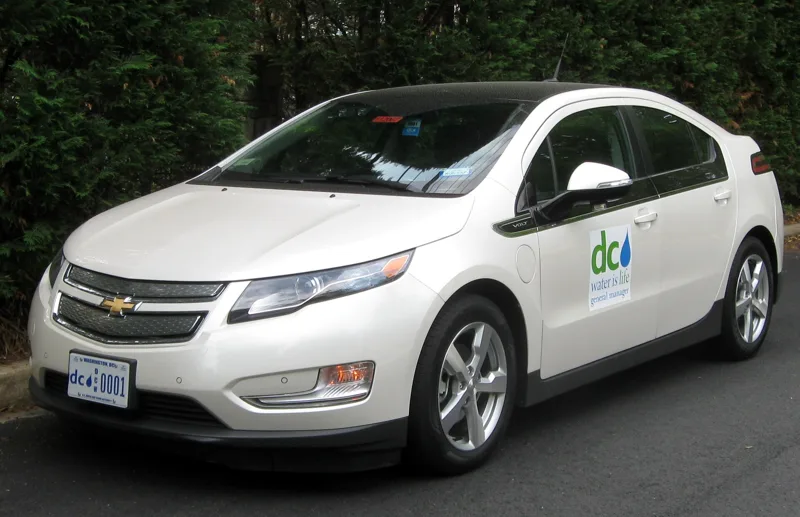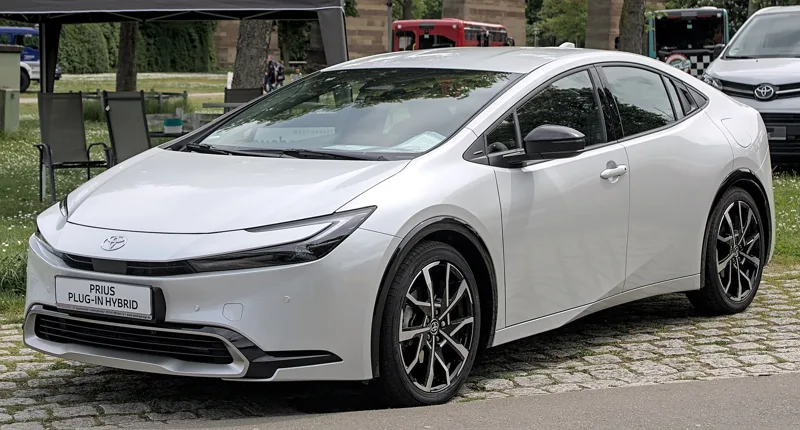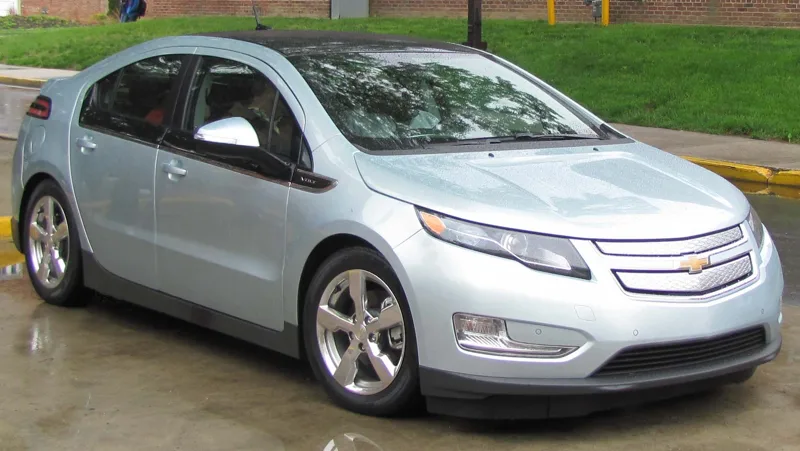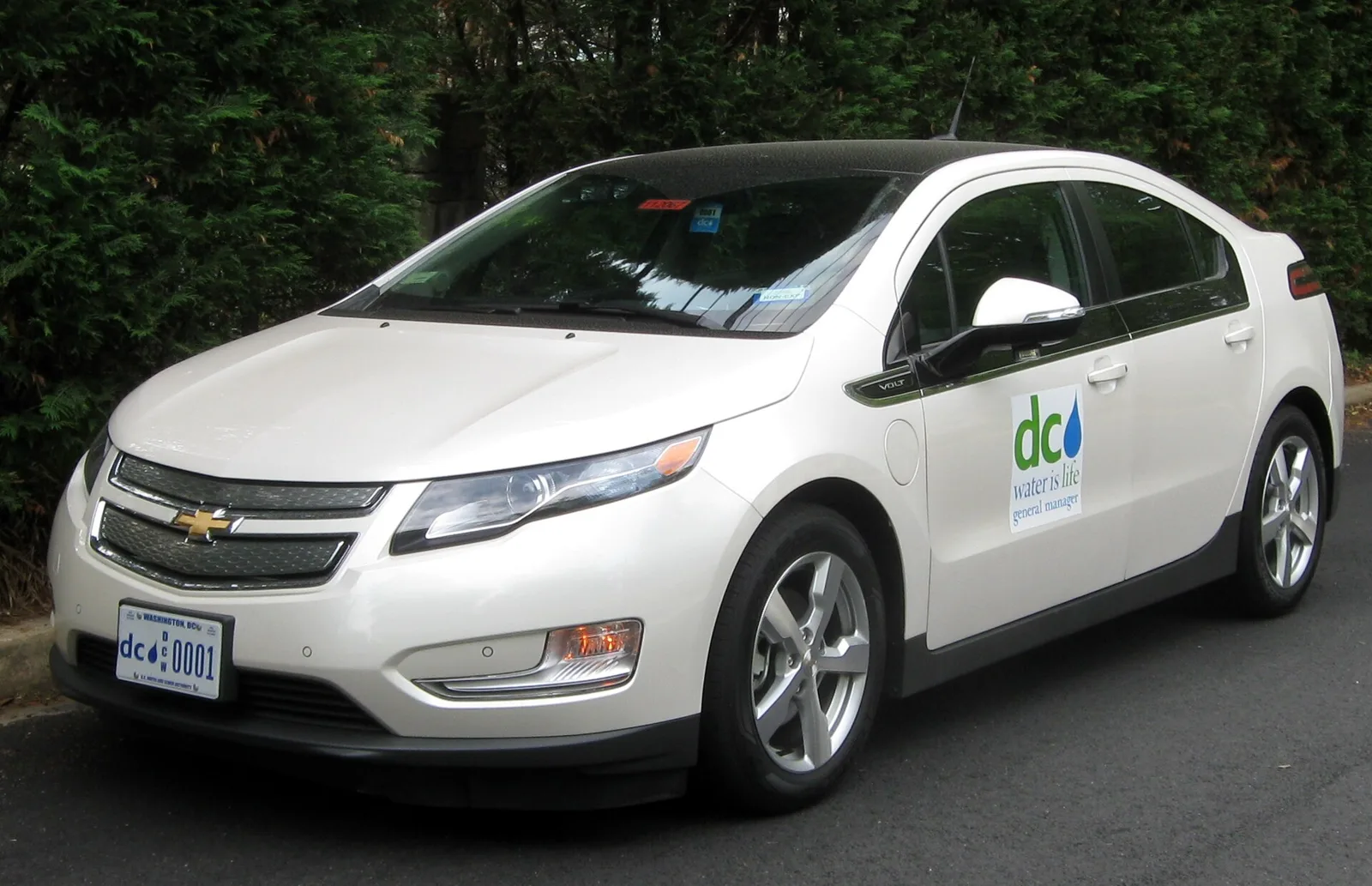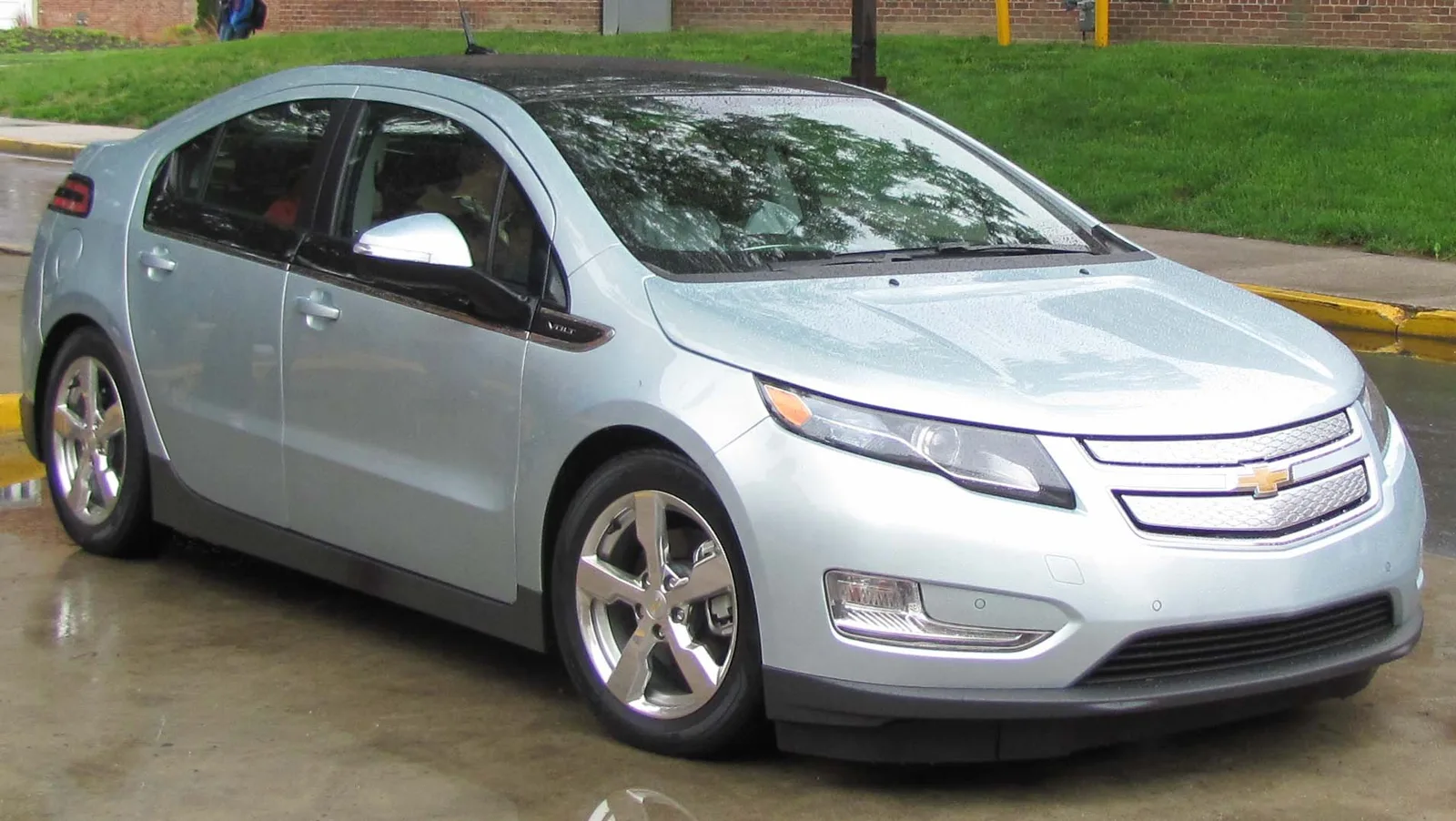
GM built the Volt to drive on electricity alone and let a generator fill in, while Toyota put a plug and a second battery into its best-selling hybrid.
The Chevrolet Volt was a pure electric car with a gasoline range extender, while the Prius Plug-in Hybrid kept a petrol engine and added a plug-in mode. The Volt's 16 kWh battery was sized for 40 miles of electric driving, and the Prius's added packs gave it a shorter electric range.
The Chevrolet Volt and the Toyota Prius Plug-in Hybrid both let a driver cover short trips on stored electricity and fall back on petrol for longer ones. The Volt does this with a motor that always drives the wheels, while the Prius keeps a petrol engine in the drive and adds plug-in capacity on top.
The Volt was designed as the more ambitious of the two, a pure electric car with a range extender, while the Prius was an evolution of Toyota's hybrid line. Both reached showrooms in the early 2010s, and both were measured against the same question of how far a plug-in can go on electricity.
Was the Volt designed to beat the Prius?
GM Vice President Robert Lutz led the project, which sought to emulate the success of the Toyota Prius. Lutz also wanted a leapfrog product in the way Apple's iPod had leapt past its rivals, and he was inspired by the Tesla Roadster and the progress of lithium-ion batteries.
The Prius, in turn, was the success that GM set out to emulate, and its plug-in version followed the same hybrid formula with added battery capacity.
One car runs on electricity with a generator in reserve, the other on petrol with electricity added for the short trips.
How did the Volt's range extender work?
The Volt behaves as a battery electric vehicle until its battery reaches a set threshold from full charge. At that point its combustion engine drives an electric generator to extend the range, and the motor that moves the wheels stays electric throughout.
On the motorway the engine can be linked to the generator through a clutch, which improves efficiency by 10% to 15%. The Volt's regenerative braking also adds to the onboard electricity, so the system returns some energy as it slows.
Specifications side by side
| Specification | Chevrolet Volt (first generation) | Toyota Prius Plug-in Hybrid (first generation) |
|---|---|---|
| Body | Five-door liftback with range-extending generator | Plug-in hybrid liftback |
| Production | From 30 November 2010 at Detroit/Hamtramck; succeeded in 2015 | 2012 to 2016 (first generation) |
| Battery | 16 kWh (58 MJ) lithium-ion, 136 kW peak power | 4.4 kWh lithium-ion, co-developed with Panasonic |
| Electric drive | Electric motor, peak 120 kW (160 hp), 320 Nm (236 lb ft) | Hybrid drive with an electric plug-in mode |
| Engine | 1.0 L three-cylinder turbocharged flex-fuel genset, 53 kW (71 hp) generator | Petrol hybrid engine as in the standard Prius |
| All-electric range | Target of 40 miles (64 km), sized into a 16 kWh pack | About 18 km (11 miles) on the EPA blended rating |
| Fuel tank | 12 US gal (45 L; 10.0 imp gal) | No figure given |
| Total range | About 640 mi (1,030 km) | No figure given |
| Fuel economy | About 50 mpg-US (4.7 L/100 km; 60 mpg-imp) on gasoline | 4.7 L/100 km (50 mpg-US; 60 mpg-imp) in hybrid mode |
| Seats | Four or five passengers as a family car | No figure given |
| Price | Around US$30,000, rising to about US$40,000 base | No figure given |
| Sales | No total given | About 75,400 first-generation units to April 2016 |
Why did GM choose a range extender?
Jon Lauckner, GM's vice president for global programme management, sketched the powertrain and estimated the weight and battery needs. He concluded that a range-extender design suited the project better than an all-electric car, and he convinced Lutz that a smaller pack with a small combustion engine driving a generator would answer the problems that had hobbled the EV1.
Those problems were expensive batteries, range anxiety and the lack of public charging. Lutz's first idea had been an all-electric car, and the compromise was accepted because it avoided the EV1's limitations without a large, costly battery.
What did the Volt concept look like?
The Volt concept debuted at the January 2007 North American International Auto Show as a four-door with a rear liftgate and seating for four. That contrasted with the two-seat EV1, which had been built to save weight for its lead-acid battery pack.
Its top speed rose from an electronically limited 80 mph (130 km/h) to 101 mph (160 km/h), and battery volume shrank from about 10.6 cubic feet (300 L) to 3.5 cubic feet (100 L). The smaller pack was part of the effort to hold down cost.
What battery did the Volt use?
A 16 kWh lithium-ion design was chosen to give a target all-electric range of 65 km (40 miles). GM tested around 25 cell chemistries from roughly 24 manufacturers before selecting two partners in June 2007, Compact Power and Continental Automotive Systems.
To protect the pack over a 10-year and 150,000 mi (240,000 km) warranty, GM limited the battery to 80% of its capacity and never depleted it below 30%. It also expected the battery to survive 5,000 full discharges without losing more than 10% of its capacity.
How much did the Volt cost to build?
Lutz first suggested the Volt would sell for around US$30,000, with an extra US$8,000 for the lithium-ion battery. Engineers then found that the car could not share components with GM's compact car platform, including the belt-driven power steering, power brakes and air conditioning compressor.
That cost escalation, along with a compact 110 kW (150 hp) electric motor and specialised control electronics, pushed the base price to around US$40,000. The production investment was also large, with US$700 million committed across eight Michigan facilities.
How did the Prius plug-in come to market?
The Prius Plug-in Hybrid made its debut at Frankfurt, then travelled to Tokyo and to the Los Angeles show by the end of 2009. It was based on the third-generation Prius, model XW30, but fitted with 5.2 kWh of lithium-ion batteries.
That battery size met the minimum for a US federal tax credit of US$2,500, a benefit tied to the 2009 clean energy law. The credit applied to the first 200,000 plug-ins sold by an automaker. A production version was unveiled at Frankfurt in September 2011.
How did the Prius's batteries work together?
The pre-production Prius Plug-in used three batteries. Two added packs provided all-electric drive, while the standard hybrid battery took over when those were depleted, so the car behaved like an ordinary Prius. Once the first pack was empty it disconnected, and the second pack took over in the same way.
The two added packs did not reconnect until the car was plugged in and charged. That design kept the petrol hybrid available at all times, which is the main difference from the Volt's electric-only drive.
How did the Prius demonstrators perform?
The demonstrator's JC08 rating was 1.76 L/100 km (134 mpg-US; 161 mpg-imp), with 43.6% of driving in EV mode and CO2 emissions of 41 g/km. Running as an ordinary hybrid, it returned 3.3 L/100 km (72 mpg-US; 86 mpg-imp) with CO2 at 76 g/km.
Those figures depended on how the car was charged. Its hybrid-mode rating matched the conventional liftback's 4.7 L/100 km (50 mpg-US; 60 mpg-imp), while the EPA figure in charge-depleting mode was 2.5 L/100 km (114 mpg-imp).
What did the US trials find?
Consumer Reports drove a demonstrator for two weeks and found an all-electric range of 23 to 27 km (14 to 17 mi) at the start of each trip. On a 126 km (78-mile) trip the car averaged 3.70 L/100 km (63.5 mpg-US; 76.3 mpg-imp), and its electric share on commutes was 40 to 56 percent.
Motor Trend ran one for 32 days, recording an average all-electric range of 18.8 km (11.7 miles) and 3.34 L/100 km (70.4 mpg-US; 84.5 mpg-imp) over 3,030 km (1,880 mi). The California Center for Sustainable Energy measured an average of 2.8 L/100 km (83 mpg-US; 100 mpg-imp) with two cars and 13 drivers.
How did European drivers use the Prius plug-in?
Toyota reported that two-thirds of commute trips in the European fleet fell inside 20.1 km (12.5 mi), the expected all-electric range, so most commuters could expect electric-only trips. The fleet had covered 800,000 km (497,100 mi) by the time of the report.
The European demonstrators used 36% less fuel than the comparable, best-in-class diesel, and almost 50% less than the best gasoline car. In the UK, the 20 demonstrators leased to EDF Energy drove one-third of their distance in EV mode and were 27% better on fuel than an equivalent diesel.
How did the Prius demonstration programme spread?
Toyota ran a demonstration programme with 600 pre-production test cars from late 2009, in Australia, Canada, China, France, Germany, Japan, New Zealand and the United States. Japan took 230 cars, the US 125 by early 2010, and Europe 200 in spring 2010.
The cars were leased to fleet and government customers, and each carried data tracking devices so that Toyota could monitor how they were used and improve the plug-in hybrid system.
How many Prius plug-ins were sold?
In 2012 the Prius plug-in ranked second among plug-in electric cars by sales, and by December 2014 it was third-best of all time. By November 2015 it had fallen to fifth in the global ranking, behind the Tesla Model S and the Mitsubishi Outlander PHEV.
By December 2017 North America had sold 66,800 units, Japan 48,800 and Europe 13,100. Cumulative global sales of both plug-in generations reached 209,000 by December 2019.
How did the Volt sell?
No sales total for the Volt is given in this comparison, though series production at Detroit/Hamtramck had begun on 30 November 2010. Its European variant, the Opel/Vauxhall Ampera, was introduced in numerous markets with visual changes, and the Chevrolet Volt continued to be sold in Europe in lower volumes.
In Australasia the car was sold as the Holden Volt from 2012 to 2015, and its second generation arrived in 2015 as the final version of the car. The first generation was built at the Detroit facility before that changeover.
Which buyer suits each car?
The Volt suits a buyer who wants an electric car for everyday driving, with a generator to extend the range when the larger battery runs low. The Prius plug-in suits a buyer who wants a hybrid with a petrol engine always ready and a smaller electric window for short trips.
Practicality is only partly covered. The Volt's four or five seats are noted, but no boot or rear seat dimensions are given for either car, and running costs are not compared.
How did the Volt's fuel economy compare?
GM estimated gasoline economy of about 50 mpg-US (4.7 L/100 km; 60 mpg-imp) for the car, and an effective 150 mpg-US (1.6 L/100 km) on a 60 mi daily drive with an overnight charge. That estimate depended on the electric share of the driving.
The 12 US gal (45 L; 10.0 imp gal) fuel tank gave a total range of about 640 mi (1,030 km). GM also said E85 ethanol could be used in the generator engine in place of gasoline.
What engine did the Volt's generator use?
The Volt's genset was a small 1.0 L three-cylinder turbocharged flex-fuel engine that drove a 53 kW (71 hp) generator. Because it could burn E85 ethanol as well as gasoline, GM argued that the car could reduce dependence on imported oil.
GM also said the Volt's production depended on battery advances that had not yet arrived, since the rechargeable batteries it needed did not exist on the market at the time. The prototype used a pair of 12-volt conventional car batteries to run at low speed while stationary.