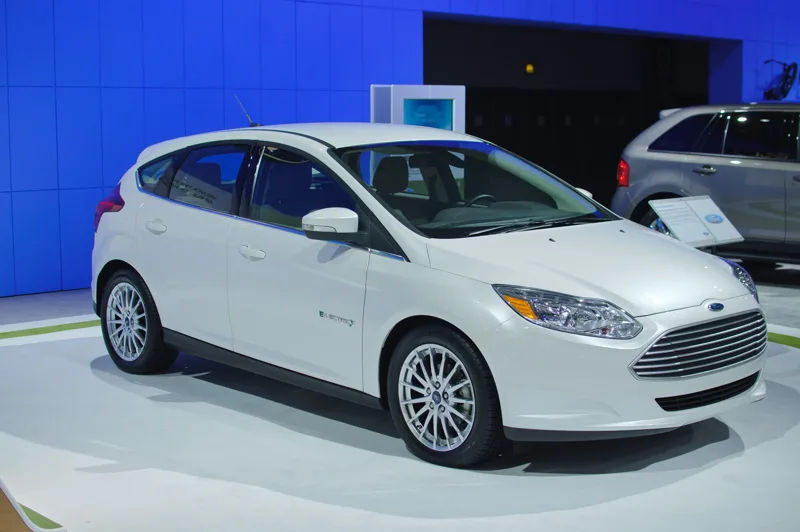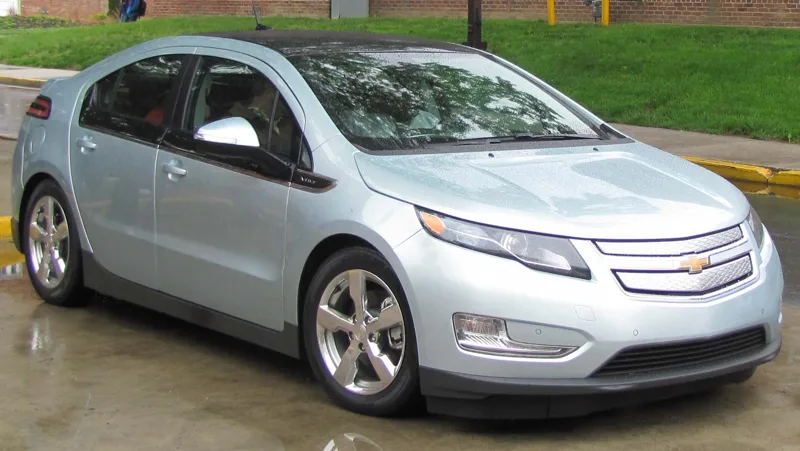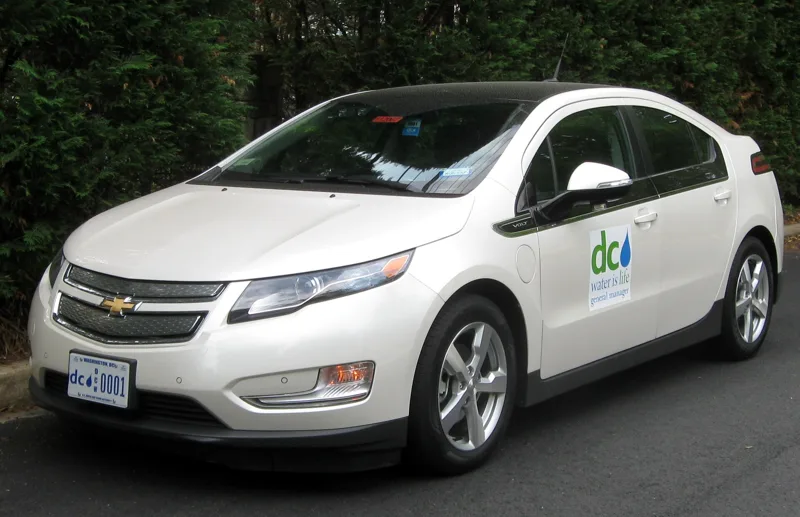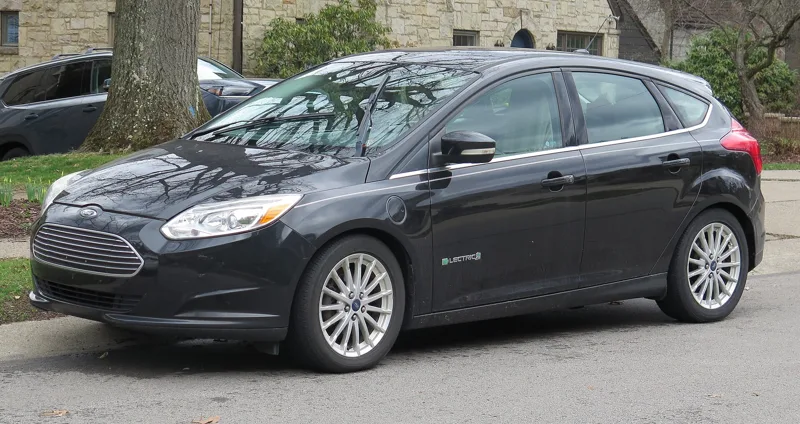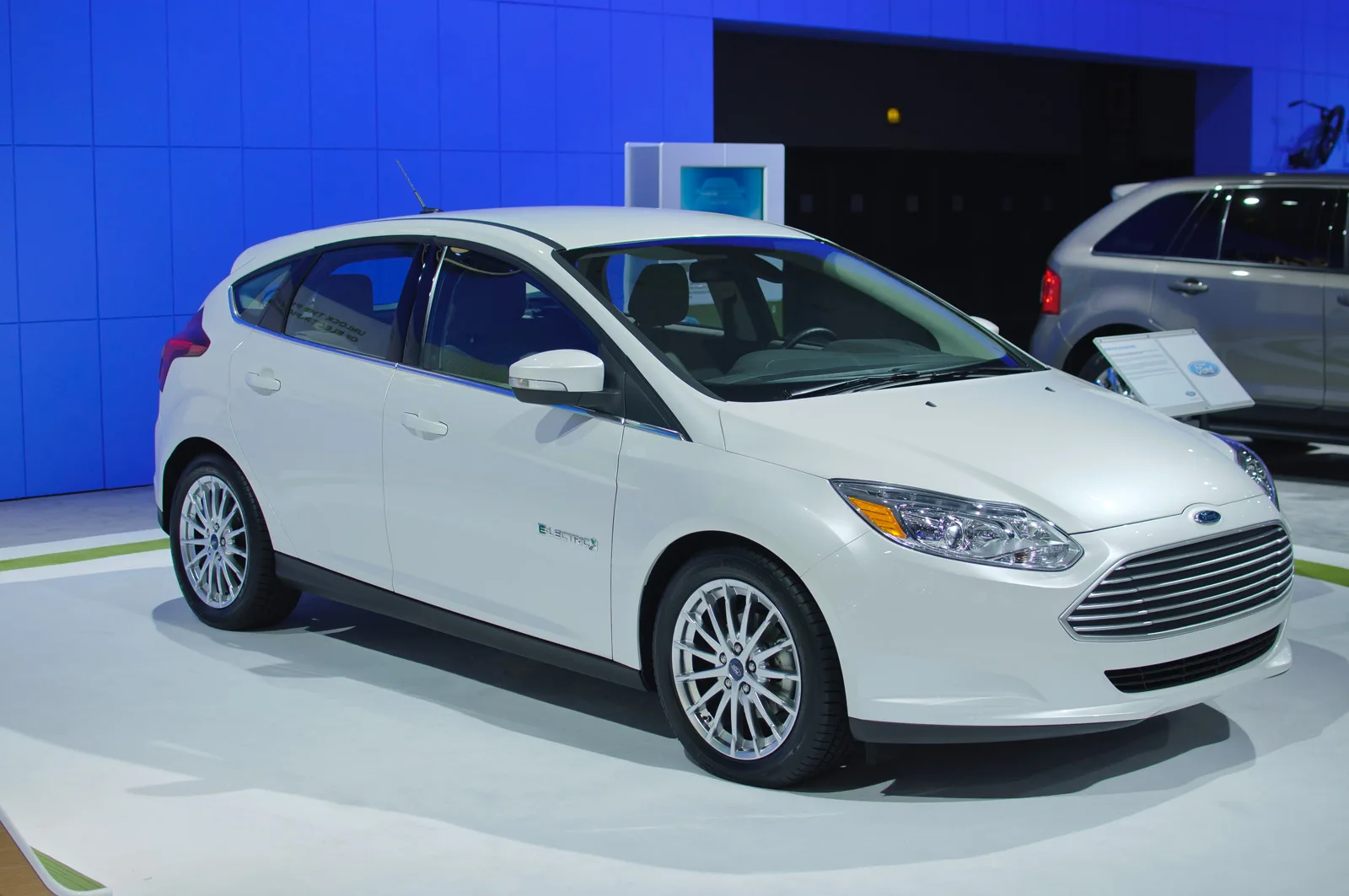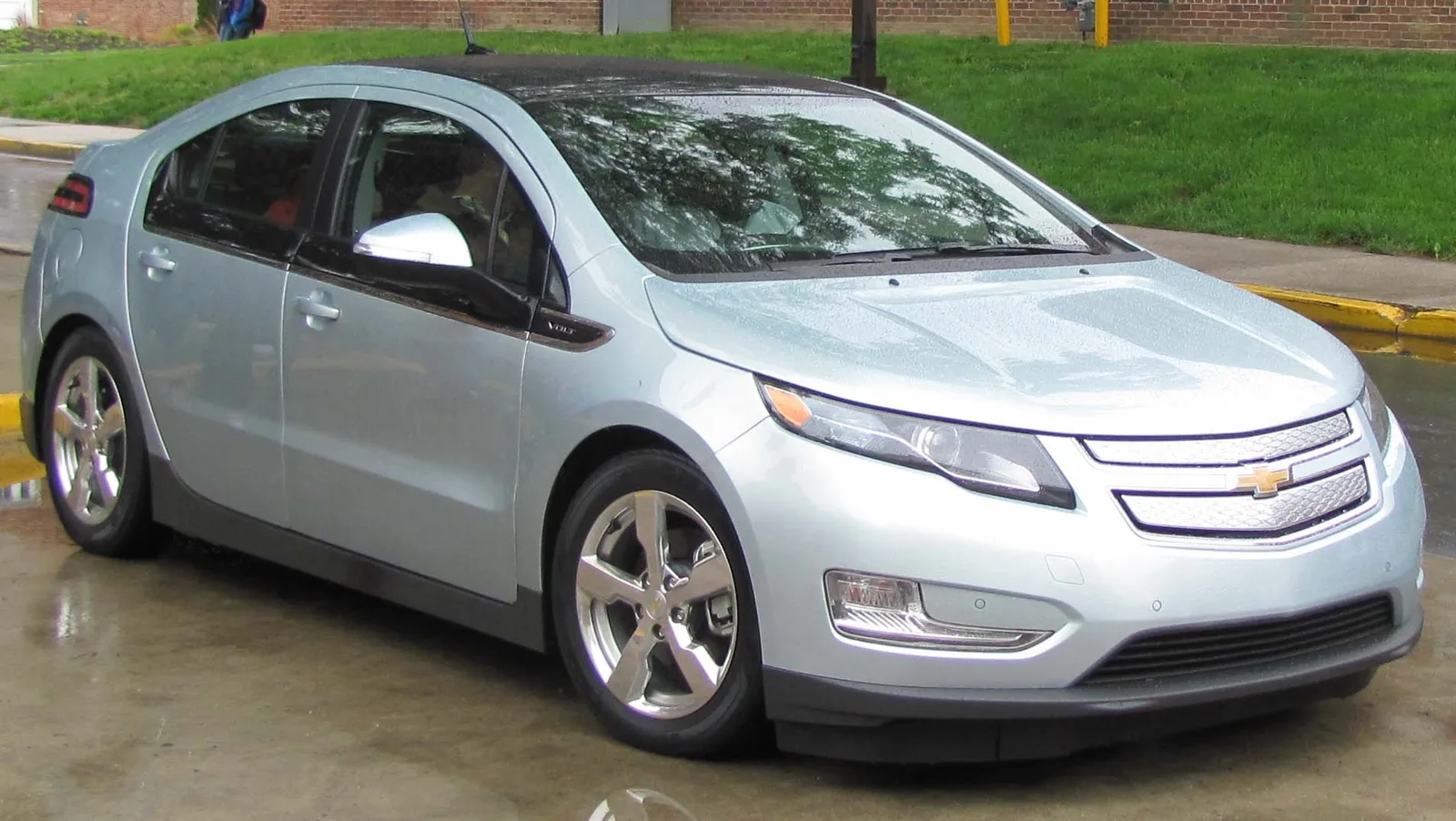
Two American electric cars from the early 2010s, one with a petrol generator to fall back on and one with nothing but a battery.
The Chevrolet Volt and Ford Focus Electric were rival American electric cars of the early 2010s, priced close together. The Volt carried a petrol range extender, while the Focus Electric was battery electric only, with a 76 mi original range and a 33.5 kWh pack from 2017.
The Chevrolet Volt and the Ford Focus Electric arrived in the American market within a year of each other, and they were sold at roughly the same price. One carried a small petrol engine to drive a generator, and the other carried nothing but a battery. Both were aimed at drivers who wanted to stop buying petrol, and both showed how carmakers were trying to make electric motoring practical in the early 2010s.
Why were the Volt and Focus Electric rivals?
The Volt and the Focus Electric were rival electric family cars sold in the United States in the early 2010s. Pricing put them close together, and Ford's 2012 Focus Electric cost about the same as the Volt. The Volt was a plug-in with a combustion engine, while the Focus Electric was a battery-only car built on the third-generation Focus.
The two designs answered different questions. General Motors wanted a car that could drive on electricity for daily trips and still go further on petrol, while Ford started with a conventional hatchback and fitted an electric drivetrain into it. That difference shaped the cars' range, charging and cabin space.
One electric car carried a petrol generator for the long trips, and the other trusted its battery and its charger alone.
How was the Volt's range-extender design developed?
General Motors began the Volt in 2006 under Robert Lutz, the vice president who wanted to rebuild the company's environmentally aware image after the EV1 programme had cost it heavily. The team set out to create a family of common electric powertrain parts, called E-Flex and later Voltec, that could accept different generators.
Jon Lauckner, the vice president for global programme management, sketched the powertrain and estimated the weight and battery needs. He concluded that a range extender was more suitable than a pure electric car. A smaller battery and a small engine driving a generator would address concerns about cost, range anxiety and the thin spread of public chargers.
The target was an all-electric range of 40 miles (64 km), chosen because research suggested that 78 per cent of American commuters travelled 40 miles or less each day. The battery was sized at 16 kWh, and it was designed so that it would be used only down to 30 per cent state of charge, which helped its life over the long term. GM also said the production Volt depended on battery advances, since the rechargeable cells a viable car needed did not yet exist on the market.
How did the Focus Electric come about?
The Focus Electric began as the Focus BEV concept, shown at the 2009 Frankfurt Motor Show. That concept used the European Mark II as its donor car and borrowed the electric climate control system from the 2010 Ford Fusion Hybrid. The pre-production car, based on the third-generation Focus, was unveiled at the 2011 Consumer Electronics Show.
Ford's electric line already included the TH!NK and the Ranger EV, so the Focus Electric was its third production all-electric car. It was built on the same body as the petrol Focus, which meant the battery had to fit into a space designed for something else.
Volt and Focus Electric compared on paper
| Specification | Chevrolet Volt | Ford Focus Electric |
|---|---|---|
| Body | Five-door liftback with range-extending generator | Five-door hatchback, built on the third-generation Focus |
| Type | Plug-in with petrol range extender | Battery electric only |
| Battery | 16 kWh lithium-ion | 23 kWh at launch, 33.5 kWh for 2017 |
| Electric range | 25 to 50 miles in charge-depleting mode | 76 mi (122 km) original; 115 mi (185 km) for 2017 |
| Engine | 1.0 L three-cylinder turbocharged flex-fuel genset | none |
| Motor | 120 kW (160 hp) peak, 236 lb ft (320 N m) | 107 kW (143 hp), 245 Nm (181 ft lb) |
| Top speed | 101 mph (160 km/h) for the concept | 84 mph (135 km/h) |
| Efficiency | about 50 mpg-US (4.7 L/100 km) on petrol | 105 MPGe (2.2 L/100 km) combined, original model |
| Home charging | not given | 6.6 kW charger, 3 to 4 hours on 240 volt |
| Fast charging | not given | DC up to 50 kW on the 2017 model |
| Price | about the same as the Focus Electric in 2012 | from US$39,995 before the federal credit |
| Production | from 30 November 2010 at Detroit/Hamtramck | from December 2011 at Wayne, Michigan |
| Ended | second and final generation in 2015 | May 2018 |
How did the Volt's genset work in practice?
The Volt ran as a battery electric car until its battery fell to a set threshold, and then its engine switched on to drive a generator. The generator kept the range going as long as there was fuel. At high speed on petrol the engine could be linked mechanically to the generator through a clutch, which GM said improved efficiency by 10 to 15 per cent.
The genset was a 1.0-litre, three-cylinder turbocharged engine that could run on flex-fuel, and its generator was rated at 53 kW (71 hp). The fuel tank held 12 US gallons (45 L; 10.0 imp gal), which gave a total driving range of about 640 miles (1,030 km).
General Motors avoided the word hybrid for the Volt. The company said the car was an electric vehicle with a range extender, and its chief engineer, Pamela Fletcher, described it in January 2011 as an electric car with extended range. Under the Society of Automotive Engineers definition the car still qualified as a plug-in hybrid.
Which battery did each car use?
GM looked at about 25 cell chemistries from around 24 manufacturers. In June 2007 it picked Compact Power and Continental Automotive Systems, whose cells came from LG Chem and A123 respectively. The Compact Power pack used a lithium manganese oxide cell, while the Continental pack used lithium iron phosphate cells.
To protect the Volt's battery over a warranty of 10 years and 150,000 miles (240,000 km), the team used only half of the 16 kWh capacity. The state of charge was limited to 80 per cent, and the battery was never allowed below 30 per cent. GM expected the pack to withstand 5,000 full discharges without losing more than 10 per cent of its capacity.
The Focus Electric's battery used 430 LG Chem cells arranged as 86 series and 5 parallel, a 23 kWh pack that weighed 667 lb. It was split, with one part under the rear seats and the other behind them, and the 2017 model's larger 33.5 kWh pack was a later upgrade.
How did the Focus Electric charge and perform?
The Focus Electric's 6.6 kW charger took 3 to 4 hours on a 240 volt socket for the original model, and 5.5 hours for the 2017 model. The 120 volt cord was included, but it could take up to 20 hours on the original car and 30 hours on the 2017.
The 2017 model added DC fast charging up to 50 kW through a Combined Charging System connector. Its charge port sat in the left front fender, because Ford found most owners would charge at home and the side position avoided the crash zones at the front and rear.
On the road, the Focus Electric's 107 kW (143 hp) motor gave it a top speed of 84 mph (135 km/h). Its active liquid cooling heated or chilled the battery to keep it working in extremes of temperature.
How much did each car cost?
The Focus Electric took online orders from 2 November 2011 with a starting price of US$39,995, including a US$795 destination charge and before a US$7,500 federal tax credit. A gasoline Focus listed at US$16,500 in December 2011, so the electric car was far dearer than its petrol sibling.
The Focus Electric was priced level with the Volt in 2012, and it was US$3,945 more than the base 2012 Nissan Leaf SV. California offered a US$2,500 rebate through its Clean Vehicle Rebate Project, along with access to the state's carpool lanes for solo drivers.
The Volt's price had moved a long way from early estimates. Lutz first talked of around US$30,000, with about US$8,000 more for the battery, and engineering costs pushed the base price towards US$40,000.
How many Focus Electrics were sold?
Sales were small. The Focus Electric sold 685 cars in 2012 and 1,738 in 2013, and by September 2014 cumulative American sales had reached 3,965. Initial supply was limited, and the first car went to Google's GFleet carsharing service in December 2011.
In 2014 Ford cut the price by US$4,000. The Focus Electric was sold in all 50 American states, which set it apart from some electric cars sold only in states with mandates, and it earned the 2011 Green Car Vision Award at the Washington Auto Show.
What did the EV1 leave behind for the Volt?
The Volt team inherited the lessons of the EV1, a two-seat electric car whose lead-acid battery pack limited it, and the programme that produced it had cost General Motors more than a billion dollars in the 1990s. Lutz nonetheless argued for a new car after the 2006 Detroit show, despite internal doubts.
The Volt's concept seated four and had a higher top speed than the EV1, which was electronically limited to 80 mph (130 km/h). The Volt reached 101 mph (160 km/h) on paper, and its battery volume fell from roughly 300 litres (10.6 cubic feet) to 100 litres (3.5 cubic feet).
Lutz hoped the car would copy the success of the Toyota Prius and become a leapfrog product, in the way Apple's iPod had changed music players. The Tesla Roadster and advances in lithium-ion batteries also encouraged the team.
Did the Focus Electric have a British test fleet?
It did. The Frankfurt concept was developed for the UK government's Ultra-Low Carbon Vehicles demonstration in early 2010. A consortium of Ford, Scottish and Southern Energy and the University of Strathclyde ran a fleet of 15 Focus BEVs with a charging network in and around the London Borough of Hillingdon.
That fleet was partly funded by the Technology Strategy Board, which backed industry projects to cut CO2. The trials gave Ford real-world data before the production car reached the market.
The production car was planned to carry warning sounds for pedestrians at low speed. Ford tested four alternatives and asked enthusiasts to vote on them through a Facebook page in June 2011, but it held back unless federal legislation required them.
Where were the two cars built?
The Volt was assembled at the Detroit/Hamtramck plant from 30 November 2010, and General Motors invested heavily in the Volt's supply chain, including a Flint plant for engine generators and a Brownstown Township factory for battery packs. In Australasia the car was sold as the Holden Volt from 2012 to 2015, and in Europe as the Opel or Vauxhall Ampera.
The Focus Electric was built at the Michigan Assembly Plant in Wayne on the same line as the petrol Focus and the C-Max plug-in hybrid. Production for European buyers began in Saarlouis, Germany, in June 2013, and it ended in May 2018 for both markets.