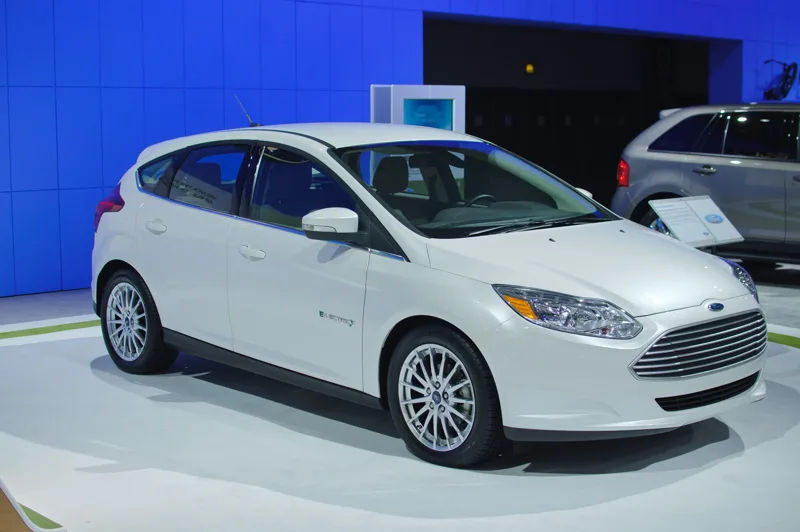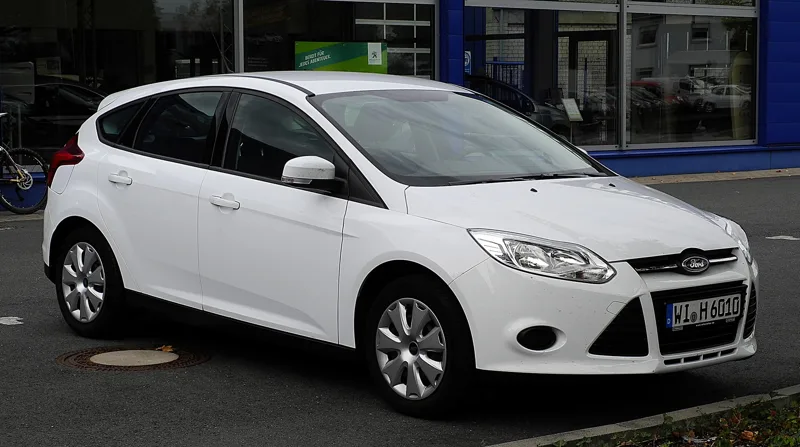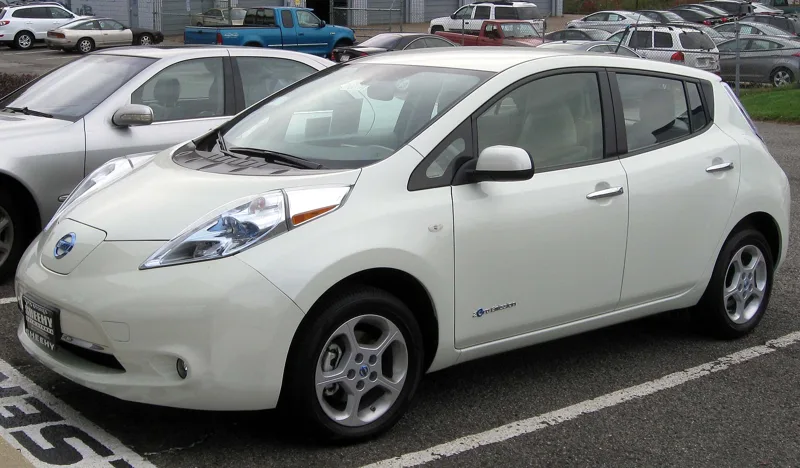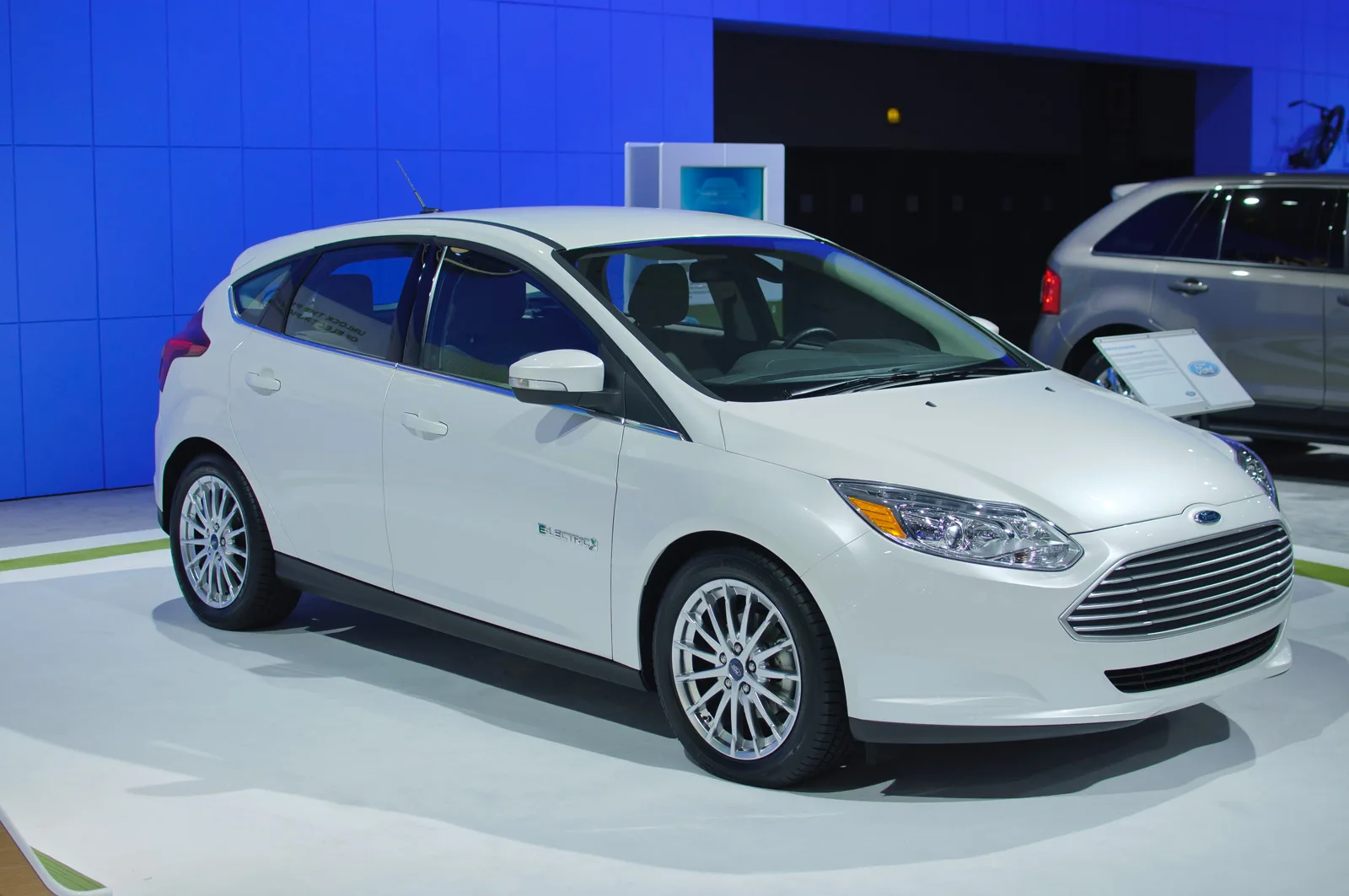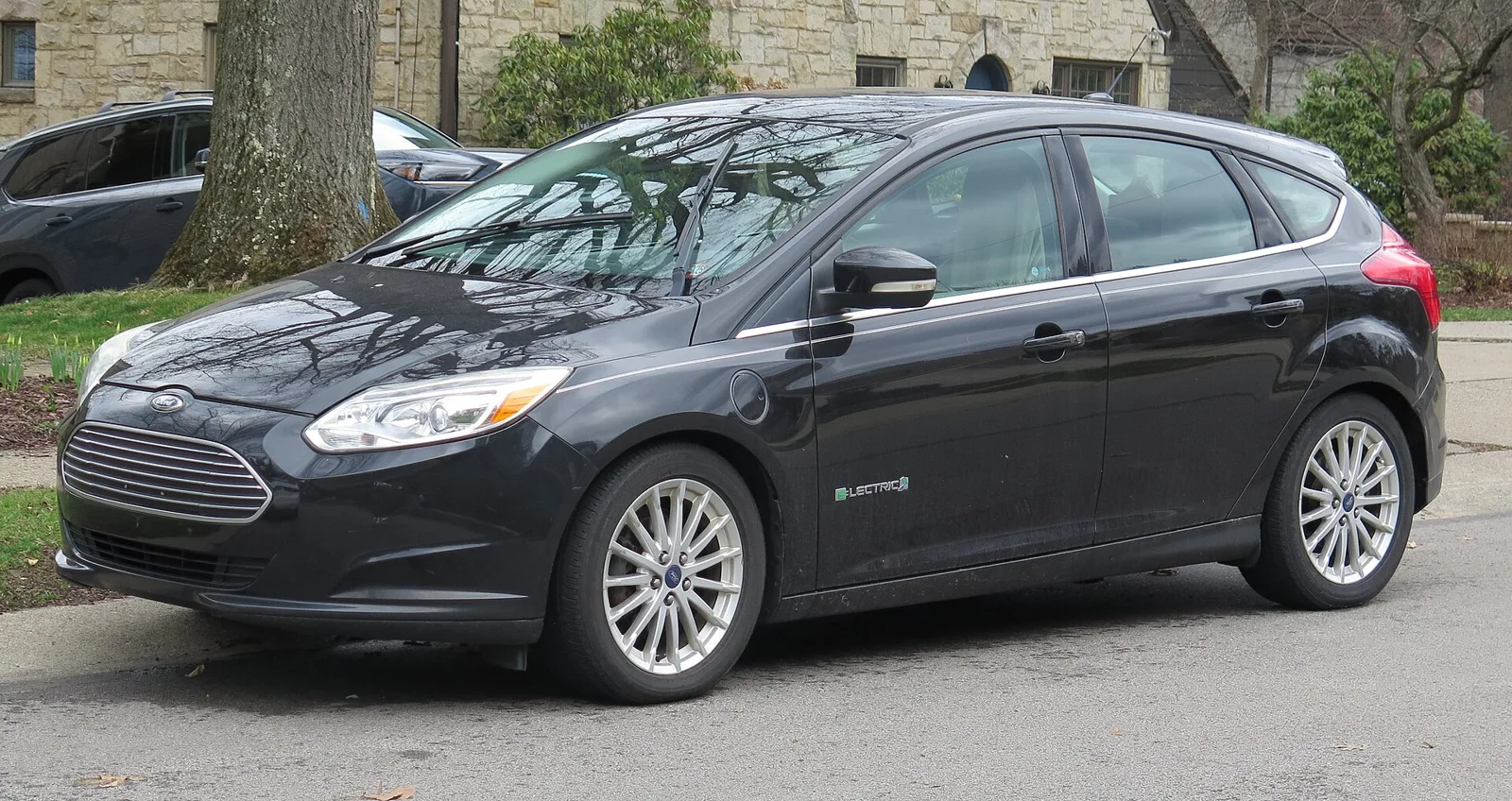
Two of the first mass-market electric cars in the United States, one a Focus body with a battery in the boot and the other a purpose-built Nissan hatchback.
The Ford Focus Electric used the third-generation Focus body with a 23 kWh battery and a 76 mi (122 km) original range, rising to 115 mi (185 km) in 2017. The Nissan Leaf was built as an electric car from the start, with a range of up to 100 miles (160 km), and it sold above 49,000 units by December 2012.
The Ford Focus Electric and the Nissan Leaf were among the first electric cars sold in volume in the United States. The Focus took a conventional hatchback body and fitted a battery into it, while the Leaf was designed from the start as a battery electric car. Their range, charging times and early sales show how two different approaches played out in the same market.
Where did each car come from?
The Focus Electric grew out of a 2009 Frankfurt concept, the Focus BEV, which was built on a European Mark II body. It borrowed an electric climate control system first used in the 2010 Fusion Hybrid. A pre-production Focus Electric followed at the 2011 Consumer Electronics Show.
Nissan's Leaf came from its own electric programme. The Leaf debuted on 2 August 2009 at Nissan's Yokohama headquarters, and it followed the Altra, a model that Nissan had built from 1998 to 2002 in limited numbers for fleets. The Leaf was the first mass-marketed, series-produced battery electric vehicle, and its name was an acronym worked backwards to suit an affordable, eco-minded family car.
Japanese production began on 22 October 2010, and sales opened in Japan and the US that December. Fleet customers took the first Focus Electrics in December 2011, and retail buyers in only three states could order one from May 2012.
It was the third all-electric vehicle Ford built for production, following two earlier models, and it sold in all 50 US states. Many smaller electric cars of the period were confined to places with a mandate.
A Focus body with a battery in the boot against a Leaf designed around its electric drivetrain.
How did the range and battery compare?
The Focus Electric launched with a 23 kWh liquid-cooled lithium-ion pack, which gave 76 mi (122 km) on the US Environmental Protection Agency test. For 2017 the pack grew to 33.5 kWh and the range rose to 115 mi (185 km), a gain of roughly half again.
The Leaf's range was rated at up to 100 miles (160 km) on a full charge. Its battery used 192 flat laminated cells, a design developed with NEC, mounted under the floor and between the wheels to keep the handling and interior space in good order.
The Focus housed its pack in two sections, one below the rear seat and one behind it, and the battery took up room in the boot. Ford's own battery work involved LG Chem, which supplied 430 cells in an 86 series by 5 parallel layout.
How did the two cars charge?
The Focus Electric's 6.6 kW onboard charger needed three to four hours on a 240 volt socket for the original model, and about five and a half hours for the 2017 car. A 120 volt cord was included too, but it could take up to 20 hours on the original and 30 hours on the 2017.
The Leaf took 16 hours on 120 volts and 8 hours on 230 volts. Its fast charger restored 80 per cent of the battery in about 30 minutes.
Ford added DC fast charging to the 2017 Focus Electric through a Combined Charging System connector, at up to 50 kW. Its active liquid cooling and heating system pre-conditioned the battery to protect range and battery life.
Specifications side by side
| Feature | Ford Focus Electric | Nissan Leaf (first generation) |
|---|---|---|
| Body | Five-door hatchback on the third-generation Focus body | Five-door hatchback, purpose-built |
| Production | December 2011 to May 2018 | 2010 to 2017 |
| Battery | 23 kWh at launch; 33.5 kWh from 2017 | No figure |
| Range | 76 mi (122 km) original; 115 mi (185 km) for 2017 | Up to 100 miles (160 km) on full charge |
| Motor | 107 kW (143 hp), 245 Nm (181 ft-lbs) | 80 kW (110 hp) AC motor |
| Top speed | 84 mph (135 km/h) | No figure |
| Charging on 240 V or 230 V | 3 to 4 hours (original); 5.5 hours (2017) | 8 hours |
| Charging on 120 V | Up to 20 hours (original); 30 hours (2017) | 16 hours |
| Fast charging | Up to 50 kW DC, 2017 model | 80 per cent in about 30 minutes |
| Combined economy | 105 MPGe (original); 107 MPGe (2017) | 99 MPGe (2011 model) |
| US price | From US$39,995 with US$795 destination charge | No figure |
| Early US sales | 685 (2012); 1,738 (2013); 3,965 by September 2014 | Above 49,000 cumulative by December 2012 |
| Safety rating | No figure | NHTSA five stars (2011 and 2012); IIHS Top Safety Pick (2011) |
| Factory | Michigan Assembly Plant, Wayne; Saarlouis for Europe | Oppama, Japan; Smyrna, Tennessee; Sunderland, England |
| Pedestrian warning sound | Not fitted to production cars | Digital warning sounds from 2011 |
How did they sell in the early years?
The Focus Electric was offered in only 19 metropolitan areas at first, including Atlanta, Houston, Boston and Los Angeles. Ford sold 685 units in 2012 and 1,738 in 2013, which brought the American cumulative total to 3,965 by September 2014.
Nissan's Leaf sold far more. Cumulative sales passed 49,000 by December 2012, although sales rose only 22 per cent during 2012, a figure Nissan's chief executive described as a disappointment.
Nissan's answer was price. It cut the 2013 Leaf's price by 18 per cent, made possible in part by a new US assembly line in Smyrna, Tennessee, where production lowered component costs. Ford took a different route. It cut the Focus Electric's manufacturer's suggested price by US$4,000 for 2014.
The Leaf reached several European countries and Canada during 2011. The Focus Electric's European launch slipped from late 2012 to August 2013, which gave the Leaf a head start on that continent.
What did the Focus Electric cost?
Ford opened online orders on 2 November 2011, with pricing from US$39,995 including a US$795 destination charge. That was before the US$7,500 federal tax credit and any state or local incentives. In California a rebate of US$2,500 was also available.
A conventional Focus listed at US$16,500 in December 2011, rising to US$30,692 fully loaded. The Focus Electric therefore cost far more than a standard car, although some buyers could bring its net price close to a fully loaded petrol version once incentives were counted.
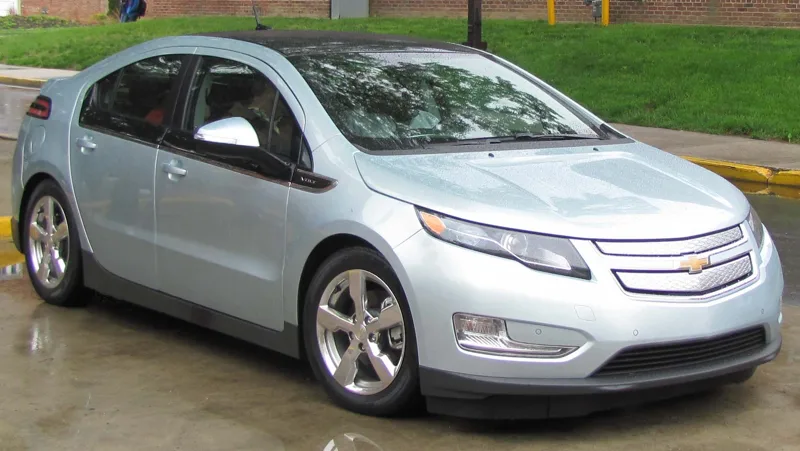
Against the 2012 Chevrolet Volt plug-in hybrid, the Focus Electric was priced in much the same territory, but it sat US$3,945 above the base 2012 Nissan Leaf SV. That gap matters for any buyer comparing the two.
Where were they built?
Ford built the Focus Electric at the Michigan Assembly Plant in Wayne, alongside the petrol Focus and the C-Max Energi and C-Max Hybrid models. Production in Europe moved to Saarlouis in Germany from June 2013.
Nissan's Leaf was built across three plants with a planned capacity of 250,000 a year. Oppama in Japan made the first vehicles sold in the United States, Smyrna in Tennessee had a capacity of 150,000 cars, and Sunderland in England produced for Europe. Commercial production at Smyrna began on 9 January 2013.
That platform had been drawn up for petrol engines, so the electric drive and battery were fitted into a body never meant for them. The Leaf's battery sat under its floor instead of in the boot.
How did the cars fare on safety?
The Leaf earned five stars from the National Highway Traffic Safety Administration for its 2011 and 2012 model years, and it was rated four stars for 2013 and 2014 because of lower front and side passenger scores. The Insurance Institute for Highway Safety gave the 2011 car its Top Safety Pick award.
Its battery safety system is triggered when airbags deploy in a crash, and it cuts the high voltage supply through a mechanical disconnection. Nissan also reported that none of the roughly two dozen Leafs destroyed by the March 2011 tsunami caught fire, and their batteries remained intact.
The Leaf brought digital warning sounds for pedestrians, a Vehicle Sound for Pedestrians system that played a sine-wave tone from 2.5 kHz to 600 Hz. The sound stopped at 30 km/h (18.6 mph) and returned below 25 km/h (16 mph). In the United Kingdom the warning sound was removed, because local rules required hazard sounds to be switchable off overnight and the Leaf's system could not do that.
The Focus Electric was planned to have warning sounds too. Ford developed four alternatives and asked fans on Facebook to pick one, but it decided to hold off unless federal legislation required them, so none reached the production car.
What did the connected features offer?
The Focus Electric used a special version of MyFord Touch that showed battery state of charge, the distance to charging points, range budget and expected range margin. Its MyView feature showed how air conditioning and other accessories affected range, which helped with multi-stop journeys.
The Focus cluster used blue butterflies to show how much range remained beyond the destination, and the butterflies disappeared as the battery drained. An 8-inch centre screen handled navigation and eco coaching, and the MyFord Mobile app let owners control charging remotely.
The Leaf offered the CarWings telematics system, which started in Japan. It mapped the car, estimated range, found charging stations and kept statistics on distance and energy use, while a smartphone app let owners control the air conditioning and charging remotely.
Did the fuel economy claims hold up?
Both cars were rated in MPGe, the US measure that puts electricity use on a petrol-equivalent scale. The Focus Electric scored 105 MPGe combined for the original car, and the 2017 version rose slightly to 107 MPGe. The Leaf's 2011 rating was 99 MPGe combined, which made the two cars close on paper.
The Focus Electric's original car was rated at 110 MPGe in city driving and 99 MPGe on the highway, while the 2017 model reached 118 MPGe in town and 96 MPGe on the highway. That pattern, with city figures above highway figures, is typical of electric cars that recover energy when slowing down.
Nissan's Leaf used about 34 kWh for every 100 miles in its 2011 EPA testing. For the 2013 model year it improved by 15 per cent, reaching 115 mpg-e, with 129 mpg-e in city driving and 102 mpg-e on highways. Those figures showed that the same basic car could improve through later software and hardware changes.
Which buyer should choose which?
A buyer who wanted a familiar Ford body, a bigger battery later in the car's life and the option of DC fast charging on the 2017 model would look at the Focus Electric. The 115 mi (185 km) range of that car set it apart from the early Leaf.
A buyer who wanted an electric car from the first day, a larger installed base and a battery designed around the drivetrain would find the Leaf more appealing. Its sales record and its five-star rating in the United States added to that case.
Neither car could claim an overall victory on these facts. The Focus Electric offered more range in its later years and a more familiar body, while the Leaf offered more cars on the road and a purpose-built layout. The two lines ended within about a year of each other, the Leaf's first generation in 2017 and the Focus Electric in May 2018.