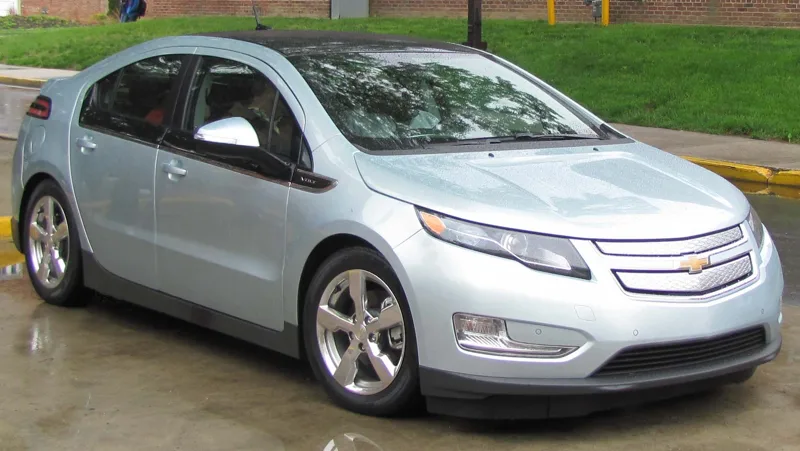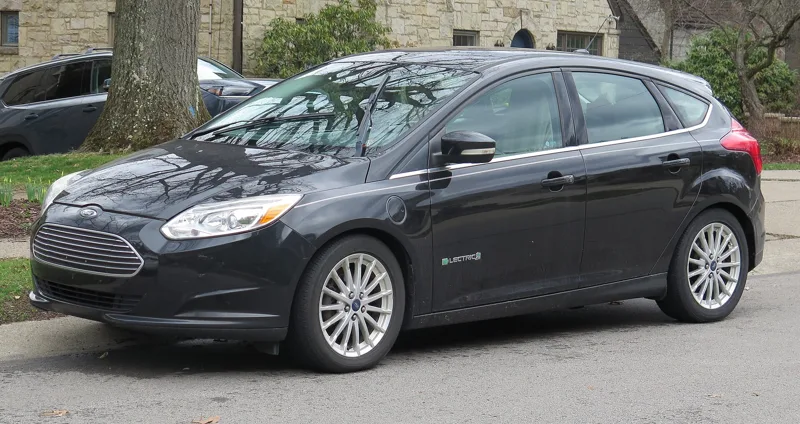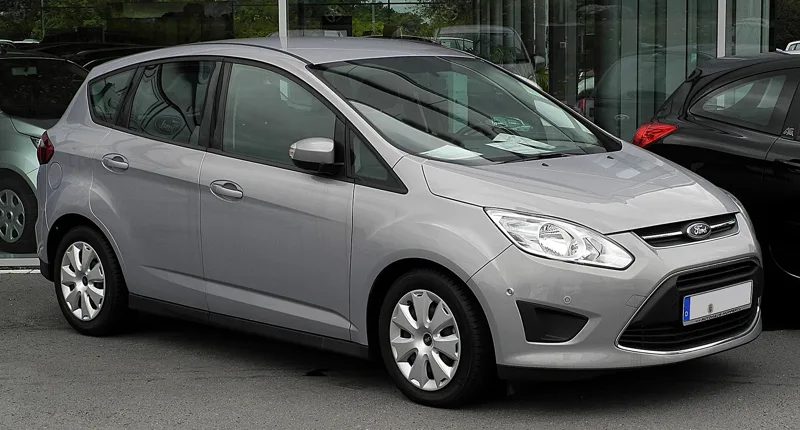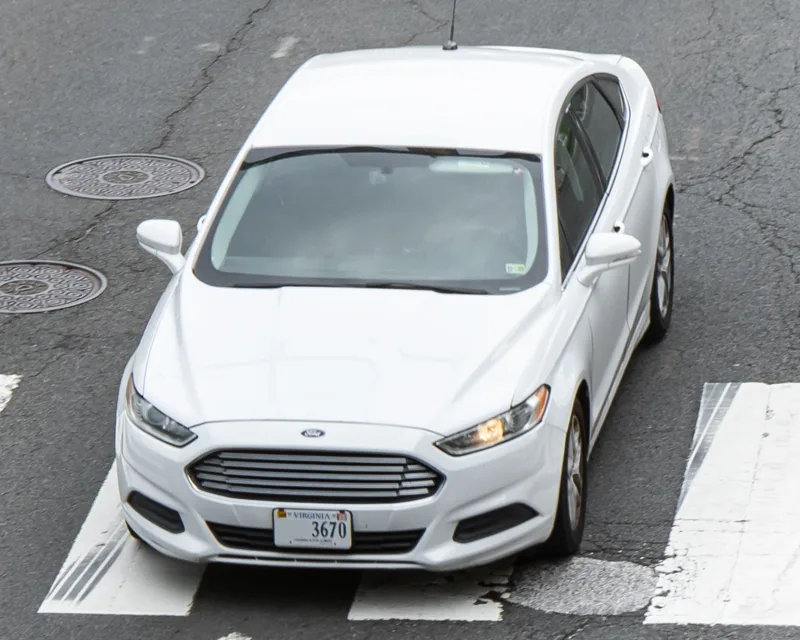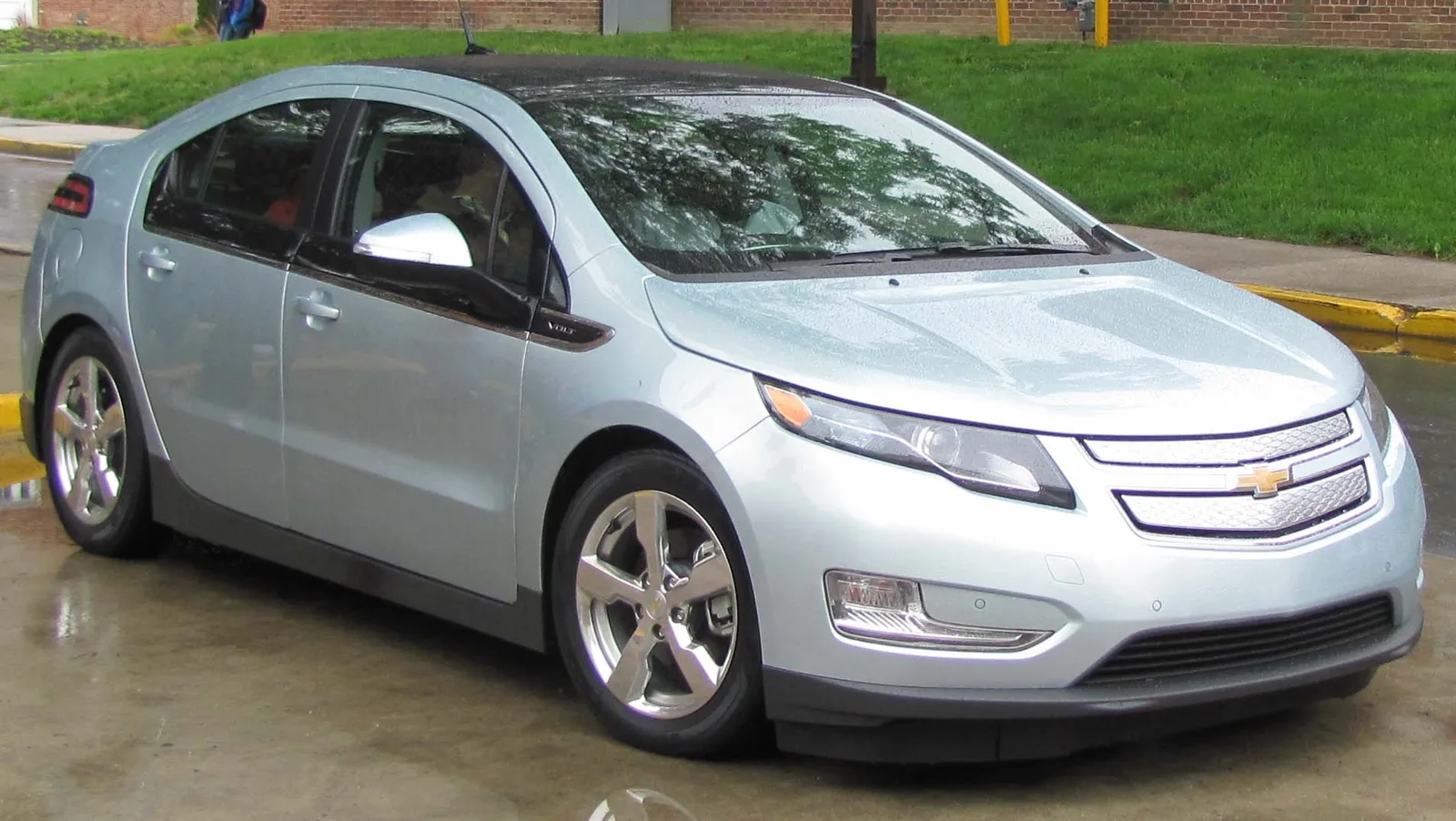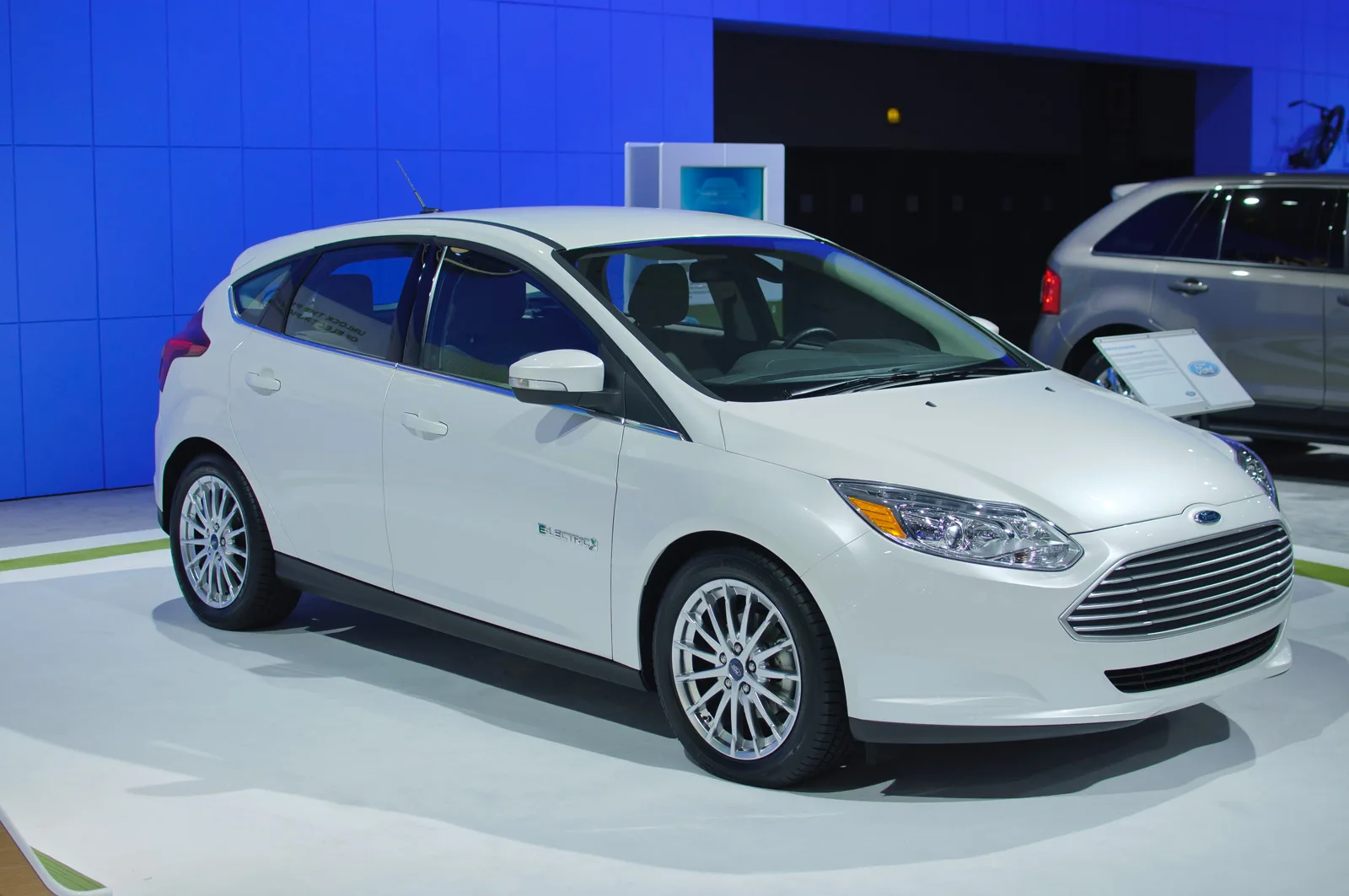
A Focus hatchback with a lithium-ion pack, 76 mi of range at launch and 115 mi on the 2017 model, sold across the United States and Europe.
Ford's electric Focus, sold from December 2011 to May 2018, was a five-door hatchback with a lithium-ion pack that grew from 23 kWh to 33.5 kWh. Its EPA range rose from 76 mi (122 km) to 115 mi (185 km) over its life.
Ford's Focus Electric was a five-door battery hatchback that shared its shell with the third-generation Focus. It was built from December 2011 until May 2018, and it marked the carmaker's third all-electric model for production.
Underneath, the car was a different machine: an electric motor, a lithium-ion pack and a cooling loop fitted into a body designed for combustion engines. Its life ran from early, limited deliveries to lower prices in its final years.
What kind of car was the Focus Electric?
The Focus Electric was a compact electric hatchback that reused the gasoline third-generation Focus body, which is why it looked nearly identical to its petrol counterpart. It was Ford's third production electric car after the TH!NK and the Ranger EV, and it went on sale across all 50 US states.
Fitting electric hardware into a body meant for piston engines involved compromises. The pack used up boot room, and the platform had not been designed to carry a pack of that size.
Fleet deliveries came first, and retail buyers in a few states got cars the following year. Wider availability followed as the car spread across more markets.
A Focus body and a battery in the boot: Ford's electric compact sold in all 50 states.
Where did the Focus Electric come from?
The car grew out of the Focus BEV concept, which Ford displayed at the 2009 Frankfurt Motor Show. That concept used a European Mark II Focus as its base and took several parts from Ford's North American hybrid programme, including an electric climate system from the 2010 Fusion Hybrid.
Ford showed a pre-production model at the 2011 Consumer Electronics Show, using the Focus Electric name. It was built on the third-generation Focus rather than the European car.
Ford also joined a British government scheme for ultra-low carbon vehicles. Its partners included Scottish and Southern Energy and the University of Strathclyde, and together they ran 15 Focus BEVs with chargers spread around Hillingdon in west London from early 2010.
How far could the Focus Electric travel on a charge?
The first Focus Electric earned a range of 76 mi (122 km) from the US Environmental Protection Agency. The 2017 model, which carried a larger battery, reached 115 mi (185 km), a gain that came from more capacity rather than a new body.
The first battery held 23 kWh, while the 2017 car used a 33.5 kWh pack. On the combined cycle the original car returned 105 MPGe (2.2 L/100 km) and the 2017 car 107 MPGe (2.2 L/100 km), so the larger battery did not lower the rating on paper.
In March 2012 the EPA put the Focus Electric top of the compact class for fuel economy among cars sold in the US.
What were the Focus Electric specifications?
| Specification | Original model | 2017 model |
|---|---|---|
| Body | Five-door hatchback, third-generation Focus glider | Same body |
| Motor | 143 hp (107 kW), 181 ft-lbs (245 Nm) | Same motor |
| Battery | 23 kWh (75Ah) LG Chem lithium-ion | 33.5 kWh lithium-ion |
| EPA range | 122 km (76 mi) | 185 km (115 mi) |
| Combined rating | 2.2 L/100 km (105 MPGe) | 2.2 L/100 km (107 MPGe) |
| City rating | 2.1 L/100 km (110 MPGe) | 2.0 L/100 km (118 MPGe) |
| Highway rating | 2.4 L/100 km (99 MPGe) | 2.5 L/100 km (96 MPGe) |
| Top speed | 135 km/h (84 mph) | Same top speed |
| Fast charging | Not offered | Up to 50 kW DC |
The motor and battery defined how the car drove and how far it could go, and the battery was the main thing that changed across the production run.
How was the battery built?
The battery was a 23 kWh LG Chem lithium-ion pack of 430 cells, wired as 86 series and five parallel groups. It fed a 107 kW motor with 245 Nm of torque, and in 2017 the pack grew to 33.5 kWh within the same layout.
Each cell had a nominal voltage of 3.7 V, which gave a nominal pack voltage of 318.2 V. The pack was split into two sections, one beneath the back seats and one to their rear, and the original version weighed 667 lbs.
Ford estimated that a comparable electric battery would weigh 600 to 700 pounds and cost between US$12,000 and US$15,000, or US$522 to US$650 per kilowatt-hour. Researchers put the carbon emitted in making the battery at 140 kg of CO2 per kWh.
A liquid cooling loop heated or chilled the coolant before it passed through the pack. In hot weather it carried heat off through a radiator, and in cold weather it warmed the cells so they could take charge efficiently. Magna International supplied the complete electric drivetrain, while Compact Power, an LG Chem subsidiary, worked on the battery system.
How long did the Focus Electric take to charge?
A 6.6 kW onboard charger used the SAE J1772-2009 connector. On a 240-volt socket a full charge took three to four hours for the original car and about 5.5 hours for the 2017 model. Both figures assumed a standard 240-volt supply.
Owners also received a 120-volt convenience cord, which could take up to 20 hours on the original car and up to 30 hours on the 2017 model. It was a backup rather than a routine.
The 2017 model added DC fast charging through a Combined Charging System connector, at up to 50 kW. That gave the later car a quicker top-up option on longer journeys.
Why was the charge port in the left front fender?
Ford tested several locations for the charge port on the Focus Electric and the C-Max Energi plug-in hybrid. It settled on the left front fender because owners were expected to charge at home, and that spot was the most convenient for home use.
The side position also kept the port away from the areas most likely to be damaged in minor collisions. Ford said that point weighed heavily against placing the port at the rear or the front.
What connected features did the car offer?
The car used an electric-specific version of the MyFord Touch system, which showed battery charge, how far it was to charge points, the spare range available and the margin ahead. A MyView function displayed the power drawn by accessories such as the air conditioning.
A Microsoft-powered value charging feature and the MyFord Mobile app let owners control and charge the car from a phone. The app meant the car could be managed away from the driver's seat.
The instrument cluster used blue butterflies to show surplus range beyond the chosen destination. More butterflies meant more margin, and they faded as the battery drained. Ford took the idea from the butterfly effect, the notion that a small choice can have a large consequence.
At the end of each trip a screen reported the distance covered, the miles regained through regenerative braking, the energy used and the petrol saved by driving electric.
Did the Focus Electric have pedestrian warning sounds?
Ford intended the car to emit a warning sound at low speeds so that pedestrians could hear it. The company designed four alternative sounds and, in June 2011, invited fans to pick a favourite through the Focus Electric Facebook page.
Ford later chose not to fit a sound unless federal law required one. That decision meant the production car never carried a warning system.
Where was the Focus Electric built?
The Focus Electric came out of the Michigan Assembly Plant, located in Wayne, Michigan, and that factory also built the gasoline Focus, the C-Max Energi and the C-Max Hybrid. Early output was limited before it was increased during 2012. Output was ramped up over the first full year of production.
The platform was originally designed for piston engines, and the battery and motor were squeezed into it. North American Focus production ended in May 2018, which also brought the Focus Electric to a close.
Cars for Europe came from Saarlouis in Germany, starting in June 2013. Production for both markets ended in May 2018.
How did Focus Electric sales go in the United States?
US sales began in a limited way. The car was first offered in 19 metropolitan areas, and its first production example went to Google in December 2011 for its GFleet carsharing service. Sales reached 685 units in 2012 and 1,738 in 2013.
Online orders opened on November 2, 2011. The starting figure was US$39,995, and that total included a US$795 destination charge before federal and state incentives. The federal tax credit was US$7,500.
California buyers could add a US$2,500 rebate through the CVRP programme, and they also gained solo access to the state's high-occupancy vehicle lanes. Cumulative American sales had reached 3,965 by September 2014.
What did the Focus Electric cost over time?
The Focus Electric carried a premium over the petrol Focus. In December 2011 the gasoline car listed at US$16,500, but a fully equipped one reached US$30,692, so after incentives the electric version could sit near a fully loaded petrol model in some places.
Ford cut the 2014 MSRP by US$4,000, to US$35,200. In February 2014 a US$6,000 dealer incentive took the base price to US$29,200 before tax incentives, and in October 2014 the company made a lower price permanent, at US$29,995 for the 2015 car.
Home charging was supported too. A SunPower solar option was offered through some dealers, costing US$10,000 before tax credits, and Ford agreed with Best Buy to supply 240-volt home charging stations.
Did Europe get the Focus Electric?
Yes, but later than planned. The European launch was first set for late 2012, and Ford said European buyers would not need to lease the battery separately, since it came with the car. Pricing was not announced at the time. The first cars were due in August 2013 instead.
The rescheduled launch put deliveries in August 2013, and the Focus Electric went on sale in Europe on that basis. Deliveries were the first step in the European rollout.
What awards and recognition did the car receive?
A 2011 honour came as the Green Car Vision Award, presented at the Washington Auto Show. Green Car Journal named the Focus Electric among five finalists for its 2012 Green Car of the Year in November 2011. Both honours came before the car reached US retail buyers.
The Jay Leno Show was a separate promotion: in September 2009 a Focus BEV appeared on it as a publicity stunt, with celebrity guests driving a purpose-built car in a segment called Green Car Challenge.