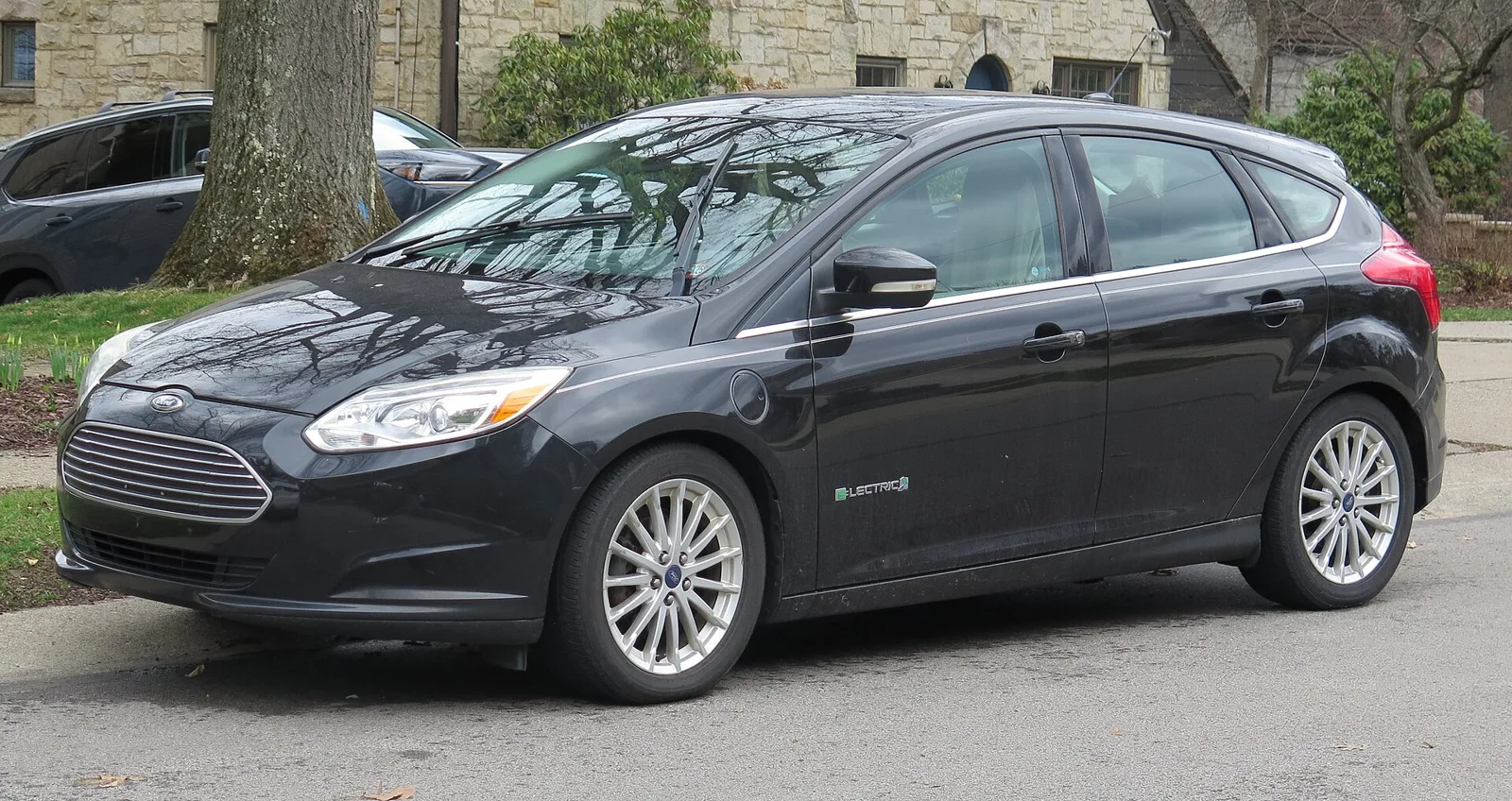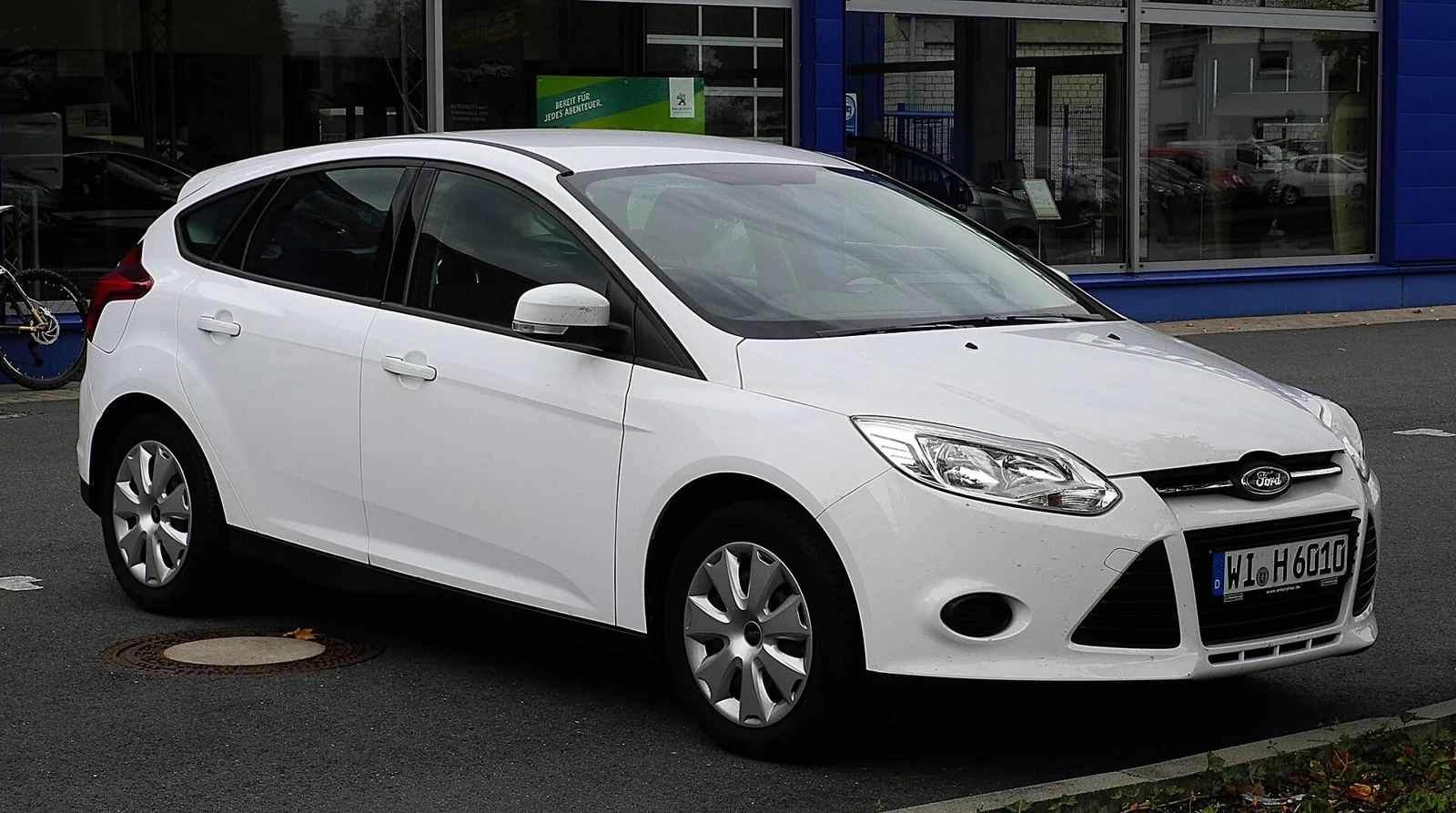
Two family hatchbacks from the early 2010s, judged on hot-hatch performance, automatic gearboxes with very different reputations, and the safety scores each car collected.
The Ford Focus Mk III launched in March 2011 and offered a 160 hp 2.0-litre base engine and a 252 hp ST. The Volkswagen Golf Mk6 from 2009 had a 270 PS Golf R with DSG in some markets, and its Euro NCAP five-star rating counted 36 of 37 points for occupant protection.
The Ford Focus Mk III and the Volkswagen Golf Mk6 went head to head in the family hatchback class at the start of the 2010s. The Focus arrived in 2011 and was the best-selling car in the world for 2012, while the Golf Mk6 was a re-engineered car that had already won the 2009 World Car of the Year award. Both offered hot-hatch versions, and both carried gearbox and reliability questions that buyers still ask about.
Why were the Focus and Golf Mk6 compared?
Both were mainstream hatchbacks sold in volume in Europe and North America, and both had performance versions that kept the compact class interesting. The comparison sets Ford's global strategy against Volkswagen's engineering refinements.
The Focus, codenamed C346, was the first Ford designed under CEO Alan Mulally and his One Ford plan, which aimed to sell globally competitive cars in each segment with minimal changes. It launched in North America and Europe at the same time, on 2 March 2011.
The Golf Mk6 (type 5K) made its debut at the Paris show in October 2008 as a 2009 model. It was built on the PQ35 platform and was largely a re-engineered version of the Mk5, with the aim of cutting assembly time and answering criticism of the Mk5's interior.
A Ford that sold more cars than anyone in 2012 met a Volkswagen that collected awards for safety and style, and both carried gearbox questions.
How were the two bodies designed?
The Focus was built on Ford's Kinetic Design, with a trapezoidal grille, a different shape to the front lights and hatchback tail lights set lower, similar to the Fiesta. Its interior was redesigned, with new materials and a new infotainment system.
Ford gave the Focus two types of central console. The basic one went with the smaller engines, while the premium console came with more powerful engines, which reflected the car's move upmarket.
Some of the Focus's changes were about cost. The sedan's space-saving gas strut trunk hinges were replaced by cheaper, intrusive gooseneck hinges, and the car used a patented capless fuel tank.
Ford's designers also wore a Third Age Suit to simulate the physical limits of an elderly person, and the insights from that exercise shaped the car. The North American platform was also 25% stronger than the previous version.
The Golf Mk6 Variant estate was facelifted in 2009 and was sold in the US as the Jetta SportWagen, with the Golf Wagon name used in Canada and Golf SportWagen in Mexico. The Golf Mk6 Cabriolet was shown at the 2011 Geneva show and was the first Golf cabriolet since 2002. Its soft top opened in 9.5 seconds, and it could be operated on the move only below 30 km/h (19 mph). The Golf Plus, a facelifted version of which was revealed at the 2008 Bologna show, was replaced in 2014 by the MQB-based Golf Sportsvan.
Ford also planned a sedan for Mercury, reportedly to be called the Tracer and to sit below the Milan. Those plans were dropped when Ford announced the closure of the Mercury division in the summer of 2010.
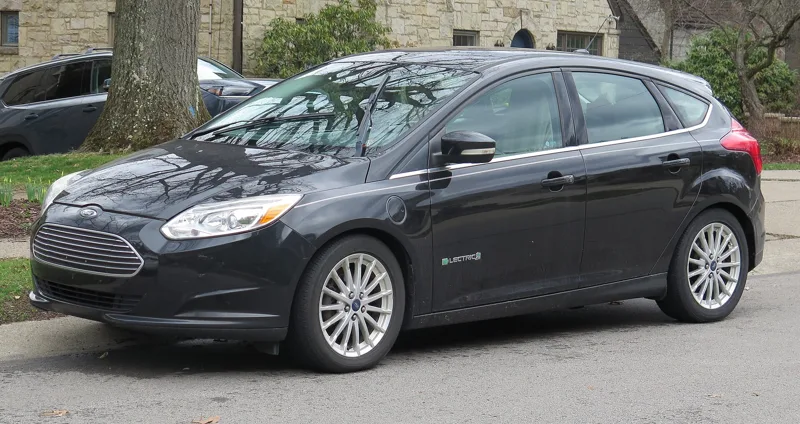
Ford debuted the all-electric Focus Electric at the Consumer Electronics Show in 2011 to take on the Nissan Leaf and the Chevrolet Volt, a sign of how the Focus was being pitched beyond the petrol range.
Which engines did each car offer?
The Focus launched in North America with a single engine, a 2.0-litre Duratec 20 direct-injection four rated at 160 hp (119 kW). Flex Fuel capability arrived in mid-2012, except in states that adhere to partial zero-emissions rules.
In Europe the Focus line-up was broader. A 1.0-litre EcoBoost three-cylinder came in 100 and 125 hp forms, the 1.6 Ti-VCT offered 85, 105 and 125 hp, and the 1.6 EcoBoost produced 150 or 182 hp. Diesel buyers could choose a 1.6 Duratorq or a 2.0 Duratorq of 150 or 185 hp.
The Golf Mk6's North American engines carried over from the Mk5, a 2.5-litre five-cylinder, a 2.0-litre TDI and a 2.0-litre TSI in the GTI. In Europe the cabriolet offered six turbocharged direct-injection engines from 77 kW (105 PS) to 155 kW (211 PS).
How quick were the performance models?
The Focus ST arrived in late 2012 with a turbocharged 2.0-litre making 252 hp (188 kW) and 270 lb-ft (366 N-m), available only with a six-speed manual. The 2016 RS brought a 2.3-litre EcoBoost as its engine.
The Golf R was unveiled at the Frankfurt IAA on 15 September 2009 as the successor to the R32. Its 1,984 cc FSI turbo produced 270 PS (266 bhp; 199 kW) and 350 N-m, and Volkswagen claimed 0 to 100 km/h in 5.5 seconds for DSG cars and 5.7 seconds for manual cars.
The Golf R used a revised fourth-generation Haldex 4motion all-wheel drive system. Volkswagen announced it for the United States from 2012, where it was detuned to 256 hp and 329 N-m and sold without the DSG option.
The GTI Edition 35 celebrated the GTI's 35th anniversary with a 232 bhp engine derived from the Mk5 GTI unit and a 0 to 62 mph time of 6.6 seconds. It sat below the Golf R in the range.
Volkswagen's Worthersee 09 concept was a Golf GTI with a 2.0-litre TSI rated at 155 kW (208 bhp; 211 PS), a red Firespark Metallic body and 19-inch alloy wheels. Volkswagen claimed 0 to 100 km/h in 6.9 seconds and a top speed of 238 km/h (148 mph).
How did the two brands compete in motorsport?
APR Motorsport led two MKVI VW GTIs to victory in the Street Tuner class of the Grand-Am Continental Tire Sports Car Challenge. Volkswagen Motorsport also entered the 2011 24 Hours Nurburgring with the Golf24, a 2,500 cc five-cylinder turbo with 441 PS and permanent four-wheel drive.
The Golf24 finished sixth overall in the third VLN race of 2011, its best lap sat nine seconds off the fastest race lap, a time set by a Ferrari 458. In the 24-hour race none of the three cars finished, with one suffering a pit-entry accident and another a blown gearbox.
Specifications side by side
| Specification | Ford Focus Mk III | Volkswagen Golf Mk6 |
|---|---|---|
| Launch | Debuted at the 2010 NAIAS; sales from 2 March 2011 | Unveiled October 2008; 2009 model year |
| Body styles | Four-door sedan and five-door hatchback; estate in Europe | Three- and five-door hatchback, estate, Cabriolet in Europe |
| Base petrol | 2.0-litre Duratec 20, 160 hp (119 kW), North America | 2.5-litre five-cylinder in North America; 2.0 TSI in the GTI |
| Hot version | ST, 252 hp (188 kW), 270 lb-ft (366 N-m) | Golf R, 270 PS (266 bhp; 199 kW), 350 N-m |
| Performance claim | Not given | 0 to 100 km/h in 5.5 seconds with DSG |
| Transmission | Six-speed manual or PowerShift dual-clutch automatic | Five- or six-speed manual; six-speed Tiptronic; DSG on the Golf R |
| Fuel economy (US) | 28 city and 38 highway for the six-speed automatic; 40 highway with SFE | Not given |
| Safety rating | Not given | Five stars from Euro NCAP; 36 of 37 points for occupant protection |
| Recall history | 2017 EcoBoost recall, 29 engine fires in US and Canada | Not given |
The Focus range also shifted during its first two model years. In 2012 the Titanium, which had been automatic-only, could be ordered with a manual gearbox, and in March 2012 a non-touch MyFord option replaced the MyFord Touch system on Titanium models.
Which automatic gearbox was the better bet?
The Focus's PowerShift dual-clutch gearbox drew heavy criticism for shuddering, and it was linked to several lemon law claims. Ford's remedy was to replace the clutch pack assembly when shudder exceeded 250 rpm after a customer complaint, and it made at least six revisions to clutch packs and control modules.
Ford attributed many problems to an improperly installed seal that leaked fluid onto the dry clutches, and it said newer packs were more resistant to wear. The US regulator did not require a recall, and Ford did not issue one voluntarily despite several software upgrades.
The Golf's North American line-up leaned on manual gearboxes, with the 2.5-litre five-cylinder paired with a five-speed manual and an automatic that was a six-speed Tiptronic. The European cabriolet used DSG dual-clutch boxes on several of its petrol engines and on one diesel, and the Golf R offered DSG in some markets.
What reliability and recall problems did each car have?
The Focus's first-year cars had rust under the bonnet from a seam sealer problem, and the hatchback's trunk lid suffered paint wear from a plastic insert. Later models gained a relocated park brake lever and a redesigned accessory power point.
In 2017 Ford recalled 1.6 EcoBoost Focus cars over a risk of engine fire caused by poor coolant circulation. Ford received reports of 29 fires in the US and Canada, and the recall partly contributed to a US$300 million charge.
How did each car fare in crash tests and awards?
The Golf Mk6 earned seven standard airbags, rising to nine in Europe and eight in the US, along with standard electronic stability control. It scored 36 of a possible 37 points for occupant protection and five stars from Euro NCAP, which made it one of the safest cars in its class at the time.
The Golf won the 2009 World Car of the Year and Euro NCAP's Safest Car of the Year for 2009. In Australia it took the 2009 Wheels Car of the Year, the first Golf to do so since 1976.
Ford's Focus topped global sales for 2012, and its platform was built to be the stronger of the two.
Where were the two cars built?
Ford built the Focus at Saarlouis in Germany from December 2010 and at Wayne in Michigan from February 2011. Production followed at Vsevolozhsk in Russia from July 2011, Rayong in Thailand and Chongqing in China from May 2012, Taoyuan in Taiwan from November 2012, and General Pacheco in Argentina in 2013.
The Golf Mk6 was built in China by FAW-VW from the 2010 model year, with the Chinese GTI using a 2.0-litre TSI rated at 149 kW (200 hp). That production ended in 2013, when the Mk7 took over.
Which car suits which buyer?
On the figures, the Focus suits a buyer who wants a family hatchback with a hot ST version, a flex-fuel option in later years and a strong sales record. The Golf suits a buyer who wants a five-star safety record, a performance range that runs from the GTI to the Golf R and a long list of awards.
A buyer of a Focus with the PowerShift gearbox should check its clutch and software history before buying, since the DPS6 is the car's biggest known weakness. A Golf buyer should check which gearbox and engine combination they are getting, as the North American and European line-ups differed a great deal.
Neither car wins outright. The Focus has the sales record and the ST, while the Golf offers the Golf R, the safety record and the awards. The choice depends on whether a buyer trusts Ford's gearbox history or wants the more decorated car.